A review copy of Maggie Nelson’s brand-new biographical essay on Sylvia Plath (and Taylor Swift) was the excuse I needed to finally finish a long-neglected paperback of The Bell Jar and also get a taste of Plath’s poetry through the posthumous collection Ariel, which is celebrating its 60th anniversary. These are the sorts of works it’s hard to believe ever didn’t exist; they feel so fully formed and part of the zeitgeist. It also boggles the mind how much Plath accomplished before her death by suicide at age 30. What I previously knew of her life mostly came from hearsay and was reinforced by Euphoria by Elin Cullhed. For the mixture of nonfiction, fiction and poetry represented below, I’m counting this towards Nonfiction November’s Book Pairings week.
The Slicks: On Sylvia Plath and Taylor Swift by Maggie Nelson (2025)
 Can young women embrace fame amidst the other cultural expectations of them? Nelson attempts to answer this question by comparing two figures who turn(ed) life into art. The link between them was strengthened by Swift titling her 2024 album The Tortured Poets Department. “Plath … serves as a metonym – as does Swift – for a woman who makes art about a broken heart,” Nelson writes. “When women make the personal public, the charge of whorishness always lurks nearby.” What women are allowed to say and do has always, it seems, attracted public commentary, and “anyone who puts their work into the world, at any level, must learn to navigate between self-protectiveness and risk, becoming harder and staying soft.”
Nelson acknowledges a major tonal difference between Plath and Swift, however. Plath longed for fame but didn’t get the chance to enjoy it; she’s the patron saint of sad-girl poetry and makes frequent reference to death, whereas Swift spotlights joy and female empowerment. It’s a shame this was out of date before it went to print; my advanced copy, at least, isn’t able to comment on Swift’s engagement and the baby rumour mill sure to follow. It would be illuminating to have an afterword in which Nelson discusses the effect of spouses’ competing fame and speculates on how motherhood might change Swift’s art.
Full confession: I’ve only ever knowingly heard one Taylor Swift song, “Anti-Hero,” on the radio in the States. (My assessment was: wordy, angsty, reasonably catchy.) Undoubtedly, I would have gotten more out of this essay were I equally familiar with the two subjects. Nonetheless, it’s fluid and well argued, and I was engaged throughout. If you’re a Swiftie as well as a literary type, you need to read this.


[66 pages]
With thanks to Vintage (Penguin) for the advanced e-copy for review.
The Bell Jar by Sylvia Plath (1963)
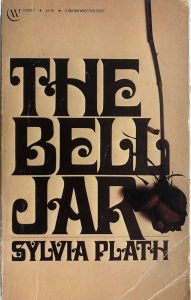 Given my love of mental hospital accounts and women’s autofiction, it’s a wonder I’d not read this before my forties. It was first published under the pseudonym “Victoria Lucas” because Plath thought it immature, “an autobiographical apprentice work which I had to write in order to free myself from the past.” Esther Greenwood is the stand-in for Plath: a talented college student who, after working in New York City during the remarkable summer of 1953, plunges into mental ill health. Chapter 13 is amazing and awful at the same time as Esther attempts suicide thrice in one day, toying with a silk bathrobe cord and ocean waves before taking 50 pills and walling herself into a corner of the cellar. She bounces between various institutional settings, undergoing electroshock therapy – the first time it’s horrible, but later, under a kind female doctor, it’s more like it’s ‘supposed’ to be: a calming reset.
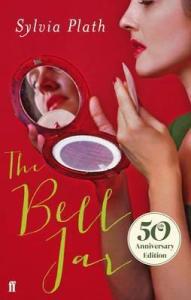 The 19-year-old is obsessed with the notion of purity. She has a couple of boyfriends but decides to look for someone else to take her virginity. Beforehand, the asylum doctor prescribes her a fitting for a diaphragm. A defiant claim to the right to contraception despite being unmarried is a way of resisting the bell jar – the rarefied prison – of motherhood. Still, Esther feels guilty about prioritizing her work over what seems like feminine duty: “Why was I so maternal and apart? Why couldn’t I dream of devoting myself to baby after fat puling baby? … I was my own woman.” Plath never reconciled parenthood with poetry. Whether that’s the fault of Ted Hughes, or the times they lived in, who can say. For her and for Esther, the hospital is a prison as well – but not so hermetic as the turmoil of her own mind. How ironic to read “I took a deep breath and listened to the old brag of my heart. I am, I am, I am” knowing that this was published just a few weeks before this literary genius ceased to be.
Apart from an unfortunate portrayal of a “negro” worker at the hospital, this was an enduringly relevant and absorbing read, a classic to sit alongside Emily Holmes Coleman’s The Shutter of Snow and Janet Frame’s Faces in the Water.
(Secondhand – it’s been in my collection so long I can’t remember where it’s from, but I’d guess a Bowie Library book sale or Wonder Book & Video / Public library – I was struggling with the small type so switched to a recent paperback and found it more readable)
Ariel by Sylvia Plath (1965)
Impossible not to read this looking for clues of her death to come:
Dying
Is an art, like everything else.
I do it exceptionally well.
(from “Lady Lazarus”)
Eternity bores me,
I never wanted it.
(from “Years”)
The woman is perfected.
Her dead
Body wears the smile of accomplishment
(from “Edge”)
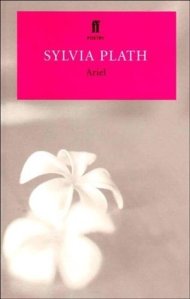 I feel incapable of saying anything fresh about this collection, which takes no prisoners. The images and vocabulary are razor-sharp. First and last lines or stanzas are particularly memorable. (“Morning Song” starts “Love set you going like a fat gold watch”; “Lady Lazarus” ends “Out of the ash / I rise with my red hair / And I eat men like air.”) Words and phrases repeat and gather power as they go. “The Applicant” mocks the obligations of a wife: “A living doll … / It can sew, it can cook. It can talk, talk, talk. … // … My boy, it’s your last resort. / Will you marry it, marry it, marry it.” I don’t know a lot about Plath’s family life, only that her father was a Polish immigrant and died after a long illness when she was eight, but there must have been some daddy issues there – after all, “Daddy” includes the barbs “Daddy, I have had to kill you” and “If I’ve killed one man, I’ve killed two— / The vampire who said he was you / And drank my blood for a year, / Seven years, if you want to know.” It ends, “Daddy, daddy, you bastard, I’m through.” Several later poems in a row, including “Stings,” incorporate bee-related imagery, and Plath’s father was an international bee expert. I can see myself reading this again and again in future, and finding her other collections, too – all but one of them posthumous. (Secondhand – RSPCA charity shop, Newbury)
 Bookish Beck = Rebecca Foster. American transplant to England. Freelance proofreader and book reviewer.

this is great, thanks; I’ve read The Bell Jar and found it amazing and dreadful at the same time but I didn’t know about the Coleman or Frame so I’ve added them to my list – and I have the perfect recipient for The Slicks, thanks!
LikeLiked by 1 person
Janet Frame’s fiction and memoirs about being in a mental hospital are so vivid and harrowing.
That’s great that you know the perfect person to appreciate a book on both Plath and Swift!
LikeLiked by 1 person
I don’t know what’s more surprising, that this is your first reading of The Bell Jar, or that you’ve only heard one Taylor Swift song (how?? She’s ubiquitous!)
LikeLiked by 1 person
I guess because I don’t listen to radio or have a television, so I don’t tend to hear random songs or ads. (And I don’t think my 13yo niece is into her.) I didn’t escape the Sheeran onslaught, though.
LikeLike
[…] Bookish Beck […]
LikeLike
Plath is such a great poet. Morning Song is amazing, Daddy is amazing, Lady Lazarus is amazing, it’s all gorgeous. I quite like Swift’s older stuff (“You Belong With Me” is a BOP), but have never gone all in on her, either musically or as a pop culture icon.
LikeLiked by 1 person
I can’t believe I hadn’t encountered Plath’s poetry until now. She must have influenced so many in the decades since.
I honestly only knew Taylor Swift for a duet she once did with John Mayer. It’s a cultural phenomenon that has completely passed me by. You have to admire someone who can do a 44-song show, though!
LikeLike
Swift is a bit of a phenomenon; those shows are huge and must be exhausting!
Honestly I think it can be good to come to Plath as an adult. She has this bizarre reputation as a confessional writer in a way that people assume suits her well to adolescent readers, and I suppose she is, but her poetry is so powerful and interesting that coming to it fresh, with the reading experience gained by adulthood, would be no bad thing.
LikeLiked by 1 person
An excellent trio and thank you for contributing it to Pairings Week! Swift even resembles Plath in some of her incarnations. Not that I’m a Swiftie as such but I’ve watched her work and indeed watched the video (or whatever) of her latest concert (v long: we watched it in three goes).
LikeLiked by 1 person
Yes! Nelson mentioned that in one music video for the Tortured Poets album, she plays Dickinson/Plath.
You are much more up with the times and down with the kids than I am!
LikeLiked by 1 person
What a great pair: and it comes with a built-in soundtrack (or, maybe not, in your case). Do you think this is a rare/uncommon case of your preferring an author’s poems to their prose? I read The Bell Jar on the advice of two confirmed Plath-lovers and didn’t ever really feel like I connected to it, the way I was meant to, or the way that they did, but I can appreciate what a milestone it is, all the same. And I did actually surprise myself by reading through that doorstopper of her diaries.
LikeLiked by 1 person
Ha ha, maybe someone could make me a short best-of Spotify playlist 😉
I think I probably did marginally prefer the poems, yes. According to Goodreads, because I took a (very) long break, it took me 4.5 years to read The Bell Jar!
LikeLike
As soon as I heard about The Slicks, I pre-ordered (patiently waiting for my copy to arrive). While I wouldn’t say I’m a hardcore Swiftie, I very much like her music and have done from the beginning of her career. I think her most recent album is remarkably good, but overall I think she’s interesting and very smart!
I read The Bell Jar in my youth – time to revisit.
LikeLiked by 1 person
You definitely fit in that small Venn diagram segment of people the book is perfect for!
LikeLiked by 1 person
It’s been so long since I read The Bell Jar that I don’t remember much about it. Interestingly, my daughter (15) has asked for a copy of it for Christmas!
LikeLiked by 1 person
Good on her! Is she a Swiftie as well? 😉
LikeLike
She isn’t at all!
LikeLike
I loved The Bell Jar, but I’ve never liked Plath’s poetry. I remember when an authoritative bio of Plath came out recently, and I was keen on reading it. It is quite lengthy.
LikeLiked by 1 person
Plath’s biography “Red Comet” is excellent! It is lengthy but reads effortlessly!
LikeLiked by 1 person
Thank you for the recommendation!
LikeLike
I read The Bell Jar in college and really liked it. I still need to read Ariel.
LikeLiked by 1 person
I’ve not read anything by Sylvia Plath and probably need to remedy that. And you’re not alone in not being too familiar with Swift. I’m familiar with a song or two here and there but that’s about it. LOL
LikeLiked by 1 person
I don’t listen to radio and none of my nieces/nephews happen to be into her, so I guess that explains it.
LikeLiked by 1 person
I don’t listen to the radio much either. 🙂
LikeLike
I’d be interested in The Slicks because I am a fan of Swift (though not quite Swiftie level!) I read The Bell Jar in high school I think – maybe college? It’s been ages. Might be worth a reread.
LikeLiked by 1 person
[…] The Bell Jar & Ariel by Sylvia Plath: Given my love of mental hospital accounts, it’s a wonder I’d not read this classic work of women’s autofiction before. Esther Greenwood is the stand-in for Plath: a talented college student who, after working in New York City during the remarkable summer of 1953, plunges into mental ill health. An enduringly relevant and absorbing read. / Ariel takes no prisoners. The images and vocabulary are razor-sharp and the first and last lines or stanzas are particularly memorable. […]
LikeLike
[…] arbitrarily chosen and they were all composed in the last nine months of Sylvia Plath’s life.” Ariel is much the stronger collection. There are only 19 poems here; the final one, “Three Women,” is […]
LikeLike
[…] got less out of this posthumous collection than I did from Ariel and Winter Trees, but there are still striking turns of phrase: “The future is a grey seagull / […]
LikeLike