I’m marking Christmas Eve with cosy reflections on the season, a biography of Britons’ favourite bird (and a bonus seasonal fairy tale), and a mixed bag of essays and stories about the obligations and annoyances of the holidays.
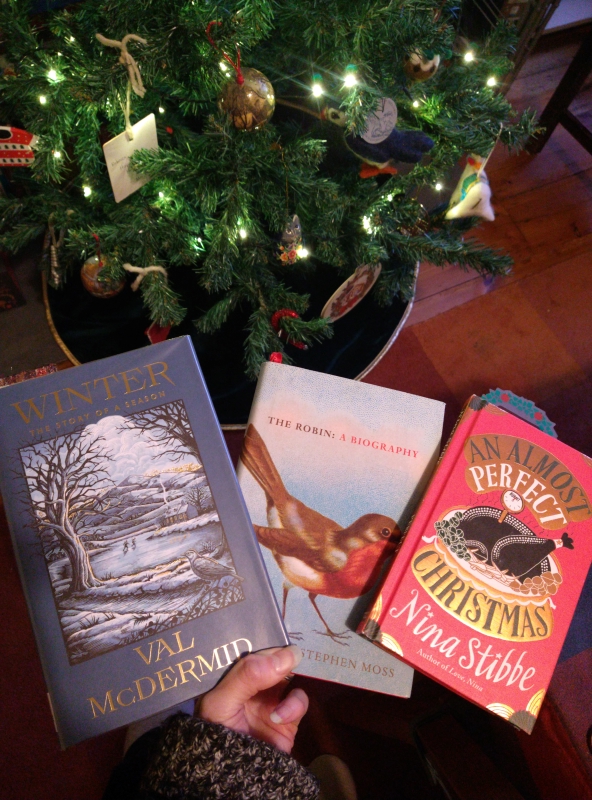
Winter by Val McDermid (2025)
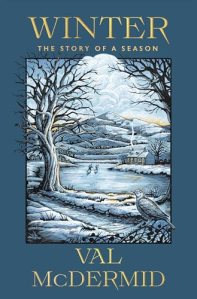 I didn’t realize that Michael Morpurgo’s Spring was the launch of a series of short nonfiction books on the seasons. McDermid writes a book a year, always starting it in early January. She evokes the Scottish winter’s “Janus-faced” character: cosy but increasingly storm-tossed. In few-page essays, she looks for nature’s clues, delves into childhood memories, and traverses the season through traditional celebrations as she has experienced them in Edinburgh and Fife: Hallowe’en, Bonfire Night, Christmas, and New Year’s Eve. The festivities are a collective way of taking the mind off of the season’s hardships, she suggests. I was amused by her mother’s recipe for soup, which she described as more of a “rummage” for whatever vegetables you have in the fridge. It was my first time reading McDermid and, while I don’t know that I will ever pick up one of her crime novels, this was pleasant. I reckon I’d read Bernardine Evaristo on summer and Kate Mosse on autumn, too. (Public library)
The Robin: A Biography – A Year in the Life of Britain’s Favourite Bird by Stephen Moss (2017)
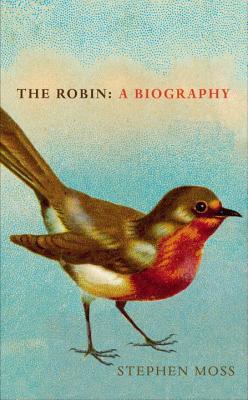 I’ve also read Moss’s most recent bird monograph, The Starling. Both provide a thorough yet accessible introduction to a beloved species’ history, behaviour, and cultural importance. The month-by-month structure works well here: Moss’s observations in his garden and on his local patch lead into discussions of what birds are preoccupied with at certain times of year. Such a narrative approach makes the details less tedious. European robins are known for singing pretty much year-round, and because hardly any migrate – only 5%, it’s thought – they feel like constant companions. They are inquisitive garden guests, visiting feeders and hanging around to see if we monkey-pigs might dig up some juicy worms for them.
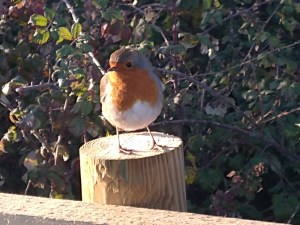
(Last month, this friendly chap at an RSPB bird reserve near Exeter wondered if we might have a snack to share.)
Although we like to think we see the same robins year after year, that’s very unlikely. One in four robins found dead has been killed by a domestic cat; most die of old age and/or starvation within a year. Robin pairs raise one or two broods per year and may attempt a third if the weather allows, but that high annual mortality rate (62%) means we’re not overrun. Compared to other notable species, then, they’re doing well. There are loads of poems and vintage illustrations and, what with robins’ associations with Christmas, this felt like a seasonally appropriate read. At Christmas 2022 I read the very similar Robin by Helen F. Wilson, but this was more engaging. (Free from C’s former colleague)
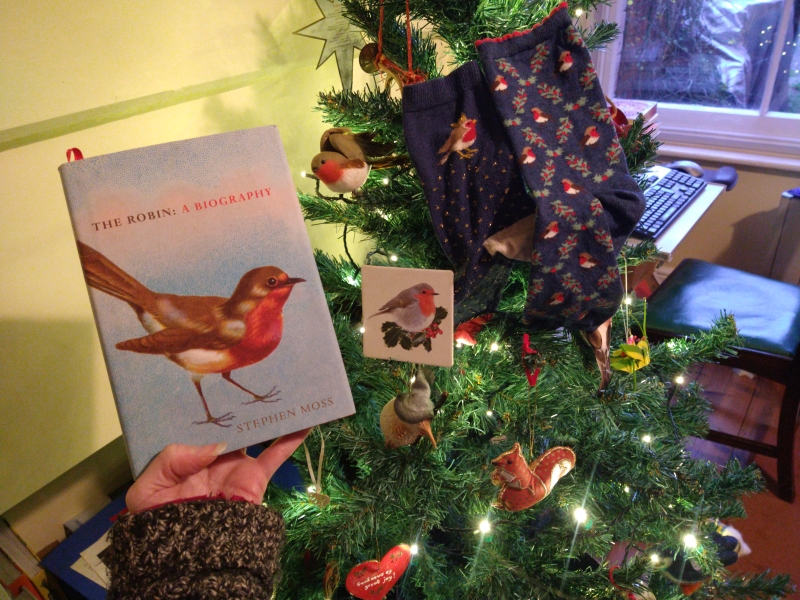
Our small collection of Christmas robin paraphernalia.
&
The Robin & the Fir Tree by Jason Jameson (2020)
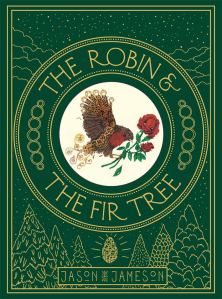 Based on a Hans Christian Andersen fairy tale, this lushly illustrated children’s book stars a restless tree and a faithful robin. The tree resents being stuck in one place and envies his kin who have been made into ships to sail the world. Although his friend the robin describes everything and brings souvenirs, he can’t see the funfair and the flora of other landscapes for himself. “Every season will be just the same. How I long for something different to happen!” he cries. Cue a careful-what-you-wish-for message. When men with axes come to chop down the fir tree and display him in the town square, he feels a combination of trepidation and privilege. Human carelessness turns his sacrifice to waste, and only the robin knows how to make something good out of the wreckage. The art somewhat outshines the story but this is still a lovely hardback I’d recommend to adults and older children. (Public library)
An Almost Perfect Christmas by Nina Stibbe (2017)
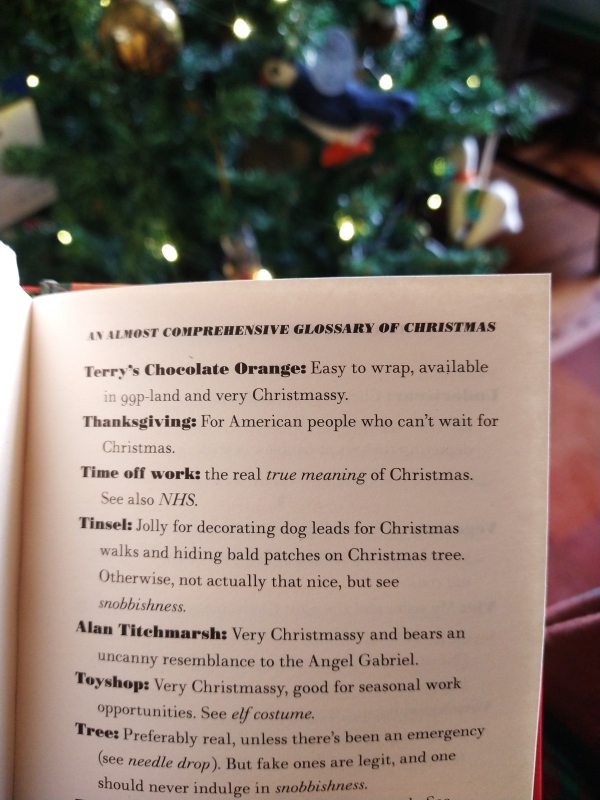
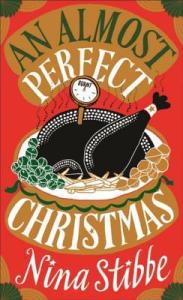 I reviewed this for Stylist magazine when it first came out and had fond memories of a witty collection I expected to dip into again and again. This time, though, Stibbe’s grumpy rants about turkey, family, choosing a tree and compiling the perfect Christmas party playlist fell flat with me. The four short stories felt particularly weak. I most recognized and enjoyed the sentiments in “Christmas Correspondence,” which is about the etiquette for round-robin letters and thank-you notes. The tongue-in-cheek glossary that closes the book is also amusing. But this has served its time in my collection and it’s off to the Little Free Library with it to, I hope, give someone else a chuckle on Christmas day. (Review copy)
My original rating (2017):
My rating now: 
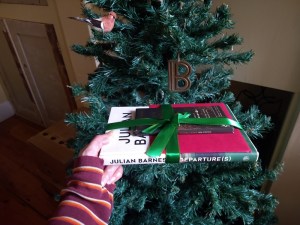
It’s taken me a long time to feel festive this year, but after a couple of book club gatherings and a load of brief community events for the Newbury Living Advent Calendar plus the neighbourhood carol walk, I think I’m finally ready for Christmas. (Not that I’ve wrapped anything yet.) I had a couple of unexpected bookish gifts arrive earlier in December. First, I won the 21st birthday quiz on Kim’s blog and she sent a lovely parcel of Australian books and an apt tote bag. Then, I was sent an early finished copy of Julian Barnes’s upcoming (final) novel, Departure(s). We didn’t trust Benny to be sensible around a real tree so got an artificial one free from a neighbour to festoon with non-breakable ornaments. He discovered the world’s comfiest blanket and spends a lot of time sleeping on it, which has been helpful.


Merry Christmas, everyone! I have a bunch of year-end posts in preparation. It’ll be a day off tomorrow, of course, but here’s what to expect thereafter:
Friday 26th: Reporting back on Most Anticipated Reads of 2025
Saturday 27th: Reading Superlatives
Sunday 28th: Best Backlist Reads
Monday 29th: Love Your Library
Tuesday 30th: Runners-Up
Wednesday 31st: Best Books of 2025
Thursday 1st: Final Statistics for 2025
Friday 2nd: Early Recommendations for 2026
Monday 5th: Most Anticipated Titles of 2026
 Bookish Beck = Rebecca Foster. American transplant to England. Freelance proofreader and book reviewer.
 Bookish Beck
Nice books! Val McDermid can write a terrific mystery, but sometimes she seems to be phoning it in. I’ve read some of the best mystery fiction by her ever and some that’s pretty meh. Her Winter book looks interesting.
My Brit friend here says British robins are quite different from ours, smaller and cuter. Unfortunately, we don’t have robins here in the winter, but they are the first new birds (by which I mean ones that don’t winter here) to appear in the spring.
Merry Christmas, Beck!
LikeLiked by 1 person
Which would you say are her best ones if I wanted to try her crime?
That’s true, European robins are a fair bit smaller and from a different family of birds, it’s just the red breast that they have in common, so it was probably a case of colonizers naming them after a familiar bird from home.
Hope you had a good Christmas!
LikeLiked by 1 person
Her really good ones are dark, I have to say. The one that blew me away was one of the first ones I read, A Place of Execution. I wondered if our robins were even related. I think the European ones might even be more red. I would really consider ours orange-breasted.
LikeLike
I heard Val McDermid talking about winter and the Great Outdoors on the radio earlier this week and she was surprisingly engaging so I might be interested in her book about the season. Stephen Moss is also a very approachable author. The Jameson sounds worth a punt too. But the Stibbe? Nah. Have a lovely Christmas, with plenty of new books under the tree!
LikeLiked by 1 person
I think you’d like the seasons series. I agree Moss is reliable (and a nice bloke in person).
LikeLiked by 1 person
Yayyy for finally feeling festive – it’s (almost) never too late. Merry Christmas! Can’t wait for the post-25th roundups and recommendations.
LikeLiked by 1 person
Looked like you had a great day!
LikeLike
It was lovely, thank you! Hope yours was just what you wanted it to be.
LikeLike
Merry Christmas to you!! Hope you have a wonderful day!
LikeLiked by 1 person
I love reading year-end posts – looking forward to yours. Mine are nearly ready to go, but every other day from the 27th. Merry Christmas to you, Chris and Benny. x
LikeLiked by 1 person
Your robins are so different from ours! Much cuter, IMO. Although ours have such a cheerful song I still enjoy them. My friend went to Scotland in November and said that the robins were so omnipresent and friendly, like pigeons over here. She even got me a cute pair of robin earrings. 🙂
LikeLiked by 1 person
American robins even ‘say’ “Cheer up, cheerily”! Ours have a lovely song and are often curious about people. I love that you have European robin earrings!
LikeLiked by 1 person
That’s interesting about the robins’ size (in comments): I didn’t know. Here, 25% don’t survive their first year, but I’m not sure beyond that. There must be some shared ancestry, but maybe not specifically the same birds?
I don’t know how anyone can make sense of the cut-down-a-real-tree-and-put-it-in-your-house-until-it-dies thing, even though I see that our artificial one doesn’t necessarily make a good substitute either. Regardless, I can see how you’d’ve hesitated with sweet Benny, and I hope he wasn’t too disappointed not to have real needles to munch on, real limbs to climb and claw.
LikeLiked by 1 person
They’re entirely different families of birds (American = thrushes; European = flycatchers). I think it literally was just the ‘red breast’ that got it the name on a new continent.
I think for an artificial tree to be worth the environmental cost of the plastic production, it has to be used for 10+ years, which is often not the case. This one we got from a neighbour was from the 1990s, so has definitely served its time! We will pass it on and plan to go back to a small real tree again next year. We buy them from a nature reserve where they are cut down as part of necessary scrub management on heaths. Benny nibbled on the plastic one plenty, the freak, so a real one can’t do him any harm. But he may worry it more…
LikeLike
Perhaps it will be therapeutic for Benny; I’ve recently started drinking Pine tea made from the needles, which is supposed to be a natural anti-inflammatory (if so, he’ll likely target the bark instead. hehe)
How interesting: that’s a great option if one is attached to the nostalgia. I knew you must have come up with something, given your and Chris’s principles! But most people seem to buy off lots/farms and love the tradition (I wonder if this kind of option you have is even available in Canada, home of infinite disposability?) Hopefully we can continue to keep our little old artificial tree for the duration; it sounds like it’s a collectible now (30+ years).
LikeLiked by 1 person
I’ll go for my Finnish pine gin instead, I think 😉
Our only option for a real tree last year would have been extremely overpriced from a supermarket or farm; the nature reserve didn’t seem to be running its annual sale.
LikeLike
A fine choice! (Or should I say… a pine choice!) Ironically, that’s probably a good sign, that they don’t always have their supply available? It’s strangely reassuring somehow…
LikeLike