Our clocks went back on Sunday; combine that with the significant wind and rain we’ve had around Storm Austen and it has felt more wintry than autumnal recently – though today is a lovely mild day. This is the season for which it’s hardest for me to find appropriate reads (excepting R.I.P. spookiness), but I did read one book specifically about autumn and another that I’m including because of the title of its first chapter and its use of a school as a setting. The orange/leaf covers fit the bill, too.
Rattlebone by Maxine Clair (1994)
 I found out about this after its 2023 reissue (by Daunt Books in the UK). Because the chapters are like linked short stories, I started reading it in September, but I’m still only two-thirds of the way through. Right from the first line, I got strong Tayari Jones vibes (particularly her latest, Kin):
We heard it from our friends, who got it from their near-eyewitness grandmothers and their must-be-psychic neighbour ladies, that when she was our same age, our teacher, Miss October Brown, watched her father fire through his rage right on into her mother’s heart.
In this opening chapter, “October Brown,” Irene Wilson and her friends start to awaken to the mores and secrets of adults. “Intuition is the guardian of childhood; it was keen in us, and we were right.” I always love the use of the first-person plural, however brief. Subsequent stories see the children resisting a Catholic missionary’s efforts and forming friendships across boundaries of class and respectability. We get glimpses of the wider Rattlebone, Kansas Black community, too. October Brown is considered a seductress, and dismissed from one of her boarding house situations because of rumours (as voiced by her landlady in “The Roomers”). I’d recommend this to fans of Jones, as above, and Alice Munro. (Secondhand – Better World Books with a voucher)
Autumn: The Story of a Season by Kate Mosse (2026)
I truly admire Mosse as a literary champion heavily involved with the Society of Authors and the Women’s Prizes in the UK. As I felt with the only other Mosse book I’ve read (An Extra Pair of Hands; Granny Rosie is still going!), though, this was pleasant but insubstantial. It may be because both are nonfiction works and she devotes her true energy to her expansive historical fiction.
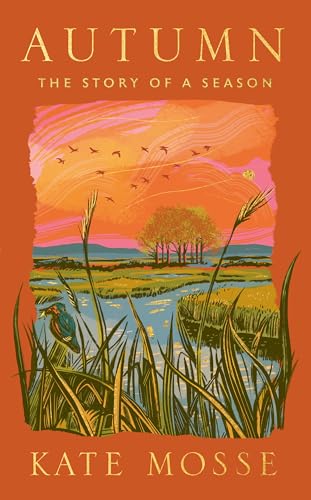 I’d read Michael Morpurgo’s Spring and Val McDermid’s Winter (the best of the bunch) and wanted to continue with the series; even though all the entries have been somewhat lacklustre, I enjoy reading with the seasons and seeing what others cherish about each one. The challenge with such a book is to create something that is specific to one’s own experience but also can evoke universal feelings in others.
Mosse doesn’t keep to a strict diary format but does proceed from early September through the end of November in 2025, reporting every few days or so on the weather and happenings in her household and community. The cold nights drawing in, admiring local trees (“Trees, if conditions are right, outlast us. They are the true custodians of a house and garden, not the humans who come and go”), going for long country walks, having sloe gin and apple snow, thrilling to spooky stories: all good. But there’s also a little bit too much, even in such a short book, about Chichester and its West Sussex surroundings. This may be inevitable given that Mosse has lived there her whole life, but it was hard for me to summon much interest in local rituals related to Bonfire Night and the War Memorial. She has attempted to create a “marriage of landscape and memory and history,” an account of “the roots of my becoming a writer,” and perhaps for fans of her fiction she will have succeeded.
For a professed nature lover, though, there were a couple of howling errors here: monarch butterflies are incredibly rare UK migrants, so I doubt she saw them on her buddleia; and “a few ospreys are wading”? Hardly. She probably means oystercatchers. (She also misquotes Edith Wharton describing the appeal of ghost stories as “the thrill of the shudder”; the original quotation says “the fun.”) Samantha Rock’s linocuts are lovely, though. (Public library) 
 Bookish Beck = Rebecca Foster. American transplant to England. Freelance proofreader and book reviewer.


I’ve only read one Mosse, too, but it was one of those expansive historical novels, and… Well, ’twas bad. But as you say, her role as a literary champion is admirable. (And her part of the UK is my UK “home”, too, so that focus actually sounds ideal!)
LikeLiked by 1 person
I’ve wondered about her hist fic, but I don’t think I’ll bother!
I didn’t realize you had family roots in West Sussex; you might get more out of this than I did. I’ve just been to Chichester the once.
LikeLike
No need. It’ll annoy you; it’s soapy and all the novels are looooong for no reason.
Yes, that’s where my grandparents lived for 25 years and where we’ll be getting married next year. It’s my English “home”! (Whenever we went to Chichester, though, it was a huge treat/day out. I mostly remember the cathedral close because we used to have picnic lunches there, and West Wittering Beach, which was always another huge day out.)
LikeLiked by 1 person
Lovely!
LikeLike
The Clair sounds the most appealing of these two.
LikeLiked by 1 person
I know you like a good linked story collection. Marcie (Buried in Print) put me on to it, and I think Jacqui Wine has reviewed it as well.
LikeLiked by 1 person
I do, and am currently reading an excellent one: Mary Morrissy’s Twenty-twenty Vision.
LikeLike
New to me; I’ll look out for it. Thanks!
LikeLike
I’ve read “Labyrinth” by Kate Mosse and quite enjoyed it. However, I am not a big nature fan and really have no idea of botany. I know what a rose looks like but many other flowers … well, you get the gist. So, I guess this is not for me.
LikeLiked by 1 person
I like books that incorporate multiple signs of the season, including nature, holidays, etc.
LikeLiked by 1 person
You know I love Rattlebone; right from the first story, it gave me that contented sigh, of feeling the writer’s authority and trusting that it was going to be good all the way through. It’s on my first for remembrance reading, this Nov/Dec, because she died not long ago (Sept ’25). A Canadian friend rec’d it to me, she found it via a favoured indie reprint in the U.S., and I think that’s how Jacqui found it, too (through her fondness for Daunt in the U.K.). I’d’ve been tempted by the seasonality of that whole series, too, although, as you say, sometimes those types of projects ring hollow.
LikeLiked by 1 person
I’ve been to Chichester for the Iris Murdoch Conference three times now, it’s a funny place and I can see why residents could become obsessed with it and think everyone else wants to know about it …
LikeLiked by 1 person
My in-laws are there all the time for the theatre, but I’ve never needed to go back.
LikeLike