Reading with Pomegranates
I spotted an odd coincidence the other week: I’ve read three books with the word ‘pomegranate’ in the title. It’s not a word (or a fruit) you encounter every day, and it has some interesting metaphorical and mythological connections with womanhood that are worth exploring. Here, then, are those three books and some things they have in common:
 Traveling with Pomegranates: A Mother–Daughter Story, Sue Monk Kidd and Ann Kidd Taylor
In this unusual travel memoir, novelist Sue Monk Kidd and her daughter Ann Kidd Taylor, a budding writer herself, swap reflections on their travels to sites in Greece and France associated with the sacred feminine and wonder what kind of women they want to be. Taylor’s trip to Greece in college had been life-changing, even giving her the idea of becoming an ancient Greek scholar, but when she was rejected by her chosen graduate school it threw her for a loop and sparked a years-long depression that distanced her from her mother and her true self.
Meanwhile, Kidd had only written nonfiction at this point but longed to be a novelist and had initial plans for The Secret Life of Bees floating in her mind. She was able to reconnect with Taylor on this first trip to Greece, and bought them matching glass pomegranate charms to wear on necklaces as a salient reminder of the myth of Demeter rescuing her beloved daughter Persephone from the underworld. As they journeyed on to France looking for Black Madonna statues like the one at Rocamadour, both Kidd and Taylor turned secrets of the heart into wishes and promises expressed to the Goddess.
As they returned to South Carolina and Taylor prepared for marriage, Kidd transitioned from myth to fairy tales while pondering the turn of generations. The fact that Taylor wore Kidd’s old wedding dress only underscored for her that “The Young Woman inside has turned to go, but the Old Woman has not shown up.” All the same, she was going through menopause and having to adjust to a new relationship with her body. “Perhaps all mothers of daughters possess a secret talking mirror that announces when their young womanhood begins to fade and their daughters’ begin to blossom,” she muses. “As in the fairy tale, the experience can unleash a lacerating jealousy in some mothers.”
This is a book with vivid settings, carefully recreated scenes and dialogue, mythological echoes, and strong feminist themes. For both Kidd and Taylor, the struggle was to balance Hestia (a home life) with Athena or Joan of Arc (the intellect and sense of adventure). “I learned how easy it is to give up and become draperies while everyone else is dancing,” Taylor laments. For both her and her mother, these travels in search of the sacred feminine were all about finding inner courage and acting on creative urges despite fear.
(Taylor gives her mother the first and last word; initially she was going to write up their journeys by herself, but later enlisted her mother’s help to give the full story – or, being cynical, to have a big-name draw. It is a shame that Taylor hasn’t managed to write anything else in all this time given that her writing is nearly as good as her mother’s. I loved Kidd’s The Invention of Wings but still haven’t read Bees, her breakout novel, so this has whetted my appetite to finally pick that one up.)
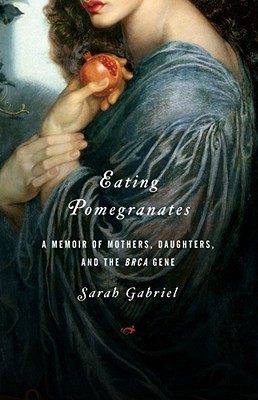 Eating Pomegranates: A Memoir of Mothers, Daughters, and the BRCA Gene, Sarah Gabriel
I read this perhaps nine years ago now; it was one of the first books – along with A Three Dog Life by Abigail Thomas and Without a Map by Meredith Hall – that really turned me on to memoirs, now one of my very favorite genres, and got me thinking about illness and death and how we respond to these in writing. Gabriel, an Oxford journalist, was diagnosed with breast cancer at age 44; her mother had died of the same disease at age 42, when Gabriel was a teenager. Two years before the diagnosis, Gabriel had genetic testing and discovered that she had an inherited mutation on the BRCA gene that made cancer nearly inevitable for her.
Exploring her past and chronicling the grueling treatment process she underwent while raising two small children, Gabriel looks for meaning and connections in a life-and-death struggle. Like Traveling with Pomegranates, this book weaves in the mythology surrounding Persephone and Demeter, bringing with it themes of abandonment and the hope of escaping the pull of the underworld.
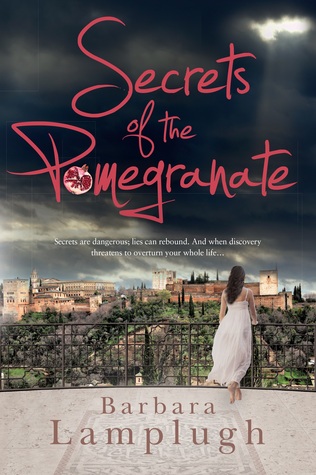
Secrets of the Pomegranate, Barbara Lamplugh
I reviewed this debut novel for The Bookbag in April. As in the Kidd–Taylor book, themes of women’s identity and creative bravery come through strongly. The title refers not only to the book’s setting, the Spanish city of Granada (which literally means pomegranate), but also serves as a symbol for female fertility. Also, as Lamplugh revealed in my interview with her, “According to the Qu’ran, [the pomegranate] grows in the gardens of paradise” – which is important to the novel given the main character’s study of Islamic women’s history as well as her relationship with a Muslim man.
My rating:  for all 3 books
Q: When is a fruit not just a fruit?
A: When it has as many symbolic and mythological associations as the pomegranate.
Have you noticed odd little connections between books before, whether their titles or themes? Share them in the comments below!
Recommended Easter Reading
Unlike Christmas, Easter is a holiday that might not lend itself so easily to reading lists. December is the perfect time to be reading cozy books with wintry scenes of snow and hearth, or old-time favorites like Charles Dickens. Christmas-themed books and short stories are a whole industry, it seems. Lent and Advent both prize special foods, traditions and symbols, but beyond devotional reading there doesn’t seem to be an Easter book scene. Nonetheless, I have a handful of books I’d like to recommend for the run-up to Easter, whether for this year or the future.
 Easter, Michael Arditti
I hadn’t heard of Michael Arditti until I reviewed his novel The Breath of Night – a taut, Heart of Darkness-inspired thriller about a young man searching for a missing priest in the Philippines – for Third Way magazine in late 2013. He deserves to be better known. Easter (2000), his third novel, earned him comparisons to Iris Murdoch and Barbara Pym. His nuanced picture of modern Christianity, especially the Anglican Church, is spot-on.
I’ve just finished Part One, which traces the week between Palm Sunday and Easter Sunday in a fictional London parish, St Mary-in-the-Vale, Hampstead. Structured around the services of Holy Week and punctuated with bits of liturgy, the novel moves between the close third-person perspectives of various clergy and parishioners. Huxley Grieve, the vicar, is – rather inconveniently – experiencing serious doubts in this week of all weeks. And this at a time when the new Bishop of London, Ted Bishop (“Bishop by name, bishop by calling,” he quips), has announced his mission to root out the poison of liberalism from the Church.
So far I’m reminded of a cross between Susan Howatch and David Lodge (especially in How Far Can You Go?), with a dash of the BBC comedy Rev thrown in. Reverend Grieve’s sermons may be achingly earnest, but the novel is also very funny indeed. Here’s a passage, almost like a set of stage directions, from the Palm Sunday service: “The procession moves up the nave. The Curate leads the donkey around the church. It takes fright at the cloud of incense and defecates by the font.”
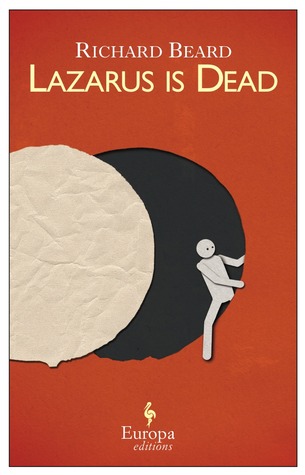 Lazarus Is Dead, Richard Beard
In this peculiar novel-cum-biography, Beard attempts to piece together everything that has ever been said, written and thought about the biblical character of Lazarus. The best sections have Beard ferreting out the many diseases from which Lazarus may have been suffering, and imagining what his stench – both in life and in death – must have been like. (“He stinketh,” as the Book of John pithily puts it.)
Alongside these reasonable conjectures is a strange, invented backstory for Jesus and Lazarus: when they were children Jesus failed to save Lazarus’ younger brother from drowning and Lazarus has borne a lifelong grudge. A Roman official is able to temporarily convince Lazarus that he needs to take up the mantle of the Messiah because he came back to life: he has the miracle to prove the position, whether he wants it or not. The end of the novel follows the strand of the Passion Week, though in a disconnected and halfhearted fashion.
Beard’s interest is not that of a religious devotee or a scriptural scholar, but of a skeptical postmodern reader. Lazarus is a vehicle for questions of textual accuracy, imagination, and the creation of a narrative of life and death. His unprecedented second life must make him irresistible to experimental novelists. Beard’s follow-up novel, Acts of the Assassins, is also Bible-themed; it’s a thriller that imagines the Roman Empire still in charge today.
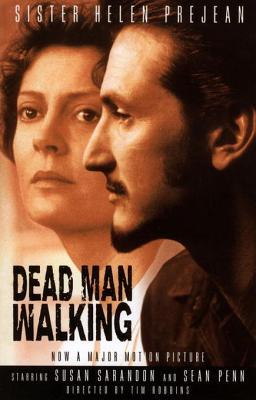 Dead Man Walking, Sister Helen Prejean
No matter your current thoughts on the death penalty, you owe it to yourself to read this book with an open mind. I read it in the run-up to Easter 2007, and would recommend it as perfect reading for the season. As I truly engaged with themes of guilt and retribution, I felt the reality of death row was brought home to me for the first time. Many of the men Prejean deals with in this book we would tend to dismiss as monsters, yet Jesus is the God who comes for the lost and the discounted, the God who faces execution himself.
The film version, which conflates some of the characters and events of the book, is equally affecting. I saw it first, but it does not ruin the reading experience in any way.
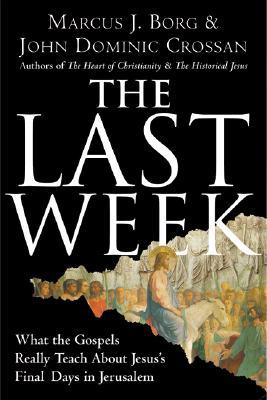 The Last Week: What the Gospels Really Teach about Jesus’s Final Days in Jerusalem, Marcus J. Borg and John Dominic Crossan
Marcus Borg, who just died on January 21st, has been one of the most important theologians in my continuing journey with Christianity. His Reading the Bible Again for the First Time and The Heart of Christianity are essential reading for anyone who’s about to give up on the faith. In this day-by-day account, mostly referencing the Gospel of Mark, Borg and Crossan convey all that is known about the historical Jesus’ last week and death. They collaborated on a second book, The First Christmas, which does the same for Jesus’ birth.
And now for two more unusual, secular selections…
 Bellman & Black, Diane Setterfield
Call me morbid, but I love English graveyards. My most enduring Easter memory is of dawn services at the country church in my husband’s hometown. In the weak half-light, with churchyard rooks croaking a near-deafening chorus, the overwhelming sense was of rampant wildness. The congregation huddled around a bonfire while a black-cloaked vicar intoned the story of scripture, from creation to the coming of Christ, as loudly as possible over the rooks – trying to win mastery over the night, and score a point for civilization in the meantime.
This anecdote goes some way toward explaining why I rather enjoyed Bellman and Black – but why many others won’t. Setterfield’s second novel is a peculiar beast, a bit like a classic suspense story but also an English country fable. Protagonist William Bellman is part Job and part Faustus. At age ten, he makes a catapult that kills a rook. Thereafter, his life is plagued by death, despite his successful career as an entrepreneur at a cloth mill. Can he make a deal with the Devil – or, rather, the sinister Mr. Black – that will stop the cycle of deaths?
Bellman’s daughter Dora is a wonderful character, and because I love birds anyway and have strong, visceral memories involving rooks in particular, I enjoyed Setterfield’s symbolic use of them. However, many will be bored to tears by details of cloth-making and dyeing in early nineteenth-century England. Setterfield evokes her time period cannily, but in such a painstaking manner that the setting does not feel entirely natural. Here’s hoping for a return to form with Setterfield’s third novel.
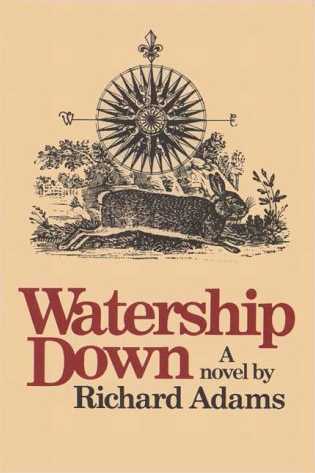 Watership Down, Richard Adams
This was the first book I ever borrowed from the Adult Fiction section of the public library, when I was eight years old. It quickly became a favorite, and though I didn’t reread it over and over like I did the Chronicles of Narnia, it still has a strong place in my childhood memories. Why have I chosen it for this list? Well, it’s about rabbits: a warren comes under threat from English countryside development and human interference.
I loved a little story Rachel Joyce inserts in her novel The Love Song of Miss Queenie Hennessy. Taking over from another nun, a young, air-headed nurse at Queenie’s hospice resumes reading Watership Down to a patient. At the end the patient cries, “Oh, it’s so sad, those poor rabbits” and the nurse replies, “What rabbits?” (You’d think the cover might have given it away!) It’s a good laugh, but also reflects how carefully Adams characterizes – one might say anthropomorphizes – each rabbit; you might forget they’re actually animals.
Do you have any favorite books to read or reread at particular holidays?
Happy spring reading!
 Bookish Beck = Rebecca Foster. American transplant to England. Freelance proofreader and book reviewer.
