Six Books I Abandoned Recently
Are they not criminals, books that have wasted our time and sympathy, are they not the most insidious enemies of society, corrupters, defilers, the writers of false books, faked books, books that fill the air with decay and disease?
Strong words there, from Virginia Woolf in “How Should One Read a Book?” I’m not quite so fervently opposed to these six books I abandoned recently, but I do share Woolf’s feeling of having had my time wasted. Particularly since I started as a freelance book reviewer, I’ve noticed that I am not very patient with my leisure reading: if a book doesn’t totally grab me and keep me turning the pages with rapt interest, I’m more likely to leave it unfinished. Better if I can do that before spending too much time with a book, but sometimes I approach the halfway point before finally giving up.
Below I give brief write-ups of the abandonees. I’d be interested to hear if you’ve read any of them and thought they were worth persisting with.
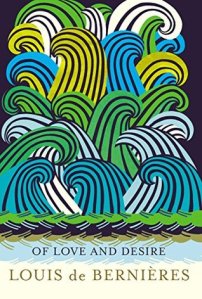 Of Love and Desire by Louis de Bernières
Like so many, I enjoyed Captain Corelli’s Mandolin but haven’t tried much else from de Bernières. These are love poems: many of them Greek-influenced; most of them sentimental and not very interesting. I marked out one passage I liked, but even it then turns into a clichéd relationship poem: “I looked behind and saw the long straight line of my mistakes, / Faithful as hounds, their eyes alert, trailing in my wake. But / They weren’t dogs, they were women, some fair, some dark …” (from “Mistakes”). [Read the first 25 pages.]
My rating: 
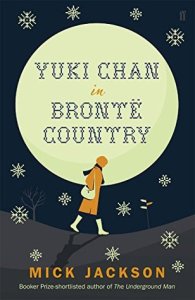 Yuki Chan in Brontë Country by Mick Jackson
The premise for this one – young Japanese woman visits the Brontë sites in Yorkshire as a way of reconnecting with her departed mother – sounded so interesting, but the third-person narration is very flat and detached. It makes Yuki and all the other characters seem like stereotypes: the fashion-obsessed Asian girl, the horde of Japanese tourists. I also noticed that far too many sentences and paragraphs start with “She.” I couldn’t be bothered to see how it would turn out. [Read the first 26%.]
My rating:
 Shylock Is My Name by Howard Jacobson
I’d read Jacobson’s three most recent novels and liked them all well enough. He’s certainly your go-to author if you want a witty discussion of the modern Jewish “persecution complex.” I think the problem with this one was that I wasn’t sure what it wanted to be: a contemporary Jewish novel, or a Hebrew fable, or some mixture thereof. Shylock is pretty much dropped in as is from The Merchant of Venice, so it’s unclear whether he’s Strulovitch’s hallucination or a time traveler or what. The exasperated father characters are well drawn, but their flighty daughters less so. I just got to a point where I didn’t care at all what happened next, which to me was the sign to give up and move on to something else. [Read the first 43%.]
My rating:
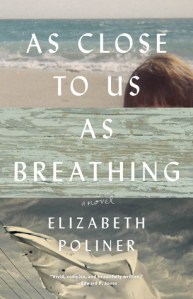 As Close to Us as Breathing by Elizabeth Poliner
The writing is measured and lovely, and I appreciated the picture of late-1940s life for a Jewish family, but the pace was killing me: this is set in one summer, but with constant flashbacks and flash-forwards to other family stories, such that although we learn on page 1 that a character has died, even by the 60% mark I still had not learned how. Also, the narrator is telling everything in retrospect from 1999, but there is too little about her life at that present moment. I would direct readers to Elizabeth Graver’s The End of the Point instead. [Read the first 60%.]
My rating: 
 The Book of Aron by Jim Shepard
I’d read such rave reviews of this novel set in the Warsaw ghetto during the Second World War, and I’ve always meant to try something by Jim Shepard, so this seemed an ideal place to start. I decided to stop because although this is a fairly believable child’s voice, it is only being used to convey information. To me the spark of personality and the pull of storytelling are lacking. I felt like I was reading a history book about the Holocaust, subtly tweaked (i.e. dumbed down and flattened) to sound like it could be a child’s observations. [Read the first 53 pages.]
My rating: 
 Georgia by Dawn Tripp
Who doesn’t love Georgia O’Keeffe’s dreamy paintings of flowers and southwestern scenes? Initially I loved her tough-as-nails voice in this fictionalized autobiography, too, but as the story wore on it felt like she was withholding herself to some degree, only giving the bare facts of (dry, repetitive) everyday life and (wet, repetitive) sex scenes with 24-years-her-elder photographer Alfred Stieglitz. Call me impatient, but I couldn’t be bothered to stick around to see if something actually happened in this novel. I think I’d be interested in glancing through O’Keeffe and Stieglitz’s correspondence, though, just to see how the voices compare to what Tripp has created here. [Read the first 48%.]
My rating:
Books in Brief: Five I Loved Recently
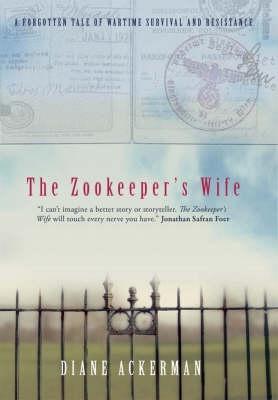 The Zookeeper’s Wife
By Diane Ackerman
A different sort of Holocaust story, set at Warsaw Zoo in the years surrounding World War II. Even after Nazis dismantled their zoo and killed many of the larger animals, Jan and Antonina Żabiński stayed at their home and used the zoo’s premises for storing explosives and ammunition for Jan’s work in the Polish resistance as well as sheltering “Guests,” Jews passing through. This is a gripping narrative of survival against the odds, with the added pleasure of the kind of animal antics you’d find in a Gerald Durrell book. Their son Ryszard kept as pets a badger who bathed sitting back in the tub like a person and an arctic hare who stole cured meats like “a fat, furry thug.” Much of the book is based on Antonina’s journals, but I wish there had been more direct quotes from it and less in the way of reconstruction.
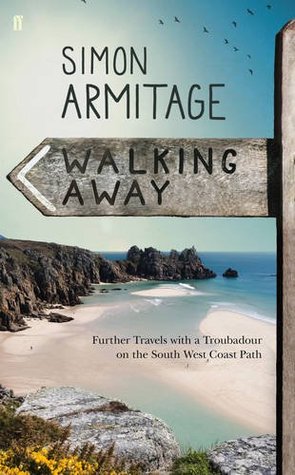 Walking Away: Further Travels with a Troubadour on the South West Coast Path
By Simon Armitage
As a sequel to Walking Home, the account of his 2010 trek along the Pennine Way, Armitage walked much of England’s South West Coast Path in August–September 2013. As before, he relied on the hospitality of acquaintances and strangers to put him up along the way and transport his enormous suitcase for him so he could walk about 10 miles a day to his next poetry reading. Emulating a modern-day troubadour, Armitage passed around a sock at the end of readings for donations (though the list of other stuff people left in the sock, with which he closes the book, is quite amusing). Along the way he meets all kinds of odd folk and muses on the landscape and the distressing amounts of seaside rubbish. His self-deprecating style reminded me of Bill Bryson. A pleasant ramble of a travel book.
 Winter World: The Ingenuity of Animal Survival
By Bernd Heinrich
This great seasonal read carefully pitches science to the level of the layman. Heinrich, an emeritus professor of biology at the University of Vermont, surveys various strategies animals use for surviving the winter: caching food, huddling together, hibernating or entering torpor, and lowering their body temperature – even to the point where 50% of their body water is ice, as with hibernating frogs. He carries out ever so slightly gruesome experiments that make him sound like a lovably nutty professor:
To find out how quickly a fully feathered kinglet loses body heat, I experimentally heated a dead kinglet and then measured its cooling rate. … I do not know how many seeds a chipmunk usually packs into each of its two pouches—I easily inserted sixty black sunflower seeds through the mouth into just one pouch of a roadkill.
His passion for knowledge carries through in his writing. I came away with a fresh sense of wonder for how species are adapted to their environments: “Much that animals have evolved to do would have seemed impossible to us, if experience has not taught us otherwise.”
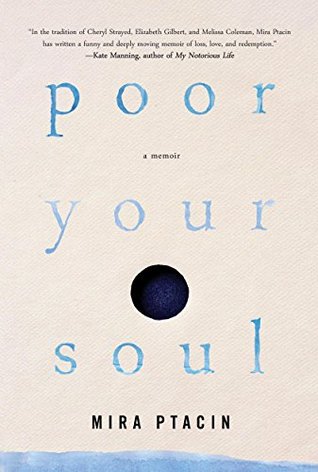 Poor Your Soul
By Mira Ptacin
Ptacin’s memoir is based around two losses: that of her brother, in a collision with a drunk driver; and that of a pregnancy in 2008. She skips back and forth in time to examine the numb aftermath of trauma as well as the fresh pain of actually going through it. In places I felt Ptacin sacrificed the literary quality hindsight might have allowed, prioritizing instead the somewhat clichéd thoughts and responses she had in the moment. Still, I loved so much about this book, especially her memories of growing up in the cereal capital of America and the account of her mother coming to America from Poland. Her mother is a terrific character, and it’s her half-warning, half-commiserative phrase that gives the novel its title (not a typo, as you might be forgiven for thinking): a kind of Slavic “I pity the fool.”
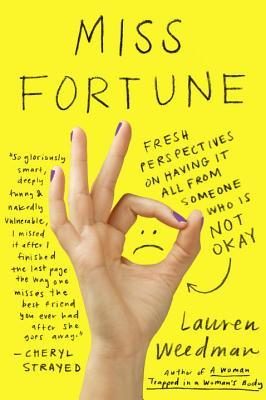 Miss Fortune: Fresh Perspectives on Having It All from Someone Who Is Not Okay
By Lauren Weedman
Weedman is a playwright and minor celebrity who’s worked on The Daily Show, Hung and Looking. This is a truly funny set of essays about marriage (from beginning to end), motherhood, working life and everything in between. Self-deprecatingly, she focuses on ridiculous situations she’s gotten herself into, like the world’s unsexiest threesome and an accidental gang symbol tattoo. Amid the laughs are some serious reflections on being adopted and figuring out how to be a responsible stepmother. With a warning that parts can be pretty raunchy, I’d recommend this to fans of David Sedaris and Bossypants.
My rating for all: 
Books in Brief: Five I Loved Recently
Why We Write about Ourselves: Twenty Memoirists on Why They Expose Themselves (and Others) in the Name of Literature
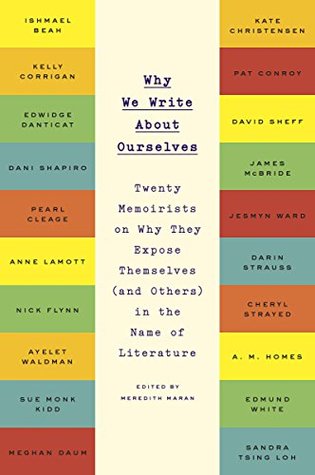 (Edited by Meredith Maran)
A great collection of first-person pieces from memoir authors, charting their individual journeys into autobiographical writing and giving their top tips. Opinions vary as to whether you have to get the approval of the people who appear in your work – some think that’s essential; others simply change the names and get on with it. Sometimes this has led to fallout within families. One thing everyone agrees on, though, is that a memoir has to be as carefully crafted as any novel, with a clear narrative arc and distinctive dialogue and scenes. My favorite pieces were from Kate Christensen, Edwidge Danticat and Darin Strauss.
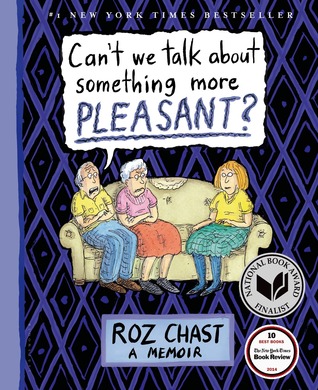
Can’t We Talk about Something More Pleasant?
 (By Roz Chast)
Memoir + graphic novel = graphic memoir. This one’s about her parents’ aging, senility and death yet still manages to be laugh-out-loud funny. It also includes photos of her parents’ apartment filled with ancient stuff they’d hoarded and a touching series of sketches she made of her mother while she was dying. This and Fun Home are the two best graphic memoirs I’ve read. A favorite line, uttered when her mother bounced back temporarily from hospice care: “Where, in the five Stages of Death, is EAT TUNA SANDWICH?!?!?”
Best Food Writing 2015
(Edited by Holly Hughes)
 “Food is intimate. We take it into our bodies. When we gather at the table with friends and family, we’re gathering to affirm something.” The title doesn’t lie – these essays are terrific. There wasn’t a single one I didn’t find interesting, whether the topic was lab meat; seeking out the perfect burger, Bolognese sauce or gumbo; particular chefs or restaurants; food fads; starting a simple meatball supper club; or feeding picky kids. A couple favorites were “Finding Home at Taco Bell” by John DeVore and “The One Ingredient that Has Sustained Me during Bouts of Leukemia” by Jim Shahin. This series has been running since 2000, but this is the first time I’ve picked up one of the books. I’ll be looking out for it again next year.
 The Longest Night
(By Andria Williams)
Utterly absorbing historical fiction. What with the remote setting and the threat of Cold War or nuclear fallout, this is reminiscent of The Last Pilot and The Wives of Los Alamos, but more engaging than either of those. You may also see hints of Richard Yates or even Tom Perrotta’s Little Children in the story of a marriage strained to the breaking point. Each character is fully explored and the early 1960s atmosphere is completely convincing. A great debut and an author I’d like to hear more from.
Your Heart Is a Muscle the Size of a Fist
(By Sunil Yapa)
 A hard-hitting novel with an unforgettably resonant title, this is set at the 1999 Seattle WTO protest. Yapa explores the motivations and backstories of activists, police officers, and delegates as the day deteriorates into violence. The novel flows pretty much effortlessly. Yapa’s writing style is closest to Smith Henderson’s (Fourth of July Creek): short, verbless sentences alternate with long, lyrical ones; there’s plenty of repetition and rhetorical questions, but it remains accessible rather than overblown. This fine debut novel is about cultivating the natural compassion in your heart even while under the threat of the fist.
My rating for all: 
My Favorite Nonfiction Reads of 2015
Without further ado, I present to you my 15 favorite non-fiction books read in 2015. I’m a memoir junkie so many of these fit under that broad heading, but I’ve dipped into other areas too. I give two favorites for each category, then count down my top 7 memoirs read this year.
Note: Only four of these were actually published in 2015; for the rest I’ve given the publication year. Many of them I’ve already previewed through the year, so – like I did yesterday for fiction – I’m limiting myself to two sentences per title: the first is a potted summary; the second tells you why you should read this book. (Links given to full reviews.)
Foodie Lit
 A Homemade Life: Stories and Recipes from My Kitchen Table by Molly Wizenberg (2009): Wizenberg reflects on the death of her father Burg from cancer, time spent living in Paris, building a new life in Seattle, starting her food blog, and meeting her husband through it. Each brief autobiographical essay is perfectly formed and followed by a relevant recipe, capturing precisely how food is tied up with memories.
 Comfort Me with Apples: More Adventures at the Table by Ruth Reichl (2001): Reichl traces the rise of American foodie culture in the 1970s–80s (Alice Waters and Wolfgang Puck) through her time as a food critic for the Los Angeles Times, also weaving in personal history – from a Berkeley co-op with her first husband to a home in the California hills with her second after affairs and a sticky divorce. Throughout she describes meals in mouth-watering detail, like this Thai dish: “The hot-pink soup was dotted with lacy green leaves of cilantro, like little bursts of breeze behind the heat. … I took another spoonful of soup and tasted citrus, as if lemons had once gone gliding through and left their ghosts behind.”
Nature Books
 Meadowland: The Private Life of an English Field by John Lewis-Stempel (2014): Lewis-Stempel is a proper third-generation Herefordshire farmer, but also a naturalist with a poet’s eye. Magical moments and lovely prose, as in “The dew, trapped in the webs of countless money spiders, has skeined the entire field in tiny silken pocket squares, gnomes’ handkerchiefs dropped in the sward.”
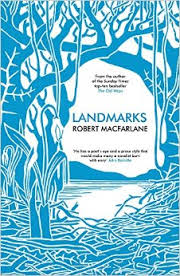 Landmarks by Robert Macfarlane: This new classic of nature writing zeroes in on the language we use to talk about our environment, both individual words – which Macfarlane celebrates in nine mini-glossaries alternating with the prose chapters – and the narratives we build around places, via discussions of the work of nature writers he admires. Whether poetic (“heavengravel,” Gerard Manley Hopkins’s term for hailstones), local and folksy (“wonty-tump,” a Herefordshire word for a molehill), or onomatopoeic (on Exmoor, “zwer” is the sound of partridges taking off), his vocabulary words are a treasure trove.
Theology Books
 Amazing Grace: A Vocabulary of Faith by Kathleen Norris (1998): In few-page essays, Norris gives theological words and phrases a rich, jargon-free backstory through anecdote, scripture and lived philosophy. This makes the shortlist of books I would hand to skeptics to show them there might be something to this Christianity nonsense after all.
 My Bright Abyss: Meditation of a Modern Believer by Christian Wiman (2013): Seven years into a cancer journey, Wiman, a poet, gives an intimate picture of faith and doubt as he has lived with them in the shadow of death. Nearly every page has a passage that cuts right to the quick of what it means to be human and in interaction with other people and the divine.
General Nonfiction
 Penelope Fitzgerald: A Life by Hermione Lee (2013): Although Penelope Fitzgerald always guarded literary ambitions, she was not able to pursue her writing wholeheartedly until she had reared three children and nursed her hapless husband through his last illness. This is a thorough and sympathetic appreciation of an underrated author, and another marvellously detailed biography from Lee.
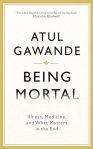 Being Mortal: Medicine and What Matters in the End by Atul Gawande (2014): A surgeon’s essential guide to decision-making about end-of-life care, but also a more philosophical treatment of the question of what makes life worth living: When should we extend life, and when should we concentrate more on the quality of our remaining days than their quantity? The title condition applies to all, so this is a book everyone should read.
Memoirs
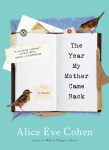 The Year My Mother Came Back by Alice Eve Cohen: Wry and heartfelt, this is a wonderful memoir about motherhood in all its variations and complexities; the magic realism (Cohen’s dead mother keeps showing up) is an added delight. I recommend this no matter what sort of relationship, past or present, you have with your mother, especially if you’re also a fan of Anne Lamott and Abigail Thomas.
- The Art of Memoir
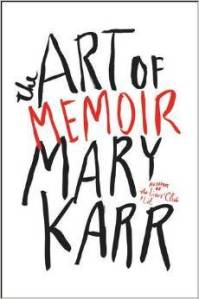 by Mary Karr: There is a wealth of practical advice here, on topics such as choosing the right carnal details (not sexual – or not only sexual – but physicality generally), correcting facts and misconceptions, figuring out a structure, and settling on your voice. Karr has been teaching (and writing) memoirs at Syracuse University for years now, so she’s thought deeply about what makes them work, and sets her theories out clearly for readers at any level of familiarity.
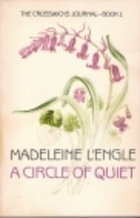 A Circle of Quiet by Madeleine L’Engle (1971): In this account of a summer spent at her family’s Connecticut farmhouse, L’Engle muses on theology, purpose, children’s education, the writing life, the difference between creating stories for children and adults, neighbors and fitting into a community, and much besides. If, like me, you only knew L’Engle through her Wrinkle in Time children’s series, this journal should come as a revelation.
-
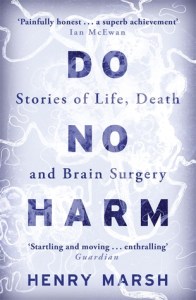 Do No Harm: Stories of Life, Death and Brain Surgery by Henry Marsh (2014): “Terrible job, neurosurgery. Don’t do it.” – luckily for us, Henry Marsh reports back from the frontlines of brain surgery so we don’t have to. In my favorite passages, Marsh reflects on the mind-blowing fact that the few pounds of tissue stored in our heads could be the site of our consciousness, our creativity, our personhood – everything we traditionally count as the soul.
 I Hate to Leave This Beautiful Place by Howard Norman (2013): Norman has quickly become one of my favorite writers. You wouldn’t think these disparate autobiographical essays would fit together as a whole, given that they range in subject from Inuit folktales and birdwatching to a murder–suicide committed in Norman’s Washington, D.C. home and a girlfriend’s death in a plane crash, but somehow they do; after all, “A whole world of impudent detours, unbridled perplexities, degrading sorrow, and exacting joys can befall a person in a single season, not to mention a lifetime.”
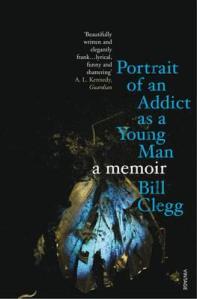 Portrait of an Addict as a Young Man by Bill Clegg (2010): Through this book I followed literary agent Bill Clegg on dozens of taxi rides between generic hotel rooms and bar toilets and New York City offices and apartments; together we smoked innumerable crack pipes and guzzled dozens of bottles of vodka while letting partners and family members down and spiraling further down into paranoia and squalor. He achieves a perfect balance between his feelings at the time – being out of control and utterly enslaved to his next hit – and the hindsight that allows him to see what a pathetic figure he was becoming.
And my overall favorite nonfiction book of the year:
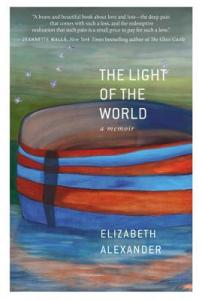 1. The Light of the World by Elizabeth Alexander: In short vignettes, beginning afresh with every chapter, Alexander conjures up the life she lived with – and after the sudden death of – her husband Ficre Ghebreyesus, an Eritrean chef and painter. This book is the most wonderful love letter you could imagine, and no less beautiful for its bittersweet nature.
What were some of your best nonfiction reads of the year?
The Best Fiction of 2015: My Top 15
2015 was a great year for fiction, largely dominated by doorstoppers (like Death & Mr. Pickwick and City on Fire, in addition to the Franzen and Yanagihara listed below) and Harper Lee. I’ve decided to pass on Go Set a Watchman, but I’ve read plenty of the year’s big-name fiction, as well as some more obscure titles I’d like to bring to your attention.
As difficult as it is to pit books against each other and come up with a numbered list, I’ve given it a go and come up with my top 15 fiction works of the year. To keep it simple for myself and straightforward for potential readers, I’m limiting myself to two sentences per title: the first is a potted summary; the second tells you why you should read it. I also link to any full reviews.
Let the countdown begin!
- The Shore
 by Sara Taylor: Gritty and virtuosic, this debut novel-in-13-stories imagines 250 years of history on a set of islands. Every region needs a literary chronicler, and I reckon Taylor – channeling David Mitchell with her cross-centuries approach – is it for the Eastern Shore of Maryland and Virginia’s islands.
 Gold Fame Citrus by Claire Vaye Watkins: Gold, fame, citrus: reasons people once came to California; now, only a desperate remnant remains in the waterless wasteland. As a smart, believable dystopian with a family at its heart, this trumps any of last year’s efforts (like Station Eleven or California).
 Preparation for the Next Life by Atticus Lish: Like West Side Story, this debut novel is an updated Romeo and Juliet narrative – a tragedy-bound love story with a grimy contemporary setting and a sobering message about racism and the failure of the American dream. The matter-of-fact style somehow manages to elevate the everyday and urban into an art form. (Reviewed for Third Way magazine in August.)
- Circling the Sun
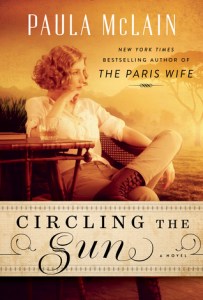 by Paula McLain: Before she ever thought of flying solo across the Atlantic, aviatrix Beryl Markham was just Beryl Clutterbuck: raised in Kenya, one of Africa’s first female horse trainers, its first professional female pilot, and the other side of the love triangle featuring Karen Blixen (Isak Dinesen) and Denys Finch Hatton. McLain describes her African settings beautifully, and focuses as much on the small emotional moments that make a life as she does on its external thrills.
 Kitchens of the Great Midwest by J. Ryan Stradal: One of my favorite debuts of the year: a culinary-themed collection of short stories loosely linked through the character of Eva Thorvald, a young chef with an unfortunate past and a rare palate. Read it for a glimpse of how ordinary, flawed Americans live – no fairytale endings here.
 Hausfrau by Jill Alexander Essbaum: This arresting debut reads like a modern retelling of Madame Bovary, with its main character a desperate American housewife in Zurich. Watch Anna’s trajectory with horror, but you cannot deny there is a little of her in you.
 The Versions of Us by Laura Barnett: In this impressively structured, elegantly written debut, Barnett chronicles the romantic lives of two Cambridge graduates through three-quarters of a century, giving three options for how their connection might play out. There is no one perfect person or story: unsentimental this may be, but it feels true to how life works. (Reviewed for Third Way magazine in July.)
 Fates and Furies by Lauren Groff: An incisive study of a marriage, beautifully written and rich with allusions to Shakespeare and Greek mythology. Groff makes it onto a short list of women I expect to produce the Great American Novel (along with Curtis Sittenfeld, Jennifer Egan, and Hanya Yanagihara).
 Purity by Jonathan Franzen: East Germany, Bolivia and Oakland, California: Franzen doesn’t quite pull all his settings and storylines together, but this is darn close to a 5-star Dickensian read. It’s strong on the level of character and theme, with secrecy, isolation and compassion as recurring topics.
 You Too Can Have a Body Like Mine by Alexandra Kleeman: Kleeman’s first novel is a full-on postmodern satire bursting with biting commentary on consumerism and conformity. Think of her as an heir to Dave Eggers and Douglas Coupland, with a hefty dollop of Margaret Atwood thrown in.
 The Animals by Christian Kiefer: Kiefer’s second novel contrasts wildness and civilization through the story of a man who runs an animal refuge to escape from his criminal past. A tough opening sequence establishes themes that will be essential to the novel: the fine line between instincts and decisions, the moral dilemmas involved in environmentalism, and the seeming inescapability of violence.
 The Tsar of Love and Techno by Anthony Marra: A collection of tightly linked short stories giving an intimate look at Russia and Chechnya in wartime and afterwards – revealing how politics, family, and art intertwine. Just as he did in his first novel, Marra renders unspeakable tragedies bearable through his warm and witty writing.
 Girl at War by Sara Nović: This pitch-perfect debut novel is an inside look at the Yugoslavian Civil War and its aftermath, from the perspective of a young girl caught up in the fighting. The way Nović recreates a child’s perspective on the horrors of war is masterful: Ana’s viewpoint is realistic and matter-of-fact, without the melodrama an omniscient narrator might inject.
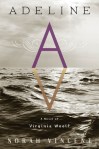 Adeline by Norah Vincent: Set in 1925–1941 and structured like a five-act play, the novel revolves around Virginia Woolf’s philosophical conversations with Leonard Woolf, Lytton Strachey and his lover Carrington, T.S. and Valerie Eliot, W.B. Yeats, and her doctor, Octavia Wilberforce. Vincent has produced a remarkable picture of mental illness from the inside.
- A Little Life
 by Hanya Yanagihara: Jude St. Francis: Dickensian orphan, patron saint of lost causes, Christlike Man of Sorrows, and one of the most memorable characters in recent fiction. This novel is an attempt to tackle the monolithic question of what makes life worth living; among the potential answers: love (though it doesn’t conquer all), friendship, creativity, and the family you create for yourself.
Best Discoveries of the Year: Mary Lawson (Road Ends), Daniel Kehlmann (F: A Novel), Jonathan Evison (This Is Your Life, Harriet Chance!) and Jonathan Coe (Number 11).
Debut Novelists Whose Next Work I’m Most Looking Forward to: Jessamyn Hope (Safekeeping – reviewed here in June) and Carmiel Banasky (The Suicide of Claire Bishop – reviewed for Foreword’s Fall 2015 issue).
 The Year’s Biggest Disappointments: Etta and Otto and Russell and James by Emma Hooper; Where My Heart Used to Beat by Sebastian Faulks and Avenue of Mysteries by John Irving (both rehash the authors’ familiar themes; I couldn’t make it past 15% in the latter).
Novels I Most Wish I’d Gotten to in 2015: Nell Zink’s Mislaid, Sara Baume’s Spill Simmer Falter Wither, and the final two volumes of Jane Smiley’s “Last Hundred Years” trilogy.
What are the best novels you read this year? Any new favorite books or authors? Your comments are always welcome.
I’ll be back tomorrow with my top 15 nonfiction books I read this year (most of them not published in 2015, however – I seem to have been a nonfiction slacker!)
Thanksgiving Reading
This Thursday marks one of the most American of holidays: Thanksgiving. (My apologies to Canadian readers, who already had their celebration in October, and to British readers, who may find the whole thing a bit mysterious.) If you’ve never experienced a Thanksgiving meal for yourself, you might not know what all the fuss is about. After all, as Bill Bryson puts it in Notes from a Big Country, it’s a holiday where you just try to “get your stomach into the approximate shape of a beach ball.” But something about dysfunctional families crossing the country for a feast and reflecting on the country’s origins – however spurious the Pilgrims-’n-Injuns history behind the tradition might be – makes for intriguing fictional possibilities.
It’s no wonder Thanksgiving turns up all the time in American novels. Jonathan Franzen’s The Corrections is a classic example, but look further and you’ll find references everywhere. For instance, I’m just finishing up Good on Paper by Rachel Cantor (coming in February), set in New York City as Y2K approaches, and what do you know? There’s a Thanksgiving meal. And even a simple list of dishes gives a perfect miniature view of differences in class and perspective: Shira’s neighbor wants “traditional fare—string bean casserole with cornflakes” and yam casserole topped with marshmallows, while her gay, Pakistani co-parent, Ahmad, prefers “the exotic: millet-shitake stuffing with chestnut-and-caper sauce.”
If you’re looking for something seasonal to read this week, here are snippets of books I’ve reviewed, two fiction and two nonfiction. For more ideas, check out this Thanksgiving books list on Goodreads from the Washington Post’s Ron Charles. Anne Tyler, Richard Ford – some great stuff on there!
Fiction:
 Want Not by Jonathan Miles: “Waste not, want not” goes the aphorism, and Miles’s second novel explores both themes to their fullest extent: the concept of waste – from profligate living to garbage and excrement – and ordinary people’s conflicting desires. In three interlocking story lines, Miles looks for what is really of human value at a time when everything seems disposable and possessions both material and digital can exert a dispiriting tyranny. The novel opens on Thanksgiving 2007, with New York City buried under an early snowstorm. The nation’s annual excuse for gluttony makes a perfect metaphorical setting for Miles’s exposé of food waste and consumerist excess. This is a book I wish I had written.


Housebreaking by Dan Pope: This tightly crafted novel of adultery in dysfunctional suburbia is somewhat reminiscent of Tom Perrotta’s Little Children or the movie Far from Heaven, but with less memorable characters and story line overall. The strategy of revisiting the same events of one late summer and fall from different characters’ perspectives makes it feel slightly repetitive and claustrophobic. My favorite touches were the comical dialogue between a handful of old folks and a description of the cookie-cutter buildings in the Connecticut suburbs: “all the little houses, lined up like cereal boxes on a shelf.” Like Want Not, it also revolves around Thanksgiving 2007.

Bet you never thought there would be a third novel set on Thanksgiving 2007! But it appears there is: Strangers at the Feast by Jennifer Vanderbes. You may also like to sample “An Old-Fashioned Thanksgiving,” an 1881 short story by Louisa May Alcott.
Nonfiction:
You won’t have to try too hard to find Thanksgiving scenes in nonfiction either, especially when it comes to memoirs. I read one of Ruth Reichl’s terrific ‘foodoirs’, Comfort Me with Apples, earlier this year and there’s a great moment when she and Michael Singer, who would become her second husband, go to a restaurant for their first Thanksgiving together. It’s a disaster of a meal; the duck isn’t served until midnight. Sure is memorable, though.
 The First Thanksgiving by Nathaniel Philbrick: In this selection from his 2007 book Mayflower: A Story of Courage, Community, and War, reprinted as a mini e-book in the “Penguin Tracks” series, Philbrick tells the true story behind the first Thanksgiving. As with most beloved legends, the circumstances are much more complicated and much less rosy than they appear in our collective memory. Philbrick writes in an informative yet conversational style, and paints an appealing picture of the Pilgrims as reasonable people with humble aims. (See my full review at Bookkaholic.)
 Eating Appalachia: Rediscovering Regional American Flavors by Darrin Nordahl: Nordahl travels through Ohio, West Virginia, Kentucky and North Carolina in search of truly indigenous local ingredients. There are a few recipes and photographs in each chapter, although this is more of a narrative than a cookbook. I loved how he brought it all together with his imagined Appalachian Thanksgiving feast (what we consider traditional today includes very little that would actually have been eaten in the Pilgrims’ place and time):
appetizers of pickled ramps and brook trout crostini, bowls of butternut [the nut, not the squash] cream bisque, plates piled with the showpiece dish of spicebush-peppered roast elk tenderloin and hickory nut stuffing—all washed down with steaming sassafras tea and chilled sumac-ade, capped with a choice of persimmon pudding with black walnut ice cream or pawpaw panna cotta.
Do you like to tailor your reading to the holidays? What will you be reading this Thanksgiving week?
I Do Love a Good Book List
In the same way that I love following literary prize races (see my post on that topic from a couple weeks ago), I adore a good book list. This includes everything from an inspirational lifetime reading menu such as 1001 Books You Must Read Before You Die to those gimmicky “5 Novels About…” or “10 Books for People Who Like…” lists you get on websites like BuzzFeed and the Huffington Post.
Every time a new ‘Best Books Ever’ type of checklist comes out, I gleefully scan through to figure out how many I’ve already read. Usually the disappointing results smack me back and remind me that for all my voracious reading, I still haven’t read many of the classics everyone’s supposed to have read by my age.
Here for your delectation (if you like this sort of thing) is a sampling of the book lists I’ve bookmarked over the years, with my running total noted in brackets after each:
THE BEST OF THE BEST
The 100 Greatest Novels of All Time, as chosen by the Guardian in 2003 [33]
1000 novels everyone must read, as chosen by the Guardian in 2009 (interestingly, they divide it up by genre: Love Stories, Crime Fiction, Comedy, Family & Self, State of the Nation, Science Fiction & Fantasy, and War & Travel) [155 + 2 in progress]
The 100 greatest non-fiction books, as chosen by the Guardian in 2011 [7]
Vintage 21, a set of 21 modern classics chosen in 2011 [14]
100 novels everyone should read, as chosen by the Telegraph in April [29]
The 100 best novels written in English, as chosen by Robert McCrum in the Guardian last week [34]
PARTICULAR TIMES OF LIFE
65 Books You Need To Read in Your 20s, from BuzzFeed (alas, it’s too late for many of us) [13, 12 of which I think I read in my 20s]
25 Books to Help You Survive Your Mid-20s, from Bustle (ditto) [9, all read in my 20s, I think]
Conversely, here’s 15 Books You Should Definitely Not Read in Your 20s from Flavorwire (well, that’s alright, then) [I disobeyed them on 4 counts]
21 Books Every Woman Should Read By 35, from Bustle (I’ve got 3.13 years to work on it) [5; I left The Flamethrowers unfinished]
11 Novels That Expectant Parents Should Read Instead of Parenting Books, from Electric Literature (my mother may be reading this, so I must hastily add that THIS SITUATION DOES NOT APPLY TO ME!) [6]
SPECIFIC AUTHORS
The Best Hemingway Novels, on Publishers Weekly [2 out of 6, but A Moveable Feast is my favorite from him]
The 13 Best John Steinbeck Books, on Publishers Weekly [3]
The 10 Best Mark Twain Books, on Publishers Weekly [just 1!]
23 Contemporary Writers You Should Have Read by Now, on Reader’s Digest [I’ve read 3, Elizabeth Spencer, Percival Everett and Pamela Erens]
Beyond Murakami: 7 Japanese Authors to Read, on Book Riot [none so far]
SPECIFIC GENRES
20 Classic Novels You’ve Never Heard of, from QwikLit [I’ve heard of plenty of these, but only read 1]
12 Fiction Books That Will Shape Your Theology, from RELEVANT Magazine [3]
The 10 Best Books Shorter Than 150 Pages, on Publishers Weekly [2]
10 Best Southern Gothic Books, on Publishers Weekly [none so far]
10 Novels with Multiple Narratives, on Publishers Weekly [2]
The 10 Best Short Story Collections You’ve Never Read, on Publishers Weekly [they got that right; none so far]
The top 10 novels about childbirth, on the Guardian (again, NOT APPLICABLE TO ME!) [7]
I also highly recommend Nancy Pearl’s Book Lust series of four books, each one divided into themes.
ONE LAST LIST
Not a book list, but it may be useful for all you bibliophiles:
The 25 Best Websites for Literature Lovers, by Flavorwire
Do you love book lists as much as I do? Are you addicted to counting how many you’ve read from a checklist?
How do you fare on the lists above?
Graphic Novels for Newbies
Following on from last week’s article on quick reads…
I sometimes wonder if counting graphic novels on my year lists is a bit like cheating, since some are little more than comic books. However, the majority of graphic novels I read have a definite storyline and more words on a page than your average comic. When I worked in London I took advantage of the extensive public library holdings there and tried out a lot of graphic novelists’ work that was new to me. Some of my favorites are Alison Bechdel, Posy Simmonds, Audrey Niffenegger and Joe Sacco. As it happens, I’ve never officially reviewed graphic novels (nor do I own any), but here’s a handful I’ve enjoyed, along with my reading notes:
 Fun Home: A Family Tragicomic by Alison Bechdel
This memoir in graphic novel form is super. Bechdel puts the ‘fun’ in both dysfunctional family and funeral home – the family business her father inherited in small-town Pennsylvania. All through her 1970s upbringing, as Alison grew up coveting men’s shirts and feeling strange quivers of suspicion when she encountered the word “lesbian” in the dictionary, her father was leading a double life, sleeping with the younger men who babysat his kids or helped out with his twin passions of gardening and home renovation.
In an ironic sequence of events, the coming-out letter Alison sent home from college was followed just weeks later by her mother’s revelation of her father’s homosexual indiscretions and their upcoming divorce, and then no more than a few months later by her father’s sudden death. Bruce Bechdel was run down by a Sunbeam Bread truck as he was crossing the road with an armload of cleared brush from a property he was renovating. Was it suicide, or just a horribly arbitrary accident? (The Sunbeam Bread detail sure makes one cringe.) In any case, it was a “mort imbécile,” just as Camus characterized any death by automobile.
Bechdel traces the hints of queerness in her family, the moments when she and her father saw into each other and recognized something familiar. She also muses on the family as a group of frustrated and isolated artists each striving, unfulfilled, towards perfection. This is a thoughtful, powerful memoir, and no less so for being told through a comic strip.
(Bechdel’s Are You My Mother? was also on my BookTrib list of mother–daughter memoirs to read for Mother’s Day.)
 Blankets by Craig Thompson
This sweet, autobiographical coming-of-age story in graphic novel form is not quite as likable and quick-witted as Fun Home, but it has similar themes such as sexual awakening and the difficulty of understanding one’s parents. Blankets are a linking metaphor: the quilt Craig’s first love, Raina, makes for him; huddling in the same bed with his little brother Phil for warmth during freezing Wisconsin winters; and playing ‘storm at sea’ with the covers.
There’s also an interesting loss-of-faith element to the narrative. Craig is brought up in your average Midwestern fundamentalist Evangelical church and attends youth group, camp, etc. (where he meets Raina); the pastor even wants him to consider going into the ministry, but he doesn’t fit in here – even in the Christian subculture he’s forced into a fringe group of outsiders. Writing and drawing are acts of self-creation and self-preservation. He wants to find a way to use his drawing for good but no one seems to see a value in it. Thus everything, or nothing in particular, leads him to reject his faith when he gets to college.
How satisfying it is to leave a mark on a blank surface. To make a map of my movement – no matter how temporary.
The drawings are lush and bold (though even more so in Thompson’s Habibi). [SPOILERS ahead!] I appreciated how Thompson denies the satisfaction of a happy ending to Craig and Raina’s love story; it’s more realistic this way, recognizing that high school sweethearts rarely stay together. As Raina says, “everything ENDS…everything DEGENERATES, CRUMBLES – so why bother getting started in the first place?” And yet the beauty and power in memory of young love remains, thus Thompson’s rhapsodizing here.
 Mrs Weber’s Omnibus by Posy Simmonds
[a collection of her comics for the Guardian]
As with the Garfield cartoons, you get to see the development of Simmonds’s style and the characters, as well as the march of fashion over the period 1977–1993. Very clever skewering of middle class liberal values and political correctness gone mad: the characters (especially polytechnic sociology lecturer George, in the Department of Liberal Studies, and children’s book author Wendy Weber) espouse these values, but their actions don’t always live up to the tolerance they preach. Here are some of the themes:
- 1980s politics: reactionary against Thatcherism; youth unemployment and purposelessness; income inequality; economic and social injustice
- Hypocrisy, avoiding unpleasant truths, compromising youthful ideals
- Middle vs. upper-middle / upper class: second homes, private education
- Place of women: the irony that stay-at-home motherhood is idealized and the difficulties of working motherhood denied (women – liberated to do what?)
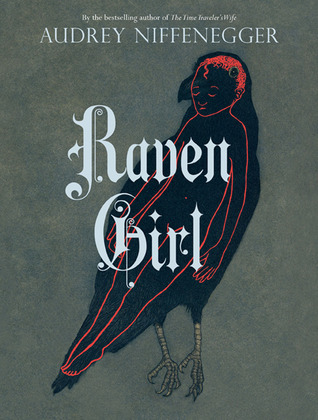 Raven Girl by Audrey Niffenegger
A lovely and simple fairy tale, with classical plot elements like transformation and true love transcending all boundaries. In a quaint English setting, a country postman is tasked with delivering a letter to an address he’s never seen before:
Dripping Rock
Raven’s Nest
2 Flat Drab Manor
East Underwhelm, Otherworld
EE1 LH9 [postcode = East of East, Lower Heights]
Here the postman meets a young raven fallen out of her nest, takes her home to mend her and they fall in love. Even when her wing heals and she can fly, she chooses to stay with him. Their daughter is a mixed creature; she can only croak, but she has no wings and so is raised as a human child. At university she meets a plastic surgeon who can create human-animal chimeras; she begs him to make her wings – a mixture of science and magic. It involves bloody surgery and painful recovery, but in the end she has the wings she’s always felt were hers. Her identity is described in terms very much like Jan Morris’s in Conundrum, when describing her sex change and her knowledge that she was really a girl: “My mother is a raven and my father is a postman, but I feel that truly I should have been a raven.”
Like Niffenegger’s other work, there’s an ever so slightly uncomfortable blend of sinister/grotesque elements with charming, innocuous magic.
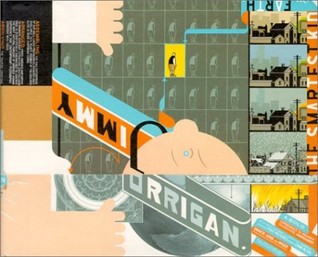 Jimmy Corrigan, the Smartest Kid on Earth by Chris Ware
This is probably the most peculiar graphic novel I’ve ever read. It’s the story of Jimmy Corrigan, a sad-sack workaholic who, at 36, has no friends apart from his mother, who constantly telephones him. One day he gets a letter from the father he’s never met, asking him to come meet him. And so Jimmy gets on a plane from Chicago out to suburban Michigan. Corrigan is one of those unfortunate-looking fellows who has a potato for a head and a wispy comb-over, and could be anywhere between 30 and 60; he looked little different as a child in the flashback scenes – somewhat like Charlie Brown, also in his depression, diffidence and inability to speak to women.
I much preferred the historical interludes looking at his grandfather (another Jimmy) and his years growing up in Chicago with the World’s Fair under construction. I also liked the more random additions such as patterns for cutting and folding your own model village or business cards with ‘scenic views’ of today’s Waukosha, MI on them.
Parental (verbal) abuse and neglect is a recurring theme, as are bullying from peers, car accidents, and Superman. There’s also an uncomfortable amount of imagined violence – either homicide or suicide.
Also recommended:
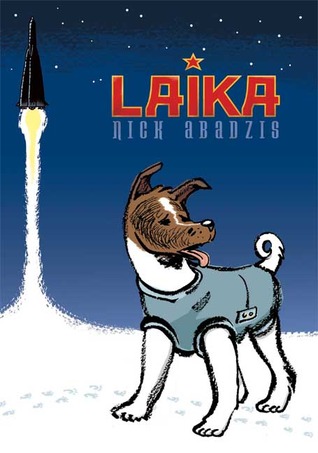 Laika by Nick Abadzis
Palestine by Joe Sacco
Couch Fiction by Philippa Perry
Days of the Bagnold Summer by Joff Winterhart
Do you read graphic novels? What are some of your favorites?
Small Books Are Good, Too
Last week I wrote in praise of doorstoppers – books over 500 pages. But I also love really short books: there’s just as much writing skill involved in making a narrative concise, and it can be supremely satisfying to pick up a book and polish it off within a couple hours, especially if you’re in a situation of captured attention as on a plane. Being honest and slightly selfish for a moment, short books are also a great way to build up a flagging year list.
Below I highlight poetry collections, memoirs, short stories and novellas that should be on your agenda if you’re looking for a quick read (number of pages in brackets after each title):
Poetry
I try to always have a book of contemporary poetry on the go, usually by a British poet since I pluck these at random from my local public library shelves. Poetry collections aren’t always ‘quick’ reads, nor should they be, because you often have to read a poem more than once to understand it or truly appreciate its techniques. Still, with most poetry books numbering somewhere between 45 and 90 pages, even if you parcel them out over days or weeks they’ll take much less time than a novel. Pick up something by Mark Doty, Kathleen Jamie, David Harsent or Christopher Reid and you’ll have plenty of beautiful verse to ponder.
Recently reviewed and recommended:
- Learning to Make an Oud in Nazareth by Ruth Padel [80]
- All One Breath by John Burnside [96]
- Praise in Which I Live and Move and Have My Being by Paul Durcan [176]
Short Memoirs
Depending on how thorough they are, autobiographies can often hover around 300 or 400 pages. Looking through my shelves, though, I’ve spotted a few in the 140–160 page range: My Movie Business by John Irving [158], The Diving-Bell and the Butterfly by Jean-Dominique Bauby [139], and Winter by Rick Bass [162]. Another short one well worth reading is the unusual The Sound of a Wild Snail Eating by Elisabeth Tova Bailey [170], a story about debilitating illness and taking comfort from nature.
Abigail Thomas, one of my favorite memoirists, writes in an episodic style that makes her 200-page books fly by as if they were half that length. Also, Anne Lamott has written two very short faith memoirs that would serve as a good introduction to her style and content for those who haven’t read Traveling Mercies et al.: Help Thanks Wow [102] and Stitches [112].
Recently reviewed and recommended:
- The Two Kinds of Decay by Sarah Manguso [192]
- The Light of the World by Elizabeth Alexander [208]
- What Comes Next and How to Like It by Abigail Thomas [240] – also included on my BookTrib list of mother–daughter memoirs to read for Mother’s Day
Short Stories
I used to shy away from short stories because I didn’t think they were worth the emotional investment, but recently I’ve decided I really like the rhythm of picking up a set of characters, a storyline and a voice and then, after 20 or so pages, following an epiphany or an aporia (or utter confusion), trading them in for a whole new scenario. Short stories are also the perfect length for reading during a quick meal or car ride. Two short story collections made it onto my “Best of 2014” list: White Man’s Problems by Kevin Morris and The Heaven of Animals by David James Poissant.
Recently reviewed and recommended (no page numbers listed here because each story can stand alone):
- Wallflowers by Eliza Robertson
- Funny Once by Antonya Nelson
- Thunderstruck and Other Stories by Elizabeth McCracken
Novellas
With some credits for free Penguin books I got hold of Borges and the Eternal Orang-Utans by Luis Fernando Verissimo (translated from the Portuguese by Margaret Jull Costa) [135], a book I’d been hankering to read ever since I came across that terrific title. It’s an enjoyable academic comedy and locked room mystery, with nods to Borges and Poe (though I probably didn’t get them all).
I also recently discovered Peirene Press, which exclusively publishes novellas in translation. Their motto is “Contemporary European Literature. Thought provoking, well designed, short.” They publish the novellas in thematic trilogies, with headings such as “Male Dilemma: Quests for Intimacy” and “Small Epic: Unravelling Secrets.” The book I own from Peirene (scored from a secondhand bookshop in Henley-on-Thames for £1), from the “Turning Point: Revolutionary Moments” series, is Mr. Darwin’s Gardener by Kristina Carlson [122] (translated from the Finnish by Emily and Fleur Jeremiah).
It’s an odd little book, with a mixture of past and present tense and first-, third- and first-person plural narration. Set in the village of Downe, it’s peripherally about the title character, Charles Darwin’s gardener Thomas Davies, a new widower with two children, one of whom has Duchenne muscular dystrophy (newly identified). It’s thin on plot, it must be said. Daniel Lewis, the verger of Downe for five years, was dismissed for stealing from the church and is beaten up when he comes back to town; some characters think and talk about Darwin’s theory and Davies’s bereavement; there’s an overturned cart.
My favorite section, “At the Anchor,” is composed of conversations at the village pub, and my favorite individual lines reflect on Darwin’s influence on contemporary thought:
“Mr Darwin is a tree that spreads light, Thomas Davies thinks.”
“Great men are remembered, like Mr Darwin, a genuine monolith. We small folk are mere sand, washed by the waves as they go back and forth.”
“People in future decades and centuries will react to our ideas superciliously, as if we were children playing at thinking. We shall look most amusing in the light of new thoughts and inventions.”
If you’re looking to get through a classic in an afternoon, why not try one of these (full text available for free online through Project Gutenberg or other initiatives): Animal Farm by George Orwell [95], Ethan Frome by Edith Wharton [181] or Flush by Virginia Woolf (her spoof ‘biography’ of Elizabeth Barrett Browning’s cocker spaniel) [108]. E. M. Forster’s novels also read very quickly, and several of John Steinbeck’s novels are quite short. Whether or not you’ve seen the Audrey Hepburn movie, you’ll want to read the sparkling, bittersweet Breakfast at Tiffany’s by Truman Capote [100]; my edition also includes several of his best known short stories, including the wonderful “A Christmas Memory.”
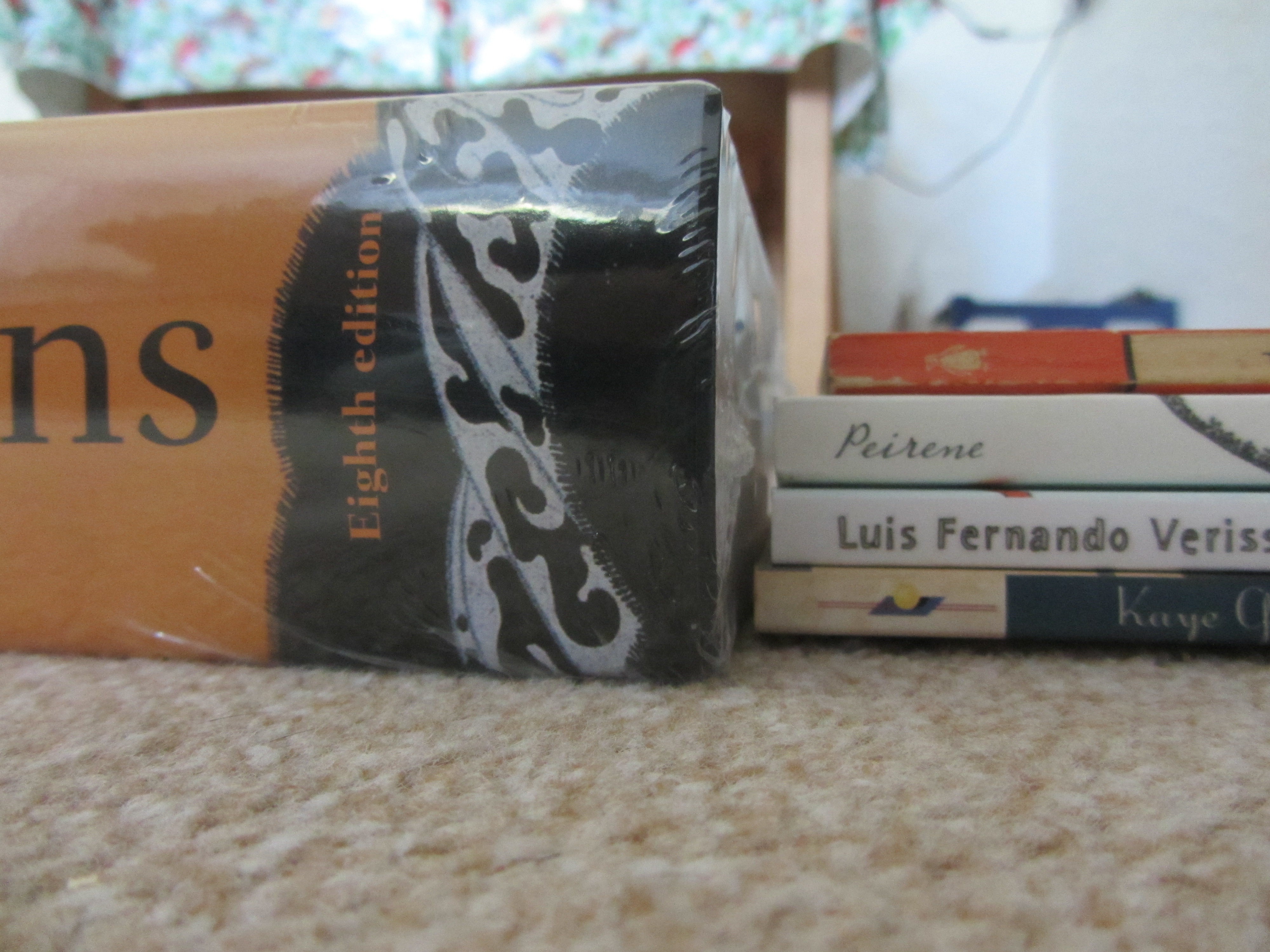
Even four novellas put together don’t stack up very far compared to the Oxford Dictionary of Quotations.
I recently finished The Bookshop by Penelope Fitzgerald [123]; all her books are similarly concise, so you may want to give her a try. The next novella on the pile for me is Ellen Foster by Kaye Gibbons [126]. I had never heard of the author, but the title and description lured me into buying it from a library book sale on a trip back to America (for 25 cents, why not?!). It’s a Southern Gothic story with an eleven-year-old narrator whom Walker Percy likened to Holden Caulfield. The alluring first line: “When I was little I would think of ways to kill my daddy.”
For more ideas, see these two Publishers Weekly’s lists:
“10 Best Books Shorter than 150 Pages” (only repeats one of my suggestions)
“10 Best Short Story Collections You’ve Never Read”
Off topic, but today is a milestone for me: it marks exactly two years that I’ve been a freelance writer!
Are you fond of short books? Do you prefer them to doorstoppers? What are some of your favorite novellas? All comments welcome!
I Like Big Books and I Cannot Lie
You can never get a cup of tea large enough or a book long enough to suit me.
~ C. S. Lewis

My best friend got me this tote bag for my 30th birthday. Rarely has there been a better slogan.
 Here’s to doorstoppers! Books of 500 pages or more [the page count is in brackets for each of the major books listed below] can keep you occupied for entire weeks of a summer – or for just a few days if they’re gripping enough. There’s something delicious about getting wrapped up in an epic story and having no idea where the plot will take you. Doorstoppers are the perfect vacation companions, for instance. I have particularly fond memories of getting lost in Jonathan Strange and Mr. Norrell by Susanna Clarke [782] on a week’s boating holiday in Norfolk with my in-laws, and of devouring The Crimson Petal and the White by Michel Faber [835] on a long, queasy ferry ride to France.
I have an MA in Victorian Literature, so I was used to picking up novels that ranged between 600 and 900 pages. Of course, one could argue that the Victorians were wordier than necessary due to weekly deadlines, the space requirements of serialized stories, and the popularity of subsequent “triple-decker” three-volume publication. Still, I think Charles Dickens’s works, certainly, stand the test of time. His David Copperfield [~900] is still my favorite book. I adore his sprawling stories crammed full of major and minor characters. Especially in a book like David Copperfield that spans decades of a character’s life, the sheer length allows you time to get to know the protagonist intimately and feel all his or her struggles and triumphs as if they were your own.

Nothing ‘little’ about this review copy.
I felt the same about A Little Life by Hanya Yanagihara [720], which I recently reviewed for Shiny New Books. Jude St. Francis is a somewhat Dickensian character anyway, for his orphan origins at least, and even though the novel is told in the third person, it is as close a character study as you will find in contemporary literature. I distinctly remember two moments in my reading, one around page 300 and one at 500, when I looked up and thought, “where in the world will this go?!” Even as I approached the end, I couldn’t imagine how Yanagihara would leave things. That, I think, is one mark of a truly masterful storyteller.

Slow but steady progress.
Speaking of Dickensian novels, in recent years I’ve read two Victorian pastiches that have an authentically Victorian page count, too: The Luminaries by Eleanor Catton [848] and Death and Mr. Pickwick by Stephen Jarvis [816]. The Luminaries, which won the 2013 Booker Prize, has an intricate structure (based on astrological charts) that involves looping back through the same events – making it at least 200 pages too long.
It was somewhat disappointing to read Jarvis’s debut novel in electronic format; without the physical signs of progress – a bookmark advancing through a huge text block – it’s more difficult to feel a sense of achievement. Once again one might argue that the book’s digressive nature makes it longer than necessary. But with such an accomplished debut that addresses pretty much everything ever written or thought about The Pickwick Papers, who could quibble?

I was initially rather daunted by the heft of The Luminaries.
John Irving’s novels are Dickensian in their scope as well as their delight in characters’ eccentricities, but fully modern in terms of themes – and sexual explicitness. Along with Dickens, he’s a mutual favorite author for my husband and me, and his A Prayer for Owen Meany [637] numbers among our collective favorite novels. Most representative of his style are The World According to Garp and The Cider House Rules.
Here are a handful of other long novels I’ve read and reviewed within the last few years (the rating is below each description):
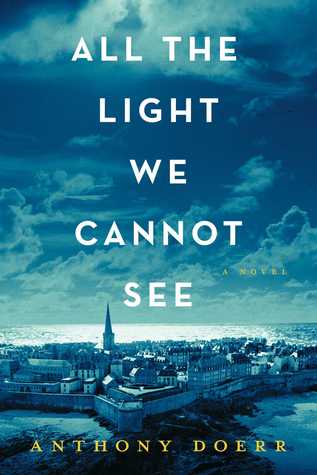 All the Light We Cannot See by Anthony Doerr [531] – The 2015 Pulitzer Prize winner; set in France and Germany during World War II.

In the Light of What We Know by Zia Haider Rahman [555] – Digressive intellectualizing about race, class and war as they pertain to British immigrants.

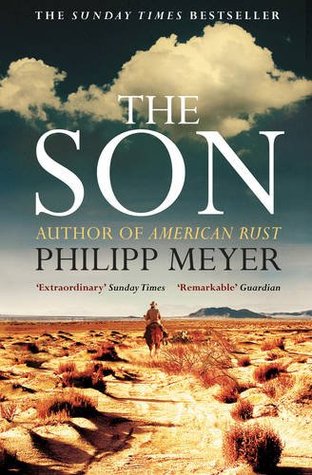 The Son by Philipp Meyer [561] – An old-fashioned Western with hints of Cormac McCarthy.

The Art of Fielding by Chad Harbach [512] – Baseball is a window onto modern life in this debut novel about homosocial relationships at a small liberal arts college.
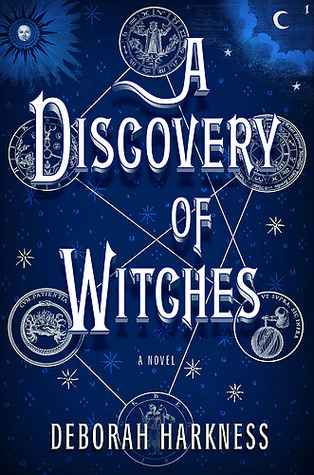 “A Discovery of Witches” fantasy trilogy by Deborah Harkness: A Discovery of Witches [579], Shadow of Night [584], and The Book of Life [561] – Thinking girl’s vampire novels, with medieval history and Oxford libraries thrown in.
/  /
/ 
And here’s the next set of doorstoppers on the docket:
Of Human Bondage by W. Somerset Maugham [766] – A Dickensian bildungsroman about a boy with a clubfoot who pursues art, medicine and love.
The Goldfinch by Donna Tartt [864] – I have little idea of what this is actually about. A boy named Theo, art, loss, drugs and 9/11? Or just call it life in general. I’ve read Tartt’s other two books and was enough of a fan to snatch up a secondhand paperback for £1.
A Brief History of Seven Killings by Marlon James [686] (as with A Little Life, the adjective in the title surely must be tongue-in-cheek!) – The starting point is an assassination attempt on Bob Marley in the late 1970s, but this is a decades-sweeping look at Jamaican history. I won a copy in a Goodreads giveaway.
A Suitable Boy by Vikram Seth [1,474!] – A sprawling Indian family saga. Apparently he’s at work on a sequel entitled A Suitable Girl.
This Thing of Darkness by Harry Thompson [744] – A novel about Charles Darwin and his relationship with Robert FitzRoy, captain of the Beagle.
The Last Chronicle of Barset by Anthony Trollope [891] – As the title suggests, this is the final novel in Trollope’s six-book “Chronicles of Barsetshire” series. Alas, reading this one requires reading the five previous books, so this is more like a 5,000-page commitment…
Now, a confession: sometimes I avoid long books because they just seem like too much work. It’s sad but true that a Dickens novel takes me infinitely longer to read than a modern novel of similar length. The prose is simply more demanding, there’s no question about it. So if I’m faced with a choice between one 800-page novel that I know could take me months of off-and-on reading and three or four 200–300-page contemporary novels, I’ll opt for the latter every time. Part of this also has to do with meeting my reading goals for the year: when you’re aiming for 250 titles, it makes more sense to read a bunch of short books than a few long ones. I need to get better about balancing quality and quantity.
How do you feel about long books? Do you seek them out or shy away? Comments welcome!
 Bookish Beck = Rebecca Foster. American transplant to England. Freelance proofreader and book reviewer.
