Biography of the Month: Ali: A Life by Jonathan Eig
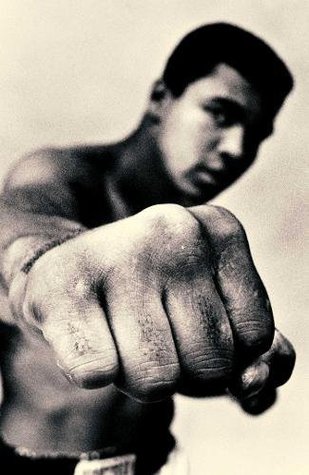 The first book I ever reviewed on this blog, nearly three years ago, happened to be Jonathan Eig’s The Birth of the Pill. It was the strength of the writing in that offbeat work of history, as well as rave reviews for this 2017 biography of Muhammad Ali (1942–2016), that led me to pick up a sport-themed book. I’m the furthest thing from a sports fan you could imagine, but I approached this as a book about a cultural icon and read it with a spirit of curiosity about how Eig would shape this life story and separate the facts from the legend. It’s a riveting account of outliving segregation and developing a personal style and world-beating confidence; it’s a sobering tale of facing consequences and having your own body fail you. I loved it.
Today would have been Ali’s 76th birthday, so in honor of the occasion – and his tendency to spout off-the-cuff rhymes about his competitors’ shortfalls and his own greatness – I’ve turned his life story into a book review of sorts, in rhyming couplets.
Born into 1940s Kentucky,
this fine boy had decent luck – he
surpassed his angry, cheating father
though he shared his name; no bother –
he’d not be Cassius Clay much longer.
He knew he was so much stronger
than all those other boys. Racing
the bus with Rudy; embracing
the help of a white policeman,
his first boxing coach – this guardian
prepared him for Olympic gold
(the last time Cassius did as told?).

Ali in 1967. By Ira Rosenberg [Public domain], via Wikimedia Commons.
was no scholar but won hearts; he
hogged every crowd’s full attention
but his faults are worth a mention:
he hoarded Caddys and Royces
and made bad financial choices;
he went through one, two, three, four wives
and lots of other dames besides;
his kids – no closer than his fans –
hardly even got a chance.
Cameos from bin Laden, Trump,
Toni Morrison and more: jump
ahead and you’ll see an actor,
envoy, entrepreneur, preacher,
recognized-all-round-the-world brand
(though maybe things got out of hand).
Ali was all things to all men
and fitted in the life of ten
but though he tested a lot of walks,
mostly he just wanted to box.
The fights: Frazier, Foreman, Liston –
they’re all here, and the details stun.
Eig gives a vivid blow-by-blow
such that you will feel like you know
what it’s like to be in the ring:
dodge, jab, weave; hear that left hook sing
past your ear. Catch rest at the ropes
but don’t stay too long like a dope.
If, like Ali, you sting and float,
keep an eye on your age and bloat –
the young, slim ones will catch you out.
Bow out before too many bouts.
Ignore the signs if you so choose
(ain’t got many brain cells to lose –
these blows to the head ain’t no joke);
retirement talk ain’t foolin’ folk,
can’t you give up on earning dough
and think more about your own soul?

1968 Esquire cover. By George Lois (Esquire Magazine) [CC BY-SA 4.0 (https://creativecommons.org/licenses/by-sa/4.0)%5D, via Wikimedia Commons.
Allah laid a call on your head:
To raise up the black man’s status
and ask white men why they hate us;
to resist the Vietnam draft
though that nearly got you the shaft
and lost you your name, your title
and (close) your rank as an idol.
Was it all real, your piety?
Was it worth it in society?
Nation of Islam was your crew
but sure did leave you in the stew
with that Vietcong kerfuffle
and Malcolm/Muhammad shuffle.
Through U.S. missions (after 9/11)
you explained it ain’t about heaven
and who you’ll kill to get you there;
it’s about peace, being God’s heir.
Is this story all about race?
Eig believes it deserves its place
as the theme of Ali’s life: he
was born in segregation, see,
a black fighter in a white world,
but stereotypes he hurled
right back in their faces: Uncle
Tom Negro? Naw, even punch-drunk he’ll
smash your categories and crush
your expectations. You can flush
that flat dismissal down the john;
don’t think you know what’s going on.
Dupe, ego, clown, greedy, hero:
larger than life, Jesus or Nero?
How to see both, that’s the kicker;
Eig avoids ‘good’ and ‘bad’ stickers
but shows a life laid bare and
how win and lose ain’t fair and
history is of our making
and half of legacy is faking
and all you got to do is spin
the world round ’till it lets you in.

Ali in 2004.
Biography’s all ’bout the arc
and though this story gets real dark,
there’s a glister to it all the same.
A man exists beyond the fame.
What do you know beneath the name?
Less, I’d make a bet, than you think.
Come over here and take a drink:
this is long, deep, satisfying;
you won’t escape without crying.
Based on 600 interviews,
this fresh account is full of news
and fit for all, not just sports fans.
Whew, let’s give it up for Eig, man.
My rating:
Some Early Recommendations for 2018
I took some time out this December to start reading the 2018 releases I was most looking forward to. In early January I’ll preview another 25 or 30 titles I’m interested in, but for now here are eight books coming out in the first half of next year that I can heartily recommend, with ~130-word mini reviews to give you a taste of them. (These are in alphabetical order by author, with the publication details noted beneath the title.)
Because We Are Bad: OCD and a Girl Lost in Thought by Lily Bailey
[Coming on March 15th from Canbury Press (UK) and on April 3rd from Harper Collins US]
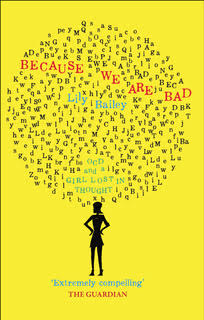 “For as long as I could remember, I wasn’t me, I was we.” Lily Bailey had a sort of imaginary friend while she was growing up, but instead of a comforting presence it was a critical voice pushing her to be ultra-conscious of how her behavior appeared to others. This went on for years until she was finally diagnosed with severe Obsessive Compulsive Disorder. Despite Prozac and CBT, she later landed in a psychiatric unit. She captures this inpatient stay with great verve, recalling the chorus of other patients’ voices and different nurses’ strategies. This memoir tracks Bailey’s life up until age 20, but her recreation of childhood and the first-person plural sections are the strongest. I’d recommend this to readers interested in learning more about OCD and mental health issues in general. (Full blog review scheduled for March 15th.)
The Immortalists by Chloe Benjamin
[Coming on January 9th from Tinder Press (UK) / G.P. Putnam’s (USA)]
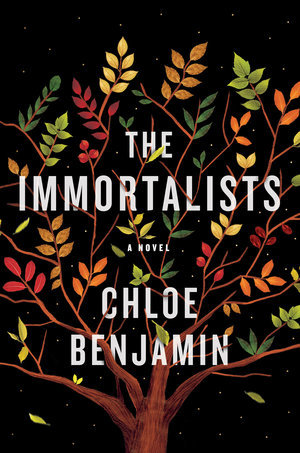 Summer 1969: four young siblings escape a sweltering New York City morning by visiting a fortune teller who can tell you the day you’ll die. In the decades that follow, they have to decide what to do with this advance knowledge: will it spur them to live courageous lives, or drive them to desperation? This compelling family story lives up to the hype. I can imagine how much fun Benjamin had researching and writing it as she’s able to explore four distinct worlds: Daniel, a military doctor, examines Iraq War recruits; Klara becomes a magician in Las Vegas; Varya researches aging via primate studies; and Simon is a dancer in San Francisco. The settings, time periods, and career paths are so diverse that you get four novels’ worth of interesting background. (See my full review at The Bookbag.)
Everything Happens for a Reason: And Other Lies I’ve Loved by Kate Bowler
[Coming on February 6th from Random House (USA)]
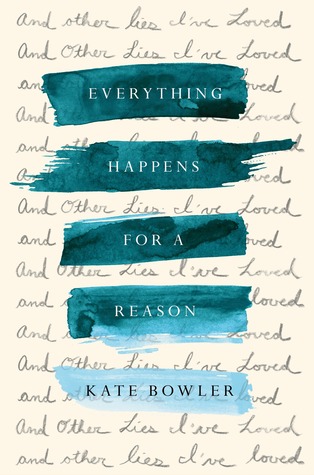 This was the 2018 title I was most looking forward to reading. It combines two of my niche interests: medical (especially cancer) memoirs, and the prosperity gospel, which I grew up with in the church my parents attend in America. An assistant professor at Duke Divinity School, Bowler was fascinated by the idea that you can claim God’s blessings, financial and otherwise, as a reward for righteous behavior and generosity to the church. But if she’d been tempted to set store by this notion, that certainty was permanently fractured when she was diagnosed with stage IV colon cancer in her mid-thirties. Bowler writes tenderly about suffering and surrender, about living in the moment with her husband and son while being uncertain of the future. Her writing reminds me of Anne Lamott’s and Nina Riggs’s.
The Reading Cure: How Books Restored My Appetite by Laura Freeman
[Coming on February 22nd from Weidenfeld & Nicolson (UK)]
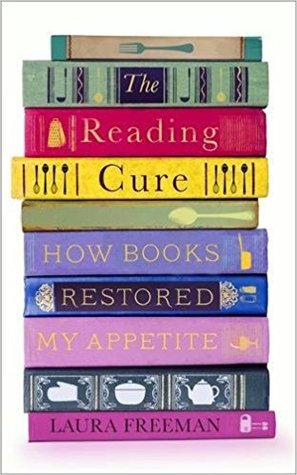 A memoir with food, medical and literary themes and a bibliotherapy-affirming title – this debut ticks lots of boxes for me. As a teenager, Freeman suffered from anorexia. This is not an anorexia memoir, though; instead, it’s about the lifelong joy of reading and how books have helped her haltingly recover the joy of eating. Her voracious reading took in the whole of Charles Dickens’s oeuvre, war writers like Siegfried Sassoon and Robert Graves (boiled eggs and cocoa); travel writers Laurie Lee and Patrick Leigh Fermor and their enthusiastic acceptance of whatever food came their way on treks; and rediscovered children’s classics from The Secret Garden through to the Harry Potter series. This is about comfort reading as much as it is about rediscovering comfort eating, and it delicately balances optimism with reality. (Full blog review scheduled for February 1st.)
Everything Here Is Beautiful by Mira T. Lee
[Coming on January 16th from Pamela Dorman Books (USA)]
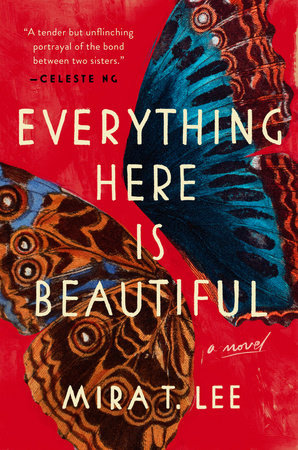 Lucia Bok has been many people: a globe-trotting Chinese-American journalist, a shopkeeper’s wife in New York City, an illegal immigrant’s girlfriend, and a mother making the best of primitive conditions in Ecuador. Her schizophrenia means she throws herself wholeheartedly into each role but, as her mind turns against her, eventually finds herself unable to cope. We hear from Lucia herself as well as her older sister, ex-husband and boyfriend – in both first-person and third-person passages – over the course of 25 years to get an intimate picture of how mental illness strains families and how blame gets parceled out. Lucia’s first-person narration was most effective for me: “I take only one kind of medication now. They adjust the dosage. Sometimes I still slosh around, dense and slushy like a watermelon; other times I’m flat, defizzed.”
Junk by Tommy Pico
[Coming on May 8th from Tin House Books (USA)]
 Junk food, junk shops, junk mail; junk as in random stuff; junk as in genitals. These are the major elements of Pico’s run-on, stream-of-consciousness poem, the third in his Teebs trilogy (after IRL and Nature Poem). The overarching theme is being a homosexual Native American in Brooklyn. You might think of Pico as a latter-day Ginsberg. His text-speak and sexual explicitness might ordinarily be off-putting for me, but there’s something about Pico’s voice that I really like. He vacillates between flippant and heartfelt in a way that seems to capture something about the modern condition.
Sample lines:
“the lights go low across the / multiplex Temple of // canoodling and Junk food”
“Haven’t figured out how to be NDN and not have / suspicion coursing thru me like cortisol”
Indecent by Corinne Sullivan
[Coming on March 6th from St. Martin’s Press (USA)]
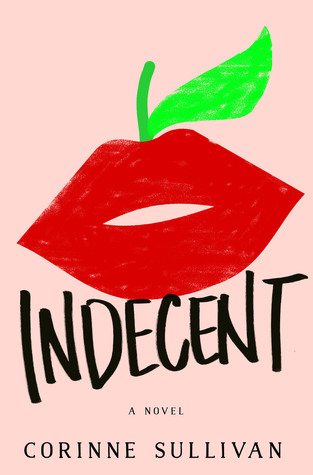 Expect a cross between Prep (Curtis Sittenfeld) and Notes on a Scandal (Zoe Heller). Imogene Abney, 22, is an apprentice teacher at Vandenberg School for Boys in New York State. She’s young and pretty enough to be met with innuendo and disrespect from her high school charges; she’s insecure enough about her acne to feel rejected by other apprentices. But Adam Kipling, who goes by “Kip,” seems different from any of the other people she’s thrown together with at Vandenberg. A fourth-year student, he’s only five years younger than she is, and he really seems to appreciate her for who she is. Their relationship proceeds apace, but nothing stays a secret for long around here. Being in Imogene’s head can feel a little claustrophobic because of her obsessions, but this is a racy, pacey read.
From Mother to Mother by Émilie Vast
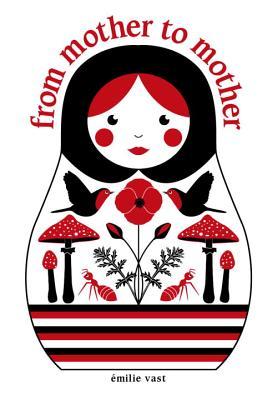 [Coming on March 20th from Charlesbridge Publishing (USA)]
This sweet, simple picture book for very young children (it will actually be a board book, though I read it as an e-book) was originally published in French. Based on Russian nesting dolls, it introduces the idea of ancestry, specifically multiple generations of women. I imagine a mother with a child sitting on her knee. Holding this book in one hand and a photo album in the other, she points to all the family members who have passed down life and love. Each two-page spread has a different color motif and incorporates flora and fauna on the design of the doll.
 I’m also currently partway through, and enjoying, Educated by Tara Westover [Coming on February 20th from Random House (USA) and February 22nd from Hutchinson (UK)], a striking memoir about being raised off grid in Idaho as the youngest of seven children of religious/survivalist parents – and never going to a proper school.
Coming tomorrow (my last post of the year): Some year-end statistics and 2018 reading goals.
2017’s Runners-Up and Other Superlatives
The choices below are in alphabetical order by author, with any previously published reviews linked in (many of these books have already appeared on the blog in some way over the course of the year). You know the drill by now: to keep it simple for myself as well as for all of you who are figuring out whether you’re interested in these books or not, I’m limiting myself to two sentences per title. The first is a potted summary; the second tells you why you should read it. Across these three best-of posts (see also my Top Nonfiction and Best Fiction posts), I’ve spotlighted roughly the top 15% of my year’s reading.
Runners-Up:
 As a God Might Be by Neil Griffiths: The themes and central characters were strong enough to keep me powering through this 600-page novel of ideas about encounters with God and the nature of evil. This turned out to be just my sort of book: big and brazen, a deep well of thought that will only give up its deeper meanings upon discussion and repeat readings.
 Spaceman of Bohemia by Jaroslav Kalfař: The story of Jakub Procházka, a Czech astronaut who leaves his wife behind to undertake a noble research mission but soon realizes he can never escape his family history or the hazards of his own mind. A terrific blend of the past and the futuristic, Earth and space.
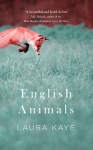 English Animals by Laura Kaye: A young Slovakian becomes a housekeeper for a volatile English couple and discovers a talent for taxidermy. A fresh take on themes of art, sex, violence and belonging, this is one of the more striking debut novels I’ve encountered in recent years.
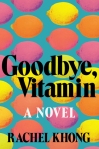 Goodbye, Vitamin by Rachel Khong: Reeling from a broken engagement, Ruth Young returns to her childhood home in California for a year to help look after her father, who has Alzheimer’s. This is a delightfully quirky little book, but you may well read it with a lump in your throat, too.
 Midwinter Break by Bernard MacLaverty: In MacLaverty’s quietly beautiful fifth novel, a retired couple faces up to past trauma and present incompatibility during a short vacation in Amsterdam. My overall response was one of admiration for what this couple has survived and sympathy for their current situation – with hope that they’ll make it through this, too. (Reviewed for BookBrowse.)
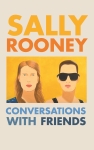 Conversations with Friends by Sally Rooney: An Irish college student navigates friendships and an affair with a married man. This is much more about universals than it is about particulars: realizing you’re stuck with yourself, exploring your sexuality and discovering sex is its own kind of conversation, and deciding whether ‘niceness’ is really the same as morality; a book I was surprised to love, but love it I did.
 Lincoln in the Bardo by George Saunders: The residents of Georgetown cemetery limbo don’t know they’re dead – or at least won’t accept it. An entertaining and truly original treatment of life’s transience; I know it’s on every other best-of-year list out there, but it really is a must-read.
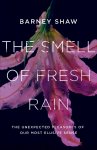 The Smell of Fresh Rain by Barney Shaw: Shaw travels through space, time and literature as he asks why we don’t have the vocabulary to talk about the smells we encounter every day. If you’re interested in exploring connections between smell and memory, discovering what makes the human sense of smell unique, and learning some wine-tasting-style tips for describing odors, this is a perfect introduction.
 A Life of My Own by Claire Tomalin: Tomalin is best known as a biographer of literary figures including Mary Wollstonecraft, Samuel Pepys and Charles Dickens, but her memoir is especially revealing about the social and cultural history of the earlier decades her life covers. A dignified but slightly aloof book – well worth reading for anyone interested in spending time in London’s world of letters in the second half of the twentieth century.
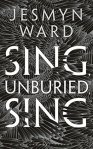 Sing, Unburied, Sing by Jesmyn Ward: The story of a mixed-race family haunted – both literally and figuratively – by the effects of racism, drug abuse and incarceration in Bois Sauvage, a fictional Mississippi town. Beautiful language; perfect for fans of Toni Morrison and Cynthia Bond.
I’ve really struggled with short stories this year, but here are four collections I can wholeheartedly recommend:
 What It Means when a Man Falls from the Sky by Lesley Nneka Arimah (Reviewed for Shiny New Books.)
- Unruly Creatures: Stories by Jennifer Caloyeras
- Bad Dreams and Other Stories by Tessa Hadley
- The Great Profundo and Other Stories by Bernard MacLaverty (1987)
The Best 2017 Books You Probably Never Heard of (Unless You Heard about Them from Me!):
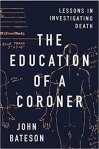 The Education of a Coroner by John Bateson: The coroner’s career is eventful no matter what, but Marin County, California has its fair share of special interest, what with Golden Gate Bridge suicides, misdeeds at San Quentin Prison, and various cases involving celebrities (e.g. Harvey Milk, Jerry Garcia and Tupac) in addition to your everyday sordid homicides. Ken Holmes was a death investigator and coroner in Marin County for 36 years; Bateson successfully recreates Holmes’ cases with plenty of (sometimes gory) details.
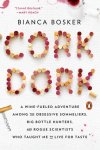 Cork Dork by Bianca Bosker: Tasting notes: gleeful, ebullient, learned, self-deprecating; suggested pairings: Sweetbitter by Stephanie Danler; Top Chef, The Great British Bake Off. A delightful blend of science, memoir and encounters with people who are deadly serious about wine.
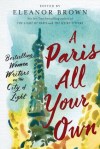 A Paris All Your Own: Bestselling Women Writers on the City of Light, edited by Eleanor Brown: A highly enjoyable set of 18 autobiographical essays that celebrate what’s wonderful about the place but also acknowledge disillusionment; highlights are from Maggie Shipstead, Paula McLain, Therese Anne Fowler, Jennifer Coburn, Julie Powell and Michelle Gable. If you have a special love for Paris, have always wanted to visit, or just enjoy armchair traveling, this collection won’t disappoint you.
 Ashland & Vine by John Burnside: Essentially, it’s about the American story, individual American stories, and how these are constructed out of the chaos and violence of the past – all filtered through a random friendship that forms between a film student and an older woman in the Midwest. This captivated me from the first page.
 Tragic Shores: A Memoir of Dark Travel, Thomas H. Cook: In 28 non-chronological chapters, Cook documents journeys he’s made to places associated with war, massacres, doomed lovers, suicides and other evidence of human suffering. This is by no means your average travel book and it won’t suit those who seek high adventure and/or tropical escapism; instead, it’s a meditative and often melancholy picture of humanity at its best and worst. (Reviewed for Nudge.)
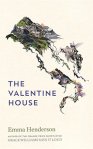 The Valentine House by Emma Henderson: This is a highly enjoyable family saga set mostly between 1914 and 1976 at an English clan’s summer chalet in the French Alps near Geneva, with events seen from the perspective of a local servant girl. You can really imagine yourself into all the mountain scenes and the book moves quickly –a great one to take on vacation.

The year’s runners-up and superlatives that I happen to have around in print.
Various Superlatives, Good and Bad:
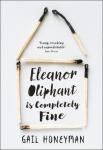 The 2017 Book Everybody Else Loved but I Didn’t: Eleanor Oliphant Is Completely Fine by Gail Honeyman. (See my Goodreads review for why.)
The Year’s Biggest Disappointments: All Grown Up by Jami Attenberg, Future Home of the Living God by Louise Erdrich, Between Them by Richard Ford and George and Lizzie by Nancy Pearl.
The Worst Book I Read This Year: Books by Charlie Hill (ironic, that). My only one-star review of the year.
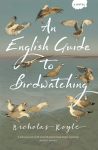 The Downright Strangest Book I Read This Year: An English Guide to Birdwatching by Nicholas Royle.
My Best Discoveries of the Year: Beryl Bainbridge, Saul Bellow, Bernard MacLaverty and Haruki Murakami. I’ve read two books by each of these authors this year and look forward to trying more from them.
The Debut Authors Whose Next Work I’m Most Looking Forward to: Lesley Nneka Arimah, Laura Kaye, Carmen Marcus, Julianne Pachico and Sally Rooney.
 The Best First Line of the Year: “History has failed us, but no matter.” (Pachinko, Min Jin Lee)
The Best Last Line of the Year: “If she was an instance of the goodness in this world then passing through by her side was miracle enough.” (Midwinter Break, Bernard MacLaverty)
Coming tomorrow: Some early recommendations for 2018.
Best Fiction of 2017, Plus Some Other Favorite Reads
Below I’ve chosen my top nine fiction releases from 2017 (seven by women!), followed by the backlist titles I loved the most this year. Many of these books have already featured on my blog in some way over the course of the year. To keep it simple for myself as well as for all of you who are figuring out whether you’re interested in these books or not, as with my nonfiction selections I’m mostly limiting myself to two sentences per title: the first is a potted summary; the second tells you why you should read it. I also link to any full reviews.
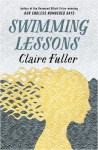 Swimming Lessons by Claire Fuller: This atmospheric novel reminiscent of Iris Murdoch is no happy family story; it’s full of betrayals and sadness, of failures to connect and communicate, yet it’s beautifully written, with all its scenes and dialogue just right. I recently caught up on Fuller’s acclaimed 2015 debut, Our Endless Numbered Days, and collectively I’m so impressed with her work, specifically the elegant way she alternates between time periods to gradually reveal the extent of family secrets and the faultiness of memory.
 The Lucky Ones by Julianne Pachico: You may remember that our shadow panel chose this as our winner for the Sunday Times Young Writer of the Year award: we were blown away by this linked short story collection set in a drug-fueled Colombia in which violence and its aftermath are never far away. For the originality of the setup and the sheer excellence of the writing, this can’t be topped.
 The Velveteen Daughter by Laurel Davis Huber: The name Margery Williams Bianco might not seem familiar, but chances are you remember her classic children’s book, The Velveteen Rabbit. This is about Margery and her daughter, Pamela Bianco, a painter and child prodigy troubled by mental illness, and the themes of creativity, mental health and motherhood are nestled in a highly visual debut novel full of cameos by everyone from Pablo Picasso to Eugene O’Neill.
 The Animators by Kayla Rae Whitaker: The cartooning world and the Kentucky–New York City dichotomy together feel like a brand new setting for a literary tragicomedy. Though it seems lighthearted, there’s a lot of meat to this story of the long friendship between two female animators as Whitaker contrasts the women’s public and private personas and imagines their professional legacy.
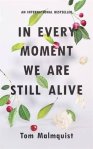 In Every Moment We Are Still Alive by Tom Malmquist: While it’s being marketed as a novel, this reads more like a stylized memoir: Similar to Karl Ove Knausgaard’s books, it features the author as the central character and narrator, and the story of grief it tells is a highly personal one. Malmquist does an extraordinary job of depicting his protagonist’s bewilderment at the sudden loss of his partner and his new life as a single father.
 How to Be Human by Paula Cocozza: As much as this is about a summer of enchantment and literal brushes with urban wildlife, it’s also about a woman’s life: loneliness, the patterns we get stuck in, and those unlooked-for experiences that might just liberate us. There’s something gently magical about the way the perspective occasionally shifts to give a fox’s backstory and impressions as a neologism-rich stream.
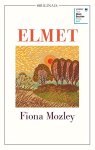 Elmet by Fiona Mozley: The dark horse on this past year’s Man Booker Prize longlist, this is a twisted fable about the clash of the land-owning and serf classes in contemporary England. It’s a gorgeous, timeless tale balanced between lush nature writing and Hardyesque pessimism.
-
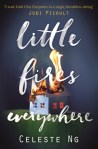 Little Fires Everywhere by Celeste Ng: A multi-layered story about many facets of motherhood: adoption, surrogacy, pregnancy, abortion; estrangement, irritation, longing and pride. Each and every character earns our sympathy here – a real triumph of characterization, housed in a tightly plotted and beautifully written novel you’ll race through.
And my fiction book of the year was:
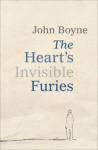 The Heart’s Invisible Furies by John Boyne: A wonderful seam of humor tempers the awfulness of much of what befalls Cyril Avery – born in Dublin in 1945 – for whom homosexuality seems a terrible curse. It’s an alternately heartbreaking and heartening portrait of a life lived in defiance of intolerance and tragedy.
My poetry read of the year was:
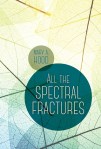 All the Spectral Fractures: New and Selected Poems, Mary A. Hood: There is so much substance and variety to this poetry collection spanning the whole of Hood’s career. A professor emerita of microbiology at the University of West Florida and a former poet laureate of Pensacola, Florida, she takes inspiration from the ordinary folk of the state, the world of academic scientists, flora and fauna, and the minutiae of everyday life.
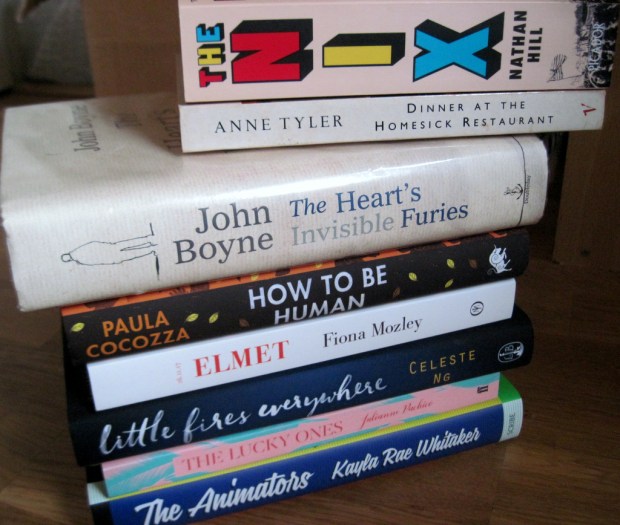
The year’s best books that I happen to have around in print.
And here’s a quick run-through of the seven best backlist titles I read this year:
-
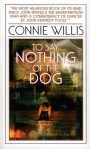 To Say Nothing of the Dog by Connie Willis: Time travel would normally be a turnoff for me, but Willis manages it perfectly in this uproarious blend of science fiction and pitch-perfect Victorian pastiche (boating, séances and sentimentality, oh my!).
-
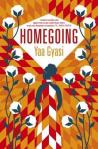 Homegoing by Yaa Gyasi: Brings together so many facets of the African and African-American experience; full of clear-eyed observations about the ongoing role race plays in American life.
-
 Days Without End by Sebastian Barry: Contains the most matter-of-fact consideration of same-sex relationships I’ve ever encountered in historical fiction. Heart-breaking, life-affirming, laugh-out-loud: those may be clichés, but it’s all these things and more.
-
 The Wind-Up Bird Chronicle by Haruki Murakami: Mesmerizing and bizarre, but in the best possible way: it questions our comfort in the everyday by contorting familiar elements like dreams do. I’m a definite Murakami convert.
-
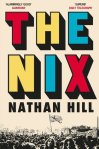 The Nix by Nathan Hill: A rich story about family curses and failure, and how to make amends for a life full of mistakes. Hill is a funny and inventive writer.
-
 Signs for Lost Children by Sarah Moss: Simply superb in the way it juxtaposes England and Japan in the 1880s and comments on mental illness, the place of women, and the difficulty of navigating a marriage whether the partners are thousands of miles apart or in the same room.
My overall most memorable fiction read of the year, to my great surprise, was:
-
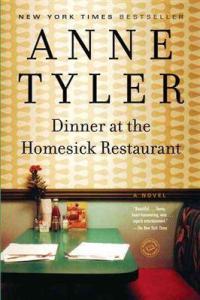 Dinner at the Homesick Restaurant by Anne Tyler: I’ve been lukewarm on Anne Tyler’s novels before – this is my sixth from her – but this instantly leapt onto my list of absolute favorite books. Its chapters are like perfectly crafted short stories focusing on different members of the Tull family. These vignettes masterfully convey the common joys and tragedies of a fractured family’s life. After Beck Tull leaves with little warning, Pearl must raise Cody, Ezra and Jenny on her own and struggle to keep her anger in check. Cody is a vicious prankster who always has to get the better of good-natured Ezra; Jenny longs for love but keeps making bad choices. Despite their flaws, I adored these characters and yearned for them to sit down, even just the once, to an uninterrupted family dinner of comfort food.
What were some of your top fiction reads of the year?
Tomorrow I’ll be naming some runners-up and listing a few other superlatives.
December’s Doorstopper: The Heart’s Invisible Furies by John Boyne
The more I examined the architecture of my life, the more I realized how fraudulent were its foundations.
This is a book that wasn’t even on my radar until fairly late on in the year, when I noticed just how many of my Goodreads friends had read it and rated it – almost without fail – 5 stars. I knew John Boyne’s name only through the movie version of his Holocaust-set novel for younger readers, The Boy in the Striped Pajamas, and didn’t think I’d be interested in his work. But the fact that The Heart’s Invisible Furies was written in homage to John Irving (Boyne’s dedicatee) piqued my interest, and I’m so glad I gave it a try. It distills all the best of Irving’s tendencies while eschewing some of his more off-putting ones. Of the Irving novels I’ve read, this is most like The World According to Garp and In One Person, with which it shares, respectively, a strong mother–son relationship and a fairly explicit sexual theme.
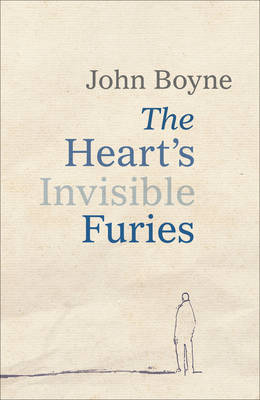 A wonderful seam of humor tempers the awfulness of much of what befalls Cyril Avery, starting with his indifferent adoptive parents, Charles and Maude. Charles is a wealthy banker and incorrigible philanderer occasionally imprisoned for tax evasion, while Maude is a chain-smoking author whose novels, to her great disgust, are earning her a taste of celebrity. Both are cold and preoccupied, always quick to remind Cyril that since he’s adopted he’s “not a real Avery”. The first bright spot in Cyril’s life comes when, at age seven, he meets Julian Woodbead, the son of his father’s lawyer. They become lifelong friends, though Cyril’s feelings are complicated by an unrequited crush. Julian is as ardent a heterosexual as Cyril is a homosexual, and sex drives them apart in unexpected and ironic ways in the years to come.
For Cyril, born in Dublin in 1945, homosexuality seems a terrible curse. It was illegal in Ireland until 1993, so assignations had to be kept top-secret to avoid police persecution and general prejudice. Only when he leaves for Amsterdam and the USA is Cyril able to live the life he wants. The structure of the novel works very well: Boyne checks in on Cyril every seven years, starting with the year of his birth and ending in the year of his death. In every chapter we quickly adjust to a new time period, deftly and subtly marked out by a few details, and catch up on Cyril’s life. Sometimes we don’t see the most climactic moments; instead, we see what happened just before and then Cyril remembers the aftermath for us years later. It’s an effective tour through much of the twentieth century and beyond, punctuated by the AIDS crisis and focusing on the status of homosexuals in Ireland – in 2015 same-sex marriage was legalized, which would have seemed unimaginable a few short decades before.
Boyne also sustains a dramatic irony that kept me reading eagerly: the book opens with the story Cyril’s birth mother told him of her predicament in 1945, and in later chapters Cyril keeps running into this wonderfully indomitable woman in Dublin – but neither of them realizes how intimately they’re connected. Thanks to the first chapter we know they eventually meet and all will be revealed, but exactly when and how is a delicious mystery.
Along with Irving, Dickens must have been a major influence on Boyne. I spotted traces of David Copperfield and Great Expectations in minor characters’ quirks as well as in Cyril’s orphan status, excessive admiration of a romantic interest, and frequent maddening failures to do the right thing. But there are several other recent novels – all doorstoppers – that are remarkably similar in their central themes and questions. In Donna Tartt’s The Goldfinch, Hanya Yanagihara’s A Little Life and Nathan Hill’s The Nix we also have absent or estranged mothers; friends, lovers and adoptive family who help cut through a life of sadness and pain; and the struggle against a fate that seems to force one to live a lie. Given a span of 500 pages or more, it’s easy to become thoroughly engrossed in the life of a flawed character.
The Heart’s Invisible Furies – a phrase Hannah Arendt used to describe the way W.H. Auden wore his experiences on his face – is an alternately heartbreaking and heartening portrait of a life lived in defiance of intolerance and tragedy. A very Irish sense of humor runs all through the dialogue and especially Maude’s stubborn objection to fame. I loved Boyne’s little in-jokes about the writer’s life (“It’s a hideous profession. Entered into by narcissists who think their pathetic little imaginations will be of interest to people they’ve never met”) and thanks to my recent travels I was able to picture a lot of the Dublin and Amsterdam settings. Although it’s been well reviewed on both sides of the Atlantic, I’m baffled that this novel doesn’t have the high profile it deserves. I am especially grateful to Sarah of Sarah’s Book Shelves for naming this her book of the year: knowing her discriminating tastes, I could tell I’d be in for something special. Look out for it on my Best Fiction of 2017 list tomorrow.
My rating:
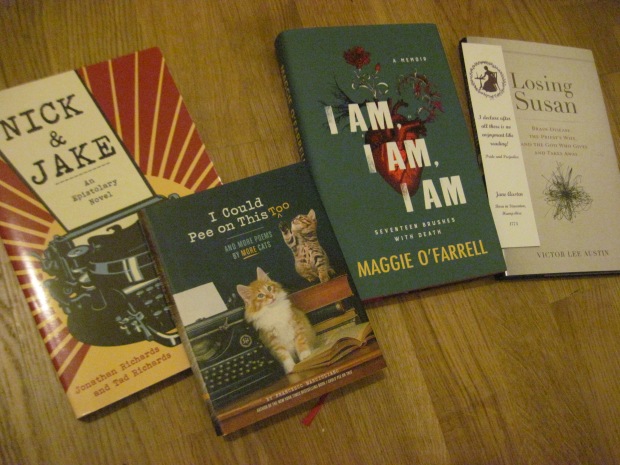
I got just four books for Christmas this year, but they’re all ones I’m very excited to read. I looked back at last year’s Christmas book haul photo and am impressed that I’ve actually read seven out of eight of them now – and the eighth is a cocktail cookbook one wouldn’t read all the way through anyway. All too often I let books sit around for years unread, but I will try to keep up this trend of reading books fairly soon after they enter my collection.
My Top 10 Nonfiction Reads of 2017
Below I’ve chosen my seven favorite nonfiction books published in 2017, followed by three older titles that I only recently discovered. Many of these books have already featured on the blog in some way over the course of the year. To keep it simple for myself as well as for all of you who are figuring out whether you’re interested in these books or not, I’m mostly limiting myself to two sentences per title: the first is a potted summary; the second tells you why you should read it. I also link to any full reviews.
-
 Landslide: True Stories by Minna Zallman Proctor: This gorgeous set of autobiographical essays circles through some of the overarching themes of the author’s life: losing her mother, a composer; the importance Italy had for both of them; a love for the work of Muriel Spark; their loose connection to Judaism; and the relentless and arbitrary nature of time. Proctor provides a fine example of how to write a non-linear memoir that gets to the essence of what matters in life.
 My Jewish Year by Abigail Pogrebin: From September 2014 to September 2015, Pogrebin celebrated all the holidays in the Jewish calendar, drawing thematic connections and looking for the resonance of religious rituals might have in her daily life. This bighearted, open-minded book strikes me as a perfect model for how any person of faith should engage with their tradition: not just offering lip service and grudgingly showing up to a few services a year, but knowing what you believe and practice, and why.
-

The U.S. cover
In Pursuit of Memory: The Fight against Alzheimer’s by Joseph Jebelli: With the world’s population aging, it is expected that by 2050 Alzheimer’s will be the second leading cause of death after heart disease. Research neurologist Joseph Jebelli gives a thorough survey of the history of Alzheimer’s and the development of our efforts to treat and even prevent it, but balances his research with a personal medical story any reader can relate to – his beloved grandfather, Abbas, succumbed to Alzheimer’s back in Iran in 2012. (See my full review for BookBrowse.)
 My Life with Bob by Pamela Paul: Whether she was hoarding castoffs from her bookstore job, obsessing about ticking off everything in the Norton Anthology, despairing that she’d run out of reading material in a remote yurt in China, or fretting that her new husband took a fundamentally different approach to the works of Thomas Mann, Paul (the editor of the New York Times Book Review) always looks beyond the books themselves to ask what they say about her. It’s just the sort of bibliomemoir I wish I had written.
 The Bright Hour by Nina Riggs: Beautiful prose enhances this literary and philosophical approach to terminal cancer. Riggs was a great-great-great-granddaughter of Ralph Waldo Emerson and quotes from her ancestor’s essays as well as from Michel de Montaigne’s philosophy to put things into perspective; she’s an expert at capturing the moments that make life alternately euphoric and unbearable – and sometimes both at once.
 Fragile Lives by Stephen Westaby: This is a vivid, compassionate set of stories culled from the author’s long career in heart surgery with the Grim Reaper looking on. I am not a little envious of all that Westaby has achieved: not just saving the occasional life despite his high-mortality field – as if that weren’t enough – but also pioneering various artificial heart solutions and a tracheal bypass tube that’s named after him.
And my nonfiction book of the year was:
1. The Shadow in the Garden: A Biographer’s Tale by James Atlas: I read this in August, planning to contrast it with Claire Tomalin’s A Life of My Own, another biographer’s memoir, for the LARB. It would have been a brilliant article, believe me. But they didn’t bite, and by the time I approached the TLS they’d already arranged coverage of the books. Alas! Such is the life of a freelancer. Since then I’ve struggled to know what to say about Atlas’s book that would explain why I loved it so much that my paperback proof is riddled with Post-It flags. (It’s going to take more than a couple of sentences…)
Much more so than Tomalin, Atlas gave me a real sense of what it’s like to immerse yourself in another person’s life. He made it up as he went along: he was only 25 when he got the contract to write a biography of the poet Delmore Schwartz, who died a penniless alcoholic at age 52. Writing about the deceased was a whole different matter to engaging with a living figure, as Atlas did when he wrote his biography of Saul Bellow in the 1990s.
 Atlas perceptively explores the connections between Schwartz and Bellow (Schwartz was the model for the protagonist of Bellow’s 1975 Pulitzer winner, Humboldt’s Gift) and between Bellow and himself (a Chicago upbringing with Russian Jewish immigrant ancestors), but also sets his work in the context of centuries of biographical achievement – from Boswell’s The Life of Samuel Johnson through master biographers like Richard Holmes, Leon Edel and Richard Ellmann (Atlas’s supervisor during his fellowship at Oxford) to recent controversial biographies of Robert Frost and Vladimir Nabokov.
This book deals with the nitty-gritty of archival research and how technology has changed it; Atlas also talks story-telling strategies and the challenge of impartiality, and ponders how we look for the patterns in a life that might explain what, besides genius, accounts for a writer’s skill. Even the footnotes are illuminating, and from the notes I learned about a whole raft of biographies and books on the biographer’s trade that I’d like to read. After I finished reading it I spent a few days dreamily wondering if I might write a biography some day. For anyone remotely interested in life writing, pick this up with my highest recommendation.
I’ll make it up to an even 10 with a few backlist titles I also loved:
 The Unexpected Professor: An Oxford Life in Books by John Carey (2014): Carey gives a thorough picture of events from his personal and professional life, but the focus is always on his literary education: the books that have meant the most to him and the way his taste and academic specialties have developed over the years. Ultimately what this book conveys is the joy of being a lifelong reader.
 A Sand County Almanac and Sketches Here and There by Aldo Leopold (1949): So many of Leopold’s musings ring true today: how we only appreciate wildlife if we can put an economic value on it, the troubles we get into when we eradicate predators and let prey animals run rampant, and the danger of being disconnected from the land that supplies our very life. And all this he delivers in stunning, incisive prose.
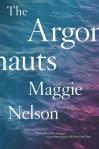 The Argonauts by Maggie Nelson (2015): An exquisite interrogation of gender identity and an invaluable reminder that the supposed complications of making a queer family just boil down to your basic human experiences of birth, love and death. I preferred those passages where Nelson allows herself to string her fragments into more extended autobiographical meditations, like the brilliant final 20 pages interspersing her memories of giving birth to her son Iggy with an account of the deathbed vigil her partner (artist Harry Dodge) held for his mother; it had me breathless and in tears, on a plane of all places.
What were some of your top nonfiction reads of the year?
Tomorrow I’ll be posting my Library Checkout a few days early.
Next week’s planned posts:
26th: Doorstopper of the Month
27th: Top fiction of the year list
28th: Runners-up and other superlatives
29th: Early 2018 recommendations
30th: Final statistics on my 2017 reading
2017 Fiction Picks from Rosemary & Reading Glasses
I asked Carolyn Oliver of Rosemary & Reading Glasses for her top fiction picks from 2017 and she came up with this list of 13 cracking recommendations. I doubt you’ll be able to resist adding at least one of these to your TBR.
Best 2017 Fiction: A Baker’s Dozen
These were my favorite works of fiction published (in the United States) in 2017, listed in the order I read them. One caveat: as I write this, there are 22 days left in 2017, so I may find another favorite; there are some heavy hitters (Jesmyn Ward’s Sing, Unburied, Sing comes to mind) that haven’t found their way to my nightstand yet.
 Human Acts, Han Kang: I admit, this book, which traces the human costs of the brutally repressed Gwanju Uprising, is difficult to read. Worth the effort, though, for its urgent questions about the nature of humanity.
Pachinko, Min Jin Lee: A twentieth-century family saga about Korean immigrants in Japan. Expansive and richly textured.
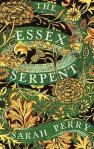 The Essex Serpent, Sarah Perry: A recently widowed natural historian and a village curate spar over rumors of a returned prehistoric serpent. Sumptuous.
Lincoln in the Bardo, George Saunders: The resident ghosts look on with consternation as Abraham Lincoln visits their cemetery to mourn over the body of his son, Willie. Polyphonic; extraordinarily moving.
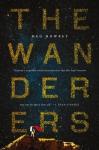 The Wanderers, Meg Howrey: Three astronauts undertake a long-term simulation of a mission to Mars, leaving their loved ones behind. Wonderful literary sci-fi, absorbing in its physical and psychological detail.
 Exit West, Mohsin Hamid: Two young lovers become part of a global migration through mysterious doors that connect locations all over the world. Intimate and tender.
 My Darling Detective, Howard Norman: A tale of family secrets set in 1970s Halifax, featuring plainspoken people and delightful use of radio drama. From my review: “noir with a spring in its step and a lilt in its voice.”
Days Without End, Sebastian Barry: Irish immigrant Thomas McNulty chronicles his survival in the American West (and the Civil War) and his love for fellow soldier John Cole. Fearsomely beautiful.
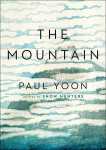 The Mountain, Paul Yoon: Six exquisite short stories, set in different locations over the past 100 years, from a master of the form.
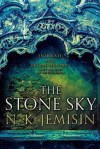 The Stone Sky, N. K. Jemisin: The blistering final book in Ms. Jemisin’s stunning Broken Earth trilogy (must be read in order, so start with The Fifth Season if you’re new to the series). Superb speculative fiction.
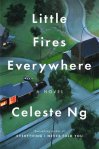 Little Fires Everywhere, Celeste Ng: The complexities of race, class, and motherhood swirl in a Cleveland suburb (my hometown) in this deft, compassionate novel.
 Her Body and Other Parties, Carmen Maria Machado: Short stories grounded in the body but shot through with elements of horror and fantasy. Won’t take it easy on you, but you won’t want to stop reading, either. Brilliant.
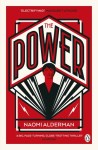 The Power, Naomi Alderman: Women harness a power within themselves that turns the tables on men. Atwoodian dystopia at its finest.
A huge thank-you to Carolyn for this guest blog!
Which one of her picks do you want to read first?
November’s Novellas: A Wrap-Up
Yesterday was my husband’s birthday. Baking him the world’s most complicated cake on Wednesday evening and taking Thursday off for a birthday outing to Salisbury for the Terry Pratchett exhibit at the town’s museum and the Christmas-decorated rooms at Mompesson House are my collective excuse for not writing up the last of November’s novellas until now.


For the most part I had a great time reading novellas last month. However, there were three I abandoned: Mornings in Mexico by D.H Lawrence (p. 11), whose random, repetitive observations lead to no bigger picture; So Long, See You Tomorrow by William Maxwell (p. 28), which is understated to the point of nothing really happening; and Jaguars and Electric Eels by Alexander von Humboldt (p. 6), which has that dry old style that’s hard to engage with. (I’ll plan to encounter snatches of his writing via Andrea Wulf’s biography instead.)
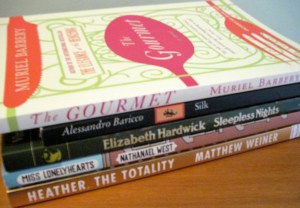 To my disappointment, I find I can’t make generalizations about the correlation between a book’s page count and its quality: a great book stands out no matter its length. But as Joe Hill (Stephen King’s son) said of his latest work, a set of four short novels, a novella should be “all killer, no filler.” Three of the five I review today definitely meet those criteria, impressing me with the literal and/or emotional ground covered.
Below are the novellas I didn’t manage to get to this past November. Perhaps they’ll hang around until next year, unless I get a burning urge to read one or more of them before then:
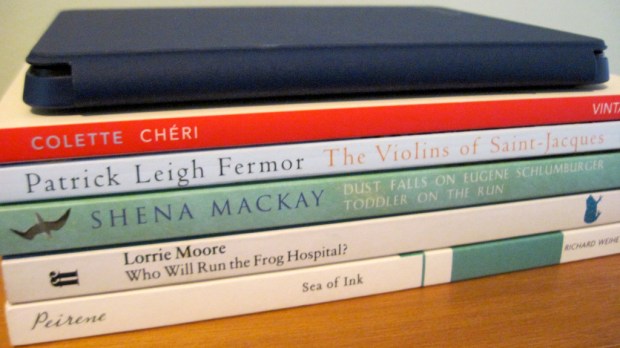
(On the Kindle: Record of a Night Too Brief by Hiromi Kawakami and Spring Garden by Tomoka Shibasaki.)
The Gourmet by Muriel Barbery
(translated from the French by Alison Anderson)
[112 pages]
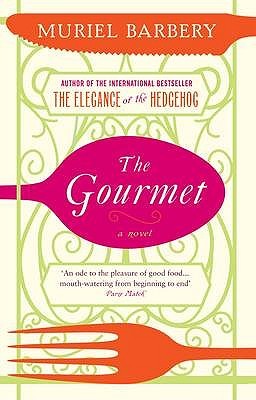 Pierre Arthens, France’s most formidable food critic, is on his deathbed reliving his most memorable meals and searching for one elusive flavor to experience again before he dies. He’s proud of his accomplishments – “I have covered the entire range of culinary art, for I am an encyclopedic esthete who is always one dish ahead of the game” – and expresses no remorse for his affairs and his coldness as a father. This takes place in the same apartment building as The Elegance of the Hedgehog and is in short first-person chapters narrated by various figures from Arthens’ life. His wife, his children and his doctor are expected, but we also hear from the building’s concierge, a homeless man he passed every day for ten years, and even a sculpture in his study. I liked Arthens’ grandiose style and the descriptions of over-the-top meals but, unlike the somewhat similar The Debt to Pleasure by John Lanchester, this doesn’t have much of a payoff.
A favorite passage:
“After decades of grub, deluges of wine and alcohol of every sort, after a life spent in butter, cream, sauce, and oil in constant, knowingly orchestrated and meticulously cajoled excess, my trustiest right-hand men, Sir Liver and his associate Stomach, are doing marvelously well and it is my heart that is giving out.”
Silk by Alessandro Baricco
(translated from the Italian by Guido Waldman)
[104 pages]
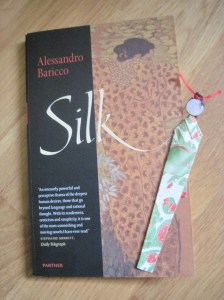 The main action is set between 1861 and 1874, as married French merchant Hervé Joncour makes four journeys to and from Japan to acquire silkworms. “This place, Japan, where precisely is it?” he asks before his first trip. “Just keep going. Right to the end of the world,” Baldabiou, the silk mill owner, replies. On his first journey, Joncour is instantly captivated by his Japanese advisor’s concubine, though they haven’t exchanged a single word, and from that moment on nothing in his life can make up for the lack of her. At first I found the book slightly repetitive and fable-like, but as it went on I grew more impressed with the seeds Baricco has planted that lead to a couple of major surprises. At the end I went back and reread a number of chapters to pick up on the clues. I’d had this book recommended from a variety of quarters, first by Karen Shepard when I interviewed her for Bookkaholic in 2013, so I’m glad I finally found a copy in a charity shop.
Sleepless Nights by Elizabeth Hardwick
[151 pages]
 Hardwick’s 1979 work is composed of (autobiographical?) fragments about the people and places that make up a woman’s remembered past. Elizabeth shares a New York City apartment with a gay man; lovers come and go; she mourns for Billie Holiday; there are brief interludes in Amsterdam and other foreign destinations. She sends letters to “Dearest M.” and back home to Kentucky, where her mother raised nine children. (“My mother’s femaleness was absolute, ancient, and there was a peculiar, helpless assertiveness about it. … This fateful fertility kept her for most of her life under the dominion of nature.”) There’s some astonishingly good writing here, but as was the case for me with Jenny Offill’s Dept. of Speculation, I couldn’t quite see how it was all meant to fit together.
Some favorite passages:
“The stain of place hangs on not as a birthright but as a sort of artifice, a bit of cosmetic.”
“The bright morning sky that day had a rare and blue fluffiness, as if a vacuum cleaner had raced across the heavens as a weekly, clarifying duty.”
“On the battered calendar of the past, the back-glancing flow of numbers, I had imagined there would be felicitous notations of entrapments and escapes, days in the South with their insinuating feline accent, and nights in the East, showing a restlessness as beguiling as the winds of Aeolus. And myself there, marking the day with an I.”
Miss Lonelyhearts by Nathanael West
[110 pages]
 West was a contemporary of F. Scott Fitzgerald; in fact, the story goes that when he died in a car accident at age 37, he had been rushing to Fitzgerald’s wake, and the friends were given adjoining rooms in a Los Angeles funeral home. Like The Great Gatsby, this is a very American tragedy and state-of-the-nation novel. “Miss Lonelyhearts” (never given any other name) is a male advice columnist for the New York Post-Dispatch. His letters come from a pitiable cross section of humanity: the abused, the downtrodden, the unloved. Not surprisingly, the secondhand woes start to get him down (“his heart remained a congealed lump of icy fat”), and he turns to drink and womanizing for escape. Indeed, I was startled by how explicit the language and sexual situations are; this doesn’t feel like a book from 1933. West’s picture of how beleaguered compassion can turn to indifference really struck me, and the last few chapters, in which a drastic change of life is proffered but then cruelly denied, are masterfully plotted. The 2014 Daunt Books reissue has been given a cartoon cover and a puff from Jonathan Lethem to emphasize how contemporary it feels.
Heather, the Totality by Matthew Weiner
[134 pages]
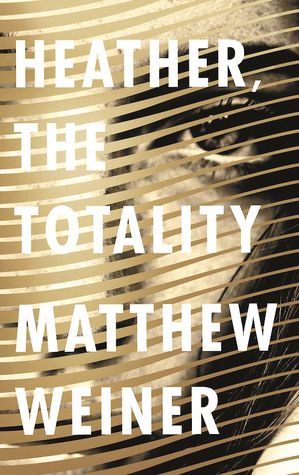 This was very nearly a one-sitting read for me: Clare gave me a copy at our Sunday Times Young Writer Award shadow panel decision meeting and I read all but a few pages on the train home from London. Famously, Matthew Weiner is the creator of Mad Men, but instead of 1960s stylishness this debut novella is full of all-too-believable creepiness and a crescendo of dubious decisions. Mark and Karen Breakstone have one beloved daughter, Heather. We follow them for years, getting little snapshots of a normal middle-class family. One summer, as their New York City apartment building is being renovated, the teenaged Heather catches the eye of a construction worker who has a criminal past – as we’ve learned through a parallel narrative about his life. I had no idea what I would conclude about this book until the last few pages; it was all going to be a matter of how Weiner brought things together. And he does so really satisfyingly, I think. It’s a subtle, Hitchcockian story, and that title is so sly: We never get the totality of anyone; we only see shards here and there – something the cover portrays very well – and make judgments we later have to rethink.
Have you read any of these novellas? Which one takes your fancy?
Classic of the Month: Under the Net (#IMReadalong)
I plan to dip in and out of Liz Dexter’s two-year Iris Murdoch readalong project to increase my familiarity with Murdoch and get through some of the paperbacks I happen to own. Even though I don’t own it, I decided to join in with Under the Net (1954) to see how her fiction career began. My university library copy is a rebound 1960s Penguin paperback, so – alas! – has a generic cover. See Liz’s introductory post for the different cover images and to get a peek at some of the recurring Murdochian themes that make their first appearance here.


Under the Net is narrated by Jake Donoghue, a translator who arrives back in London after a trip to France to find that he’s being kicked out of the flat where he’s been living for free with his friend Finn. In his desultory search for where to go next he takes readers along to Mrs Tinckham’s cat-filled shop, his Jewish philosopher friend Dave’s place, and the theatre where a former girlfriend, Anna Quentin, is in charge of props. (One of my favorite scenes has him accidentally locked into the theatre overnight; he has to sleep among the costumes.)
Anna’s sister Sadie, an actress, offers Jake a role as her bodyguard; she has a stalker of sorts, fireworks manufacturer and film studio owner Hugo Belfounder – whom, it turns out, Jake already knows. Together they were guinea pigs for an experiment on the common cold, and Jake secretly worked up Hugo’s conversations into a poorly received book called The Silencer. “Hugo was my destiny,” Jake muses; even though he’s embarrassed to see Hugo again, he gets drawn back into a connection with him.
One of the central themes of the novel, playing out with various characters, is the difficulty of seeing people clearly rather than resting with the image of them you’ve built up in your mind. I enjoyed Jake’s contrasting of physical and intellectual work, and his (sometimes contradictory) reflections on solitude and introversion:
I sometimes feel that Finn has very little inner life. I mean no disrespect to him in saying this; some have and some haven’t. I connect this too with his truthfulness. Subtle people, like myself, can see too much ever to give a straight answer.
I hate solitude, but I am afraid of intimacy. The substance of my life is a private conversation with myself which to turn into a dialogue would be equivalent to self-destruction. The company which I need is the company which a pub or a café will provide.
If like myself you are a connoisseur of solitude, I recommend to you the experience of being alone in Paris on the fourteenth of July.
Many readers probably expect Murdoch’s books to be dense and difficult, bogged down with philosophical ideas. But what I most noticed about this first novel is how humorous it is: it’s even madcap in places, with some coming and going via windows and Mister Mars, the film star dog, playing dead to get Jake out of a sticky situation. Over at Liz’s blog we’ve been discussing whether Murdoch is a typical ‘woman writer’; if her books had been published anonymously or under her initials, would it have been assumed that she was a man? I think so, given her success in creating a male narrator and her focus on the world of work and less traditional domestic arrangements.
This is my sixth Murdoch book. I didn’t enjoy Under the Net as much as the Booker Prize-winning The Sea, The Sea or The Bell (), but liked it more than The Black Prince and An Unofficial Rose () [I’ve also read one of her philosophy books, The Fire and the Sun ( ; I could make neither head nor tail of it)], so it falls in the middle for me so far at a solid
  . I’m looking forward to participating with several more of the readalong books next year, starting with A Severed Head in March.
Another favorite line, spoken by Hugo: “One must just blunder on. Truth lies in blundering on.”
Have you read anything by Iris Murdoch? Do you enjoy her work?
Join us for one or more of the readalong books!
Nonfiction Novellas for November
Nonfiction novellas – that’s a thing, right? Lots of bloggers are doing Nonfiction November, but I feel like I pick up enough nonfiction naturally (at least 40% of my reading, I’d estimate) that I don’t need a special challenge related to it. I’ve read seven nonfiction works this month that aren’t much longer than 100 pages, or sometimes significantly shorter. For the most part these are nature books and memoirs. I’m finishing off a few more fiction novellas and will post a roundup of mini reviews before the end of the month, along with a list of the titles that didn’t take and some general thoughts on novellas.
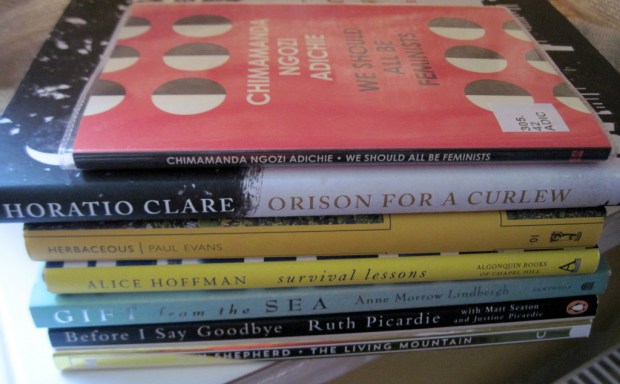
“We Should All Be Feminists” by Chimamanda Ngozi Adichie
[48 pages]
 This isn’t even a novella, but an essay published in pamphlet form, based on a TED talk Adichie gave as part of a conference on Africa. I appreciate and agree with everything she has to say, yet didn’t find it particularly groundbreaking. Her discussion of the various stereotypes associated with feminists and macho males is more applicable to a society like Lagos, though of course the pay gap and negative connotations placed on women managers are as relevant in the West.
Favorite line: “At some point I was a Happy African Feminist Who Does Not Hate Men And Who Likes To Wear Lip Gloss And High Heels For Herself And Not For Men.”
Orison for a Curlew: In search of a bird on the edge of extinction by Horatio Clare
[101 pages]
 Clare was commissioned to tell the story of the slender-billed curlew, a critically endangered marsh-dwelling bird that might be holding out in places like Siberia and Syria but is largely inaccessible to the European birding community. With little hope of finding a bird as good as extinct, he set out instead to speak to those in Greece, Romania and Bulgaria who had last seen the bird before its disappearance: conservationists, hunters, bird watchers and photographers. Clare writes well about nostalgia, hope and the difference individuals can make, but there’s no getting around the fact that this book doesn’t really do what it promises to. [Also, much as I hate to say it, this is atrociously edited. I know Little Toller is a small operation, but there are some shocking typos in here: “pilgrimmage,” “bridwatching,” “govenor,” “refinerey”; even the name of the author’s town, “Hebdon Bridge”!]
Some favorite lines:
“A huge cloud of black storks jump up like an ambush of Hussars in their red bills and leggings, white fronts and dark uniforms.”
“The wheels click-beat the rails as we follow a river valley north past dozy dolomitic scenery in ageing lemon sunlight”
Herbaceous by Paul Evans
[106 pages]
 This was Evans’s first book, and the first issued in the Little Toller monograph series. These are generally exceptionally produced nature books on niche subjects. Herbaceous is hard to categorize. In some ways it’s similar to Evans’s Guardian Country Diary columns: short pieces blending straightforward observations with poetic musings. However, some of them read more like short stories, and the language – appropriately for a book about flora? – can be florid. They probably work better read aloud as poems: I remember him reading “Skunk cabbage” at the New Networks for Nature conference some years back, for instance. Some lines are a little oversaturated with metaphor. But others are truly lovely.
A few favorite lines:
“The following morning the text of journeys appear[s] on snow: trident marks of pheasant, double slots of fallow deer, dabs of rabbit.”
“Bordello black and scarlet, six-spot burnet moths swing on the nodding idiot scabious flower through a lavender-blue sky and deep, deep under roots, the fossilised fury of the mollusc’s empire heaves.”
“A bed of pansies tilts flat blue faces to the sun like a deaf and dumb funeral.”
Survival Lessons by Alice Hoffman
[83 pages]
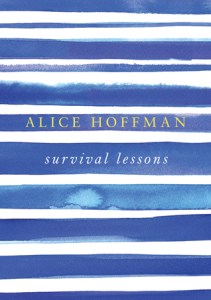 Hoffman wrote this 15 years after her own bout with breast cancer to encourage anyone going through a crisis. Each chapter title begins with the word “Choose” – a reminder that, even when you can’t choose your circumstances, you can choose your response. For instance, “Choose Whose Advice to Take” and “Choose to Enjoy Yourself.” This has been beautifully put together with blue-tinted watercolor-effect photographs and an overall yellow and blue theme (along with deckle edge pages – a personal favorite book trait). It’s a sweet little memoir with a self-help edge, and I think most people would appreciate being given a copy. The only element that felt out of place was the five-page knitting pattern for a hat. Though very similar to Cathy Rentzenbrink’s A Manual for Heartache, this is that tiny bit better.
Favorite lines:
“Make a list of what all you have loved in this unfair and beautiful world.”
“When I couldn’t write about characters that didn’t have cancer and worried I might never get past this single experience, my oncologist told me that cancer didn’t have to be my entire novel. It was just a chapter.”
Gift from the Sea by Anne Morrow Lindbergh
[130 pages]
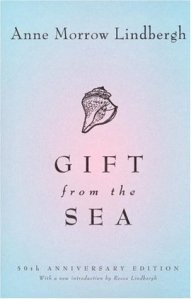 Though written in 1955 (I read a 50th anniversary edition copy), this still resonates and deserves to be read alongside feminist nonfiction by Virginia Woolf, May Sarton and Madeleine L’Engle. Solitude is essential for women’s creativity, Lindbergh writes, and this little book, written during a beach vacation in Florida, is about striving for balance in a midlife busy with family commitments. Like Joan Anderson, Lindbergh celebrates the pull of the sea and speaks of life, and especially marriage, as a fluid thing that ebbs and flows. Divided into short, meditative chapters named after different types of shells, this is a relatable work about the search for a simple, whole, purposeful life. The afterword from 1975 and her daughter Reeve’s introduction from 2005 testify to how lasting an influence the book has had.
Favorite lines:
“Patience, patience, patience, is what the sea teaches. Patience and faith.”
“The most exhausting thing in life, I have discovered, is being insincere.”
“I no longer pull out grey hairs or sweep down cobwebs.”
“It is fear, I think, that makes one cling nostalgically to the last moment or clutch greedily toward the next.”
Before I Say Goodbye by Ruth Picardie
[116 pages]
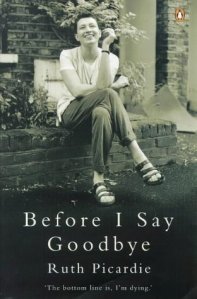 Ruth Picardie, an English freelance journalist and newspaper editor, was younger than I am now when she died of breast cancer in September 1997. The cancer had moved into her liver, lungs, bones and brain, and she only managed to write 6.5 weekly columns for Observer Life magazine, which her older sister, Justine Picardie, edited. Matt Seaton, Ruth’s widower, and Justine gathered a selection of e-mails exchanged with friends and letters sent by Observer readers and put them together with the columns to make a brief chronological record of Ruth’s final illness, ending with a 20-page epilogue by Seaton. Ruth comes across as down-to-earth and self-deprecating. All the rather Bridget Jones-ish fretting over her weight and complexion perhaps reflects that it felt easier to think about daily practicalities than about the people she was leaving behind. This is a poignant book, for sure, but feels fixed in time, not really reaching into Ruth’s earlier life or assessing her legacy. I’ve moved straight on to Justine’s bereavement memoir, If the Spirit Moves You, and hope it adds more context.
Favorite lines:
“You ram a non-organic carrot up the arse of the next person who advises you to start drinking homeopathic frogs’ urine.”
“Worse than the God botherers, though, are the road accident rubber-neckers, who seem to find terminal illness exciting, the secular Samaritans looking for glory.”
The Living Mountain by Nan Shepherd
[108 pages]
 This is something of a lost nature classic that has been championed by Robert Macfarlane (who contributes a 25-page introduction to this Canongate edition). Composed during the later years of World War II but only published in 1977, it’s Shepherd’s tribute to her beloved Cairngorms, a mountain region of Scotland. But it’s not a travel or nature book in the way you might usually think of those genres. It’s a subtle, meditative, even mystical look at the forces of nature, which are majestic but also menacing: “the most appalling quality of water is its strength. I love its flash and gleam, its music, its pliancy and grace, its slap against my body; but I fear its strength.” Shepherd dwells on the senses, the mountain flora and fauna, and the special quality of time and existence (what we’d today call mindfulness) achieved in a place of natural splendor and solitude: “Yet often the mountain gives itself most completely when I have no destination, when I reach nowhere in particular, but have gone out merely to be with the mountain as one visits a friend with no intention but to be with him.”
 Bookish Beck = Rebecca Foster. American transplant to England. Freelance proofreader and book reviewer.
 Bookish Beck