Christmas and Snow Reading: George Mackay Brown & More
I’ve never had a Christmas Day without my immediate family or in-laws before, but when West Berkshire leapt into the Tier 4 (highest) COVID-19 risk category on Saturday it was clear that even our modest plans to spend 48 hours at my parents-in-law’s home by the coast would be dashed. How we’d looked forward to seeing other people and going somewhere else! Nothing dramatic; just a change of scene and an excuse to pack an overnight bag and a giant tote full of books. The bright side, if there is one, is that we can choose exactly how to spend the holidays, and my husband – a fantastic cook – will have total control over the feast.
To keep our spirits up, we’ve done more Christmas decorating than usual. Our lounge is dominated by the biggest tree we’ve had yet, there’s holly all over, and we strung colored fairy lights across one wall. After Saturday’s bad news, we brought forward our annual viewing of Elf. And of course, I have a stack of seasonally appropriate books at the ready.
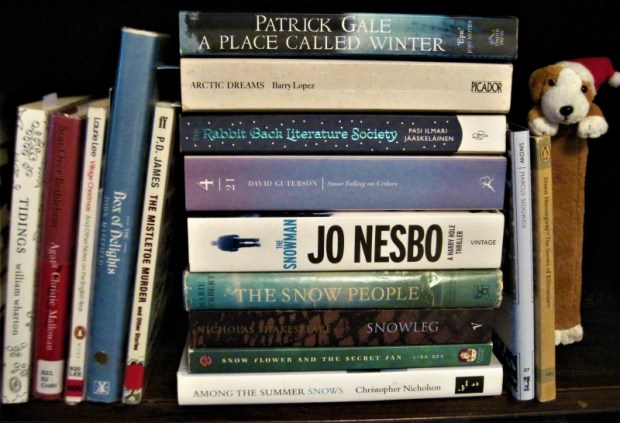
Here’s the first two I managed to read for review:
Christmas Stories by George Mackay Brown
 Many of these 30 short stories originally appeared in publications like the Scotsman, Tablet and Glasgow Herald between the 1940s and 1990s, with some also reprinted in previous Mackay Brown story volumes. This posthumous collection of seasonal tales by Orkney’s best-known writer runs the gamut from historical fiction to timeless fable, and travels from the Holy Land to Scotland’s islands. Often, Orkney is contrasted with Edinburgh, as in one of my favorites, “A Christmas Exile,” in which a boy is sent off to Granny’s house in Orkney one winter while his mother is in hospital and longs to make it home in time for Christmas.
Although the main characters are usually crofters, fishermen and lairds, they take on other roles in Nativity and Christmas Carol-like setups. For instance, a skipper, a miller, and a shepherd play the part of the Three Kings, while a greedy general merchant who won’t close his shop for Christmas Day is like Ebenezer Scrooge. Biblical and Dickensian figures merge in “An Epiphany Tale,” in which a deaf-blind-mute boy is visited by three strangers who give him back each of his senses, in turn, for one magical day. Characters get visions of the past or glimpses of how the other half live (“The Poor Man in His Castle”). Children are disabused of the idea of Santa Claus, but the unexplained still fuels a sense of wonder, as in Jeanette Winterson’s holiday stories. Even the poor have small gifts and pleasures to look forward to.
As editor William S. Peterson notes in his introduction, Calvinism had erased much of the joy from Christmas in Scotland, but in Mackay Brown’s lifetime he saw Yule traditions returning and was keen to emphasize that Christmas was not just about one day of celebration but was a whole season running from Advent through to Epiphany. The story “I Saw Three Ships…” remembers an oppressed past, though: set at the end of the Civil War, after King Charles I was beheaded, it is set at a time when the government declared “‘There will be no more Christmas. Christmas is abolished and forbid in the islands here, as it has been put down everywhere in this commonwealth. We will have no more of such ancient mummery.’ … Men reckoned that that was the longest coldest dreichest winter ever known in Orkney.” Those words might feel gloomily appropriate, but let’s celebrate all the more in defiance.
With thanks to Galileo Publishers for the free copy for review.
Fifty Words for Snow by Nancy Campbell
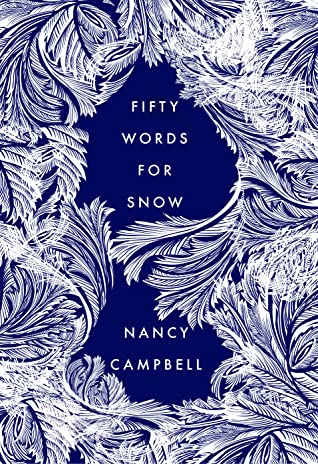 Words for snow exist in most of the world’s languages – even those spoken in countries where it rarely, if ever, snows. For instance, Thai has “hima” at the ready even though there were only once claims of a snow flurry in Thailand, in 1955. Campbell meanders through history, legend, and science in these one- to five-page essays. I was most taken by the pieces on German “kunstschnee” (the fake snow used on movie sets), Icelandic “hundslappadrifa” (snowflakes big as a dog’s paw, a phrase used as a track title on one of Jónsi’s albums – an excuse for discussing the amazing Sigur Rós), and Estonian “jäätee” (the terrifying ice road that runs between the mainland and the island of Hiiumaa – only when the ice is 22 cm thick, and with cars traveling 2 minutes apart and maintaining a speed of 25–40 km/hour).
The white and blue tendrils of the naked hardback’s cover creep over onto the endpapers, each essay is headed by a Wilson Bentley photograph of a snowflake, and the type is in a subtle dark blue ink rather than black. Too many of the essays are thin or dull, such that the contents don’t live up to the gorgeous physical object they fill. Still, I imagine you have a snow-loving relative who would appreciate a copy as a seasonal coffee table book.
With thanks to Elliott & Thompson for the free copy for review.
And a bonus:
“The Burglar’s Christmas” by Willa Cather (1896)
 This Renard Press pamphlet supporting the Three Peas charity (in aid of Europe’s refugees) was sent to me as a Christmas card alternative by Annabel/Shiny New Books. A young man wanders the slushy streets of Chicago one Christmas Eve. On this, his 24th birthday, he laments how low he has sunk that he has to rob the rich in order to get money to eat. But in this take on the Prodigal Son story, there is a second chance at forgiveness and a good life. I was reminded of the high society atmosphere of Edith Wharton’s work and the moral fables of O. Henry. The lovely little story has a William Morris design on the cover. I’ll keep it with my small collection of Christmas books and bring it out to reread in future years.
Are you reading any Christmas or wintry books?
What are your plans for the holidays?
Three Women and a Boat by Anne Youngson
“Does being grown up mean we are all doomed to be ordinary?”
One of my favorite things about where I live is the opportunity to walk along the Kennet & Avon canal, which runs by the bottom of our garden. Just a 10-minute stroll on the towpath takes us into Newbury’s town center, but someone with more time and motivation could take the canal all the way from London to Bristol. We have a small population of permanent boat dwellers beside one of the bridges, but many more vessels pass through or moor up for a night or a week. Even more so than gazing through a lit house window on a dark, cold night, looking at canal-boats sparks my imagination, making me wonder what life is like for the people (and cats) who live on them. How do they store everything, especially books??
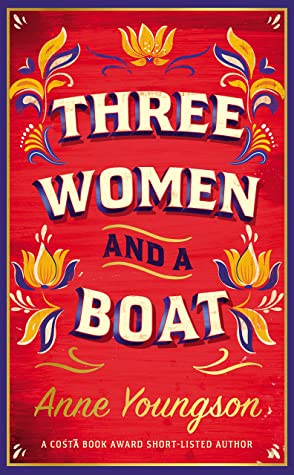 My curiosity about canal living and my love for Meet Me at the Museum (2018), Anne Youngson’s charming, bittersweet debut novel in letters between a farmer’s wife in England and a curator at the Denmark museum that houses the Tollund Man, were two strong motives to request her follow-up; a third was the title’s nod to the delightful Victorian classic Three Men in a Boat (although, for its 2021 U.S. release, it has been renamed The Narrowboat Summer; Jerome K. Jerome must be too niche a reference for the average American reader.)
On a towpath not far from London, two women are drawn to the Number One by the sound of a dog howling. Eve Warburton has just been made redundant after 30 years at a corporate job, and Sally Allsop has just decided to leave her impassive husband. Distressed at the animal’s unearthly cries, they break down the boat door to check on it and it promptly runs away. Luckily, it’s not long until the boat owner, Anastasia, returns, followed by Noah the terrier.
Anastasia is a no-nonsense woman but takes kindly to Eve and Sally. Her situation is thus: she needs to go into hospital soon for cancer treatment, but she has no money for moorings or necessary repairs on the Number One, her only home. She needs someone to pilot her boat to Chester, where she knows someone who will carry out the maintenance for free, and back. Conveniently, Eve and Sally, free of the commitments that once defined them, now have all the time in the world. Anastasia will live in Eve’s flat during her treatment. In a matter of days, Eve and Sally learn the basics about canal-boats and set off on their journey. Along the way they’ll meet drifters, craftspeople and storytellers, and rethink what they want from life.
Youngson perches halfway between Rachel Joyce and Carol Shields in this one. Much like Meet Me at the Museum, it’s about second chances in the second half of life, with relatable situations and an open, hopeful ending. I liked the details of the journey – makeshift meals, Scrabble games, transcripts of blunt phone calls with Anastasia – but Eve and Sally remained a bit blank for me, such that I did not care equally about all the protagonists’ fates. Still, this is a pleasant amble of a novel and one that I expect to be popular with my local book club. (See also: Susan’s review.)
A favorite passage:
Anyone can use the canal, for holidays, for living, for plying a trade. They’ve always been a bit alternative. An alternative to a horse and cart, then an alternative to a railway, then an alternative to a caravan holiday, an alternative to a house. I like that. I like that it’s not fixed. No one owns it. And I like that it is slow, which is exactly what made the search for alternatives essential. The canals were wide enough to cope with a boat moving at the walking pace of a horse. Any faster, and they break apart. That’s the only thing that needs to be preserved: the banks, the locks, the bridges. And what would destroy them is speed.
Three Women and a Boat was published in the UK by Doubleday on November 12th. My thanks to the publisher for the proof copy for review.
It will be published as The Narrowboat Summer in the USA by Flatiron Books on January 26, 2021.
Cover Love: My Favorite Book Covers of 2020
As I did last year, I’ve picked out some favorite book covers from the year’s new releases. In general, slap some flora and/or fauna on and I’m going to be drawn to a book. Sometimes these covers are colorful and busy; other times the layout is more stark.
Here are my favorite covers from books I’ve actually read:



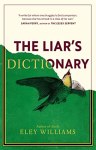

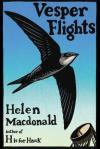
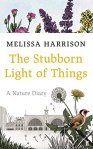
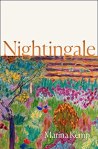


Plus a few I’ve read whose covers aren’t quite like the others:


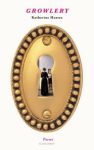
I prefer the U.S. cover (left) to the U.K. cover (right) in these four cases:


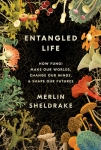


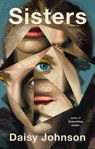

And here are covers that caught my eye even though I’ve not had a chance to read the books themselves (including USA-only releases and books my library doesn’t own):
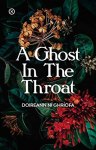


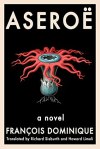
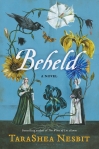
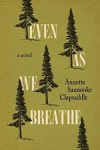
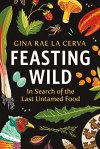
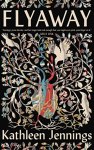
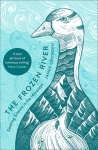
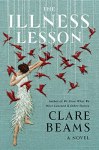
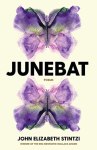
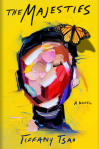
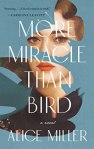

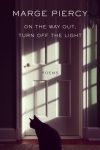
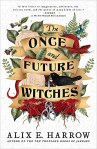


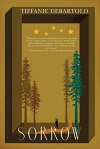

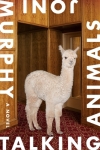
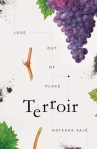




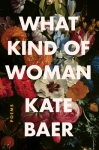

A few even buck the flora + fauna trend, employing interesting lines, shapes or perspective instead.


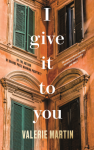
If I had to narrow it down, I think these three would be my absolute favorite covers of 2020:
What cover trends have you noticed this year?
Which ones tend to grab your attention?
Recent Reviews for Shiny New Books: Poetry, Fiction and Nature Writing
First up was a rundown of my five favorite poetry releases of the year, starting with…
Dearly by Margaret Atwood
 Dearly is a treasure trove, twice the length of the average poetry collection and rich with themes of memory, women’s rights, environmental crisis, and bereavement. It is reflective and playful, melancholy and hopeful. I can highly recommend it, even to non-poetry readers, because it is led by its themes; although there are layers to explore, these poems are generally about what they say they’re about, and more material than abstract. Alliteration, repetition, internal and slant rhymes, and neologisms will delight language lovers and make the book one to experience aloud as well as on paper. Atwood’s imagery ranges from the Dutch masters to The Wizard of Oz. Her frame of reference is as wide as the array of fields she’s written in over the course of over half a century.
I’ll let you read the whole article to discover my four runners-up. (They’ll also be appearing in my fiction & poetry best-of post next week.)
Next was one of my most anticipated reads of the second half of 2020. (I was drawn to it by Susan’s review.)
Artifact by Arlene Heyman
 Lottie’s story is a case study of the feminist project to reconcile motherhood and career (in this case, scientific research). In the generic more than the scientific meaning of the word, the novel is indeed about artifacts – as in works by Doris Lessing, Penelope Lively and Carol Shields, the goal is to unearth the traces of a woman’s life. The long chapters are almost like discrete short stories. Heyman follows Lottie through years of schooling and menial jobs, through a broken marriage and a period of single parenthood, and into a new relationship. There were aspects of the writing that didn’t work for me and I found the book as a whole more intellectually noteworthy than engaging as a story. A piercing – if not notably subtle – story of women’s choices and limitations in the latter half of the twentieth century. I’d recommend it to fans of Forty Rooms and The Female Persuasion.
Finally, I contributed a dual review of two works of nature writing that would make perfect last-minute Christmas gifts for outdoorsy types and/or would be perfect bedside books for reading along with the English seasons into a new year.
The Stubborn Light of Things by Melissa Harrison
 This collects five and a half years’ worth of Harrison’s monthly Nature Notebook columns for The Times. The book falls into two rough halves, “City” and “Country”: initially based in South London, Harrison moved to the Suffolk countryside in late 2017. In the grand tradition of Gilbert White, she records when she sees her firsts of a year. Often, she need look no further than her own home and garden. I appreciated how hands-on and practical she is: She’s always picking up dead animals to clean up and display the skeletons, and she never misses an opportunity to tell readers about ways they can create habitat for wildlife (e.g. bat and bird nest boxes that can be incorporated into buildings) and get involved in citizen science projects like moth recording.
The book’s final two entries were set during the UK’s first COVID-19 lockdown in spring 2020 – a notably fine season. This inspired me to review it alongside…
The Consolation of Nature by Michael McCarthy, Jeremy Mynott and Peter Marren
 A tripartite diary of the coronavirus spring kept by three veteran nature writers based in southern England (all of them familiar to me through their involvement with New Networks for Nature and its annual Nature Matters conferences). The entries, of a similar length to Harrison’s, are grouped into chronological chapters from 21 March to 31 May. While the authors focus in these 10 weeks on their wildlife sightings – red kites, kestrels, bluebells, fungal fairy rings and much more – they also log government advice and death tolls. They achieve an ideal balance between current events and the timelessness of nature, enjoyed all the more in 2020’s unprecedented spring because of a dearth of traffic noise.
The Stone Diaries by Carol Shields (Blog Tour Review)
Is it possible to capture the complete course of a life, whether looking from the outside or telling it from the inside? What is set in stone and what is fleeting? These are questions Carol Shields addresses in her 1995 Pulitzer Prize winner, which plays with perspective and forms of storytelling as it conveys the extra/ordinary life of Daisy Stone Goodwill Flett. What with the family tree and section of black-and-white photographs, you might expect this to be a family saga; with the chronological chapters proceeding from “Birth” in 1905 to “Death” in the 1990s, you might expect an objective faux-biography. But The Stone Diaries is neither.
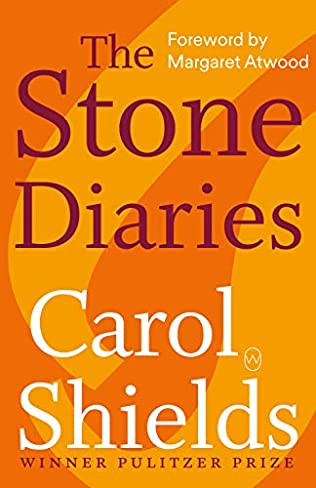 The facts are these. Daisy’s mother, Mercy, dies giving birth to her in rural Manitoba. Raised by a neighbor, Daisy later moves to Indiana with her stonecutter father, Cuyler. After a disastrously short first marriage, Daisy returns to Canada to marry Barker Flett. Their three children and Ottawa garden become her life. She temporarily finds purpose in her empty-nest years by writing a “Mrs. Green Thumb” column for a local newspaper, but her retirement in Florida is plagued by illness and the feeling that she has missed out on what matters most.
What makes this surprising life story so remarkable is its unpicking of (auto)biographical authenticity: Shields switches between the first and third person, between Daisy’s point of view and a feigned omniscience. Some sections foreground others’ opinions: Chapter 6 is composed entirely of letters Daisy receives, while Chapter 7 collects short first-person narratives from her children and friends as they speculate on why she has fallen into a depression.
As in Shields’s Happenstance and Larry’s Party, which I’ve also reread this year, I was struck by the role that chance plays in any life:
History indeed! As though this paltry slice of time deserves such a name. Accident, not history, has called us together, and what an assembly we make. What confusion, what a clamor of inadequacy and portent.
Talk of bias, gaps and unreliability undermines the narrative:
Well, a childhood is what anyone wants to remember of it. It leaves behind no fossils, except perhaps in fiction. Which is why you want to take Daisy’s representation of events with a grain of salt, a bushel of salt.
Daisy herself almost disappears from the parts of the book where she is voiceless, consumed by her roles – by the end she is universally known as “Grandma Flett.” This meant that other characters stood out as more memorable to me: Cuyler for his obsessive building of stone monuments and streams of words, Barker for his love of plants and long-deferred sexual fulfillment, Daisy’s friend Fraidy Hoyt for her careful chronicling of fast living, and Magnus, Barker’s father, who lives long past his 100th birthday after his return to the Orkney Islands.
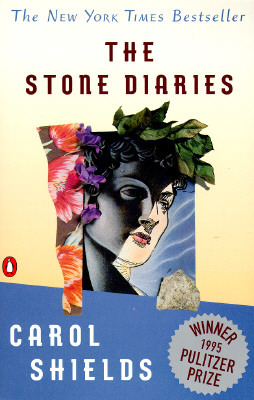 As in Moon Tiger, one of my absolute favorites, the author explores how events and memories turn into artifacts. The meta approach also, I suspect, tips the hat to other works of Canadian literature: in her introduction, Margaret Atwood mentions that the poet whose story inspired Shields’s Mary Swann had a collection entitled A Stone Diary, and surely the title’s similarity to Margaret Laurence’s The Stone Angel (1964) can’t be pure coincidence.
Experiencing the novel again after 14 years, I was impressed by the experimentation but ultimately somewhat detached from the story. It was admiration rather than love; I enjoyed earlier chapters more than the last few. But isn’t that just like life, to keep going past the point where it’s fun? And isn’t that the point, that the meaning you long for may not be there at all?
Marcie (Buried in Print) and I have reread – or, in my case for half of them, read for the first time – six Shields novels together in 2020. I hope I’ll find time to respond to the rest of them in the next few weeks. It has been so rewarding to observe how her themes recur and interlock. How heartening to see that, 17 years after her death, Shields is still being read and remembered, through the World Editions reissues (three more are coming in 2021) and through the Carol Shields Prize for Fiction, a new $100,000 annual award for North American women’s writing.
The Stone Diaries was reissued in the UK by World Editions on December 3rd. My thanks to the publisher for the free copy for review.
I was delighted to be invited to help close out the blog tour for The Stone Diaries. See below for details of where other reviews have appeared.
Booker and Young Writer Ceremonies & Tracy Chevalier Book Club
This year I correctly predicted Shuggie Bain by Douglas Stuart and Surge by Jay Bernard as the winners of the Booker Prize and the Sunday Times Young Writer of the Year Award, respectively. Patting myself on the back!


(Earlier in the year, I had a feeling Maggie O’Farrell would win the Women’s Prize, but wasn’t confident enough to single her out; and I got the Wainwright Prizes all wrong.)
I watched both the Booker Prize (live) and Young Writer of the Year Award (pre-recorded) ceremonies online; not having to secure an invitation or pay £30 for the train into London has been an ongoing bonus of pandemic arrangements.
 The Booker ceremony was nicely tailored to viewers at home, incorporating brief, informal pre-recorded interviews with each nominated author and a video chat between last year’s winners, Margaret Atwood and Bernardine Evaristo. When Evaristo asked Atwood about the difference between winning the Booker in 2019 versus in 2000, she replied, deadpan, “I was older.” I especially liked the short monologues that well-known UK actors performed from each shortlisted book. Only a few people – the presenter, Evaristo, chair of judges and publisher Margaret Busby, and a string quartet – appeared in the studio, while all the other participants beamed in from other times and places. Stuart is only the second Scottish winner of the Booker, and seemed genuinely touched for this recognition of his tribute to his mother.
I’ve attended the Young Writer ceremony at the London Library twice: in 2017, when I was on the shadow panel, and again last year. It was a shame not to be able to meet up with fellow bloggers and the shortlisted authors, but I appreciated hearing the judges’ thoughts on each nominee. Tessa Hadley said the whole shortlist was “so full of young energy.” Kit de Waal called Catherine Cho’s Inferno “an absolute page-turner.” All the judges remarked at how funny, cutting and original Naoise Dolan’s Exciting Times is. Critic Houman Barekat referred to Seán Hewitt’s Tongues of Fire as “unabashedly earnest.” Hadley said Marina Kemp’s Nightingale is just the kind of novel she loves, a “delicate, full notation,” and Barekat observed that it is a timely reminder of the value of care work.


It was clear that, for the judges, all five books were terrifically accomplished and would be worthy winners. Still, the unanimous decision was in favor of Surge, which Sunday Times literary editor Andrew Holgate said is “remarkable for its passionate engagement and diversity of voices.” Bernard read “Hiss” (also up on the Granta website) and said that “poems can take on another life” through performance and short films, so the poet can’t predict whether they will stay in poetry or branch out into other genres.
 Back on 18 November, I attended another online event to which I’d gotten a last-minute invitation: a “book club” featuring Tracy Chevalier in conversation with her literary agent, Jonny Geller, on Girl with a Pearl Earring at 20 and her new novel, A Single Thread. In 1996 she sent Geller a letter asking if he’d read Virgin Blue, which she’d written for the MA at the University of East Anglia – the only UK Creative Writing course out there at the time. After VB, she started a contemporary novel set at Highgate Cemetery, where she was a tour guide. It was to be called Live a Little (since a Howard Jacobson title). But shortly thereafter, she was lying in bed one day, looking at a Vermeer print on the wall, and asked herself what the look on the girl’s face meant and who she was. She sent Geller one page of thoughts and he immediately told her to stick Live a Little in a drawer and focus on the Vermeer idea.
Intriguingly, Chevalier stated that the deadline of her pregnancy determined the form of Girl with a Pearl Earring: she knew she had to keep things simple, with a linear narrative, one point of view, and spare prose. While the novel had a quiet publication in August 1999, a good review from Deborah Moggach helped, and it became a “word of mouth success,” never hitting #1 but selling continuously. Chevalier believes this was due to a rare coming together of story and writing; sometimes good stories are hampered by mediocre writing, or vice versa. She and Geller discussed the strange coincidence of two other Vermeer novels coming out at the same time (e.g. Girl in Hyacinth Blue by Susan Vreeland); she had the good luck of being the victor. The film version is “lovely,” she said. Geller has never forgotten Scarlett Johansson, who turned 18 on set, leaving her gum in during a cast supper of spaghetti.


Chevalier’s actual Highgate novel, Falling Angels, didn’t borrow at all from her contemporary-set draft as it was set in 1900. Incorporating suffragette history, it felt like an untold story ripe for the plucking. Falling Angels has long been the one I consider my favorite Chevalier – as of last month, when we did The Last Runaway in book club, I’ve read all her work – but after this event I’m eager to reread it and GwaPE to see what I think.
 Lastly, Chevalier and Geller talked about her new novel, A Single Thread, which was conceived before Trump and Brexit but had its central themes reinforced by the constant references back to 1930s fascism during the Trump presidency. She showed off the needlepoint spectacles case she’d embroidered for the novel. This wasn’t the first time she’d taken up a craft featured in her fiction: for The Last Runaway she learned to quilt, and indeed still quilts today. Geller likened her to a “method actor,” and jokingly fretted that they’ll lose her to one of these hobbies one day. Chevalier’s work in progress features Venetian glass. I’m already looking forward to it.
Like me, she moved to England from the Washington, D.C. area and has never lost the ‘accent’, so I feel like she’s a kindred spirit.
Bookish online events coming up soon: Penguin book quiz, followed by book club holiday social (a Zoom meeting with glasses of wine in hand!), on the 15th
Have you taken advantage of any online literary events recently?
Review Book Catch-Up: Gange, Mann, O’Donoghue
The end of the year is fast approaching, and one of my main reading goals is to follow through on all the rest of the review books I’ve received from publishers. I have another handful on the go, including a few holiday- and snow-themed ones I’ll review together.
Today, I have a history-rich travelogue that explores the Atlantic coast of Britain and Ireland, a memoir by an Anglican priest who has transitioned and experienced chronic illness, and a humorous, offbeat novel about finding the real Ireland.
The Frayed Atlantic Edge: A Historian’s Journey from Shetland to the Channel by David Gange (2019)
 This was one of the 2020 Wainwright Prize finalists. Having now experienced the entire nature writing shortlist, I stick with my early September pronouncement that it should have won. I was consistently impressed with the intricacy of the interdisciplinary approach. While kayaking down the western coast of the British Isles and Ireland, Gange delved into the folklore, geology, history, local language and wildlife of each region and island group. From the extreme north of Scotland at Muckle Flugga to the southwest tip of Cornwall, he devoted a month to each Atlantic-facing area, often squeezing in expeditions between commitments as a history lecturer at Birmingham.
Gange’s thesis is that the sea has done more to shape Britain and Ireland than we generally recognize, and that to be truly representative history books must ascribe the same importance to coastal communities that they do to major inland cities. Everywhere he goes he meets locals, trawls regional archives and museums, and surveys the art and literature (especially poetry) that a place has produced. Though dense with information, the book is a rollicking travelogue that – in words no less than in the two sections of stunning colour photographs – captures the elation and fear of an intrepid solo journey. He hunkers on snowy cliffs in his sleeping bag and comes face to face with otters, seals and seabirds in his kayak; at the mercy of the weather, he has deep respect for the Atlantic waves’ power.
I enjoyed revisiting places I’ve seen in person (Shetland, the Orkney Islands, Skomer) and getting a taste of others I’ve not been to but would like to go (like the Western Isles and the west coast of Ireland). Gange’s allusive writing reminds me of Tim Dee’s and Adam Nicolson’s, and Madeleine Bunting’s Love of Country is a similar read I also loved.
With thanks to William Collins for the free copy for review.
Dazzling Darkness: Gender, sexuality, illness and God by Rachel Mann (2012; 2020)
 I’ve so enjoyed discovering Rev. Rachel Mann’s work: poetry collection A Kingdom of Love, Advent devotional In the Bleak Midwinter, and novel The Gospel of Eve. This is a revised edition of her memoir, which is less an autobiographical blow-by-blow of becoming a trans priest in the Church of England than it is a vibrant theological meditation based around keywords like loneliness, reconciliation and vocation. She reflects on the apparent contradictions of her life: she was a typical boy who loved nothing more than toy guns, and then a young man obsessed with drugs and guitars; as ‘Nick’, she was married to a woman at the time of coming out, but continued to have relationships with women after transitioning and undergoing reassignment surgery, so considers herself a lesbian.
Ambiguities like this make us uncomfortable, Mann notes, but change and loss, and making the best of impossible situations, are all a part of the human condition. I appreciated how she characterizes herself as a perennial beginner: having to face the world anew after the second adolescence of becoming a woman as well as after the end of a long-term relationship and the last in a series of hospitalizations for severe Crohn’s disease.
While I’ve read other trans memoirs (Amateur by Thomas Page McBee and Conundrum by Jan Morris), this is my first from a Christian perspective, apart from the essays in The Book of Queer Prophets. Mann describes her early faith as intense but shallow, like falling in love; later it became deeper but darker as she followed Jesus’s path of suffering. Ministry has been a gift but is not without challenges: At synod meetings she is unsure whether to speak out or remain silent, but at least she bears witness to the presence of trans people in the Church.
With thanks to Wild Goose Publications for the free copy for review.
Scenes of a Graphic Nature by Caroline O’Donoghue (2020)
 Charlotte “Charlie” Regan is a 29-year-old filmmaker based in London. Her father has had cancer on and off for four years, but he got his ‘survivor’ label in a different way: when he was a child on an island off the western coast of Ireland, his teacher and 18 classmates died of carbon monoxide poisoning from the faulty secondhand oil burner in the schoolhouse; he was the only one left alive. Although her film commemorates this story, Charlie has never actually been to Ireland, so an invitation to Cork Film Festival is the perfect opportunity to see the place before her father dies. Travelling with her is her former best friend and roommate, Laura Shingle. There’s sexual tension between these two: Charlie is a lesbian, but Laura is determined to think of herself as straight even though she and Charlie would occasionally share a bed. To prove herself, Laura goes too far the other way, making homophobic comments about strangers.
If initially Charlie thinks this trip to Ireland will be about shamrock-green nostalgia, she soon snaps out of her idealism as she has to face some tough truths about the film and her family’s history. Charlie is a companionable narrator, but, while I enjoyed the pub scenes and found some of the one-liners very funny (“Everything in our room is a faint brown, as though it were daubed very gently by a child with a teabag” and “He had an X-ray and there’s legumes all over it.” / “Legumes? Do you mean lesions?”), I was underwhelmed overall. My interest peaked at the halfway point and waned thereafter. This is one I might recommend to fans of Caoilinn Hughes.
With thanks to Virago for the free copy for review.
Would you be interested in reading one or more of these?
Six Degrees of Separation: From Margaret to This Cold Heaven
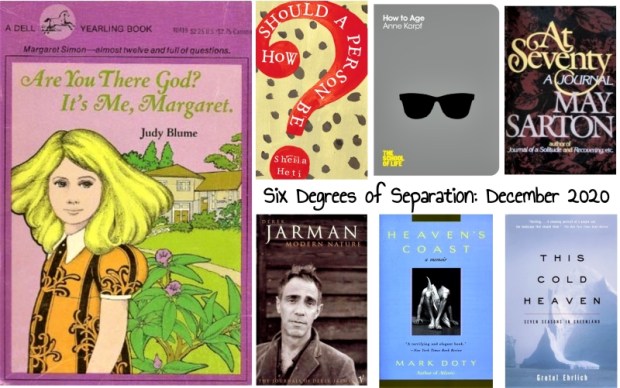
This month we’re starting with Are You There, God? It’s Me, Margaret (which I have punctuated appropriately!). See Kate’s opening post. I know I read this as a child, but other Judy Blume novels were more meaningful for me since I was a tomboy and late bloomer. The only line that stays with me is the chant “We must, we must, we must increase our bust!”
 #1 Another book with a question in the title (and dominating the cover) is How Should a Person Be? by Sheila Heti. I found a hardback copy in the unofficial Little Free Library I ran in our neighborhood during the first lockdown before the public library reopened. Heti is a divisive author, but I loved Motherhood for perfectly encapsulating my situation. I think this one, too, is autofiction, and the title question is one I ask myself variations on frequently.
 #2 I’ve read quite a few “How to” books, whether straightforward explanatory/self-help texts or not. Lots happened to be from the School of Life series. One I found particularly enjoyable and helpful was How to Age by Anne Karpf. She writes frankly about bodily degeneration, the pursuit of wisdom, and preparation for death. “Growth and psychological development aren’t a property of our earliest years but can continue throughout the life cycle.”
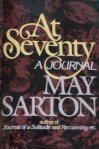 #3 Ageing is a major element in May Sarton’s journals, particularly as she moves from her seventies into her eighties and fights illnesses. I’ve read all but one of her autobiographical works now, and – while my favorite is Journal of a Solitude – the one I’ve chosen as most representative of her usual themes, including inspiration, camaraderie, the pressures of the writing life, and old age, is At Seventy.
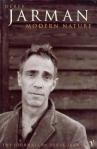 #4 Sarton was a keen gardener, as was Derek Jarman. I learned about him in the context of nature helping people come to terms with their mortality. Modern Nature reproduces the journal the gay, HIV-positive filmmaker kept in 1989–90. Prospect Cottage in Dungeness, Kent, and the unusual garden he cultivated there, was his refuge between trips to London and further afield, and a mental sanctuary when he was marooned in the hospital.
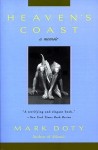 #5 One of the first memoirs I ever read and loved was Heaven’s Coast by Mark Doty, about his partner Wally’s death from AIDS. This sparked my continuing interest in illness and bereavement narratives, and it was through following up Doty’s memoirs with his collections of poems that I first got into contemporary poetry, so he’s had a major influence on my taste. I’ve had Heaven’s Coast on my rereading shelf for ages, so really must get to it in 2021.
 #6 Thinking of heaven, a nice loop back to Blume’s Margaret and her determination to find God … one of the finest travel books I’ve read is This Cold Heaven, about Gretel Ehrlich’s expeditions to Greenland and historical precursors who explored it. Even more than her intrepid wanderings, I was impressed by her prose, which made the icy scenery new every time. “Part jewel, part eye, part lighthouse, part recumbent monolith, the ice is a bright spot on the upper tier of the globe where the world’s purse strings have been pulled tight.”
A fitting final selection for this week’s properly chilly winter temperatures, too. I’ll be writing up my first snowy and/or holiday-themed reads of the year in a couple of weeks.
Join us for #6Degrees of Separation if you haven’t already! (Hosted on the first Saturday of each month by Kate W. of Books Are My Favourite and Best.)
Have you read any of my selections? Are you tempted by any you didn’t know before?
Book Serendipity in the Final Months of 2020
I call it Book Serendipity when two or more books that I read at the same time or in quick succession have something pretty bizarre in common. Because I have so many books on the go at once (20+), I suppose I’m more prone to such incidents than some. I also list these occasional reading coincidences on Twitter. (Earlier incidents from the year are here, here, and here.)
- Eel fishing plays a role in First Love, Last Rites by Ian McEwan and The Gospel of the Eels by Patrik Svensson.
- A girl’s body is found in a canal in First Love, Last Rites by Ian McEwan and Carrying Fire and Water by Deirdre Shanahan.
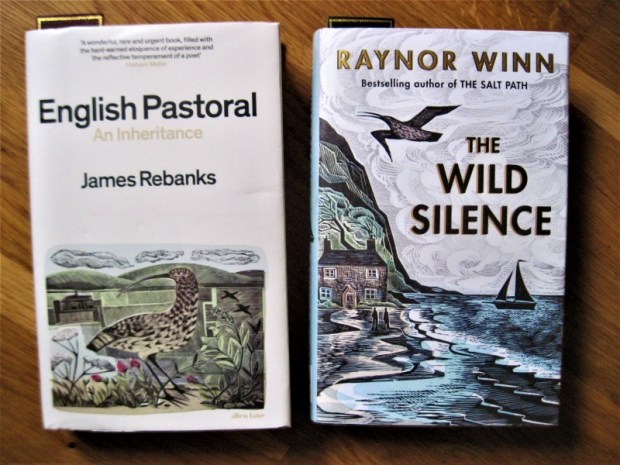
- Curlews on covers by Angela Harding on two of the most anticipated nature books of the year, English Pastoral by James Rebanks and The Wild Silence by Raynor Winn (and both came out on September 3rd).
- Thanksgiving dinner scenes feature in 666 Charing Cross Road by Paul Magrs and Such a Fun Age by Kiley Reid.
- A gay couple has the one man’s mother temporarily staying on the couch in 666 Charing Cross Road by Paul Magrs and Memorial by Bryan Washington.
- I was reading two “The Gospel of…” titles at once, The Gospel of Eve by Rachel Mann and The Gospel of the Eels by Patrik Svensson (and I’d read a third earlier in the year, The Gospel of Trees by Apricot Irving).

- References to Dickens’s David Copperfield in The Cider House Rules by John Irving and Mudbound by Hillary Jordan.
- The main female character has three ex-husbands, and there’s mention of chin-tightening exercises, in The Idea of Perfection by Kate Grenville and The Pumpkin Eater by Penelope Mortimer.
- A Welsh hills setting in On the Red Hill by Mike Parker and Along Came a Llama by Ruth Janette Ruck.


- Rachel Carson and Silent Spring are mentioned in A Year on the Wing by Tim Dee, The Frayed Atlantic Edge by David Gange, English Pastoral by James Rebanks and The Gospel of the Eels by Patrik Svensson. SS was also an influence on Losing Eden by Lucy Jones, which I read earlier in the year.
- There’s nude posing for a painter or photographer in The Glass Hotel by Emily St. John Mandel, How to Be Both by Ali Smith, and Adults by Emma Jane Unsworth.
- A weird, watery landscape is the setting for The Swallowed Man by Edward Carey and Piranesi by Susanna Clarke.
- Bawdy flirting between a customer and a butcher in The Idea of Perfection by Kate Grenville and Just Like You by Nick Hornby.


- Corbels (an architectural term) mentioned in The Idea of Perfection by Kate Grenville and Wakenhyrst by Michelle Paver.
- Near or actual drownings (something I encounter FAR more often in fiction than in real life, just like both parents dying in a car crash) in The Idea of Perfection, The Glass Hotel, The Gospel of Eve, Wakenhyrst, and Love and Other Thought Experiments.
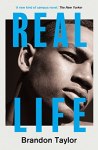
- Nematodes are mentioned in The Gospel of the Eels by Patrik Svensson and Real Life by Brandon Taylor.
- A toxic lake features in The New Wilderness by Diane Cook and Real Life by Brandon Taylor (both were also on the Booker Prize shortlist).


- A black scientist from Alabama is the main character in Transcendent Kingdom by Yaa Gyasi and Real Life by Brandon Taylor.
- Graduate studies in science at the University of Wisconsin, and rivals sabotaging experiments, in Artifact by Arlene Heyman and Real Life by Brandon Taylor.
- A female scientist who experiments on rodents in Transcendent Kingdom by Yaa Gyasi and Artifact by Arlene Heyman.
- There are poems about blackberrying in Dearly by Margaret Atwood, Passport to Here and There by Grace Nichols, and How to wear a skin by Louisa Adjoa Parker. (Nichols’s “Blackberrying Black Woman” actually opens with “Everyone has a blackberry poem. Why not this?” – !)


What’s the weirdest reading coincidence you’ve had lately?
Young Writer of the Year Award 2020: Shortlist Reviews and Predictions
Being on the shadow panel for the Sunday Times Young Writer of the Year Award was a bookish highlight of 2017 for me. I’m pleased for this year’s panelists, especially blogging friend Marina Sofia, to have had the same opportunity, and I look forward to hearing who they choose as their shadow panel winner on December 3rd and then attending the virtual prize ceremony on December 10th.

At the time of the shortlisting, I happened to have already read Exciting Times by Naoise Dolan and was halfway through Catherine Cho’s memoir Inferno. I got the poetry collection Surge by Jay Bernard out from the library to have another go (after DNFing it last year), and the kind folk of FMcM Associates sent me the other two shortlisted books, a poetry collection and a novel, so that I could follow along with the shadow panel’s deliberations. Here are my brief thoughts on all five nominees.
Surge by Jay Bernard (2019)
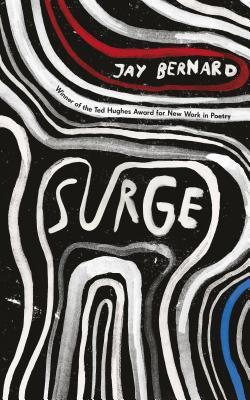 As a writer-in-residence at the George Padmore Institute, a research centre for radical Black history, in 2016, Bernard investigated the New Cross Massacre, a fire that killed 13 young people in 1981. In 2017, the tragedy found a horrific echo in the Grenfell Tower fire, which left 72 dead. This debut poetry collection bridges that quarter-century through protest poems from various perspectives, giving voice to victims and their family members and exploring the interplay between race, sexuality and violence. Patois comes in at several points, most notably in “Songbook.” I especially liked “Peg” and “Pride,” and the indictment of government indifference in “Blank”: “It-has-nothing-to-do-with-us today issued this statement: / those involved have defended their actions and been … acquitted / retired with full pay”. On the whole, I found it difficult to fully engage with this collection, but I am reliably informed that Bernard’s protest poems have more impact when performed aloud.
Readalikes: In Nearby Bushes by Kei Miller, A Portable Paradise by Roger Robinson and Don’t Call Us Dead by Danez Smith
My rating:
Inferno by Catherine Cho (2020)
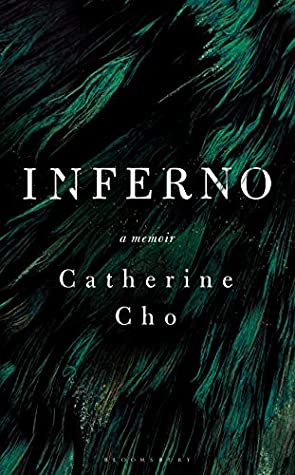 Cho, a Korean American literary agent based in London, experienced stress-induced postpartum psychosis after the birth of her son. She and her husband had returned to the USA when Cato was two months old to introduce him to friends and family, ending with a big Korean 100-day celebration at her in-laws’ home. Almost as soon as they got to her in-laws’, though, she started acting strangely: she was convinced cameras were watching their every move, and Cato’s eyes were replaced with “devil’s eyes.” She insisted they leave for a hotel, but soon she would be in a hospital emergency room, followed by a mental health ward. Cho alternates between her time in the mental hospital and a rundown of the rest of her life before the breakdown, weaving in her family history and Korean sayings and legends. Twelve days: That was the length of her hospitalization in early 2018, but Cho so painstakingly depicts her mindset that readers are fully immersed in an open-ended purgatory. She captures extremes of suffering and joy in this vivid account. (Reviewed in full here.)
Readalikes: An Angel at My Table by Janet Frame and Dear Scarlet by Teresa Wong
My rating:
Exciting Times by Naoise Dolan (2020)
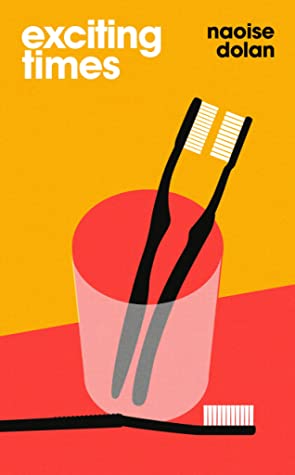 At 22, Ava leaves Dublin to teach English as a foreign language to wealthy preteens in Hong Kong and soon comes to a convenient arrangement with her aloof banker friend, Julian, who lets her live with him without paying rent and buys her whatever she wants. They have sex, yes, but he’s not her boyfriend per se, so when he’s transferred to London for six months, there’s no worry about hard feelings when her new friendship with Edith Zhang turns romantic. It gets a little more complicated, though, when Julian returns and she has to explain these relationships to her two partners and to herself. On the face of it, this doesn’t sound like it would be an interesting plot, and the hook-up culture couldn’t be more foreign to me. But with Ava Dolan has created a funny, deadpan voice that carries the entire novel. I loved the psychological insight, the playfulness with language, and the zingy one-liners (“I wondered if Victoria was a real person or three Mitford sisters in a long coat”). (Reviewed in full here.)
Readalikes: Besotted by Melissa Duclos and Conversations with Friends by Sally Rooney
My rating:
Tongues of Fire by Seán Hewitt (2020)
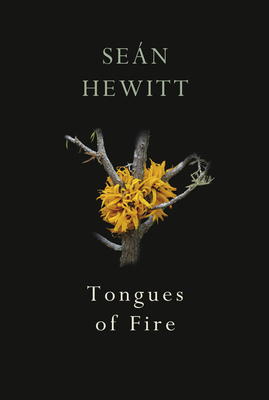 In the title poem, the arboreal fungus from the cover serves as “a bright, ancestral messenger // bursting through from one realm to another” like “the cones of God, the Pentecostal flame”. This debut collection is alive with striking imagery that draws links between the natural and the supernatural. Sex and grief, two major themes, are silhouetted against the backdrop of nature. Fields and forests are loci of meditation and epiphany, but also of clandestine encounters between men: “I came back often, // year on year, kneeling and being knelt for / in acts of secret worship, and now / each woodland smells quietly of sex”. Hewitt recalls travels to Berlin and Sweden, and charts his father’s rapid decline and death from an advanced cancer. A central section of translations of the middle-Irish legend “Buile Suibhne” is less memorable than the gorgeous portraits of flora and fauna and the moving words dedicated to the poet’s father: “You are not leaving, I know, // but shifting into image – my head / already is haunted with you” and “In this world, I believe, / there is nothing lost, only translated”.
Readalikes: Physical by Andrew McMillan and If All the World and Love Were Young by Stephen Sexton
My rating:
Nightingale by Marina Kemp (2020)
 Marguerite Demers, a 24-year-old nurse, has escaped Paris to be a live-in carer for elderly Jérôme Lanvier in southern France. From the start, she senses she’s out of place here – “She felt, as always in this village, that she was being observed”. She strikes up a friendship with a fellow outsider, an Iranian émigrée named Suki, who, in this story set in 2002, stands out for wearing a hijab. Everyone knows everyone here, and everyone has history with everyone else – flirtations, feuds, affairs, and more. Brigitte Brochon, unhappily married to a local farmer, predicts Marguerite will be just like the previous nurses who failed to hack it in service to the curmudgeonly Monsieur Lanvier. But Marguerite sticks up for herself and, though plagued by traumatic memories, makes her own bid for happiness. The novel deals sensitively with topics like bisexuality, euthanasia, and family estrangement, but the French provincial setting and fairly melodramatic plot struck me as old-fashioned. Still, the writing is strong enough to keep an eye out for what Kemp writes next. (U.S. title: Marguerite.)
Readalikes: French-set novels by Joanne Harris and Rose Tremain; The Hoarder by Jess Kidd
My rating:
General thoughts:
After last year’s unexpected winner – Raymond Antrobus for his poetry collection The Perseverance – I would have said that it’s time for a novel by a woman to win. However, I feel like a Dolan win would be too much of a repeat of 2017’s win (for Sally Rooney), and Kemp’s debut novel isn’t quite up to scratch. Much as I enjoyed Inferno, I can’t see it winning over these judges (three of whom are novelists: Kit de Waal, Sebastian Faulks and Tessa Hadley), though it would be suited to the Wellcome Book Prize if that comes back in 2021. So, to my surprise, I think it’s going to be another year for poetry.
I’ve been following the shadow panel’s thoughts via Marina’s blog and the others’ Instagram accounts and it looks like they are united in their admiration for the poetry collections, particularly the Hewitt. That would be my preference, too: I respond better to theme and style in poetry (Hewitt) than to voice and message (Bernard). However, I think that in 2020 the Times may try to trade its rather fusty image for something more woke, bearing in mind the Black Lives Matter significance and the unprecedented presence of a nonbinary author.
My predictions:
Shadow panel winner: Tongues of Fire by Seán Hewitt
Official winner: Surge by Jay Bernard
 Bookish Beck = Rebecca Foster. American transplant to England. Freelance proofreader and book reviewer.
 Bookish Beck