Reporting Back on My Most Anticipated Reads of 2024
Most years I’ve combined this topic with a rundown of my DNFs for the year; this time I can’t be bothered to list them. There have maybe not been as many as usual; generally, I’ve given a sentence or two about each DNF in a Love Your Library post. In any case, I hereby give you blanket permission to drop that book you’ve been struggling with. I absolve you of all potential guilt. It makes no difference if it has been nominated for or won a major prize, or if everyone else seems to love it. If for any reason a book isn’t connecting with you, move onto something else; you can always come back to try it another time, or not. Life is short.
So, on to those Most Anticipated books! In January, I picked the 12 new releases I was most looking forward to reading in 2024. Here’s how I fared with them – links are to my reviews:
Read and enjoyed: 5 (2 will appear on my Best-of list!)
 The Ministry of Time by Kaliane Bradley
- Fi: A Memoir of My Son by Alexandra Fuller
- Rapture’s Road by Seán Hewitt
- Wellness by Nathan Hill
- Come and Get It by Kiley Reid
Read and found somewhat disappointing (i.e., 3 stars or below): 5
 Martyr! by Kaveh Akbar
- Cairn by Kathleen Jamie
- Exhibit by R.O. Kwon
- The Vulnerables by Sigrid Nunez
- The Paris Novel by Ruth Reichl
DNF: 1
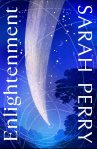 Enlightenment by Sarah Perry
Haven’t managed to get hold of, but have basically decided against anyway: 1
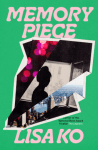 Memory Piece by Lisa Ko – The reviews from Susan and Laura made me realize I probably won’t love this as much as I want to. (Plus the average rating on Goodreads is disconcertingly low.)
I’ve really come to wonder if designating a book as “Most Anticipated” is a kiss of death. Are my hopes so high that only the rare book can live up to them?!
Nonetheless, I can’t resist compiling this list each year. In the first week of January, I’ll be previewing my 25 Most Anticipated titles for the first half of 2025.
Do you choose Most Anticipated books each year? (Or do you prefer to be surprised?) And if so, do they generally meet your expectations?
The Ones that Got Away: 2023’s DNFs, Most Anticipated Reads & More
Every time I list my DNFs the posts are absurdly popular, so if this is the permission you need to drop that book you’ve been struggling with, take it! If for any reason a book isn’t connecting with you, move onto something else; you can always try it another time. In rough chronological order:
Snowflake, AZ, Marcus Sedgwick – I wanted to try something else by the late Sedgwick (I’ve only read his nonfiction monograph, Snow) and this seemed like an ideal addition to a winter-themed post. I could have gotten onboard with the desert dystopia, but Ash’s narration was so unconvincing. Sedgwick was attempting a folksy American accent but all the “ain’t”s and “darned”s really don’t work from a teenage character. I only managed about 20 pages.
The Furrows, Namwali Serpell – I pushed myself through the first 78 pages for a buddy read with Laura, but once it didn’t advance in the Carol Shields Prize race there was no impetus to continue and it wasn’t compelling enough to finish. Magic realism, unreliable narrator … even when done well they can feel pretentious. I liked Serpell’s writing well enough. I marked out the line “Wayne’s absence in our lives had become the drain toward which everything ran.” I also noted neologisms like “splummeshing” and “spitz and thunk.” It’s always fun for me to read something set in familiar places (Baltimore area).
How Not to Drown in a Glass of Water by Angie Cruz – I read the first 40 pages. A voice-driven novel about a middle-aged immigrant re-entering the work force, it has a certain charm but also (the Spanglish!) a slightly irksome quality.
Corpse Beneath the Crocus by N.N. Nelson – Cliché-riddled and full of obvious sentiments and metaphors as it explores specific moments but mostly overall emotions. “Love Letter,” a prose piece, held the most promise, which suggests Nelson would have been better off attempting memoir. I slogged (hate-read, really) my way through to the halfway point but could bear it no longer.
Nothing Special by Nicole Flattery – The title is, unfortunately, apt. I read nearly half of this novel (109 pages!), waiting all the time for something to happen; something more than a disaffected teenager’s flat narration or her older self’s bitter remembrances. The premise of a typist working for Andy Warhol seemed promising, but here is the extent of his presence in what I read: “I never saw him come in but I felt the atmosphere change when he did” and Mae once approaching him to hand over a phone call.
All the Men I Never Married, Kim Moore – I hadn’t heard of the poet, and had never read anything from the publisher, but took a chance because I’ll read any new-to-me contemporary poetry that my library system acquires. I got to page 16. It’s fine: poems about former love interests, whether they be boyfriends or aggressors. There looks to be good variety of structure in the book. I just didn’t sense adequate weight. A stanza I liked: “I want to say to them now / though all we are to each other is ghosts / once you were all that I thought of”.
Music in the Dark, Sally Magnusson – I loved The Ninth Child, but have DNFed her other two novels, alas! I even got to page 122 in this, but I had so little interest in seeing how the two Scotland storylines fit together.
Tracks, Robyn Davidson – I got to page 93, hoping for adventure but finding only preamble, disturbing human behaviour, and cruelty to camels. It’s a shame, as I had in mind that this was an Australian classic and of course I was interested in an intrepid female travel writer’s perspective. Her thoughts about solitude were also valuable.
The Five Red Herrings by Dorothy L. Sayers – I’m awful about trying mystery series, usually DNFing or giving up after the first book. I just can’t care whodunnit.
The Other Side of Mrs Wood by Lucy Barker – I read the first 82 pages. This was capable hist fic but without the spark that would have kept me interested.
Study for Obedience by Sarah Bernstein – The first few pages seemed medieval; the next two 19th-century; the next several hyper-contemporary. Always, the vocabulary felt arcane and overblown. Feeling this was going to be one of those annoyingly vague fables of strangers and peculiar happenings, I gave up after the first 10 pages.
Weyward by Emilia Hart – I read the first 48 pages. The setup is EXACTLY the same as in The Bass Rock by Evie Wyld (three women characters connected in similar ways, and set at three almost identical time periods). Unfortunately, that one’s amazing whereas this was pedestrian. I could never be bothered to pick it up.
The Last Bookwanderer by Anna James – I read the first 36 pages and felt no impetus to read any more. The series went downhill after Book 3 in particular, but really never topped Book 1. Say no to series! Stand-alone books are fine!!
All In: Cancer, Near Death, New Life by Caitlin Breedlove – Unconnected and slightly pretentious thoughts. It didn’t seem like she had anything new to say about cancer.
The Elegance of the Hedgehog by Muriel Barbery – I read the first 88 pages before giving up. This story of several residents of the same apartment building, their families and sadness and thoughts, was reminiscent of Sophie’s World and didn’t grip me.
The Pleasing Hour by Lily King – I read the first 75 pages. In theme and atmosphere this debut novel was most like her short stories (adolescents, travel, relationships). After giving up her baby to her sister, a young woman goes abroad to be an au pair for a family who live on a Paris houseboat. I failed to warm to any of the characters and the perspective seemed too diffuse for such a short book. Had this been my first taste of King’s work I would likely not have read anything else, because it seems quite ordinary.
Plus a handful more I didn’t keep notes on and barely remember, including:
- Ghost Apples by Katharine Coles
- Becky by Sarah May
- Industrial Roots by Lisa Pike
- I Laugh Me Broken by Bridget van der Zijpp
- A Terrible Kindness by Jo Browning Wroe
- The Premonition by Banana Yoshimoto
Overall, that feels like a lot fewer than in previous years, which I’ll call a win.
In January, I wrote about the 20 new releases I was most looking forward to reading in 2023. Here’s how I did with them:
Read and enjoyed: 7 (a few will appear on my Best-of list for the year)
Read and found disappointing (3 stars or below): 6
DNFed: 1
Currently reading: 1
Started but set aside and need to finish: 2
Haven’t managed to get hold of yet: 3
A pretty poor showing!
However, I did recently get the chance to go back and read one of my most anticipated books of 2019, the graphic memoir Good Talk by Mira Jacob, and really enjoyed it (my review is here). I found a secondhand copy at 2nd & Charles for $4 and bought it with my store credit for purchasing some gift vouchers. The lesson is that it’s never too late to catch up on a most anticipated book.
What are some of the ‘ones that got away’ from you this year?
The Ones that Got Away: 2022’s DNFs, Most Anticipated Reads & More
Every time I list my DNFs the posts are absurdly popular, so if this is the permission you need to drop that book you’ve been struggling with, take it! If for any reason a book isn’t connecting with you, move onto something else; you can always try it another time. I’ve given a few words as to why I gave up on each one. In rough chronological order:
What Cannot Be Undone by Walter M. Robinson: Medical essays. Repetitive and mawkish; won’t stand out in the crowded field of doctors’ memoirs.
Loss of Memory Is Only Temporary by Johanna Kaplan: Rediscovered short stories of Jewish NYC in the 1960s–70s. The character portraits are sharp, but the first story, “Other People’s Lives,” is novella length and felt absolutely endless.
Six Walks: In the Footsteps of Henry David Thoreau by Ben Shattuck: Nice enough travel writing about trips to Cape Cod, Walden Pond and Mt. Katahdin, but the information on Thoreau (including extensive quotations) is not well integrated and the reflections generic.
Here Comes the Miracle by Anna Beecher (from the ST Young Writer of the Year Award shortlist): MA-course writing-by-numbers and seemed to be building towards When God Was a Rabbit-style mawkishness.
Empire of Wild by Cherie Dimaline: The premise was appealing but it was so slow to go anywhere and the writing was only so-so.
Devotion by Hannah Kent: I was enjoying the beautiful writing and the gentle love story unfolding between two teenage girls setting off from Prussia to Australia with their families. My interest waned a little during the start of the sea voyage, as I kept waiting for the bizarre twist other bloggers had warned of. When I finally got to it, it seemed so silly that I could scarcely be bothered to continue. A shame as I was getting Kiran Millwood Hargrave vibes.
Mercury Pictures Presents by Anthony Marra: A huge disappointment as I adored Marra’s two previous works. I wasn’t connecting to the characters or setting at all. Something about it felt too familiar, also; I kept trying to think what it was reminding me of. Mr Wilder & Me by Jonathan Coe?
After Sappho by Selby Wynn Schwartz: From the Booker Prize longlist. Another case of a terrific premise – and interesting style, too, what with the first person plural in the prologue and the discrete paragraphs like prose poems – but I found that there were too many historical figures, most of them too obscure for me to get interested in.
Raining Sideways: A Devonshire Diary of Food and Farming by Sally Vincent: Boring observations, poorly edited.
Motherthing by Ainslie Hogarth: I actually read about two-thirds of this comic horror novel about a woman dealing with the aftermath of her hateful mother-in-law’s suicide, and intended to review it for R.I.P. even though it felt try-hard. But when my mother died I found that the whole thing seemed in poor taste and I didn’t want to go back to it.
Liberation Day by George Saunders: I only read the first story, which was so much like “The Semplica Girl Diaries” (from Tenth of December) in voice and content that it felt unnecessary, as well as being overlong (nearly 1/3 of the whole book). I’ll hold my place in the Kindle edition and think about trying the rest again another time.
Lessons by Ian McEwan: I’m used to much shorter novels with more contrived plots from McEwan, whereas this feels like the sort of rambling life story William Boyd would have written. I was intrigued by the promised element of Roland’s abuse by his childhood piano teacher, but bored with the Cold War theme of the 1980s strand (which feels most like The Child in Time from his past oeuvre). Perhaps I’ll try it again another day.
Plus a handful more I didn’t keep notes on and barely remember, so they just get my reductive and unfair two-word summaries (alphabetical order this time):
- Human Croquet by Kate Atkinson: Too quirky.
- The Flow by Amy-Jane Beer: Too overwritten.
- The Wilderness by Sarah Duguid: Too pulpy.
- Brave New World: A Graphic Novel by Fred Fordham: Too lurid.
- Mother’s Boy by Patrick Gale: Too mild.
- The Quarry by Ben Halls: Too gritty.
- The White Rock by Anna Hope: Too what’s-the-point.
- One Good Story, That One by Thomas King: Too trickster.
- As I Walked Out One Midsummer Morning by Laurie Lee: Too old-fashioned.
- Homage to Catalonia by George Orwell: Too academic.
- What Is Not Yours Is Not Yours by Helen Oyeyemi: Too weird.
- Catch Your Breath by Ed Patrick: Too unfunny.
- The Unadoptables by Hana Tooke: Too boring.
Whew. I think that’s all.
That works out to abandoning about 8% of the books I started in the year, which is not a bad average for me (often it’s closer to 15%).
In January, I wrote about the 20 new releases I was most looking forward to reading in 2022. Here’s how I did with them:
Read and enjoyed (3.5* or above rating): 10 (a few will appear on my Best-of lists for the year)
Currently reading: 2
Started but set aside; need to finish: 3
Haven’t managed to get hold of: 3
Not actually published yet: 2 (Heartstopper, Volume 5 is now due out in 2023; try as I might, I can’t find any info on A Violent Woman by Ayana Mathis.)
This beats last year’s showing, when I had 5 DNFs from my Most Anticipated list!
I regret running out of time to finish True Biz and Horse from that Most Anticipated list, as well as The Rabbit Hutch (a bit too clever for its own good?) and Fight Night. It’s entirely possible that I could have found some more year favourites on my groaning set-aside and review backlog shelves. I also would have liked to get to the in-demand 2022 releases I’ve just picked up from the library, including The Seven Moons of Maali Almeida and Our Missing Hearts. No matter – I’ll enjoy these just as much when I get to them in an unhurried fashion next year.
What are some of the ‘ones that got away’ from you this year?
The Ones that Got Away: 2021’s DNFs, Most Anticipated Reads & More
I’ve not been great about keeping track of my abandoned books this year, nor have I been consistent about writing justifications. I’m particularly wary about casting aspersions on books that I know others have loved (such as the latest novels by Jonathan Franzen, Lauren Groff and Elizabeth Strout). I don’t like to belabour the matter, but every time I list my DNFs I do find that the posts are absurdly popular, so if this is the permission you need to drop that book you’ve been struggling with for months, take it! If for any reason a book isn’t connecting with you, move onto something else; you can always try it again another time.
For most I’ve given the usual (horribly reductive and unfair) two-word summaries, with longer reactions then given to the DNFs that were on my “most anticipated” list. In rough chronological order:
The Dickens Boy by Thomas Keneally: Too dull.
A Fire in My Head: Poems for the Dawn by Ben Okri: Too unsubtle.
Nobody Told Me: Poetry and Parenthood by Hollie McNish: Too long.
A Burning by Megha Majumdar: Too amateurish.
A Crooked Tree by Una Mannion: Too 1980s.
The Lamplighters by Emma Stonex: Too suspense-less.
The Art of Falling by Danielle McLaughlin: Too slow.
Escape Routes by Naomi Ishiguro: Too undistinctive.
You Exist Too Much by Zaina Arafat: Too Creative-Writing-MA-alum.
The Last Migration by Charlotte McConaghy: Too overwrought.
Of Women and Salt by Gabriela Garcia: Too dispersed.
Bewilderness by Karen Tucker: Too Marlena-wannabe.
Drowning Ruth by Christina Schwarz: Too early-2000s-Oprah’s-book-club.
Will This House Last Forever? by Xanthi Barker: Too Featherhood-lite.
The Union of Synchronised Swimmers by Cristina Sandu: Too vague.
The Cape Doctor by E. J. Levy: Too plodding.
Fathoms by Rebecca Giggs: Too dense.
Crossroads by Jonathan Franzen: Too wordy.
Fox and I: An Uncommon Friendship by Catherine Raven: Too lyrical.
Oh William! by Elizabeth Strout: Too scatter-brained.
Dark Tourist: Essays by Hasanthika Sirisena: Too unfocused.
Darwin’s Dragons by Lindsay Galvin: Too non-Darwin.
Something Out of Place: Women and Disgust by Eimear McBride: Too researched.
The Art of Reassembly by Peg Conway: Too homespun.
Coming Clean: A true story of love, addiction and recovery by Liz Fraser: Too soon.
Beautiful Country: A Memoir by Qian Julie Wang: Too child-POV.
Deadheading and Other Stories by Beth Gilstrap: Too drifting-to-nowhere.
Malibu Rising by Taylor Jenkins Reid: Too soapy.
Philomath: Poems by Devon Walker-Figueroa: Too weird.
Taste: My Life through Food by Stanley Tucci: Too celebrity-rather-than-author.
Somewhere between 30 and 40 DNFs is not too bad for me, representing around 10% of the books I started this year, rather than my standard 15%.
In January, I highlighted the 20 releases that I was most looking forward to reading in 2021. Here’s how I did:
Read and loved: 7 (4 will be on my Best-of lists for the year)
Read and found disappointing (i.e., rated 3.5 stars or below): 4
Still have a review copy to read: 1
Haven’t managed to find yet: 3
DNFs: 5 (oh so poor! – is my “most anticipated” designation actually a kiss of death?)
These were:
Libertie by Kaitlyn Greenidge – I was a big fan of Greenidge’s debut novel, We Love You, Charlie Freeman, but this Reconstruction-era story of an African American doctor and her daughter/protégée bored me stiff. After two attempts I could barely get past page 30.
Matrix by Lauren Groff – It’s as if Groff set herself the challenge of applying the most modern style possible (present tense, no speech marks, pared-back prose, sexual frankness) to a medieval setting. The result is readable, which is more than I can say for most of what’s set in that time period, but I waited 75 pages for something to happen. All we’d had thus far was people commenting on how unsuitable ungainly six-foot Marie is to be an abbess and lots of detail about the privations of life at that time unless you have money as a cushion.
Hot Stew by Fiona Mozley – I read the first 110 pages and felt a bit puzzled by Mozley’s change in direction: This is the sort of state-of-the-nation (via London) novel that male authors were writing a decade ago, in the Dickensian mode of broad characterization and coincidental connection. The omniscient, present-tense narration does too much skating over the surface and not enough digging into characters’ individuality and motivation.
An Ordinary Wonder by Buki Papillon – I read 25 pages or so. Adebayo/Adichie vibes but not the writing chops or the interesting story. Too bad, as I was interested in another intersex narrative to compare with Middlesex et al.
Great Circle by Maggie Shipstead – I tried this twice and found it bloated and slow; such a disappointment. Perhaps I’ll find the right moment in the future. In the meantime, I look forward to reading Shipstead’s first short story collection next year instead. Here’s hoping that her short-form storytelling will work out better for me!
Not a great showing, then, but I can’t seem to resist getting my hopes up each year. (My Most Anticipated Books of 2022 post will be coming up early in January!)
I regret running out of time in 2021 to finish The Final Revival of Opal and Nev by Dawnie Walton or read my review copy of Build Your House Around My Body by Violet Kupersmith. The other 2021 releases I’m most keen to get hold of are Radiant Fugitives by Nawaaz Ahmed, The Secret to Superhuman Strength by Alison Bechdel, Seeing Ghosts by Kat Chow, The War for Gloria by Atticus Lish, What Doesn’t Kill You by Tessa Miller, On Freedom by Maggie Nelson, Names of the Women by Jeet Thayil and O Beautiful by Jung Yun.
What are some of the ‘ones that got away’ from you this year?
The Ones that Got Away: DNFs, Most Anticipated Reads & More
Following on from my late June list of DNFs, here are the rest of the books I abandoned this year (asterisks next to the ones I intend to try again someday):
Summer before the Dark: Stefan Zweig and Joseph Roth, Ostend 1936 by Volker Weidermann – Too niche.
The Motion of the Body through Space by Lionel Shriver – Too non-PC.
When They Call You a Terrorist: A Black Lives Matter Memoir by Patrisse Khan-Cullors – Too been-there.
*The Wild Laughter by Caoilinn Hughes – Too much economics.
Birdsong on Mars by Jon Glover & Two Tongues by Claudine Toutoungi – Carcanet poetry releases. Style/reader mismatch issue for both.
That Reminds Me by Derek Owusu – Too dull.
3 Summers by Lisa Robertson (poetry) – Too weird.
Apeirogon by Colum McCann – Too long.
*We Were the Mulvaneys by Joyce Carol Oates – Too much of quirky folks.
Persuasion by Jane Austen – Too much telling.
Golden Boy by Abigail Tarttelin – Too brutal.
The Song of Achilles by Madeline Miller – Too much Greek myth.
*Shuggie Bain by Douglas Stuart – Too misery-memoir.
Night-Gaunts and Other Tales of Suspense by Joyce Carol Oates – Maddening punctuation.
The Corset by Laura Purcell – Too lifeless.
True Story by Kate Reed Petty – Too consciously relevant.
As You Were by Elaine Feeney – Too much of mental hospitals.
*House of Glass by Hadley Freeman – Too detailed.
Rootbound: Rewilding a Life by Alice Vincent – Too much snowflake woe.
Le Bal by Irène Némirovsky – Too gloomy.
The Wasp Factory by Iain Banks – Too disturbing.
The Girl with the Louding Voice by Abi Daré – Too precocious.
Restless by William Boyd – Too ordinary.
No getting around it: I have lots of DNFs. I’ve not done a great job recording them this year, but I think it was 46, which works out to about 12% of the books I’ve started. Most years it’s around 15%, so for me that’s not too bad, but I know some of you never have DNFs, or could count them on one hand. How do you do it? Do you sample books beforehand? Do you make yourself finish everything you start even if you’re not enjoying it? Or are you just that good at picking what will suit your tastes? Sometimes I overestimate my interest in a subject or my tolerance for subpar writing. In recent years my patience for mediocre books has waned, and I’m allergic to some writers’ style for reasons that are often difficult to pinpoint.
In early July, I highlighted the 15 releases from the second half of the year that I was most looking forward to reading. Here’s how I did:
Read: 10 [Slight disappointments (i.e., rated 3 stars): 4]
Languishing on my Kindle, but I still intend to read: 2
Haven’t managed to find yet: 3
Getting to two-thirds of my most anticipated books is really good for me!
 I regret not having enough time left in 2020 to finish Tyll by Daniel Kehlmann, especially because Cathy and Susan both named it as one of their favorite books of the year.
 The additional 2020 releases I most wished I’d found time for before the end of this year (from my late November list of year-end reading plans) include Marram by Leonie Charlton, D by Michel Faber, and Alone Together: Love, Grief, and Comfort in the Time of COVID-19. This last one was offered to me by the editor on Goodreads and I feel bad for not following through with a review, but somehow the subject feels too close to the bone. Maybe next year?
I’ll be back to start the countdown of my favorite books of the year on the 26th, starting with fiction and poetry. On the 27th it’s all about nonfiction. A break for Library Checkout on the 28th, followed by 2020 runners-up on the 29th, best backlist reads on the 30th, and some superlatives and statistics on the 31st.
Merry Christmas!
A Look Back at 2020’s Reading Projects, Including Rereads
Major bookish initiatives:
- Coordinated a Not the Wellcome Prize blog tour to celebrate 2019’s health-themed books – in case you missed it, the winner was Sinéad Gleeson for Constellations.
- Co-hosted Novellas in November with Cathy (746 Books).
- Hosted Library Checkout each month.


Reading challenges joined:
- 12 blog tours
- Six Degrees of Separation: I started participating in February and did nine posts this year
- Paul Auster Reading Week
- Reading Ireland month
- Japanese Literature Challenge
- 1920 Club
- 20 Books of Summer
- Women in Translation Month
- Robertson Davies Weekend
- Women’s Prize winners (#ReadingWomen)
- 1956 Club
- R.I.P.
- Nonfiction November
- Margaret Atwood Reading Month
This works out to one blog tour, one reading project, and one regular meme per month – manageable. I’ll probably cut back on blog tours next year, though; unless for a new release I’m really very excited about, they’re often not worth it.


Buddy reads:
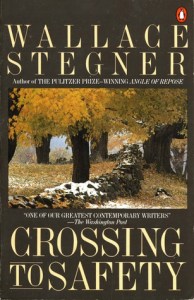 Crossing to Safety with Laila (Big Reading Life)
- 6 Carol Shields novels plus The Trick Is to Keep Breathing, Deerbrook, and How to Be Both with Marcie (Buried in Print)
- A Visit from the Goon Squad and The Idea of Perfection with Laura T.
- Mother’s Milk with Annabel
- 666 Charing Cross Road with Liz
Self-set reading challenges:
- Seasonal reading
- Classic of the Month (14 in total; it’s only thanks to Novellas in November that I averaged more than one a month)
- Doorstopper of the Month (just 3; I’d like to try to get closer to monthly in 2021)
- Wainwright Prize longlist reading
- Bellwether Prize winners (read 2, DNFed 1)
- Short stories in September (8 collections)
- Young Writer of the Year Award shortlist reading
- Thematic roundups – I’m now calling these “Three on a Theme” and have done 2 so far
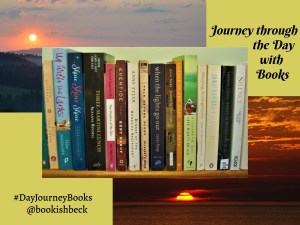
- Journey through the Day with Books (3 new reviews this year):
- Zennor in Darkness by Helen Dunmore
 Rise and Shine by Anna Quindlen
- [Up with the Larks by Tessa Hainsworth – DNF]
- [Shine Shine Shine by Lydia Netzer – DNF]
- Three-Martini Lunch by Suzanne Rindell – existing review
- The Shadow of the Sun by Ryszard Kapuściński – read part of
- Eventide by Kent Haruf
- Dinner at the Homesick Restaurant by Anne Tyler – existing review
- Talk before Sleep by Elizabeth Berg – existing review
- When the Lights Go Out by Carys Bray
- Journey by Moonlight by Antal Szerb
- Voyage in the Dark by Jean Rhys
- Late Nights on Air by Elizabeth Hay – existing review
- Sleeping Arrangements by Laura Shaine Cunningham
- The House of Sleep by Jonathan Coe
- Bodies in Motion and at Rest by Thomas Lynch – read but not reviewed
- Silence by Shūsaku Endō
- Arctic Dreams by Barry Lopez – read part of
- The Four in a Row Challenge – I failed miserably with this one. I started an M set but got bogged down in Tales of the City by Armistead Maupin (also a bibliotherapy self-prescription for Loneliness from The Novel Cure), which I had as a bedside book for much of the year, so only managed 1.5 out of 4; I also started an H quartet but set both Tinkers and Plainsong aside. Meanwhile, Debbie joined in and completed her own 4 in a Row. Well done! I like how simple this challenge is, so I’m going to use it next year as an excuse to read more from my shelves – but I’ll be more flexible and allow lots of substitutions in case I stall with one of the four books.

Rereading
At the end of 2019, I picked out a whole shelf’s worth of books I’d been meaning to reread. I kept adding options over the year, so although I managed a respectable 16 rereads in 2020, the shelf is still overflowing!
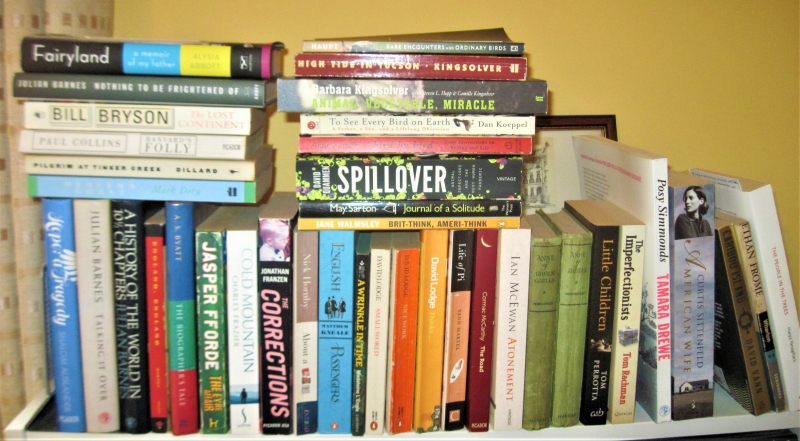
Many of my rereads have featured on the blog over the year, but here are two more I didn’t review at the time. Both were book club selections inspired by the Black Lives Matter movement. (We held a rally and silent protest in a park in the town centre in June.)
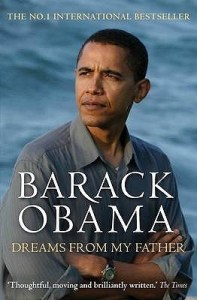 Dreams from My Father by Barack Obama: Remember when there was a U.S. president who thought deeply, searched his soul, and wrote eloquently? I first read this memoir in 2006, when Obama was an up-and-coming Democratic politician who’d given a rousing convention speech. I remembered no details, just the general sweep of Hawaii to Chicago to Kenya. On this reread I engaged most with the first third, in which he remembers a childhood in Hawaii and Indonesia, gives pen portraits of his white mother and absentee Kenyan father, and works out what it means to be black and Christian in America. By age 12, he’d stopped advertising his mother’s race, not wanting to ingratiate himself with white people. By contrast, “To be black was to be the beneficiary of a great inheritance, a special destiny, glorious burdens that only we were strong enough to bear.” The long middle section on community organizing in Chicago nearly did me in; I had to skim past it to get to his trip to Kenya to meet his paternal relatives – “Africa had become an idea more than an actual place, a new promised land”.
 now
now
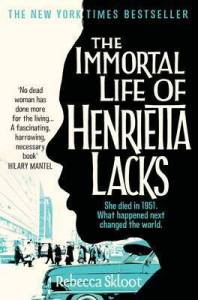 The Immortal Life of Henrietta Lacks by Rebecca Skloot: This Wellcome Book Prize winner about the use of a poor African-American woman’s cells in medical research was one of the first books to turn me onto health-themed reads. I devoured it in a few days in 2010. Once again, I was impressed at the balance between popular science and social history. Skloot conveys the basics of cell biology in a way accessible to laypeople, and uses recreated scenes and dialogue very effectively. I had forgotten the sobering details of the Lacks family experience, including incest, abuse, and STDs. Henrietta had a rural Virginia upbringing and had a child by her first cousin at age 14. At 31 she would be dead of cervical cancer, but the tissue taken from her at Baltimore’s Johns Hopkins hospital became an immortal cell line. HeLa is still commonly used in medical experimentation. Consent was a major talking point at our book club Zoom meeting. Cells, once outside a body, cannot be owned, but it looks like exploitation that Henrietta’s descendants are so limited by their race and poverty. I had forgotten how Skloot’s relationship and travels with Henrietta’s unstable daughter, Deborah, takes over the book (as in the film). While I felt a little uncomfortable with how various family members are portrayed as unhinged, I still thought this was a great read.
  then / now
 I had some surprising rereading DNFs. These were once favorites of mine, but for some reason I wasn’t able to recapture the magic: Middlesex by Jeffrey Eugenides, Everything Is Illuminated by Jonathan Safran Foer, Gilead by Marilynne Robinson, and On Beauty by Zadie Smith. I attempted a second read of John Fowles’s postmodern Victorian pastiche, The French Lieutenant’s Woman, on a mini-break in Lyme Regis, happily reading the first third on location, but I couldn’t make myself finish once we were back home. And A Visit from the Goon Squad by Jennifer Egan was very disappointing a second time; it hasn’t aged well. Lastly, I’ve been stalled in Watership Down for a long time, but do intend to finish my reread.
In general, voice- and style-heavy fiction did not work so well for me on rereading. Autobiographical essays by Anne Lamott and Abigail Thomas worked best, but I also succeeded at rereading some straightforward novels and short stories. Next year, I’d like to aim for a similar number of rereads, with a mixture of memoirs and fiction, including at least one novel by David Lodge. I’d also be interested in rereading earlier books by Ned Beauman and Curtis Sittenfeld if I can find them cheap secondhand.
What reading projects did you participate in this year?
Done much rereading lately?
Booker Prize 2020: Longlist Progress & Shortlist Predictions
The 2020 Booker Prize shortlist will be announced tomorrow, September 15th. Following on from my initial thoughts … I’ve only managed to read one more book from the longlist, reviewed in brief below along with some thoughts on a few other nominees I’ve sampled.
Burnt Sugar by Avni Doshi
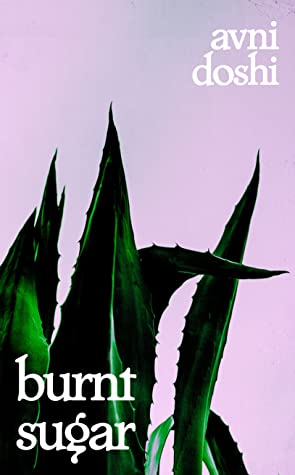 This short, intense novel is about two women locked into resentful competition. Tara and Antara also happen to be mother and daughter. When the long-divorced Tara shows signs of dementia, artist Antara and her American-born husband Dilip take her into their home in Pune, India. Her mother’s criticism and strange behavior stir up flashbacks to the 1980s and 1990s, when Antara felt abandoned by Tara during the four years they lived in an ashram and then her time at boarding school. Emotional turmoil led to medical manifestations like excretory issues and an eating disorder, and both women fell in love in turn with a homeless photographer named Reza Pine.
When Antara learns she is pregnant, the whole cycle of guilt and maternal ambivalence looks set to start again. Memory is precarious and full of potential hurt here, and Antara’s impassive narration is perfectly suited to the story of a toxic relationship. Neither the UK title nor the one for the original Indian publication (Girl in White Cotton) seems quite right to me; I might have chosen something related to the cover and endpaper image of the aloe plant: something that is as spiky as a cactus yet holds out hope of balm. This was a good fictional follow-up to a memoir I read earlier in the year about dementia’s effect on an Indian-American mother–daughter pair, What We Carry by Maya Shanbhag Lang.
Favorite passages:
It seems to me now that this forgetting is convenient, that she doesn’t want to remember the things she has said and done. It feels unfair that she can put away the past from her mind while I’m brimming with it all the time. I fill papers, drawers, entire rooms with records, notes, thoughts, while she grows foggier with each passing day.
I will never be free of her. She’s in my marrow and I’ll never be immune.
My rating:
My thanks to Hamish Hamilton for the free copy for review.
DNFed:
Apeirogon by Colum McCann
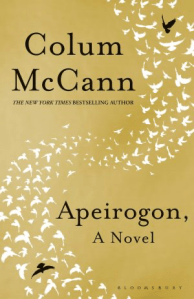 Reminiscent of the work of David Grossman, this is the story of two fathers, one Israeli and one Palestinian, who lost their daughters to the ongoing conflict between their nations: Rami Elhanan’s 13-year-old daughter Smadar was killed by a Palestinian suicide bomber, while Bassam Aramin’s 10-year-old daughter Abir was shot by Israeli border police. The two men become unlikely friends through their work with a peacemaking organization, with Bassam also expanding his sense of compassion through his studies of the Holocaust.
It doesn’t take long to piece the men’s basic stories together. But the novel just keeps going. It’s in numbered vignettes ranging in length from one line to a few pages, and McCann brings in many tangentially related topics such as politics, anatomy, and religious history. Bird migration is frequently used as a metaphor. Word association means some lines feel arbitrary and throwaway. Looking ahead, I could see the numbering goes up to 500, at which point there is a long central section narrated in turn by the two main characters, and then goes back down to 1, mimicking the structure of the One Thousand and One Nights, mentioned in #101.
The narrative sags under the challenge McCann has set for himself. At 200 pages, this might have been a masterpiece. Though still powerful, it sprawls into repetition and pretension. (I read the first 150 pages.)
My rating: 
Set aside temporarily:
 The New Wilderness by Diane Cook: The blurb promised an interesting mother–daughter relationship, but so far this is dystopia by numbers. A wilderness living experiment started with 20 volunteers, but illnesses and accidents have reduced their number. Bea was an interior decorator and her partner, Glen, a professor of anthropology – their packing list and habits echo primitive human culture. I loved the rituals around a porcelain teacup, but in general the plot and characters weren’t promising. I read Part I (47 pages) and would only resume if this makes the shortlist, which seems unlikely. (See this extraordinarily detailed 1-star Goodreads review from someone who DNFed the novel near where I am now.)
 Shuggie Bain by Douglas Stuart: Dialect + depressing subject matter = a hard slog. Poverty and alcoholism make life in 1980s Glasgow a grim prospect for Agnes Bain and her three children. So far, the novel is sticking with the parents and the older children, with the title character barely getting a mention. I did love the scene where Catherine goes to Leek’s den in the pallet factory. This is a lot like the account Damian Barr gives of his childhood in Maggie & Me. I left off on page 82 but will go back to this if it makes the shortlist.
So that makes a total of 2 read, 4 DNFed, 2 set aside (and might yet DNF), 2 I still hope to read (one of which I’m awaiting from the library; the other is on my birthday wish list), and 3 I don’t intend to read. Not a great showing at all this year!
Still, I can never resist an opportunity to make predictions about a prize shortlist, so here’s what I expect to still be in the running after tomorrow. Weighty, diverse; a mixture of historical and contemporary.
- The Mirror & The Light by Hilary Mantel (will win)
- Apeirogon by Colum McCann
- The Shadow King by Maaza Mengiste
- Shuggie Bain by Douglas Stuart
- Real Life by Brandon Taylor
- How Much of These Hills Is Gold by C. Pam Zhang
What have you read from the longlist? What do you expect to be shortlisted?
All the Books I’ve Abandoned So Far This Year
Hard to believe, especially with the bizarre few months we’ve been having, but it’s mid-year review time already. I’ll do two more posts this month rounding up my reading from the first half of 2020: where my books came from, and the best releases so far. But first, let’s get this out of the way.
I encourage readers to give up on books they are not enjoying, at any time and for any reason (tone, voice, writing style, distressing subject matter, similarity to other things you’ve read, whatever). I’ve DNFed 27 books so far this year, equating to roughly 15% of what I started. That’s my usual average, so not a particular problem as far as I’m concerned.
To keep it short and sweet, especially as I have mentioned a number of these before, e.g. in a Library Checkout or Six Degrees post, I’m listing the pages or percentage read and dispatching each book with a two-word summary using the template “Too ______”. (I am aware of how reductive and unfair this is.) These are in rough chronological order of my attempted reading. Asterisks denote the books I intend to try again someday.
*The Street by Ann Petry: 32 pages. Too dated.
Short Short Stories by Dave Eggers: 22 pages. Too raunchy.
The Year without Summer by Guinevere Glasfurd: 21 pages. Too dull.
When All Is Said by Anne Griffin: 60 pages. Too sentimental.
The Tenderness of Wolves by Stef Penney: 162 pages. Too plodding.
Running the Rift by Naomi Benaron: 25 pages. Too self-aware.
The Story of a Marriage by Andrew Sean Greer: 93 pages. Too obvious.
Journalism by Joe Sacco: 21 pages. Too gritty.
Run by Ann Patchett: 80 pages. Too contrived.
*Jazz by Toni Morrison: 100 pages. Too dense.
On Turpentine Lane by Elinor Lipman: 30 pages. Too false.
Things We Say in the Dark by Kirsty Logan: 20-something pages. Too weird.
*Norwegian Wood by Haruki Murakami: 20 pages. Too normal.
*The Warlow Experiment by Alix Nathan: 20 pages. Too ponderous.
*Such a Fun Age by Kiley Reid: 15 pages. Too hip.
Djinn Patrol on the Purple Line by Deepa Anappara: 3 pages. Too precocious.
The Night Brother by Rosie Garland: 5 pages. Too unremarkable.
The Giver of Stars by Jojo Moyes: 4 pages. Too bland.
My Wild, Sleepless Nights: A Mother’s Story by Clover Stroud: 5 pages. Too (m)othering.
Godshot by Chelsea Bieker: 30%. Too Handmaid’s.
The Cruellest Month by Louise Penny: 34 pages. Too undistinguished.
On Beauty by Zadie Smith [an attempted reread]: 107 pages. Too stereotyping.
*Everything Is Illuminated by Jonathan Safran Foer [an attempted reread]: 35 pages. Too quirky.
The Bumblebee Flies Anyway: A year of gardening and (wild)life by Kate Bradbury: 24 pages. Too middling.
The Animals at Lockwood Manor by Jane Healey: 11%. Too familiar.
The Paris Library by Janet Skeslien Charles: 18 pages. Too twee.
Up with the Larks: Starting Again in Cornwall: My First Year as a Seaside Postie by Tessa Hainsworth: 80 pages. Too lite.
Any DNFs for you this year?
A Report on My Most Anticipated Reads & The Ones that Got Away
Between my lists in January and June, I highlighted 45 of the 2019 releases I was most looking forward to reading. Here’s how I did:
Read: 28 [Disappointments (rated
or
Currently reading: 1
Abandoned partway through: 5
Lost interest in reading: 1
Haven’t managed to find yet: 9
Languishing on my Kindle; I still have vague intentions to read: 1
To my dismay, it appears I’m not very good at predicting which books I’ll love; I would have gladly given 43% of the ones I read a miss, and couldn’t finish another 11%. Too often, the blurb is tempting or I loved the author’s previous book(s), yet the book doesn’t live up to my expectations. And I still have 376 books published in 2019 on my TBR, which is well over a year’s reading. For the list to keep growing at that annual rate is simply unsustainable.
Thus, I’m gradually working out a 2020 strategy that involves many fewer review copies. For strings-free access to new releases I’m keen to read, I’ll go via my local library. I can still choose to review new and pre-release fiction for BookBrowse, and nonfiction for Kirkus and the TLS. If I’m desperate to read an intriguing-sounding new book and can’t find it elsewhere, there’s always NetGalley or Edelweiss, too. I predict my FOMO will rage, but I’m trying to do myself a favor by waiting most of the year to find out which are truly the most worthwhile books rather than prematurely grabbing at everything that might be interesting.
I regret not having time to finish two 2019 novels I’m currently reading that are so promising they likely would have made at least my runners-up list had I finished them in time. I’m only a couple of chapters into The Confessions of Frannie Langton by Sara Collins (on the Costa Awards debut shortlist), a Gothic pastiche about a Jamaican maidservant on trial for killing her master and mistress (doubly intended) in Georgian London, but enjoying it very much. I’m halfway through The Dearly Beloved by Cara Wall, a quiet character study of co-pastors and their wives and how they came to faith (or not); it is lovely and simply cannot be rushed.
The additional 2019 releases I most wished I’d found time for before the end of this year are:
All This Could Be Yours by Jami Attenberg
Your House Will Pay by Steph Cha
Dominicana by Angie Cruz
&
In the Dream House by Carmen Maria Machado: I’ve heard that this is an amazing memoir of a same-sex abusive relationship, written in an experimental style. It was personally recommended to me by Yara Rodrigues Fowler at the Young Writer of the Year Award ceremony, and also made Carolyn Oliver’s list of nonfiction recommendations.

Luckily, I have another chance at these four since they’re all coming out in the UK in January; I have one as a print proof (Cruz) and the others as NetGalley downloads. I also plan to skim Invisible Women: Exposing Data Bias in a World Designed for Men by Caroline Criado Perez, a very important new release, before it’s due back at the library.
 The biggest release of 2019 is another that will have to wait until 2020: I know I made a lot of noise about boycotting The Testaments, but I’ve gradually come round to the idea of reading it, and was offered a free hardback to read as a part of an online book club starting on the 13th, so I’m currently rereading Handmaid’s to be ready to start the sequel in the new year.
Here’s the books I’m packing for the roughly 48 hours we’ll spend at my in-laws’ over Christmas. (Excessive, I know, but I’m a dabbler, and like to keep my options open!) A mixture of current reads, including a fair bit of suspense and cozy holiday stuff, with two lengthy autobiographies, an enormous Victorian pastiche, and an atmospheric nature/travel book waiting in the wings. I find that the holidays can be a good time to start some big ol’ books I’ve meant to read for ages.

Left stack: to start and read gradually over the next couple of months; right stack: from the currently reading pile.
I’ll be back on the 26th to start the countdown of my favorite books of the year, starting with fiction.
Merry Christmas!
Reading Fail: The Remainder of the 2019 DNFs
Yipes, 97 DNFs this year – that’s roughly 22% of the books I started. Higher than my usual 15% average, suggesting that I’ve had trouble getting on with books that appealed for their subject matter or hype but didn’t live up to my expectations. (In the latter category, I’m thinking of It books of the year like The Man Who Saw Everything, The Starless Sea, Three Women, Trick Mirror and On Earth We Are Briefly Gorgeous.)
Following on from June’s post on the books I’d abandoned so far in 2019, here’s a list of the other DNFs I haven’t already written about, perhaps in a monthly Library Checkout post. No cover images, tags, links or full reviews here; just a text dump. Titles are in chronological order; the number of pages or percentage I read is generally given in brackets at the end.
Note: I encourage readers to give up on books they are not enjoying – at any time, but as early on as possible. You owe it to yourself to devote your limited, precious time to the books you’ll love and find worthwhile.
Stroke: A 5% Chance of Survival by Ricky Monahan Brown: Brown, a Scot in New York City, suffered a hemorrhagic stroke at age 38. I’m pretty oversaturated with medical memoirs; despite the breezy style and accessible details, this one doesn’t stand out. (104 pp.)
How to Catch a Mole: And Find Yourself in Nature by Marc Hamer: Hamer is a gardener and former molecatcher. This is a gentle natural history of the mole, as well as a meditation on our connections with a nature and a memoir of a life lived largely outdoors. But is it about atonement or not? (103 pp.)
The Great Railway Bazaar by Paul Theroux: I read up to when Theroux arrives in northern Italy. He mostly describes his fellow passengers, as well as the details of meals and sleeping arrangements on trains. The writing struck me as old-fashioned. (32 pp.)
What Dementia Teaches Us about Love by Nicci Gerard: I’ve read a lot of books about dementia, both clinical and anecdotal, and this doesn’t add anything new. (11%)
The Music Room by William Fiennes: Time to accept that I just don’t get on with Fiennes’s writing, even when the subjects seem tailor-made for me. (10 pp.)
Tisala by Richard Seward Newton: I guess I read a blurb and thought this was unmissable, but I should have tried to read a sample or some more reviews of it. I couldn’t imagine reading another 560+ pages. (6 pp.)
The Days of Abandonment by Elena Ferrante: Alas, I do not appreciate Elena Ferrante’s work; this is a third try. I enjoyed the narrator’s voice well enough, and loved the scene in which her errant husband finds broken glass in his dinner, but had no interest in how this seemingly predictable story of the end of a marriage might play out. (25 pp.)
Breaking and Mending: A Junior Doctor’s Stories of Compassion and Burnout by Joanna Cannon: I’ve read so many doctors’ memoirs now, and this one doesn’t really cut the mustard: the writing is undistinguished and the tone as sentimental as I’ve come to expect from her fiction. (30 pp.)
Dunedin by Shena Mackay: After loving The Orchard on Fire, I thought I’d try another Mackay novel, and I was intrigued by the dual timeline of 1909 New Zealand and 1989 London. I kept thinking we were going to get links back to the historical chapter; I got bored of waiting. (189 pp.)
Skyfaring: A Journey with a Pilot by Mark Vanhoenacker: I thought it would be fascinating to read about flying from the perspective of a British Airways pilot. But this is more of an academic and philosophical study of flight and the modern condition of dislocation than a memoir of what it’s like to train to fly planes. (28 pp.)
Night Boat to Tangier by Kevin Barry: At first these ageing Irish gangsters seem like harmless drunks, but gradually you come to realize just how dangerous they are. I loved the voices and if this was a short story it would have gotten a top rating, but I found I had no interest in the backstory of how these men got involved in heroin smuggling. (76 pp.)
The Country Ahead of Us, the Country Behind by David Guterson: I read “Angels in the Snow” (last Christmas) and “Wood Grouse on a High Promontory Overlooking Canada.” Both were fine but not memorable; a glance at the rest suggests they’ll all be about baseball and hunting. If I want to read stories about dudes hunting I’ll turn to Hemingway or David Vann.
The Man Who Saw Everything by Deborah Levy: There’s a lot of repetition and random details that seem deliberately placed to be clues. I’m sure there’s a clever story in here somewhere, but apart from a few intriguing anachronisms, there is not a lot of plot or character to latch onto. (35 pp.)
Inland by Téa Obreht: I made two attempts to get into this Western, but found it excruciatingly slow and couldn’t warm to any of the characters or convince myself of the accuracy of the period speech. This was disappointing as it was one of my most anticipated titles of the second half of the year and I loved The Tiger’s Wife. (37 pp.)
Our Place: Can We Save Britain’s Wildlife before It Is Too Late?, by Mark Cocker: I simply didn’t need this level of detail on the history of nature conservation in Britain. The personal writing about his patch of Norfolk engaged me a bit more. (60 pp.)
Better Off Bald: A Life in 147 Days by Andrea Wilson Woods: When Woods’s 13-years-younger sister Adrienne was diagnosed with liver cancer, it hit her hard. This didn’t pull me in, despite strong recreated dialogue and an extraordinary memory for events. I think it’s a combination of it being far too long and detailed, and feeling dated. (12%)
The Grassling: A Geological Memoir by Elizabeth-Jane Burnett: Burnett’s roots are in Ide, Devon and in Kenya. She has previously published poetry and is going for extreme lyricism in her nature writing, which at times makes it feel overwritten, especially in the prologue. (55 pp.)
The Man in the Red Coat by Julian Barnes: I completely misjudged this: I thought it would be historical fiction, but it’s actually narrative nonfiction about an obscure historical figure. I found it dull and impenetrable. A shame, as Barnes is a favorite author of mine. (9 pp.)
Loop by Brenda Lozano: The narrator, waiting for her boyfriend to come back from Spain, is explicitly likened to Penelope. She lets her mind wander at random, which leads to unrelated paragraphs about dwarves, David Bowie songs, her choice of notebooks, tiny things that happened to her, and so on. Not enough narrative to keep me interested. (35 pp.)
The Dream Life of Balso Snell by Nathanael West: I’m not sure I even made it past the second page. It’s even more bizarre and crass than I’m used to from him.
Whiskey When We’re Dry by John Larison: Larison has done a good job of approximating the voice of an unlettered young woman in the 1880s, but I found this quite slow and feel like I’ve read too many Westerns in the last few years. (50 pp.)
Dust Falls on Eugene Schlumburger / Toddler on the Run by Shena Mackay: Argh, another Mackay DNF! She wrote these two novellas when she was SEVENTEEN. I only managed a few pages of Dust, but got 40 pages into Toddler. It has an amusing premise but was only okay.
The Voyage Out by Virginia Woolf: I couldn’t even tell you the basics of what happened. Some posh English people on a boat to South America? I could see that there were keen psychological insights, but no plot to speak of. (Did you know Mrs Dalloway is a character?!) Perhaps I’ll try this again someday, but it will require a concerted effort. (110 pp.)
Shelf Life by Livia Franchini: Reminiscent of Eleanor Oliphant: readable but blah. (40%)
The Complete Stories of Saki by Hector Hugh Munro: This was a follow-up bibliotherapy prescription for reading aloud. My husband and I read “Tobermory,” “Sredni Vashtar,” “The Easter Egg,” “Laura,” and “Tea.” The stories are very short and quite witty, but the language so advanced/old-fashioned that I found them rather like tongue-twisters.
The Starless Sea by Erin Morgenstern: Like most of the rest of the world, I was enraptured with The Night Circus. This, however, felt like a knockoff of A Discovery of Witches and The Thirteenth Tale, with added geek and queer stylings. Passages from the book within a book failed to draw me in. (44 pp.)
The Glass Woman by Caroline Lea: I don’t know if it’s the time period and setting (17th-century Iceland), or the writing style, but I couldn’t get through Sally Magnusson’s The Sealwoman’s Gift either. The challenging names add to a feeling of foreignness that’s more bewildering than entrancing. (8 pp.)
Ghostwalk by Rebecca Stott: The idea of a ghostwriter being almost literally haunted by her subject is appealing, and I did find the writing atmospheric. However, the Isaac Newton and animal rights activism plots didn’t capture my attention. (126 pp.)
Three Flames by Alan Lightman: I’d enjoyed several Lightman books before, fiction and non-, but despite his nonprofit work with women in Southeast Asia, he doesn’t seem like the person to write this novel about women’s lives in post-Khmer Rouge Cambodia. (50 pp.)
Bowlaway by Elizabeth McCracken: Quirk for quirk’s sake. Characters are found alive in a cemetery, killed by a flow of molasses, or expire by spontaneous combustion. What is supposed to unite this 19th-century community – a bowling alley – never comes to life. Another disappointment from my most anticipated titles of the year list. (153 pp.)
Trick Mirror by Jia Tolentino: I read part of “Ecstasy,” her essay on belonging to a Texas megachurch in her high school years. The other topics, and the writing in general, didn’t interest me enough.
Idiot Wind by Peter Kaldheim: I requested this purely on the basis of an enthusiastic NPR review from an acquaintance. While there’s a lot of energy to this memoir of the author’s time as a New York City drug dealer/addict taking off on a cross-country road trip in the late 1980s, I should have known it wouldn’t be for me. (14 pp.)
 Bookish Beck = Rebecca Foster. American transplant to England. Freelance proofreader and book reviewer.
 Bookish Beck