#ShortStorySeptember: Single Stories by Barnes, Bellow, Enright, P. Fitzgerald, Mackay, and Norman
Thanks for all the contributions to Short Story September thus far! I usually review whole collections, but today I’m highlighting individual stories I read either as stand-alones, in an unrelated volume, or as a taster from a book I might finish some other time. A few really surprised me for being so dissimilar to other work by the author. These six seem to illustrate different techniques or situations that short stories are good at exploring, thus my headings. (Beware mild spoilers in most of these brief responses.)

The Pastiche
“Homage to Hemingway” by Julian Barnes (2011)
[from Through the Window]
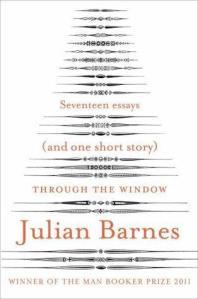 The protagonist is a literature instructor and failed novelist whom we see undertaking three different teaching gigs (in rural Wales, the Alps, and the American Midwest), like the triptych of expatriate Americans waiting for trains in Hemingway’s “Homage to Switzerland,” which is specifically referenced here. He believes fiction is “omnivorous and essentially amoral” and hopes to inspire his students to “reflect on life’s influence on art, and then art’s influence back on life.” This is, of course, a huge theme across Barnes’s oeuvre. Luckily, Barnes doesn’t attempt mimicry of Hemingway’s style, which really wouldn’t suit him at all, but I enjoyed the barbs his students throw. For example, Kate describes Hemingway as “the ultimate dead white male … celebration of machismo. Boys with toys.” This wasn’t very memorable but has me hankering to track down and reread Barnes’s full-length story collections. (Public library)
The Character Study
“Leaving the Yellow House” by Saul Bellow (1958)
[Penguin Modern: 36]
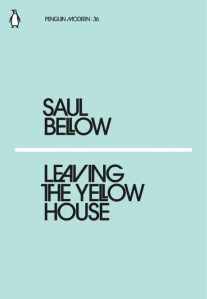 I wouldn’t have recognized this as Bellow’s writing were his name not on the cover. I think of him as a chronicle of Jewish city-dwellers; this is the story of a woman in a tiny town in the American West. Everyone in Sego Desert Lake knows that Hattie is an alcoholic. She’s now in her early seventies and pretty much has bourbon running through her veins. When she gets her car stuck on train tracks while driving drunk and breaks her arm in the ensuing kerfuffle, she and her acquaintances are forced to think seriously about what’s going to happen to her. She looks back on her two marriages and her relationship with India, who used to own her house – I never did work out who India was to her; a friend? an employer? – as she sets to the task of writing her will. Who deserves to have the house in turn? The title has a double meaning and also points to the final leave-taking of death. Hattie is not a very likeable character but has a certain admirable dignity, like Olive Kitteridge or Hagar in The Stone Angel. I liked her fancy that her whole life has been filmed and she’ll soon be able to revisit any moment she chooses. A melancholy slice of mid-century Americana. (Secondhand – Community Furniture Project, Newbury)
The Shock Ending
“Pillow” by Anne Enright (2008)
[from Taking Pictures]
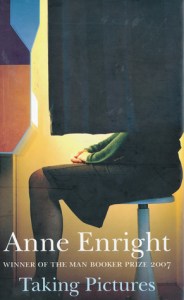 Alison, from Ireland, is part of a set of international roommates at her American college. Li is always asking her questions about what things mean or how they work. The first lines have her querying “What is a homosexual?” With this Enright sets us up to think that Li has a crush on Alison. First, the roommates find out that Li is her surname and really they should call her Ping. And then one morning Alison wakes up struggling to breathe because Ping is trying to smother her with the title object. I gasped aloud! The incident seems to come out of nowhere but I guess illustrates how easy it can be to hide mental illness. I kind of wish it wasn’t the Chinese girl who ended up being unstable, though. I’m not sure short stories are where Enright shines; I read the first two stories in this volume but won’t finish it. (Public library)
The Visual Pun
“The Axe” by Penelope Fitzgerald (1975)
[from The Means of Escape]
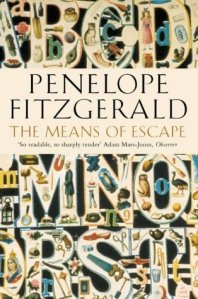 An office worker recalls having to make redundancies, including of his dignified clerical assistant, W. S. Singlebury. He feels even worse about it when the man invites him to visit his home. This faux report to the Company boss chronicles a growing sense of unease as he returns to work and finds the fired man still in the office, gruesomely injured and leaking blood all over. Fitzgerald has playfully imagined Singlebury getting the axe, literally, and then haunting the man responsible. I’ve never experienced such gleeful mischief from Fitzgerald – I only knew her austere historical novellas – but sure enough, this originally appeared in The Times Anthology of Ghost Stories. (Secondhand – Community Furniture Project, Newbury)
The Family Drama in Miniature
“The Worlds Smallest Unicorn” by Shena Mackay (1999)
[from The Worlds Smallest Unicorn and Other Stories]
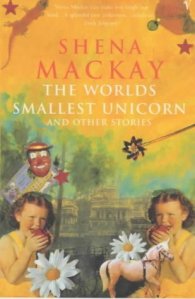 Fan’s brother-in-law, Teddy, has just returned from Hong Kong and she’s not happy about it: “now here was this succubus squatting in her kitchen, expecting to be fed.” She sees in the newspaper that an old flame of his, a singer, has died and he sets out for the funeral, passing a circus billet advertising the title act. (Since it reproduces what was on the tacky poster, I can let Mackay off for the grammatical gaffe, though it doth offend the eyes!) It seems to be a metaphor for anything that’s too good to be true, such as Fan’s affair with Teddy years ago. Her adolescent daughters’ banter and the South London environs are highlights in this one, but so far the book is not living up to the collection I read by Mackay last year, Dreams of Dead Women’s Handbags. (Secondhand – Slightly Foxed, Berwick)
The Relationship Study
“Kiss in the Hotel Joseph Conrad” by Howard Norman (1989)
[from Kiss in the Hotel Joseph Conrad]
 The narrator is dishonourably discharged from Canada’s air force for faking an emergency beach landing during a practice flight in 1943. “We’ve come up with a new, Asshole category,” the colonel declares as he dismisses him. Still, this amiable joker hopes his pluck will endear him to Imogene Linny, who has a kissing booth for would-be soldiers on the Halifax wharf. She recognizes him from his prank and says, “You can kiss something, but it ain’t, I guarantee you, my lips.” In the two decades that follow, he keeps tabs on Imogene as she marries into a hotel empire and he works on the greyhound tracks. After all, he paid his dollar at that booth but never got his kiss. This could have gone creepy but Norman keeps it quirky and sweet instead. His novels, too, often feature Atlantic Canada, oddballs, and hotels. (Secondhand – Hay Cinema Bookshop)
Are any of these authors, and their stories, familiar to you?
Which of these six story types do you prefer?
Six Degrees of Separation: From H Is for Hawk to Notes from an Exhibition
It’s been several years since I last participated in Kate’s Six Degrees meme. I’m not sure why I fell out of the habit, after posting pretty faithfully from February 2020 until August 2023. This month I was drawn back by the individualized starting point: your book club’s current read. (See Kate’s opening post.)
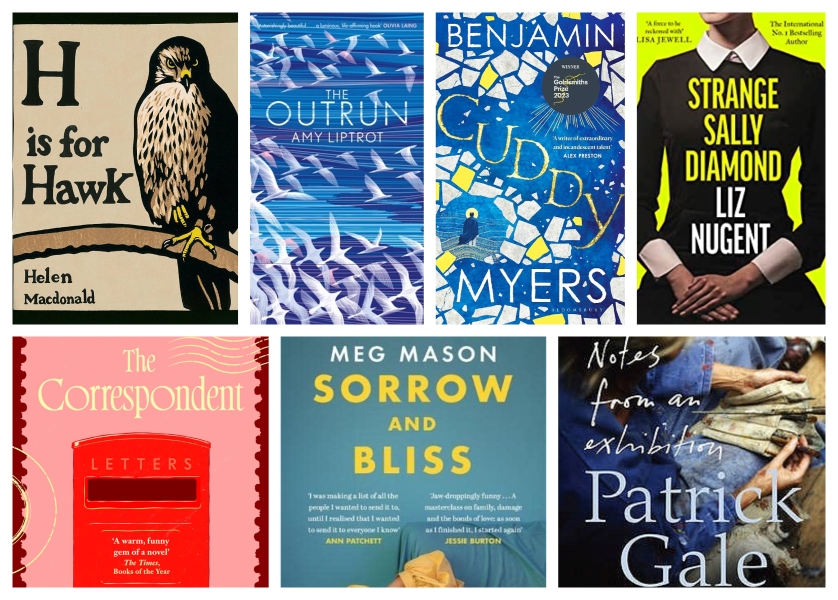
 So I start with Helen Macdonald’s H Is for Hawk, which I look forward to rereading for our next meeting in early October, and every link that follows is (or is connected to) a book we’ve read in book club.
 #1 H Is for Hawk was a vanguard of a new trend in nature writing that came to dominate the Wainwright Prize list in the UK: blending a hard/sad personal story with a quest that involves travel and/or communion with the natural world. In the case of Macdonald (who now uses they/them pronouns), they work through grief for their father by taking up falconry and training a goshawk.
I went with some members of my book club to see the excellent film starring Claire Foy, followed by a Q&A with the author, earlier this year. Another early example of the misery memoir-meets-nature book vogue was The Outrun by Amy Liptrot (a Wainwright winner), which combines her struggle with alcoholism with her return to the Orkney Islands and her work for the RSPB surveying endangered corncrakes. Another link: I saw the film version with Saoirse Ronan, which probably surpassed the book, with a book club friend. We then tried to get the others interested in rereading it with us, but it only got a few votes.
 #2 Liptrot lives in Hebden Bridge, Yorkshire, which is famous for its hippie artists and inclusivity (a Brighton of the North?). Among the other nearby residents (in the village of Mytholmroyd) is Benjamin Myers, whose experimental historical novel about Saint Cuthbert, Cuddy, we discussed in book club a year ago. I had skimmed it when it was first published, and enjoyed it in parts but thought it more pretentious than readable. It was not very well received by most members…
 #3 …unlike the quirky and suspenseful Strange Sally Diamond by Liz Nugent, which we’d read the year before and was a hit with almost everyone. Cuddy is set in Northumberland, and I associate Sally with that county because I read it on holiday there.
 #4 Sally Diamond has some autistic-like traits, in terms of her lack of understanding of social conventions. We questioned whether this was an attempt by the author to reproduce the effects of trauma. The same book club member brought this up in relation to Sybil Van Antwerp, the protagonist of the most recent Women’s Prize winner, The Correspondent by Virginia Evans, which was our September read. I’d picked up on the characterization of her young friend Harry Landy as autistic, but Sybil herself? That hadn’t occurred to me. It just goes to show how discussing books in a group turns up fresh ideas about them.
 #5 We had also talked diagnoses with one of our previous reads, Sorrow and Bliss by Meg Mason, who scrupulously avoided naming her protagonist’s mental health condition, though it seemed pretty clear to us that it was meant to be bipolar. Another connection: we read that novel as part of our official Women’s Prize shadowing in 2022.
 #6 The Correspondent, Sorrow and Bliss, and Patrick Gale’s Notes from an Exhibition, which shares the theme of mental illness, are all among our top 10 reads of all time, with a score of 18.5/20. We’ve read two Gale novels now and he’s a reliable author for us.
Summer Reads, Part II: Ellis, Faulkner (Reread), Groskop, Ruskovich
Thankfully, since I last wrote about summer, we’ve had abundant rainfall – a cosy wet weekend after nearly two months of drought. Our pond is looking full again and our apple tree is perking up, but it will take much more to fill the country’s coffers. I’ve spent significantly less time outdoors than usual this summer, taking refuge indoors from the unremitting heat and sun. Luckily, there have been plenty of books to keep me company.
Book 2 of The Summerhouse Trilogy
The Skeleton in the Cupboard by Alice Thomas Ellis (1988)
Summer was a dull season. In spring things were growing; in autumn they were harvested; in winter they were waiting. Summer was pointless, designed for idleness. An inbred Yorkshire Puritanism led me to despise it.
{SPOILERS IN THIS ONE}
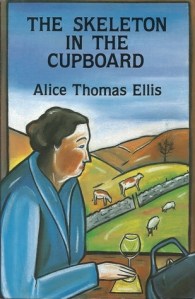 After The Clothes in the Wardrobe (1987), this novella felt conventional and superfluous. Repeating the run-up to Margaret and Syl’s wedding from the perspective of Margaret’s mother-in-law-to-be, Mrs Monro, is only worthwhile in that it allows for two key revelations: one, that Margaret was molested by her father, which goes some way toward explaining her flat affect and inability to love Syl; and two, that Lili also slept with Syl’s father in the summerhouse, long before she bedded Syl himself there on the morning of the wedding. Otherwise, this is a collection of sad and somewhat clichéd meditations on the loneliness of alcoholism-prone older age and widowhood. Provided it doesn’t simply reproduce stereotypes of the seductress, I’m hoping the third volume, from Lili’s perspective, will end up being the most interesting; the middle book of a trilogy always kinda sucks, right? I’ll read Book 3 for one last seasonal instalment before the autumn equinox. (Secondhand – Regent Books, Wantage)
Light in August by William Faulkner (1932)
Memory believes before knowing remembers.
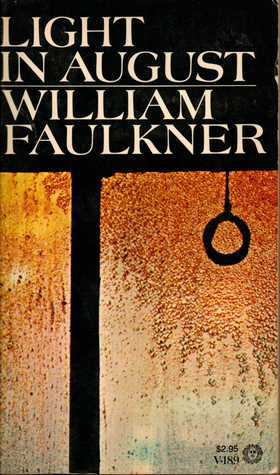 In my second year as a college English major, I took a senior elective on Faulkner & Morrison. Ever since, I’ve remembered this and Song of Solomon as my favourite from each author – the books I’d read again even without them being assigned. For several of the last few Augusts I’ve meant to pick this up, but when I finally did I found Faulkner’s style oppressive and only succeeded in a quick skim. The one thing I’d remembered beforehand is that there is a mixed-race character named Joe Christmas. But the first character we’re introduced to is the indomitable Lena Grove, who’s heavily pregnant and has hitchhiked from Alabama to Mississippi to find her baby daddy. She still believes he’ll do right by her and their child, but the fact that he’s living under an assumed name is our clue that he has no intention of taking responsibility. The plot is set in motion by a misunderstanding: she’s looking for Lucas Burch, but others know there’s a Byron Bunch nearby, and he takes a shine to Lena.
Meanwhile, Burch is going by Joe Brown and rooming with the sadistic Joe Christmas, who gets caught up in bootlegging and murder and goes on the run. The language about his “black blood” driving him to do things, and what happens to him, is awful, but true to its time as well as to Faulkner’s vision of tragic inevitability. I only got the bare bones from a skim, but did love how the novel feels epic yet only spans about a month; it completes a full circle as Lena and her baby move on again, this time to Tennessee. I also liked the neologism in the description of a town’s “garland of Augusttremulous lights.” All told, I’m unlikely to read Faulkner again; he’s like a darker version of Steinbeck, who I’d recommend instead. (Secondhand – Wonder Book and Video)
My original rating: 
My rating now:
One Ukrainian Summer: A memoir about falling in love and coming of age in the former USSR by Viv Groskop (2024)
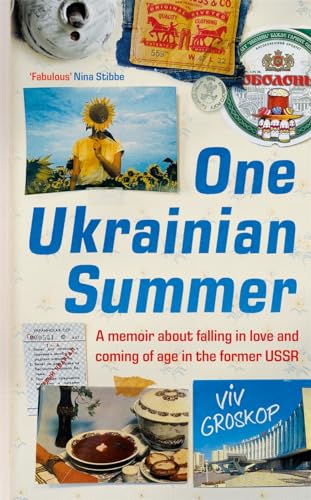 As part of her Russian degree course at Cambridge, Groskop spent a year abroad in St Petersburg, where she also conducted English lessons for adults. She arrived in September 1993 and the next month, in a nightclub, met Bogdan Bogdanovich (“God’s Gift, Son of God’s Gift”), a young man whose rock band called itself “Ukraine answer to Red Hot Chili Pepper.” She would be the solitary groupie on their tour the following summer, but first she had to get through a freezing winter of too much alcohol, too many cigarettes, and turbulent living situations. Her pen portraits of friends and acquaintances are quite amusing. There’s an appealing blend of self-deprecation and nostalgia to her outlook: “I was a clueless, lovesick, pedantic linguist. But I held the future of Ukrainian rock ’n’ roll in my hands.” I never got a particular sense of any of the cities she visits, but the long train ride from Moscow to Kiev is evocative. Each chapter is headed by a vocabulary word, given in Russian and then in the (very similar) Ukrainian. There are lots of Slavic phrases in the text, too, rendered in Roman script. I enjoyed reading them to myself in my head, but none of them has stuck. Let’s see if I can commit this one to memory: “Babine leto” (Ukr.) = “grandmother’s summer,” the equivalent of an Indian summer. Kudos to Groskop and her agents, all of whom donated their proceeds/fees to PEN International, which supports writers at risk. (Public library)
Nightjar: Stories by Emily Ruskovich (2026)
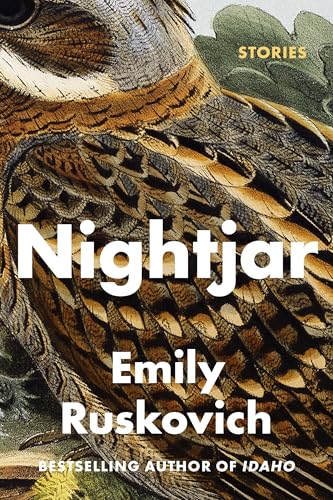 I abandoned Ruskovich’s 2018 debut novel, Idaho, early on, but will absolutely go back to it now because these stories are phenomenal. There are only five, so they tread the border between short story and novella at ~50 pages each and reminded me in their intricacy and depth of short fiction by Lauren Groff and Alice Munro. All are set in the American West and circle themes of loss and remembrance, and they often feature animals prominently. “Victor’s Room” sees a young wife become obsessed with exposing her husband’s false memory of the Oregon house where his brother died in childhood. In “Owl,” the only first-person, historical story, the narrator’s wife is accidentally shot by boys who mistake her for an owl in the night; as she convalesces, her old life lures her back. “Round Lake,” probably my favourite, finds violinist Jade adrift in Tokyo, where she agreed to meet a love interest. There’s water in her ears from an Idaho lake, which she only learned after her swim was where her mother drowned. “Petty Creek Road,” about middle-aged brothers, introduces a subtle note of magic realism (through Will’s premonitions of danger) that is echoed in the final, title story in the tangible reflections that Tess finds each morning in a bucket of water. Jade keeps orphaned hedgehogs, Jane feeds stray cats in “Owl,” and Tess communes with a goat named Panic Boy. The writing and character development are extraordinary, and the question of how memories become stories, or take on physical weight, truly resonated with me.
I’ve included this in my summer round-up because, for me, nightjars are synonymous with warm evenings on Newtown Common, where we go once a year to catch up with nightjars (not the same species as Tess encounters in Montana). This small scrubby nature reserve never fails to turn up several nightjars: unearthly with their gaping mouths, alternating churring and yipping, and jerky flaps against the gathering dusk. We made our annual pilgrimage on 15 July and it didn’t disappoint. (Edelweiss) 
I have a few more summery reads lined up to take me through what I sincerely hope is this season’s last gasp. I’m looking forward to getting out my corduroy coat, wearing hoodies and lap blankets around the house, and eating autumnal goodies based around squash and apples.
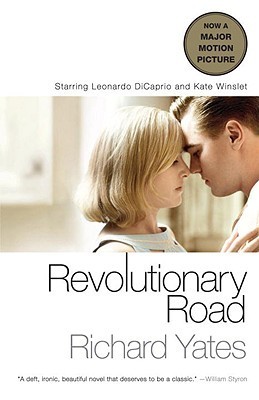
Revolutionary Road by Richard Yates for #1961Club
Simon and Karen’s classics reading weeks are always a great excuse to pick up an older book or two from my shelves. I’m just back from 12 days in Portugal and Spain (about which more anon) in time to post a review for the latest one, the 1961 Club. I own the film tie-in paperback of Revolutionary Road and indeed saw the Leonardo DiCaprio–Kate Winslet film when it first came out, but had no specific memory of the plot. However, I’d read Yates’s The Easter Parade and Cold Spring Harbor and also recently experienced Evan S. Connell’s Mrs. Bridge, so I knew the sort of suburban despair I was in for.
Frank and April Wheeler appear to be the perfect 1950s American family, with a lovely home in Connecticut’s Revolutionary Hill Estates, a daughter and a son, and Frank’s comfortable New York City job at Knox Business Machines – which he is proud of getting without so much as mentioning that his father was a long-time Knox employee. But neither Frank nor April ever intended to be trapped in provincial conventionality. Frank has “made it clear, time and again, that his job was the very least important part of his life, never to be mentioned except in irony.” The ennui hiding under the surface of their marriage seeps out through alcoholism and adultery. In one fantastic sequence, Frank calculatedly seduces the office receptionist on his 30th birthday, arriving home late for April and the kids’ homemade cake.
 The Wheelers begin to dream of escape, specifically moving to Paris, where April could be the family breadwinner as an ambassador’s secretary and Frank would finally be free to produce the novel he’s been toying with writing ever since he finished his military service. They start telling their acquaintances – their drinking buddies, Shep and Milly Campbell; the local real-estate agent, Helen Givings – about the plan to leave for Europe in the fall. They’re sure it’s their chance to push back at capitalist conformity, leave small-mindedness behind, and be happy and bohemian. That is, until April finds out that she’s pregnant a third time.
Yates really plays up the ironies of the situation. The Wheelers try to be avant-garde but keep getting sucked back into the same old ways of doing things. Glimpses into the main couple’s upbringings hint at their psychological motivations but don’t explain away their mistakes. The omniscient narrator’s occasional highlighting of others’ perspectives is particularly effective for contrasting radical ideas with the status quo. Shep is in love with April and has his own romantic fantasies, while Mrs. Givings hopes that the Wheelers could be a good influence on her son, John, who pays visits to them on the Sunday afternoons that he’s temporarily let out of a mental institution. It is only John, the ‘mad’ character, who truly appreciates the gravity of what Frank and April are attempting, and mocks them for faltering: “You figure it’s more comfy here in the old Hopeless Emptiness after all[?]”
Are the Wheelers revolutionary – in what they long for, in what they attempt, in what they admit to themselves? To an extent. But there’s also what they settle for, and what is possible in 1955; April, in particular, isn’t allowed to become her own person. As in Jude the Obscure, punishment seems inevitable for those who reach above their station or outside of social norms. This is a justly famous novel of ordinary angst, a tragedy so realistic it can’t be ignored. (Secondhand purchase – Wonder Book and Video, many years ago) 
Here are some other famous 1961 titles that I’ve read but mostly not reviewed (I’ve now read just 5 of the top 20 on the Goodreads list of the most popular books published that year):
James and the Giant Peach by Roald Dahl
A Grief Observed by C.S. Lewis (twice)
The Prime of Miss Jean Brodie by Muriel Spark (twice)
Travels with Charley: In Search of America by John Steinbeck
I’ve previously participated in the 1920 Club, 1956 Club, 1936 Club, 1976 Club, 1954 Club, 1929 Club, 1940 Club, 1937 Club, 1970 Club, 1952 Club and 1925 Club.
January Novels by Alix E. Harrow & Patricia Highsmith
The month of January was named for the Roman god Janus, known for having two faces: one looking backward, the other forward. “He presided not over one particular domain but over the places between – past and present, here and there, endings and beginnings,” as Alix E. Harrow writes. In her novel, the door is a prevailing metaphor for liminal times and spaces; Highsmith’s work, too, focuses on the way life often pivots on tiny accidents or decisions.
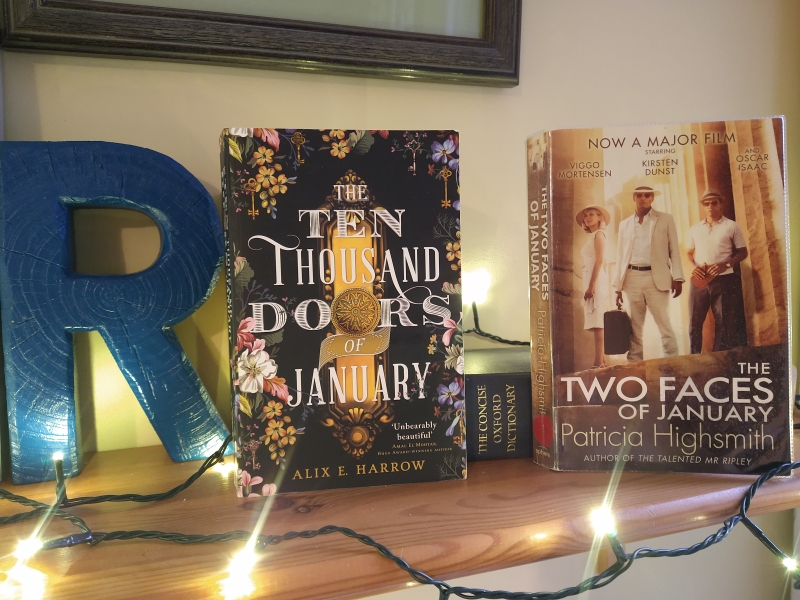
The Ten Thousand Doors of January by Alix E. Harrow (2019)
“I didn’t want to be safe … I wanted to be dangerous, to find my own power and write it on the world.”
 As the mixed-race ward of a wealthy collector, January Scaller grows up in a Vermont mansion with a dual sense of privilege and loss. She barely sees her brown-skinned father, who travels the world amassing treasures for Mr. Locke and his archaeological society; and her mother’s absence is an unexplained heartbreak. But when her father also disappears in 1911 – to be apparently replaced by an African governess named Jane Irimu (it’s her quote above) and an enticing scholarly manuscript entitled The Ten Thousand Doors – 17-year-old January discovers the power of words to literally open doors to new worlds, and sets off on a quest to reunite her family. At every turn, though, she’s thwarted by evil white men who, after plundering foreign cultures, intend to close the doors of opportunity behind them.
This was an unlikely book for me to pick up: I didn’t get on with that whole wave of books with books and keys on the cover (Bridget Collins et al.) and wouldn’t willingly pick up romantasy – yet this features two meant-to-be romances fought for across worlds and eras. I grow impatient with a book-within-the-book format. But The Chronicles of Narnia, which no doubt inspired Harrow, were my favourite books as a child. Especially early on, I found this as thrilling as The Absolute Book and The End of Mr. Y. Whereas those doorstoppers held my interest all the way through, though, this became a trudge at a certain point. Harrow is maybe a little too pleased with her own imagination and turns of phrase, like T. Kingfisher. (Bad the dog is also in peril far too often.) In the end, this reminded me most of Babel by R.F. Kuang with its postcolonial conscience and words as power. I enjoyed this enough that I think I’ll propose her The Once and Future Witches for book club. (Little Free Library)
The Two Faces of January by Patricia Highsmith (1964)
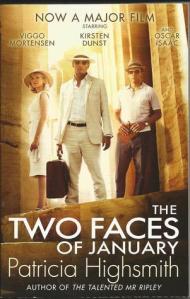 Three American vacationers meet in a hotel in Greece one January. But the circumstances are far from auspicious. Conman Chester MacFarland is traveling with his 15-years-younger wife, Colette. Rydal Keener is a stranger who, seemingly on a whim, helps them cover up the accidental death of a Greek police investigator who came to ask Chester some questions. From here on in, they’re in lockstep, moving around Greece together, obtaining fake passports and checking the headlines obsessively to outrun consequences. Colette takes a fancy to Rydal, and the jealousy emanating from the love triangle is complicated by Chester’s alcoholism and Rydal’s hurt over earning a police record for a consensual teenage relationship. I have a dim memory of seeing the 2014 Kirsten Dunst and Viggo Mortensen film, but luckily I didn’t recall any major events. A climactic scene takes place at the palace of Knossos, and the chase continues until an unavoidably tragic end.
I’ve read several Ripley novels and a few standalone psychological mysteries by Highsmith and enjoyed them well enough, but murders aren’t really my thing. (Carol is the only work of hers that I’ve truly loved.) My specific issue here was with the central trio of characters. Colette is thinly drawn and doesn’t get enough time on the page. Chester seems much older than his 42 years and is an irredeemable swindler. It’s only because of our fondness for Rydal that we want them all to get away with it. But even Rydal doesn’t get the in-depth portrayal one might hope for. There’s the injustice of his backstory and the fact that he’s a would-be poet, true, but we never understand why he helped the MacFarlands, so have to conclude that it was the impulse of a moment and committed him to a regrettable course. This is pacey enough to keep the pages turning, but won’t stick with me. (Public library)
I’m turning my face forward: Good riddance to January 2026, during which I’ve mostly felt rubbish; here’s hoping for a better rest of the year. I’m off to the opera tonight – something I’ve only done once before, in Leeds in 2006! – to see Susannah, a tale from the Apocrypha transplanted to the 1950s U.S. South.
Four (Almost) One-Sitting Novellas by Blackburn, Murakami, Porter & School of Life (#NovNov25)
I never believe people who say they read 300-page novels in a sitting. How is that possible?! I’m a pretty slow reader, I like to bounce between books rather than read one exclusively, and I often have a hot drink to hand beside my book stack, so I’d need a bathroom break or two. I also have a young cat who doesn’t give me much peace. But 100 pages or thereabouts? I at least have a fighting chance of finishing a novella in one go. Although I haven’t yet achieved a one-sitting read this month, it’s always the goal: to carve out the time and be engrossed such that you just can’t put a book down. I’ll see if I can manage it before November is over.
A couple of longish car rides last weekend gave me the time to read most of three of these, and the next day I popped the other in my purse for a visit to my favourite local coffee shop. I polished them all off later in the week. I have a mini memoir in pets, a surreal Japanese story with illustrations, an innovative modern classic about bereavement, and a set of short essays about money and commodification.
My Animals and Other Family by Julia Blackburn; illus. Herman Makkink (2007)
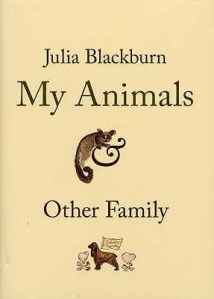 In five short autobiographical essays, Blackburn traces her life with pets and other domestic animals. Guinea pigs taught her the facts of life when she was the pet monitor for her girls’ school – and taught her daughter the reality of death when they moved to the country and Galaxy sired a kingdom of outdoor guinea pigs. They also raised chickens, then adopted two orphaned fox cubs; this did not end well. There are intriguing hints of Blackburn’s childhood family dynamic, which she would later write about in the memoir The Three of Us: Her father was an alcoholic poet and her mother a painter. It was not a happy household and pets provided comfort as well as companionship. “I suppose tropical fish were my religion,” she remarks, remembering all the time she devoted to staring at the aquarium. Jason the spaniel was supposed to keep her safe on walks, but his presence didn’t deter a flasher (her parents’ and a policeman’s reactions to hearing the story are disturbingly blasé). My favourite piece was the first, “A Bushbaby from Harrods”: In the 1950s, the department store had a Zoo that sold exotic pets. Congo the bushbaby did his business all over her family’s flat but still was “the first great love of my life,” Blackburn insists. This was pleasant but won’t stay with me. (New purchase – remainder copy from Hay Cinema Bookshop, 2025) [86 pages]
Super-Frog Saves Tokyo by Haruki Murakami; illus. Seb Agresti and Suzanne Dean (2000, 2001; this edition 2025)
[Translated from Japanese by Jay Rubin]
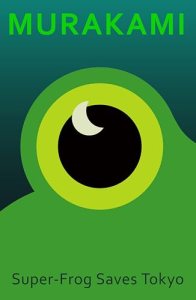 This short story first appeared in English in GQ magazine in 2001 and was then included in Murakami’s collection after the quake, a response to the Kobe earthquake of 1995. “Katigiri found a giant frog waiting for him in his apartment,” it opens. The six-foot amphibian knows that an earthquake will hit Tokyo in three days’ time and wants the middle-aged banker to help him avert disaster by descending into the realm below the bank and doing battle with Worm. Legend has it that the giant worm’s anger causes natural disasters. Katigiri understandably finds it difficult to believe what’s happening, so Frog earns his trust by helping him recover a troublesome loan. Whether Frog is real or not doesn’t seem to matter; either way, imagination saves the city – and Katigiri when he has a medical crisis. I couldn’t help but think of Rachel Ingalls’ Mrs. Caliban (one of my NovNov reads last year). While this has been put together as an appealing standalone volume and was significantly more readable than any of Murakami’s recent novels that I’ve tried, I felt a bit cheated by the it-was-all-just-a-dream motif. (Public library) [86 pages]
Grief Is the Thing with Feathers by Max Porter (2015)
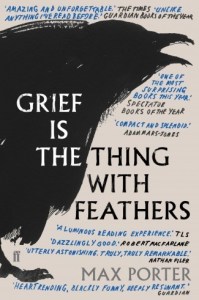 A reread – I reviewed this for Shiny New Books when it first came out and can’t better what I said then. “The novel is composed of three first-person voices: Dad, Boys (sometimes singular and sometimes plural) and Crow. The father and his two young sons are adrift in mourning; the boys’ mum died in an accident in their London flat. The three narratives resemble monologues in a play, with short lines often laid out on the page more like stanzas of a poem than prose paragraphs.” What impressed me most this time was the brilliant mash-up of allusions and genres. The title: Emily Dickinson. The central figure: Ted Hughes’s Crow. The setup: Edgar Allan Poe’s “The Raven” – while he’s grieving his lost love, a man is visited by a black bird that won’t leave until it’s delivered its message. (A raven cronked overhead as I was walking to get my cappuccino.) I was less dazzled by the actual writing, though, apart from a few very strong lines about the nature of loss, e.g. “Moving on, as a concept, is for stupid people, because any sensible person knows grief is a long-term project.” I have a feeling this would be better experienced in other media (such as audio, or the play version). I do still appreciate it as a picture of grief over time, however. Porter won the Sunday Times Young Writer of the Year Award as well as the Dylan Thomas Prize. (Secondhand – Gifted by a friend as part of a trip to Community Furniture Project, Newbury last year; I’d resold my original hardback copy – more fool me!) [114 pages]


My original rating (in 2015):
My rating now: 
Why We Hate Cheap Things by The School of Life (2017)
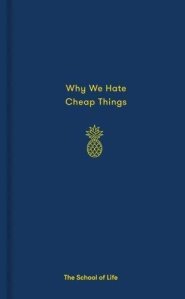 I’m generally a fan of the high-brow self-help books The School of Life produces, but these six micro-essays feel like cast-offs from a larger project. The title essay explores the link between the cost of an item or experience and how much we value it – with reference to pineapples and paintings. The other essays decry the fact that money doesn’t get fairly distributed, such that craftspeople and arts graduates often struggle financially when their work and minds are exactly what we should be valuing as a society. Fair enough … but any suggestions for how to fix the situation?! I’m finding Robin Wall Kimmerer’s The Serviceberry, which is also on a vaguely economic theme, much more engaging and profound. There’s no author listed for this volume, but as The School of Life is Alain de Botton’s brainchild, I’m guessing he had a hand. Perhaps he’s been cancelled? This raises a couple of interesting questions, but overall you’re probably better off spending the time with something more in depth. (Little Free Library) [78 pages]
20 Books of Summer, 8: Au Revoir, Tristesse by Viv Groskop
This is a substitute I picked out as a potential (now belated) #ParisinJuly2025 contribution. There’s been little time for writing over the past week while we’ve been hosting my sister and brother-in-law. Their whirlwind trip was shortened by a day due to a cancelled flight from the States, but we managed to pack in a lot, including a two-night mini-break down in Devon.

Reminiscent of Something to Declare by Julian Barnes and How Proust Can Change Your Life by Alain de Botton, this is a lighthearted tour through a dozen great works of French literature and the lessons they might offer modern readers on how to live well. Ever since her school days of studying French and spending every family holiday in France, Groskop has been obsessed with the language and culture. In most of the chapters, she undertakes a rereading of a novel she first read as a teenager or Cambridge student, marveling at how much more she gets out of it with greater life experience.
 Although her choices are indisputable classics, she acknowledges they can only ever be an incomplete and biased selection, unfortunately all white and largely male, though she opens with Bonjour Tristesse and also includes Colette and Duras novels. I’d only read three of her dozen, in translation: along with the Sagan, Dangerous Liaisons and Madame Bovary (as well as other books by two of the additional authors), but it didn’t make much difference whether I was familiar with a plot or not. So long as one is not allergic to spoilers, it’s possible to enjoy these miniature essays’ witty combination of literary criticism, biographical information, self-help messaging, and a bit of autobiographical context.
The male writers tended to be syphilitic workaholics – Balzac is reputed to have drunk 50 cups of coffee per day to sustain his output – while the women flouted social conventions by drinking, taking much younger (and/or female) lovers and driving recklessly. While the subtitle promises “Lessons in Happiness,” from Hugo to Camus these are in fact pretty miserable narratives in which, as was especially common in the 19th century, protagonists are punished for ambition or transgressions, or never reach contentment because of self-delusion.
In boiling down each plot to one line of advice for a chapter title, Groskop’s tone alternates between earnest (“Our greatest weaknesses conceal our greatest strengths” = Cyrano de Bergerac) and tongue in cheek (“Social climbing rarely pays off, but you’ll probably want to do it anyway” = Le Rouge et le Noir). She describes the works with genuine affection and clearly believes they are still worth reading, yet isn’t afraid to question those aspects that have aged less well. Controversially, she suggests being selective with Proust’s mammoth oeuvre: “skim-read, rereading the passages you fall in love with and discarding the rest.” She also surveys how the stories live on through adaptations. Of the new-to-me, I’m most drawn to Bel-Ami but also fancy La Cousine Bette. This was a delight I wouldn’t hesitate to recommend to fellow Francophiles. (New purchase – remainder from Hay Cinema Bookshop)

November Releases Including #NovNov24: Bennett, Pimlott, Rishøi, Shattuck
Two belated novellas: one a morbid farce set at an old folks’ home; the other a sweet Norwegian tale that offers sisterhood and magic as ways to survive a rough upbringing. Plus a lovely poetry pamphlet about the early days of widowhood and a linked short story collection spanning several centuries of art and relationships in New England.
Killing Time by Alan Bennett
I’d only previously read The Uncommon Reader by Alan Bennett; I perpetually have him confused with Arnold Bennett, by whom I know more. It could be debated whether this is a novella by word count, but even if more of a short story, for me it counts for #NovNov24 because it’s in a stand-alone volume, as publishing partner Faber produced for Claire Keegan’s So Late in the Day last year.
I polished this off in one sitting. Bennett’s black comedy is set at a posh home for the elderly, the Edwardian mansion Hill Topp House. (Residents know to be on their best behaviour lest they be demoted to an inferior neighbouring facility, Low Moor.) When a prospective client calls, Mrs McBryde enthusiastically lists the assets:
We have a choir and on special occasions a glass of dry sherry. It’s less of a home and more of a club and very much a community. We go on frequent trips out. Only last week we went to a local farm where they have a flamingo. … We don’t vegetate at Hill Topp. And the cuisine is not unadventurous. It’s not long since we had a Norwegian evening.
 The dialogue is sparkling, just like you’d expect from a playwright. As in the Hendrik Groen books and Elizabeth Taylor’s Mrs Palfrey at the Claremont, the situation invites cliques and infantilizing. The occasional death provides a bit more excitement than jigsaws and knitting. Ageing bodies may be pitiable (the incontinence!), but sex remains a powerful impulse.
Here is where readers might start to feel disconnected from Bennett’s dated humour. The window cleaner turned gigolo is somewhat amusing; the repeated gag of a flasher, not so much. “Has she seen the sights yet?” two ladies ask. And a jesting conversation about clerical sexual abuse scandals seems particularly ill considered given recent news.
The story is most interesting and fresh once Covid comes onto the scene. Some perish early on; the survivors, ungoverned, do their best. I loved the detail of a resident turning a velvet dress into 60 masks. Two objects, one of them depicted on the cover (it’s not a grenade as I thought at first!), come to have particular importance. I liked this but thought by favouring broad humour it sacrificed characterization or compassion. You’ll enjoy it if you’re fond of wicked comedy by the likes of Alan Ayckbourn. [112 pages]
With thanks to Profile Books for the free copy for review.
After the Rites and Sandwiches: Poems by Kathy Pimlott
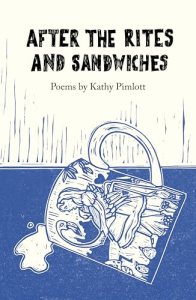 The 18 poems in this pamphlet (in America it would be called a chapbook) orbit the sudden death of Pimlott’s husband a few years ago. By the time she found Robert at the bottom of the stairs, there was nothing paramedics could do. What next? The callousness of bureaucracy: “Your demise constitutes a quarter off council tax; / the removal of a vote you seldom cast and then / only to be contrary; write-off of a modest overdraft; / the bill for an overpaid pension” (from “Death Admin I”). Attempts at healthy routines: “I’ve written my menu for the week. Today’s chowder. / I manage ten pieces of the 1000-piece jigsaw’s scenes / from Jane Austen. Tomorrow I’ll visit friends and say // it’s alright, it’s alright, seventy, eighty percent / alright” (from “How to be a widow”). Pimlott casts an eye over the possessions he left behind, remembering him in gardens and on Sunday walks of the sort they took together. Grief narratives can err towards bitter or mawkish, but this one never does. Everyday detail, enjambment and sprightly vocabulary lend the wry poems a matter-of-fact grace. I plan to pass on my copy to a new book club member who was widowed unexpectedly in May – no doubt she’ll recognise the practical challenges and emotional reality depicted.
With thanks to The Emma Press for the free copy for review.
Brightly Shining by Ingvild Rishøi (2021; 2024)
[Translated from the Norwegian by Caroline Waight]
 Ten-year-old Ronja and her teenage sister Melissa have to stick together – their single father may be jolly and imaginative, but more often than not he’s drunk and unemployed. They can’t rely on him to keep food in their Tøyen flat; they subsist on cereal. When Ronja hears about a Christmas tree seller vacancy, she hopes things might turn around. Their father lands the job but, after his crew at a local pub pull him back into bad habits, Melissa has to take over his hours. Ronja hangs out at the Christmas tree stand after school, even joining in enthusiastically with publicity. The supervisor, Tommy, doesn’t mind her being around, but it’s clear that Eriksen, the big boss, is uncomfortable with even a suggestion of child labour.
It’s touching to see Melissa take on a caring role and to meet the few indisputably good people who help the sisters, such as their elderly neighbour, Aronsen. Ronja’s innocent narration emphasizes her disbelief at their father’s repeated failings and also sets the story up for a late swerve into what seems like magic realism. I’m genuinely not sure what’s supposed to happen at the end, but the sisters find themselves alone in a wintry storm and the language of miracles is used. Rishøi’s debut will surely be compared to Small Things Like These and other classic holiday novellas. I found it a little obvious and saccharine, but if you find the right mood and moment it might just tug at your heart in the run-up to Christmas. [182 pages]
With thanks to Grove Press UK for the free copy for review.
The History of Sound by Ben Shattuck
“history is personal, even when it isn’t”
The dozen stories of Shattuck’s fiction debut form a “hook-and-chain” structure of five couplets, bookended by a first and last story that are related to each other. The links are satisfyingly overt: A pair might take place in the same house in different centuries, or the second will fill in the history of the characters from the first. In “Edwin Chase of Nantucket,” the eponymous figure recognizes his bereaved mother’s loneliness and does her a kindness. “Silver Clip,” which follows, is separated by 200 years, but its accounts of a young painter living in his ancestral island home reprises the motifs of grief, compassion and memory. “Graft,” about a woman spurned in the 1880s, and “Tundra Swan,” in which a man concocts a swindle to pay for his son’s rehab in the present day, are connected by a Cape Cod orchard. Artefacts and documents also play important roles: a journal accounts for a mysterious mass death, a radio transcript and a photograph explain a well-meaning con, and an excerpt from a history textbook follows up on the story of the religious cult in “The Children of New Eden.”
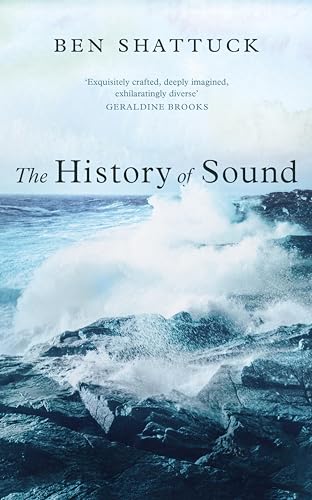 My favourite individual story was “August in the Forest,” about a poet whose artist’s fellowship isn’t all it cracked up to be – the primitive cabin being no match for a New Hampshire winter. His relationships with a hospital doctor, Chloe, and his childhood best friend, Elizabeth, seem entirely separate until Elizabeth returns from Laos and both women descend on him at the cabin. Their dialogues are funny and brilliantly awkward (“Sorry not all of us are quietly chiseling toward the beating heart of the human experience, August. One iamb at a time”) and it’s fascinating to watch how, years later, August turns life into prose. But the crowning achievement is the opening title story and its counterpart, “Origin Stories,” about folk music recordings made by two university friends during the First World War – and the afterlife of both the songs and the men.
From the start I was reminded strongly of North Woods by Daniel Mason, and particular sequences recall Shoot the Horses First by Leah Angstman and An Account of the Decline of the Great Auk, According to One Who Saw It by Jessie Greengrass. It’s a slight shame for Shattuck that what he was doing here didn’t seem as original to me because of my familiarity with these predecessors. Yet, to my surprise, I found that The History of Sound was more consistent than any of those. With the exception of a few phrases from “Graft” (“living room,” “had sex” and “boring” don’t strike me as 1880s lingo), all of the stories are historically convincing, and the very human themes of lust, parenthood, sorrow and frustrated ambition resonate across centuries and state lines. Really beautiful. (See Susan’s review too.)
[Some you-couldn’t-make-it-up trivia about Shattuck: he’s married to Jenny Slate (author of Little Weirds et al., as well as an actress known to me as Mona Lisa from Parks and Recreation); and he runs the oldest general store in America, built in 1793.]
With thanks to Swift Press for the free copy for review.
Which of these November releases catches your eye? What others can you recommend?
Eve Smith Event & Absurd Person Singular
Two literary events I attended recently…
On Friday afternoon I volunteered on stewarding and refreshments for an author chat held at my local public library. It was our first such event since before Covid! I’d not heard of Eve Smith, who is based outside Oxford and writes speculative – not exactly dystopian, despite the related display below – novels inspired by scientific and medical advancements encountered in the headlines. Genetics, in particular, has been a recurring topic in The Waiting Rooms (about antibiotic resistance), Off Target (gene editing of embryos), One (a one-child policy introduced in climate-ravaged future Britain) and The Cure (forthcoming in April 2025; transhumanism or extreme anti-ageing measures).


Smith used to work for an environmental organization and said that she likes to write about what scares her – which tends not to be outlandish horror but tweaked real-life situations. Margaret Atwood has been a big influence on her, and she often includes mother–daughter relationships. In the middle of the interview, she read from the opening of her latest novel, One. I reckon I’ll give her debut, The Waiting Rooms, a try. (I was interested to note that the library has classed it under Science Fiction but her other two novels with General Fiction.)
Then last night we went to see my husband’s oldest friend (since age four!) in his community theatre group’s production of Absurd Person Singular, a 1972 play by Alan Ayckbourn. I’ve seen and read The Norman Conquests trilogy plus another Ayckbourn play and was prepared for a suburban British farce, but perhaps not for how dated it would feel.
 The small cast consists of three married couples. Ronald Brewster-Wright is a banker with an alcoholic wife, Marion. Sidney Hopcroft (wife: Jane) is a construction contractor and rising property tycoon and Geoffrey Jackson is a philandering architect with a mentally ill wife, Eva. Weaving all through is the prospect of a business connection between the three men: “you scratch my back, I’ll scratch yours,” as Sidney puts it to Ronald several times. After one of Geoffrey’s buildings suffers a disastrous collapse, he has to consider humbling himself enough to ask Sidney for work.
The three acts take place in each of their kitchens on subsequent Christmas Eves; the period kitchen fittings and festive decorations were a definite highlight. First, the Hopcrofts stress out over hosting the perfect cocktail party – which takes place off stage, with characters retreating in twos and threes to debrief in the kitchen. The next year, the jilted Eva makes multiple unsuccessful suicide attempts while her oblivious friends engage in cleaning and DIY. Finally, we’re at the Brewster-Wrights’ and the annoyingly cheerful Hopcrofts cajole the others, who aren’t in the Christmas spirit at all, into playing a silly musical chairs-like game.


With failure, adultery, alcoholism and suicidal ideation as strong themes, this was certainly a black comedy. Our friend Dave decided not to let his kids (10 and 7) come see it. He was brilliant as Sidney, not least because he genuinely is a DIY genius and has history of engaging people in dancing. But the mansplaining, criticism of his poor wife, and “Oh dear, oh dear” exclamations were pure Sidney. The other star of the show was Marion. Although the actress was probably several decades older than Ayckbourn’s intended thirtysomething characters, she brought Norma Desmond-style gravitas to the role. But it did mean that a pregnancy joke in relation to her and the reference to their young sons – the Brewster-Wrights are the only couple with children – felt off.
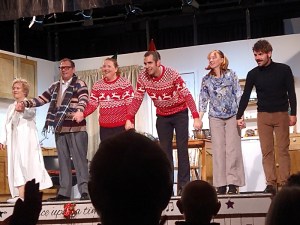 The director chose to give a mild content warning, printed in the program and spoken before the start: “Please be aware that this play was written in the 1970s and reflects the language and social attitudes of its time and includes themes of unsuccessful suicide attempts.” So the play was produced as is, complete with Marion’s quip about the cycles on Jane’s new washing machine: “Whites and Coloreds? It’s like apartheid!” The depiction of mental illness felt insensitive, although I like morbid comedy as much as the next person.
I can see why the small cast, silliness, and pre-Christmas domestic setting were tempting for amateur dramatics. There was good use of sound effects and the off-stage space, and a fun running gag about people getting soaked. I certainly grasped the message about not ignoring problems in hopes they’ll go away. But with so many plays out there, maybe this one could be retired?
September Releases, Part II: Antrobus, Attenberg, Strout and More
As promised yesterday, I give excerpts of the six (U.S.) September releases I reviewed for Shelf Awareness. But first, my thoughts on a compassionate sequel about a beloved ensemble cast.
Tell Me Everything by Elizabeth Strout
“People always tell you who they are if you just listen”
Alternative title ideas: “Oh Bob!” or “Talk Therapy in Small-Town Maine.” I’ve had a mixed experience with the Amgash novels, of which I’ve now read four. Last year’s Lucy by the Sea was my favourite, a surprisingly successful Covid novel with much to say about isolation, political divisions and how life translates into art. Oh William!, though shortlisted for the Booker, seemed a low point. It’s presented as Lucy’s published memoir about her first husband, but irked me with its precious, scatter-brained writing. For me, Tell Me Everything was closer to the latter. It continues Strout’s newer habit of bringing her various characters together in the same narrative. That was a joy of the previous book, but here it’s overdone and, along with the knowing first-person plural narration (“As we mentioned earlier, housing prices in Crosby, Maine, had been going through the roof since the pandemic”; “Oh Jim Burgess! What are we to do with you?”), feels affected and hokey.
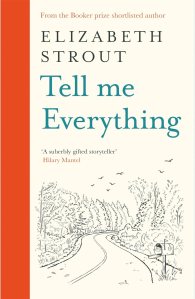
Strout makes it clear from the first line that this novel will mostly be devoted to Bob Burgess, who is not particularly interesting but perhaps a good choice of protagonist for that reason. A 65-year-old semi-retired lawyer, he’s a man of integrity who wins confidences because of his unassuming mien and willingness to listen and help where he can. One doesn’t read Strout for intrigue, but there is actually a mild murder mystery here. Bob ends up defending Matt Beach, a middle-aged man suspected of disposing of his mother’s body in a quarry. The Beaches are odd and damaged, with trauma threading through their history.
Sad stories are indeed the substance of the novel; Lucy trades in them. Literally: on her visits to Olive Kitteridge’s nursing home room, they swap bleak stories of the “unrecorded lives” they have observed or heard about. Lucy and Bob, who are clearly in love with each other, keep up a similar exchange of gloomy tales on their regular walks. Lucy asks Bob and Olive the point of these anecdotes, pondering the very meaning of life. Bob dismisses the question as immature; “as we have said, Bob was not a reflective fellow.” And because the book is filtered through Bob, we, too, feel this is just a piling up of depressing stories. Why should I care about Bob’s ex-wife’s alcoholism, his sister-in-law’s death from cancer, his nephew’s accident? Or any of the other unfortunate occurrences that make up a life. Bob and Lucy are appealingly ordinary characters, yet Strout suggests that they function as secular “sin-eaters,” accepting confessions. Forasmuch as they focus on others, they do each come to terms with childhood trauma and the reality of their marriages. Strout majors on emotional intelligence, but can be clichéd and soundbite-y. Such was my experience of this likable but diffuse novel.
With thanks to Viking (Penguin) for the proof copy for review.
Reviewed for Shelf Awareness:
Poetry:
 Signs, Music by Raymond Antrobus – The British-Jamaican poet’s intimate third collection contrasts the before and after of becoming a father—a transition that prompts him to reflect on his Deaf and biracial identity as well as the loss of his own father.
With thanks to Picador for the free copy for review.
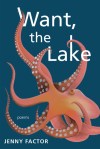 Want, the Lake by Jenny Factor – Factor’s long, intricate second poetry collection envisions womanhood as a tug of war between desire and constraint. “Elegy for a Younger Self” poems string together vivid reminiscences.
 Terminal Maladies by Okwudili Nebeolisa – The Iowa Writers’ Workshop graduate’s debut collection is a tender chronicle of the years leading to his mother’s death from cancer. Food and nature imagery chart the decline in Nkoli’s health and its effect on her family.
Fiction:
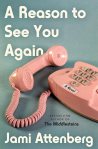 A Reason to See You Again by Jami Attenberg – Her tenth book evinces her mastery of dysfunctional family stories. From the Chicago-area Cohens, the circle widens and retracts as partners and friends enter and exit. Through estrangement and reunion, as characters grapple with sexuality and addictions, the decision is between hiding and figuring out who they are.
Nonfiction:
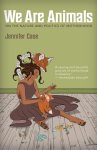 We Are Animals: On the Nature and Politics of Motherhood by Jennifer Case – Case’s second book explores the evolution, politics, and culture of contemporary parenthood in 15 intrepid essays. Science and statistics weave through in illuminating ways. This forthright, lyrical study of maternity is an excellent companion read to Lucy Jones’s Matrescence.
 Question 7 by Richard Flanagan – Ten years after his Booker Prize win for The Narrow Road to the Deep North, Richard Flanagan revisits his father’s time as a POW—the starting point but ultimately just one thread in this astonishing and uncategorizable work that combines family memoir, biography, and history to examine how love and memory endure. (Published in the USA on 17 September.)
With thanks to Emma Finnigan PR and Vintage (Penguin) for the proof copy for review.
Any other September releases you’d recommend?
 Bookish Beck = Rebecca Foster. American transplant to England. Freelance proofreader and book reviewer.
