Book Serendipity, June to Mid-August 2024
I call it “Book Serendipity” when two or more books that I read at the same time or in quick succession have something in common – the more bizarre, the better. This is a regular feature of mine every couple of months. Because I usually have 20–30 books on the go at once, I suppose I’m more prone to such incidents. People frequently ask how I remember all of these coincidences. The answer is: I jot them on scraps of paper or input them immediately into a file on my PC desktop; otherwise, they would flit away!
The following are in roughly chronological order.
- A self-induced abortion scene in Recipe for a Perfect Wife by Karma Brown and Sleeping with Cats by Marge Piercy.
- A woman who cleans buildings after hours, and a character named Tova who lives in the Seattle area in A Reason to See You Again by Jami Attenberg and Remarkably Bright Creatures by Shelby Van Pelt.
- Flirting with a surf shop employee in Sandwich by Catherine Newman and Remarkably Bright Creatures by Shelby Van Pelt.
- Living in Paris and keeping ticket stubs from all films seen in Paris Trance by Geoff Dyer and The Invention of Hugo Cabret by Brian Selznick.
- A schefflera (umbrella tree) is mentioned in Cheri by Jo Ann Beard and Company by Shannon Sanders.

- The Plague by Albert Camus is mentioned in Knife by Salman Rushdie and Stowaway by Joe Shute.
- Making egg salad sandwiches is mentioned in Cheri by Jo Ann Beard and Sandwich by Catherine Newman.
- Pet rats in Stowaway by Joe Shute and Happy Death Club by Naomi Westerman. Rats are also mentioned in Mammoth by Eva Baltasar, The Tale of Despereaux by Kate DiCamillo, and The Colour by Rose Tremain.
- Eels feature in Our Narrow Hiding Places by Kristopher Jansma, Late Light by Michael Malay, and The Colour by Rose Tremain.
- Atlantic City, New Jersey is a location in Florence Adler Swims Forever by Rachel Beanland and Company by Shannon Sanders.
 The father is a baker in Florence Adler Swims Forever by Rachel Beanland and Our Narrow Hiding Places by Kristopher Jansma.
- A New Zealand setting (but very different time periods) in Greta & Valdin by Rebecca K Reilly and The Colour by Rose Tremain.
- A mention of Melanie Griffith’s role in Working Girl in I’m Mostly Here to Enjoy Myself by Glynnis MacNicol and Happy Death Club by Naomi Westerman.
 Ermentrude/Ermyntrude as an imagined alternate name in Greta & Valdin by Rebecca K Reilly and a pet’s name in Stowaway by Joe Shute.
- A poet with a collection that was published on 6 August mentions a constant ringing in the ears: Joshua Jennifer Espinoza (I Don’t Want to Be Understood) and Keith Taylor (What Can the Matter Be?).
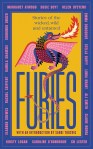
- A discussion of the original meaning of “slut” (a slovenly housekeeper) vs. its current sexualized meaning in Girlhood by Melissa Febos and Sandi Toksvig’s introduction to the story anthology Furies.
- An odalisque (a concubine in a harem, often depicted in art) is mentioned in I’m Mostly Here to Enjoy Myself by Glynnis MacNicol and The Shark Nursery by Mary O’Malley.
- Reading my second historical novel of the year in which there’s a disintegrating beached whale in the background of the story: first was Whale Fall by Elizabeth O’Connor, then Come to the Window by Howard Norman.
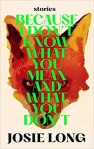 A short story in which a woman gets a job in online trolling in Because I Don’t Know What You Mean and What You Don’t by Josie Long and in the Virago Furies anthology (Helen Oyeyemi’s story).
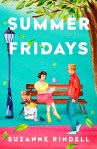
- Her partner, a lawyer, is working long hours and often missing dinner, leading the protagonist to assume that he’s having an affair with a female colleague, in Recipe for a Perfect Wife by Karma Brown and Summer Fridays by Suzanne Rindell.
- A fierce boss named Jo(h)anna in Summer Fridays by Suzanne Rindell and Test Kitchen by Neil D.A. Stewart.
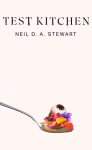
- An OTT rendering of a Scottish accent in Greta & Valdin by Rebecca K Reilly and Test Kitchen by Neil D.A. Stewart.
- A Padstow setting and a mention of Puffin Island (Cornwall) in The Cove by Beth Lynch and England as You Like It by Susan Allen Toth.
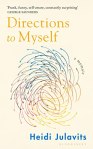
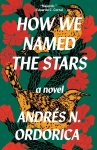
- A mention of the Big and Little Dipper (U.S. names for constellations) in Directions to Myself by Heidi Julavits and How We Named the Stars by Andrés N. Ordorica.
- A mention of Binghamton, New York and its university in We Are Animals by Jennifer Case and We Would Never by Tova Mirvis.
- A character accidentally drinks a soapy liquid in We Would Never by Tova Mirvis and one story of The Man in the Banana Trees by Marguerite Sheffer.
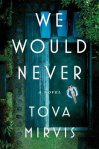 The mother (of the bride or groom) takes over the wedding planning in We Would Never by Tova Mirvis and Summer Fridays by Suzanne Rindell.
- The ex-husband’s name is Jonah in The Mourner’s Bestiary by Eiren Caffall and We Would Never by Tova Mirvis.
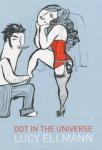
- The husband’s name is John in Dot in the Universe by Lucy Ellmann and Liars by Sarah Manguso.
- An affair is discovered through restaurant receipts in Summer Fridays by Suzanne Rindell and Test Kitchen by Neil D.A. Stewart.
- A mention of eating fermented shark in The Museum of Whales You Will Never See by A. Kendra Greene and Test Kitchen by Neil D.A. Stewart.
- A mention of using one’s own urine as a remedy in Thunderstone by Nancy Campbell and Terminal Maladies by Okwudili Nebeolisa.
- The main character tries to get pregnant by a man even though one of the partners is gay in Mammoth by Eva Baltasar and Until the Real Thing Comes Along by Elizabeth Berg.
- Motherhood is for women what war is for men: this analogy is presented in We Are Animals by Jennifer Case, Parade by Rachel Cusk, and Want, the Lake by Jenny Factor.
 Childcare is presented as a lifesaver for new mothers in We Are Animals by Jennifer Case and Liars by Sarah Manguso.
- A woman bakes bread for the first time in Mammoth by Eva Baltasar and A Year of Biblical Womanhood by Rachel Held Evans.
- A gay couple adopts a Latino boy in Greta & Valdin by Rebecca K Reilly and one story of There Is a Rio Grande in Heaven by Ruben Reyes, Jr.
 A husband who works on film projects in A Year of Biblical Womanhood by Rachel Held Evans and Liars by Sarah Manguso.
- A man is haunted by things his father said to him years ago in Parade by Rachel Cusk and one story in There Is a Rio Grande in Heaven by Ruben Reyes, Jr.
- Two short story collections in a row in which a character is a puppet (thank you, magic realism!): The Man in the Banana Trees by Marguerite Sheffer, followed by There Is a Rio Grande in Heaven by Ruben Reyes, Jr.
- A farm is described as having woodworm in Mammoth by Eva Baltasar and Parade by Rachel Cusk.
- Sebastian as a proposed or actual name for a baby in Signs, Music by Raymond Antrobus and Birdeye by Judith Heneghan.
What’s the weirdest reading coincidence you’ve had lately?
July Releases, II: Howard Norman, Andrés N. Ordorica, Neil D. A. Stewart
Three more July releases after yesterday’s Disability Pride Month special. Today is all fiction, but with rather different settings: Atlantic Canada, upstate New York and Mexico, and a London restaurant. The time period ranges from the last days of the First World War to 2013. The themes? Murder, plagues, accidental deaths and gourmet food in addition to those perennial subjects of finding love and coming to terms with identity.
Come to the Window by Howard Norman
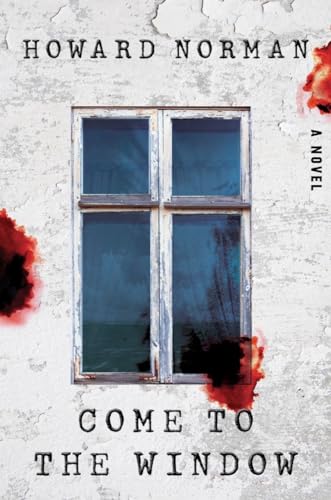 This was my eighth book by Norman and felt most similar to My Darling Detective and Next Life Might Be Kinder. Nothing much happens in the Nova Scotia fishing village of Parrsboro – until the night in April 1918 that Elizabeth Frame shoots dead her husband of 11 hours and throws the revolver into the blowhole of a beached whale. The story is a boon for Toby Havenshaw, a journalist with the Halifax Evening Mail, and quickly becomes an obsession. It’s never a whodunit so much as a why as Toby reports on the trial and follows Elizabeth when she goes on the lam. The sordid case just keeps getting stranger, drawing in bigamy, illegitimate pregnancy, and so on.
But Norman never treats all this too seriously; it is almost a tragicomic foil to the more consequential matters of world war and an influenza pandemic, which soon has Atlantic Canada in its grip as well. Toby’s wife, Amelia, is a hospital surgeon operating on returning veterans. She’s so quietly capable she makes Toby look a dunce, and their everyday rapport and unusual road to parenthood in their late thirties are charming. I also enjoyed Norman’s Dickensian naming (Bevel Cousins, Dr. S. S. Particulate) and literary references: the title phrase is from Matthew Arnold, and L. M. Montgomery gets a mention.
No doubt Norman wrote this as a Covid response; the parallel with the Spanish flu has been irresistible for many. He really captures the feeling of living through a uniquely terrible world situation. However, I’m not sure this short novel will prove memorable. Such has been true for his other recent novels, which pale in comparison with The Bird Artist. (Read via Edelweiss)
How We Named the Stars by Andrés N. Ordorica
I learned about this through the Observer’s 10 best new novelists feature and requested a copy via a Northern Fiction Alliance online showcase. There’s a sweet Heartstopper vibe to the story of an unlikely romance blooming between Daniel de la Luna and Sam Morris, his roommate at the University of Cayuga (= Cornell). Sam is a hunky jock while Daniel is a nervous would-be writer who has only just become comfortable with calling himself gay.
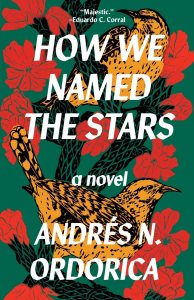 Ordorica, also a poet, immediately sets an elegiac tone by revealing Sam’s untimely death soon after the end of their freshman year. To cope with losing the love of his life, Daniel writes this text as if it’s an extended letter to Sam, recounting the course of their relationship – from strangers to best friends to secret lovers – and telling of his summer spent in Mexico exploring his family history, especially the parallels between his life and that of his late uncle and namesake, who was brave enough to be openly gay in the early days of the AIDS crisis.
Unfortunately, solid ideas and a warm-hearted approach are swamped by a host of problems. Ordorica writes a pretty good sex scene but the rest is clichéd, purple or awkward prose (“I snapped photo after photo of you, laughing all the while from your infectious elation”; “I felt unmoored, unsettled, and utterly liminal, in a state of flux”; “I sank into my pillows, muffling my tears as my mind floundered into even deeper waves of sadness”) and stiff dialogue. The cultural references and terminology feel all wrong for 2011, let alone for the 1988 diary entries of Uncle Daniel’s. The Mexico subplot is too tidy and Daniel’s breakdown after news of Sam’s death, which appears to involve full-blown alcohol addiction, is implausibly resolved within a chapter. The characterization of the secondary figures, particularly Daniel’s trio of queer Cayuga friends, is tissue thin.
It seems likely that Ordorica channeled much of his own experience into this queer coming-of-age narrative. He may have been aiming for star-crossed lovers and a groundbreaking own voices story, but this is run-of-the-mill stuff – more like a college student’s first draft than a finished book.
With thanks to Saraband for the proof copy for review.
Test Kitchen by Neil D. A. Stewart
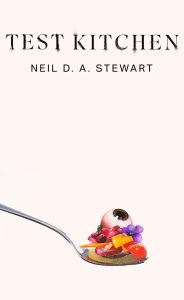 I spied this in one of Susan’s monthly previews. (If you haven’t already subscribed to her blog, do so at once. You’ll never be short of ideas for what to read.) Midgard is a fine dining restaurant with a tree in the middle whose multiple small courses evoke childhood memories and disguise one foodstuff as another. The London establishment earned two Michelin stars and has a perpetual waiting list, but as a news piece at the start presages, it will be forced to close its doors within five years after a series of disasters. Every other chapter introduces another set of diners, table by table: a first date, a reunion of old friends, a 12-year-old foodie trying to forestall his parents’ divorce, a restaurant critic and her freeloading acquaintances, and a solitary man who should really get that face wound seen to.
Many of these situations aren’t what they seem; the same goes for the intervening glimpses into the kitchen. Our host for these is Marley, the most recently hired waitress, who fled a chaotic home life in Melbourne. She didn’t show for work today; she’s in hiding, yet knows everything about the staff dynamics so is a perfect tour guide. There’s a mixture of nerves and bravado running through the kitchen as dinner starts. A knife accident, a food allergy, and a champagne cork hitting a customer are only the beginning of the evening’s mishaps. While I was initially drawn to the structure, which is almost like a linked short story collection, and I can’t resist a restaurant setting, the narrative trickery and the way that the mood evolves from slapstick to grotesque put me off. I enjoyed individual vignettes, but the whole didn’t come together as satisfyingly as in Sweetbitter or Service, among others.
With thanks to Corsair (Hachette) for the free copy for review.
 Bookish Beck = Rebecca Foster. American transplant to England. Freelance proofreader and book reviewer.
 Bookish Beck