The Bookshop Band in Abingdon & 20 Books of Summer, 6: Orphans of the Carnival by Carol Birch
The Bookshop Band have been among my favourite musical acts since I first saw play live at the Hungerford Literary Festival in 2014. Initially formed of three local musicians for hire, they got their start in 2010 as the house band at Mr B’s Emporium of Reading Delights in Bath, England. For their first four years, they wrote a pair of original songs about a new book, often the very day of an author’s event in the shop, and performed them on guitar, cello, and ukulele as an interlude to the evening’s reading and discussion.
Notable songs from their first 13 albums are based on Glow by Ned Beauman (“We Are the Foxes”), Don’t Let’s Go to the Dogs Tonight by Alexandra Fuller (“Bobo and the Cattle”), The Unlikely Pilgrimage of Harold Fry by Rachel Joyce (“How Not to Woo a Woman”), and Bring Up the Bodies by Hilary Mantel (“You Make the Best Plans, Thomas”). They have also written responses to classic literature, with songs inspired by Alice in Wonderland, various Shakespeare plays, and a compilation of first lines called “Once Upon a Time.”
I got to see the band live five times pre-pandemic, even after husband-and-wife-duo Ben Please and Beth Porter moved nearly 400 miles away to Wigtown, the Book Town of Scotland. During the first six months of Covid-19 lockdown, the livestream concerts from their attic were weekly treats to look forward to. They also interviewed authors for a breakfast chat show as part of the Wigtown Book Festival, which went online that year.

In the years since, the band has kept busy with other projects (not to mention two children). Porter sings and performs on the two Spell Songs albums based on Robert Macfarlane’s The Lost Words and its sequel. Together they composed the soundtrack to Aardman Animations’ short film, Robin Robin (2021) – winning Best Music at the British Animation Awards, and wrote an album of songs based on Scottish children’s literature. And they have continued writing one-off book songs, such as for the launch of Birnam Wood by Eleanor Catton. (I’m disappointed their songs about All My Wild Mothers by Victoria Bennett and The Spinning Heart by Donal Ryan still haven’t made it onto record.)
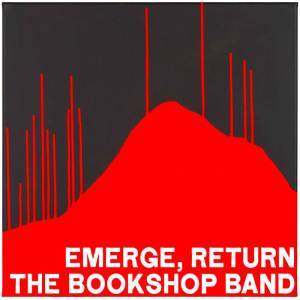 I’ve been enthusing about them for nearly a decade, but they’ve remained mostly under the radar in that time. Not so any longer; their recent album Emerge, Return was produced by Pete Townshend of The Who; the production value has notably advanced while retaining their indie spirit. Foreword Reviews kindly agreed to pay me to fangirl – er, write a blog – about Emerge, Return and the tour supporting it, so I’ll leave it there for the music criticism (their complete discography is now available on Bandcamp and Spotify). I’ll just add that a number of these ‘new’ songs have been kicking around for six to ten years but went unrecorded until now. For that reason, I worried that it might feel like a collection of cast-offs, but in fact they’ve managed to produce something sonically and thematically cohesive. It’s darker than some of their previous work, with moody minor chords and slightly sinister subjects.

Julia Pastrana after death. George Wick, Public domain, via Wikimedia Commons.
I’ve often found that the band will zero in on a detail, scene, or idea that never would have stood out to me while reading a book but, in retrospect, evokes the whole with great success. I decided to test this out by reading Carol Birch’s Orphans of the Carnival in the weeks leading up to seeing them on their months-long UK summer/autumn tour. It’s a historical novel about real-life 1850s Mexican circus “freak” Julia Pastrana, who had congenital conditions that caused her face and body to be covered in thick hair and her jaw and lips to protrude. Cruel contemporaries called her the world’s ugliest woman and warned that pregnant women should not be allowed to see her on tour lest the shock cause them to miscarry. Medical doctors posited, in all seriousness, that she was a link between humans and orangutans.
My copy of Birch’s novel was a remainder, and it is certainly a minor work compared to the Booker Prize-shortlisted Jamrach’s Menagerie. Facts about Julia’s travel itinerary and fellow oddballs quickly grow tedious, and while one of course sympathizes when children throw rocks at her, she never becomes a fully realized character rather than a curiosity.
There is also a bizarre secondary storyline set in 1983, in which Rose fills her London apartment with hoarded objects, including a doll she rescues from a skip and names Tattoo. She becomes obsessed with the idea of visiting a doll museum in Mexico. I thought that Tattoo would turn out to be Julia’s childhood doll Yatzi (similar to in A Council of Dolls by Mona Susan Power, where dolls have sentimental and magical power across the centuries), but the connection, though literal, was not as I expected. It’s more grotesque than that. And stranger than fiction, frankly.
{SPOILERS AHEAD}
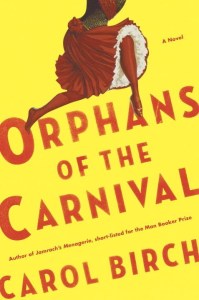 Birch sticks to the known details of Julia’s life. She had various agents, the final one being Theo Lent, who married her. (In the novel, he can’t bring himself to kiss her, but he can, you know, impregnate her.) She died of a fever soon after childbirth. Her son, Theo Junior, who inherited her hypertrichosis, also died within days. Both bodies were embalmed, sold, and exhibited. Theo then married another hairy woman, Marie Bartel of Germany, who took the name “Zenora” and posed as Julia’s sister. Theo died, syphilitic (or so Birch implies) and insane, in a Russian asylum. Julia and Theo Junior’s remains were displayed and mislaid at various points over the years, with Julia’s finally repatriated to Mexico for a proper burial in 2013. In the novel, Tattoo is, in fact, Theo Junior’s mummy.
Two Bookshop Band songs from the new album are about the novel: “Doll” and “Waggons and Wheels.” “Doll” is one of the few more lighthearted numbers on the album. It ended up being a surprise favourite track for me (along with the creepy “Eve in Your Garden,” about Margaret Atwood’s The Testaments, and “Room for Three,” a sombre yet resolute epic written for the launch of Philip Pullman’s La Belle Sauvage) because of its jaunty music-hall tempo; the pattern of repeating most nouns three times; and the hand claps, “deedily” vocal fills, unhinged recorder playing, and springy sound effects. The lyrics are almost a riddle: “When’s a doll (doll doll) not a doll (doll doll)?” They somehow avoid all spoilers while conveying something of the mental instability of a couple of characters.
The gorgeous “Waggons and Wheels” picks up on the melancholy tone and parental worries of earlier tracks from the album. The chorus has a wistful air as Julia ponders the passage of time and her constant isolation: “old friends, new deals / Winter or spring, I am hiding … Winter or spring, I’ll be travelling.” Porter’s mellow soprano tempers Julia’s outrage at mistreatment: “who are you to shout / Indecency and shame? / Shocking, I shock, so lock me out / I’m locked into this face.” She fears, too, what will happen to her child, “a beast or a boy, a monster or joy”. Listening to the song, I feel that the band saw past the specifics to plumb the universal feelings that get readers empathizing with Julia as a protagonist. They’ve gotten to the essence of the story in a way that Birch perhaps never did. Mediocre book; lovely songs. (New (bargain) purchase – Dollar Tree, Bowie, Maryland) 
I caught the Emerge, Return tour at St Nicolas’ Church in Abingdon (an event hosted by Mostly Books) last night. It was my sixth time seeing the Bookshop Band in concert – see also my write-ups of two 2016 events plus one in 2018 and another in 2019 – but the first time in person since the pandemic. I got to show off my limited-edition T-shirt. How nice it was to meet up again with blogger friend Annabel, too! Fun fact for you: Ben was born in Abingdon but hadn’t been back since he was two. Beth’s cousin turned up to the show as well. Although they have their daughters, 2 and 7, on the tour with them, they were being looked after elsewhere for the evening so the parents could relax a bit. Across the two sets, they played seven tracks from the new album, six old favourites, and two curios: one Spell Song, and an untitled song they wrote for the audiobook of Jackie Morris’s The Unwinding. It was a brilliant evening!


Miscellaneous Novellas: Murdoch, Read & Spark; Comics; Art Books
Novellas in November will be coming to a close on Monday and has been a great success in terms of blogger engagement. I’ve been adding review links to the master post nearly every day of the month, and I’m sure there are some I have missed. Although I still have a couple of novellas on the go, I don’t see myself finishing them this month, so I’m going to end with this set: three short classics to continue the week’s theme, two graphic novels, and a pair of nature/art/music/poetry books.
Classics:
Something Special by Iris Murdoch (1957)
[51 pages]
 A Murdoch rarity, this appeared in a 1950s anthology and in an English-language textbook in Japan, but was not otherwise published in the author’s lifetime. I think it’s her only short story. I’m counting it as a novella because it was published as a stand-alone volume by Vintage Classics in 2000. Twenty-four-year-old Yvonne Geary doesn’t know precisely what she wants from life, but hopes there might be more for her than a conventional marriage to Sam, her beau. “Can’t I live my life as I please since it’s the only thing I have?” she asks her hen-pecking mother. “I can’t see him as something special and I won’t marry him if I can’t.” Maybe she’ll escape to England. But for now she’s off for a night on the town in Dublin with Sam, going from a rowdy pub to the quiet of a locked-up park. Sam may be dull, but he seems sensitive, solicitous and well-meaning. Yvonne’s feelings for him flip-flop over the course of the evening. I’ve noticed before that Murdoch is a bit funny about Jewishness, but this is still a brisk, bittersweet story in the direct lineage of Sally Rooney’s Normal People. (With striking black-and-white woodcut-style illustrations by Michael McCurdy.)
The Fairacre Festival by ‘Miss Read’ (1968)
[80 pages]
 I’m not sure why I’d never tried anything by ‘Miss Read’ (the pseudonym of Dora Jessie Saint, a teacher turned author who was based not far from me in Berkshire) until now. She wrote two series of quaint novels set in the fictional villages of Fairacre and Thrush Green; this is #7 in the Fairacre series. Miss Read, her narrator, is a schoolteacher who records her wry observations of all the local happenings. After an autumn storm damages the church roof, the parishioners are dismayed to learn the renovations could cost £2000. No amount of jumble sales, concerts and tea dances will raise that much. So they set their sights higher, to an Edinburgh-style festival with a light show and an appearance from a famous opera singer. But it’s not going to be smooth sailing now, is it? This was cozy, quaint fun, and if I wished it had been a full-length book, that means I’ll just have to begin at the beginning with 1955’s Village School.
The Driver’s Seat by Muriel Spark (1970)
[107 pages]
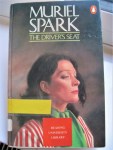 Lise has her “glad rags” on – bright new clothes in clashing patterns that strangers can’t help commenting on. The 34-year-old single woman has worked in an accounting office for the last 16 years and is now off to the South (Italy?) for a long-awaited vacation. This will be no blissful holiday, though. Just 11 pages in, we get our first hint that things are going to go wrong, and in the opening line of Chapter 3 Spark gives the game away. Clearly, her intention is to subordinate what happens to why it happens, so the foreshadowing of the early chapters is twisted to ironic effect later on. Lise is an unappealing character, haughty and deceitful, and the strangers she meets on the flight and at the hotel, including a man obsessed with the macrobiotic diet, are little better. I felt I didn’t have enough time to change my mind about Lise before we’re asked to have pity. Of course, this is meant to be a black comedy, but it was a little abrasive for my taste. This was my third and probably last from Spark, as I haven’t particularly enjoyed any of her work; I do love this pithy description of The Ballad of Peckham Rye, though: “An entertaining tale of satanism in South London.”
Graphic Novels:
Why Don’t You Write My Eulogy Now So I Can Correct It? A Mother’s Suggestions by Patricia Marx, illus. Roz Chast (2019)
[81 pages]
 I loved Chast’s graphic memoir Can’t We Talk about Something More Pleasant? and figured this would have the same witty approach to an elderly parent’s decline. Apart from a brief introduction to her mother (from Philadelphia, outspoken, worked as a guidance counselor and for her husband’s office supplies company), there is hardly any text; the rest is just illustrated one-liners, sayings her mother had or opinions she espoused. Many of these have to do with fashion no-nos, dinner party etiquette, grammar pedantry, avoiding the outdoors and exercise, and childrearing. “My mother never hesitates to say what other mothers would not even think to think. She calls it constructive criticism.” She reminds me of Bess Kalb’s grandmother in Nobody Will Tell You This but Me, an overall much funnier and more complete picture of an entertaining figure.
The Exciting World of Churchgoing by Dave Walker (2010)
[90 pages]
 A third set of Church Times comics, not as memorable as the original Dave Walker Guide to the Church. Once again, Walker pokes fun at bureaucracy, silly traditions, closed-mindedness, and the oddities of church buildings and parishioners’ habits. You really need to be familiar with the UK churchgoing scene, and specifically with Anglican churches, to get much out of the cartoons. I loved “According to legend, there is a lady who changes the teatowels in the church kitchen from time to time” and the “Infestations” spread that starts with bats and wasps and moves on to Charismatics. Most striking are two pages on church proceedings during swine flu – what was meant to be a joke doesn’t seem so funny now that it literally describes in-person services during COVID-19: “Shaking hands during the peace should be replaced by a friendly wave,” “Administration of anti-bacterial gel should take place,” etc.
Art Books:
The Lost Words: A Spell Book by Robert Macfarlane, illus. Jackie Morris (2017)
[112 pages]
 Macfarlane’s work has been hit or miss for me and I was suspicious of this project in general, thinking it would be twee or juvenile, but the beauty of the artwork and playful energy of the poems won me over. It’s common knowledge that this book arose as a response to news that many words to do with nature had been removed from the latest version of a junior dictionary published in the UK, to be replaced by technology vocabulary. Macfarlane spotlights these omitted words through acrostic poems alive with alliteration (“Fern’s first form is furled, / Each frond fast as a fiddle-head”), wordplay and internal rhymes. He peppers in questions, both rhetorical and literal-minded, and exclamations. Conker, Dandelion, Lark and Otter are highlights. Morris’s wildlife paintings are superb, with a Giotto-like gilt portrait facing each poem and two-page in situ tableaux in between.
The Lost Words Spell Songs (2019)
[112 pages]
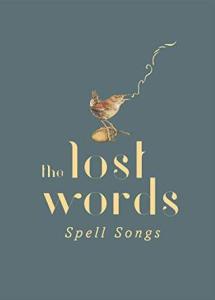 I followed up immediately with this companion book to the 14-track album a group of eight folk musicians made in response to The Lost Words. We were already fans of Kris Drever (mostly via Lau), Karine Polwart and Beth Porter (via the Bookshop Band), and became familiar with a few more of the artists (Kerry Andrew, Julie Fowlis and Rachel Newton) earlier this year through the online Folk on Foot festivals. This volume includes six additional poems, four of which directly inspired songs on the album, plus brief bios and words on the project from each artist (each portrayed by Morris as a relevant bird, with the musician serving as the “spirit human” for the bird) the complete lyrics with notes from whoever took the lead on a particular song, and short essays by Macfarlane, Morris (also an interview) and Polwart.
It was interesting to compare the different approaches to the project: five songs directly set Macfarlane’s poetry to music, two of them primarily in spoken word form; five are based on Macfarlane “extras,” like the new spells and the “charm against harm” he wrote during anti-tree felling campaigns like the one in Sheffield; a few are essentially pop songs based around major lines from Dandelion, Goldfinch and Lark (these plus “Selkie-Boy,” based on Grey Seal, ended up being my favorites); one is a traditional song from Seckou Keita’s native Senegal that also incorporates the bilingual Fowlis’s Gaelic to mourn the words that are lost with the past; and one is a final blessing song that weaves in bits from multiple spells. The artists all bring their individual styles, but the collaborations are strong, too.

Are you squeezing in any more novellas this month?
Do you like the sound of any of the ones I’ve read?
Classics and Doorstoppers of the Month
April was something of a lackluster case for my two monthly challenges: two slightly disappointing books were partially read (and partially skimmed), and two more that promise to be more enjoyable were not finished in time to review in full.
Classics
Wise Blood by Flannery O’Connor (1952)
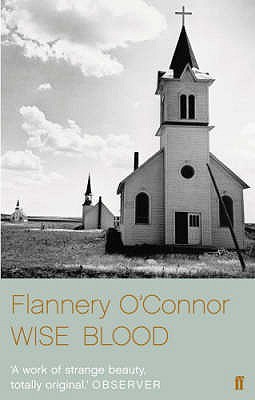 When Hazel Motes, newly released from the Army, arrives back in Tennessee, his priorities are to get a car and to get laid. In contrast to his preacher grandfather, “a waspish old man who had ridden over three counties with Jesus hidden in his head like a stinger,” he founds “The Church Without Christ.” Heaven, hell and sin are meaningless concepts for Haze; “I don’t have to run from anything because I don’t believe in anything,” he declares. But his vociferousness belies his professed indifference. He’s particularly invested in exposing Asa Hawkes, a preacher who vowed to blind himself, but things get complicated when Haze is seduced by Hawkes’s 15-year-old illegitimate daughter, Sabbath – and when his groupie, eighteen-year-old Enoch Emery, steals a shrunken head from the local museum and decides it’s just the new Jesus this anti-religion needs. O’Connor is known for her very violent and very Catholic vision of life. In a preface she refers to this, her debut, as a comic novel, but I found it bizarre and unpleasant and only skimmed the final two-thirds after reading the first 55 pages.
In progress: Cider with Rosie by Laurie Lee (1959) – I love to read ‘on location’ when I can, so this was a perfect book to start during a weekend when I visited Stroud, Gloucestershire for the first time.* Lee was born in Stroud and grew up there and in the neighboring village of Slad. I’m on page 65 and it’s been a wonderfully evocative look at a country childhood. The voice reminds me slightly of Gerald Durrell’s in his autobiographical trilogy.
*We spent one night in Stroud on our way home from a short holiday in Devon so that I could see The Bookshop Band and member Beth Porter’s other band, Marshes (formerly Beth Porter and The Availables) live at the Prince Albert pub. It was a terrific night of new songs and old favorites. I also got to pick up my copy of the new Marshes album, When the Lights Are Bright, which I supported via an Indiegogo campaign, directly from Beth.


Doorstoppers
The Resurrection of Joan Ashby by Cherise Wolas (2017)
Joan Ashby’s short story collection won a National Book Award when she was 21 and was a bestseller for a year; her second book, a linked story collection, was nominated for a Pulitzer Prize. In contravention of her childhood promise to devote herself to her art, she marries Martin Manning, an eye surgeon, and is soon a mother of two stuck in the Virginia suburbs. Two weeks before Daniel’s birth, she trashes a complete novel. Apart from a series of “Rare Babies” stories that never circulate outside the family, she doesn’t return to writing until both boys are in full-time schooling. When younger son Eric quits school at 13 to start a computer programming business, she shoves an entire novel in a box in the garage and forgets about it.
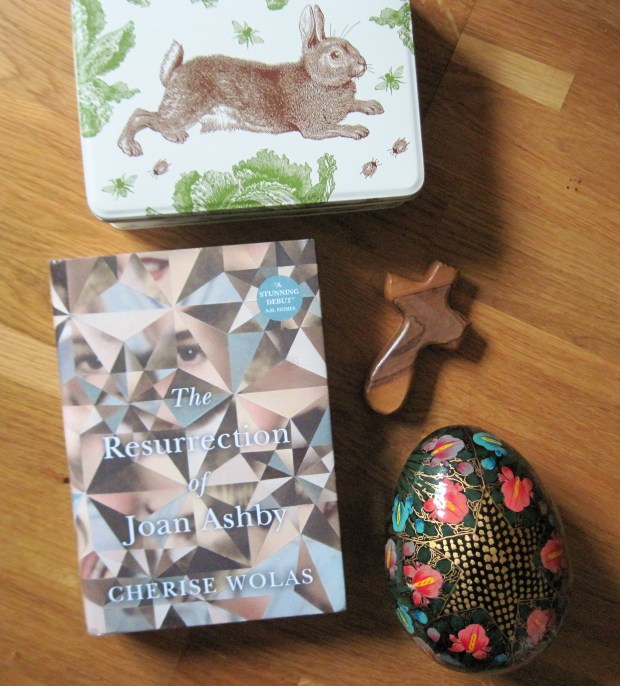
I chose this for April based on the Easter-y title (it’s a stretch, I know!).
Queasy feelings of regret over birthing parasitic children – Daniel turns out to be a fellow writer (of sorts) whose decisions sap Joan’s strength – fuel the strong Part I, which reminded me somewhat of Doris Lessing’s The Golden Notebook in that the protagonist is trying, and mostly failing, to reconcile the different parts of her identity. However, this debut novel is indulgently long, and I lost interest by Part III, in which Joan travels to Dharamshala, India to reassess her relationships and career. I skimmed most of the last 200 pages, and also skipped pretty much all of the multi-page excerpts from Joan’s fiction. At a certain point it became hard to sympathize with Joan’s decisions, and the narration grew overblown (“arc of tragedy,” “tortured irony,” etc.) [Read instead: Forty Rooms by Olga Grushin]
Page count: 523
In progress: Mary Ann Sate, Imbecile by Alice Jolly, a 613-page historical novel in verse narrated by a semi-literate servant from Stroud, then a cloth mill town. I’d already committed to read it for a Nudge/New Books magazine review, having had my interest redoubled by its shortlisting for the Rathbones Folio Prize, but it was another perfect choice for a weekend that involved a visit to that part of Gloucestershire. Once you’re in the zone, and so long as you can guarantee no distractions, this is actually a pretty quick read. I easily got through the first 75 pages in a couple of days.
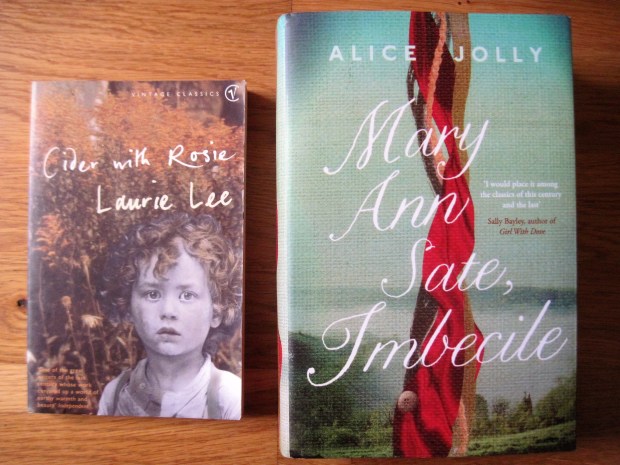
My Stroud-themed reading.
Next month’s plan: As a doorstopper Annabel and I are going to read The Amazing Adventures of Kavalier & Clay by Michael Chabon (636 pages, or roughly 20 pages a day for the whole month of May). Join us if you like! I’m undecided about a classic, but might choose between George Eliot, William Faulkner, Robert Louis Stevenson and Emile Zola.
 Bookish Beck = Rebecca Foster. American transplant to England. Freelance proofreader and book reviewer.
 Bookish Beck