Final Reading Statistics for 2025 & Goals for 2026
Happy New Year! We went to a neighbours’ party again this year and played silly games and chased their kittens until 1:30 a.m. It was a fun, low-key way to see in 2026.
I read 313 books last year. (2024’s total of 352 will never be topped!) Initially, I set a goal of 350, but by midyear I downgraded it to 300 and it was easy to reach. I can’t pinpoint a particular reason for the decline. In general, I felt like I was chasing my tail all year, despite having less work on than ever (but increased volunteering commitments). Often, I struggled with fatigue or being on the verge of illness. What a fun guessing game: is it long Covid or perimenopause?
Goodreads was glitchy for me all year, randomly counting books two or three times and falsely inflating my total by a whole extra 33 books at one point. It also has a lot of annoying, automatically generated book records that duplicate ISBNs or add the publisher to the title field. So I’m thinking about moving over to StoryGraph this year – I just imported my Goodreads library – though I always quail at learning new online systems. It would also be the next logical step in divesting from Am*zon.
The year that was…
2025’s notable happenings:
- Twice assessing the ‘proper’ (published) books as a McKitterick Prize judge
- Adopting crazy Benny (though that was after losing our precious Alfie)
- Acquiring a secondhand electric car for the household
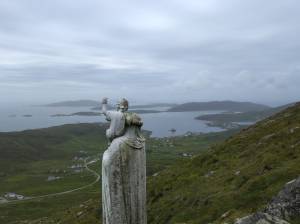
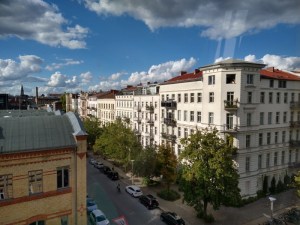
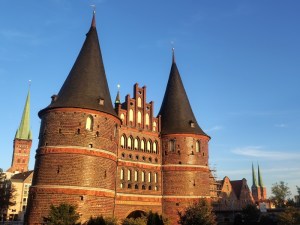
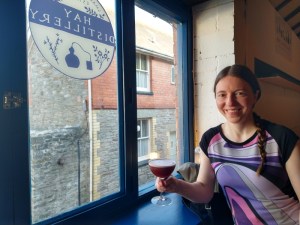
- Holidays in Hay-on-Wye; the Outer Hebrides; Suffolk; Berlin and Lübeck, Germany
- A summer visit from my sister and brother-in-law
- Having the windows and door replaced in the back of our house; and the hall and stairwell/landing redecorated
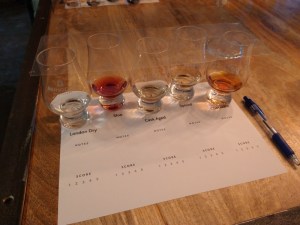
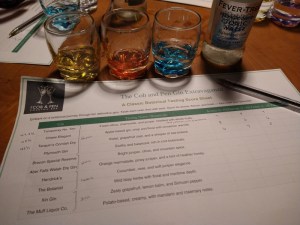
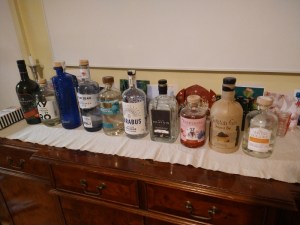
- I got ever more into gin and cocktails, with tastings in Abingdon and Wantage (and in December I led two informal tastings for friends). I also acquired the taste for rum!


The reading statistics, as compared to 2024:
Fiction: 54.7% (↑3.3%)
Nonfiction: 31.6% (↓0.2%)
Poetry: 13.7% (↓3.1%)
Female author: 67.7% (↓0.2%)
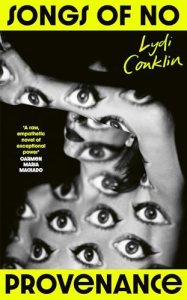
Lydi Conklin was one of 10 nonbinary authors I read from this year. Had I read their novel earlier, this would have made it into my Cover Love post!
Nonbinary author: 3.2% (↑2.1%)
BIPOC author: 18.5% (↑0.1%)
How to get it to 25% or more??
LGBTQ: 20.4% (↓1.1%)
(Author’s identity or a major theme in the work.) It’s the first time this has decreased since 2021, but I’m still pleased with the figure overall.
Work in translation: 9.6% (↑3.6%)
Going the right way with this trend! 10% seems like a good minimum to aim for. I find I have to make a conscious effort by accepting translated review copies or picking them off my shelves to tie in with particular reading challenges.
German (6) – mainly because of our trip in September
French (5)
Swedish (4)
Korean (3)
 Italian (2)
Japanese (2)
Spanish (2)
Chinese (1)
Dutch (1)
Norwegian (1)
Polish (1)
Portuguese (1)
Russian (1)
2025 (or pre-release 2026) books: 55.6% (↑3.2%)
Backlist: 44.4%
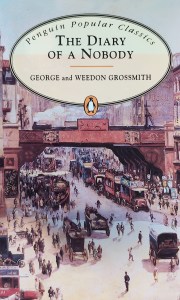
But a lot of that ‘backlist’ stuff was still from the 2020s; I only read eight pre-1950 books, the oldest being Diary of a Nobody from 1892.
E-books: 35.5% (↑3.4%)
Print books: 64.5%
I almost exclusively read e-books for BookBrowse, Foreword and Shelf Awareness reviews. The number of overall Shelf Awareness reviews will be decreasing because of changes to their publishing model, so this figure may well change by next year.
Rereads: 11, vs. last year’s 18
I managed nearly one a month. Like last year, three of my rereads ended up being among my most memorable reading experiences of the year, so I should really reread more often.
And, courtesy of Goodreads:
- 69,616 pages read
- Average book length: 221 pages (just one off of last year’s 220; in previous years it has always been 217–225, driven downward by poetry collections and novellas)
- Average rating for 2025: 6 (identical to the last three years)
Where my books came from for the whole year, compared to 2024:
- Free print or e-copy from publisher: 33.9% (↓10.9%)
- Public library: 18.8% (↑0.4%)
- Free (gifts, giveaways, Little Free Library/free bookshop, from friends or neighbours): 15.3% (↑2.9%)
- Downloaded from NetGalley, Edelweiss or BookSirens: 15% (↑7.2%)
- Secondhand purchase: 12.8% (↑1.3%)
- New purchase (often at a bargain price; includes Kindle purchases): 2.6% (↓0.5%)
- University library: 1.3% (↓0.7%)
- Other (church theological library): 0.3% (↑0.3%)


I’m pleased that 30.3% of my reading was from my own shelves, versus last year’s 24%. It looks like I mainly achieved this through a reduction in review copies. In 2026, I’d like to read even more backlist material from my own shelves (including rereads). This will be a particular focus in January, and then I’ll plan how to incorporate it for the rest of the year.
I have an absurd number of review books to catch up on (42), some stretching back to 2022 – the year of my mother’s death, which put me off my stride in many ways – as well as part-read books (116) to get real about and either finish or call DNFs and clear from my shelves. Dealing with these can be part of the reading-from-my-shelves initiative.
What trends did you see in your year’s reading? What is your plan for 2026?
Prize Updates: McKitterick Prize Winner and Wainwright Prize Longlists
It was my second year as a first-round manuscript judge for the McKitterick Prize; have a look at my rundown of the shortlist here.
 The winner, Louise Kennedy, and runner-up, Liz Hyder, were announced on 29 June. (Nominee Aamina Ahmad won a different SoA Award that night, the Gordon Bowker Volcano Prize for a novel focusing on the experience of travel away from home.) Other recipients included Travis Alabanza, Caroline Bird, Bonnie Garmus and Nicola Griffith. For more on all of this year’s SoA Award winners, see their website.


I’m a big fan of the Wainwright Prize for nature and conservation writing, and have been following it particularly closely since 2020, when I happened to read most of the nominees. In 2021 I also managed to read quite a lot from the longlists; 2022, the first year of an additional prize for children’s literature, saw me reading about a third of the total nominees.
This is the third year that I’ve been part of an “academy” of bloggers, booksellers, former judges and previously shortlisted authors asked to comment on a very long list of publisher submissions. I’m delighted that a few of my preferences made it through to the longlists.
My taste generally runs more to the narrative nature writing than the popular science or travel-based books. I find I’ve read just two from the Nature list (Bersweden and Huband) and one each from Conservation (Pavelle) and Children’s (Hargrave) so far.

The 2023 James Cropper Wainwright Prize for Nature Writing longlist:
- The Swimmer: The Wild Life of Roger Deakin, Patrick Barkham (Hamish Hamilton)
- The Flow: Rivers, Water and Wildness, Amy-Jane Beer (Bloomsbury)
- Where the Wildflowers Grow, Leif Bersweden (Hodder)
- Twelve Words for Moss, Elizabeth-Jane Burnett (Allen Lane)
- Cacophony of Bone, Kerri ní Dochartaigh (Canongate)
- Sea Bean, Sally Huband (Hutchinson)
- Ten Birds that Changed the World, Stephen Moss (Faber)
- A Line in the World: A Year on the North Sea Coast, Dorthe Nors, translated by Caroline Waight (Pushkin)
- The Golden Mole: And Other Living Treasure, Katherine Rundell, illustrated by Talya Baldwin (Faber)
- Belonging: Natural Histories of Place, Identity and Home, Amanda Thomson (Canongate)
- Why Women Grow: Stories of Soil, Sisterhood and Survival, Alice Vincent (Canongate)
- Landlines, Raynor Winn (Penguin)

The 2023 James Cropper Wainwright Prize for Writing on Conservation longlist:
- Sarn Helen: A Journey Through Wales, Past, Present and Future, Tom Bullough, illustrated by Jackie Morris (Granta)
- Beastly: A New History of Animals and Us, Keggie Carew (Canongate)
- Rewilding the Sea: How to Save Our Oceans, Charles Clover (Ebury)
- Birdgirl, Mya-Rose Craig (Jonathan Cape)
- The Orchid Outlaw, Ben Jacob (John Murray)
- Elixir: In the Valley at the End of Time, Kapka Kassabova (Jonathan Cape)
- Rooted: How Regenerative Farming Can Change the World, Sarah Langford (Viking)
- Black Ops and Beaver Bombing: Adventures with Britain’s Wild Mammals, Fiona Mathews and Tim Kendall (Oneworld)
- Forget Me Not, Sophie Pavelle (Bloomsbury)
- Fen, Bog, and Swamp: A Short History of Peatland Destruction and its Role in the Climate Crisis, Annie Proulx (Fourth Estate)
- The Lost Rainforests of Britain, Guy Shrubsole (HarperCollins)
- Nomad Century: How to Survive the Climate Upheaval, Gaia Vince (Allen Lane)

The 2023 James Cropper Wainwright Prize for Children’s Writing on Nature and Conservation longlist:
- The Earth Book, Hannah Alice (Nosy Crow)
- The Light in Everything, Katya Balen, illustrated by Sydney Smith (Bloomsbury)
- Billy Conker’s Nature-Spotting Adventure, Conor Busuttil (O’Brien)
- Protecting the Planet: The Season of Giraffes, Nicola Davies, illustrated by Emily Sutton (Walker)
- Blobfish, Olaf Falafel (Walker)
- A Friend to Nature, Laura Knowles, illustrated by Rebecca Gibbon (Welbeck)
- Spark, M G Leonard (Walker)
- A Wild Child’s Book of Birds, Dara McAnulty (Macmillan)
- Leila and the Blue Fox, Kiran Millwood Hargrave, illustrated by Tom de Freston (Hachette Children’s Group)
- The Zebra’s Great Escape, Katherine Rundell, illustrated by Sara Ogilvie (Bloomsbury)
- Archie’s Apple, Hannah Shuckburgh, illustrated by Octavia Mackenzie (Little Toller)
- Grandpa and the Kingfisher, Anna Wilson, illustrated by Sarah Massini (Nosy Crow)
It’s impressive that women writers are represented so well this year: 9/12 for Nature, 8/12 for Conservation, and 8/12 for Children’s. Amusingly, Katherine Rundell is on TWO of the lists. There are also, refreshingly, several BIPOC authors, and – I think for the first time ever – a work in translation (A Line in the World by Dorthe Nors, which I have as a set-aside proof copy and will get back into at once).
Here is where I have to admit that quite a number of the nominees, overall, are books I DNFed, authors whose work I’ve tried before and not enjoyed, or books I’ve been turned off of by the reviews. I’ll not mention these by name just now, and will leave any predictions for a future date when I’ve read a few more of the nominees. It seems that I’m most likely to catch up with the majority of the children’s longlist, if anything.
The shortlists will be announced on 10 August, and winners will be announced on 14 September at a 10th Anniversary live event held as part of the Kendal Mountain Festival in Cumbria (tickets available here).
See any nominees you’ve read? Who would you like to see shortlisted?
December Reading Plans
November is always a busy blogging month what with co-hosting Novellas in November and making small contributions to several other challenges: Nonfiction November, German Literature Month, and Margaret Atwood Reading Month.
In the final month of the year, my ambitions are always split:
I want to get to as many 2022 releases as possible … but I also want to dip a toe into the 2023 offerings.
I need to work on my review copy backlog … but I also want to relax and read some cosy wintry or holiday-themed stuff.
I want to get to the library books I’ve had out for ages … but I also want to spend some time reading from my shelves.
And that’s not even to mention my second year of McKitterick Prize judging (my manuscript longlist is due at the end of January).
My set-aside shelves (yes, literal shelves plural) are beyond ridiculous, and I have another partial shelf of review books not yet started. I do feel bad that I’ve accepted so many 2022 books for review and not read them, let alone reviewed them. But books are patient, and I’m going to cut myself some slack given that my year has contained two of the most stressful events possible (buying and moving into a house, and the death of a close family member).
I’m not even going to show you my preposterous backlog, because my WordPress media library is at capacity. “Looks like you have used 3.0 GB of your 3.0 GB upload limit (99%).” I’ll have to work on deleting lots of old images later on this month so that I can post photos of my best-of stacks towards the end of the year.
 So, for December I’ll work a bit on all of the above. My one final challenge to self is “Diverse December” – not official since 2020, when Naomi Frisby spearheaded it, but worth doing anyway. This is the second year that I’ve specifically monitored my reading of BIPOC authors. Last year, I managed 18.5%. I have no idea where I stand now, but would like to see a higher total.
 I’ll start with a December review book, A Down Home Meal for These Difficult Times by Meron Hadero, and see how I go from there. I was a lucky recipient of a proof copy of The Late Americans by Brandon Taylor, one of my new favourite authors; it doesn’t come out until May 23 in the USA and June 22 in the UK, but I will also see if I can read it early. Another potential 2023 release I have by a BIPOC author is Camp Zero by Michelle Min Sterling, a debut dystopian novel about climate refugees, which arrived unsolicited last month.
Among the other tempting options on my dedicated BIPOC-author shelf:
Leave the World Behind by Rumaan Alam
Black Buck by Mateo Askaripour
Fruit of the Drunken Tree by Ingrid Rojas Contreras
The Inheritance of Loss by Kiran Desai
Diamond Hill by Kit Fan
A Fine Balance by Rohinton Mistry
Still Born by Guadalupe Nettel
The Last of Her Kind by Sigrid Nunez
Names of the Women by Jeet Thayil
What are your year-end bookish plans? Happy December reading!
 Bookish Beck = Rebecca Foster. American transplant to England. Freelance proofreader and book reviewer.
 Bookish Beck