Book Serendipity, Mid-April to Mid-June
I call it “Book Serendipity” when two or more books that I read at the same time or in quick succession have something in common – the more bizarre, the better. This is a regular feature of mine every couple of months. Because I usually have 20–30 books on the go at once, I suppose I’m more prone to such incidents. People frequently ask how I remember all of these coincidences. The answer is: I jot them down on scraps of paper or input them immediately into a file on my PC desktop; otherwise, they would flit away!
The following are in roughly chronological order.
- Raising a wild animal but (mostly) calling it by its species rather than by a pet name (so “Pigeon” and “the leveret/hare”) in We Should All Be Birds by Brian Buckbee and Raising Hare by Chloe Dalton.
- Eating hash cookies in New York City in Women by Chloe Caldwell and How to Be Somebody Else by Miranda Pountney.
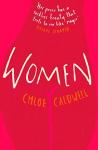
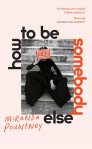
- A woman worries she’s left underclothes strewn about a room she’s about to show someone in one story of Single, Carefree, Mellow by Katherine Heiny and Days of Light by Megan Hunter.
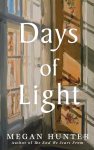 The dialogue is italicized in Women by Chloe Caldwell and Days of Light by Megan Hunter.
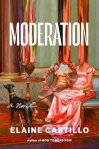
- The ‘you know it when you see it’ definition (originally for pornography) is cited in Moderation by Elaine Castillo and Bookish by Lucy Mangan.
- Women (including the protagonist) weightlifting in a gym in Moderation by Elaine Castillo and All Fours by Miranda July.
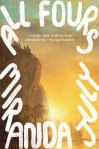
- Miranda July, whose All Fours I was also reading at the time, was mentioned in Chinese Parents Don’t Say I Love You by Candice Chung.
- A sibling story and a mystical light: late last year into early 2025 I read The Snow Queen by Michael Cunningham, and then I recognized this type of moment in Days of Light by Megan Hunter.
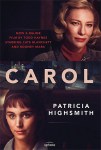
- A lesbian couple with a furniture store in Carol [The Price of Salt] by Patricia Highsmith and one story of Are You Happy? by Lori Ostlund.

- Not being able to see the stars in Las Vegas because of light pollution was mentioned in The Wild Dark by Craig Childs, then in Moderation by Elaine Castillo.
- A gynaecology appointment scene in All Fours by Miranda July and How to Be Somebody Else by Miranda Pountney.
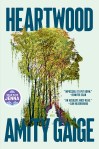
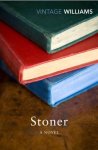
- An awkwardly tall woman in Heartwood by Amity Gaige, How to Be Somebody Else by Miranda Pountney, and Stoner by John Williams.
- The 9/11 memorial lights’ disastrous effect on birds is mentioned in The Wild Dark by Craig Childs and How to Be Somebody Else by Miranda Pountney.
- A car accident precipitated by an encounter with wildlife is key to the denouement in the novellas Women by Chloe Caldwell and Wild Boar by Hannah Lutz.
- The plot is set in motion by the death of an older brother by drowning, and pork chops are served to an unexpected dinner guest, in Bug Hollow by Michelle Huneven and Days of Light by Megan Hunter, both of which I was reading for Shelf Awareness review.
- Kids running around basically feral in a 1970s summer, and driving a box of human ashes around in Case Histories by Kate Atkinson and Bug Hollow by Michelle Huneven.
- A character becomes a nun in Case Histories by Kate Atkinson and Days of Light by Megan Hunter.
- Wrens nesting just outside one’s front door in Lifelines by Julian Hoffman and Little Mercy by Robin Walter.

- ‘The female Woody Allen’ is the name given to a character in Women by Chloe Caldwell and then a description (in a blurb) of French author Nolwenn Le Blevennec.
- A children’s birthday party scene in Single, Carefree, Mellow by Katherine Heiny and Friends and Lovers by Nolwenn Le Blevennec. A children’s party is also mentioned in Case Histories by Kate Atkinson and A Family Matter by Claire Lynch.
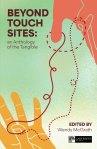
- A man who changes his child’s nappies, unlike his father – evidence of different notions of masculinity in different generations, in Case Histories by Kate Atkinson, What My Father and I Don’t Talk About, edited by Michele Filgate, and one piece in Beyond Touch Sites, edited by Wendy McGrath.
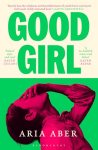
- What’s in a name? Repeated names I came across included Pansy (Case Histories by Kate Atkinson and Days of Light by Megan Hunter), Olivia (Case Histories by Kate Atkinson and A Family Matter by Claire Lynch), Jackson (Case Histories by Kate Atkinson and So Far Gone by Jess Walter), and Elias (Good Girl by Aria Aber and Dream State by Eric Puchner).
- The old wives’ tale that you should run in zigzags to avoid an alligator appeared in Alligator Tears by Edgar Gomez and then in The Girls Who Grow Big by Leila Mottley, both initially set in Florida.
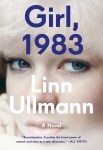
- A teenage girl is groped in a nightclub in Good Girl by Aria Aber and Girl, 1983 by Linn Ullmann.
- Discussion of the extinction of human and animal cultures and languages in both Nature’s Genius by David Farrier and Lifelines by Julian Hoffman, two May 2025 releases I was reading at the same time.
- In Body: My Life in Parts by Nina B. Lichtenstein, she mentions Linn Ullmann – who lived on her street in Oslo and went to the same school (not favourably – the latter ‘stole’ her best friend!); at the same time, I was reading Linn Ullmann’s Girl, 1983! And then, in both books, the narrator recalls getting a severe sunburn.
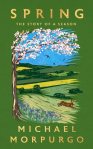 On the same day, I read about otter sightings in Lifelines by Julian Hoffman and Spring by Michael Morpurgo. The next day, I read about nesting swallows in both books.
- The Salish people (Indigenous to North America) are mentioned in Lifelines by Julian Hoffman, Dream State by Eric Puchner (where Salish, the town in Montana, is also a setting), and So Far Gone by Jess Walter.
- Driving into a compound of extremists, and then the car being driven away by someone who’s not the owner, in Dream State by Eric Puchner and So Far Gone by Jess Walter.
- A woman worries about her (neurodivergent) husband saying weird things at a party in The Honesty Box by Lucy Brazier and Normally Weird and Weirdly Normal by Robin Ince.
- Shooting raccoons in Ginseng Roots by Craig Thompson and So Far Gone by Jess Walter. (Raccoons also feature in Dream State by Eric Puchner.)
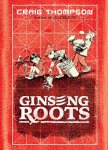
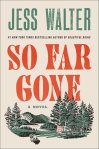
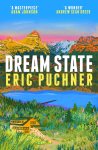
- A graphic novelist has Hollywood types adding (or at least threatening to add) wholly unsuitable supernatural elements to their plots in Spent by Alison Bechdel and Ginseng Roots by Craig Thompson.
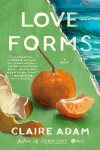
- A novel in which a character named Dawn has to give up her daughter in the early 1980s, one right after the other: A Family Matter by Claire Lynch, followed by Love Forms by Claire Adam.
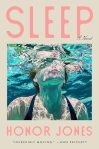
- A girl barricades her bedroom door for fear of her older brother in Love Forms by Claire Adam and Sleep by Honor Jones.
- A scene of an only child learning that her mother had a hysterectomy and so couldn’t have any more children in Dream Count by Chimamanda Ngozi Adichie and Other People’s Mothers by Julie Marie Wade.
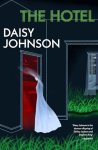
- An African hotel cleaner features in Dream Count by Chimamanda Ngozi Adichie and The Hotel by Daisy Johnson.

- Annie Dillard’s essay “Living Like Weasels” is mentioned in Nature’s Genius by David Farrier and The Dry Season by Melissa Febos.
- A woman assembles an inventory of her former lovers in Dream Count by Chimamanda Ngozi Adichie and The Dry Season by Melissa Febos.
What’s the weirdest reading coincidence you’ve had lately?
Three on a Theme: “Love”
I’m really not a Valentine’s Day person, yet this is the fifth year in a row that I’ve put together a themed post featuring books that have “Love” or a similar word in the title in the run-up to mid-February. (Here are the 2017, 2018, 2019 and 2020 posts. I’m also at work on a set of three “Heart” titles to post about on the 14th.) All three of the below books reflect, in their own ways, on how love perplexes and sustains us at different points in our lives.
The Emma Press Anthology of Love, ed. Rachel Piercey and Emma Wright (2018)
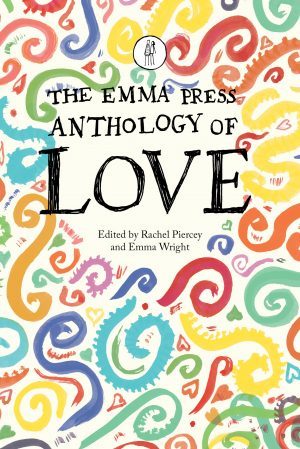 I read my first book from the publisher (Tiny Moons by Nina Mingya Powles) last summer and loved it, so when this one popped up in the Waterstones sale in January I snapped it up. Your average love poetry volume would trot out all the standards from Shakespeare’s sonnets to Carol Ann Duffy, whereas this features recent work from lesser-known contemporary poets. Of the 56 poets, I’d heard of just two before: Stephen Sexton, because I reviewed his collection, If All the World and Love Were Young, last year; and Rachel Long, because I was simultaneously reading her Costa Award-shortlisted debut, My Darling from the Lions.
What I most appreciated about the book is that it’s free of cliché. You can be assured there will be no ‘Roses are red, violets are blue’ simplicity of theme or style. It must be nigh on impossible to write about romantic and erotic love without resorting to the same old symbols, but here there is a fresh, head-turning metaphor every few pages. Rachel Plummer describes her first crush, on a video game character, in “Luigi.” Love is conveyed through endless cups of tea or practical skills that favor postapocalyptic survival; desire is sparked by the downy hair on a woman’s back or the deliberate way a lover pulls on a pair of tights. Anything might be a prelude to seduction: baking, preparing lab specimens, or taking a taster at the off-license.
There are no real duds here, but a couple of my overall favorites were “Note from Edinburgh” by Stav Poleg and “Not the Wallpaper Game” by Jody Porter (“her throat was a landmine grown over with roses / and her arms were the antidote to the sufferings of war”). I’m running low on poetry, so I’ve gone ahead and ordered three more original anthologies direct from The Emma Press (poems on the sea, illness, and aunts!). After all, it’s #ReadIndies month and I’m delighted to support this small publisher based in Birmingham. 
Favorite lines:
I have a friend who always believed
love was like being touched
by a livewire or swimming
on her back in a lightning storm.
I want to tell her it’s homesickness,
how longing pulls us in funny ways.
(from “Falooda” by Cynthia Miller)
It’s today already
and we have only the rest of our lives.
Long may we dabble our feet in the clear Italian lakes.
Long may we mosey through the graveyards of the world.
(from “Romantic” by Stephen Sexton)
Love After Love by Ingrid Persaud (2020)
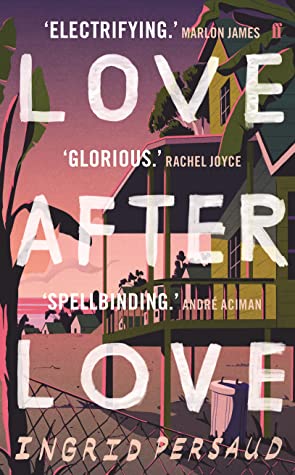 I saw the author read from this in November as part of a virtual Faber Live Fiction Showcase. My interest was then redoubled by the book winning the Costa First Novel Award. All three narrators – Betty, her son Solo, and their lodger Mr Chetan – are absolutely delightful, and I loved the Trini slang and the mix of cultures (for example, there is a Hindu temple where locals of Indian extraction go to practice devotion to the Goddess). Early on, I was reminded most, in voice and content, of Mr Loverman by Bernardine Evaristo.
But the lightness of Part One, which ends with a comically ill-fated tryst, soon fades. When Solo moves to New York City to make his own way in the world, he discovers that life is cruel and not everyone is good at heart. Indeed, my only hesitation in recommending this book is that it gets so very, very dark; the blurb and everything I had heard did not prepare me. If easily triggered, you need to know that there are many upsetting elements here, including alcoholism, domestic violence, self-harm, attempted suicide, sadomasochism, and gruesome murder. Usually, I would not list such plot elements for fear of spoilers, but it seems important to note that what seems for its first 100 pages to be such a fun, rollicking story becomes more of a somber commentary on injustices experienced by both those who leave Trinidad and those who stay behind.
A beautiful moment of reconciliation closes the story, but man, getting to that point is tough. The title speaks of love, yet this novel is a real heartbreaker. What that means, though, is that it makes you feel something. Not every author can manage that. So Persaud is a powerful talent and I would certainly recommend her debut, just with the above caveats.
Readalikes:
- Golden Child by Claire Adam
- A Little Life by Hanya Yanagihara
Love’s Work: A Reckoning with Life by Gillian Rose (1995)
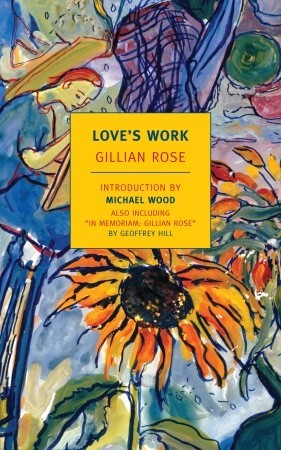 The English philosopher’s memoir-in-essays got on my radar when it was mentioned in two other nonfiction works I read in quick succession (one of my Book Serendipity incidents of late 2019): Notes Made while Falling by Jenn Ashworth and My Year Off by Robert McCrum. I had in mind that it was a cancer memoir, and while receiving a terminal diagnosis of ovarian cancer in her early forties is indeed an element, it is a wide-ranging short book that includes pen portraits of remarkable friends – an elderly woman, a man with AIDS – she met in New York City, musings on her Jewish family history and the place that religious heritage holds in her life, and memories of the contrast between the excitement of starting at Oxford and the dismay at her mother’s marriage to her stepfather (from whom she got her surname, having changed it by deed poll at age 16 from her father’s “Stone”) falling apart.
The mishmash of topics and occasional academic jargon (e.g., “These monitory anecdotes indicate, however, the anxiety of modernity” and “Relativism of authority does not establish the authority of relativism: it opens reason to new claimants”) meant I didn’t enjoy this as much as I’d expected to. 
Words about love:
“However satisfying writing is—that mix of discipline and miracle, which leaves you in control, even when what appears on the page has emerged from regions beyond your control—it is a very poor substitute indeed for the joy and the agony of loving.”
“There is no democracy in any love relation: only mercy. … each party … is absolute power as well as absolute vulnerability. … I am highly qualified in unhappy love affairs. My earliest unhappy love affair was with Roy Rogers.”
“To grow in love-ability is to accept the boundaries of oneself and others, while remaining vulnerable, woundable, around the bounds. Acknowledgement of conditionality is the only unconditionality of human love.”
If you read just one … Make it The Emma Press Anthology of Love. (But, if you’re feeling strong, add on Love After Love, too.)
Have you read any books about love lately?
Faber Live Fiction Showcase 2020
In February 2018 Annabel and I attended the Faber Spring Party with some other blogger friends, the first time I’d been to such an event. The hoped-for repeat invitation never came last year, but 2020’s perverse gifts meant I could attend the publisher’s latest showcase as a webinar. It was free to sign up to be a Faber member (you can do so here), and now I get e-mails about new releases and interesting upcoming events.

Six new and forthcoming novels were featured last night, with author readings. There were some connection issues where the sound and image froze for a couple seconds so the voice was temporarily out of sync with the picture, which made it more difficult to engage with the extracts, but I still enjoyed hearing about these new-to-me writers.
Love After Love by Ingrid Persaud
 This one came out in April, and was already on my radar. It’s about a widow, Betty, her son, Solo, and their lodger, Mr. Chetan, and how people come together to make a family despite secrets and “way too much rum”. Persaud read two excerpts, one in Betty’s voice and one from Mr. Chetan’s perspective. I loved the Trinidadian accents. (Comes with praise from Claire Adam and Marlon James.)
Meanwhile in Dopamine City by D.B.C. Pierre
 Published in August and shortlisted for the Goldsmiths Prize. Pierre described his new novel as a book of voices about a single father trying to withhold a smartphone from his youngest child. One passage he read had a professor speaking to a Silicon Valley type; another was someone trying to compose the perfect tweet after hearing of the death of someone they don’t like. I’ve never read any Pierre and I don’t think I’ll start now.
A Crooked Tree by Una Mannion
 Out on January 21st. A literary debut with a touch of the thriller, set in Philadelphia in 1981 and starring a large Irish American family. (Mannion herself is from Philadelphia but now lives in County Sligo.) She read from the first chapter, about a quarrelsome family drive about to go badly wrong. I was reminded of Lorrie Moore and Ann Patchett.
little scratch by Rebecca Watson
 Out on January 14th. This one was already on my TBR. It’s about a day in the life of a woman in her twenties. While going through the daily routine of office life, she’s suppressing memories of a recent sexual assault. Watson’s delivery was very engaging. She read a passage in which the protagonist neurotically overthinks a colleague asking her what she’s been reading lately. “Why is it when anyone asks what I’ve read I go blank?!” (I can sympathize.)
Come Join Our Disease by Sam Byers
 Byers’s third novel comes out on March 18th. Maya, who’s homeless, is offered a spot on a rehabilitation and wellness program – if she’ll document it on Instagram. He read about Maya being seized from her encampment. Two early Goodreads reviews made me laugh out loud and convinced me this isn’t for me: “Reads like David Foster Wallace mixed with Marquis de Sade in a blender” and “Promising start but soon disappears up its own arse.”
This One Sky Day by Leone Ross
 On the magical Caribbean island of Popisho, something odd is happening to all of the women. I think (though I had some trouble hearing and following) their genitals are falling off, rendering sex a little difficult. The patois was similar to Persaud’s Trini, and, like little scratch, this is a circadian novel. It made me think of the descriptions of Monique Roffey’s books. I found the premise a little silly, though. This is unlike to draw in those suspicious of magic realism.
If I had to pick just one? I’m going to request a proof copy of little scratch. And my library system has two copies, so I’ll also place a hold and try to read Love After Love soon (though before the end of the year now looks doubtful). It helped that these two authors gave the best readings.
Book Serendipity, 2019 Second Half
I call it serendipitous when two or more books that I’m reading at the same time or in quick succession have something pretty bizarre in common. Because I have so many books on the go at once – usually between 10 and 20 – I guess I’m more prone to such incidents. I post these occasional reading coincidences on Twitter. What’s the weirdest one you’ve had lately? (The following are in rough chronological order.)
[Previous 2019 Book Serendipity posts from April and July.]
- Two novels in which a character attempts to glimpse famous mountains out of a train window but it’s so rainy they can barely be seen: The Unchangeable Spots of Leopards by Kristopher Jansma and The Pine Islands by Marion Poschmann.


- Ex-husbands move from England to California and remarry younger women in The Stillness The Dancing by Wendy Perriam and Heat Wave by Penelope Lively.
 References to Edgar Allan Poe in both Timbuktu by Paul Auster and The Unchangeable Spots of Leopards by Kristopher Jansma.
- An account of Percy Shelley’s funeral pyre in both The Unchangeable Spots of Leopards by Kristopher Jansma and Frankissstein by Jeanette Winterson.
- Mentions of barn owls being killed by eating poisoned rats in Owl Sense by Miriam Darlington and Homesick by Catrina Davies.


- Miriam Rothschild is mentioned in Irreplaceable by Julian Hoffman and An Obsession with Butterflies by Sharman Apt Russell.
- Gorse is thrown on bonfires in Homesick by Catrina Davies and The Stillness The Dancing by Wendy Perriam.
 A character has a nice cup of Ovaltine in Some Tame Gazelle by Barbara Pym and The Stillness The Dancing by Wendy Perriam.
- I started two books with “Bloom” in the title on the same day.

 Two books I finished about the same time conclude by quoting or referring to the T. S. Eliot lines about coming back to the place where you started and knowing it for the first time (Owl Sense by Miriam Darlington and This Is Not a Drill, the Extinction Rebellion handbook).
- Three books in which the narrator wonders whether to tell the truth slant (quoting Emily Dickinson, consciously or not): The Unchangeable Spots of Leopards by Kristopher Jansma, The Poisonwood Bible by Barbara Kingsolver and The Hiding Game by Naomi Wood.
- On the same day, I saw mentions of crullers in both On Chapel Sands by Laura Cumming and The Dutch House by Ann Patchett.


- There are descriptions of starling murmurations over Brighton Pier in both Irreplaceable by Julian Hoffman and Expectation by Anna Hope. (Always brings this wonderful Bell X1 song to mind!)
- I was reading The Outermost House by Henry Beston and soon after found an excerpt from it in Irreplaceable by Julian Hoffman; later I started The Easternmost House by Juliet Blaxland, whose title is a deliberate tip of the hat to Beston.
 At a fertility clinic, the author describes a pair of transferred embryos as “two sequins of light” (in On Chapel Sands by Laura Cumming) and “two points of light” (in Expectation by Anna Hope).
- Mentions of azolla ferns in Time Song by Julia Blackburn and Bloom (aka Slime) by Ruth Kassinger.
 Incorporation of a mother’s brief memoir in the author’s own memoir in On Chapel Sands by Laura Cumming and All Things Consoled by Elizabeth Hay.
- Artist mothers in On Chapel Sands by Laura Cumming, All Things Consoled by Elizabeth Hay, and Expectation by Anna Hope.
- Missionary fathers in The Poisonwood Bible by Barbara Kingsolver and The Wind that Lays Waste by Selva Almada.


- Twins, one who’s disabled from a birth defect and doesn’t speak much, in Golden Child by Claire Adam and The Poisonwood Bible by Barbara Kingsolver.
 An Irish-American family in a major East Coast city where the teenage boy does construction work during the summers in Ask Again, Yes by Mary Beth Keane and The Dutch House by Ann Patchett.
- SPOILERS: A woman with terminal cancer refuses treatment so she can die on her own terms and is carried out into her garden in Expectation by Anna Hope and A Reckoning by May Sarton.
- A 27-year-old professor has a student tearfully confide in her in Crow Lake by Mary Lawson and The Small Room by May Sarton.


- Reading The Yellow House by Sarah M. Broom at the same time as The Dutch House by Ann Patchett.
 “I was nineteen years old and an idiot” (City of Girls, Elizabeth Gilbert); “I was fifteen and generally an idiot” (The Dutch House, Ann Patchett).
- Mentions of a conjuring tricks book in Time Song by Julia Blackburn and Fifth Business by Robertson Davies.
- A teen fleeces their place of employment in Sweet Sorrow by David Nicholls and Who Will Run the Frog Hospital? by Lorrie Moore.


- A talking parrot with a religious owner in The Poisonwood Bible by Barbara Kingsolver and Olive Kitteridge by Elizabeth Strout.
- Pictorial book serendipity: three books I was reading, and another waiting in the wings, had a red, black and white color scheme.

 Kripalu (a Massachusetts retreat center) is mentioned in Fleishman Is in Trouble by Taffy Brodesser-Akner and Once More We Saw Stars by Jayson Greene.
- The character of Netty Quelch in Robertson Davies’s The Manticore reminds me of Fluffy in Ann Patchett’s The Dutch House.
- The artist Chardin is mentioned in How Proust Can Change Your Life by Alain de Botton and Varying Degrees of Hopelessness by Lucy Ellmann.
- A Czech grand/father who works in a plant nursery in the opening story of Andrea Barrett’s Ship Fever and Patricia Hampl’s The Florist’s Daughter.


- The author was in Eva Le Gallienne’s NYC theatre company (Madeleine L’Engle’s Two-Part Invention and various works by May Sarton, also including a biography of her).
 Gillian Rose’s book Love’s Work is mentioned in both Notes Made while Falling by Jenn Ashworth and My Year Off by Robert McCrum. (I will clearly have to read the Rose!)
- Sarah Baartman (displayed in Europe as the “Hottentot Venus”) is mentioned in Shame on Me by Tessa McWatt and Hull by Xandria Phillips.
 Bookish Beck = Rebecca Foster. American transplant to England. Freelance proofreader and book reviewer.
 Bookish Beck