Book Serendipity, September through Mid-November
I call it “Book Serendipity” when two or more books that I read at the same time or in quick succession have something in common – the more bizarre, the better. This is a regular feature of mine every couple of months. Because I usually have 20–30 books on the go at once, I suppose I’m more prone to such incidents. People frequently ask how I remember all of these coincidences. The answer is: I jot them down on scraps of paper or input them immediately into a file on my PC desktop; otherwise, they would flit away.
Thanks to Emma and Kay for posting their own Book Serendipity moments! (Liz is always good about mentioning them as she goes along, in the text of her reviews.)
The following are in roughly chronological order.
- An obsession with Judy Garland in My Judy Garland Life by Susie Boyt (no surprise there), which I read back in January, and then again in Beard: A Memoir of a Marriage by Kelly Foster Lundquist.
- Leaving a suicide note hinting at drowning oneself before disappearing in World War II Berlin; and pretending to be Jewish to gain better treatment in Aimée and Jaguar by Erica Fischer and The Lilac People by Milo Todd.
- Leaving one’s clothes on a bank to suggest drowning in The Covenant of Water by Abraham Verghese, read over the summer, and then Benbecula by Graeme Macrae Burnet.
- A man expecting his wife to ‘save’ him in Amanda by H.S. Cross and Beard: A Memoir of a Marriage by Kelly Foster Lundquist.
 A man tells his story of being bullied as a child in Goodbye to Berlin by Christopher Isherwood and Beard by Kelly Foster Lundquist.
- References to Vincent Minnelli and Walt Whitman in a story from Touchy Subjects by Emma Donoghue and Beard by Kelly Foster Lundquist.
- The prospect of having one’s grandparents’ dining table in a tiny city apartment in Beard by Kelly Foster Lundquist and Wreck by Catherine Newman.
- Ezra Pound’s dodgy ideology was an element in The Dime Museum by Joyce Hinnefeld, which I reviewed over the summer, and recurs in Swann by Carol Shields.
- A character has heart palpitations in Andrew Miller’s story from The BBC National Short Story Award 2025 anthology and Endling by Maria Reva.
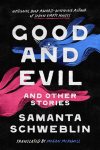
- A (semi-)nude man sees a worker outside the window and closes the curtains in one story of Cathedral by Raymond Carver and one from Good and Evil and Other Stories by Samanta Schweblin.
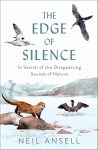
- The call of the cuckoo is mentioned in The Edge of Silence by Neil Ansell and Of All that Ends by Günter Grass.
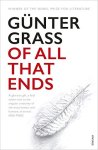 A couple in Italy who have a Fiat in Of All that Ends by Günter Grass and Caoilinn Hughes’s story from The BBC National Short Story Award 2025 anthology.
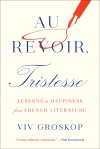
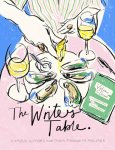
- Balzac’s excessive coffee consumption was mentioned in Au Revoir, Tristesse by Viv Groskop, one of my 20 Books of Summer, and then again in The Writer’s Table by Valerie Stivers.
- The main character is rescued from her suicide plan by a madcap idea in The Wedding People by Alison Espach and Endling by Maria Reva.
- The protagonist is taking methotrexate in Sea, Poison by Caren Beilin and Wreck by Catherine Newman.

- A man wears a top hat in Benbecula by Graeme Macrae Burnet and one story of Cathedral by Raymond Carver.
- A man named Angus is the murderer in Benbecula by Graeme Macrae Burnet and Swann by Carol Shields.
 The thing most noticed about a woman is a hair on her chin in the story “Pluck” in Touchy Subjects by Emma Donoghue and Swann by Carol Shields.
- The female main character makes a point of saying she doesn’t wear a bra in Sea, Poison by Caren Beilin and Find Him! by Elaine Kraf.
- A home hairdressing business in one story of Cathedral by Raymond Carver and Emil & the Detectives by Erich Kästner.
- Painting a bathroom fixture red: a bathtub in The Diary of a Nobody by George Grossmith, one of my 20 Books of Summer; and a toilet in Find Him! by Elaine Kraf.
- A teenager who loses a leg in a road accident in individual stories from A Wild Swan by Michael Cunningham and the Racket anthology (ed. Lisa Moore).
- Digging up the casket of a loved one in the wee hours features in Pet Sematary by Stephen King, one of my 20 Books of Summer; and one story of Pretty Monsters by Kelly Link.
- A character named Dani in the story “The St. Alwynn Girls at Sea” by Sheila Heti and The Silver Book by Olivia Laing; later, author Dani Netherclift (Vessel).
 Obsessive cultivation of potatoes in Benbecula by Graeme Macrae Burnet and The Martian by Andy Weir.
- The story of Dante Gabriel Rossetti digging up the poems he buried with his love is recounted in Sharon Bala’s story in the Racket anthology (ed. Lisa Moore) and one of the stories in Pretty Monsters by Kelly Link.
- Putting French word labels on objects in Alone in the Classroom by Elizabeth Hay and Find Him! by Elaine Kraf.
 A man with part of his finger missing in Find Him! by Elaine Kraf and Lessons from My Teachers by Sarah Ruhl.
- In Minor Black Figures by Brandon Taylor, I came across a mention of the Italian film director Pier Paolo Pasolini, who is a character in The Silver Book by Olivia Laing.
- A character who works in an Ohio hardware store in Flashlight by Susan Choi and Buckeye by Patrick Ryan (two one-word-titled doorstoppers I skimmed from the library). There’s also a family-owned hardware store in Alone in the Classroom by Elizabeth Hay.
- A drowned father – I feel like drownings in general happen much more often in fiction than they do in real life – in The Homecoming by Zoë Apostolides, Flashlight by Susan Choi, and Vessel by Dani Netherclift (as well as multiple drownings in The Covenant of Water by Abraham Verghese, one of my 20 Books of Summer).
- A memoir by a British man who’s hard of hearing but has resisted wearing hearing aids in the past: first The Quiet Ear by Raymond Antrobus over the summer, then The Edge of Silence by Neil Ansell.
 A loved one is given a six-month cancer prognosis but lives another (nearly) two years in All the Way to the River by Elizabeth Gilbert and Lessons from My Teachers by Sarah Ruhl.
- A man’s brain tumour is diagnosed by accident while he’s in hospital after an unrelated accident in Flashlight by Susan Choi and Saltwash by Andrew Michael Hurley.
- Famous lost poems in What We Can Know by Ian McEwan and Swann by Carol Shields.
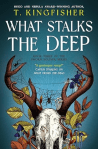
- A description of the anatomy of the ear and how sound vibrates against tiny bones in The Edge of Silence by Neil Ansell and What Stalks the Deep by T. Kingfisher.
- Notes on how to make decadent mashed potatoes in Beard by Kelly Foster Lundquist, Death of an Ordinary Man by Sarah Perry, and Lessons from My Teachers by Sarah Ruhl.
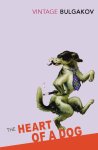
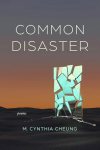
- Transplant surgery on a dog in Russia and trepanning appear in The Heart of a Dog by Mikhail Bulgakov and the poetry collection Common Disaster by M. Cynthia Cheung.
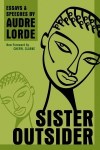
- Audre Lorde, whose Sister Outsider I was reading at the time, is mentioned in Lessons from My Teachers by Sarah Ruhl. Lorde’s line about the master’s tools never dismantling the master’s house is also paraphrased in Spent by Alison Bechdel.
- An adult appears as if fully formed in a man’s apartment but needs to be taught everything, including language and toilet training, in The Heart of a Dog by Mikhail Bulgakov and Find Him! by Elaine Kraf.
 Two sisters who each wrote a memoir about their upbringing in Spent by Alison Bechdel and Vessel by Dani Netherclift.
- The fact that ragwort is bad for horses if it gets mixed up into their feed was mentioned in Ghosts of the Farm by Nicola Chester and Understorey by Anna Chapman Parker.
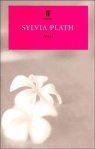
- The Sylvia Plath line “the O-gape of complete despair” was mentioned in Vessel by Dani Netherclift, then I read it in its original place in Ariel later the same day.
- A mention of the Baba Yaga folk tale (an old woman who lives in the forest in a hut on chicken legs) in Common Disaster by M. Cynthia Cheung and Woman, Eating by Claire Kohda. [There was a copy of Sophie Anderson’s children’s book The House with Chicken Legs in the Little Free Library around that time, too.]
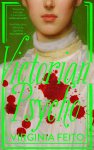
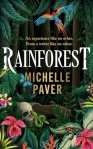
- Coming across a bird that seems to have simply dropped dead in Victorian Psycho by Virginia Feito, Vessel by Dani Netherclift, and Rainforest by Michelle Paver.
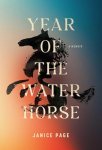
- Contemplating a mound of hair in Vessel by Dani Netherclift (at Auschwitz) and Year of the Water Horse by Janice Page (at a hairdresser’s).
- Family members are warned that they should not see the body of their loved one in Vessel by Dani Netherclift and Rainforest by Michelle Paver.
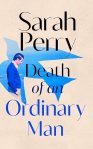
- A father(-in-law)’s swift death from oesophageal cancer in Year of the Water Horse by Janice Page and Death of an Ordinary Man by Sarah Perry.
- I saw John Keats’s concept of negative capability discussed first in My Little Donkey by Martha Cooley and then in Understorey by Anna Chapman Parker.
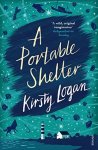
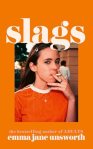
- I started two books with an Anne Sexton epigraph on the same day: A Portable Shelter by Kirsty Logan and Slags by Emma Jane Unsworth.
- Mentions of Martin Luther King, Jr.’s assassination in Q’s Legacy by Helene Hanff and Sister Outsider for Audre Lorde, both of which I was reading for Novellas in November.
- Mentions of specific incidents from Samuel Pepys’s diary in Q’s Legacy by Helene Hanff and Gin by Shonna Milliken Humphrey, both of which I was reading for Nonfiction November/Novellas in November.
- Starseed (aliens living on earth in human form) in Beautyland by Marie-Helene Bertino and The Conspiracists by Noelle Cook.
- Reading nonfiction by two long-time New Yorker writers at the same time: Life on a Little-Known Planet by Elizabeth Kolbert and Joyride by Susan Orlean.
- The breaking of a mirror seems like a bad omen in The Spare Room by Helen Garner and The Bell Jar by Sylvia Plath.
 The author’s husband (who has a name beginning with P) is having an affair with a lawyer in Catching Sight by Deni Elliott and Joyride by Susan Orlean.
- Mentions of Lewis Hyde’s book The Gift in Lessons from My Teachers by Sarah Ruhl and The Serviceberry by Robin Wall Kimmerer; I promptly ordered the Hyde secondhand!
- The protagonist fears being/is accused of trying to steal someone else’s cat in Minka and Curdy by Antonia White and Aunts Aren’t Gentlemen by P.G. Wodehouse, both of which I was reading for Novellas in November.
What’s the weirdest reading coincidence you’ve had lately?
Spring Reads, Part II: Swifts, a Cuckoo, and a British Road Trip
Despite ongoing worries about biodiversity loss after last year’s drought, I had the most idyllic late spring evening yesterday. On the way home from an evening with Alice Winn hosted by Hungerford Bookshop (more on which anon), I sat at the station awaiting my train. It was 8:30 p.m. and still fully light, warm enough to be comfortable in a jacket, and a cuckoo serenaded me as I watched swifts wheeling by overhead.
For my second instalment of spring-themed reading (see Part I here), I have books about those very birds, one a nonfiction study of a species that is a welcome sign of late spring and summer in Europe, and a novel that takes up the metaphors associated with another notable species; plus a narrative of a circuitous route driven through a British spring.
Swifts and Us by Sarah Gibson (2020)
We first noticed the swifts had returned to Newbury on 29 April. Best of all, we think ‘our’ birds that nested in the space between the roof and rear gutter last year (see footage here) are back. We’ve also installed one swift and two house martin boxes along the wall from the corner, just in case. Swifts are truly amazing for the distances they travel and the almost fully aerial life they lead. They only touch down to breed and otherwise do everything else – eat, sleep, mate – on the wing. I skimmed this book over the course of two springs and learned that the screaming parties you may, if you are lucky, see tearing down your street are likely to be made up of one- or two-year-old birds. Those tending to nestlings will be quieter. (They’ll be ruthless about displacing house sparrows who try to steal their space, so we hope the questing sparrows we saw at the gutter a few weeks before didn’t get as far as nest-building.)
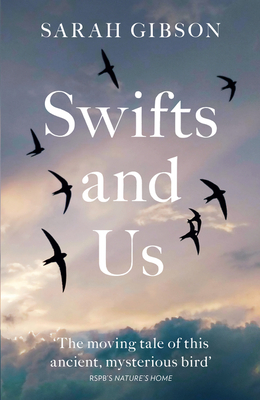 Beaks agape, swifts catch thousands of insects a day and keep them in a bolus in their throat to regurgitate for chicks. The sharp decline in insect numbers is a major concern, as well as the intensification of agriculture, climate change, and new houses or renovations that block up holes birds traditionally nest in. There are multiple species of swift – in southern Spain one can see five types – and in general they are considered to be of least conservation concern, but these matters are all relative in these days of climate crisis. Evolved to nest in cliffs and trees, they now live alongside humans except in rare places like Abernethy Forest near Inverness in Scotland, where they still nest in trees, in holes abandoned by woodpeckers.
Gibson surveys swifts’ distribution and evolution, key figures in how we came to understand them (Gilbert White et al.), and early landmark studies (e.g. David Lack’s in Oxford). She also takes us through a typical summer swift schedule, and interviews some people who rehabilitate and advocate for swifts. Other chapters see her travelling to Italy, Switzerland and Ireland, the furthest west that swifts breed. If you find a grounded swift, she learns from bitter experience, keep it in a box with air holes and give it water on a cotton bud, but don’t feed or throw it up in the air. To release, take it to an open space and hold it on your hand above your head. If it’s ready to fly, it will. The current push to help swifts is requiring that nest blocks or boxes be incorporated in every new home design. (I signed this petition.)
This is a great source of basic information, though some of the background may be more detailed than the average reader needs. If you’re only going to read one book about swifts, I would be more likely to recommend Charles Foster’s The Screaming Sky, a literary monograph, but do follow up with this one. And soon we’ll also have Mark Cocker’s book about swifts, One Midsummer’s Day, which I hope to get hold of. (Public library) 
Favourite lines:
“It is their otherness that makes them so fascinating. They touch our lives briefly and then vanish; this is part of their magic.”
“The brevity of their summer stays enhances their hold on our hearts. The season is short, their bold, wild chases over the roofs and high-pitched screams a fleeting experience: they are a metaphor for life itself. We need to act now to ensure these birds will scythe across our skies forever; to keep them in our streets, to keep them in abundance and common. All of us can do something within the compass of our lives to help tilt the balance back in their favour. If the will to do it is there, it can be done.”
Cuckoo by Wendy Perriam (1991)
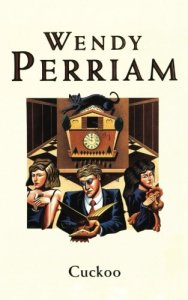 (We started hearing cuckoos locally last week!) My second by Perriam, after The Stillness The Dancing, and I’ve amassed quite a pile for afterwards. Frances Parry Jones, in her early thirties, is desperate for a baby but her husband, Charles, doesn’t seem fussed. He goes along with fertility treatment but remains aloof like the posh snob Perriam depicts him to be – the opening line is “Typical of Charles to decant his sperm sample into a Fortnum and Mason’s jar.” Their comfortable home in Richmond is cut off from the messy reality of life, as represented by Frances’s friend Viv and her brood.
Frances soon learns why Charles is unenthusiastic about having children: he already has one, a sullen teenager named Magda who lived with her mother in Hungary but has just arrived in London, “a greedy little cuckoo, commandeering the nest.” Though tempted to accept Magda as a replacement child, Frances just can’t manage it. However, they do find common ground through their japes with Ned, a free spirit Frances meets during her brief time as a taxi driver, and Frances starts to imagine how her life could be different. The portraits and sex scenes alike were a little grotesque here. I had to skim a lot to get through it. Here’s hoping for a better experience with the next one. (Secondhand copy passed on by Liz – thank you!) 
Springtime in Britain by Edwin Way Teale (1970)
 I discovered Teale a few years ago through the exceptional Autumn Across America, the first volume of a quartet illuminating the nature of the four seasons in the USA; he won a Pulitzer for the final book. Here he applied the same pattern across the pond, taking an 11,000-mile road trip around Britain with his wife Nellie. It’s a delight to see the country through his eyes, particularly places I know well (Devon, the New Forest, Wiltshire/Berkshire) or have visited recently (Northumberland). They find the early spring alarmingly cold and wet, but before long are rewarded with swathes of daffodils and bluebells. Several stake-outs finally result in hearing a nightingale. For the most part, the bird life is completely new to them, but he remarks on what North American species the European birds remind him of. “We felt we would travel to Britain just to hear the song thrush and the blackbird,” he maintains.
Nellie develops pneumonia and has to convalesce in Kent, but otherwise personal matters hardly come into the narrative. Teale is well versed in English nature writing and often references classics by the likes of John Clare and Gilbert White that inspired destinations. (They spend an excessive number of days on their pilgrimage to White’s Selborne.) He also reports on perceived threats of the time, such as small animals getting stuck in littered milk bottles. While it was, inevitably, a little distressing to think of the abundance and diversity he was still experiencing in the late 1960s that has since been lost to development, I mostly found this a pleasant meander. Some things never change: the magic of prehistoric sites; the grossness of some cities (“we forgot the misadventure of Slough”). (Secondhand) 
What signs of late spring are you seeing?
 Bookish Beck = Rebecca Foster. American transplant to England. Freelance proofreader and book reviewer.
 Bookish Beck