Asking What If? with Rodham by Curtis Sittenfeld
Early on in Curtis Sittenfeld’s sixth novel, a work of alternative history narrated entirely by Hillary Rodham and covering the years between 1970 and the recent past, the character describes the method of decision-making she’s used since the third grade:
I thought of it as the Rule of Two: If I was unsure of a course of action but could think of two reasons for it, I’d do it. If I could think of two reasons against it, I wouldn’t.
Here’s the Rule of Two as applied to Rodham:
- You are likely to enjoy this novel if:
- You (if American) voted for Hillary Clinton or (if not) admire her and think she should have won the 2016 presidential race.
- You are a devoted fan of Curtis Sittenfeld’s writing and, in particular, loved American Wife (her 2008 masterpiece from the perspective of a fictionalized Laura Bush) and/or “The Nominee,” a short story voiced by HRC that appeared in the UK edition of You Think It, I’ll Say It.
- You will probably want to avoid this novel if:
- The idea of spending hours in Hillary’s head – hearing about everything from how Bill Clinton makes her feel in bed to her pre-debate nervous diarrhea – causes you to recoil.
- You’re not particularly interested in “What if?” questions, or would prefer that they were answered in one sentence rather than 400 pages.
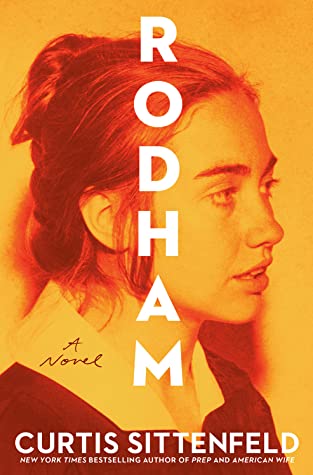 Sittenfeld is one of my favorite authors and I’ve read everything she’s published, so I was predisposed to like Rodham and jumped at the chance to read it early. She has a preternatural ability to get inside other minds and experiences, channeling a first-person voice with intense detail and intimacy. It’s almost like she’s a medium instead of a novelist. As in “The Nominee,” the narration here is perfectly authentic based on what I’d read from HRC’s memoirs. However, a problem I had was that the first third of the novel sticks very closely to the plodding account of her early years in Living History, which I’d read in 2018. I liked coming across instances when she was told she was too strong-willed and outspoken for a girl, but felt the need for a layer of fiction as in American Wife.
So I was looking forward to the speculative material, which begins in 1974 when evidence of Bill Clinton’s chronic infidelity and sex addiction comes to light. He warns Hillary that he’ll never get over his issues and will only hold her back in the future, so she’s better off without him. She takes him at his word and leaves Arkansas a single woman. I’m going to leave it there for plot summary. IF you want the juicy specifics and don’t mind spoilers, or you don’t think you’ll read the novel itself but are still curious to learn what Sittenfeld does with her what-if future scenario, you can continue reading in the marked section below. There’s a lot to think about, so I would welcome comments from others who have read the book.
 As to my own general reaction, though: I was fully engaged in the blend of historical and fictional material and read the novel in big chunks of 50+ pages at a time. The made-up characters are as convincing as the real-life ones, and there are a few relationships I found particularly touching. To my relief, there’s a satisfying ending and a couple of central figures get a pleasing comeuppance. But the chronology has an abrupt start and stop pattern, going deep into one time period or scene and then rushing forward, and I was left wondering what happened next, even if it would require another 400 pages. This would almost be better suited to some kind of serial format – it’s like the best kind of summer binge reading/watching.
My rating: 
Rodham will be published in the UK on July 9th by Doubleday. I read an advanced e-copy via NetGalley. My thanks to the publisher and publicists for arranging my early access.
I was delighted to be invited to help kick off the blog tour for Rodham. See below for details of where other reviews will be appearing soon.
SPOILERS ENSUE; YOU HAVE BEEN WARNED.
The alternative history section of the novel picks up in 1991, when Hillary Rodham is on the law faculty at Northwestern University in Illinois, not far from where she grew up. She and James, a married colleague with whom she flirts harmlessly, are glued to the TV as news of Thurgood Marshall’s retirement from the Supreme Court and replacement by conservative African-American judge Clarence Thomas is complicated by a sexual harassment claim brought by Anita Hill. (It’s impossible not to see history repeating itself with Christine Blasey Ford’s testimony at Brett Kavanaugh’s confirmation hearing.) In the wake of this scandal, Rodham’s gay friend Greg Rheinfrank, a Democratic strategist and all-round great character, suggests that she run for the U.S. Senate – Washington, D.C. could clearly use more of a progressive female presence. Even though it eventually involves running against a (real-life) Black female, she agrees and wins in 1992, becoming a multi-term senator and running for president three times, starting with the 2004 race and culminating with 2016.
Meanwhile, Bill Clinton has married and divorced twice and is now a tech billionaire living in California and rumored to attend sex parties. A sex scandal quickly derailed his first presidential campaign in 1992, but in 2015 he decides to run again, thereby competing with his own ex-girlfriend for the Democratic nomination (at his rallies, “Shut her up!” becomes a popular chant that he tolerates from the crowd). Rodham makes it clear to her staff that he should not become president because he is a sexual predator.

Hillary Rodham Clinton speaking in Iowa, January 2016. Gage Skidmore / CC BY-SA (https://creativecommons.org/licenses/by-sa/3.0).
But here a curious compromise comes into play: Donald Trump has a bone to pick with Clinton, so after some rigorous courting from Rodham and her staffers, he agrees to endorse her. In the novel, then, Clinton and Trump are like villainous twins: wealthy narcissists who devalue women. Trump is only differentiated by his lack of class and intelligence. He still tweets, spouts odious opinions and comes across as a buffoon, but – crucially – doesn’t run on the Republican ticket. Instead, it’s Jeb Bush, and Rodham beats him by 2.9 million votes.
So, whew! – a satisfying ending. At points I feared that Sittenfeld would conclude that, despite all that was different after Rodham rejecting Clinton, she still would have lost to Donald Trump. Instead, the novel envisions defeat for Clinton and comeuppance for Trump when he’s indicted for tax fraud in New York. It’s, of course, a vision of “what should have happened” (versus Hillary’s own account in What Happened). But in the back of my mind was the thought that, really, you could have just printed one sentence, “What if the USA didn’t still use that stupid electoral college system?” and you would have gotten the same outcome, because in 2016 HRC won the popular vote by that same 2.9 million.
Specific scenes and elements that I loved:
- Through her (fictional) childhood best friend, Maureen Gurski, we get an alternative vision of what life could have been like had Rodham married and had children; Maureen’s daughter Meredith becomes like a surrogate daughter for her.
- In 2015 Rodham becomes close to Misty, a supporter who’s battling breast cancer, and has her speak to open a rally for her.
- She goes on a stoned bonehead’s radio show and storms out in protest at his sexism – I totally got vibes of Leslie Knope on Crazy Ira and The Douche’s radio show (that’s a Parks and Recreation reference, in case you’re not familiar with it).
- Rodham gets a late chance at romance: there’s a “First Boyfriend” who seems just right for her.
- This isn’t a hagiography: Sittenfeld includes instances when Rodham is tone-deaf about race and chooses pragmatism over the moral high road (e.g. campaign funding).
- Sittenfeld found ways to incorporate real speech from press conferences, campaign announcements, etc. I also recognized two verbatim lines from the infamous “baking cookies” remarks HRC gave to reporters in 1992 (in the novel this happens in 2004).
 Ultimately, I think Rodham doesn’t work as well as American Wife because we already know too much about Hillary, from her three published (ghostwritten) memoirs and from her being so much in the public eye since 1992. Whereas Laura Bush was something of a mystery, and American Wife introduced a comfortable cushion of fiction, Rodham is a little too in-your-face with its contemporary history and its message. But it’s a lot of fun nonetheless.
If you have made it all the way to the end of this extended review, give yourself a pat on the back!
Pandemic Reading Strategies & Recommendations, Serious or Tongue-in-Cheek
If you’ve been spending time blog-hopping or on Twitter over the last few weeks, you will have seen countless riffs on this topic. Everyone’s pondering what’s best to read in these times. All we can get our hands on about plagues (Boccaccio, Camus, Defoe)? Allegories of similarly challenging worldwide disasters (WWII, 9/11)? Childhood favorites? Comfort reads? Funny books? Light, undemanding stuff? Rereads?
My general answer would be: as always, read whatever you want or can – anything that captures your attention is worthwhile. We’re under so much stress that our reading should be entirely unpressured. But to be a little more specific, I’ve gathered reading recommendations on a variety of topics, drawing on lists that others have made and linking to my own blog reviews where applicable.
(Some of these ideas are less serious than others.)
If you are brave enough to learn about zoonotic diseases:
 Spillover: Animal Infections and the Next Human Pandemic by David Quammen: This is top-notch scientific journalism: pacey, well-structured, and gripping. The best chapters are on Ebola and SARS; the SARS chapter, in particular, reads like a film screenplay, if this were a far superior version of Contagion. It’s a sobering subject, with some quite alarming anecdotes and statistics, but this is not scare-mongering for the sake of it; Quammen is frank about the fact that we’re still all more likely to get heart disease or be in a fatal car crash.
If you can’t look away from pandemic stories, historical or imagined:


I already had Philip Roth’s Nemesis (set in 1940s New Jersey amid a polio epidemic) out from the library because it was on the Wellcome Book Prize shortlist in 2011. I was also inspired to take Year of Wonders by Geraldine Brooks (set in the 1660s and featuring an English village that quarantined itself during the Plague) off the shelf. I’m nearing the end of these two and should have my reviews up next week.
You will see no one book referenced more than Station Eleven by Emily St. John Mandel. It’s a wholly believable dystopian novel in which 99% of the population has been wiped out by a pandemic. The remnant bands together not just to survive but to create and preserve art. “What was lost in the collapse: almost everything, almost everyone, but there is still such beauty.” (My full BookBrowse review from December 2014.)
See also this Publishers Weekly list of “13 Essential Pandemic Novels.”
If you’re feeling cooped up…
 Infinite Home by Kathleen Alcott: “Edith is a widowed landlady who rents apartments in her Brooklyn brownstone to an unlikely collection of humans, all deeply in need of shelter.” (I haven’t read it, but I do have a copy; now would seem like the time to read it!)
…yet want to appreciate the home you’re stuck in:


Years ago I read and loved At Home: A Short History of Private Life by Bill Bryson and Happier at Home by Gretchen Rubin. I can’t tell you anything more than that because it was before the days when I reviewed everything I read, but these are both reliable authors.
 I love the sound of A Journey Around My Room by Xavier de Maistre: “Finding himself locked in his room for six weeks, a young officer journeys around his room in his imagination, using the various objects it contains as inspiration for a delightful parody of contemporary travel writing and an exercise in Sternean picaresque.”
I’m also drawn to Home: The Story of Everyone Who Ever Lived in Our House by Julie Myerson, who combed archives for traces of all the former residents of her 1870s terraced house in Clapham.
If you’re struggling with being on your own:


The Lonely City by Olivia Laing: This remarkable book on outsider artists interweaves biography, art criticism and memoir. Laing is a tour guide into the peculiar, lonely crowdedness you find in a world city.
How to Be Alone by Sara Maitland: Maitland argues that although being alone is easy to achieve, there is an art to doing it properly, and solitude and loneliness are by no means the same thing. Profiling everyone from the Desert Fathers of early Christianity to the Romantic poets, she enumerates all the benefits that solitude confers.
Journal of a Solitude by May Sarton: A one-year account of her writing life in New Hampshire, this is Sarton’s best. The book dwells on the seasonal patterns of the natural world (shovelling snow, gardening, caring for animals) but also the rhythms of the soul – rising in hope but also falling into occasional, inevitable despair.
See also this Penguin UK list of books to read in self-isolation.
If you’ve been passing the time by baking…
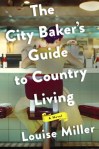 The City Baker’s Guide to Country Living by Louise Miller: As chief baker at the Sugar Maple Inn in Guthrie, Vermon, Olivia Rawlings settles into a daily routine of baking muffins, bread and cakes. This is a warm, cozy debut novel full of well-drawn secondary characters and romantic possibilities. There’s nothing clichéd about it, though. Livvy is a sassy narrator, and I loved how Miller documents the rhythms of the small-town country year, including tapping the maple trees in the early spring and a pie baking contest at the summer county fair.
 Sourdough by Robin Sloan: Lois Clary, a Bay Area robot programmer, becomes obsessed with baking. “I needed a more interesting life. I could start by learning something. I could start with the starter.” She attempts to link her job and her hobby by teaching a robot arm to knead the bread she makes for a farmer’s market. Madcap adventures ensue. It’s a funny and original novel and it makes you think, too – particularly about the extent to which we should allow technology to take over our food production.
…but can’t find yeast or eggs in the shop:
Yeast: A Problem by Charles Kingsley (1851). Nope, I haven’t read it, but our friend has a copy in his Everyman’s Library collection and the title makes us laugh every time we see it.
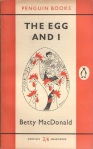 The Egg & I by Betty Macdonald: MacDonald and her husband started a rural Washington State chicken farm in the 1940s. Her account of her failure to become the perfect farm wife is hilarious. The voice reminded me of Doreen Tovey’s: mild exasperation at the drama caused by household animals, neighbors, and inanimate objects. “I really tried to like chickens. But I couldn’t get close to the hen either physically or spiritually, and by the end of the second spring I hated everything about the chicken but the egg.” Perfect pre-Easter reading.
And here are a few lists I put together for Hungerford Bookshop:
If you need a laugh:
Fiction:
Lucky Jim by Kingsley Amis
The Darling Buds of May (and sequels) by H.E. Bates
Ella Minnow Pea by Mark Dunn
Heartburn by Nora Ephron
 Cold Comfort Farm by Stella Gibbons
Anything by Nick Hornby
Three Men in a Boat by Jerome K. Jerome
Anything by David Lodge
Dear Committee Members by Julie Schumacher
The Rosie Project (and sequels) by Graeme Simsion
To Say Nothing of the Dog by Connie Willis
Nonfiction:
 Anything by Bill Bryson
21st-Century Yokel by Tom Cox
Anything by Gerald Durrell
Anything by Nora Ephron (essays)
This Is Going to Hurt by Adam Kay
Priestdaddy by Patricia Lockwood
Dear Lupin by Roger Mortimer
Anything by David Sedaris
Little Failure by Gary Shteyngart
If you want to disappear into a long book:


The Heart’s Invisible Furies by John Boyne
Jonathan Strange & Mr Norrell by Susanna Clarke
David Copperfield by Charles Dickens
Middlesex by Jeffrey Eugenides
The Crimson Petal and the White by Michel Faber
The Signature of All Things by Elizabeth Gilbert
The Nix by Nathan Hill
We, the Drowned by Carsten Jensen
Mary Ann Sate, Imbecile by Alice Jolly
The Poisonwood Bible by Barbara Kingsolver
The Wind-Up Bird Chronicle by Haruki Murakami
The Sparrow by Mary Doria Russell
American Wife by Curtis Sittenfeld
East of Eden by John Steinbeck
The Goldfinch by Donna Tartt
Cutting for Stone by Abraham Verghese
The Paying Guests by Sarah Waters
If you’re looking for some hope:
 Almost Everything: Notes on Hope by Anne Lamott
Hope in the Dark by Rebecca Solnit
Hope Dies Last: Making a Difference in an Indifferent World by Studs Terkel
I’ve been doing a combination of the above strategies, reading about historical plagues in fiction and nonfiction but also doing some rereading and consuming lighter genre stuff like mysteries. I continue to dip into new releases, and I enjoy the ongoing challenge of my reading projects. Right now, I’m working through a few current Women’s Prize longlistees, as well as some past Wellcome Book Prize nominees and Women’s Prize winners, and I’m about to start a third #1920Club title. Plus I’m already thinking about my 20 Books of Summer (I’m considering an all-foodie theme).
Further reading:
- Book Riot pinpoints seven categories of books to read during a pandemic.
- Clare surveys the post-pandemic literary landscape.
- Elle logs her pandemic reading and viewing.
- Laura discusses pandemic reading strategies and distraction reading.
- Literary Hub looks at parallel situations, including post-9/11 reads, to make predictions, and asks what your “go-to quarantine read” says about you. (I’ve read Kindred most recently, but I wouldn’t say that describes me.)
- Simon thinks about what we can and should read.
- Susan highlights some comfort reads.
What are your current reading strategies?
My Books of 2018: Some Runners-Up
Across my four best-of posts (Nonfiction was on Wednesday and Fiction on Thursday; Backlist reads are coming up tomorrow), I will have spotlighted roughly the top 20% of my year’s reading. The 15 runners-up below – 5 fiction and 10 nonfiction – are in alphabetical order by author. The ones marked with an asterisk are my Best 2018 Books You Probably Never Heard Of (Unless You Heard about Them from Me!).

Some runners-up for best books of the year (the ones I own in print, anyway).
Fiction:
 *Frieda by Annabel Abbs: If you rely only on the words of D.H. Lawrence, you’d think Frieda was lucky to shed a dull family life and embark on an exciting set of bohemian travels with him as he built his name as a writer; Abbs adds nuance to that picture by revealing just how much Frieda was giving up, and the sorrow she left behind her. Frieda’s determination to live according to her own rules makes her a captivating character.
 A Ladder to the Sky by John Boyne: A delicious piece of literary suspense with a Tom Ripley-like hero you’ll love to hate: Maurice Swift, who wants nothing more than to be a writer but doesn’t have any ideas of his own, so steals them from other people. I loved how we see this character from several outside points of view before getting Maurice’s own perspective; by this point we know enough to understand just how unreliable a narrator he is.
 The Overstory by Richard Powers: A sprawling novel about regular people who through various unpredictable routes become so devoted to trees that they turn to acts, large and small, of civil disobedience to protest the clear-cutting of everything from suburban gardens to redwood forests. I admired pretty much every sentence, whether it’s expository or prophetic.
 You Think It, I’ll Say It by Curtis Sittenfeld: Sittenfeld describes families and romantic relationships expertly, in prose so deliciously smooth it slides right down. These 11 stories are about marriage, parenting, authenticity, celebrity and social media in Trump’s America. Overall, this is a whip-smart, current and relatable book, ideal for readers who don’t think they like short stories.
 *Meet Me at the Museum by Anne Youngson: A charming, bittersweet novel composed entirely of the letters that pass between Tina Hopgood, a 60-year-old farmer’s wife in East Anglia, and Anders Larsen, a curator at the Silkeborg Museum in Denmark. It’s a novel about second chances in the second half of life, and has an open but hopeful ending. I found it very touching and wish it hadn’t been given the women’s fiction treatment.
Nonfiction:
 Rough Beauty: Forty Seasons of Mountain Living by Karen Auvinen: An excellent memoir that will have broad appeal with its themes of domestic violence, illness, grief, travel, wilderness, solitude, pets, wildlife, and relationships. A great example of how unchronological autobiographical essays can together build a picture of a life.
 *Heal Me: In Search of a Cure by Julia Buckley: Buckley takes readers along on a rollercoaster ride of new treatment ideas and periodically dashed hopes during four years of chronic pain. I was morbidly fascinated with this story, which is so bizarre and eventful that it reads like a great novel.
 *This Really Isn’t About You by Jean Hannah Edelstein: A wry, bittersweet look at the unpredictability of life as an idealistic young woman in the world’s major cities. Another great example of life writing that’s not comprehensive or strictly chronological yet gives a clear sense of the self in the context of a family and in the face of an uncertain future.
 *The Pull of the River: Tales of Escape and Adventure on Britain’s Waterways by Matt Gaw: This jolly yet reflective book traces canoe trips down Britain’s rivers, a quest to (re)discover the country by sensing the currents of history and escaping to the edge of danger. Gaw’s expressive writing renders even rubbish- and sewage-strewn landscapes beautiful.
 The Feather Thief: Beauty, Obsession, and the Natural History Heist of the Century by Kirk Wallace Johnson: A delightful read that successfully combines many genres – biography, true crime, ornithology, history, travel and memoir – to tell the story of an audacious heist of rare bird skins from the Natural History Museum at Tring in 2009. This is the very best sort of nonfiction: wide-ranging, intelligent and gripping.
 *No One Tells You This by Glynnis MacNicol: There was a lot of appeal for me in how MacNicol sets out her 40th year as an adventure into the unknown. She is daring and candid in examining her preconceptions and asking what she really wants from her life. And she tells a darn good story: I read this much faster than I generally do with a memoir.
 The Library Book by Susan Orlean: This is really two books in one. The first is a record of the devastating fire at the Los Angeles Central Library on April 29, 1986 and how the city and library service recovered. The second is a paean to libraries in general: what they offer to society, and how they work, in a digital age. Sure to appeal to any book-lover.
 Help Me!: One Woman’s Quest to Find Out if Self-Help Really Can Change Her Life by Marianne Power: I have a particular weakness for year-challenge books, and Power’s is written in an easy, chatty style, as if Bridget Jones had given over her diary to testing self-help books for 16 months. Help Me! is self-deprecating and relatable, with some sweary Irish swagger thrown in. I can recommend it to self-help junkies and skeptics alike.
 Mrs Gaskell & Me: Two Women, Two Love Stories, Two Centuries Apart by Nell Stevens: Stevens has a light touch, and flits between Gaskell’s story and her own in alternating chapters. This is a whimsical, sentimental, wry book that will ring true for anyone who’s ever been fixated on an idea or put too much stock in a relationship that failed to thrive.
 The Language of Kindness: A Nurse’s Story by Christie Watson: Watson presents her book as a roughly chronological tour through the stages of nursing – from pediatrics through to elderly care and the tending to dead bodies – but also through her own career. With its message of empathy for suffering and vulnerable humanity, it’s a book that anyone and everyone should read.
Coming tomorrow: My best backlist reads of the year.
35 Years, 35 Favorite Books
I love book lists: ticking off what I’ve read from newspaper and website selections, comparing my “best-of” choices and prize predictions with other people’s, and making up my own thematic inventories. Earlier in the year I spotted Desert Island-style 100-book lists on Annabookbel and A life in books, as well as Lonesome Reader’s reconsideration of the 100 favorite books he’d chosen half a lifetime ago. For my 35th birthday today, I’ve looked back at my “Absolute Favorites” shelf on Goodreads and picked the 35 titles that stand out the most for me: some are childhood favorites, some are books that changed my thinking, some I have read two or three times (an extreme rarity for me), and some are recent discoveries that have quickly become personal classics. I’ve listed these in rough chronological order of when I first read them, rather than ranking them, which would be nigh on impossible! Perhaps I’ll revisit the list on future significant birthdays and see how things change. Interesting to note that this works out as about two-thirds fiction and one-third nonfiction.
~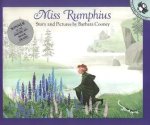
- Miss Rumphius by Barbara Cooney
- The Silver Chair by C.S. Lewis
- Watership Down by Richard Adams
- Anne of Green Gables by L.M. Montgomery
- David Copperfield by Charles Dickens
 The Scarlet Letter by Nathaniel Hawthorne
- Far from the Madding Crowd by Thomas Hardy
- Jane Eyre by Charlotte Brontë
- A Portrait of the Artist as a Young Man by James Joyce
- Possession by A.S. Byatt
- Flaubert’s Parrot by Julian Barnes
- Sixpence House by Paul Collins
 A History of God by Karen Armstrong
- Conundrum by Jan Morris
- The Heart of Christianity by Marcus Borg
- The Blind Assassin by Margaret Atwood
- My Family and Other Animals by Gerald Durrell
- On Beauty by Zadie Smith
- Heaven’s Coast by Mark Doty
- Secrets in the Dark by Frederick Buechner
- A Prayer for Owen Meany by John Irving
- American Wife by Curtis Sittenfeld
- Middlesex by Jeffrey Eugenides
- Caribou Island by David Vann
- To Travel Hopefully by Christopher Rush
- We, the Drowned by Carsten Jensen
 The Emperor of All Maladies by Siddhartha Mukherjee
- Leaving Alexandria by Richard Holloway
- An Exact Replica of a Figment of My Imagination by Elizabeth McCracken
- A Tale for the Time Being by Ruth Ozeki
- Want Not by Jonathan Miles
- Journal of a Solitude by May Sarton
- F by Daniel Kehlmann
 Dinner at the Homesick Restaurant by Anne Tyler
- March by Geraldine Brooks
Are any of these among your favorites, too?
Short Story Collections Read Recently
This is the third year in a row that I’ve made a concerted effort to read more short stories in the alliterative month of September; see also my 2016 and 2017 performances. (I actually finished Sarah Hall’s collection in late August, but I’m going to cheat and include it anyway.) That makes for four volumes in total read recently. Surprisingly, I had my best luck with two that were published back in the early 1990s.
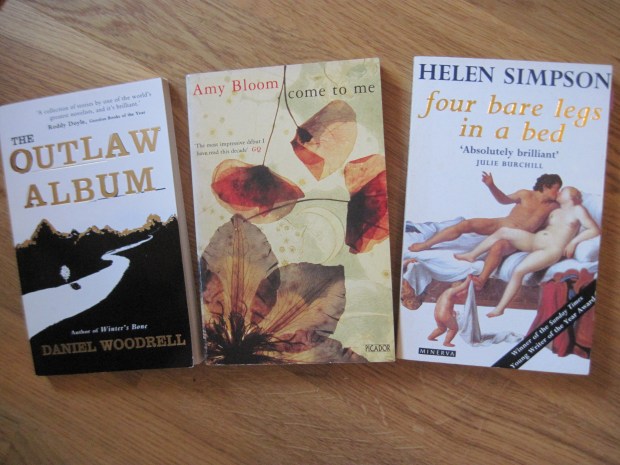
I read Sarah Hall’s book from the library; these three were bargains from my local charity warehouse, the Community Furniture Project.
Like many devoted novel readers, I struggle with short stories because they can feel fragmentary or open-ended, and it takes that much more effort to keep up with multiple settings and groups of characters. Yet I also get frustrated when the narrative voice and themes are too similar across a whole set of tales.
However, when done well short stories can be marvelous, of course. I enjoyed K.J. Orr’s article on short stories in the September 7th issue of the Times Literary Supplement. Among the virtues of the short story, she lists the following:
- “the capacity to stoke questions of definition and instability, resolution and irresolution … ; to deliver its conundrums to the reader in a state of compression”
- “The unpredictability involved means that picking up a new short story always feels to me a moment full of possibilities.”
- “The short story can combine complexity and uncertainty with ebullience and humour. It can take on subjects and situations that risk seeming clichéd and open them to wonder. It can put the familiar and the strange in conversation.”
And yet sometimes the quality of the writing, or at least the intensity of my engagement, can vary wildly within a story collection, which often makes the books difficult to rate and respond to as a whole. That’s what I found with these first two.
Madame Zero by Sarah Hall (2017)
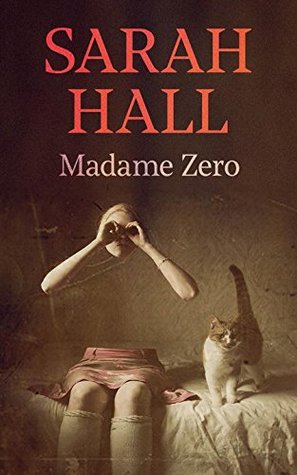 Three corkers; two pretty good; four been-there-read-that. My favorites were the first and last stories, “Mrs Fox” and “Evie” (winner of the BBC National Short Story Prize 2013 and shortlisted for the Sunday Times EFG Private Bank Short Story Award 2013, respectively). Both concern a fairly average marriage derailed when the wife undergoes a transformation. In the former Sophia literally turns into a fox and her husband scrambles for a way to make the relationship last. In “Evie,” Richard’s wife develops a voracious appetite for sweets and sex, and starts talking gibberish. This one is very explicit, but if you can get past that I found it both painful and powerful. I also especially liked “Case Study 2,” about a psychologist’s encounter with a boy who’s been brought up in a commune. It has faint echoes of T.C. Boyle’s “The Wild Child.”
“Wilderness” focuses on an intense episode of fear of heights during a trip to South Africa. In “Luxury Hour,” a new mother meets up with an old lover near the swimming pool they used to frequent and wonders where and why their lives diverged. This one reminded me of the first chapter of Rachel Cusk’s Transit.
As for the rest? “Goodnight Nobody” was completely forgettable, and the other three are in the vague speculative/post-apocalyptic vein that’s been done to death: “Theatre 6” = Red Clocks; “Later, His Ghost” = The Road et al.; “One in Four” = Station Eleven et al. I admire Hall’s writing in general, but The Wolf Border remains the best thing I’ve read by her.
My rating: 
The Outlaw Album: Stories by Daniel Woodrell (2011)
 Based on the first six stories, I was planning a 5-star rating. (How can you resist this opening line? “Once Boshell finally killed his neighbor he couldn’t seem to quit killing him.”) But the second half of the book ended up being much less memorable; I wouldn’t say it wasn’t worth reading, but I got very little out of four of the stories, and the other two were okay but somewhat insubstantial. By contrast, the first two stories, “The Echo of Neighborly Bones” and “Uncle,” are gritty little masterpieces of violence and revenge.
I also particularly liked “Black Step” and “Night Stand,” about traumatized soldiers back from war (Woodrell himself was a Marine). Each has a creepy segment where the veteran gives sarcastic answers to the unspecified typical questions they always get; we have to infer that these are: How many people did you kill? What’s it like to kill someone? and What do you do with the bodies? There’s a nice balance between first- and third-person voices; lyrical and unlearned prose; and speech marks and none. I will definitely read more by Woodrell.
My rating:
I thoroughly loved these next two debut collections. In each case I’d read one or two previous books by the author and not been wild about the writing (White Houses; In-Flight Entertainment and Cockfosters), but these two have convinced me to try more of their work.
Come to Me by Amy Bloom (1993)
 Bloom was a practicing psychotherapist, so it’s no surprise she has deep insight into her characters’ motivations. This is a wonderful set of stories about people who love who they shouldn’t love. In “Song of Solomon,” a new mother falls for the obstetrician who delivered her baby; in “Sleepwalking,” a woman gives in to the advances of her late husband’s son from a previous marriage; in “Light Breaks Where No Sun Shines,” adolescent Susan develops crushes on any man who takes an interest in her. My favorite was probably “Love Is Not a Pie,” in which a young woman rethinks her impending marriage during her mother’s funeral, all the while remembering the unusual sleeping arrangement her parents had with another couple during their joint summer vacations. The title suggests that love is not a thing to be apportioned out equally until it’s used up, but a more mysterious and fluid entity.
Linked short stories can be a useful halfway-house for readers who prefer novels and are still unsure about reading stories. Happily, then, the heart of this collection is five pieces that orbit around the same characters. In “Hyacinths” we meet David as a boy in Manitoba and get a glimpse of him as an adult. In the next story we encounter his second wife, Galen, and her lover, Henry. “Silver Water” is about a mental health crisis with David and Galen’s daughter, and the next two stories are about Henry, his wife Marie, and the other bonds they form.
Although I read the book quickly while on holiday and so haven’t marked out any particular quotes, convincing dialogue and insightful observations are on almost every page. I was reminded most of short stories I’ve read by Elizabeth McCracken and Carol Shields.
My rating: 
Four Bare Legs in a Bed and Other Stories by Helen Simpson (1990)
 Simpson won the inaugural Sunday Times Young Writer of the Year Award for this in 1991. Her protagonists are women disillusioned with the norms of marriage and motherhood. They ditch their safe relationships, or carry on brazen affairs; they fear pregnancy, or seek it out on their own terms. The feminist messages are never strident because they are couched in such brisk, tongue-in-cheek narratives. For instance, in “Christmas Jezebels” three sisters in 4th-century Lycia cleverly resist their father’s attempts to press them into prostitution and are saved by the bishop’s financial intervention; in “Escape Clauses” a middle-aged woman faces the death penalty for her supposed crimes of gardening naked and picnicking on private property, while her rapist gets just three months in prison because she was “asking for it.” (Nearly three decades on, it’s still so timely it hurts.)
I loved “The Bed,” a kind of fairy tale about a luxurious bed solving all a woman’s problems; “What Are Neighbours For,” in which each woman cattily plans what she can get out of the others; “Labour,” a brief five-act play set in a hospital delivery room; and “Zoë and the Pedagogues,” about a woman learning to drive who has two very different teachers (perhaps inevitably, this recalled Mirror, Shoulder, Signal by Dorthe Nors). “An Interesting Condition,” which takes place in an antenatal class, is like Curtis Sittenfeld’s “Bad Latch,” while multiple stories reminded me of Shena Mackay, especially “Send One Up for Me,” about a woman tiptoeing around her boarding house and trying not to anger the landlady.
My rating:
Are you a short story fan? Read any good ones recently?
Certain American States: Stories by Catherine Lacey
The loneliness of certain American states is enough to kill a person if you look too closely
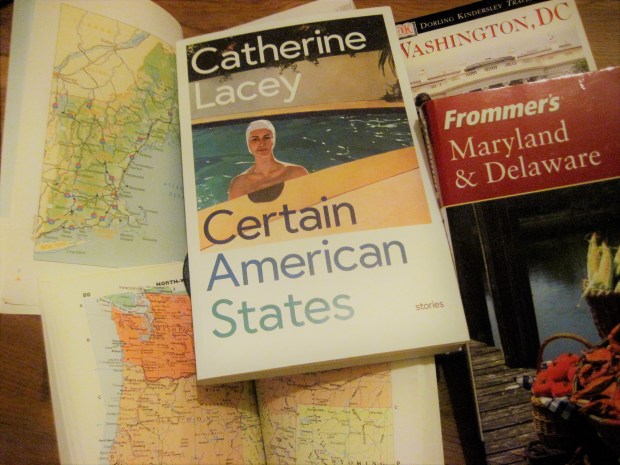
I come from a certain American state: Maryland. Before I first came to England 15 years ago, I’d never lived anywhere else. It’s the ninth-smallest state but has a little bit of everything – mountains, lakes and farmland; coast and bayfront; rough cities and pleasant towns; plus proximity to the nation’s capital – which is why it’s nicknamed “America in Miniature.” Brits say Merry-Land (it’s more like the name Marilyn, with a faint D on the end) and more than once when asked where I’m from I’ve heard in reply,“like the cookies?” No, not like the cookies!

Anyway, the characters in Catherine Lacey’s short story collection move through various states – Texas, North Dakota, Virginia, Montana – but the focus is more on their emotional states. Ten of the 12 stories are in the first person, giving readers a deep dive into the psyches of damaged or bereaved people. I particularly liked “ur heck box,” in which the narrator, troubled by the death of her brother and wary of her mother joining her in New York City, starts getting garbled messages from a deaf man. Whether a result of predictive text errors or mental illness, these notes on his phone echo her confusion at what’s become of her life.
 Two other favorites were “Touching People,” in which a sixty-something woman takes a honeymooning couple to see her ex-husband’s grave, and “Small Differences,” about a woman who’s cat-sitting for her on-and-off boyfriend and remembers the place faith used to have in her life. Both dramatize the divide between youth and age; in the latter the cat is named Echo, a reminder that the past still resonates. Another standout is “Learning,” about a painting teacher with a crumbling house and marriage whose deadbeat college friend has become a parenting guru. (This one reminded me of Curtis Sittenfeld’s “The Prairie Wife.”)
Many of the stories question the possibility of ‘getting over’ what’s happened and posit, instead of total healing, a stoic determination to just keep going. In the title story, the narrator goes to see her godfather, Leonard, on his deathbed. She still doesn’t like him much; the trip isn’t about achieving closure but doing the right thing when you can. The same is true in “Family Physics”: Bridget had an explosive falling-out with her family when they came to see her accept her college Physics Award. Now that she’s back in touch with them everything isn’t perfect, but she sees how family life is always a mixture of entropy and rebuilding.

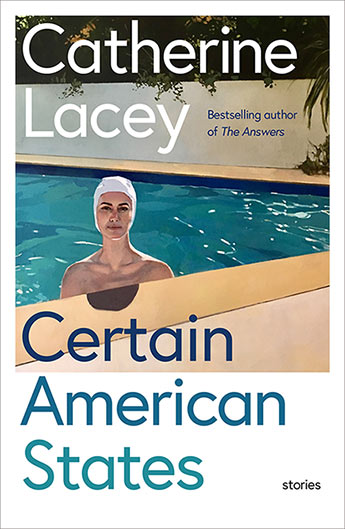
I prefer this U.S. cover. How about you?
There isn’t as much variety to the narration as I often like from a set of stories, but Lacey uses a range of storytelling techniques (or gimmicks, if one was being unkind) to keep things interesting. The first story, “Violations,” about a man whose ex-wife has published a story drawing on their life together, features run-on sentences that go over the page; “ur heck box” nests parentheses inside parentheses, up to three layers; “Because You Have To,” about a woman who’s counting her blessings even though she’s newly single and surrounded by feral pets, is in short sections separated by asterisks; and “The Four Immeasurables and Twenty New Immeasurables,” narrated by a woman who’s sleeping with a Buddhist monk, is in list form. Lacey also uses no speech marks, setting out dialogue in italics instead.
It can be tough to assess a story collection as a whole because the parts can range from hard-hitting to instantly forgettable. I didn’t always feel that each of the parts was necessary here; perhaps I would have been better off just sampling a few of the best stories? The problem, of course, is that you never know which those would be for you before you open up the book. There were quite a number of lines that rang true for me in Lacey’s work, but no more than a few stories that I can imagine myself recalling or ever going back to in the future. The book feels very much of the moment, though. If you’ve enjoyed recent work by Julie Buntin, R. O. Kwon, Sally Rooney or Sittenfeld, you might want to spend time in Certain American States.
Favorite lines:
“I don’t know what to do now, a state I am so familiar with it feels like my only true home.” (from “Because You Have To”)
“Anyone can visit a graveyard, no matter what they think, and every graveyard has been seen so many times there is nothing left in them for anyone to see and that is why we all must go and look, to see again what’s been seen again” (from “Touching People”)
“I no longer understand the state I was in back then (heartsick over the idea of Jesus the way that other girls were heartsick over the idea of River Phoenix)” (from “Small Differences”)
My rating:
Certain American States was published in the UK by Granta on September 6th; it came out in the USA on August 7th from Farrar, Straus and Giroux. My thanks to the publisher for the free copy for review.
You Think It, I’ll Say It: Stories by Curtis Sittenfeld
“Oh, our private habits, our private selves—how strange we all are, how full of feelings and essentially alone.”
You could say that Curtis Sittenfeld is the reason I’m a book reviewer. Back when I worked as a library assistant in London, I filled the hours of tedium by writing one- or two-paragraph responses to every book I read, but these just sat in a Word file and never saw the light of day. I had so little confidence in my writing that I didn’t show these proto-reviews to anyone, not even on Goodreads. One day in 2011, though, I saw that Stylist magazine was looking for a temporary books columnist; to be considered you had to submit a 100-word review of your favorite book by a woman. I chose Sittenfeld’s American Wife, her masterfully introspective 2008 novel from the perspective of a fictionalized Laura Bush. It was great practice in being concise, that’s for sure, and Stylist chose me as a finalist. (You can see my 100-word review here.) From there it went to public voting on the website. Alas, I didn’t win, but it was the first time I got recognition for a book review, and I was hooked. When I left my job in 2013 to go freelance, I was determined that reviewing would be part of my work.
Sittenfeld is still one of my favorite authors, and I’ve read everything she’s written. Like Maggie O’Farrell and Carolyn Parkhurst, her work is perfectly balanced between women’s fiction and literary fiction and she describes families and romantic relationships expertly, in prose so deliciously smooth it slides right down. If you’re a fan of her novels, I would certainly recommend these 11 short stories to you. They’re about marriage, parenting, authenticity, celebrity and social media in Trump’s America, with the two key recurring elements of role reversal and retrospect.
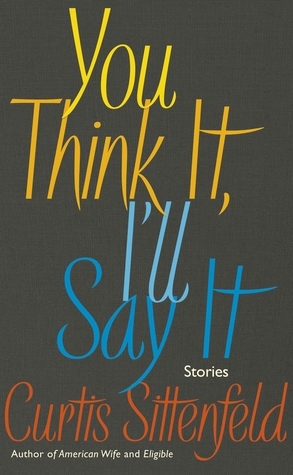 The opening story, “The Nominee,” which only appears in the U.K. edition, feels like a natural follow-up to American Wife. Though never named, the narrator is clearly Hillary Clinton, and in a voice that’s consistent with her memoirs she ponders her struggle to earn popular appeal: “The typical American voter doesn’t wish to share a beer with me.” It’s 2016 and she’s about to be interviewed by a younger female journalist who has written about her dozens of times. Back in 2002 she was compassionate when this journalist fell apart during an interview, but she knows not to expect the same courtesy in return. No, she fully expects to be burned. But still the nominee truly believes she’ll win, as the opposite outcome would be catastrophic.
Yet that’s the reality in the final story, “Do-Over,” which was shortlisted for this year’s Sunday Times EFG Short Story Award. In the wake of Trump’s election, Clay hears from Sylvia, a high school classmate, out of the blue and meets up with her for dinner in Chicago. She’s still sore about the sexist nature of the election at Bishop Academy in which, despite having tied, she was given the patronizing, made-up role of “assistant prefect” while Clay was named senior prefect. Sylvia has engineered this fake date as a gift to herself, to see what could happen, and she’s going to behave as badly as she wants.
The role reversal is clearest in “Gender Studies” and “A Regular Couple.” In the former, Nell, a gender studies professor, accidentally uses a taxi driver for sex. In the latter, Maggie is on her honeymoon with Jason; though they’re both lawyers, she recently handled a sportsman’s rape trial and earns 20 times what Jason does in nonprofit immigration law. There’s another flipping of positions in this one: among the other honeymooners at their ski resort is Ashley Frye, who was one of the popular girls at Maggie’s high school and made her feel awkward and inferior. But Maggie’s TV appearances have given her an aura of celebrity: now she’s the popular one, and she has an idea for how to get revenge on Ashley.
The most similar to Sittenfeld’s early fare is “Vox Clamantis in Deserto,” in which a college student loses her virginity under bizarre circumstances in 1994. Several stories involve a dual time setting: a decade or more later, characters reflect on the strange turns their lives have taken to get them where they are now and have a chance to rethink the decisions they made.
My favorite single story is “Plausible Deniability,” the only time I can think of that Sittenfeld has used a male point-of-view. The narrator is William, a 41-year-old lawyer in St. Louis who has distinctly different relationships with his brother and his sister-in-law. There’s a clever surprise in this one, as there is later on in “The Prairie Wife,” and it makes you ask about the various ways there are of being close with another person.
Other stories concern new mothers’ guilt and compromises, the temptation of adultery, and the danger of jealousy and making up your mind about someone too soon. I was less sure about “Volunteers Are Shining Stars,” voiced by a character with OCD and set among African-Americans at a family shelter in Washington, D.C., and I thought “Off the Record” was a bit too similar to “The Nominee.” Overall, though, this is a whip-smart, current and relatable book, ideal for readers who don’t think they like short stories.
My rating:
You Think It, I’ll Say It is published in the UK today, May 3rd, by Doubleday. My thanks to the publisher for the free review copy.
My Most Anticipated 2018 Releases, Part I
Here are 30 books that are on my radar for the months of January through June. This is by no means a full inventory of what’s coming out (or even of what I have available through NetGalley and Edelweiss); instead, think of it as a preview of the books I actually intend to read. This time my list seems strangely skewed towards plants (the covers too), with a couple of bird- and medical-themed reads in there too. Also: two feminist group biographies, plenty of historical fiction, some short stories, a bit of true crime, and a fair few memoirs. I hope you’ll find a book or two here to tempt you.
(The descriptions below are generally adapted from the publisher blurbs on Goodreads, NetGalley or Edelweiss. Some of these I already have access to in print or galley form; others I’m still on the look-out for. The list is in chronological order by first publication date; if multiple books release on the same day they are in alphabetical order by author surname.)
January
 On the Bright Side: The New Secret Diary of Hendrik Groen [Jan. 11, Michael Joseph (Penguin UK)]: I loved the first Hendrik Groen novel back in 2016 (reviewed here); this promises more of the same witty, bittersweet stories about elderly Dutch eccentrics. “Chaos will ensue as 85-year-old Hendrik Groen is determined to grow old with dignity … He dreams of escaping the confines of his care home and practising hairpin turns on his mobility scooter.” (NetGalley download)
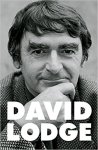 Writer’s Luck: A Memoir: 1976–1991 by David Lodge [Jan. 11, Harvill Secker]: I reviewed the first volume of Lodge’s memoirs, Quite a Good Time to Be Born, for Nudge back in 2015, so I’m eager to continue his life story in this second installment. “Readers of Lodge’s novels will be fascinated by the insights this book gives—not only into his professional career but also more personal experience. The main focus, however, is on writing as a vocation.”
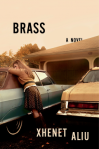 Brass: A Novel by Xhenet Aliu (for BookBrowse review) [Jan. 23, Random House]: “A waitress at the Betsy Ross Diner, Elsie hopes her nickel-and-dime tips will add up to a new life. Then she meets Bashkim, … who left Albania to chase his dreams. … Told in equally gripping parallel narratives with biting wit and grace, Brass announces a fearless new voice with a timely, tender, and quintessentially American story.” (NetGalley download)
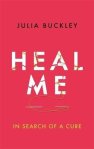 Heal Me: In Search of a Cure by Julia Buckley [Jan. 25, Weidenfeld & Nicolson]: The “search for a cure [for chronic pain] takes her on a global quest, exploring the boundaries between science, psychology and faith with practitioners on the fringes of conventional, traditional and alternative medicine. Rais[es] vital questions about the modern medical system … and the struggle to retain a sense of self.” (print review copy)
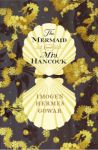 The Mermaid and Mrs. Hancock by Imogen Hermes Gowar [Jan. 25, Harvill Secker]: “A spellbinding story of curiosity, love and obsession from an astonishing new talent. One September evening in 1785, the merchant Jonah Hancock hears urgent knocking on his front door. One of his captains is waiting eagerly on the step. He has sold Jonah’s ship for what appears to be a mermaid.” Comes recommended by Elle. (NetGalley download)
February
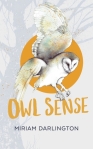 Owl Sense by Miriam Darlington [Feb. 6, Guardian Faber]: Darlington’s previous nature book, Otter Country, was stunning. Here, “Darlington sets out to tell a new story. Her fieldwork begins with wild encounters in the British Isles and takes her to the frosted borders of the Arctic. In her watching and deep listening to the natural world, she cleaves myth from reality and will change the way you think of this magnificent creature.”
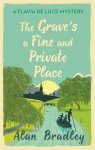 The Grave’s a Fine and Private Place by Alan Bradley [Feb. 8, Orion]: I’ve read all eight Flavia de Luce novels so far, which is worth remarking on because I don’t otherwise read mysteries and I usually find child narrators annoying. There’s just something delicious about this series set in 1950s England. This one will be particularly interesting because a life-changing blow came at the end of the previous book.
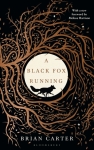 A Black Fox Running by Brian Carter [Feb. 8, Bloomsbury UK]: “A beautiful lost classic of nature writing” from 1981 that “sits alongside Tarka the Otter, Watership Down,” et al. “This is the story of Wulfgar, the dark-furred fox of Dartmoor, and of his nemesis, Scoble the trapper, in the seasons leading up to the pitiless winter of 1947. As breathtaking in its descriptions of the natural world as it is perceptive in its portrayal of damaged humanity.” Championed by Melissa Harrison.
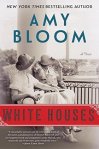 White Houses by Amy Bloom [Feb. 13, Random House]: The story of Lorena Hickock’s friendship/affair with Eleanor Roosevelt. “From Washington, D.C. to Hyde Park, from a little white house on Long Island to an apartment on Manhattan’s Washington Square, Amy Bloom’s new novel moves elegantly through fascinating places and times, written in compelling prose and with emotional depth, wit, and acuity.” (Edelweiss download)
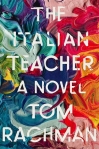 The Italian Teacher by Tom Rachman [Feb. 20, Riverrun/Viking]: I’m a huge fan of Rachman’s, especially his previous novel, The Rise & Fall of Great Powers. “1955: The artists are gathering together for a photograph. In one of Rome’s historic villas, a party is bright with near-genius, shaded by the socialite patrons of their art. … Rachman displays a nuanced understanding of twentieth-century art and its demons, vultures and chimeras.” (Edelweiss download)
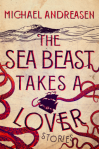 The Sea Beast Takes a Lover: Stories by Michael Andreasen [Feb. 27, Dutton (Penguin Group)]: “Romping through the fantastic with big-hearted ease, these stories cut to the core of what it means to navigate family, faith, and longing, whether in the form of a lovesick kraken slowly dragging a ship of sailors into the sea [or] a small town euthanizing its grandfathers in a time-honored ritual.” (NetGalley download)
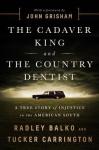 The Cadaver King and the Country Dentist: A True Story of Injustice in the American South by Radley Balko and Tucker Carrington [Feb. 27, PublicAffairs]: “After two three-year-old girls were raped and murdered in rural Mississippi, law enforcement pursued and convicted two innocent men, [who] spent a combined thirty years in prison before finally being exonerated in 2008. Meanwhile, the real killer remained free.”
March
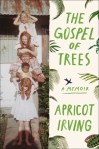 The Gospel of Trees: A Memoir by Apricot Irving [March 6, Simon & Schuster]: “Apricot Irving grew up as a missionary’s daughter in Haiti—a country easy to sensationalize but difficult to understand. Her father was an agronomist, a man who hiked alone into the hills … to preach the gospel of trees in a deforested but resilient country. Her mother and sisters, meanwhile, spent most of their days in the confines of the hospital compound they called home. As a child, this felt like paradise; as a teenager, the same setting felt like a prison.”
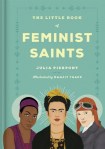 The Little Book of Feminist Saints by Julia Pierpont (illus. by Manjitt Thapp) [March 6, Random House]: This project reminds me a lot of A Glorious Freedom with its focus on women’s achievements and the full-color portraits of the subjects. I’ve just opened the file and the first two pieces give you a sense of the range that will be covered: Artemisia Gentileschi and Michelle Obama! (Edelweiss download)
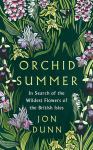 Orchid Summer: In Search of the Wildest Flowers of the British Isles by Jon Dunn [March 8, Bloomsbury UK]: Dunn’s were my favorite contributions to the Wildlife Trusts’ Seasons anthologies (e.g. Winter). I’ve also enjoyed following his botanical travels on Twitter. “From the chalk downs of the south coast of England to the heathery moorland of the Shetland Isles, and from the holy island of Lindisfarne in the east to the Atlantic frontier of western Ireland, Orchid Summer is a journey into Britain and Ireland’s most beautiful corners.”
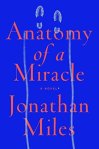 Anatomy of a Miracle by Jonathan Miles [March 13, Hogarth]: Miles’s previous novel, Want Not, is one of the books I most wish I’d written. “Rendered paraplegic after a traumatic event, Cameron Harris has been living his new existence alongside his sister, Tanya, in their battered Biloxi, Mississippi neighborhood where only half the houses made it through Katrina. … [A] stunning exploration of faith, science, mystery, and the meaning of life.”
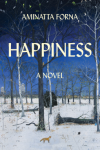 Happiness by Aminatta Forna [March 16, Grove Atlantic]: “London. A fox makes its way across Waterloo Bridge. The distraction causes two pedestrians to collide—Jean, an American studying the habits of urban foxes, and Attila, a Ghanaian psychiatrist there to deliver a keynote speech. … Forna’s unerring powers of observation show how in the midst of the rush of a great city lie numerous moments of connection.” (NetGalley download)
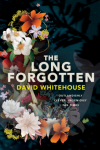 The Long Forgotten by David Whitehouse [March 22, Pan Macmillan/Picador]: “When the black box flight recorder of a plane that went missing 30 years ago is found at the bottom of the sea, a young man named Dove begins to remember a past that isn’t his. The memories belong to a rare flower hunter in 1980s New York, whose search led him around the world and ended in tragedy.” (NetGalley download)
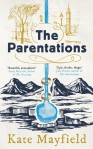 The Parentations by Kate Mayfield (to review for Shiny New Books?) [March 29, Oneworld]: From editor Jenny Parrott: “a stunning speculative historical novel … The story spans 200 years across Iceland and London, as a strange boy who can never die is surrounded by a motley collection of individuals, each with vested interests in his welfare. … [S]ome of the most extraordinary literary prose I’ve read during a thirty-year career.”
April
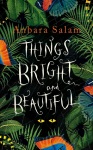 Things Bright and Beautiful by Anbara Salam [April 5, Fig Tree]: “1954, the South Pacific islands. When Beatriz Hanlon agreed to accompany her missionary husband Max to a remote island, she knew there would be challenges. But it isn’t just the heat and the damp and the dirt. There are more insects than she could ever have imagined, and the islanders are strangely hostile. [Then] an unexpected … guest arrives, and the couple’s claustrophobic existence is stretched to breaking point.” Sounds like Euphoria by Lily King. (NetGalley download)
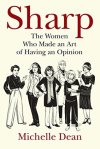 Sharp: The Women Who Made an Art of Having an Opinion by Michelle Dean [April 10, Grove Press]: “Dorothy Parker, Rebecca West, Hannah Arendt, Mary McCarthy, Susan Sontag, Pauline Kael, Joan Didion, Nora Ephron, Renata Adler, and Janet Malcolm—these brilliant women’s lives intertwine as they cut through the cultural and intellectual history of America in the twentieth century, arguing as fervently with each other as they did with the sexist attitudes of the men who often undervalued their work as critics and essayists.”
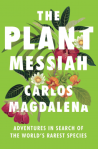 The Plant Messiah: Adventures in Search of the World’s Rarest Species by Carlos Magdalena [April 10, Doubleday]: “Carlos Magdalena is not your average horticulturist. He’s a man on a mission to save the world’s most endangered plants. … [He] takes readers from the Amazon to the jungles of Mauritius. … Back in the lab, we watch as he develops groundbreaking, left-field techniques for rescuing species from extinction, encouraging them to propagate and thrive once again.” (NetGalley download)
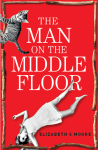 The Man on the Middle Floor by Elizabeth S. Moore (for blog tour) [April 12, RedDoor Publishing]: “Despite living in the same three-flat house in the suburbs of London, the residents are strangers to one another. … They have lived their lives separately, until now, when an unsolved murder and the man on the middle floor connect them. … It questions whether society is meeting the needs of the fast growing autistic section of society.” (print ARC)
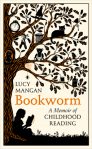 Bookworm: A Memoir of Childhood Reading by Lucy Mangan [April 24, Random House UK]: “This is a love letter to the joys of childhood reading, full of enthusiasm and wit, telling the colorful story of our best-loved children’s books, the extraordinary people who created them, and the thousand subtle ways they shape our lives.” (NetGalley download)
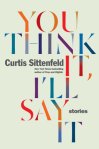 You Think It, I’ll Say It: Stories by Curtis Sittenfeld [April 24, Random House]: I would read anything Curtis Sittenfeld wrote; American Wife is still one of my absolute favorites. “The theme that unites these stories … is how even the cleverest people tend to misread others, and how much we all deceive ourselves. Sharp and tender, funny and wise, this collection shows [her] knack for creating real, believable characters that spring off the page.”
May
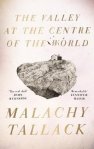 The Valley at the Centre of the World by Malachy Tallack [May 3, Canongate]: I’ve reviewed and enjoyed both of Tallack’s previous nonfiction works, including The Un-Discovered Islands. “Set against the rugged west coast of Shetland, in a community faced with extinction, [this] is a novel about love and grief, family and inheritance, rapid change and an age-old way of life. … [T]hese islanders must decide: what is left of us when the day’s work is done, the children grown, and all our choices have been made?”
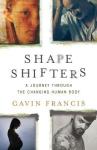 Shapeshifters: A Journey through the Changing Human Body by Gavin Francis [May 8, Basic Books]: “Francis considers the inevitable changes all of our bodies undergo—such as birth, puberty, and death, but also … those that only some of our bodies will: like getting a tattoo, experiencing psychosis, suffering anorexia, being pregnant, or undergoing a gender transition. … [E]ach event becomes an opportunity to explore the meaning of identity.”
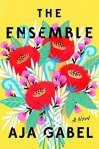 The Ensemble by Aja Gabel [May 15, Riverhead]: An “addictive debut novel about four young friends navigating the cutthroat world of music and their complex relationships with each other, as ambition, passion, and love intertwine over the course of their lives.”
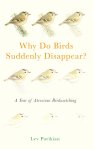 Why Do Birds Suddenly Disappear? by Lev Parikian (for blog tour) [May 17, Unbound]: “A lapsed and hopeless birdwatcher’s attempt to see 200 birds in a year. But it’s not just about birds. It’s about family, music, nostalgia; hearing the stories of strangers; the nature of obsession and obsession with nature.”
June
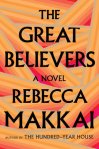 The Great Believers by Rebecca Makkai [June 19, Viking]: I loved both of Makkai’s previous novels and have her short story collection on my Kindle. “Fiona is in Paris tracking down her estranged daughter, who disappeared into a cult. While staying with an old friend, a famous photographer …, she finds herself finally grappling with the devastating ways the AIDS crisis affected her life and her relationship with her daughter.” (Edelweiss download)
Other lists of enticing 2018 releases that might give you some ideas:
Guardian (UK, nonfiction)
Halfman, Halfbook (UK, mostly science/nature and history)
Parchment Girl (mostly nonfiction)
Stylist (UK)
Which 2018 books are you most looking forward to? Do any of my choices interest you?
Some Early Recommendations for 2018
I took some time out this December to start reading the 2018 releases I was most looking forward to. In early January I’ll preview another 25 or 30 titles I’m interested in, but for now here are eight books coming out in the first half of next year that I can heartily recommend, with ~130-word mini reviews to give you a taste of them. (These are in alphabetical order by author, with the publication details noted beneath the title.)
Because We Are Bad: OCD and a Girl Lost in Thought by Lily Bailey
[Coming on March 15th from Canbury Press (UK) and on April 3rd from Harper Collins US]
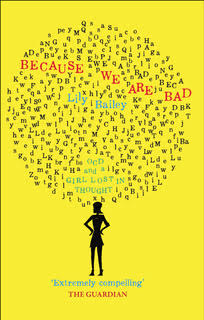 “For as long as I could remember, I wasn’t me, I was we.” Lily Bailey had a sort of imaginary friend while she was growing up, but instead of a comforting presence it was a critical voice pushing her to be ultra-conscious of how her behavior appeared to others. This went on for years until she was finally diagnosed with severe Obsessive Compulsive Disorder. Despite Prozac and CBT, she later landed in a psychiatric unit. She captures this inpatient stay with great verve, recalling the chorus of other patients’ voices and different nurses’ strategies. This memoir tracks Bailey’s life up until age 20, but her recreation of childhood and the first-person plural sections are the strongest. I’d recommend this to readers interested in learning more about OCD and mental health issues in general. (Full blog review scheduled for March 15th.)
The Immortalists by Chloe Benjamin
[Coming on January 9th from Tinder Press (UK) / G.P. Putnam’s (USA)]
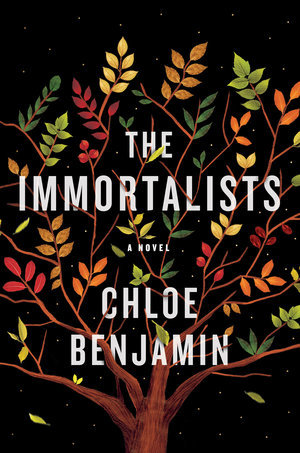 Summer 1969: four young siblings escape a sweltering New York City morning by visiting a fortune teller who can tell you the day you’ll die. In the decades that follow, they have to decide what to do with this advance knowledge: will it spur them to live courageous lives, or drive them to desperation? This compelling family story lives up to the hype. I can imagine how much fun Benjamin had researching and writing it as she’s able to explore four distinct worlds: Daniel, a military doctor, examines Iraq War recruits; Klara becomes a magician in Las Vegas; Varya researches aging via primate studies; and Simon is a dancer in San Francisco. The settings, time periods, and career paths are so diverse that you get four novels’ worth of interesting background. (See my full review at The Bookbag.)
Everything Happens for a Reason: And Other Lies I’ve Loved by Kate Bowler
[Coming on February 6th from Random House (USA)]
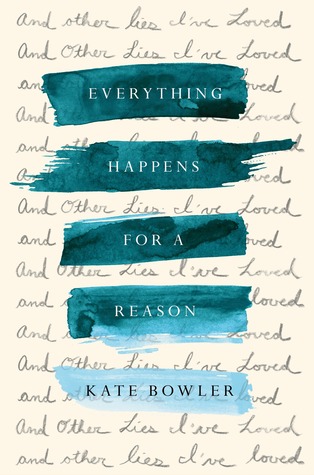 This was the 2018 title I was most looking forward to reading. It combines two of my niche interests: medical (especially cancer) memoirs, and the prosperity gospel, which I grew up with in the church my parents attend in America. An assistant professor at Duke Divinity School, Bowler was fascinated by the idea that you can claim God’s blessings, financial and otherwise, as a reward for righteous behavior and generosity to the church. But if she’d been tempted to set store by this notion, that certainty was permanently fractured when she was diagnosed with stage IV colon cancer in her mid-thirties. Bowler writes tenderly about suffering and surrender, about living in the moment with her husband and son while being uncertain of the future. Her writing reminds me of Anne Lamott’s and Nina Riggs’s.
The Reading Cure: How Books Restored My Appetite by Laura Freeman
[Coming on February 22nd from Weidenfeld & Nicolson (UK)]
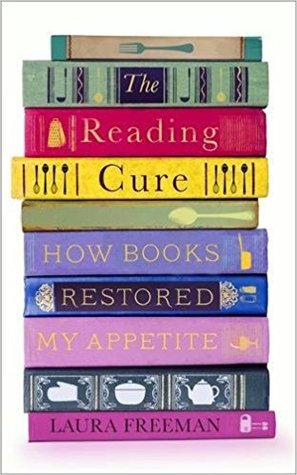 A memoir with food, medical and literary themes and a bibliotherapy-affirming title – this debut ticks lots of boxes for me. As a teenager, Freeman suffered from anorexia. This is not an anorexia memoir, though; instead, it’s about the lifelong joy of reading and how books have helped her haltingly recover the joy of eating. Her voracious reading took in the whole of Charles Dickens’s oeuvre, war writers like Siegfried Sassoon and Robert Graves (boiled eggs and cocoa); travel writers Laurie Lee and Patrick Leigh Fermor and their enthusiastic acceptance of whatever food came their way on treks; and rediscovered children’s classics from The Secret Garden through to the Harry Potter series. This is about comfort reading as much as it is about rediscovering comfort eating, and it delicately balances optimism with reality. (Full blog review scheduled for February 1st.)
Everything Here Is Beautiful by Mira T. Lee
[Coming on January 16th from Pamela Dorman Books (USA)]
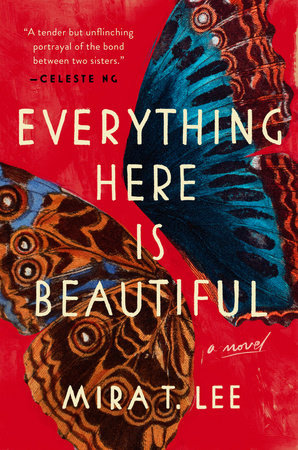 Lucia Bok has been many people: a globe-trotting Chinese-American journalist, a shopkeeper’s wife in New York City, an illegal immigrant’s girlfriend, and a mother making the best of primitive conditions in Ecuador. Her schizophrenia means she throws herself wholeheartedly into each role but, as her mind turns against her, eventually finds herself unable to cope. We hear from Lucia herself as well as her older sister, ex-husband and boyfriend – in both first-person and third-person passages – over the course of 25 years to get an intimate picture of how mental illness strains families and how blame gets parceled out. Lucia’s first-person narration was most effective for me: “I take only one kind of medication now. They adjust the dosage. Sometimes I still slosh around, dense and slushy like a watermelon; other times I’m flat, defizzed.”
Junk by Tommy Pico
[Coming on May 8th from Tin House Books (USA)]
 Junk food, junk shops, junk mail; junk as in random stuff; junk as in genitals. These are the major elements of Pico’s run-on, stream-of-consciousness poem, the third in his Teebs trilogy (after IRL and Nature Poem). The overarching theme is being a homosexual Native American in Brooklyn. You might think of Pico as a latter-day Ginsberg. His text-speak and sexual explicitness might ordinarily be off-putting for me, but there’s something about Pico’s voice that I really like. He vacillates between flippant and heartfelt in a way that seems to capture something about the modern condition.
Sample lines:
“the lights go low across the / multiplex Temple of // canoodling and Junk food”
“Haven’t figured out how to be NDN and not have / suspicion coursing thru me like cortisol”
Indecent by Corinne Sullivan
[Coming on March 6th from St. Martin’s Press (USA)]
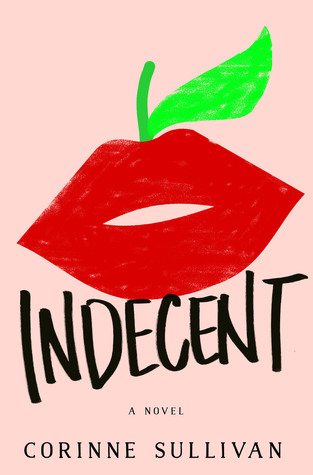 Expect a cross between Prep (Curtis Sittenfeld) and Notes on a Scandal (Zoe Heller). Imogene Abney, 22, is an apprentice teacher at Vandenberg School for Boys in New York State. She’s young and pretty enough to be met with innuendo and disrespect from her high school charges; she’s insecure enough about her acne to feel rejected by other apprentices. But Adam Kipling, who goes by “Kip,” seems different from any of the other people she’s thrown together with at Vandenberg. A fourth-year student, he’s only five years younger than she is, and he really seems to appreciate her for who she is. Their relationship proceeds apace, but nothing stays a secret for long around here. Being in Imogene’s head can feel a little claustrophobic because of her obsessions, but this is a racy, pacey read.
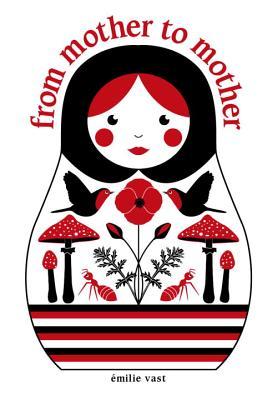
From Mother to Mother by Émilie Vast
 [Coming on March 20th from Charlesbridge Publishing (USA)]
This sweet, simple picture book for very young children (it will actually be a board book, though I read it as an e-book) was originally published in French. Based on Russian nesting dolls, it introduces the idea of ancestry, specifically multiple generations of women. I imagine a mother with a child sitting on her knee. Holding this book in one hand and a photo album in the other, she points to all the family members who have passed down life and love. Each two-page spread has a different color motif and incorporates flora and fauna on the design of the doll.
 I’m also currently partway through, and enjoying, Educated by Tara Westover [Coming on February 20th from Random House (USA) and February 22nd from Hutchinson (UK)], a striking memoir about being raised off grid in Idaho as the youngest of seven children of religious/survivalist parents – and never going to a proper school.
Coming tomorrow (my last post of the year): Some year-end statistics and 2018 reading goals.
Blog Tour Review: Little Fires Everywhere by Celeste Ng
I’m delighted to be helping to close out the UK blog tour for Little Fires Everywhere. Celeste Ng has set an intriguing precedent with her first two novels, 2014’s Everything I Never Told You and this new book, the UK release of which was brought forward by two months after its blockbuster success in the USA. The former opens “Lydia is dead. But they don’t know this yet.” The latter starts “Everyone in Shaker Heights was talking about it that summer: how Isabelle, the last of the Richardson children, had finally gone around the bend and burned the house down.” From the first lines of each novel, then, we know the basics of what happens: Ng doesn’t write mysteries in the generic sense. She doesn’t want us puzzling over whodunit; instead, we need to ask why, examining motivations and the context of family secrets.
 Little Fires Everywhere opens in the summer of 1997 in the seemingly idyllic planned community of Shaker Heights, Ohio: “in their beautiful, perfectly ordered city, […] everyone got along and everyone followed the rules and everything had to be beautiful and perfect on the outside, no matter what mess lay within.” That strict atmosphere will take some getting used to for single mother Mia Warren, a bohemian artist who has just moved into town with her fifteen-year-old daughter, Pearl. They’ve been nomads for Pearl’s whole life, but Mia promises that they’ll settle down in Shaker Heights for a while.
Mia and Pearl rent a duplex owned by Elena Richardson, a third-generation Shaker resident, local reporter and do-gooder, and mother of four stair-step teens. Pearl is fascinated by the Richardson kids, quickly developing an admiration of confident Lexie, a crush on handsome Trip, and a jokey friendship with Moody. Izzy, the youngest, is a wild card, but in her turn becomes enraptured with Mia and offers to be her photography assistant. Mia can’t make a living just from her art, so takes the occasional shift in a Chinese restaurant and also starts cleaning the Richardsons’ palatial home in exchange for the monthly rent.
The novel’s central conflict involves a thorny custody case: Mia’s colleague at the restaurant, Bebe Chow, was in desperate straits and abandoned her infant daughter, May Ling, at a fire station in the dead of winter. The baby was placed with the Richardsons’ dear friends and neighbors, the McCulloughs, who yearn for a child and have suffered multiple miscarriages. Now Bebe has gotten her life together and wants her daughter back. Who wouldn’t want a child to grow up in the comfort of Shaker Heights? But who would take a child away from its mother and ethnic identity? The whole community takes sides, and the ideological division is particularly clear between Mia and Mrs. Richardson (as she’s generally known here).
For all that Shaker Heights claims to be colorblind, race and class issues have been hiding under the surface and quickly come to the forefront. Mrs. Richardson’s journalistic snooping and Mia’s warm words – she seems to have a real knack for seeing into people’s hearts – are the two driving forces behind the plot, as various characters decide to take matters into their own hands and make their own vision of right and wrong a reality. Fire is a potent, recurring symbol of passion and protest: “Did you have to burn down the old to make way for the new?” Whether they follow the rules or rebel, every character in this novel is well-rounded and believable: Ng presents no clear villains and no easy answers.

The U.S. cover
There are perhaps a few too many coincidences, and a few metaphors I didn’t love, but I was impressed at how multi-layered this story is; it’s not the simple ethical fable it might at first appear. There are so many different shards in its mosaic of motherhood: infertility, adoption, surrogacy, pregnancy, abortion; estrangement, irritation, longing, pride. “It came, over and over, down to this: What made someone a mother? Was it biology alone, or was it love?” Ng asks. I also loved the late-1990s setting. It’s a time period you don’t often encounter in contemporary fiction, and Ng brings to life the ambiance of my high school years in a way I found convincing: the Clinton controversy, Titanic, the radio hits playing at parties, and so on.
Each and every character earns our sympathy here – a real triumph of characterization, housed in a tightly plotted and beautifully written novel you’ll race through. This may particularly appeal to readers of Curtis Sittenfeld, Pamela Erens and Lauren Groff, but I’d recommend it to any literary fiction reader. One of the best novels of the year.
My rating:
Little Fires Everywhere was published by Little, Brown UK on November 9th. My thanks to Grace Vincent for the review copy.
 Bookish Beck = Rebecca Foster. American transplant to England. Freelance proofreader and book reviewer.
 Bookish Beck