Nonfiction November Book Pairings: Autistic Husbands & The Ocean
Liz is the host for this week’s Nonfiction November prompt. The idea is to choose a nonfiction book and pair it with a fiction title with which it has something in common.
I came up with these two based on my recent reading:
An Autistic Husband
The Rosie Effect by Graeme Simsion (also The Rosie Project and The Rosie Result)
&
Disconnected: Portrait of a Neurodiverse Marriage by Eleanor Vincent
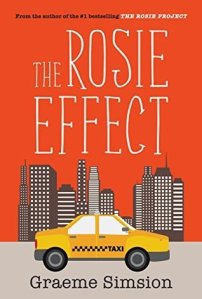 Graeme Simsion’s Don Tillman trilogy tells the odd-couple story of an autistic professor and how he falls in love with and marries a wholly unsuitable neurotypical woman. He turns this situation into romantic comedy. For Eleanor Vincent, it wasn’t so funny. She met her third husband, computer scientist Lars (a pseudonym), through Zydeco dancing when she was in her sixties. Though aware that he could be unemotional and act strangely, she found him chivalrous and sweet. They dated for a time but he hurt and confused her by asking for his apartment keys back. After a five-year period she calls their “Interregnum,” the two got back together and married. Despite their years of friendship, she was completely unprepared for what living with him would be like. “At the age of seventy-one, I had married a stranger,” she writes.
It didn’t help that Covid hit partway through their four-year marriage, nor that they each received a cancer diagnosis (cervical vs. prostate). But the problems were more with their everyday differences in responses and processing. During their courtship, she ignored some bizarre things he did around her family: he bit her nine-year-old granddaughter as a warning of what would happen if she kept antagonizing their cat, and he put a gift bag over his head while they were at the dinner table with her siblings. These are a couple of the most egregious instances, but there are examples throughout of how Lars did things she didn’t understand. Through support groups and marriage counselling, she realized how well Lars had masked his autism when they were dating – and that he wasn’t willing to do the work required to make their marriage succeed. The book ends with them estranged but a divorce imminent.
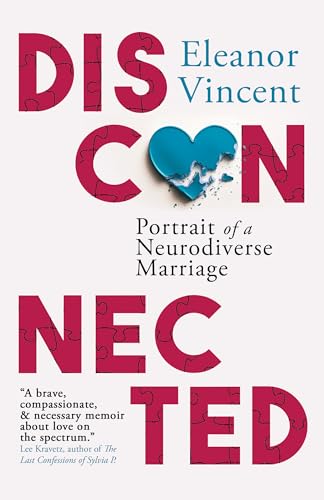 If this were purely carping about a husband’s weirdness, it might have been tedious or depressing. But Vincent doesn’t blame Lars, and she incorporates so much else in this short memoir, including a number of topics that are of particular interest to me. There’s her PTSD from a traumatic upbringing, her parents’ identity as closeted gay people, the complications around her father’s death, the tragedy of her older daughter’s death, as well as the more everyday matters of being a working single parent, finding an affordable property in California’s Bay Area, and blending households.
Vincent crafts engaging scenes with solid recreated dialogue, and I especially liked the few meta chapters revealing “What I Left Out” – a memoir is always a shaped narrative, while life is messy; this shows both. She is also honest about her own failings and occasional bad behavior. I probably could have done with a little less detail on their sex life, however.
This had more relevance to me than expected. While my sister and I were clearing our mother’s belongings from the home she shared with her second husband for the 16 months between their wedding and her death, our stepsisters mentioned to us that they suspected their father was autistic. It was, as my sister said, a “lightbulb” moment, explaining so much about our respective parents’ relationship, and our interactions with him as well. My stepfather (who died just 10 months after my mother) was a dear man, but also maddening at times. A retired math professor, he was logical and flat of affect. Sometimes his humor was off-kilter and he made snap, unsentimental decisions that we couldn’t fathom. Had they gotten longer together, no doubt many of the issues Vincent experienced would have arisen. (Read via BookSirens)
[173 pages]
The Ocean
Playground by Richard Powers
&
Rachel Carson and the Power of Queer Love by Lida Maxwell
The Blue Machine by Helen Czerski
Under the Sea Wind by Rachel Carson
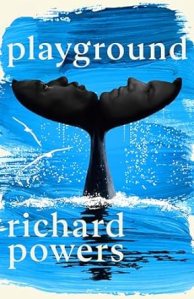 While I was less than enraptured with its artificial intelligence theme and narrative trickery, I loved the content about the splendour of the ocean in Richard Powers’s Booker Prize-longlisted Playground. Most of this comes via Evelyne Beaulieu, a charismatic French Canadian marine biologist (based in part on Sylvia Earle) who is on the first all-female submarine mission and is still diving in the South Pacific in her nineties. Powers explicitly references Rachel Carson’s The Sea Around Us. Between that and the revelation of Evelyne as a late-bloomer lesbian, I was reminded of Rachel Carson and the Power of Queer Love, a forthcoming novella-length academic study by Lida Maxwell that I have assessed for Foreword Reviews. Maxwell’s central argument is that Carson’s romantic love for a married woman, Dorothy Freeman, served as an awakening to wonder and connection and spurred her to write her greatest works.
After reading Playground, I decided to place a library hold on Blue Machine by Helen Czerski (winner of the Wainwright Writing on Conservation Prize this year), which Powers acknowledges as an inspiration that helped him to think bigger. I have also pulled my copy of Under the Sea Wind by Rachel Carson off the shelf as it’s high time I read more by her.
Previous book pairings posts: 2018 (Alzheimer’s, female friendship, drug addiction, Greenland and fine wine!) and 2023 (Hardy’s Wives, rituals and romcoms).
Six Degrees of Separation: From The Turn of the Screw to The Cider House Rules
This month we’re starting with The Turn of the Screw, a Gothic horror novella about a governess and her charges – and one of only two Henry James novels I’ve read (the other is What Maisie Knew; I’ve gravitated towards the short, atypical ones, and even in those his style is barely readable). Most of my links are based on title words this time, along with a pair of cover images.
#1 On our trip to Hay-on-Wye last month, I was amused to see in a shop a book called One Good Turn: A Natural History of the Screwdriver and the Screw (2000) by Witold Rybczynski. A bit of a niche subject and nothing I can ever imagine myself reading, but it’s somehow pleasing to know that it exists.

#2 I’m keen to try Muriel Spark again with The Driver’s Seat (1970), a suspense novella with a seam of dark comedy. I remember reading a review of it on Heaven Ali’s blog and thinking that it sounded deliciously creepy. My plan is to get it out from the university library to read and review for Novellas in November.
#3 Seating Arrangements by Maggie Shipstead was one of my favorite debut novels of 2012. An upper-middle-class family prepares for their heavily pregnant daughter’s wedding weekend on an island off Connecticut. Shipstead is great at capturing social interactions. There’s pathos plus humor here; I particularly liked the exploding whale carcass. I’m still waiting for her to come out with a worthy follow-up (2014’s Astonish Me was so-so).

#4 The cover lobsters take me to The Rosie Project (2013) by Graeme Simsion, the first and best book in his Don Tillman trilogy. A (probably autistic) Melbourne genetics professor, Don decides at age 39 that it is time to find a wife. He goes about it in a typically methodical manner, drawing up a 16-page questionnaire, but still falls in love with the ‘wrong’ woman.
#5 Earlier in the year I reviewed Cider with Rosie (1959) by Laurie Lee as my classic of the month and a food-themed entry in my 20 Books of Summer. It’s a nostalgic, evocative look at a country childhood. The title comes from a late moment when Rosie Burdock tempts the adolescent Lee with alcoholic cider and kisses underneath a hay wagon.
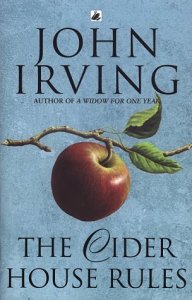
#6 My current reread is The Cider House Rules (1985), one of my favorite John Irving novels. Homer Wells is the one kid at the St. Cloud’s, Maine orphanage who never got adopted. Instead, he assists the director, Dr. Wilbur Larch, and later runs a cider factory. Expect a review in a few weeks – this will count as my Doorstopper of the Month.
Going from spooky happenings to apple cider, my chain feels on-brand for October!
Join us for #6Degrees of Separation if you haven’t already! (Hosted the first Saturday of each month by Kate W. of Books Are My Favourite and Best. Her introductory post is here.) Next month is a wildcard: start with a book you’ve ended a previous chain with.
Have you read any of my selections? Are you tempted by any you didn’t know before?
Pandemic Reading Strategies & Recommendations, Serious or Tongue-in-Cheek
If you’ve been spending time blog-hopping or on Twitter over the last few weeks, you will have seen countless riffs on this topic. Everyone’s pondering what’s best to read in these times. All we can get our hands on about plagues (Boccaccio, Camus, Defoe)? Allegories of similarly challenging worldwide disasters (WWII, 9/11)? Childhood favorites? Comfort reads? Funny books? Light, undemanding stuff? Rereads?
My general answer would be: as always, read whatever you want or can – anything that captures your attention is worthwhile. We’re under so much stress that our reading should be entirely unpressured. But to be a little more specific, I’ve gathered reading recommendations on a variety of topics, drawing on lists that others have made and linking to my own blog reviews where applicable.
(Some of these ideas are less serious than others.)
If you are brave enough to learn about zoonotic diseases:
 Spillover: Animal Infections and the Next Human Pandemic by David Quammen: This is top-notch scientific journalism: pacey, well-structured, and gripping. The best chapters are on Ebola and SARS; the SARS chapter, in particular, reads like a film screenplay, if this were a far superior version of Contagion. It’s a sobering subject, with some quite alarming anecdotes and statistics, but this is not scare-mongering for the sake of it; Quammen is frank about the fact that we’re still all more likely to get heart disease or be in a fatal car crash.
If you can’t look away from pandemic stories, historical or imagined:


I already had Philip Roth’s Nemesis (set in 1940s New Jersey amid a polio epidemic) out from the library because it was on the Wellcome Book Prize shortlist in 2011. I was also inspired to take Year of Wonders by Geraldine Brooks (set in the 1660s and featuring an English village that quarantined itself during the Plague) off the shelf. I’m nearing the end of these two and should have my reviews up next week.
You will see no one book referenced more than Station Eleven by Emily St. John Mandel. It’s a wholly believable dystopian novel in which 99% of the population has been wiped out by a pandemic. The remnant bands together not just to survive but to create and preserve art. “What was lost in the collapse: almost everything, almost everyone, but there is still such beauty.” (My full BookBrowse review from December 2014.)
See also this Publishers Weekly list of “13 Essential Pandemic Novels.”
If you’re feeling cooped up…
 Infinite Home by Kathleen Alcott: “Edith is a widowed landlady who rents apartments in her Brooklyn brownstone to an unlikely collection of humans, all deeply in need of shelter.” (I haven’t read it, but I do have a copy; now would seem like the time to read it!)
…yet want to appreciate the home you’re stuck in:


Years ago I read and loved At Home: A Short History of Private Life by Bill Bryson and Happier at Home by Gretchen Rubin. I can’t tell you anything more than that because it was before the days when I reviewed everything I read, but these are both reliable authors.
 I love the sound of A Journey Around My Room by Xavier de Maistre: “Finding himself locked in his room for six weeks, a young officer journeys around his room in his imagination, using the various objects it contains as inspiration for a delightful parody of contemporary travel writing and an exercise in Sternean picaresque.”
I’m also drawn to Home: The Story of Everyone Who Ever Lived in Our House by Julie Myerson, who combed archives for traces of all the former residents of her 1870s terraced house in Clapham.
If you’re struggling with being on your own:


The Lonely City by Olivia Laing: This remarkable book on outsider artists interweaves biography, art criticism and memoir. Laing is a tour guide into the peculiar, lonely crowdedness you find in a world city.
How to Be Alone by Sara Maitland: Maitland argues that although being alone is easy to achieve, there is an art to doing it properly, and solitude and loneliness are by no means the same thing. Profiling everyone from the Desert Fathers of early Christianity to the Romantic poets, she enumerates all the benefits that solitude confers.
Journal of a Solitude by May Sarton: A one-year account of her writing life in New Hampshire, this is Sarton’s best. The book dwells on the seasonal patterns of the natural world (shovelling snow, gardening, caring for animals) but also the rhythms of the soul – rising in hope but also falling into occasional, inevitable despair.
See also this Penguin UK list of books to read in self-isolation.
If you’ve been passing the time by baking…
 The City Baker’s Guide to Country Living by Louise Miller: As chief baker at the Sugar Maple Inn in Guthrie, Vermon, Olivia Rawlings settles into a daily routine of baking muffins, bread and cakes. This is a warm, cozy debut novel full of well-drawn secondary characters and romantic possibilities. There’s nothing clichéd about it, though. Livvy is a sassy narrator, and I loved how Miller documents the rhythms of the small-town country year, including tapping the maple trees in the early spring and a pie baking contest at the summer county fair.
 Sourdough by Robin Sloan: Lois Clary, a Bay Area robot programmer, becomes obsessed with baking. “I needed a more interesting life. I could start by learning something. I could start with the starter.” She attempts to link her job and her hobby by teaching a robot arm to knead the bread she makes for a farmer’s market. Madcap adventures ensue. It’s a funny and original novel and it makes you think, too – particularly about the extent to which we should allow technology to take over our food production.
…but can’t find yeast or eggs in the shop:
Yeast: A Problem by Charles Kingsley (1851). Nope, I haven’t read it, but our friend has a copy in his Everyman’s Library collection and the title makes us laugh every time we see it.
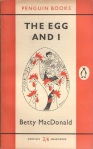 The Egg & I by Betty Macdonald: MacDonald and her husband started a rural Washington State chicken farm in the 1940s. Her account of her failure to become the perfect farm wife is hilarious. The voice reminded me of Doreen Tovey’s: mild exasperation at the drama caused by household animals, neighbors, and inanimate objects. “I really tried to like chickens. But I couldn’t get close to the hen either physically or spiritually, and by the end of the second spring I hated everything about the chicken but the egg.” Perfect pre-Easter reading.
And here are a few lists I put together for Hungerford Bookshop:
If you need a laugh:
Fiction:
Lucky Jim by Kingsley Amis
The Darling Buds of May (and sequels) by H.E. Bates
Ella Minnow Pea by Mark Dunn
Heartburn by Nora Ephron
 Cold Comfort Farm by Stella Gibbons
Anything by Nick Hornby
Three Men in a Boat by Jerome K. Jerome
Anything by David Lodge
Dear Committee Members by Julie Schumacher
The Rosie Project (and sequels) by Graeme Simsion
To Say Nothing of the Dog by Connie Willis
Nonfiction:
 Anything by Bill Bryson
21st-Century Yokel by Tom Cox
Anything by Gerald Durrell
Anything by Nora Ephron (essays)
This Is Going to Hurt by Adam Kay
Priestdaddy by Patricia Lockwood
Dear Lupin by Roger Mortimer
Anything by David Sedaris
Little Failure by Gary Shteyngart
If you want to disappear into a long book:


The Heart’s Invisible Furies by John Boyne
Jonathan Strange & Mr Norrell by Susanna Clarke
David Copperfield by Charles Dickens
Middlesex by Jeffrey Eugenides
The Crimson Petal and the White by Michel Faber
The Signature of All Things by Elizabeth Gilbert
The Nix by Nathan Hill
We, the Drowned by Carsten Jensen
Mary Ann Sate, Imbecile by Alice Jolly
The Poisonwood Bible by Barbara Kingsolver
The Wind-Up Bird Chronicle by Haruki Murakami
The Sparrow by Mary Doria Russell
American Wife by Curtis Sittenfeld
East of Eden by John Steinbeck
The Goldfinch by Donna Tartt
Cutting for Stone by Abraham Verghese
The Paying Guests by Sarah Waters
If you’re looking for some hope:
 Almost Everything: Notes on Hope by Anne Lamott
Hope in the Dark by Rebecca Solnit
Hope Dies Last: Making a Difference in an Indifferent World by Studs Terkel
I’ve been doing a combination of the above strategies, reading about historical plagues in fiction and nonfiction but also doing some rereading and consuming lighter genre stuff like mysteries. I continue to dip into new releases, and I enjoy the ongoing challenge of my reading projects. Right now, I’m working through a few current Women’s Prize longlistees, as well as some past Wellcome Book Prize nominees and Women’s Prize winners, and I’m about to start a third #1920Club title. Plus I’m already thinking about my 20 Books of Summer (I’m considering an all-foodie theme).
Further reading:
- Book Riot pinpoints seven categories of books to read during a pandemic.
- Clare surveys the post-pandemic literary landscape.
- Elle logs her pandemic reading and viewing.
- Laura discusses pandemic reading strategies and distraction reading.
- Literary Hub looks at parallel situations, including post-9/11 reads, to make predictions, and asks what your “go-to quarantine read” says about you. (I’ve read Kindred most recently, but I wouldn’t say that describes me.)
- Simon thinks about what we can and should read.
- Susan highlights some comfort reads.
What are your current reading strategies?
Continuing the Story: Why I’m Wary of Sequels and Series, with Some Exceptions
Most of the time, if I learn that a book has a sequel or is the first in a series, my automatic reaction is to groan. Why can’t a story just have a tidy ending? Why does it need to sprawl further, creating a sense of obligation in its readers? Further adventures with The Hundred-Year-Old Man Who Climbed Out the Window? Returning to the world of The Handmaid’s Tale? No, thank you.
It was different when I was a kid. I couldn’t get enough of series: the Little House on the Prairie books, Encyclopedia Brown, Nancy Drew, the Saddle Club, Redwall, the Baby-Sitters Club, various dragon series, Lilian Jackson Braun’s Cat Who mysteries, the Anne of Green Gables books… You name it, I read it. I think children, especially, gravitate towards series because they’re guaranteed more of what they know they like. It’s a dependable mold. These days, though, I’m famous for trying one or two books from a series and leaving the rest unfinished (Harry Potter: 1.5 books; Discworld: 2 books at random; Jim Butcher’s Dresden Files: 1 book; the first book of crime series by M.J. Carter, Judith Flanders and William Shaw).
But, like any reader, I break my own rules all the time – even if I sometimes come to regret it. I recently finished reading a sequel and I’m now halfway through another. I’ve even read a few high-profile sci fi/fantasy trilogies over the last eight years, even though with all of them I liked each sequel less than the book that went before (Margaret Atwood’s MaddAddam books, Chris Beckett’s Dark Eden series and Deborah Harkness’s All Souls Trilogy).
A later book in a series can go either way for me – surpass the original, or fail to live up to it. Nonfiction sequels seem more reliable than fiction ones, though: if I discover that a memoirist has written a follow-up volume, I will generally rush to read it.
So, what would induce me to pick up a sequel?
I want to know what happens next.
WINNERS:
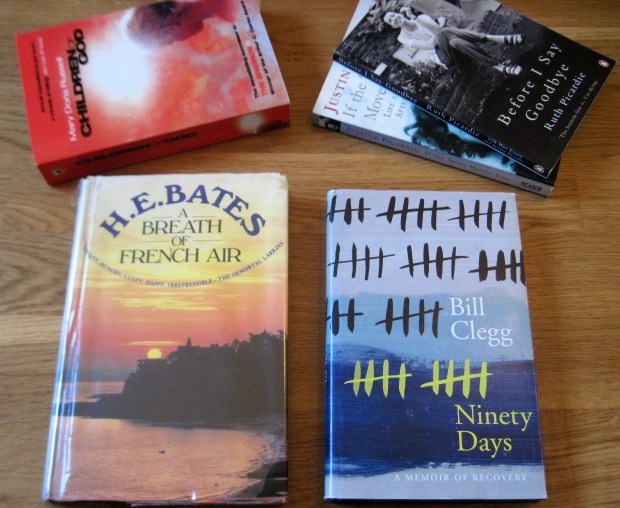
After reading Ruth Picardie’s Before I Say Goodbye, I was eager to hear from her bereaved sister, Justine Picardie. Ruth died of breast cancer in 1997; Justine writes a journal covering 2000 to 2001, asking herself whether death is really the end and if there is any possibility of communicating with her sister and other loved ones she’s recently lost. If the Spirit Moves You: Life and Love after Death is desperately sad, but also compelling.
 Graeme Simsion’s Rosie series has a wonderfully quirky narrator. When we first meet him, Don Tillman is a 39-year-old Melbourne genetics professor who’s decided it’s time to find a wife. Book 2 has him and Rosie expecting a baby in New York City. I’m halfway through Book 3, in which in their son is 11 and they’re back in Australia. Though not as enjoyable as the first, it’s still a funny look through the eyes of someone on the autistic spectrum.
Edward St. Aubyn’s Never Mind, the first Patrick Melrose book, left a nasty aftertaste, but I was glad I tried again with Bad News, a blackly comic two days in the life of a drug addict.
LOSERS:
Joan Anderson’s two sequels to A Year by the Sea are less engaging, and her books have too much overlap with each other.
Perhaps inevitably, Bill Clegg’s Ninety Days, about getting clean, feels subdued compared to his flashy account of the heights of his drug addiction, Portrait of an Addict as a Young Man.
 Patrick Leigh Fermor’s Between the Woods and the Water was an awfully wordy slog compared to A Time of Gifts.
Mary Doria Russell’s The Sparrow was one of my favorite backlist reads last year. I only read the first 60 pages of Children of God, though. It was a recent DNF after leaving it languishing on my pile for many months. While I was, of course, intrigued to learn that (SPOILER) a character we thought had died is still alive, and it was nice to see broken priest Emilio Sandoz getting a chance at happiness back on Earth, I couldn’t get interested in the political machinations of the alien races. Without the quest setup and terrific ensemble cast of the first book, this didn’t grab me.
I want to spend more time with these characters.
WINNERS:
Simon Armitage’s travel narrative Walking Away is even funnier than Walking Home.
 I’m as leery of child narrators as I am of sequels, yet I read all 10 Flavia de Luce novels by Alan Bradley: quaint mysteries set in 1950s England and starring an eleven-year-old who performs madcap chemistry experiments and solves small-town murders. The Dead in Their Vaulted Arches (#6) was the best, followed by Thrice the Brinded Cat Hath Mew’d (#8).
Roald Dahl’s Going Solo is almost as good as Boy.
Alexandra Fuller’s Leaving Before the Rains Come is even better than Don’t Let’s Go to the Dogs Tonight.
Likewise, Sarah Moss’s Signs for Lost Children, about a female doctor in the 1880s, is even better than Bodies of Light.
Doreen Tovey’s Cats in May is just as good as Cats in the Belfry.
LOSERS:
H. E. Bates’s A Breath of French Air revisits the Larkins, the indomitably cheery hedonists introduced in The Darling Buds of May, as they spend a month abroad in the late 1950s. France shows off its worst weather and mostly inedible cuisine; even the booze is barely tolerable. Like a lot of comedy, this feels slightly dated, and maybe also a touch xenophobic.
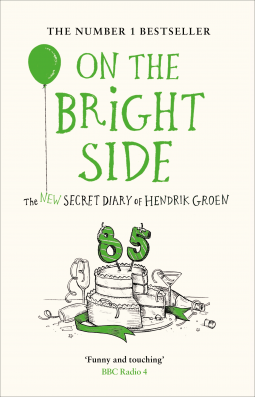 The first Hendrik Groen diary, about an octogenarian and his Old-But-Not-Dead club of Amsterdam nursing home buddies, was a joy, but the sequel felt like it would never end.
I loved Marilynne Robinson’s Gilead; I didn’t need the two subsequent books.
The Shakespeare Requirement, Julie Schumacher’s sequel to Dear Committee Members, a hilarious epistolary novel about an English professor on a Midwest college campus, was only mildly amusing; I didn’t even get halfway through it.
I finished Jane Smiley’s Last Hundred Years trilogy because I felt invested in the central family, but as with the SFF series above, the later books, especially the third one, were a letdown.
What next? I’m still unsure about whether to try the other H. E. Bates and Edward St. Aubyn sequels. I’m thinking yes to Melrose but no to the Larkins. Olive Kitteridge, which I’ve been slowly working my way through, is so good that I might make yet another exception and seek out Olive, Again in the autumn.
Sequels: yea or nay?
All the Books I’ve Abandoned So Far This Year
Last year’s abandoned books posts were popular ones – strangely so considering that, instead of giving recommendations like usual, I was instead listing books I’d probably steer you away from. This is such a subjective thing, though; I know that at least a few of the books I discuss below (especially the Mervyn Peake and Rachel Cusk) have admirers among my trusted fellow bloggers. So consider this a record of some books that didn’t work for me: take my caution with a grain of salt, and don’t let me put you off if you think there’s something here that you’d really like to try. (For some unfinished books I give ratings, while for others where I haven’t read far enough to get a good sense of the contents I refrain from rating. This list is in chronological order of my reading rather than alphabetical by title or author.)
 Titus Groan by Mervyn Peake: Vivid scene setting and amusingly exaggerated characters, but I couldn’t seem to get anywhere. It takes over 50 pages for one servant to tell another that the master has had a son?! Hearing that the book only lasts until Titus’s second birthday made me fear the next 400+ pages would just be more of the same. I bought the whole trilogy secondhand, so I hope I’ll be successful on a future attempt. (Set aside at page 62.)
 Seven Seasons in Siena: My Quixotic Quest for Acceptance among Tuscany’s Proudest People, by Robert Rodi: I read the first 49 pages but found the information about the city’s different districts and horse races tedious. Favorite passage: “it’s what’s drawn me to Italians in general—their theatricality, their love of tradition, their spirit. Ever since my first trip to Rome, some ten years ago, I’ve found the robustness of the Italians’ appetites (for food, for music, for fashion) to be a welcome antidote to the dismaying anemia of modern American culture.”
A Book about Love by Jonah Lehrer: Read the first 31% of the Kindle book. Featured in my Valentine’s Day post about “Love” titles. 
 Pondlife: A Swimmer’s Journal by Al Alvarez: I read the first 57 pages but found the entries fairly repetitive. The book spans nine years, but up to that point it was all set in 2002, when Alvarez was 73, and he reported so frequently that the conditions (weather, etc.) at the Hampstead Heath ponds didn’t differ enough to keep this interesting. Unless he’s traveling, you can count on each entry remarking on the traffic getting there, the relative scarcity or overabundance of fellow swimmers at the pond, the chilly start and the ultimately invigorating, calming effect of the water. Impressive that he’d been taking early-morning swims there since age 11, though. Favorite line (from a warm, late June day): “the water is like tepid soup – duck soup with swan-turd croutons.”
 The Best of Adam Sharp by Graeme Simsion: I read the first 36 pages of a library copy and gave up in grave disappointment. Compared to the two Rosie books, this felt like it had no spark. It’s just lots of name-dropping of 1960s and ’70s songs. I felt no connection to either Adam’s current life in England or his memories of his nascent relationship with soap actress Angelina back in Australia.
 The Wild Other: A Memoir by Clover Stroud: Normally I love memoirs that center on bereavement or major illness, but there’s so much going on in this book that drowns out the story of her mother falling off her horse and suffering a TBI when Stroud was 16. For instance, there’s a lot about the blended family she grew up in, embarrassing detail about her early sexual experiences, and an account of postnatal depression that plunges her back into memories of her mother’s accident. “Horses are the source of powerful magic that’s changed my life,” Stroud asserts, so she talks a lot about both real horses and chalk figures of them, but that’s not the same as affirming the healing power of nature, which is how this book has been marketed. Well written, yet I couldn’t warm to the story of a posh Home Counties upbringing, which means I never got as far as the more tantalizing contents set in Ireland and Texas. (Read the first 78 pages.)
 The Evening Road by Laird Hunt: I read about the first 50 pages, skimmed the rest of the first part, and barely glanced at the remainder. Hunt’s previous novel, Neverhome, was a pretty unforgettable take on the Civil War narrative. This latest book is trying to do something new with Jim Crow violence. In the 1920s–30s history Hunt draws on, lynchings were entertainment in the same way other forms of execution were in previous centuries; buses have even been put on to take people to “the show” up at Marvel, Indiana. Hateful Ottie Lee narrates the first half of the novel as she rides with her handsy boss Bud Lancer and her unappealing husband Dale to see the lynching. Their road trip includes a catfish supper, plenty of drinking, and a stop at a dance hall. It ends up feeling like a less entertaining The Help. A feel-good picaresque about a lynching? It might work if there were a contrasting tone, a hint that somewhere in this fictional universe there is an appropriate sense of horror about what is happening. I think Hunt’s mistake is to stick with Ottie Lee the whole time rather than switching between her and Calla Destry (the black narrator of the second half) or an omniscient narrator. I’d long given up on the novel by the time Calla came into play.
 Outline by Rachel Cusk: I read the first 66 pages before setting this aside. I didn’t dislike the writing; I even found it quite profound in places, but there’s not enough story to peg such philosophical depth on. This makes it the very opposite of unputdownable. Last year I read the first few pages of Aftermath, about her divorce, and found it similarly detached. In general I just think her style doesn’t connect with me. I’m unlikely to pick up another of her books, although I have had her memoir of motherhood recommended. Lines I appreciated: “your failures keep returning to you, while your successes are something you always have to convince yourself of”; “it’s a bit like marriage, he said. You build a whole structure on a period of intensity that’s never repeated. It’s the basis of your faith and sometimes you doubt it, but you never renounce it because too much of your life stands on that ground.”
Last but not least, Our Mutual Friend by Charles Dickens, in which I barely made it a few chapters.
Only nine in five months – not too shabby? There’s also a handful of other books that I decided to skim instead of read in their entirety, though.
I’ll be interested to hear if you’ve read any of these books – or plan to read them – and believe that they are worth persisting with.
Making Plans for March
How is it March already?! The last weekend of February flew by with a trip to Exeter to visit friends. Between Saturday and Sunday we spotted: a humpback whale off the Devon coast at Slapton (occasioning many cries of “Thar she blows!”), a giant pug painted on an underpass, a mighty fine cream tea, and far too many secondhand books at Book-Cycle.


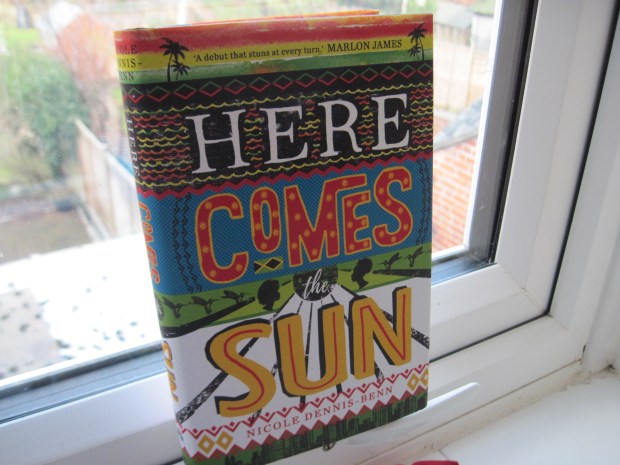
For me the month of March holds an alarming number of deadlines for book reviews: 15, to be precise. Yipes! Luckily I’ve already managed to submit two of these reviews, and I plan to write a third this afternoon. Most of those are as part of my paid work, but I’ll also be participating in two blog tours for nonfiction books on adoption and foxes, respectively, and contributing a review of Here Comes the Sun by Nicole Dennis-Benn to Shiny New Books.
As to other planned blog posts for the month…
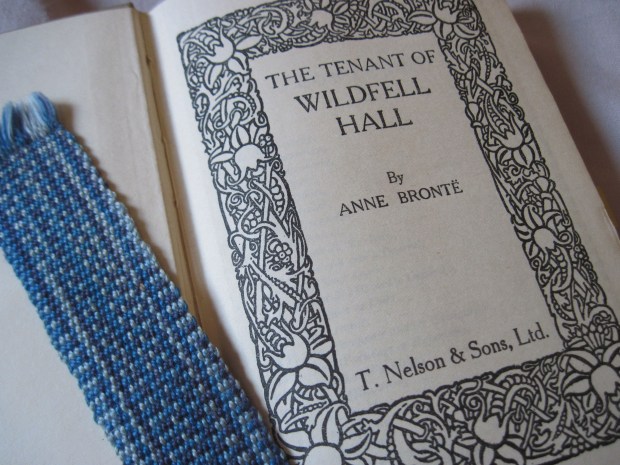
- Thanks to your comments I’ve started The Tenant of Wildfell Hall as my monthly classic (27 pages in and I’m loving it already).
- I’m doing some thematic reading for World Kidney Day on the 9th.
- I’m thinking of getting my first Haruki Murakami book, The Wind-Up Bird Chronicle, out from the library as my doorstopper of the month.
- I’ll be reviewing Narcissism for Beginners by Martine McDonagh (terrific) and The Family Gene by Joselin Linder (haven’t started yet).
- A couple more books may turn up from publishers if I’m lucky.
Some other themed reading challenges are underway but will probably roll over to future months.
Today I’m picking up three library holds: The Good People by Hannah Kent, The Best of Adam Sharp by Graeme Simsion and Days Without End by Sebastian Barry (this one’s for a BookBrowse review due in April). All are likely to be requested after me, so somehow I have to fit them in during the next three weeks. I do hope they’re quick reads!
So, a busy month – back to the reading! How does the month look for you?
The 2017 Releases I’m Most Excited About
2017 hasn’t even begun and already I’m overwhelmed by the quantity and quality of new books to be released. This is by no means a full picture of what’s coming out next year; it’s only 30 titles that I happen to have heard about and/or know I want to seek out. The descriptions are taken from the publisher blurbs on Goodreads, NetGalley or Edelweiss. Some of these I already have access to in galley form; others I’ll be doing my darndest to get hold of! (Within categories, titles are in alphabetical order by author rather than by publication date.)
ASSIGNED
English Animals by Laura Kaye (for the blog tour) [Jan. 12, Little, Brown UK]: “When Mirka [from Slovakia] gets a job in a country house in rural England, she has no idea of the struggle she faces to make sense of a very English couple, and a way of life that is entirely alien to her.”
 Pachinko by Min Jin Lee (for BookBrowse) [Feb. 7, Grand Central]: “Pachinko follows one Korean family through the generations, beginning in [the] early 1900s. … [A] sweeping saga of an exceptional family in exile from its homeland and caught in the indifferent arc of history.”
No One Is Coming to Save Us by Stephanie Watts Powell (for the Pittsburgh Post-Gazette) [Apr. 4, Ecco]: “The Great Gatsby brilliantly recast in the contemporary South: a powerful first novel about an extended African-American family and their colliding visions of the American Dream.”
The Twelve Lives of Samuel Hawley by Hannah Tinti (for The Bookbag) [Mar. 28, Tinder Press]: “A father protects his daughter from the legacy of his past and the truth about her mother’s death in this thrilling new novel … Both a coming-of-age novel and a literary thriller, The Twelve Lives of Samuel Hawley explores what it means to be a hero, and the cost we pay to protect the people we love most.”
NOVELS (all by authors I’ve enjoyed in the past)
Greatest Hits by Laura Barnett [June 15, W&N]: “Cass Wheeler [is] a British singer-songwriter, hugely successful since the early 70s … Her task is to choose 16 songs from among the hundreds she has written … for a uniquely personal Greatest Hits record”
The Idiot by Elif Batuman [Mar. 14, Penguin]: “1995: Selin, the daughter of Turkish immigrants, arrives for her freshman year at Harvard. … With superlative emotional and intellectual sensitivity, mordant wit, and pitch-perfect style, Batuman dramatizes the uncertainty of life on the cusp of adulthood.”
The Hearts of Men by Nickolas Butler [Mar. 7, Ecco]: “Nelson, irrevocably scarred from the Vietnam War, becomes Scoutmaster of Camp Chippewa, while Jonathan marries, divorces, and turns his father’s business into a highly profitable company. … [A] sweeping, panoramic novel about the slippery definitions of good and evil, family and fidelity”
New Boy by Tracy Chevalier [May 16, Hogarth]: “The tragedy of Othello is transposed to a 1970s suburban Washington schoolyard, where kids fall in and out of love with each other before lunchtime, and practice a casual racism picked up from their parents and teachers.”
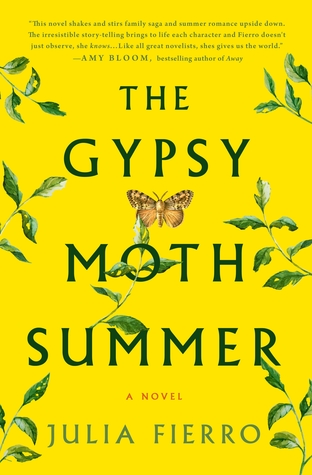 Gypsy Moth Summer by Julia Fierro [June 6, St. Martin’s]: “It is the summer of 1992 and a gypsy moth invasion blankets Avalon Island. … The Gypsy Moth Summer is about love, gaps in understanding, and the struggle to connect: within families; among friends; between neighbors and entire generations.” – Plus, get a load of that gorgeous cover!
Grief Cottage by Gail Godwin [June 6, Bloomsbury USA]: “Grief Cottage is the best sort of ghost story, but it is far more than that—an investigation of grief, remorse, and the memories that haunt us. The power and beauty of this artful novel wash over the reader like the waves on a South Carolina beach.”
The Evening Road by Laird Hunt [Feb. 7, Little, Brown & Co.]: “Reminiscent of the works of Louise Erdrich, Edward P. Jones and Marilynne Robinson, The Evening Road is the story of two remarkable women on the move through an America riven by fear and hatred, and eager to flee the secrets they have left behind.”
 The Awkward Age by Francesca Segal [May 4, Chatto & Windus]: “In a Victorian terraced house, in north-west London, two families have united in imperfect harmony. … This is a moving and powerful novel about the modern family: about starting over; about love, guilt, and generosity; about building something beautiful amid the mess and complexity of what came before.” – Sounds like Ann Patchett’s Commonwealth…
The Best of Adam Sharp by Graeme Simsion [Feb. 9, Penguin]: “The Best of Adam Sharp is about growing old and feeling young, about happy times and sad memories, about staying together and drifting apart, but most of all, it’s about how the music we make together creates the soundtrack that shapes our lives.” – Sounds a lot like the Barnett!
SHORT STORIES (also by authors I’ve enjoyed in the past)
The Dinner Party by Joshua Ferris: [May 2, Little, Brown & Co.]: “Full of the keenly observed, mordant wit that characterizes his beloved, award-winning novels, the stories in The Dinner Party are about people searching for answers in the aftermath of life’s emotional fissures”
Bad Dreams and Other Stories by Tessa Hadley [May 16, Harper]: “Hadley has proven herself to be the champion of revealing the hidden depths in the deceptively simple. In these short stories it’s the ordinary things that turn out to be most extraordinary: the history of a length of fabric or a forgotten jacket.”
NOVELS BY AUTHORS NEW TO ME
 A Separation by Katie Kitamura [Feb. 7, Riverhead Books]: “A mesmerizing, psychologically taut novel about a marriage’s end and the secrets we all carry.”
Hame by Annalena McAfee (Mrs. Ian McEwan) [Feb. 9, Harvill Secker]: “Mhairi McPhail dismantles her life in New York and moves with her 9-year-old daughter, Agnes, to the remote Scottish island of Fascaray. Mhairi has been commissioned to write a biography of the late Bard of Fascaray, Grigor McWatt, a cantankerous poet with an international reputation.”
NONFICTION: memoirs
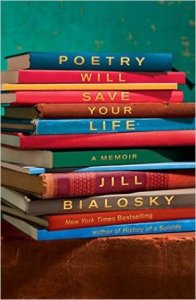 Poetry Can Save Your Life: A Memoir by Jill Bialosky [June 13, Atria]: “[A]n unconventional coming-of-age memoir organized around the 43 remarkable poems that gave her insight, courage, compassion, and a sense of connection at pivotal moments in her life.”
Between Them: Remembering My Parents by Richard Ford [May 2, Harper Collins]: “Ford brings his trademark candor, wit, and empathetic storytelling to the most intimate of landscapes: that of his love for two people who remain a mystery. Mining poignant details of his life in the American South during some iconic periods of the 20th century, Between Them illuminates the writer’s past as well as his beliefs on memory, relationships, and self-knowledge.”
The Mighty Franks: A Family Memoir by Michael Frank [May 16, Farrar, Straus and Giroux]: “A psychologically acute memoir about an unusual and eccentric Hollywood family.”
Sick: A Life of Lyme, Love, Illness, and Addiction by Porochista Khakpour [Aug. 8, Harper Perennial]: “In the tradition of Brain on Fire and The Empathy Exams, an honest, beautifully rendered memoir of chronic illness, misdiagnosis, addiction, and the myth of full recovery that details author Porochista Khakpour’s struggles with late-stage Lyme disease.”
A Stitch of Time: The Year a Brain Injury Changed My Language and Life by Lauren Marks [May 2, Simon & Schuster]: “Lauren Marks was twenty-seven, touring a show in Scotland with her friends, when an aneurysm ruptured in her brain and left her fighting for her life. … [A]n Oliver Sacks-like case study of a brain slowly piecing itself back together”
Homing Instincts: Early Motherhood on a Midwestern Farm by Sarah Menkedick [May 2, Pantheon]: “Fresh, intimate, and radiantly meditative, Homing Instincts is the story of one woman’s ‘coming of age’ as a first-time parent on her family’s rural Ohio farm.”
My Jewish Year: 18 Holidays, One Wondering Jew by Abigail Pogrebin [Mar. 14, Fig Tree Books]: “Although she grew up following some holiday rituals, Pogrebin realized how little she knew about their foundational purpose and contemporary relevance; she wanted to understand what had kept these holidays alive and vibrant, some for thousands of years. Her curiosity led her to embark on an entire year of intensive research, observation, and writing about the milestones on the religious calendar.”
 Theft by Finding: Diaries (1977–2002) by David Sedaris [May 30, Little, Brown & Co.]: “[F]or the first time in print: selections from the diaries that are the source of his remarkable autobiographical essays.”
How to Make a French Family: A Memoir of Love, Food, and Faux Pas by Samantha Vérant [Apr. 4, Sourcebooks]: “When Samantha is given a second chance at love at the age of forty, she moves to southwestern France, thinking she’s prepared for her new role in life as an instant American wife and stepmom. It turns out, though, that making a French family takes more than just good intentions and a quick lesson in croissant-baking.”
NONFICTION: poetry, biography, essays, travel
Eat This Poem: A Literary Feast of Recipes Inspired by Poetry by Nicole Gulotta [Mar. 21, Roost Books]: “The twenty-five inspiring poems in this book—from such poets as Marge Piercy, Louise Glück, Mark Strand, Mary Oliver, Billy Collins, Jane Hirshfield—are accompanied by seventy-five recipes that bring the richness of words to life in our kitchen, on our plate, and through our palate.”
Mozart’s Starling by Lyanda Lynn Haupt [May 16, Little, Brown & Co.]: “A charming story of Mozart and his pet starling, along with a natural history of the bird.”
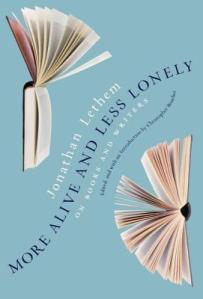 More Alive and Less Lonely: On Books and Writers by Jonathan Lethem [Mar. 14, Melville House]: “[C]ollects more than a decade of Lethem’s finest writing on writing, with new and previously unpublished material, including: impassioned appeals for forgotten writers and overlooked books, razor-sharp essays, and personal accounts of his most extraordinary literary encounters and discoveries.”
The Not-Quite States of America by Doug Mack [Feb. 14, W.W. Norton]: “American Samoa, Guam, Puerto Rico, the Northern Mariana Islands, and the U.S. Virgin Islands—and their 4 million people—are often forgotten, even by most Americans. … When Doug Mack realized just how little he knew about the territories, he set off on a globe-hopping quest covering more than 30,000 miles to see them all.”
What 2017 books are you most looking forward to?
Which of these interest you?
Review: The First Bad Man, Miranda July
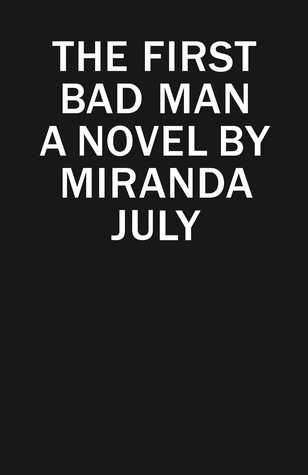 Scribner sent me a copy of this one entirely at random. I had barely heard of the author (an indie filmmaker and visual artist) and knew nothing about the book before starting it – which is probably for the best given that a simple synopsis makes it sound even weirder than it really is and would likely have turned me off. That black-and-white cover doesn’t really give you any clues, either, though when you open it up you get the riotously colored modern art swirls of the endpapers. You could think of the design as emblematic of the book itself: unpromising from the outside but reasonably rewarding once you get into it.
Cheryl Glickman is a neurotic 43-year-old manager at Open Palm, a Los Angeles area women’s self-defense organization that now mostly runs fitness classes. Her obsessive personality comes through with her devotion to “the system,” a strict minimalism that involves as few possessions as possible, plus reusing everything to save time and increase efficiency, and her crush on Phillip Bettelheim, an odious colleague 22 years her senior.
The book opens with two key events: Phil recommends she undergo chromotherapy for the globus in her throat; and her bosses con her into hosting their 21-year-old daughter, Clee, who seems to do nothing but lie around watching TV. The color therapy morphs into more general therapy with Ruth-Anne, while the unwanted houseguest changes Cheryl’s life forever, though not at all in the way one might expect.

Open up the dull cover and you get the colorful surprise of the endpapers.
“What was the name of the situation I was in? What category was this?” Cheryl wonders to herself. Clee messes with her system and starts mocking and even physically abusing Cheryl. Instead of kicking her out, though, Cheryl codifies their fights into reenactments of some of Open Palm’s 1990s self-defense videos (the title phrase comes from one of these scenarios).
And then things get sexual. First Phil starts texting about his infatuation with a 16-year-old, asking permission to make a move. Next Cheryl starts an intense masturbation campaign, imagining Clee in various pornographic situations. Sometimes Cheryl pretends she is Phil diddling Clee. To take her mind off things, Ruth-Anne suggests that Cheryl sing. She chooses a David Bowie song.
(Still with me?)
Cheryl has conflicted feelings about Clee. She likes the physical closeness of their combative relationship. At the same time, she’s disgusted by Clee’s laziness and smelly feet. Still, she’s fixated. “Her cowlike vacuousness didn’t really bother me anymore. Or it didn’t matter—her personality was just a little piece of parsley decorating warm tawny haunches.”
Eventually Cheryl wakes up to the reality that she is “a middle-aged woman who couldn’t keep her hands off herself.” The first half of the book is about fantasy and fabrication. “Real comes and goes and isn’t very interesting,” as Ruth-Anne says. In the second, though, things swiftly turn concrete when Clee realizes she’s pregnant. Cheryl takes on an advisory and later a supportive role; “I’d been her enemy, then her mother, then her girlfriend. That was three lifetimes right there.”
Does Clee love Cheryl? Does Cheryl love Clee? It’s hard to say; “maybe that was the point of love: not to think.” Regardless, all of a sudden, Cheryl finds herself a mother. “[Clee] was the worst possible person to do this with—that was evident now, but what could I do?” July herself had a new baby at the time of writing this novel, which accounts for how authentic the Jack sections feel. It’s a bit of an aimless story, but watching Cheryl’s development is certainly interesting. I could have done without most of the Phil stuff, but it turns out he’s important to the plot.
If I had to compare July’s style to anyone else’s, it would be Douglas Coupland. At times Cheryl was also a bit like Don Tillman in The Rosie Effect, what with her matter-of-fact recounting of Jack’s fetal development. Blend the voyeuristic raunchiness of The Heart Goes Last with the uncomfortable physical reality of After Birth, two novels I’ve previously reviewed on this blog, and you get an idea of the dynamic at work here.
I can’t say I entirely enjoyed the book; I don’t always appreciate quirky-for-quirkiness’-sake. However, my utter lack of expectations was a good thing, and I thought July did a solid job of making her somewhat unpleasant characters sympathetic by making them go through one of life’s central challenges: parenthood. She also comes up with some delightfully off-the-wall sentences, as in my favorite passage, in which Cheryl vocalizes her thoughts to baby Jack:
“You are a sweet potato.”This sounded literal, as if I was letting him know he was a root vegetable, a tuber. “You’re a baby,” I added, just in case there was any confusion on that last point.
My rating: 
Have you ever read a book by a celebrity known for their achievements in a different field? What did you think?
 Bookish Beck = Rebecca Foster. American transplant to England. Freelance proofreader and book reviewer.
 Bookish Beck