Book Serendipity, June to Mid-August 2024
I call it “Book Serendipity” when two or more books that I read at the same time or in quick succession have something in common – the more bizarre, the better. This is a regular feature of mine every couple of months. Because I usually have 20–30 books on the go at once, I suppose I’m more prone to such incidents. People frequently ask how I remember all of these coincidences. The answer is: I jot them on scraps of paper or input them immediately into a file on my PC desktop; otherwise, they would flit away!
The following are in roughly chronological order.
- A self-induced abortion scene in Recipe for a Perfect Wife by Karma Brown and Sleeping with Cats by Marge Piercy.
- A woman who cleans buildings after hours, and a character named Tova who lives in the Seattle area in A Reason to See You Again by Jami Attenberg and Remarkably Bright Creatures by Shelby Van Pelt.
- Flirting with a surf shop employee in Sandwich by Catherine Newman and Remarkably Bright Creatures by Shelby Van Pelt.
- Living in Paris and keeping ticket stubs from all films seen in Paris Trance by Geoff Dyer and The Invention of Hugo Cabret by Brian Selznick.
- A schefflera (umbrella tree) is mentioned in Cheri by Jo Ann Beard and Company by Shannon Sanders.

- The Plague by Albert Camus is mentioned in Knife by Salman Rushdie and Stowaway by Joe Shute.
- Making egg salad sandwiches is mentioned in Cheri by Jo Ann Beard and Sandwich by Catherine Newman.
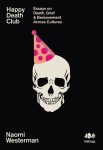
- Pet rats in Stowaway by Joe Shute and Happy Death Club by Naomi Westerman. Rats are also mentioned in Mammoth by Eva Baltasar, The Tale of Despereaux by Kate DiCamillo, and The Colour by Rose Tremain.
- Eels feature in Our Narrow Hiding Places by Kristopher Jansma, Late Light by Michael Malay, and The Colour by Rose Tremain.
- Atlantic City, New Jersey is a location in Florence Adler Swims Forever by Rachel Beanland and Company by Shannon Sanders.
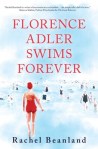 The father is a baker in Florence Adler Swims Forever by Rachel Beanland and Our Narrow Hiding Places by Kristopher Jansma.
- A New Zealand setting (but very different time periods) in Greta & Valdin by Rebecca K Reilly and The Colour by Rose Tremain.
- A mention of Melanie Griffith’s role in Working Girl in I’m Mostly Here to Enjoy Myself by Glynnis MacNicol and Happy Death Club by Naomi Westerman.
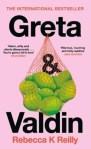 Ermentrude/Ermyntrude as an imagined alternate name in Greta & Valdin by Rebecca K Reilly and a pet’s name in Stowaway by Joe Shute.
- A poet with a collection that was published on 6 August mentions a constant ringing in the ears: Joshua Jennifer Espinoza (I Don’t Want to Be Understood) and Keith Taylor (What Can the Matter Be?).
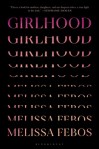
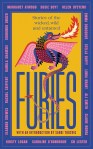
- A discussion of the original meaning of “slut” (a slovenly housekeeper) vs. its current sexualized meaning in Girlhood by Melissa Febos and Sandi Toksvig’s introduction to the story anthology Furies.
- An odalisque (a concubine in a harem, often depicted in art) is mentioned in I’m Mostly Here to Enjoy Myself by Glynnis MacNicol and The Shark Nursery by Mary O’Malley.
- Reading my second historical novel of the year in which there’s a disintegrating beached whale in the background of the story: first was Whale Fall by Elizabeth O’Connor, then Come to the Window by Howard Norman.
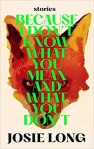 A short story in which a woman gets a job in online trolling in Because I Don’t Know What You Mean and What You Don’t by Josie Long and in the Virago Furies anthology (Helen Oyeyemi’s story).
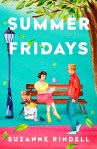
- Her partner, a lawyer, is working long hours and often missing dinner, leading the protagonist to assume that he’s having an affair with a female colleague, in Recipe for a Perfect Wife by Karma Brown and Summer Fridays by Suzanne Rindell.
- A fierce boss named Jo(h)anna in Summer Fridays by Suzanne Rindell and Test Kitchen by Neil D.A. Stewart.
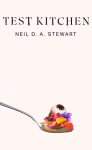
- An OTT rendering of a Scottish accent in Greta & Valdin by Rebecca K Reilly and Test Kitchen by Neil D.A. Stewart.
- A Padstow setting and a mention of Puffin Island (Cornwall) in The Cove by Beth Lynch and England as You Like It by Susan Allen Toth.
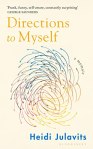
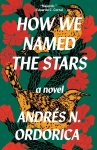
- A mention of the Big and Little Dipper (U.S. names for constellations) in Directions to Myself by Heidi Julavits and How We Named the Stars by Andrés N. Ordorica.
- A mention of Binghamton, New York and its university in We Are Animals by Jennifer Case and We Would Never by Tova Mirvis.
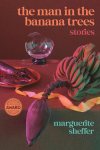
- A character accidentally drinks a soapy liquid in We Would Never by Tova Mirvis and one story of The Man in the Banana Trees by Marguerite Sheffer.
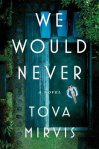 The mother (of the bride or groom) takes over the wedding planning in We Would Never by Tova Mirvis and Summer Fridays by Suzanne Rindell.
- The ex-husband’s name is Jonah in The Mourner’s Bestiary by Eiren Caffall and We Would Never by Tova Mirvis.
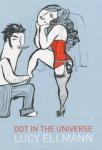
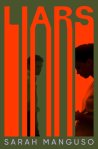
- The husband’s name is John in Dot in the Universe by Lucy Ellmann and Liars by Sarah Manguso.
- An affair is discovered through restaurant receipts in Summer Fridays by Suzanne Rindell and Test Kitchen by Neil D.A. Stewart.
- A mention of eating fermented shark in The Museum of Whales You Will Never See by A. Kendra Greene and Test Kitchen by Neil D.A. Stewart.
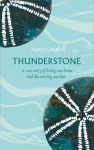
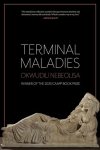
- A mention of using one’s own urine as a remedy in Thunderstone by Nancy Campbell and Terminal Maladies by Okwudili Nebeolisa.
- The main character tries to get pregnant by a man even though one of the partners is gay in Mammoth by Eva Baltasar and Until the Real Thing Comes Along by Elizabeth Berg.
- Motherhood is for women what war is for men: this analogy is presented in We Are Animals by Jennifer Case, Parade by Rachel Cusk, and Want, the Lake by Jenny Factor.
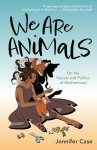 Childcare is presented as a lifesaver for new mothers in We Are Animals by Jennifer Case and Liars by Sarah Manguso.
- A woman bakes bread for the first time in Mammoth by Eva Baltasar and A Year of Biblical Womanhood by Rachel Held Evans.
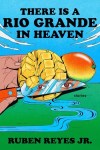
- A gay couple adopts a Latino boy in Greta & Valdin by Rebecca K Reilly and one story of There Is a Rio Grande in Heaven by Ruben Reyes, Jr.
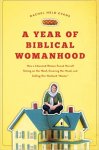 A husband who works on film projects in A Year of Biblical Womanhood by Rachel Held Evans and Liars by Sarah Manguso.
- A man is haunted by things his father said to him years ago in Parade by Rachel Cusk and one story in There Is a Rio Grande in Heaven by Ruben Reyes, Jr.
- Two short story collections in a row in which a character is a puppet (thank you, magic realism!): The Man in the Banana Trees by Marguerite Sheffer, followed by There Is a Rio Grande in Heaven by Ruben Reyes, Jr.
- A farm is described as having woodworm in Mammoth by Eva Baltasar and Parade by Rachel Cusk.
- Sebastian as a proposed or actual name for a baby in Signs, Music by Raymond Antrobus and Birdeye by Judith Heneghan.
What’s the weirdest reading coincidence you’ve had lately?
20 Books of Summer, 11–13: Campbell, Julavits, Lu
Two solid servings of women’s life writing plus a novel about a Chinese woman stuck in roles she’s not sure she wants anymore.
Thunderstone: A true story of losing one home and discovering another by Nancy Campbell (2022)
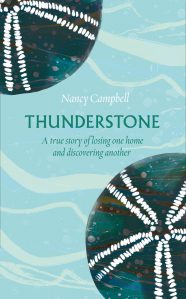 Just before Covid hit, Campbell’s partner Anna had a partially disabling stroke. They had to adjust to lockdown and the rigours of Anna’s at-home care at once. It was complicated in that Campbell was already halfway out the door: after 10 years, their relationship had run its course and she knew it was time to go, but guilt lingered about abandoning Anna at her most vulnerable (“How dare I leave someone who needed me”). That is the backdrop to a quiet book largely formed of a diary spanning June to September 2021. Campbell recounts settling into a caravan by the canal and railway line in Oxford, getting plenty of help from friends and neighbours but also finding her own inner resources and enjoying her natural setting.
The title refers to a fossil that has been considered a talisman in various cultures, and she needed the good luck during a period that involved accidental carbon monoxide poisoning and surgery for an ovarian abnormality (but it didn’t protect her books, which were all destroyed in a leaking shipping container – the horror!). I most enjoyed the longer entries where she muses on “All the potential lives I moved on from” during 20 years in Oxford and elsewhere, which makes me think that I would have preferred a more traditional memoir by her. Covid narratives feel really dated now, unfortunately. (New (bargain) purchase from Hungerford Bookshop with birthday voucher)
Directions to Myself: A Memoir by Heidi Julavits (2023)
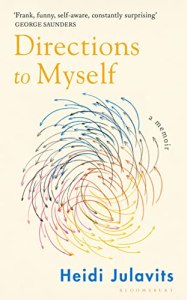 Julavits is a novelist and founding editor of The Believer. I loved her non-standard diary, The Folded Clock, back in 2017, so jumped at the chance to read her new memoir but then took more a year over reading it. The U.S. subtitle, “A Memoir of Four Years,” captures the focus: the change in her son from age five to age nine – from little boy to full-fledged individual. In later sections he sounds so like my American nephew with his Fortnite obsession and lawyerly levels of argumentation and self-justification. A famous author once told Julavits that writers should not have children because each one represents a book they will not write. This book is a rebuttal: something she could not have written without having had her son. Home is a New York City apartment near the Columbia University campus where she teaches – in fact, directly opposite a dorm at which rape allegations broke out – but more often the setting is their Maine vacations, where coastal navigation is a metaphor for traversing life.
Mostly the memoir takes readers through everyday conversations the author has with friends and family about situations of inequality or harassment. Through her words she tries to gently steer her son towards more open-minded ideas about gender roles. She also entrances him and his sleepover friends with a real-life horror story about being chased through the French countryside by a man in a car. The tenor of her musings appealed to me, but already the details are fading. I suspect this will mean much more to a parent.
With thanks to Bloomsbury for the free copy for review.
The Funeral Cryer by Wenyan Lu (2023)
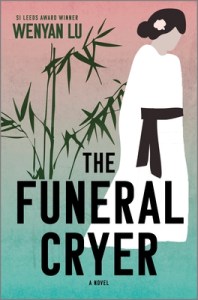 The title character holds a traditional position in her Chinese village, performing mourning at ceremonies for the dead. It’s a steady source of income for her and her husband, but her career choice has stigma attached: “Now that I brought bad luck and I smelt of the dead, nobody would step into our house to play mah-jong or chat.” Exotic as the setup might seem at first, it underpins a familiar story of a woman caught in frustrating relationships and situations. A very readable but plain style to this McKitterick Prize winner.
With thanks to the Society of Authors for the free copy.
Book Serendipity, August to September 2023
I call it “Book Serendipity” when two or more books that I read at the same time or in quick succession have something in common – the more bizarre, the better.
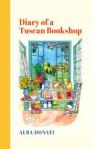
In Diary of a Tuscan Bookshop, Alba Donati remarks on this phenomenon: “Jung called these coincidences ‘synchronicities’, postulating that the universe possessed its own form of intelligence, which generated harmonies. A universe that detects and brings together the elements it feels are seeking each other in the endless swirl of life. Chance be damned.”
This is a regular feature of mine every couple of months. Because I usually have 20–30 books on the go at once, I suppose I’m more prone to such incidents. The following are in roughly chronological order.
- A memoir that opens with a little girl being injured in a bicycle accident: Some of Us Just Fall by Polly Atkin and Pharmakon by Almudena Sánchez.
- Telling stories through embroidery in Cross-Stitch by Jazmina Barrera and The Farmer’s Wife by Helen Rebanks.

- A small boy nicknamed “Willmouse” (real name: William) in Mary and the Birth of Frankenstein by Anne Eekhout and The Greengage Summer by Rumer Godden.
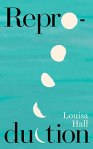
- An account of a routine sonogram that ends with the technician leaving the doctor to deliver bad news in Reproduction by Louisa Hall and The Unfamiliar by Kirsty Logan.
- Black dreadlocks/braid/ponytail being cut off in When We Were Birds by Ayanna Lloyd Banwo, The Wren, The Wren by Anne Enright, and Rebecca, Not Becky by Christine Platt and Catherine Wigginton Greene.

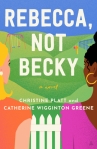
- Wondering how to arm a Black daughter against racist microaggressions in Rebecca, Not Becky by Christine Platt and Catherine Wigginton Greene and Ordinary Notes by Christina Sharpe.
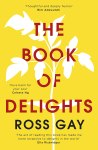
- Countering the commodification or romanticization of Black suffering in The Book of Delights by Ross Gay and Ordinary Notes by Christina Sharpe.

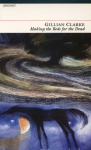
- An account of how the foot and mouth disease outbreak of 2001 affected the UK, especially northwest England, in Making the Beds for the Dead by Gillian Clarke and The Farmer’s Wife by Helen Rebanks.
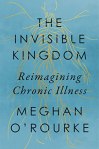
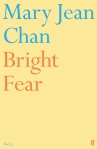
- I encountered the quote from Elaine Scarry’s The Body in Pain about pain being inexpressible in Reproduction by Louisa Hall and The Invisible Kingdom by Meghan O’Rourke on the same day. It’s also referenced in Mary Jean Chan’s Bright Fear.
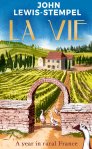
- A mention of eating frogs’ legs in The Book of Delights by Ross Gay and La Vie by John Lewis-Stempel.
- I read about the effects of heavy metal pollution on the body in The Invisible Kingdom by Meghan O’Rourke and Windswept by Annie Worsley in the same evening.
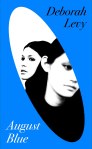
- Composer Erik Satie is mentioned in Making the Beds for the Dead by Gillian Clarke and August Blue by Deborah Levy.
- Stendhal syndrome and Florence are mentioned in The Wren, The Wren by Anne Enright and Pharmakon by Almudena Sánchez.
- Swallows nesting in an old Continental building in Diary of a Tuscan Bookshop by Alba Donati and La Vie by John Lewis-Stempel.
- France being all about the rules and a “Putain de merde” exclamation to bad news in Dirt by Bill Buford and La Vie by John Lewis-Stempel.

- A character named Nomi in Friends and Strangers by J. Courtney Sullivan and one called Noemi in Diary of a Tuscan Bookshop by Alba Donati.
- Epigenetics (trauma literally determining the genetic traits that are passed on) is discussed in The Invisible Kingdom by Meghan O’Rourke and Pharmakon by Almudena Sánchez.
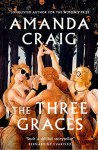
- Women of a certain age in Tuscany in The Three Graces by Amanda Craig and Diary of a Tuscan Bookshop by Alba Donati.
- Audre Lorde is quoted in Tremor by Teju Cole, Bibliomaniac by Robin Ince, The Invisible Kingdom by Meghan O’Rourke, Alone by Daniel Schreiber, and Ordinary Notes by Christina Sharpe.
- A Galway Kinnell poem is mentioned/quoted in The Dead Peasant’s Handbook by Brian Turner and Otherwise by Julie Marie Wade.
- The Bamiyan Buddhas are mentioned in Tremor by Teju Cole and The Dead Peasant’s Handbook by Brian Turner.


- Both The Three Graces by Amanda Craig and The Story of Lucy Gault by William Trevor open with a man shooting someone from his bedroom window.
- Linked short story collections about two children’s relationship with their Jamaican father, and mention of a devastating hurricane, in If I Survive You by Jonathan Escoffery and The Human Origins of Beatrice Porter and Other Essential Ghosts by Soraya Palmer. (Dual review coming up tomorrow!)
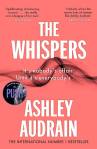
- Characters named Ben and Mara in The Whispers by Ashley Audrain and one story in Kate Doyle’s I Meant It Once.
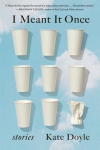
- Occasional uncut pages in my copies of I Meant It Once by Kate Doyle and The Unfamiliar by Kirsty Logan.
- A Florida setting and mention of the Publix supermarket chain in If I Survive You by Jonathan Escoffery and Arms and Legs by Chloe Lane.
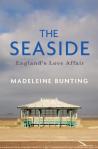
- A down-at-heel English seaside town near Scarborough features in The Seaside by Madeleine Bunting and Penance by Eliza Clark.

- A fictional northern town with “Crow” in the name: Crow-on-Sea in Penance by Eliza Clark and Crows Bank in Weyward by Emilia Hart.
- Claw-machine toys are mentioned in Penance by Eliza Clark and Directions to Myself by Heidi Julavits.
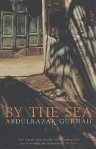
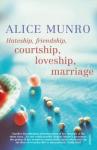
- Reading books by two Nobel Prize winners at the same time: Abdulrazak Gurnah (By the Sea) and Alice Munro (Hateship, Friendship, Courtship, Loveship, Marriage).
- Reading my second 2023 release featuring North Carolina ghost lights (after All of Us Together in the End by Matthew Vollmer, which I actually read last year): The Caretaker by Ron Rash.
- Reading my second 2023 release featuring a cat named Virginia Woolf (after Tell the Rest by Lucy Jane Bledsoe, which I actually read last year): one of the short stories in I Meant It Once by Kate Doyle.
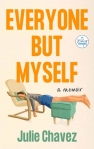
- A character named Shay in Everyone but Myself by Julie Chavez, The Human Origins of Beatrice Porter and Other Essential Ghosts by Soraya Palmer and The Caretaker by Ron Rash.

What’s the weirdest reading coincidence you’ve had lately?
The Folded Clock by Heidi Julavits
I keep a long list of books that I’d love to read but know are only currently available in the USA. Occasionally I manage to chip away at it through my public library borrowing during trips back to visit my family, but I’m adding more titles all the time. I was pleased, then, to learn that The Folded Clock, a book I’ve wanted to get hold of ever since it was first released in the States in 2015, was recently published in the UK.
Heidi Julavits is a founding editor of The Believer magazine as well as a novelist and an associate professor of writing at Columbia University. She lives in New York City during the academic year and spends the rest of the time in Maine, where she was born and raised. The Folded Clock is a diary of two fairly average years in her life, but its dated entries (month and day only) are not in order; they’ve been rearranged into what at times feels like an arbitrary sequence. Yet this is in keeping with the overall theme of time’s fluidity.
The title comes from her daughter’s mishearing of “folded cloth” but is apt in that it suggests time stretching and collapsing back on itself. Indeed, one reason for starting the journal was that Julavits felt time had started to pass differently from how it did in her childhood. Whereas she once thought in terms of days, she realized in her forties that she now worked in weeks and months. She was also inspired by digging out her adolescent diary – though it was not nearly as profound or revelatory about her future writing career as she might have hoped.
Every single entry begins with “Today,” reflecting a determination to live in the present. But of course, that format still offers a broad scope for memory, with certain activities and objects provoking flashbacks. For instance, she finds her ten-year-old marriage vows in the pocket of an old coat, and rereads a biography of Edie Sedgwick (from Andy Warhol’s circle, she died of a drug overdose at 28), as she periodically does to gauge how her response changes as she ages.
Julavits also situates her writing in the context of other famous diarists, such as the Goncourt brothers and Henry David Thoreau. As the latter did in Walden, she’s seeking to live deliberately, though within her regular life and without venturing into nature all that much; “I am an outdoorsman of the indoors,” she quips.
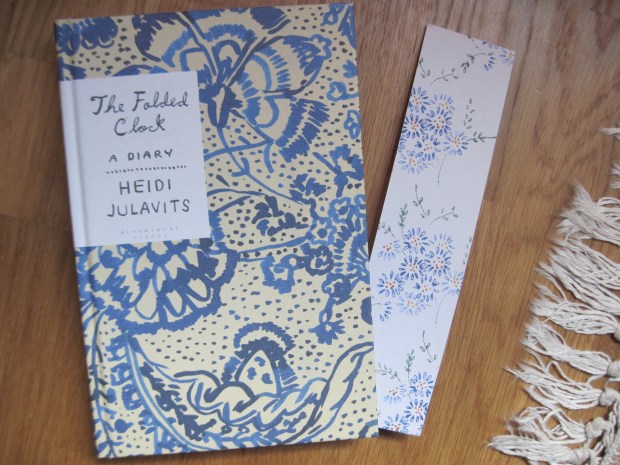
The cover design is by Leanne Shapton.
There’s a huge variety of topics here. She writes about being afraid of sharks, stealing names to use for characters in her novels, entering her small Maine town’s Fourth of July parade float competition, visiting E.B. White’s grave, mourning a tree half-lost to a hurricane, her insistence on dwelling in west-facing rooms, and regretting never telling her doctor how much she appreciated him before he died in a cycling accident. Travel features heavily, too, what with accompanying her husband to a fellowship in Germany and spending time at an art colony in Italy. Often it’s the tiny encounters and incidents that remain in her mind, though, like accidentally buying bitter apricot kernels instead of almonds at a German market and worrying that her husband might have given himself cyanide poisoning by eating 14 at once.
Some of these pieces would function well as stand-alone essays, like the one about her obsession with The Bachelor, an American reality television franchise, which leads into her belief that crushes are fostered by small spaces – she fell for her second husband (author Ben Marcus) at an arts colony even though they were both attached to other people at the time.
I was delighted to see Julavits quote the Julian Barnes passage on episodicism versus narrativism that inspired my post on that topic back in January. Unsurprisingly, Julavits sees herself as a narrativist, drawing connections between different points in her life. She’s always pondering what small incidents reveal about her character. We learn that she’s so averse to inconveniencing others that she continued a phone call while nursing a wasp sting and once planned to pee in an airsickness bag rather than wake the two sleepers between her and the aisle on a flight. She avoids yard sales because she’s so cutthroat, and she’s been known to romanticize her daily life when e-mailing a friend in London: “I probably didn’t tell the truthiest truths. I never made stuff up. But I did strive to be entertaining. Such embellishments do not constitute lies. They constitute your personality.”
In one of the pieces that stood out most for me, Julavits feels typecast as a woman of a certain age when she attends a Virginia Woolf reading. “I am of that age now where I am looking for the next age I will be. How will I dress? How will I act?” It’s a good example of how she uses these mini-essays to negotiate the stages of life and contemplate her changing roles. Elsewhere she sums up her composite identity and what she seeks from her writing:
I am a jack-of-all-trades. I edit and teach and at times desire to be a clothing designer or an artist … and I write everything but poetry and I am a mother and a social maniac and a misanthrope and a burgeoning self-help guru and a girl who wants to look pretty and a girl who wants to look sexy and a girl who wants to look girly and a woman in her middle forties who wishes not to look like anything at all, who wishes sometimes to vanish.
I sometimes think this is why I became a writer. Here was a way to regularly exercise my desire. I could desire to do this thing that no one does perfectly, and by doing it and doing it I could learn how to desire more, and better. Here was an activity that would always leave me wanting … not youth exactly, but the opposite of death. That to me is a way to always feel like I am nowhere near the end.
Inevitably, some entries are more interesting than others, and Julavits’ neuroticism may grate for some readers, but I found this book to be chock-full of quotable lines and insights into what it means to be a time-bound human being. Like one of May Sarton’s journals, I read it slowly, just a few pieces at a time over the course of weeks, and I’ll be keeping it on the shelf to flick through if I ever need an example of how to write a piercing, bite-sized fragment of autobiography. I highly recommend it.
(See also this brief Guardian interview with Julavits.)
The Folded Clock: A Diary was published by Bloomsbury Circus on March 9th. My thanks to the publisher for the free copy for review.
My rating: 
 Bookish Beck = Rebecca Foster. American transplant to England. Freelance proofreader and book reviewer.
 Bookish Beck