Six from My Shelves
My resolution to read just my own books for the summer largely fell by the wayside, but I did manage to get through another handful of print books from the shelves. Below I give brief write-ups of what I’ve finished lately and recall how these books came to be in my collection.
 In Fond Remembrance of Me by Howard Norman: A strange, short book that blends memoir and Inuit legends. In 1977 Norman travelled to Churchill, Manitoba to transcribe an oral storyteller’s folktales. Most of these were about Noah coming into contact with the peoples of the far north and displeasing them by refusing to give over the exotic animals of his ark as food. Helen Tanizaki, a scholar in her late thirties who tried half-heartedly to hide the fact that she was dying of stomach cancer, was also there to translate stories into Japanese. It’s easy to see why she impressed Norman with her mystical stoicism. She was a keen birdwatcher, and declared she wanted to be reincarnated as a seabird. The portrait of Helen is compelling, but the book doesn’t hang together well, especially because the interspersed legends are so repetitive. [From my Amazon wish list last Christmas.]
 An Anthology of Animal Poetry, ed. Kenneth A. Mason: This was assembled in 1940 by a 19-year-old, and it shows. The choices are obvious and old-fashioned; too many of the poems are long and insist on rhyming. However, I discovered some real gems. Three poems in a row are about skylarks – by Gerard Manley Hopkins, Wordsworth and Shelley – and they’re all brilliant, using the bird as an emblem of freedom. Shelley’s “To a Skylark,” in particular, I can’t believe I’ve never encountered before. Its 21 stanzas praise the bird’s pure joy and wonder how careworn humans might emulate it: “We look before and after, / And pine for what is not … Teach me half the gladness / That thy brain must know.” My vintage Pelican copy has ads for chocolate and cigarettes that made me laugh. [Bought from a secondhand bookstore in Tunbridge Wells for 10 pence.]


 The Mistress’s Daughter by A.M. Homes: This grew out of a New Yorker article Homes published about meeting her biological parents in her early 30s. Her mother carried on an affair with her married boss, starting when she was just a teenager – Homes learned that she was the mistress’s daughter. This is the story of how her birth mother tried to get involved in her life, in a really rather stalker-ish way, and the occasional contact she had from her birth father. The blow-by-blow gets a little boring, especially when it’s Homes and her father only communicating via lawyers. Homes doesn’t really make much of a contribution to the literature of adoption, though this is a pleasant enough read. “I am an amalgam. I will always be something glued together, something slightly broken.” [Bought from a library book sale in America for $1.]
 Summertime by Vanessa Lafaye: An enjoyable historical novel based on several true-life elements: a work camp of army veterans based at the Florida Keys, segregation and lynching, and a massive hurricane that hit in 1935. Main characters Missy and Henry are well drawn, but beyond them I thought Lafaye splits the perspective too far: I didn’t need to see through the eyes of lots of the veterans, the shopkeeper, or the policeman investigating the brutal beating of a local white woman. As for this crime, I knew whodunit pretty much right away, so there wasn’t any suspense regarding that plot point. However, Lafaye does do a great job of building tension in the novel’s final third as the storm approaches. The U.S. title (Under a Dark Summer Sky) is much better; “Summertime” evokes strangely rosy images and so is inappropriate. [I won a copy in a Goodreads giveaway.]
 So Many Books, So Little Time: A Year of Passionate Reading by Sara Nelson: Nelson is forthright about what she likes and doesn’t like; she also ruefully reflects on the gap between what she meant to read and what she actually read in 2002. Her reading diary tells a lot about her personal life too: having a non-reading spouse and a novelist sister; memories of her late father; and the struggle to instill a love of reading into her young son. Inevitably a little dated as it engages with ‘It’ books of the time like A Million Little Pieces and Kitchen Confidential, the book has staying power because in each chapter Nelson broadens out from her discussion of one or more books to craft a thematic essay. This was meant to be my bedside book for the second half of the year, but I devoured it in less than seven weeks. It’s full of lines bibliophiles can relate to. [Free from The Book Thing of Baltimore.]
 The Debt to Pleasure by John Lanchester: Tarquin Winot, the snobby Francophile who narrates Lanchester’s debut novel, has a voice reminiscent of Oliver in Julian Barnes’s Talking It Over and Love etc. His opinionated, verbose speech provides much of the book’s wit. “This is not a conventional cookbook,” the first line warns, but a foodie’s tribute to traditional English and French dishes that compose the best seasonal menus. As we travel with Tarquin from Portsmouth to Provence we learn more about this peculiar character through the memories dishes elicit: about his Irish nanny, his sculptor brother’s boarding school years, etc. Lanchester subtly introduces notes of doubt about the narrator’s reliability, until we have to wonder how much his tale resembles Perfume or The Talented Mr. Ripley. Deliciously clever and sinuous. [Bought from a London charity shop for 20 pence.]
I spent much of the summer bogged down in several very good but not particularly page-turning works of nonfiction. I’ll review those in due course.
Up next, though, are a few Booker Prize longlist mini-reviews in advance of the shortlist announcement on Tuesday.
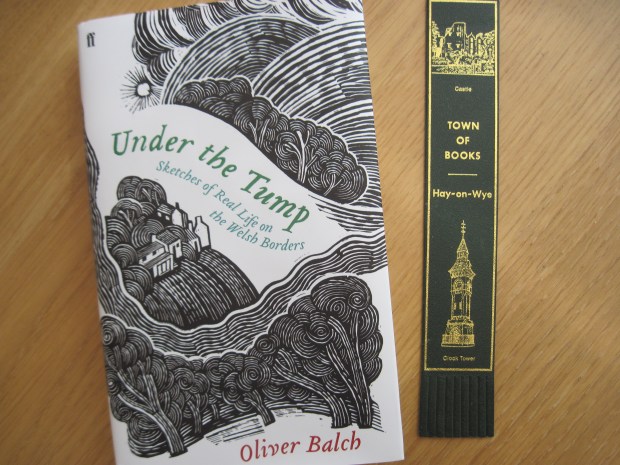
Looking for Community: Oliver Balch’s Under the Tump
My eagle eye for anything related to Hay-on-Wye led me to this book, a memoir of sorts about moving to the Welsh Borders in the search for a sense of community. Journalist Oliver Balch and his wife had previously lived in London and then started a family while living in Argentina. Although they loved the vibrancy and social opportunities of city life, when they moved back to the UK in 2012 they were in search of something different:
I fancied living somewhere with open skies and fresh air; somewhere I could strap on my walking boots and head out for a hike; somewhere alive to the sound of birdsong rather than bus exhausts. I envisioned the same for the boys. Growing up in wellies and with dirty knees. Weekend camping trips. Swimming in the river.
But it was more than just the natural scenery that drew him to the England–Wales border town of Clyro. “I liked the idea of finding a place where I could truly belong. It would be good to be on the inside for once, to be a thread or stitch in the social fabric.” It was John Updike, of all people, who inspired him to seek out small-town life. “For a writer, it’s good to live between a widow and a plumber,” Updike wrote – to be surrounded by different, ordinary people and get to know your neighbors in an old-fashioned but still desirable way.
After the family settled in at Pottery Cottage, another of Balch’s guiding spirits was Reverend Francis Kilvert, curate of Clyro from 1865 to 1872. He’s known today for the diary he started keeping in 1870. As he went around visiting, he made pen portraits of his parishioners, often summing people up through one apt phrase of Dickensian description. In a sense, Balch is trying to do the same thing with these sketches of his new community members. Meanwhile, he weaves in biographical information about Kilvert in much the same way that Helen Macdonald does about T.H. White in H is for Hawk.
![Francis Kilvert [Public domain], via Wikimedia Commons.](https://commons.wikimedia.org/wiki/File:Francis_Kilvert.jpg)
Francis Kilvert [Public domain], via Wikimedia Commons.
The Wye is at its nearest to the east, huddled in the dip between two rippled fields of honeyed wheat and brilliant yellow rapeseed, its emerald-green waters rushing fast above the reeds. … Burrowed among the trees above its far bank stands Hay, a blue-grey patchwork of tiled rooftops amid a swathe of sylvan green. Poking above the tree canopy is the castle … And then beyond, of course, the barren bouldery bulk of the Black Mountains. Implacably wild. Their beauty hard, unremitting, almost brutish in their bluntness.
Balch starts trying to fit in by joining the regular drinkers at the Rhydspence Inn, an old-fashioned pub, on Wednesday nights. He’s closest with Tony, a farmer, and subsequently observes the Young Farmers group. In other chapters he profiles the unconventional, hippie types drawn to the area, like the owners of Hay’s fair trade shop; and the locals and shopkeepers involved in the Thursday market. He also sits in on some community planning meetings and learns about a recent anti-supermarket campaign. The Town Council and the “Hay Together” interest group are often at odds, he learns. A Chamber of Commerce meeting turns into an argument about renovating the Castle, one of Hay’s chief landmarks.
![Hay Castle (a partial ruin) with the outdoor 'honesty bookshop' below. Michael Graham [CC BY-SA 2.0], via Wikimedia Commons.](https://commons.wikimedia.org/wiki/File:Hay_Castle_-_geograph.org.uk_-_1452325.jpg)
Hay Castle (a partial ruin) with the outdoor ‘honesty bookshop’ below. Michael Graham [CC BY-SA 2.0], via Wikimedia Commons.
Part of me is elated that the outside world has landed on our doorstep. For a brief window in late spring, everywhere I turn there are urbanites like me. … Simultaneously, part of me recoils. … I feel invaded. Some traitorous wretch has spilled word of our rural haven and now legions of out-of-towners have arrived, overrunning the place with their unmuddied cars and city manners.
Even in the decade that I’ve been visiting, I can recognize some of the processes Balch pinpoints – essentially evidence of gentrification going on in Hay and the surrounding area. Under the ownership of an American female entrepreneur, for instance, Booth’s Bookshop has been transformed from a falling-down jumble sale into a well-presented independent bookstore with a posh café. Some of the locals Balch meets are delighted with the changes, while others feel that the snobs are taking over and driving up prices for regular folk.
If I was a bit disappointed with this book, it’s because I didn’t fully heed the subtitle – “Sketches of Real Life on the Welsh Borders.” It’s not meant to be a chronological narrative of Balch’s time in Clyro but a thematic tour, with some common threads running through. This means that, depending on the reader, certain chapters will probably seem much more interesting than others. So the best part of “The Young Farmers” chapter, for me, was a description of a cow doing a messy poo (“the most splendid jet of steaming gravy-colored excrement”); otherwise I found it entirely tedious.
![The view from the Castle, looking back over the town towards the hills. By Schuy (Own work) [CC BY-SA 4.0-3.0-2.5-2.0-1.0], via Wikimedia Commons.](https://commons.wikimedia.org/wiki/File:Hay.jpg)
The view from the Castle, looking back over the town towards the hills. By Schuy (Own work) [CC BY-SA 4.0-3.0-2.5-2.0-1.0], via Wikimedia Commons.
With thanks to Faber & Faber for the free copy.
My rating: 
Further reading:
- Other books that reference Hay-on-Wye:
- Reading in Bed by Sue Gee opens at the Hay Festival.
- In The Red House by Mark Haddon, a dysfunctional family vacations in the countryside near Hay.
- In Next Life Might Be Kinder by Howard Norman, the main female character is from Hay.
- One of the settings in The Rise and Fall of Great Powers by Tom Rachman is a bookstore in a small Welsh village. (Okay, not quite Hay.)
- Plus one from the TBR: in The Bookman’s Tale by Charlie Lovett, an antiquarian bookseller browsing in a shop in Hay finds a book that sets him off on a quest.
My Favorite Nonfiction Reads of 2015
Without further ado, I present to you my 15 favorite non-fiction books read in 2015. I’m a memoir junkie so many of these fit under that broad heading, but I’ve dipped into other areas too. I give two favorites for each category, then count down my top 7 memoirs read this year.
Note: Only four of these were actually published in 2015; for the rest I’ve given the publication year. Many of them I’ve already previewed through the year, so – like I did yesterday for fiction – I’m limiting myself to two sentences per title: the first is a potted summary; the second tells you why you should read this book. (Links given to full reviews.)
Foodie Lit
 A Homemade Life: Stories and Recipes from My Kitchen Table by Molly Wizenberg (2009): Wizenberg reflects on the death of her father Burg from cancer, time spent living in Paris, building a new life in Seattle, starting her food blog, and meeting her husband through it. Each brief autobiographical essay is perfectly formed and followed by a relevant recipe, capturing precisely how food is tied up with memories.
 Comfort Me with Apples: More Adventures at the Table by Ruth Reichl (2001): Reichl traces the rise of American foodie culture in the 1970s–80s (Alice Waters and Wolfgang Puck) through her time as a food critic for the Los Angeles Times, also weaving in personal history – from a Berkeley co-op with her first husband to a home in the California hills with her second after affairs and a sticky divorce. Throughout she describes meals in mouth-watering detail, like this Thai dish: “The hot-pink soup was dotted with lacy green leaves of cilantro, like little bursts of breeze behind the heat. … I took another spoonful of soup and tasted citrus, as if lemons had once gone gliding through and left their ghosts behind.”
Nature Books
 Meadowland: The Private Life of an English Field by John Lewis-Stempel (2014): Lewis-Stempel is a proper third-generation Herefordshire farmer, but also a naturalist with a poet’s eye. Magical moments and lovely prose, as in “The dew, trapped in the webs of countless money spiders, has skeined the entire field in tiny silken pocket squares, gnomes’ handkerchiefs dropped in the sward.”
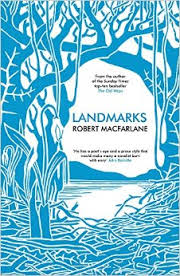 Landmarks by Robert Macfarlane: This new classic of nature writing zeroes in on the language we use to talk about our environment, both individual words – which Macfarlane celebrates in nine mini-glossaries alternating with the prose chapters – and the narratives we build around places, via discussions of the work of nature writers he admires. Whether poetic (“heavengravel,” Gerard Manley Hopkins’s term for hailstones), local and folksy (“wonty-tump,” a Herefordshire word for a molehill), or onomatopoeic (on Exmoor, “zwer” is the sound of partridges taking off), his vocabulary words are a treasure trove.
Theology Books
 Amazing Grace: A Vocabulary of Faith by Kathleen Norris (1998): In few-page essays, Norris gives theological words and phrases a rich, jargon-free backstory through anecdote, scripture and lived philosophy. This makes the shortlist of books I would hand to skeptics to show them there might be something to this Christianity nonsense after all.
 My Bright Abyss: Meditation of a Modern Believer by Christian Wiman (2013): Seven years into a cancer journey, Wiman, a poet, gives an intimate picture of faith and doubt as he has lived with them in the shadow of death. Nearly every page has a passage that cuts right to the quick of what it means to be human and in interaction with other people and the divine.
General Nonfiction
 Penelope Fitzgerald: A Life by Hermione Lee (2013): Although Penelope Fitzgerald always guarded literary ambitions, she was not able to pursue her writing wholeheartedly until she had reared three children and nursed her hapless husband through his last illness. This is a thorough and sympathetic appreciation of an underrated author, and another marvellously detailed biography from Lee.
 Being Mortal: Medicine and What Matters in the End by Atul Gawande (2014): A surgeon’s essential guide to decision-making about end-of-life care, but also a more philosophical treatment of the question of what makes life worth living: When should we extend life, and when should we concentrate more on the quality of our remaining days than their quantity? The title condition applies to all, so this is a book everyone should read.
Memoirs
 The Year My Mother Came Back by Alice Eve Cohen: Wry and heartfelt, this is a wonderful memoir about motherhood in all its variations and complexities; the magic realism (Cohen’s dead mother keeps showing up) is an added delight. I recommend this no matter what sort of relationship, past or present, you have with your mother, especially if you’re also a fan of Anne Lamott and Abigail Thomas.
- The Art of Memoir
 by Mary Karr: There is a wealth of practical advice here, on topics such as choosing the right carnal details (not sexual – or not only sexual – but physicality generally), correcting facts and misconceptions, figuring out a structure, and settling on your voice. Karr has been teaching (and writing) memoirs at Syracuse University for years now, so she’s thought deeply about what makes them work, and sets her theories out clearly for readers at any level of familiarity.
 A Circle of Quiet by Madeleine L’Engle (1971): In this account of a summer spent at her family’s Connecticut farmhouse, L’Engle muses on theology, purpose, children’s education, the writing life, the difference between creating stories for children and adults, neighbors and fitting into a community, and much besides. If, like me, you only knew L’Engle through her Wrinkle in Time children’s series, this journal should come as a revelation.
-
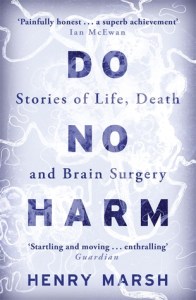 Do No Harm: Stories of Life, Death and Brain Surgery by Henry Marsh (2014): “Terrible job, neurosurgery. Don’t do it.” – luckily for us, Henry Marsh reports back from the frontlines of brain surgery so we don’t have to. In my favorite passages, Marsh reflects on the mind-blowing fact that the few pounds of tissue stored in our heads could be the site of our consciousness, our creativity, our personhood – everything we traditionally count as the soul.
 I Hate to Leave This Beautiful Place by Howard Norman (2013): Norman has quickly become one of my favorite writers. You wouldn’t think these disparate autobiographical essays would fit together as a whole, given that they range in subject from Inuit folktales and birdwatching to a murder–suicide committed in Norman’s Washington, D.C. home and a girlfriend’s death in a plane crash, but somehow they do; after all, “A whole world of impudent detours, unbridled perplexities, degrading sorrow, and exacting joys can befall a person in a single season, not to mention a lifetime.”
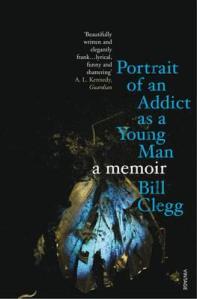 Portrait of an Addict as a Young Man by Bill Clegg (2010): Through this book I followed literary agent Bill Clegg on dozens of taxi rides between generic hotel rooms and bar toilets and New York City offices and apartments; together we smoked innumerable crack pipes and guzzled dozens of bottles of vodka while letting partners and family members down and spiraling further down into paranoia and squalor. He achieves a perfect balance between his feelings at the time – being out of control and utterly enslaved to his next hit – and the hindsight that allows him to see what a pathetic figure he was becoming.
And my overall favorite nonfiction book of the year:
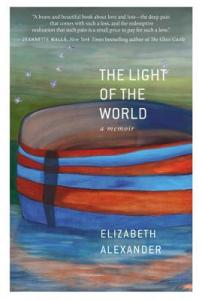 1. The Light of the World by Elizabeth Alexander: In short vignettes, beginning afresh with every chapter, Alexander conjures up the life she lived with – and after the sudden death of – her husband Ficre Ghebreyesus, an Eritrean chef and painter. This book is the most wonderful love letter you could imagine, and no less beautiful for its bittersweet nature.
What were some of your best nonfiction reads of the year?
 Bookish Beck = Rebecca Foster. American transplant to England. Freelance proofreader and book reviewer.
 Bookish Beck