My Life in Book Quotes
I keep an ongoing Word file with details on my year’s reading: books finished with the date, number of pages, and source – similar information to what’s recorded on Goodreads – plus any quotations that particularly stood out to me. It occurred to me that by looking back through these annual book lists for the quotes that meant the most to me I could probably narrate my recent years. So here are the 2015–2016 quotes that tell my story.

Career
“I’m learning that what’s important is not so much what I do to make a living as who I become in the process. … the heroine, when at a juncture, makes her own choice—the nonheroine lets others make it for her.”
(A Year by the Sea: Thoughts of an Unfinished Woman, Joan Anderson)
“The dishes. The dishes! The goddamn dishes! No wonder women don’t succeed.”
(The author’s mother’s explosion in The Year My Mother Came Back, Alice Eve Cohen)
“Success says, What more can I get?
Craft says, Can you believe I get to do this?”
(How to Be Here: A Guide to Creating a Life Worth Living, Rob Bell)
“Amateurs look for inspiration; the rest of us just get up and go to work.”
(Everyman, Philip Roth)
Finding a Home
“In Orcadian, ‘flitting’ means ‘moving house’. I can hear it spoken with a tinge of disapproval or pity: the air-headed English couple who couldn’t settle.”
(The Outrun, Amy Liptrot)
“Where, after we have made the great decision to leave the security of childhood and move on into the vastness of maturity, does anybody ever feel completely at home?”
(A Circle of Quiet, Madeleine L’Engle)
“there is no such thing / as the right route or a clear passage / no matter where you start, / or how you plan it.”
(from “Aneurysm,” Selected Poems, Kate Clanchy)
Life vs. Books
“He had accepted that if you were a bookish person the events in your life took place in your head.”
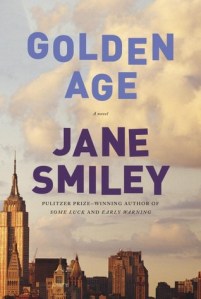
(Golden Age, Jane Smiley)
“my way of seeing has always been different, shyer. To see the world I’ve always opened a book.”
(The Violet Hour: Great Writers at the End, Katie Roiphe)
“Other people’s lives, and the lives I read about in books, seem richer, mine seems so threadbare.”
(The Past, Tessa Hadley)
Overthinking
“She remembered finding her first white hair somewhere near her thirtieth birthday and it had sent her on a tailspin for half a day. It’s starting, she’d thought then. The follicle that produced that hair is dying. I’ve reached the tipping point and from now on it’s nothing but slow decline.”
(Dog Run Moon: Stories, Callan Wink)
“All the most terrifying Ifs involve people. All the good ones do as well.”
(A Little Life, Hanya Yanagihara)
“I wished then, and still do, that there was something in me also that would march steadily in one road, instead of down here or there or somewhere else, the mind running a net of rabbit-paths that twisted and turned and doubled on themselves, pursued always by the hawk-shadow of doubt.”
(Now in November, Josephine Johnson – to be reviewed here within next couple weeks)
Jane Smiley’s Last Hundred Years trilogy
Jane Smiley’s “The Last Hundred Years” trilogy is a saga prioritizing the experiences of the Langdons, an Iowa farming family, over the century beginning in 1920. In chronological chapters, one per year from 1920 to the near future of 2019, Smiley follows an ordinary couple, their six children and several generations of their descendants as they navigate America’s social changes and re-evaluate their principles during decades of upheaval.
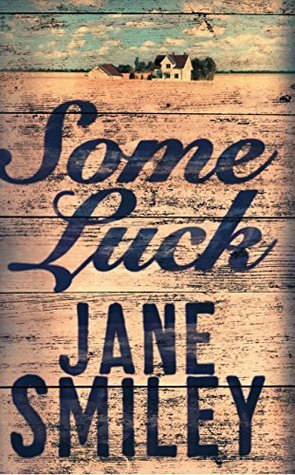 Some Luck
Here’s an excerpt from my Shiny New Books review in early 2015: “Farming, unpredictable and frequently heartbreaking, is an appropriate framework for an all-American story. Aspects of the Great American Novel are certainly on display: immigrant roots, coming-of-age trajectories for individuals and the nation, and American dream scenarios of reinvention. Within the confines of its third-person omniscient point-of-view, the novel shifts between the perspectives of each main character, especially the children. Smiley avoids a gimmicky One Day effect by varying the time of year so most chapters highlight different events, birthdays or holidays. Droughts, the Great Depression, the Second World War, and McCarthyism all feature, while the start of the Cold War – including paranoia over the Russians getting the bomb – sets up the second volume.”
My rating: 
Some months ago it occurred to me that I never followed up with the Langdons. Although I don’t generally read sequels or series, I nonetheless made it a priority to find the other two volumes of the trilogy from the library.
Early Warning
The second book covers 1953 to 1986. The family loses one member to Vietnam, one to cancer, and one to the easiest, simplest death you could imagine. There’s a shotgun wedding, a divorce, and several affairs. In short, it feels like a real family, like your family. Events seem arbitrary at the time but later take on the cast of inevitability. Historical landmarks are there as background information, not as clichéd points of action (a good example is the JFK assassination). The Vietnam War threads through the middle section, but isn’t overpowering. The connections with history are pretty subtle here. One of my favorites is when Janet, at a Vietnam protest march, suddenly realizes she’s behind Martin Luther King, Jr. and Dr. Spock. Her later involvement with the Peoples Temple grew tiresome for me, but I appreciated the ironic eye on the future: in 1980, “Well, I guess, they invaded Afghanistan…wherever that is!”
 Iowa was still my preferred setting, an ideal site for pondering time’s workings and how money comes and goes: Joe “knew enough at his age to know that dollars were like drops of mist – they fluttered around you and then dissipated.” I also like Andy’s therapy sessions, frequently featured in the first half. There’s even a gentle mystery in this book: a boy who doesn’t seem to be related to the family keeps showing up, but by the end we figure out who he is.
People may rise and fall in importance, just as they do in real life, but everyone has a perspective. That’s part of Smiley’s message here, I think. Early on she observes that Rosanna “hadn’t thought of Roland Frederick as having a point of view.” Recognizing other people as valid subjects, overcoming solipsism, is really what literature is all about.
Although I’m interested in what happens next, I don’t like the grandchildren generation all that much; Richie and Michael are especially unpleasant, and I have a feeling they will be major players in Golden Age. Still, I feel invested in and close to this family, so I’m going to see it through to the end.
Favorite passage:
Joe’s dystopian vision: “But he could see it, looking south – he could see all the layers lift off – the roof of the house, the second floor, the first floor. He could see the children and Jesse and Jenny and Lois and Minnie being lifted out on a fountain of debt and scattered to the winds; then he could see the corn and beans scoured away, and the topsoil, once twelve inches thick, now six inches thick, and below that, the silty clay loam, more gray than black, then the subsoil, brownish clay all the way down, down, down to the yellow layer, mostly, again, clay, all of it exposed, all of it flying into the atmosphere like money, burning up in the hot sunshine, disappearing.”
My rating:
Golden Age
Alas, the final installment was my least favorite. There are a few reasons for this. One is simply that I didn’t like the third- and fourth-generation characters as much. Another is that, with such a large family tree, you get more lists of names and catch-up sessions. The intrusion of history is also more overt. I noted this in the 2011 chapter, especially, which mentions the Japanese earthquake, Utøya and the Occupy movement. One character dies on 9/11; another gets a flesh-eating bacteria. One is struck by lightning; another dies in a hit and run. Not only are several of the deaths unrealistic, but, true to the winding-down spirit, there are simply a lot of them.
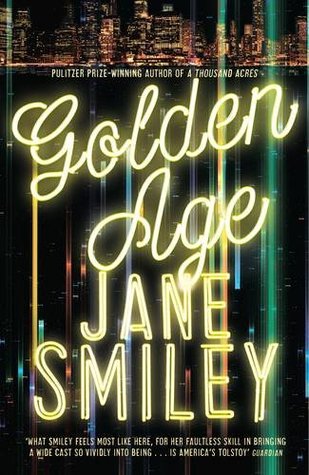 As people disperse and the second generation starts to die off, the bonds between the family members weaken. The Iowa farm diminishes in real-life and symbolic importance compared to the action on the coasts: California, New York and Washington, where Richie is a congressman. I might actually have preferred if Smiley had imagined an alternative history for the 2000s and 2010s. (Of course, that would have broken the mold she made for herself.) For me, it all felt too close. I had a sense of her picking easy targets: “I would like to thank the members of the U.S. Congress for being so easy to satirize,” she writes in her acknowledgments. There’s also too much horse material – a frequent indulgence for Smiley.
The last five or so chapters were speculative at the time Smiley was writing, and some of her predictions already seem a little silly, like violent protests against a Harper government in Vancouver in 2016. However, her environmental worries are right on, and her words about the 2012 presidential election seem prescient in relation to this year’s race: a character advises his family to vote Democrat “as a protest against the Republican Party for offering a roster of candidates that went from bad to worse to worst ever.”
My rating: 
Ultimately, my favorite overall character was Andy, who reinvented herself as a young woman and does so again as a widow, turning into a computer and investment whiz. Frank was an early favorite in Some Luck, where he reminded me a lot of Mad Men’s Don Draper, but I grew less enamored with him over the years. Henry was perhaps my second favorite in the previous two books, but he rather fades into the background in the final book.
My advice to anyone wondering whether they should read this trilogy would be to start with Some Luck and, if you really like it, proceed to Early Warning. Golden Age is largely unnecessary and can be reserved for die-hard Smiley fans or series completists.
Further reading: Literary Hub article, “Why Wasn’t Great American Novelist Jane Smiley on the Cover of a Magazine?”
The Best Fiction of 2015: My Top 15
2015 was a great year for fiction, largely dominated by doorstoppers (like Death & Mr. Pickwick and City on Fire, in addition to the Franzen and Yanagihara listed below) and Harper Lee. I’ve decided to pass on Go Set a Watchman, but I’ve read plenty of the year’s big-name fiction, as well as some more obscure titles I’d like to bring to your attention.
As difficult as it is to pit books against each other and come up with a numbered list, I’ve given it a go and come up with my top 15 fiction works of the year. To keep it simple for myself and straightforward for potential readers, I’m limiting myself to two sentences per title: the first is a potted summary; the second tells you why you should read it. I also link to any full reviews.
Let the countdown begin!
- The Shore
 by Sara Taylor: Gritty and virtuosic, this debut novel-in-13-stories imagines 250 years of history on a set of islands. Every region needs a literary chronicler, and I reckon Taylor – channeling David Mitchell with her cross-centuries approach – is it for the Eastern Shore of Maryland and Virginia’s islands.
 Gold Fame Citrus by Claire Vaye Watkins: Gold, fame, citrus: reasons people once came to California; now, only a desperate remnant remains in the waterless wasteland. As a smart, believable dystopian with a family at its heart, this trumps any of last year’s efforts (like Station Eleven or California).
 Preparation for the Next Life by Atticus Lish: Like West Side Story, this debut novel is an updated Romeo and Juliet narrative – a tragedy-bound love story with a grimy contemporary setting and a sobering message about racism and the failure of the American dream. The matter-of-fact style somehow manages to elevate the everyday and urban into an art form. (Reviewed for Third Way magazine in August.)
- Circling the Sun
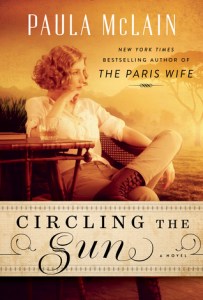 by Paula McLain: Before she ever thought of flying solo across the Atlantic, aviatrix Beryl Markham was just Beryl Clutterbuck: raised in Kenya, one of Africa’s first female horse trainers, its first professional female pilot, and the other side of the love triangle featuring Karen Blixen (Isak Dinesen) and Denys Finch Hatton. McLain describes her African settings beautifully, and focuses as much on the small emotional moments that make a life as she does on its external thrills.
 Kitchens of the Great Midwest by J. Ryan Stradal: One of my favorite debuts of the year: a culinary-themed collection of short stories loosely linked through the character of Eva Thorvald, a young chef with an unfortunate past and a rare palate. Read it for a glimpse of how ordinary, flawed Americans live – no fairytale endings here.
 Hausfrau by Jill Alexander Essbaum: This arresting debut reads like a modern retelling of Madame Bovary, with its main character a desperate American housewife in Zurich. Watch Anna’s trajectory with horror, but you cannot deny there is a little of her in you.
 The Versions of Us by Laura Barnett: In this impressively structured, elegantly written debut, Barnett chronicles the romantic lives of two Cambridge graduates through three-quarters of a century, giving three options for how their connection might play out. There is no one perfect person or story: unsentimental this may be, but it feels true to how life works. (Reviewed for Third Way magazine in July.)
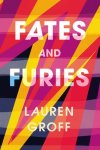 Fates and Furies by Lauren Groff: An incisive study of a marriage, beautifully written and rich with allusions to Shakespeare and Greek mythology. Groff makes it onto a short list of women I expect to produce the Great American Novel (along with Curtis Sittenfeld, Jennifer Egan, and Hanya Yanagihara).
 Purity by Jonathan Franzen: East Germany, Bolivia and Oakland, California: Franzen doesn’t quite pull all his settings and storylines together, but this is darn close to a 5-star Dickensian read. It’s strong on the level of character and theme, with secrecy, isolation and compassion as recurring topics.
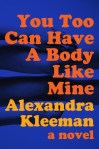 You Too Can Have a Body Like Mine by Alexandra Kleeman: Kleeman’s first novel is a full-on postmodern satire bursting with biting commentary on consumerism and conformity. Think of her as an heir to Dave Eggers and Douglas Coupland, with a hefty dollop of Margaret Atwood thrown in.
 The Animals by Christian Kiefer: Kiefer’s second novel contrasts wildness and civilization through the story of a man who runs an animal refuge to escape from his criminal past. A tough opening sequence establishes themes that will be essential to the novel: the fine line between instincts and decisions, the moral dilemmas involved in environmentalism, and the seeming inescapability of violence.
 The Tsar of Love and Techno by Anthony Marra: A collection of tightly linked short stories giving an intimate look at Russia and Chechnya in wartime and afterwards – revealing how politics, family, and art intertwine. Just as he did in his first novel, Marra renders unspeakable tragedies bearable through his warm and witty writing.
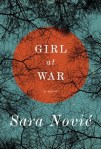 Girl at War by Sara Nović: This pitch-perfect debut novel is an inside look at the Yugoslavian Civil War and its aftermath, from the perspective of a young girl caught up in the fighting. The way Nović recreates a child’s perspective on the horrors of war is masterful: Ana’s viewpoint is realistic and matter-of-fact, without the melodrama an omniscient narrator might inject.
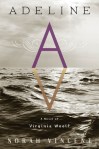 Adeline by Norah Vincent: Set in 1925–1941 and structured like a five-act play, the novel revolves around Virginia Woolf’s philosophical conversations with Leonard Woolf, Lytton Strachey and his lover Carrington, T.S. and Valerie Eliot, W.B. Yeats, and her doctor, Octavia Wilberforce. Vincent has produced a remarkable picture of mental illness from the inside.
- A Little Life
 by Hanya Yanagihara: Jude St. Francis: Dickensian orphan, patron saint of lost causes, Christlike Man of Sorrows, and one of the most memorable characters in recent fiction. This novel is an attempt to tackle the monolithic question of what makes life worth living; among the potential answers: love (though it doesn’t conquer all), friendship, creativity, and the family you create for yourself.
Best Discoveries of the Year: Mary Lawson (Road Ends), Daniel Kehlmann (F: A Novel), Jonathan Evison (This Is Your Life, Harriet Chance!) and Jonathan Coe (Number 11).
Debut Novelists Whose Next Work I’m Most Looking Forward to: Jessamyn Hope (Safekeeping – reviewed here in June) and Carmiel Banasky (The Suicide of Claire Bishop – reviewed for Foreword’s Fall 2015 issue).
 The Year’s Biggest Disappointments: Etta and Otto and Russell and James by Emma Hooper; Where My Heart Used to Beat by Sebastian Faulks and Avenue of Mysteries by John Irving (both rehash the authors’ familiar themes; I couldn’t make it past 15% in the latter).
Novels I Most Wish I’d Gotten to in 2015: Nell Zink’s Mislaid, Sara Baume’s Spill Simmer Falter Wither, and the final two volumes of Jane Smiley’s “Last Hundred Years” trilogy.
What are the best novels you read this year? Any new favorite books or authors? Your comments are always welcome.
I’ll be back tomorrow with my top 15 nonfiction books I read this year (most of them not published in 2015, however – I seem to have been a nonfiction slacker!)
Surveying the Almighty TBR List
Coming to the end of one year and looking ahead to another: it’s a good opportunity to take stock of my virtual and physical to-read piles once more. Thanks to fellow book bloggers Naomi at The Writes of Woman and Eleanor at Elle Thinks for giving me this meme idea and tagging me in it, respectively.
How do you keep track of your TBR pile?
I have a ridiculously large to-read shelf on Goodreads, but that’s more like a vague lifelong wish list – some of them I own, some I’ve only heard of and want to investigate further, some I’m desperate to get hold of, and so on. I recently culled my online TBR and cut it by about 10%, but it’s still overwhelming. In real life, I take occasional inventories of the unread books in our flat (192 at last count). However, this doesn’t account for the fact that at least half of my book collection is still in my parents’ house in the States. While I’m back there for some time over the holidays, I enjoy gazing at my books and choosing a select few to bring back in my suitcase. On this trip I’ll be boxing them all up to go into storage. When shall I ever be reunited with them?!
Is your TBR mostly print or e-book?
If I only consider the books I already have access to, there are more unread print ones on my shelves than there are e-book approvals through NetGalley and Edelweiss. There’s not all that much in it, though; I might estimate the print TBR at 400–500, while I have about 300 books at my disposal through those online sources and new titles come up for request all the time.
How do you determine which books from your TBR to read next?
This generally depends on review deadlines, library due dates, and e-book expirations. In some sense, then, my reading list is completely imposed on me from outside. However, I always make sure I let whimsy guide some of my choices. Next year I hope to be even better about just picking up a book off my shelves and starting it for no reason other than instantaneous interest.
A book that has been on my TBR the longest
On the virtual TBR: probably Fast Food Nation and some of Margaret Atwood’s back catalogue. On the vague list in my head: all the more obscure Dickens and Hardy titles.
 A book I recently added to my TBR
Rochester Knockings: A Novel of the Fox Sisters by Hubert Haddad.
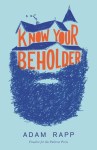 A book on my TBR strictly because of its beautiful cover
I love the beard-house on the cover of Know Your Beholder by Adam Rapp.
A book on my TBR that I never plan on reading
Will I really pick up Martin Amis’s novels, or Ian McEwan’s early work? How about those obscure Thomas Hardy novels like A Laodicean and A Pair of Blue Eyes?
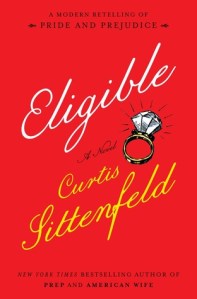 An unpublished book on my TBR that I’m excited for
I recently started Eligible by Curtis Sittenfeld (to be published on April 19, 2016). Her novel American Wife is one of my absolute favorites, so I was excited about her Pride and Prejudice retelling and lucky enough to be sent an advanced copy. I’m not that into it yet – the third-person omniscient voice is taking a while to get used to because first-person female narrators are Sittenfeld’s forte – but I hope it will pick up soon.
 A book on my TBR that everyone recommends
I’ve encountered almost universal praise for Elena Ferrante’s four autobiographical novels, the first of which is My Brilliant Friend. They’re on my priority list for 2016.
A book on my TBR that everyone has read but me
1984 by George Orwell.
 A book on my TBR that I’m dying to read
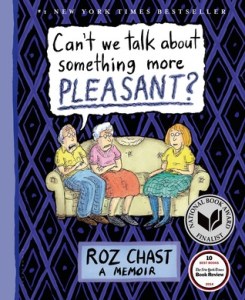
Some of my priority books to get hold of are Nell Zink’s novels, the final two books in Jane Smiley’s The Last Hundred Years trilogy, Can’t We Talk about Something More Pleasant? by Roz Chast, and Reasons to Stay Alive by Matt Haig. I’ve also been meaning to read The Signature of All Things by Elizabeth Gilbert for ages, and I’m intrigued to try The Guest Cat by Takashi Hiraide.
How many books are on your TBR shelf?
5,664 on the Goodreads shelf; maybe 500 in the print queue.
People I’m tagging:
Shannon at River City Reading
Lucy at Literary Relish
 Bookish Beck = Rebecca Foster. American transplant to England. Freelance proofreader and book reviewer.
 Bookish Beck