January Novels by Alix E. Harrow & Patricia Highsmith
The month of January was named for the Roman god Janus, known for having two faces: one looking backward, the other forward. “He presided not over one particular domain but over the places between – past and present, here and there, endings and beginnings,” as Alix E. Harrow writes. In her novel, the door is a prevailing metaphor for liminal times and spaces; Highsmith’s work, too, focuses on the way life often pivots on tiny accidents or decisions.
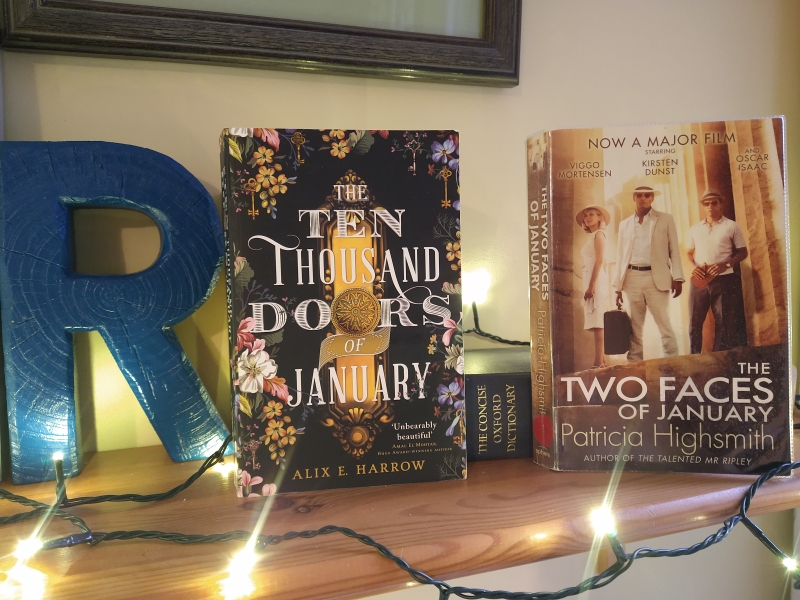
The Ten Thousand Doors of January by Alix E. Harrow (2019)
“I didn’t want to be safe … I wanted to be dangerous, to find my own power and write it on the world.”
 As the mixed-race ward of a wealthy collector, January Scaller grows up in a Vermont mansion with a dual sense of privilege and loss. She barely sees her brown-skinned father, who travels the world amassing treasures for Mr. Locke and his archaeological society; and her mother’s absence is an unexplained heartbreak. But when her father also disappears in 1911 – to be apparently replaced by an African governess named Jane Irimu (it’s her quote above) and an enticing scholarly manuscript entitled The Ten Thousand Doors – 17-year-old January discovers the power of words to literally open doors to new worlds, and sets off on a quest to reunite her family. At every turn, though, she’s thwarted by evil white men who, after plundering foreign cultures, intend to close the doors of opportunity behind them.
This was an unlikely book for me to pick up: I didn’t get on with that whole wave of books with books and keys on the cover (Bridget Collins et al.) and wouldn’t willingly pick up romantasy – yet this features two meant-to-be romances fought for across worlds and eras. I grow impatient with a book-within-the-book format. But The Chronicles of Narnia, which no doubt inspired Harrow, were my favourite books as a child. Especially early on, I found this as thrilling as The Absolute Book and The End of Mr. Y. Whereas those doorstoppers held my interest all the way through, though, this became a trudge at a certain point. Harrow is maybe a little too pleased with her own imagination and turns of phrase, like T. Kingfisher. (Bad the dog is also in peril far too often.) In the end, this reminded me most of Babel by R.F. Kuang with its postcolonial conscience and words as power. I enjoyed this enough that I think I’ll propose her The Once and Future Witches for book club. (Little Free Library) 
The Two Faces of January by Patricia Highsmith (1964)
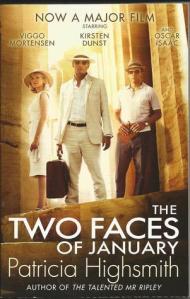 Three American vacationers meet in a hotel in Greece one January. But the circumstances are far from auspicious. Conman Chester MacFarland is traveling with his 15-years-younger wife, Colette. Rydal Keener is a stranger who, seemingly on a whim, helps them cover up the accidental death of a Greek police investigator who came to ask Chester some questions. From here on in, they’re in lockstep, moving around Greece together, obtaining fake passports and checking the headlines obsessively to outrun consequences. Colette takes a fancy to Rydal, and the jealousy emanating from the love triangle is complicated by Chester’s alcoholism and Rydal’s hurt over earning a police record for a consensual teenage relationship. I have a dim memory of seeing the 2014 Kirsten Dunst and Viggo Mortensen film, but luckily I didn’t recall any major events. A climactic scene takes place at the palace of Knossos, and the chase continues until an unavoidably tragic end.
I’ve read several Ripley novels and a few standalone psychological mysteries by Highsmith and enjoyed them well enough, but murders aren’t really my thing. (Carol is the only work of hers that I’ve truly loved.) My specific issue here was with the central trio of characters. Colette is thinly drawn and doesn’t get enough time on the page. Chester seems much older than his 42 years and is an irredeemable swindler. It’s only because of our fondness for Rydal that we want them all to get away with it. But even Rydal doesn’t get the in-depth portrayal one might hope for. There’s the injustice of his backstory and the fact that he’s a would-be poet, true, but we never understand why he helped the MacFarlands, so have to conclude that it was the impulse of a moment and committed him to a regrettable course. This is pacey enough to keep the pages turning, but won’t stick with me. (Public library) 
I’m turning my face forward: Good riddance to January 2026, during which I’ve mostly felt rubbish; here’s hoping for a better rest of the year. I’m off to the opera tonight – something I’ve only done once before, in Leeds in 2006! – to see Susannah, a tale from the Apocrypha transplanted to the 1950s U.S. South.
Live Happy by Bridget Grenville-Cleave and Ilona Boniwell: Review & Giveaway
Today is apparently what’s known as “Blue Monday,” the saddest day of the year. It can be hard to find reasons to be cheerful in mid-January, especially given the state of Anglo-American politics. All too often I give in to melancholy on these dark mornings. However, I aim to do better. Gretchen Rubin’s The Happiness Project was one of the most memorable books I read in the second half of last year. What I appreciated most about it was that her approach is not about undertaking extreme actions to try to achieve happiness, but about finding contentment with the life you already have by adding or tweaking small habits.
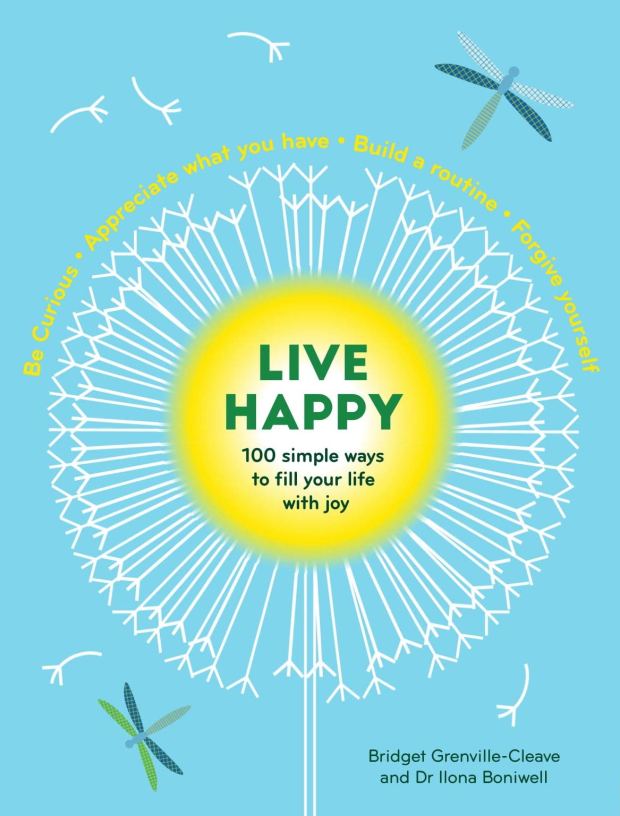
I was keen to see what additional tips I could glean from Live Happy: 100 Simple Ways to Fill Your Life with Joy by positive psychologists Bridget Grenville-Cleave and Ilona Boniwell. They explain that about 50% of the capacity for happiness is genetic, while 10% is related to your current situation. That means that individuals are able to boost their happiness by up to 40% through their attitude and choices.
The key is to focus on what you can influence for the better. The book includes in this category things like luck, health and confidence. I found it difficult to accept the idea that I could choose to have good luck and high energy. It’s just such a foreign concept to me. But according to Grenville-Cleave and Boniwell, perceived control of one’s life course is extremely important.
Live Happy contains good generic advice on diet, use of time, relationships and forming positive habits, though the 100-item format leads to some repetition. In a few cases examples of practical application are necessary; otherwise what we have is just sound bites. For instance, “Try adopting extrovert behaviours such as assertiveness and engaging with others” and “you can also try to face problems head on, rather than simply giving up; you’ll find it easier to bounce back after misfortune.”
On the other hand, I did find specific suggestions that I plan to put into practice. A tip for being more optimistic is to wear a rubber band around your wrist and snap yourself every time you experience an Automatic Negative Thought. I also appreciated these words about making choices: “For unimportant decisions try to be satisfied with an option that is merely good enough, rather than trying to make absolutely the best choice. Lower your expectations – do not expect perfection.”
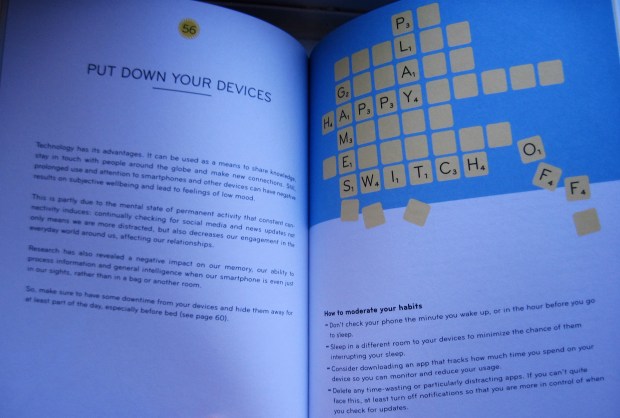
This is an attractive book, with each page containing pull quotes or whimsical drawings that tie into the blue-yellow-green palette. I would recommend it to readers of The Artist’s Way by Julia Cameron, A Manual for Heartache by Cathy Rentzenbrink and Option B by Sheryl Sandberg. It could also make an ideal bedside book for people who aren’t big readers but are interested in injecting a little more happiness into their everyday life.
My rating: 
Live Happy was published by Modern Books on January 17th. My thanks to Alison Menzies for arranging my free copy for review.
GIVEAWAY!
If you would be interested in winning a copy of Live Happy, please comment to that effect below and I will choose one winner at random on Monday the 28th (UK only, sorry!).
 Bookish Beck = Rebecca Foster. American transplant to England. Freelance proofreader and book reviewer.
 Bookish Beck