America Reading & Book Haul, Etc.
The wedding of a college friend – who I calculated I’ve known at least half my life – was the excuse we needed to book a trip back to the States for the last two weeks of May. Along with the classy nuptials in the Fell’s Point area of Baltimore, we enjoyed a day’s sightseeing in Philadelphia, a couple of outings to watch birds and other wildlife on Cape May (a migration hotspot in New Jersey), two meet-ups with other friends, and plenty of relaxation time with my mom and sister, including a Memorial Day picnic at my mom’s retirement community and a tour of Antietam Battlefield. It was much hotter than anticipated, including some days in the high 80s or even 90s, and the hayfever, ticks and mosquitoes were bad, too, but we survived.


While back in Maryland I continued the intermittent downsizing process I’ve been going through for a while now. After being on the market for nearly a year, my family home finally sold and went to closing while we were over there. So that provided a scrap of closure, but my current estrangement from my father (we don’t even know where he’s living) means there’s a lot of continuing uncertainty.
In any case, I managed to reduce the number of boxes I’m storing with my sister from 29 to 20 by recycling lots of my old schoolwork, consolidating my mementos, reselling one box of books and donating another, donating a box of figurines and decorative bottles to a thrift store, displaying some at my mom’s place, giving away a few trinkets to a friend’s kids, and packing a bunch of stuff – photo albums and decorations as well as 64 books – in our various suitcases and hand luggage to take back to the UK.


And I also acquired more books, of course! A whopping 46 of these were free: eight review copies were waiting for me at my mom’s place; three were from the outdoor free bin at 2nd & Charles, a secondhand bookstore; one was found in a Little Free Library near our friends’ place in New Jersey (Emerald City by Jennifer Egan, not pictured); and the rest were from The Book Thing of Baltimore, a legendary volunteer-run free bookshop. I mostly raided the biography section for an excellent selection of women’s life writing; the fiction is unalphabetized so harder to find anything in, but I picked up a few novels, too. My only purchases were new (remainder) copies of one novel and one memoir from Dollar Tree. Total book spending on the trip: just $2.12.
What I Read:
Two that I’d already started but finished on the plane ride over:
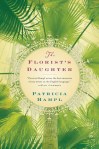 The Florist’s Daughter by Patricia Hampl: (As featured in my spring reading list.) “Love and flowers, death and flowers.” Poetic writing about small-town Minnesota life, a tense relationship with her late mother, and her late father’s flower shop.
- The Girls by Lori Lansens: I love reading about sister relationships, and the Darlen girls’ situation is an extreme case of love and jealousy given that they literally can’t get away from each other. Not as good as the two other conjoined-twin novels I’ve read, Chang and Eng by Darin Strauss and Cutting for Stone by Abraham Verghese, but I would read more from Lansens, a solid Oprah Book Club sort of author.

Three review books that will be featuring here in the near future:
- Goulash by Brian Kimberling

- Sorry I’m Late, I Didn’t Want to Come: An Introvert’s Year of Living Dangerously by Jessica Pan
- Mother Ship by Francesca Segal
A few quick reads:
 A Certain Loneliness: A Memoir by Sandra Gail Lambert: (A proof copy passed on by an online book reviewing friend.) A memoir in 29 essays about living with the effects of severe polio. Most of the pieces were previously published in literary magazines. While not all are specifically about the author’s disability, the challenges of life in a wheelchair seep in whether she’s writing about managing a feminist bookstore or going on camping and kayaking adventures in Florida’s swamps. I was reminded at times of Constellations by Sinéad Gleeson.
  No Happy Endings: A Memoir by Nora McInerny: (Borrowed from my sister.) I didn’t appreciate this as much as the author’s first memoir, It’s Okay to Laugh, though it’s in the same style: lots of short, witty but bittersweet essays reflecting on life’s losses. Within a year of being widowed by cancer, she met a new partner and soon was – surprise! – pregnant with his baby. Together they formed a blended family of four children ranging from 0 to 15 and two wounded adults. McInerny also writes about her newfound spirituality and feminism. The problem with the essay format is that she cycles through aspects of the same stories multiple times.
  Native Guard by Natasha Trethewey: (Free from 2nd & Charles.) Trethewey writes beautifully disciplined verse about her mixed-race upbringing in Mississippi, her mother’s death and the South’s legacy of racial injustice. She occasionally rhymes, but more often employs forms that involve repeated lines or words. The title sequence concerns a black Civil War regiment in Louisiana. Two favorites from this Pulitzer-winning collection by a former U.S. poet laureate were “Letter” and “Miscegenation”; stand-out passages include “In my dream, / the ghost of history lies down beside me, // rolls over, pins me beneath a heavy arm” (from “Pilgrimage”) and “I return / to Mississippi, state that made a crime // of me — mulatto, half-breed” (from “South”).
 I also read the first half or more of: The Music Shop by Rachel Joyce, my June book club book; Hungry by Jeff Gordinier, a journalist’s travelogue of his foodie journeys with René Redzepi of Noma fame, coming out in July; and the brand-new novel In West Mills by De’Shawn Charles Winslow – these last two are for upcoming BookBrowse reviews.
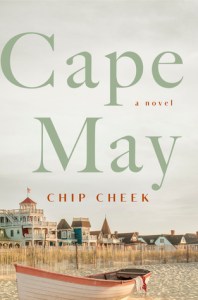
But the book I was most smug to have on my reading list for the trip was the recent novel Cape May by Chip Cheek. What could be more perfect for reading on location? I asked myself. Unfortunately, it stood out for the wrong reasons. In October 1957 a young pair of virgins, Effie and Henry, travel from Georgia to New Jersey for an off-season honeymoon in her uncle’s vacation home. They’re happy enough with each other but underwhelmed with the place (strangely, this matched my experience of Cape May), and even consider going home early until they fall in with Clara, a friend of Effie’s cousin; Clara’s lover, Max; and Max’s younger sister, Alma. Effie and Henry join the others for nightly drunken revelry.
[SPOILERS!] As the weeks pass Effie, ill and dejected, almost seems to disappear as Cheek delves into Henry’s besotted shenanigans, described in unnecessarily explicit sexual detail. When Effie makes a bid or two for her own sexual freedom late on, it only emphasizes the injustice of spending so much time foregrounding Henry’s perspective. Despite the strength of the period atmosphere and seaside location, this ends up being dull and dated. If you’re after a typically ‘trashy’ beach read and don’t mind lots of sex scenes, you may get on with it better than I did. 

Reading a few pages of Cape May over an ice-cold G&T at the wedding reception.
Bonus bookishness:
Vineland, New Jersey was on the way from our friends’ house to Cape May, so we stopped to take my proof copy of Barbara Kingsolver’s Unsheltered to its spiritual home. Alas, Vineland is an utterly boring small American town. However, Mary Treat at least appears on a painted mural on a building on the main street. The Historical Society, where Kingsolver did her research, was closed, but we photographed the outside.


What’s the last book you read ‘on location’? Did it work out well for you?
Young Writer of the Year Award: Shortlist Readings Event
On Saturday I attended an exclusive bloggers’ event at the Groucho Club in London with four of the authors shortlisted for the Sunday Times / Peters Fraser + Dunlop Young Writer of the Year Award (Sally Rooney was unable to make it from Dublin). Also in attendance were fellow shadow panelists Annabel and Clare and some other notable names from the UK blogging community, including Eric Karl Anderson and Naomi Frisby. It was lovely to meet them, and Annabel, for the first time, and to have time to chat with the shortlisted authors.

That’s me with Clare and Annabel. Thanks to Eric Karl Anderson for taking the photo.
The event was chaired by Robert Collins, a former deputy literary editor of the Sunday Times now with Intelligence Squared. Each author gave a short reading from their book and answered questions from the chair and the audience. In every case, what I heard helped me appreciate the work and the author more. All four writers were so funny and warm, and seemed equally humbled and delighted to be in the running for this award.
Minoo Dinshaw reminded me of an Oxford don twice his age. (Indeed, his father is an Oxford don, and his mother is Scottish writer Candia McWilliam, so he has a proud literary pedigree.) He first became aware of Steven Runciman as a child when he and his mother spotted the wizened old man in a hotel lobby in Edinburgh, where they had traveled for the book festival. He then read Runciman’s Crusades books at school, and when in 2011 he met Runciman’s niece and she asked him to write the biography, he said he couldn’t think of anything else he wanted to do. (And still can’t.) Reading from his Kindle as “I didn’t want to break my wrist” (!), he chose a late passage featuring Steven in his nineties. Dinshaw said that while writing about Runciman he felt by turns flirted with and accused. Living in his subject’s house, working in his library, even sleeping in his bed (just the once), he felt he “had a very strange ghost in my life.” Dinshaw said the project captured his attention because he’s romantic and competitive, but that he’d like to try writing fiction in the future.
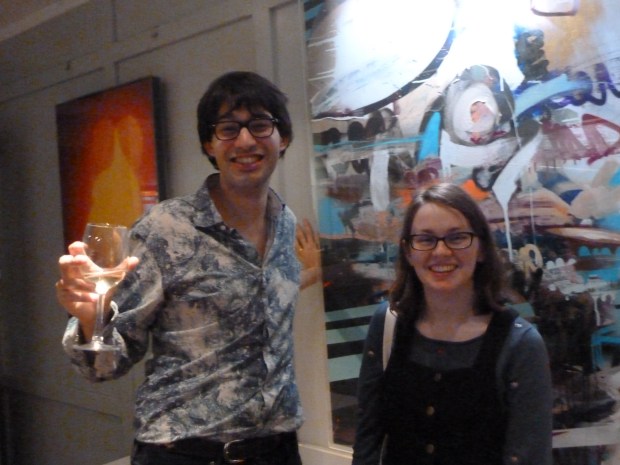
Clare with Minoo Dinshaw. Photo by Annabel Gaskell.
Julianne Pachico read a party scene from “The Tourists,” as it’s approaching the festive season. I was intrigued to learn that the interlinking structure of her book only emerged late on in the editing process; she’d originally meant to write a post-apocalyptic novel set all in one house, but found that setting too limiting. “I sort of work it out as I go along,” she said. So is it short stories or a novel? She’s sick of this question! Really she just wanted to write the kind of book she likes to read, citing Jennifer Egan’s A Visit from the Goon Squad and David Mitchell’s Ghostwritten as examples. Asked about her mentors, Pachico cited her mother, who told her “you’ll never be lonely, you’ll never be bored” as long as you read; and her first tutor, Andrew Cowan, who told her no one out there was writing anything like her story “Junkie Rabbit” – just the affirmation she needed. With all that’s happened in 2017, Pachico said she plans to turn to writing as a way “to outcreate the abyss” (a phrase from her twin sister, who’s also a writer). Pachico also teaches creative writing at Sheffield Hallam.

Julianne Pachico signing my book. Photo by Annabel Gaskell.
(As Sally Rooney was not in attendance, Collins read on her behalf a passage about Frances and Bobbi’s early friendship at school.)
 Claire North, aka “Cat” (real name: Catherine Webb; her fantasy and science fiction books are under various names) was in a way the odd one out at this event. Collins opened by saying that this award is all about getting in on the ground level with these writers, several of whom are debut authors. But North is a teen phenom who published her first book at age 14 and is set to release #20 next year. All along her parents called her a freak and demanded that she get her GCSEs and go to uni because writing “isn’t a proper job” (“but we’re very proud of you!” they’d usually append). She’s experienced the full gamut of responses over the years: some swore she wouldn’t have anything to say until age 40; others sighed that once she turned 18 she could no longer be marketed as “young.” She read the perfect passage from The End of the Day: a frantic, bravura account of the riders of the apocalypse together on a plane. She loves that science fiction “makes the extraordinary domestic” and playing with death appealed to her “flippant nature.” Charlie is, she thinks, the kindest character she’s ever written.
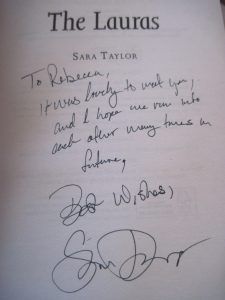 Sara Taylor read from one of Ma’s earliest stories about how her parents met. She wrote The Lauras while she was supposed to be completing her PhD thesis on censorship in American literature. At the time she was coming to terms with the fact that she was going to be staying in the UK, as well as remembering family road trips and aspects of her relationship with her mother that she wishes were otherwise. Her agent wasn’t comfortable with the focus on an “agender” character, but Taylor held firm. She’s used to ignoring the advice her (older, male) professors and advisors tend to give her. Instead, she gets tips from her ten-years-younger sister back in the States, who knows exactly how to “fix” her work. Taylor feels the USA is 5–10 years behind the UK on gender issues, and revealed that The Lauras is a response to the novel Love Child (1971) by Maureen Duffy. She has recently finished her third novel and hopes to get back into teaching since writing non-stop for nine months makes her “go a little funny.”
This was such a special event. There were no more than 20 people in the room, and at the end I got a chance to speak to each of the authors as they signed my books. I normally get shy in such situations, but everyone was completely approachable. (Sara Taylor and I confirmed that we were indeed on the same study abroad program to England, a few years apart, so spent some time reminiscing about Reading and our formerly women-only colleges. Her mother went to Hood College, my alma mater – thus the brief mention of it in The Lauras.)


Important upcoming dates:
- November 24th: shadow panel meeting in London
- November 27th: deadline for shadow panel winner decision
- November 29th: shadow panel winner announced on STPFD website
- December 3rd: shadow panel winner announced in Sunday Times
- December 7th: prize-giving ceremony at the London Library
I’ll be aiming to post my last couple of reviews on Wednesday.
Most Anticipated Releases for the Second Half of 2017
Back in December I previewed some of the books set to be released in 2017 that I was most excited about. Out of those 30 titles, here’s how I fared:
- Read: 16 [Disappointments: 2]
- Currently reading: 1
- Abandoned partway through: 2
- Lost interest in: 4
- Haven’t managed to find yet: 2
- Languishing on my Kindle; I still have vague intentions to read: 5
The latter half of the year promises plenty of big-name releases, such as long-awaited novels from Nicole Krauss and Jennifer Egan and a memoir by Maggie O’Farrell. Here are 24 books that happen to be on my radar for the coming months; this is by no means a full picture.
The descriptions below are adapted from the publisher blurbs on Goodreads, NetGalley or Amazon. Some of these books I already have access to in print or galley form; others I’ll be looking to get hold of. (In chronological order, generally by first publication date.)
July
How Saints Die by Carmen Marcus [July 13, Harvill Secker]: “Ten years old and irrepressibly curious, Ellie lives with her fisherman father, Peter, on the wild North Yorkshire coast. This vivacious and deeply moving novel portrays adult breakdown through the eyes of a child and celebrates the power of stories to shape, nourish and even save us.”
Moving Kings by Joshua Cohen [July 20, Fitzcarraldo Editions]: “Two young Israeli soldiers travel to New York after fighting in the Gaza War and find work as eviction movers. It’s a story of the housing and eviction crisis in poor Black and Hispanic neighborhoods that also shines new light on the world’s oldest conflict in the Middle East.” (print ARC)
August
 Sour Heart by Jenny Zhang [Aug. 1, Lenny]: “Centered on a community of immigrants who have traded their endangered lives as artists in China and Taiwan for the constant struggle of life at the poverty line in 1990s New York City, Zhang’s exhilarating collection examines the many ways that family and history can weigh us down and also lift us up.”
The Education of a Coroner: Lessons in Investigating Death by John Bateson [Aug. 15, Scribner]: “An account of the hair-raising and heartbreaking cases handled by the coroner of Marin County, California throughout his four decades on the job—from high-profile deaths to serial killers, to Golden Gate Bridge suicides.”
The Futilitarians: Our Year of Thinking, Drinking, Grieving, and Reading by Anne Gisleson [Aug. 22, Little, Brown and Company]: “A memoir of friendship and literature chronicling a search for meaning and comfort in great books, and a beautiful path out of grief.” (currently reading via NetGalley)
Midwinter Break by Bernard McLaverty [Aug. 22, W. W. Norton]: “A retired couple fly from their home in Scotland to Amsterdam for a long weekend. … [A] tender, intimate, heart-rending story … a profound examination of human love and how we live together, a chamber piece of real resonance and power.” (to review for BookBrowse)
 I Am, I Am, I Am: Seventeen Brushes with Death by Maggie O’Farrell [Aug. 22, Tinder Press]: “A childhood illness she was not expected to survive. A terrifying encounter on a remote path. A mismanaged labor in an understaffed hospital … 17 encounters at different ages, in different locations, reveal to us a whole life in a series of tense, visceral snapshots.”
What It Means When a Man Falls from the Sky by Lesley Nneka Arimah [Aug. 24, Tinder Press]: “A dazzlingly accomplished debut collection explores the ties that bind parents and children, husbands and wives, lovers and friends to one another and to the places they call home.” (print ARC to review for Shiny New Books)
Madness Is Better than Defeat by Ned Beauman [Aug. 24, Sceptre]: “In 1938, rival expeditions set off for a lost Mayan temple, one intending to shoot a screwball comedy on location, the other to disassemble the temple and ship it to New York. … Showcasing the anarchic humor and boundless imagination of one of the finest writers of his generation.”
Forest Dark by Nicole Krauss [Aug. 24, Harper/Bloomsbury]: “A man in his later years and a woman novelist, each drawn to the Levant on a journey of self-discovery. Bursting with life and humor, this is a profound, mesmerizing novel of metamorphosis and self-realization – of looking beyond all that is visible towards the infinite.” (currently reading via NetGalley)
 My Absolute Darling by Gabriel Tallent [Aug. 29, Riverhead Books/4th Estate] “A brilliant and immersive, all-consuming read about one fourteen-year-old girl’s heart-stopping fight for her own soul. … Shot through with striking language in a fierce natural setting.” (e-ARC to review for the Pittsburgh Post-Gazette)
September
Dinner at the Center of the Earth by Nathan Englander [Sept. 5, Knopf]: “[A] political thriller that unfolds in the highly charged territory of the Israeli-Palestinian conflict and pivots on the complex relationship between a secret prisoner and his guard. … Englander has woven a powerful, intensely suspenseful portrait of a nation riven by insoluble conflict.”
George and Lizzie by Nancy Pearl [Sept. 5, Touchstone]: “[A]n emotionally riveting debut novel about an unlikely marriage at a crossroads. … With pitch-perfect prose and compassion and humor to spare, George and Lizzie is an intimate story of new and past loves, the scars of childhood, and an imperfect marriage at its defining moments.”
 Little Fires Everywhere by Celeste Ng [Sept. 7, Little, Brown]: “In Shaker Heights, a placid, progressive suburb of Cleveland, everything is meticulously planned. … [E]xplores the weight of long-held secrets and the ferocious pull of motherhood-and the danger of believing that planning and following the rules can avert disaster, or heartbreak.”
Afterglow (A Dog Memoir) by Eileen Myles [Sept. 12, Grove Press]: “A probing investigation into the dynamics between pet and pet-owner. Through this lens, we examine Myles’s experiences with intimacy and spirituality, celebrity and politics, alcoholism and recovery, fathers and family history.”
October
From Here to Eternity: Traveling the World to Find the Good Death by Caitlin Doughty [Oct. 3, W. W. Norton]: “Fascinated by our pervasive terror of dead bodies, mortician Caitlin Doughty set out to discover how other cultures care for their dead. Featuring Gorey-esque illustrations by artist Landis Blair.”
Manhattan Beach by Jennifer Egan [Oct. 3, Scribner/Corsair]: “The pace and atmosphere of a noir thriller and a wealth of detail about organized crime … Egan’s first historical novel is a masterpiece, a deft, startling, intimate exploration of a transformative moment in the lives of women and men, America, and the world.”
Dunbar by Edward St. Aubyn [Oct. 3, Hogarth Shakespeare]: “Henry Dunbar, once all-powerful head of a family firm, has handed it over to his two eldest daughters, Abby and Megan. Relations quickly soured. Now imprisoned in a Lake District care home with only an alcoholic comedian as company, Dunbar starts planning his escape.” (print ARC)
 The Diary of a Bookseller by Shaun Bythell [Oct. 5, Profile Books]: “Bythell owns The Bookshop, Wigtown – Scotland’s largest second-hand bookshop. … These wry and hilarious diaries provide an inside look at the trials and tribulations of life in the book trade, from struggles with eccentric customers to wrangles with his own staff.”
In Shock by Rana Awdish [Oct. 17, St. Martin’s]: “Dr. Awdish spent months fighting for her life, enduring consecutive major surgeries and experiencing multiple overlapping organ failures. At each step of the recovery process, she was faced with repeated cavalier behavior from her fellow physicians. … A brave road map for anyone navigating illness.”
American Wolf: A True Story of Survival and Obsession in the West by Nate Blakeslee [Oct. 17, Crown]: “[I]n recent decades, conservationists have brought wolves back to the Rockies, igniting a battle over the very soul of the West. With novelistic detail, Nate Blakeslee tells the gripping story of one of these wolves, alpha female O-Six.” (print ARC)
November
The White Book by Han Kang [Nov. 2, Portobello Books]: “Writing while on a residency in Warsaw, the narrator finds herself haunted by the story of her older sister, who died a mere two hours after birth. A fragmented exploration of white things … the most autobiographical and experimental book to date from [the] South Korean master.”
 Radio Free Vermont: A Fable of Resistance by Bill McKibben [Nov. 7, Blue Rider Press]: “Follows a band of Vermont patriots who decide that their state might be better off as its own republic. … McKibben imagines an eccentric group of activists who carry out their own version of guerrilla warfare … a fictional response to the burgeoning resistance movement.”
Future Home of the Living God by Louise Erdrich [Nov. 14, Harper]: “Evolution has reversed itself, affecting every living creature on earth. … A chilling dystopian novel both provocative and prescient … a moving meditation on female agency, self-determination, biology, and natural rights that speaks to the troubling changes of our time.”
December
(Nothing as of yet…)
Which of these tempt you? What other books from the latter half of 2017 are you most looking forward to?
Better Late than Never: City on Fire
I aim to read one book of 500+ pages in each month of 2017. My first Doorstopper of the Month is City on Fire, the 2015 debut novel from Garth Risk Hallberg. It’s common knowledge that Hallberg earned a six-figure advance for this 911-page evocation of a revolutionary time in New York City. When it was first published I didn’t think I had the fortitude to tackle it and had in mind to wait for the inevitable miniseries instead, but when I won a copy in a goodie bag from Hungerford Bookshop I decided to go for it. I started the novel just after Christmas and finished it a few days ago, so like Donna Tartt’s The Goldfinch it took me roughly a month to read because I had many other books on the go at the same time.
 Opening on Christmas Eve 1976 and peaking with the July 1977 blackout, the novel brings its diverse cast together through a shooting in Central Park. Insider traders, the aimless second generation of some of the city’s wealthiest aristocrats, anarchist punk rockers, an African-American schoolteacher, a journalist and his Vietnamese neighbor, a fireworks manufacturer, a policeman crippled by childhood polio – the characters fill in the broad canvas of the city, everywhere from Wall Street boardrooms to drug dens.
The real achievement is not how Hallberg draws each character but how he fits them all together. The closest comparison I can make is with one of Dickens’s long novels, say David Copperfield, where, especially as you approach the conclusion, you get surprising meet-ups of figures from different realms of life. The relaxed chronology reaches back to the 1950s and forward to 2003 to give hints of where these people came from and what fate holds for them.
City on Fire might sound like a crime drama – I can see a miniseries working in a manner comparable to The Wire – and the mystery of who shot Samantha Cicciaro does indeed last from about page 80 to page 800-something. But finding out who shot her and why (or why investment bankers would be funding a posse of anarchists, or who pushed a journalist into the river) is something of an anticlimax. The journey is the point, and the city is the real star, even though it’s described with a kind of affectionate disdain in the passages that follow:
The stench of the basement level reached him even here, like hot-dog water mixed with roofing tar and left in an alley to rot
The park on New Year’s Day had been a blasted whiteness, or a series of them, hemmed in by black trees like sheets snagged on barbed wire.
It seemed impossible that he’d chosen to live here, at a latitude where spring was a semantic variation on winter, in a grid whose rigid geometry only a Greek or a builder of prisons could love, in a city that made its own gravy when it rained. Taxis continued to stream toward the tunnel, like the damned toward a Boschian hellmouth. Screaming people staggered past below. Impossible, that he now footed the rent entire, two hundred bucks monthly for the privilege of pressing his cheek to the window and still not being able to see spectacular Midtown views. Impossible, that the cinderblock planter on the fire escape could ever have produced flowers.
Or wasn’t this city really the sum of every little selfishness, every ignorance, every act of laziness and mistrust and unkindness ever committed by anybody who lived there, as well as of everything she personally had loved?
Mercer Goodman, Jenny Nguyen and Richard Groskoph were my three favorite characters, and I might have liked to see more of each of them. I also felt that the book as a whole was quite baggy, and the six Interludes that separate the seven large sections, remarkable as they are (especially an entire fanzine, complete with photographs, comics and handwritten articles), weren’t strictly necessary.

It’s definitely a chunkster. For the longest while it felt like I wasn’t making a dent.
Still, I couldn’t help but be impressed by Hallberg’s ambition, and on the sentence level the novel is always well wrought and surprising, with especially lovely last lines that are like a benediction. Though it’s mostly set in the 1970s, this never feels dated; in fact, I thought it thoroughly relevant for our time: “even now they’re writing over history, finding ways to tell you what you just saw doesn’t exist. The big, bad anarchic city, people looting, ooga-booga. Better to trust the developers and the cops.”
I won’t pretend that a 900+-page book isn’t a massive undertaking, and I have some trusted bloggers and Goodreads friends who gave up on this after 250 or 450 pages. So I can’t promise you that you’ll think it’s worth the effort, though for me it was. A modern twist on the Dickensian state-of-society novel, it’s one I’d recommend to fans of Jonathan Franzen, Bill Clegg and Jennifer Egan.
My rating: 
Four Books Abandoned Recently (+ One I SHOULD Have)
I’d like to think I’ve gotten better at choosing books that are sure to suit me, but sometimes it’s still a matter of ditching the duds when it becomes clear they’re not working. Here’s the small (digital) pile of abandoned novels I’ve amassed over the last couple of months. I’d be interested to hear if you’ve read any of them and thought they were worth persisting with.
Mrs. Houdini by Victoria Kelly
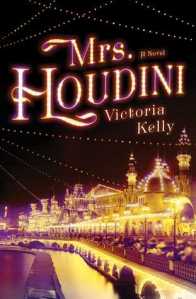 Perfectly serviceable historical fiction, but with no spark. I felt like I was just being given a lot of information about the two major time periods (1894 and 1929). Alas, scenes set at a séance, a circus, and an insane asylum are not nearly as exciting as they promise to be. And, as is often the case with these famous wives books – a genre I generally love but can also find oddly disappointing from time to time – the protagonist tries but fails to explain why she finds her husband so fascinating. “His eyes danced. There was a madness to his passion, but he was not insane. There was something real and familiar about him. … Harry was promising her a life of possibility, of magic, and it was unlike anything she had ever imagined for herself.” [Read the first 40%.]
My rating: 
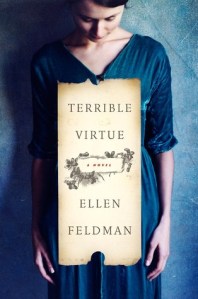 Terrible Virtue by Ellen Feldman
Another case of expectations too high and payoff too little. Fictionalized biographies can be among my favorite historical fiction, but the key is that they have to do something that a biography doesn’t do. They have to shape a story that goes beyond the chronology of what happened to whom and when. This novel about contraception activist Margaret Sanger failed to tell me anything I didn’t already know from The Birth of the Pill, a more engaging book all round. If anything this left me more confused about why Sanger consented to marriage and motherhood. These cringe-worthy lines try to explain it: “His [Bill’s] sex upended the world. His love filled the hole my childhood had carved out of me. Maybe that was the reason I married him.” [Read the first 26%.]
My rating: 
Vexation Lullaby by Justin Tussing
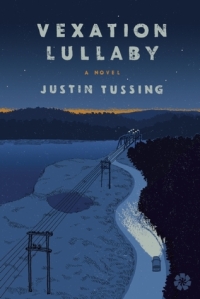 This started off very promising, with Pete Silver, a doctor in Rochester, New York, being summoned by ageing rock star Jimmy Cross for a consult. Jimmy knows Pete’s mother from way back and wants to know if he’ll accompany him on the airplane during this comeback tour as his personal physician. However, after that there was a lot of downtime filling in Pete’s backstory and introducing a first-person voice that didn’t feel relevant. This is Arthur Pennyman, a fan who’s seen every Jimmy Cross show and writes them up on his website. I didn’t care for Arthur’s sections and thought they pulled attention away from Pete’s story. That’s a shame, as the plot reminded me of Jennifer Egan’s A Visit from the Goon Squad. [Read the first nearly 100 pages.]
My rating:
 Over the Plain Houses by Julia Franks
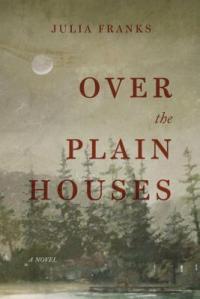
Entirely decent historical fiction with a flavor of Ron Rash or Virginia Reeves (Work Like Any Other), but it felt so slow and aimless. Irenie Lambey is married to a harsh fundamentalist preacher named Brodis. She longs for their son to get a good education and hopes that the appearance of a USDA agent may be the chance, but Brodis cares about the boy’s soul rather than his mind. On night-time walks, Irenie stores up artifacts and memories in a cave – desperately trying to have a life larger than what her husband controls. It could well just be my lack of patience, but the believable dialect and solid characters weren’t quite enough to keep me reading. [Read the first 16%.]
My rating:
And now for the one I should have stopped reading at about the 25% point. I have an expanded version of this review on Goodreads; click on the title to read more.
The Mandibles: A Family, 2029–2047 by Lionel Shriver
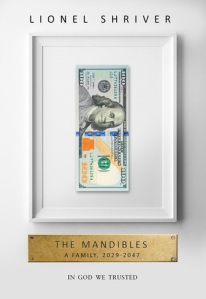 Shriver does a good line in biting social commentary. Here she aims at Atwood-style near-future speculative fiction and takes as her topic the world economy. I had big problems with this one. Worst is the sheer information overload: tons of economic detail crammed into frequent, wearisome conversations. Instead of making America’s total financial collapse a vague backdrop for her novel, she takes readers through it event by agonizing event. This means the first third or more of the novel feels like prologue, setting the scene. When she finally gets around to the crux of the matter – the entire extended Mandible family descending on Florence’s small New York City house – it feels like too little plot, too late. Everything Shriver imagines for the near future, except perhaps the annoying slang (e.g. “boomerpoop”), is more or less believable. But boy is it tedious in the telling.
My rating: 
The Best Fiction of 2015: My Top 15
2015 was a great year for fiction, largely dominated by doorstoppers (like Death & Mr. Pickwick and City on Fire, in addition to the Franzen and Yanagihara listed below) and Harper Lee. I’ve decided to pass on Go Set a Watchman, but I’ve read plenty of the year’s big-name fiction, as well as some more obscure titles I’d like to bring to your attention.
As difficult as it is to pit books against each other and come up with a numbered list, I’ve given it a go and come up with my top 15 fiction works of the year. To keep it simple for myself and straightforward for potential readers, I’m limiting myself to two sentences per title: the first is a potted summary; the second tells you why you should read it. I also link to any full reviews.
Let the countdown begin!
- The Shore
 by Sara Taylor: Gritty and virtuosic, this debut novel-in-13-stories imagines 250 years of history on a set of islands. Every region needs a literary chronicler, and I reckon Taylor – channeling David Mitchell with her cross-centuries approach – is it for the Eastern Shore of Maryland and Virginia’s islands.
 Gold Fame Citrus by Claire Vaye Watkins: Gold, fame, citrus: reasons people once came to California; now, only a desperate remnant remains in the waterless wasteland. As a smart, believable dystopian with a family at its heart, this trumps any of last year’s efforts (like Station Eleven or California).
 Preparation for the Next Life by Atticus Lish: Like West Side Story, this debut novel is an updated Romeo and Juliet narrative – a tragedy-bound love story with a grimy contemporary setting and a sobering message about racism and the failure of the American dream. The matter-of-fact style somehow manages to elevate the everyday and urban into an art form. (Reviewed for Third Way magazine in August.)
- Circling the Sun
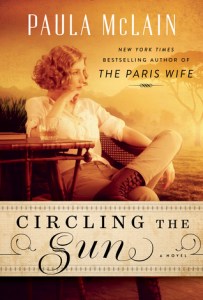 by Paula McLain: Before she ever thought of flying solo across the Atlantic, aviatrix Beryl Markham was just Beryl Clutterbuck: raised in Kenya, one of Africa’s first female horse trainers, its first professional female pilot, and the other side of the love triangle featuring Karen Blixen (Isak Dinesen) and Denys Finch Hatton. McLain describes her African settings beautifully, and focuses as much on the small emotional moments that make a life as she does on its external thrills.
 Kitchens of the Great Midwest by J. Ryan Stradal: One of my favorite debuts of the year: a culinary-themed collection of short stories loosely linked through the character of Eva Thorvald, a young chef with an unfortunate past and a rare palate. Read it for a glimpse of how ordinary, flawed Americans live – no fairytale endings here.
 Hausfrau by Jill Alexander Essbaum: This arresting debut reads like a modern retelling of Madame Bovary, with its main character a desperate American housewife in Zurich. Watch Anna’s trajectory with horror, but you cannot deny there is a little of her in you.
 The Versions of Us by Laura Barnett: In this impressively structured, elegantly written debut, Barnett chronicles the romantic lives of two Cambridge graduates through three-quarters of a century, giving three options for how their connection might play out. There is no one perfect person or story: unsentimental this may be, but it feels true to how life works. (Reviewed for Third Way magazine in July.)
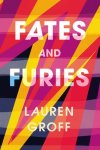 Fates and Furies by Lauren Groff: An incisive study of a marriage, beautifully written and rich with allusions to Shakespeare and Greek mythology. Groff makes it onto a short list of women I expect to produce the Great American Novel (along with Curtis Sittenfeld, Jennifer Egan, and Hanya Yanagihara).
 Purity by Jonathan Franzen: East Germany, Bolivia and Oakland, California: Franzen doesn’t quite pull all his settings and storylines together, but this is darn close to a 5-star Dickensian read. It’s strong on the level of character and theme, with secrecy, isolation and compassion as recurring topics.
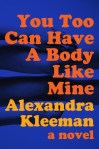 You Too Can Have a Body Like Mine by Alexandra Kleeman: Kleeman’s first novel is a full-on postmodern satire bursting with biting commentary on consumerism and conformity. Think of her as an heir to Dave Eggers and Douglas Coupland, with a hefty dollop of Margaret Atwood thrown in.
 The Animals by Christian Kiefer: Kiefer’s second novel contrasts wildness and civilization through the story of a man who runs an animal refuge to escape from his criminal past. A tough opening sequence establishes themes that will be essential to the novel: the fine line between instincts and decisions, the moral dilemmas involved in environmentalism, and the seeming inescapability of violence.
 The Tsar of Love and Techno by Anthony Marra: A collection of tightly linked short stories giving an intimate look at Russia and Chechnya in wartime and afterwards – revealing how politics, family, and art intertwine. Just as he did in his first novel, Marra renders unspeakable tragedies bearable through his warm and witty writing.
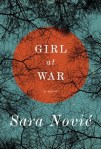 Girl at War by Sara Nović: This pitch-perfect debut novel is an inside look at the Yugoslavian Civil War and its aftermath, from the perspective of a young girl caught up in the fighting. The way Nović recreates a child’s perspective on the horrors of war is masterful: Ana’s viewpoint is realistic and matter-of-fact, without the melodrama an omniscient narrator might inject.
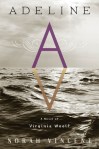 Adeline by Norah Vincent: Set in 1925–1941 and structured like a five-act play, the novel revolves around Virginia Woolf’s philosophical conversations with Leonard Woolf, Lytton Strachey and his lover Carrington, T.S. and Valerie Eliot, W.B. Yeats, and her doctor, Octavia Wilberforce. Vincent has produced a remarkable picture of mental illness from the inside.
- A Little Life
 by Hanya Yanagihara: Jude St. Francis: Dickensian orphan, patron saint of lost causes, Christlike Man of Sorrows, and one of the most memorable characters in recent fiction. This novel is an attempt to tackle the monolithic question of what makes life worth living; among the potential answers: love (though it doesn’t conquer all), friendship, creativity, and the family you create for yourself.
Best Discoveries of the Year: Mary Lawson (Road Ends), Daniel Kehlmann (F: A Novel), Jonathan Evison (This Is Your Life, Harriet Chance!) and Jonathan Coe (Number 11).
Debut Novelists Whose Next Work I’m Most Looking Forward to: Jessamyn Hope (Safekeeping – reviewed here in June) and Carmiel Banasky (The Suicide of Claire Bishop – reviewed for Foreword’s Fall 2015 issue).
 The Year’s Biggest Disappointments: Etta and Otto and Russell and James by Emma Hooper; Where My Heart Used to Beat by Sebastian Faulks and Avenue of Mysteries by John Irving (both rehash the authors’ familiar themes; I couldn’t make it past 15% in the latter).
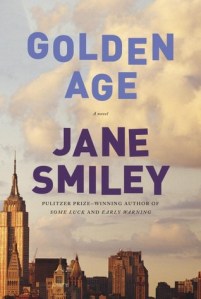
Novels I Most Wish I’d Gotten to in 2015: Nell Zink’s Mislaid, Sara Baume’s Spill Simmer Falter Wither, and the final two volumes of Jane Smiley’s “Last Hundred Years” trilogy.
What are the best novels you read this year? Any new favorite books or authors? Your comments are always welcome.
I’ll be back tomorrow with my top 15 nonfiction books I read this year (most of them not published in 2015, however – I seem to have been a nonfiction slacker!)
 Bookish Beck = Rebecca Foster. American transplant to England. Freelance proofreader and book reviewer.
 Bookish Beck