Best Backlist Reads of 2018
Like a lot of book bloggers, I’m irresistibly drawn to the shiny new books released each year. However, I’ve noticed recently that many of my most memorable reads were published years or even decades ago. In 2018 I even came across a handful of books that are for me among the very best representatives of their genre, whether that’s nature, travel, family memoir, historical fiction or science fiction. The below selections are in alphabetical order by author name, and account for all the rest of my 4.5- and 5-star ratings of the year (another 27!).

My best backlist reads of the year (most of the ones I own in print, anyway).
Fiction
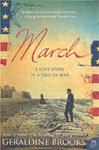 March by Geraldine Brooks (2005): The best Civil War novel I’ve read. The best slavery novel I’ve read. One of the best historical novels I’ve ever read, period. Brooks’s second novel uses Little Women as its jumping-off point but is very much its own story. The whole is a perfect mixture of what’s familiar from history and literature and what Brooks has imagined.
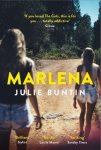 Marlena by Julie Buntin (2017): The northern Michigan setting pairs perfectly with the novel’s tone of foreboding: you have a sense of these troubled teens being isolated in their clearing in the woods, and from one frigid winter through a steamy summer and into the chill of the impending autumn, they have to figure out what in the world they are going to do with their terrifying freedom. It’s basically a flawless debut, one I can’t recommend too highly.
 Reading in the Dark by Seamus Deane (1996): Ireland’s internecine violence is the sinister backdrop to this family’s everyday sorrows, including the death of a child and the mother’s shaky mental health. The book captures all the magic, uncertainty and heartache of being a child, in crisp scenes I saw playing out in my mind.
 The Life and Loves of Lena Gaunt by Tracy Farr (2013): Lena Gaunt: early theremin player, grande dame of electronic music, and opium addict. I loved how Farr evokes the strangeness and energy of theremin music, and how sound waves find a metaphorical echo in the ocean’s waves – swimming is Lena’s other great passion.
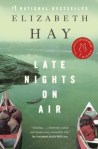 Late Nights on Air by Elizabeth Hay (2007): A tight-knit cast gathers around the local radio station in Yellowknife, a small city in Canada’s Northwest Territories: Harry and Gwen, refugees from Ontario starting new lives; Dido, an alluring Dutch newsreader; Ralph, the freelance book reviewer; menacing Eddie; and pious Eleanor. This is a marvellous story of quiet striving and dislocation; I saw bits of myself in each of the characters, and I loved the extreme setting, both mosquito-ridden summer and bitter winter.
 The Leavers by Lisa Ko (2017): An ambitious and satisfying novel set in New York and China, with major themes of illegal immigration, searching for a mother and a sense of belonging, and deciding what to take with you from your past. This was hand-picked by Barbara Kingsolver for the 2016 PEN/Bellwether Prize for Socially Engaged Fiction.
 The Invisible Bridge by Julie Orringer (2010): Hungarian Jew Andras Lévi travels from Budapest to Paris to study architecture, falls in love with an older woman who runs a ballet school, and – along with his parents, brothers, and friends – has to adjust to the increasingly strict constraints on Jews across Europe in 1937–45. It’s all too easy to burn out on World War II narratives these days, but this is among the very best I’ve read.
 The Sparrow by Mary Doria Russell (1996): For someone like me who struggles with sci-fi at the best of times, this is just right: the alien beings are just different enough from humans for Russell to make fascinating points about gender roles, commerce and art, but not so peculiar that you have trouble believing in their existence. All of the crew members are wonderful, distinctive characters, and the novel leaves you with so much to think about: unrequited love, destiny, faith, despair, and the meaning to be found in life.
 Salt Creek by Lucy Treloar (2015): Hester Finch is looking back from the 1870s – when she is a widowed teacher settled in England – to the eight ill-fated years her family spent at Salt Creek, a small (fictional) outpost in South Australia, in the 1850s–60s. This is one of the very best works of historical fiction I’ve read; it’s hard to believe it’s Treloar’s debut novel.
 Christmas Days: 12 Stories and 12 Feasts for 12 Days by Jeanette Winterson (2016): I treated myself to this new paperback edition with part of my birthday book token and it was a perfect read for the week leading up to Christmas. The stories are often fable-like, some spooky and some funny. Most have fantastical elements and meaningful rhetorical questions. Winterson takes the theology of Christmas seriously. A gorgeous book I’ll return to year after year.
Poetry
 Available Light by Marge Piercy (1988): The subjects are diverse: travels in Europe, menstruation, identifying as a Jew as well as a feminist, scattering her father’s ashes, the stresses of daily life, and being in love. Some of my favorites were about selectively adhering to the lessons her mother taught her, how difficult it is for a workaholic to be idle, and wrestling the deity for words.
Nonfiction
 Deep Country: Five Years in the Welsh Hills by Neil Ansell (2011): One of the most memorable nature/travel books I’ve ever read; a modern-day Walden. Ansell’s memoir is packed with beautiful lines as well as philosophical reflections on the nature of the self and the difference between isolation and loneliness.
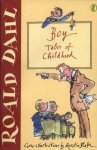 Boy by Roald Dahl (1984): Pranks and larks and holidays: these are all here; so is crushing homesickness and a bitter sense of injustice at being at the mercy of sadistic adults. Nearly 60 years later, Dahl could use memory and imagination to fully inhabit his childhood self and give a charming survey of the notable events of his life up to age 20.
 This Cold Heaven: Seven Seasons in Greenland by Gretel Ehrlich (2001): I thoroughly enjoyed my armchair trek across a frigid island nation in the company of Gretel Ehrlich, who traveled here repeatedly between 1995 and 2001 and intersperses her journeys with those of her historical model, Inuit–Danish explorer Knud Rasmussen, whose seven Arctic expeditions took in the west coast of Greenland and the far north of the North American continent. Every time she finds a fresh way to write about ice and sun glare and frigid temperatures.
 Ali: A Life by Jonathan Eig (2017): It’s a riveting account of outliving segregation and developing a personal style and world-beating confidence; it’s a sobering tale of facing consequences and having your own body fail you. I’m the furthest thing from a sports fan you could imagine, but I approached this as a book about a cultural icon and read it with a spirit of curiosity about how Eig would shape this life story and separate the facts from the legend. I loved it.
 The Book of Forgotten Authors by Christopher Fowler (2017): A charming introduction to 99 more or less obscure writers. Each profile is a perfectly formed mini-biography with a survey of the author’s major work: in just two or three pages, Fowler is able to convey all a writer’s eccentricities and why their output is still worth remembering.
 To the Is-Land: An Autobiography by Janet Frame (1982): This is some of the best writing about childhood and memory that I’ve ever read, infused with music, magic and mystery. The prose alternates between dreamy and matter-of-fact as Frame describes growing up in New Zealand one of five children in the Depression and interwar years.
 Leaving Before the Rains Come by Alexandra Fuller (2015): This poignant sequel to Don’t Let’s Go to the Dogs Tonight is a portrait of Fuller’s two-decade marriage, from its hopeful beginnings to its acrimonious end. What I most appreciated about the book was Fuller’s sense of being displaced: she no longer feels African, but nor does she feel American.
 West With the Night by Beryl Markham (1942): Markham writes so vividly about the many adventures of her life in Africa: hunting lions, training race horses, and becoming one of the continent’s first freelance pilots, delivering mail and locating elephant herds. Whether she’s reflecting on the many faces of Africa or the peculiar solitude of night flights, the prose is just stellar.
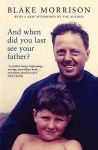 And When Did You Last See Your Father? by Blake Morrison (1993): An extraordinary memoir based around the author’s relationship with his father. Alternating chapters give glimpses into earlier family life and narrate Morrison’s father’s decline and death from cancer. This is simply marvelously written, not a bad line in the whole thing.
 The Seabird’s Cry: The Lives and Loves of Puffins, Gannets and Other Ocean Voyagers by Adam Nicolson (2017): This is an extraordinarily well-written and -researched book (a worthy Wainwright Prize winner) about the behavior, cultural importance, and current plight of the world’s seabirds. Each chapter takes up a different species and dives deep into everything from its anatomy to the legends surrounding it, simultaneously conveying the playful, intimate real lives of the birds and their complete otherness.
 The Long Goodbye: A Memoir of Grief by Meghan O’Rourke (2011): I read a whole lot of bereavement memoirs; this has been one of the very best. O’Rourke tells her story with absolute clarity – a robust, plain-speaking style that matches her emotional transparency. The heart of the book is her mother’s death from colorectal cancer on Christmas Day 2008, but we also get a full picture of the family life that preceded it and the first couple of years of aftermath.
 Ghosts of the Tsunami: Death and Life in Japan’s Disaster Zone by Richard Lloyd Parry (2017): Eighteen and a half thousand people died in the earthquake and tsunami that hit Japan in March 2011. It’s not really possible to get your head around a tragedy on that scale so, wisely, Parry focuses on a smaller story within the story: 74 died at Okawa primary school because the administration didn’t have a sufficient disaster plan in place. This is a stunning portrait of a resilient people, but also a universal story of the human spirit facing the worst.
 Lots of Candles, Plenty of Cake by Anna Quindlen (2012): A splendid memoir-in-essays that dwells on aging, parenting and female friendship. Some of its specific themes are marriage, solitude, the randomness of life, the process of growing into your own identity, and the special challenges her generation (roughly my mother’s) faced in seeking a work–life balance. Her words are witty and reassuring, and cut right to the heart of the matter in every case.
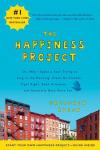 The Happiness Project: Or, Why I Spent a Year Trying to Sing in the Morning, Clean My Closets, Fight Right, Read Aristotle, and Generally Have More Fun by Gretchen Rubin (2009): Probably the best self-help book I’ve read; dense (in the best possible way) with philosophy, experience and advice. What I appreciated most is that her approach is not about undertaking extreme actions to try to achieve happiness, but about finding contentment in the life you already have by adding or tweaking small habits – especially useful for pessimists like me.
 In the Days of Rain: A daughter. A father. A cult by Rebecca Stott (2017): This was a perfect book for my interests, and just the kind of thing I would love to write someday. It’s a bereavement memoir that opens with Stott’s father succumbing to pancreatic cancer and eliciting her promise to help finish his languishing memoir; it’s a family memoir that tracks generations through England, Scotland and Australia; and it’s a story of faith and doubt, of the absolute certainty experienced inside the Exclusive Brethren (a Christian sect that numbers 45,000 worldwide) and how that cracked until there was no choice but to leave.
 Writers & Company by Eleanor Wachtel (1993): Erudite and fascinating author interviews from Wachtel’s weekly Canadian Broadcasting Corporation radio program. Whether I’d read anything by these authors (or even heard of them) or not, I found each Q&A chock-full of priceless nuggets of wisdom about creativity, mothers and daughters, drawing on autobiographical material, the writing process, and much more.
And if I really had to limit myself to just two books – my very best fiction and nonfiction reads of the year – they would be March by Geraldine Brooks and And When Did You Last See Your Father? by Blake Morrison.

What were your best backlist reads this year?
Two Records of Bodily Transformation: Amateur and Shapeshifters
Amateur: A True Story about What Makes a Man, Thomas Page McBee
 Thomas Page McBee was the first transgender man to box at Madison Square Garden. In his second memoir, which arose from a Quartz article entitled “Why Men Fight,” he recounts the training leading up to his charity match and ponders whether aggression is a natural male trait. McBee grew up in a small town outside Pittsburgh with a stepfather who sexually abused him from age four. In 2011 he started the testosterone injections that would begin his gender transformation. During the years that followed, other men seemed to pick fights with him fairly often, and he was unsure what to do about it. Finally, in 2015, the Manhattan editor decided to confront the belligerent male stereotype by starting boxing training.
What I most appreciated were the author’s observations of how others have related to him since his transition. He notices that he’s taken more seriously at work as a man, and that he can be an object of fear – when jogging behind a woman at night, for instance. One of the most eye-opening moments of the book is when he realizes that he’s been talking over his own sister. Thankfully, McBee is sensitive enough to stop and change, recognizing that kindness and vulnerability are not faults but attributes any person should be proud of.
I have a feeling I would have preferred his previous memoir, Man Alive, which sounds like it has more about the transition itself. Jonathan Eig’s biography of Muhammad Ali is one of the best books I’ve read this year, and in comparison I didn’t find the boxing writing here very interesting. Likewise, this pales beside two similar but more perceptive books I’ve read that have been hugely influential on my own understanding of gender identity: Conundrum by Jan Morris and The Argonauts by Maggie Nelson.
My rating: 
Amateur was published in the UK by Canongate on August 2nd. My thanks to the publisher for the free copy for review.
Shapeshifters: On Medicine and Human Change by Gavin Francis
 Gavin Francis is a physician with a practice near Edinburgh. His latest book is like a taster course in medical topics. The overarching theme is the modifications the body undergoes, so there are chapters on, for example, body-building, tattoos, puberty, prosthetic limbs, dementia and menopause. Over his years in general practice Francis has gotten to know his patients’ stories and seen them change, for better or worse. These anecdotes of transformation are one source for his book, but he also applies insight from history, mythology, literature, etymology and more. So in a chapter on conception he discusses the Virgin Mary myth, Leonardo da Vinci’s fetal diagrams, the physiological changes pregnant women experience, and the case of a patient, Hannah, who had three difficult, surprise pregnancies in quick succession.
We are all in the process of various transformations, Francis argues, whether by choice or involuntarily. (I decided on the link with McBee because of a chapter on sex changes.) I was less convinced by the author’s inclusion of temporary, reversible changes such as sleep, hallucinations, jet lag and laughter. And while each chapter is finely wrought, I felt some sort of chronological or anatomical order was necessary to give the book more focus. All the same, I suspect this will be a strong contender for next year’s Wellcome Book Prize because of its broad relevance to human health and its compassionate picture of bodies in flux.
My rating: 
Shapeshifters was published by the Wellcome Collection/Profile Books on May 2nd. My thanks to the publisher for the proof copy for review.
Third Blog Anniversary
Hard to believe, but I’ve only been blogging for three years as of today. It feels like something I’ve been doing forever, but at the same time I still consider myself a newbie. This is my 382nd post, so I’ve been keeping up an average of 2.5 posts a week.

By Joey Gannon from Pittsburgh, PA (Candles) [CC BY-SA 2.0 (http://creativecommons.org/licenses/by-sa/2.0)%5D, via Wikimedia Commons.
I’ve particularly enjoyed doing author Q&As and highlighting seasonal reads, novellas, books about cats, and physical book traits. I especially like writing up bookshop visits and other literary travels, and discussing literary prizes. My supply of graphic novels seems to have dried up; for new releases I focus on literary fiction, historical fiction and memoirs.
Straightforward book reviews have always been less popular than book lists and other more tangentially book-related posts. Library Checkout posts are consistently well-liked, as were the “Books in Brief” sets of five mini-reviews I used to do. As I’ve noted before, my posts on abandoned books are always perversely popular.
Some of my favorite posts from the past year were on World Kidney Day, Mother–Daughter Author Pairs, and Book Hoarding, and my review in verse of Jonathan Eig’s Ali: A Life.
The numbers of likes seem to be less than informative as they simply reflect a growing number of followers – many of my recent posts have averaged 20–25 likes – so I prefer to look at comments, as it means people are truly reading and engaging. In terms of numbers of comments, my top posts of all time appeared in the last year and were:
- Bibliotherapy appointment
- Books in Brief, May 2017 (featuring books by Sebastian Barry, Tracy Chevalier, Thomas H. Cook, Nicole Gulotta and Elizabeth Hay)
- (Tied for 3rd) Booker Longlist 2017 & Jacob’s Room Is Full of Books review
Thanks to everyone who has supported me this past year, and/or all three years, by visiting the site, commenting, re-tweeting, and so on. You’re the best!
Biography of the Month: Ali: A Life by Jonathan Eig
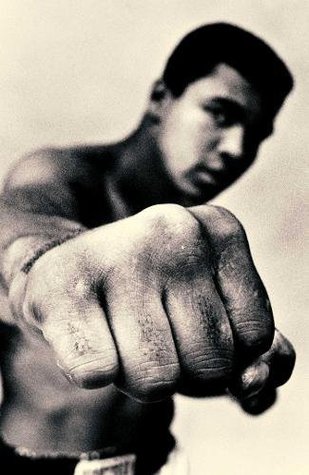 The first book I ever reviewed on this blog, nearly three years ago, happened to be Jonathan Eig’s The Birth of the Pill. It was the strength of the writing in that offbeat work of history, as well as rave reviews for this 2017 biography of Muhammad Ali (1942–2016), that led me to pick up a sport-themed book. I’m the furthest thing from a sports fan you could imagine, but I approached this as a book about a cultural icon and read it with a spirit of curiosity about how Eig would shape this life story and separate the facts from the legend. It’s a riveting account of outliving segregation and developing a personal style and world-beating confidence; it’s a sobering tale of facing consequences and having your own body fail you. I loved it.
Today would have been Ali’s 76th birthday, so in honor of the occasion – and his tendency to spout off-the-cuff rhymes about his competitors’ shortfalls and his own greatness – I’ve turned his life story into a book review of sorts, in rhyming couplets.
Born into 1940s Kentucky,
this fine boy had decent luck – he
surpassed his angry, cheating father
though he shared his name; no bother –
he’d not be Cassius Clay much longer.
He knew he was so much stronger
than all those other boys. Racing
the bus with Rudy; embracing
the help of a white policeman,
his first boxing coach – this guardian
prepared him for Olympic gold
(the last time Cassius did as told?).

Ali in 1967. By Ira Rosenberg [Public domain], via Wikimedia Commons.
was no scholar but won hearts; he
hogged every crowd’s full attention
but his faults are worth a mention:
he hoarded Caddys and Royces
and made bad financial choices;
he went through one, two, three, four wives
and lots of other dames besides;
his kids – no closer than his fans –
hardly even got a chance.
Cameos from bin Laden, Trump,
Toni Morrison and more: jump
ahead and you’ll see an actor,
envoy, entrepreneur, preacher,
recognized-all-round-the-world brand
(though maybe things got out of hand).
Ali was all things to all men
and fitted in the life of ten
but though he tested a lot of walks,
mostly he just wanted to box.
The fights: Frazier, Foreman, Liston –
they’re all here, and the details stun.
Eig gives a vivid blow-by-blow
such that you will feel like you know
what it’s like to be in the ring:
dodge, jab, weave; hear that left hook sing
past your ear. Catch rest at the ropes
but don’t stay too long like a dope.
If, like Ali, you sting and float,
keep an eye on your age and bloat –
the young, slim ones will catch you out.
Bow out before too many bouts.
Ignore the signs if you so choose
(ain’t got many brain cells to lose –
these blows to the head ain’t no joke);
retirement talk ain’t foolin’ folk,
can’t you give up on earning dough
and think more about your own soul?

1968 Esquire cover. By George Lois (Esquire Magazine) [CC BY-SA 4.0 (https://creativecommons.org/licenses/by-sa/4.0)%5D, via Wikimedia Commons.
Allah laid a call on your head:
To raise up the black man’s status
and ask white men why they hate us;
to resist the Vietnam draft
though that nearly got you the shaft
and lost you your name, your title
and (close) your rank as an idol.
Was it all real, your piety?
Was it worth it in society?
Nation of Islam was your crew
but sure did leave you in the stew
with that Vietcong kerfuffle
and Malcolm/Muhammad shuffle.
Through U.S. missions (after 9/11)
you explained it ain’t about heaven
and who you’ll kill to get you there;
it’s about peace, being God’s heir.
Is this story all about race?
Eig believes it deserves its place
as the theme of Ali’s life: he
was born in segregation, see,
a black fighter in a white world,
but stereotypes he hurled
right back in their faces: Uncle
Tom Negro? Naw, even punch-drunk he’ll
smash your categories and crush
your expectations. You can flush
that flat dismissal down the john;
don’t think you know what’s going on.
Dupe, ego, clown, greedy, hero:
larger than life, Jesus or Nero?
How to see both, that’s the kicker;
Eig avoids ‘good’ and ‘bad’ stickers
but shows a life laid bare and
how win and lose ain’t fair and
history is of our making
and half of legacy is faking
and all you got to do is spin
the world round ’till it lets you in.

Ali in 2004.
Biography’s all ’bout the arc
and though this story gets real dark,
there’s a glister to it all the same.
A man exists beyond the fame.
What do you know beneath the name?
Less, I’d make a bet, than you think.
Come over here and take a drink:
this is long, deep, satisfying;
you won’t escape without crying.
Based on 600 interviews,
this fresh account is full of news
and fit for all, not just sports fans.
Whew, let’s give it up for Eig, man.
My rating:
Four Books Abandoned Recently (+ One I SHOULD Have)
I’d like to think I’ve gotten better at choosing books that are sure to suit me, but sometimes it’s still a matter of ditching the duds when it becomes clear they’re not working. Here’s the small (digital) pile of abandoned novels I’ve amassed over the last couple of months. I’d be interested to hear if you’ve read any of them and thought they were worth persisting with.
Mrs. Houdini by Victoria Kelly
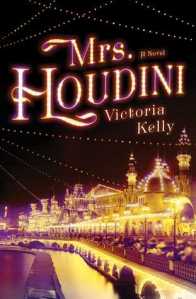 Perfectly serviceable historical fiction, but with no spark. I felt like I was just being given a lot of information about the two major time periods (1894 and 1929). Alas, scenes set at a séance, a circus, and an insane asylum are not nearly as exciting as they promise to be. And, as is often the case with these famous wives books – a genre I generally love but can also find oddly disappointing from time to time – the protagonist tries but fails to explain why she finds her husband so fascinating. “His eyes danced. There was a madness to his passion, but he was not insane. There was something real and familiar about him. … Harry was promising her a life of possibility, of magic, and it was unlike anything she had ever imagined for herself.” [Read the first 40%.]
My rating: 
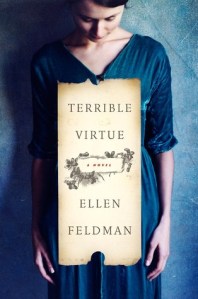 Terrible Virtue by Ellen Feldman
Another case of expectations too high and payoff too little. Fictionalized biographies can be among my favorite historical fiction, but the key is that they have to do something that a biography doesn’t do. They have to shape a story that goes beyond the chronology of what happened to whom and when. This novel about contraception activist Margaret Sanger failed to tell me anything I didn’t already know from The Birth of the Pill, a more engaging book all round. If anything this left me more confused about why Sanger consented to marriage and motherhood. These cringe-worthy lines try to explain it: “His [Bill’s] sex upended the world. His love filled the hole my childhood had carved out of me. Maybe that was the reason I married him.” [Read the first 26%.]
My rating: 
Vexation Lullaby by Justin Tussing
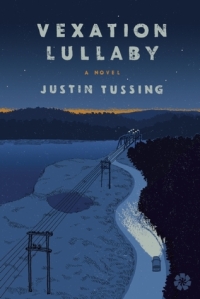 This started off very promising, with Pete Silver, a doctor in Rochester, New York, being summoned by ageing rock star Jimmy Cross for a consult. Jimmy knows Pete’s mother from way back and wants to know if he’ll accompany him on the airplane during this comeback tour as his personal physician. However, after that there was a lot of downtime filling in Pete’s backstory and introducing a first-person voice that didn’t feel relevant. This is Arthur Pennyman, a fan who’s seen every Jimmy Cross show and writes them up on his website. I didn’t care for Arthur’s sections and thought they pulled attention away from Pete’s story. That’s a shame, as the plot reminded me of Jennifer Egan’s A Visit from the Goon Squad. [Read the first nearly 100 pages.]
My rating:
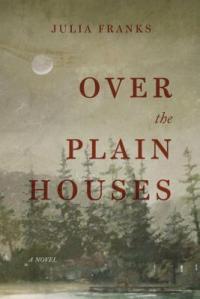 Over the Plain Houses by Julia Franks
Entirely decent historical fiction with a flavor of Ron Rash or Virginia Reeves (Work Like Any Other), but it felt so slow and aimless. Irenie Lambey is married to a harsh fundamentalist preacher named Brodis. She longs for their son to get a good education and hopes that the appearance of a USDA agent may be the chance, but Brodis cares about the boy’s soul rather than his mind. On night-time walks, Irenie stores up artifacts and memories in a cave – desperately trying to have a life larger than what her husband controls. It could well just be my lack of patience, but the believable dialect and solid characters weren’t quite enough to keep me reading. [Read the first 16%.]
My rating:
And now for the one I should have stopped reading at about the 25% point. I have an expanded version of this review on Goodreads; click on the title to read more.
The Mandibles: A Family, 2029–2047 by Lionel Shriver
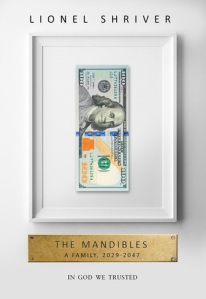 Shriver does a good line in biting social commentary. Here she aims at Atwood-style near-future speculative fiction and takes as her topic the world economy. I had big problems with this one. Worst is the sheer information overload: tons of economic detail crammed into frequent, wearisome conversations. Instead of making America’s total financial collapse a vague backdrop for her novel, she takes readers through it event by agonizing event. This means the first third or more of the novel feels like prologue, setting the scene. When she finally gets around to the crux of the matter – the entire extended Mandible family descending on Florence’s small New York City house – it feels like too little plot, too late. Everything Shriver imagines for the near future, except perhaps the annoying slang (e.g. “boomerpoop”), is more or less believable. But boy is it tedious in the telling.
My rating: 
Review: The Birth of the Pill by Jonathan Eig
The development of the birth control pill: this seems like an odd topic for my first book review on the new blog, but I’ll go with it. I have a special love for nonfiction that incorporates many different genres: history, biography, popular science, sociology, and so on. (See my next-to-last paragraph for some other examples of books that do this well.)
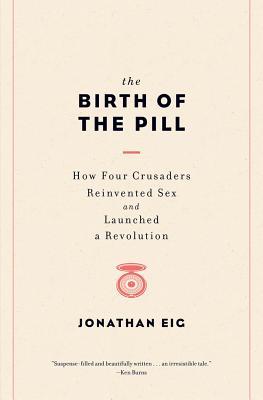 This is an epic adventure starring four unlikely heroes: two middle-aged doctors, Gregory Pincus, fired by Harvard, and John Rock, a Catholic; and two older ladies, Margaret Sanger, who left her first husband and family and grew increasingly addicted to alcohol and prescription pills, and Katharine McCormick, whose mentally ill husband died and left her with a huge fortune she dug into the birth control movement.

Dr. Gregory Pincus is on the left (date unknown). Copyright Mrs. F. Hammond.
From testing progesterone on rabbits to the desperate hunt for human test subjects in Puerto Rico and in a Massachusetts mental hospital, it is a tale full of surprises. When first presented to American doctors and the FDA, the contraceptive pill – then known as Enovid – was billed as an infertility drug: It regulated periods to make it more likely that women would then get pregnant after going off it. Pincus et al. conveniently failed to mention that it also prevented ovulation. I never would have expected a Trojan horse story.
Margaret Sanger was given a hero’s welcome on every trip to Japan, but she also had an unfortunate association with the eugenics movement – an inevitable offshoot of concerns about overpopulation? She once said that parents should have to apply for the right to have children just like immigrants have to apply for visas. The best random piece of trivia I came across here was that Prescott S. Bush, father of George and grandfather of Dubya, was the treasurer for Planned Parenthood’s first nationwide fundraising campaign in 1947. You can bet the Bush family has tried to cover that one up!

Margaret Sanger in 1922.
“Religion is a very poor scientist,” John Rock was known to say. The fight to have the Catholic Church change its position on birth control is an important background narrative in this book. The sexual revolution and the personal decision to contravene Catholic doctrine regarding contraception is also a major component of Quite a Good Time to Be Born, David Lodge’s recent memoir. It’s always fun when similar ideas come up in multiple books at the same time.
Jonathan Eig was previously known for his sports biographies, and there’s plenty of action and narrative here. Like the best science writers (Rebecca Skloot in The Immortal Life of Henrietta Lacks, David Quammen in Spillover, Atul Gawande in Being Mortal, or Siddhartha Mukherjee in The Emperor of All Maladies), he tells a story rich with three-dimensional characters.
We have a family legend about a Swiss ancestor who admitted herself to a mental asylum (then euphemistically called a sanatorium) in upstate New York in 1922 rather than have more children. She already had nine kids (one more died in infancy); she was tired and overworked. If this was what it took to keep her husband from making her pregnant again, so be it. She and thousands of housewives like her never could have guessed that one day (in 1960, to be precise) a simple pill could limit their family size. This is what this book is all about: the quest to give women control over their lives.
My rating: 
 Bookish Beck = Rebecca Foster. American transplant to England. Freelance proofreader and book reviewer.
 Bookish Beck