Book Serendipity, November to December 2024
I call it “Book Serendipity” when two or more books that I read at the same time or in quick succession have something in common – the more bizarre, the better. This is a regular feature of mine every couple of months. Because I usually have 20–30 books on the go at once, I suppose I’m more prone to such incidents. People frequently ask how I remember all of these coincidences. The answer is: I jot them down on scraps of paper or input them immediately into a file on my PC desktop; otherwise, they would flit away! The following are in roughly chronological order.
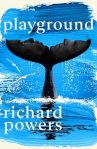
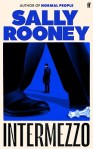
- Characters who were in a chess club and debating society in high school/college in Playground by Richard Powers and Intermezzo by Sally Rooney.
- Pondering the point of a memorial and a mention of hiring mourners in Immemorial by Lauren Markham and Basket of Deplorables by Tom Rachman.
- A mention of Rachel Carson, and her The Sea Around Us in particular, in Playground by Richard Powers, while I was also reading for review Rachel Carson and the Power of Queer Love by Lida Maxwell.
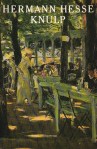
- A character pretends to be asleep when someone comes into the room to check on them in Knulp by Hermann Hesse and Rental House by Weike Wang.
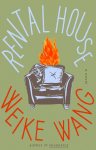
- A mention of where a partner puts his pistachio shells in After the Rites and Sandwiches by Kathy Pimlott and Rental House by Weike Wang.
 A character who startles very easily (in the last two cases because of PTSD) in Life before Man by Margaret Atwood, A History of Sound by Ben Shattuck, and Disconnected by Eleanor Vincent.
- The husband is named Nate in Life before Man by Margaret Atwood and Rental House by Weike Wang.
- In People Collide by Isle McElroy, there’s a mention of Elizabeth reading “a popular feminist book about how men explained things to women.” The day I finished reading the novel, I started reading the book in question: Men Explain Things to Me by Rebecca Solnit.
- I learned about the “he’s-at-home” (19th-century dildo) being used by whalers’ wives on Nantucket while the husbands are away at sea through historical fiction – Daughters of Nantucket by Julie Gerstenblatt, which I read last year – and encountered the practice again through an artefact found in the present day in The History of Sound by Ben Shattuck. Awfully specific!
- A week after I finished reading Station Eleven by Emily St. John Mandel, it turned up in a discussion of Vancouver Island in Island by Julian Hanna.
- A Cape Cod setting in Sandwich by Catherine Newman (earlier in the year) plus The History of Sound by Ben Shattuck and Rental House by Weike Wang.
- A gay character references Mulder and Scully (of The X-Files) in the context of determining sexual preference, and there’s a female character named Kit, in The Old Haunts by Allan Radcliffe and one story of Show Don’t Tell by Curtis Sittenfeld.
- A mention of The Truman Show in the context of delusions in The Year of Living Biblically by A.J. Jacobs and You Don’t Have to Be Mad to Work Here by Benji Waterhouse.
- St. Lucia is mentioned in Beasts by Ingvild Bjerkeland, Brightly Shining by Ingvild Rishøi (two Norwegian authors named Ingvild there!), and Mudhouse Sabbath by Lauren Winner.
- A pet named Darwin: in Levels of Life by Julian Barnes it’s Sarah Bernhardt’s monkey; in Cold Kitchen by Caroline Eden it’s her beagle. Within days I met another pet beagle named Darwin in Island by Julian Hanna. (It took me a moment to realize why it’s a clever choice!)
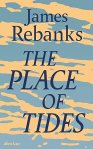
- A character named Henrik in The Place of Tides by James Rebanks and one story of Show Don’t Tell by Curtis Sittenfeld, and a Hendrik in The Safekeep by Yael van der Wouden.
- A hat with a green ribbon in The Safekeep by Yael van der Wouden and one story of Show Don’t Tell by Curtis Sittenfeld (in which it’s an emoji).
- Romanian neighbours who speak very good English in Island by Julian Hanna and Rental House by Weike Wang.
- A scene of returning to a house one used to live in in Hyper by Agri Ismaïl, The Old Haunts by Allan Radcliffe, and one story of Show Don’t Tell by Curtis Sittenfeld.
- A woman has had three abortions in The House of Dolls by Barbara Comyns and Without Exception by Pam Houston.
- Household items keep going missing and there’s broken china in The House of Dolls by Barbara Comyns and The Safekeep by Yael van der Wouden.
- Punctuated equilibrium (a term from evolutionary biology) is used as a metaphor in Hyper by Agri Ismaïl and Men Explain Things to Me by Rebecca Solnit.
 The author’s mother repeatedly asked her daughter a rhetorical question along the lines of “Do you know what I gave up to have you?” in Permission by Elissa Altman and Without Exception by Pam Houston.
- The author/character looks in the mirror at the end of a long day and hardly recognizes him/herself in The Place of Tides by James Rebanks, You Don’t Have to Be Mad to Work Here by Benji Waterhouse, and Amphibian by Tyler Wetherall.
- A man is afraid to hold his boyfriend’s hand in public in another country because he’s unsure about the cultural attitudes towards homosexuality in Clinical Intimacy by Ewan Gass and Small Rain by Garth Greenwell.
- The author’s mother is a therapist/psychologist and the author her/himself is undergoing some kind of mental health treatment in Unattached by Reannon Muth and You Don’t Have to Be Mad to Work Here by Benji Waterhouse.
- A man declares that dying in one’s mid-40s is nothing to complain about in A Beginner’s Guide to Dying by Simon Boas and Small Rain by Garth Greenwell.
- A woman ponders whether her ongoing anxiety is related to the stressful circumstances of her birth in Unattached by Reannon Muth and When the World Explodes by Amy Lee Scott.
What’s the weirdest reading coincidence you’ve had lately?
Three Object Lessons Books for #NovNov24 & #NonfictionNovember (Frith, Hanna, Lobdell)
Bloomsbury’s Object Lessons series “is a series of concise, collectable, beautifully designed books about the hidden lives of ordinary things.” (I have previously reviewed Doctor, Dust, Grave, Pregnancy Test, and Recipe.) I love how interdisciplinary these short nonfiction works are, combining history and pop culture and often incorporating science or medicine, too. Here are my thoughts on three 2024 additions to the series.
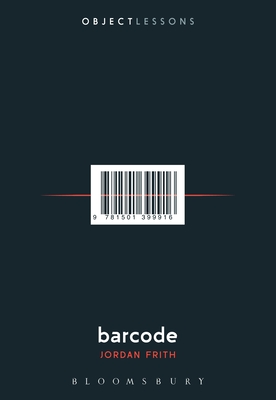 Barcode by Jordan Frith: The barcode was patented in 1952 but didn’t come into daily use until 1974. It was developed for use by supermarkets – the Universal Product Code or UPC. (These days a charity shop is the only place you might have a shopping experience that doesn’t rely on barcodes.) A grocery industry committee chose between seven designs, two of which were round. IBM’s design won and became the barcode as we know it. “Barcodes are a bit of a paradox,” Frith, a communications professor with previous books on RFID and smartphones to his name, writes. “They are ignored yet iconic. They are a prime example of the learned invisibility of infrastructure yet also a prominent symbol of cultural critique in everything from popular science fiction to tattoos.” In 1992, President Bush was considered to be out of touch when he expressed amazement at barcode scanning technology. I was most engaged with the chapter on the Bible – Evangelicals, famously, panicked that the Mark of the Beast heralded by the book of Revelation would be an obligatory barcode tattooed on every individual. While I’m not interested enough in technology to have read the whole thing, which does skew dry, I found interesting tidbits by skimming. (Public library) [152 pages]
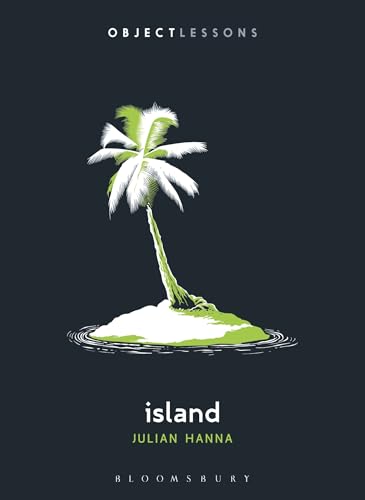 Island by Julian Hanna: The most autobiographical, loosest and least formulaic of these three, and perhaps my favourite in the series to date. Hanna grew up on Vancouver Island and has lived on Madeira; his genealogy stretches back to another island nation, Ireland. Through disparate travels he comments on islands that have long attracted expats: Hawaii, Ibiza, and Hong Kong. From sweltering Crete to the polar night, from family legend to Virginia Woolf’s To the Lighthouse, the topics are as various as the settings. Although Hanna is a humanities lecturer, he even gets involved in designing a gravity battery for Eday in the Orkneys (fully powered by renewables), having won funding through a sustainable energy prize, and is part of a team that builds one in situ there in three days. I admired the honest exploration of the positives and negatives of islands. An island can promise paradise, a time out of time, “a refuge for eccentrics.” Equally, it can be a site of isolation, of “domination and exploitation of fellow humans and of nature.” We may think that with the Internet the world has gotten smaller, but islands are still bastions of distinct culture. In an era of climate crisis, though, some will literally cease to exist. Written primarily during the Covid years, the book contrasts the often personal realities of death, grief and loneliness with idyllic desert-island visions. Whimsically, Hanna presents each chapter as a message in a bottle. What a different book this would have been if written by, say, a geographer. (Read via Edelweiss) [180 pages]
 X-Ray by Nicole Lobdell: X-ray technology has been with us since 1895, when it was developed by German physicist Wilhelm Roentgen. He received the first Nobel Prize in physics but never made any money off of his discovery and died in penury of a cancer that likely resulted from his work. From the start, X-rays provoked concerns about voyeurism. People were right to be wary of X-rays in those early days, but radiation was more of a danger than the invasion of privacy. Lobdell, an English professor, tends to draw slightly simplistic metaphorical messages about the secrets of the body. But X-rays make so many fascinating cultural appearances that I could forgive the occasional lack of subtlety. There’s an in-depth discussion of H.G. Wells’s The Invisible Man, and Superman was only one of the comic-book heroes to boast X-ray vision. The technology has been used to measure feet for shoes, reveal the hidden history of paintings, and keep air travellers safe. I went in for a hospital X-ray of my foot not long after reading this. It was such a quick and simple process, as you’ll find at the dentist’s office as well, and safe enough that my radiographer was pregnant. (Read via Edelweiss) [152 pages]


 Bookish Beck = Rebecca Foster. American transplant to England. Freelance proofreader and book reviewer.
 Bookish Beck