April Releases: Frida Kahlo, Games and Rituals, Romantic Comedy
It’s been a big month for new releases and I have loads more April books on the go or waiting in the wings to be reviewed in catch-up posts in the future. For now, I have a biographical graphic novel about a celebrated painter whose medical struggles coloured her art, a set of witty short stories about modern preoccupations and relationships, and a guilty pleasure of a novel from one of my favourite contemporary authors.
Frida Kahlo: Her Life, Her Work, Her Home by Francisco de la Mora
[Translated from the Spanish by Lawrence Schimel]
 The latest in SelfMadeHero’s Art Masters series (I’ve also reviewed their books on Munch, Van Gogh, Gauguin and O’Keeffe). De la Mora imagines Kahlo (1907–1954) hosting a party at her famous blue house in Coyoacán, Mexico in her final summer – unknown to everyone there, it’s exactly one week before her death. “Hola, come in, welcome. I’m so glad you’re all here. Today is my birthday, and I want to tell all of you the story of my life…” she invites her guests, and thereby the reader. It’s a handy conceit that justifies a chronological approach.
I was reminded of traumatic events from Kahlo’s life that I’d already encountered in various places (such as Constellations by Sinéad Gleeson and Frida Kahlo and My Left Leg by Emily Rapp Black): childhood polio and the Mexican Revolution, the hideous bus accident that reshaped her body, and two miscarriages. Periods of confinement alternate with travels. We see her devotion to traditional dress and the development of her frank self-portraiture style. I’d forgotten, or never knew, that she married Diego Rivera twice and divorced in between. They hosted many cultural giants of the time (e.g., Trotsky’s stay with them forms part of Barbara Kingsolver’s The Lacuna), and both had their infidelities. I loved the use of vibrant colours, but learned little. This is really only an introduction for those new to her.

With thanks to Paul Smith and SelfMadeHero for the free copy for review.
Games and Rituals by Katherine Heiny
Early Morning Riser was one of my favourite books of 2021, and I caught up earlier this year with Heiny’s only previous novel, Standard Deviation. Both are hilarious takes on the quirks of relationships, exploring a specific dynamic that recurs in a couple of these stories: the uncomfortable triangle between a man, his second (invariably younger) wife, and the very different, generally formidable, woman he was formerly married to and who continues to play a role in his life. One of the strongest stories is “561,” which was first published as a stand-alone e-book in 2018. Charlie stole Forrest away from Barbara and now the two women have a frosty relationship. It might seem like poetic justice that Charlie later has to load all of Barbara’s possessions into a moving van, but the notion of penance gets murkier when we learn what happened when they worked together on a suicide prevention hotline.
 Eight of the 11 stories are in the third person and most protagonists are young or middle-aged women navigating marriage/divorce and motherhood. A driving examiner finds herself in the same situation as her teenage test-taker; a wife finds evidence of her actor husband’s adultery. In “Damascus,” Mia worries her son might be on drugs, but doesn’t question her own self-destructive habits. Inspired by Marie Kondo, Rachel tries to pare her life back to the basics in “CobRa.” In “King Midas,” Oscar learns that all is not golden with his mistress. “Sky Bar” has Fawn stuck in her hometown airport during a blizzard. I particularly liked the ridiculous situations Florida housemates get themselves into in “Pandemic Behavior,” and the second-person “Twist and Shout,” about loving an elderly father even though he’s infuriating.
Heiny mixes humour with bitter truths in engaging stories about characters whose mistakes and futile attempts to escape the past only make them the more relatable. Her first and last lines are particularly strong; who could resist a piece that opens with “Your elderly father has mistaken his four-thousand-dollar hearing aid for a cashew and eaten it”?
With thanks to 4th Estate for the proof copy for review.
Romantic Comedy by Curtis Sittenfeld
Curtis Sittenfeld is one of my favourite contemporary authors (I’ve also reviewed You Think It, I’ll Say It and Rodham) and I’ve read everything she’s published. Her work might seem lighter than my usual fare, but I’ve always maintained that she, like Maggie O’Farrell, perfectly treads the line between literary fiction and women’s fiction. This was one of my most anticipated releases of the year and it met my expectations.
Sally Milz is a mid-thirties writer for The Night Owls, a long-running sketch comedy show modelled on Saturday Night Live. Sittenfeld clearly did a lot of research into women in comedy, and Chapter 1 is a convincing blow-by-blow of a typical TNO schedule of pitches, edits, rehearsals, all-nighters and afterparties. This particular week in 2018, the host and musical guest are the same person: Noah Brewster, a pop star with surfer-boy good looks who rose to fame in the early 2000s with radio singles like “Making Love in July” and has maintained steady popularity since then. (I imagined him as a cross between Robbie Williams and Chris Hemsworth.) Sally had been expecting a self-absorbed ignoramus so, when she helps Noah edit a sketch he’s written, is pleasantly surprised to discover he’s actually smart, funny and humble. Sparks seem to fly between them, too, though the week ends all too soon.
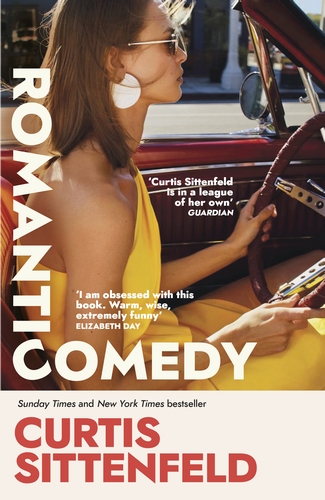 Plain Jane getting the hot guy … that never happens, right? In fact, Sally has a theory about this very dilemma, named after her schlubby TNO office-mate: The Danny Horst Rule states that ordinary men may date and even marry actresses or supermodels, but reverse the genders and it never works. A fundamental lack of confidence means that, whenever she feels too vulnerable, Sally resorts to snarky comedy and sabotages her chances at happiness. But when, midway through the summer of 2020, she gets an out-of-the-blue e-mail from Noah, she wonders if this relationship has potential in the real world. (This, for me, is the peak: when you find out that interest is requited; that the person you’ve been thinking about for years has also been thinking about you. Whatever comes next pales in comparison to this moment.)
The correspondence section was my favourite element. “I do still wonder whether a person’s writing self is their realest self, their fakest self, or just a different self than their in-the-world self?” Sally writes to Noah. As always, Sittenfeld’s inhabiting of a first-person narrator is flawless, and Sally’s backstory and Covid-lockdown, Kansas City existence with her octogenarian stepfather and his beagle endeared her to me. I also appreciated that a woman in her mid- to late thirties could be a romantic lead, and that the question of whether she wants children simply never comes up. Of Sittenfeld’s books, I’d call this closest in tone and content to Eligible, and some familiarity with SNL would probably be of benefit.
Could this be called a predictable story? Well, what does one expect or want from a romcom (watching or reading)? There may be a feminist leaning in places, but this is conventional wish fulfilment, which, I assume, is what keeps romance readers hooked. I enjoyed every sentence and, when it was over, wished I could stay in Sally’s world. (See also Susan’s review.)
With thanks to Doubleday for the proof copy for review.
Would you be interested in reading one or more of these?
Review Catch-Up: Herreros, Onyebuchi and Tookey
Quick snapshot reviews as I work through a backlog.
One each today from fiction, nonfiction and poetry: a graphic novel about the life of Georgia O’Keeffe, a personal response to Chimamanda Ngozi Adichie’s Americanah, and a beautiful collection of place-centric verse.
Georgia O’Keeffe by Maria Herreros (2021; 2022)
[Translated from the Spanish by Lawrence Schimel]
 This is the latest in SelfMadeHero’s “Art Masters” series (I’ve also reviewed Gauguin, Munch and Vincent). Madrid-based illustrator Herreros renders O’Keeffe’s life story in an abstract style that feels in keeping with the artist’s own. The book opens in 1915 with O’Keeffe still living in her family home in Virginia and working as an art teacher. Before she ever meets Alfred Stieglitz, she is fascinated by his photography. They fall in love at a distance via a correspondence and later live together in New York City. Their relationship ebbs as she spends more and more time in New Mexico, a desert landscape that inspires many of her most famous paintings. Much of the narrative is provided by O’Keeffe’s own letters (with idiosyncrasies retained); the additional summary text is unfortunately generic, and the urge to cover many years leads to skating over long periods. Still, the erotic attention to detail and the focus on the subject’s dedication to independence made it worthwhile.

With thanks to SelfMadeHero for the free copy for review.
(S)kinfolk: Chimamanda Ngozi Adichie’s Americanah by Tochi Onyebuchi (2021)
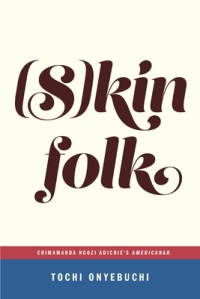 I’ve reviewed six previous releases from Fiction Advocate’s “Afterwords” series (on Blood Meridian, Fun Home, and The Year of Magical Thinking; My Struggle and Wild; and Middlesex). In these short monographs, “acclaimed writers investigate the contemporary classics,” weaving literary criticism into memoir as beloved works reverberate through their lives. Onyebuchi, a Nigerian American author of YA dystopian fiction, chose one of my favourite reads of recent years: Americanah. When he read the novel as a lawyer in training, it was the first time he sensed recognition of his own experiences in literature. He saw his immigrant mother’s situation, the collective triumph of Obama’s election, and his (re)discovery of Black beauty and spaces. Like Ifemelu: he was an outsider to African American identity and had to learn it gradually; and he makes a return trip to Nigeria at the end. I enjoyed this central thread but engaged less with asides about a 2013 visit to the West Bank (for a prisoners’ rights organization) and Frantz Fanon’s work on Algeria.
With thanks to Fiction Advocate for the free e-copy for review.
In the Quaker Hotel by Helen Tookey (2022)
 Tookey’s third collection brings its variety of settings – an austere hotel, Merseyside beaches and woods, the fields and trees of Southern France (via Van Gogh’s paintings), Nova Scotia (she completed a two-week residency at the Elizabeth Bishop House in 2019) – to life as vibrantly as any novel or film could. In recent weeks I’ve taken to pulling out my e-reader as I walk home along the canal path from library volunteering, and this was a perfect companion read for the sunny waterway stroll, especially the poem “Track.” Whether in stanzas, couplets or prose paragraphs, the verse is populated by meticulous images and crystalline musings.
not a loss
something like a clarifying
becoming something you can’t name
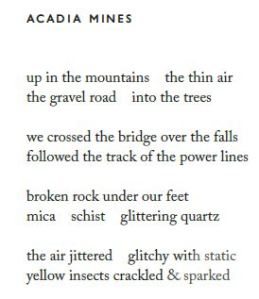
There are evanescent encounters (“Leapfrog”) and deep time (“Natural History”); playing with language (“Concession à Perpetuité”) and erasures (“Pool / Other Body”). You’ll find alliteration and ampersands (a trend in contemporary poetry?), close observation of nature, and no trace of cliché. Below are the opening stanzas of a couple of poems to give a flavour:

With thanks to Carcanet Press for the free e-copy for review.
Would you be interested in reading one or more of these?
 Bookish Beck = Rebecca Foster. American transplant to England. Freelance proofreader and book reviewer.
 Bookish Beck