Paulette Bates Alden: An Underrated Author
I first came across Paulette Alden’s work last June, when she contacted me to ask if I’d like to review her new short story collection, Unforgettable. It’s a self-published book available through Kindle, and in all honesty, given my experience reviewing self-published material for Kirkus and Foreword, I wasn’t expecting much. What a pleasant surprise, then, to find that these were excellent, literary short stories with a strong voice and sense of place. Since then I have read two more Alden books: Crossing the Moon, her memoir of infertility, and Feeding the Eagles, her first short story collection, which shares a protagonist with Unforgettable. Here, in the order in which I have read them, are Alden’s published works:
Unforgettable
 Nine linked stories focus on the life of Miriam Batson, a writer and adjunct professor at a Minnesota college. Now in her late forties, Miriam faces the challenge of caring for her aging mother. Indeed, the final five stories are inspired by Alden’s experience as a caregiver for her late mother, who suffered from dementia. Although it is intriguing to ponder just how autobiographical these stories might be, ultimately it makes little difference to a reader’s enjoyment. The close third-person perspective creates such intimate knowledge of the main character that one cannot help but feel sympathy for her professional and personal struggles.
The opening story, “The Student,” is among the strongest. Miriam learns that Brian, one of the students in her advanced short story class, has attempted suicide – in three different ways. Horror cedes to compassion as she realizes how he must have been suffering, even while keeping up a cheerful exterior in class. As she visits Brian in the hospital during his recovery, Miriam is taken aback by her feelings for him. Hesitant to borrow spiritual language, she still senses that she and Brian have a soul connection. At the same time, she realizes that no relationship is entirely one thing or another; their teacher-student dynamic may resemble a parent-child link, but sex keeps creeping in unexpectedly.
In “Sorrow,” told in the present tense, Miriam learns of the death of one of her black nannies and returns to South Carolina to pay her respects. Filled with memories of segregation, this story shares the social conscience of Kathryn Stockett’s The Help. “Enormously Valuable” returns to the first story’s academic setting, with Miriam receiving notification that someone else – a less experienced man – has gotten the teaching job she applied for. She decides to take legal advice to determine whether this is a case of sex discrimination. This story tips over into melodrama slightly, but is still an affecting look at career disappointment. The themes of bureaucracy and petty infighting in a university English department recall John Williams’s Stoner.
“Swimming, Snow” was commissioned as the Minnesota Center for Book Arts’ 1993 Winter Book. Miriam slowly starts to heal after her father’s death, thanks to the therapeutic effects of activities like massage, classical music, and sex. This one is a perfect segue into the collection’s last five stories, which together reflect on Alden’s experiences as a caregiver during her mother’s final years with dementia.
The title story, the last in the collection, does indeed have a stand-alone feel, combining all the emotions of the previous four into the most shrewdly crafted of the tales, rich with symbolism. It opens with Miriam driving to a monastery for a writing retreat. Although it is April, it is snowing, and Nat King Cole’s song “Unforgettable” is on the radio. Ironically, that title is also the name given to her mother’s nursing home’s remodeling campaign. Miriam has been taking beginner’s Italian lessons; her bewilderment is an echo of her mother’s confusion about language. In addition, Easter is coming up the following week, and the symbology of death and restoration plays a significant role. Miriam can no longer deny that her mother will be dead soon, yet she feels that she will live on – perhaps even through Miriam’s work: “Writing is her religion, her resurrection. Long after her mother is gone, she will have this moment. Her mother will rise from the dead and live again in those words.”
Alden tenderly conveys the overwhelming difficulties and small joys of being the primary caregiver for a loved one with serious health problems. You do not have to share any of Miriam’s experiences to value her insight and admire her courage. I daresay every reader will find at least one aspect of these stories to be, as the title suggests, simply unforgettable.
My rating: 
Crossing the Moon
 Frank and tender, this is a wonderful memoir about women’s reproductive choices – or the way life sometimes takes those choices out of your hands. Alden was happily married, with a beloved cat named Cecil and her first short story collection coming out soon. At age 39, she still hadn’t thought all that much about motherhood, but suddenly decision time was on her. Despite her ambivalence (“I might never have a child, and the irony is not lost on me, that I’m not even sure I want one”), she went ahead with multiple rounds of infertility treatment, only conceding defeat and grieving her loss when she was 42.
All along she was resisting multiple voices: that of her Southern upbringing, which said all women were supposed to have children; that of feminism, which told her she wasn’t supposed to want what all women are supposed to have. There was also her own inner suspicion that the life she already had was the one she wanted. “From the very start, I had seen writing and motherhood as mutually exclusive.”
I found this a very touching story of learning to love the life you have. “It came to me that it really was a choice between two good things – having a child and not having a child. Our life without a child seemed good to me. I caught a glimpse that it was what was right for us, for the best.”
My rating: 
 Feeding the Eagles
Miriam Batson first appeared in this 1983 collection published by Graywolf Press. Of the 11 stories here, seven are in the third person and four in the first person. They dart back and forth in time: sometimes Miriam is married and back in South Carolina visiting her parents and sister; other times she’s a young graduate student on the way back to California. It was particularly interesting for me, having read Alden’s memoir, to trace the autobiographical roots of many of the stories. I even spotted a couple of lines taken word for word from life: “‘I’ll tell you what I think,’ [Miriam’s] mother says slowly. ‘I think people who don’t have children are the most selfish people in the world.’”
These stories are strong on symbolism and often have memorable endings. For instance, the title phrase seems odd but in context is a beautiful image of turning failure into a positive. Miriam and her husband Ted have gone out fishing from their Minnesota cabin. Ted throws a big fish back, hoping the hook injury wasn’t too deep, but a while later they see it floating on its side. They’re feeling a little guilty – until an eagle drops in and snatches the dead fish. “‘Now you don’t have to feel so bad,’ Ted says. ‘We’re feeding the eagles.’” Elsewhere, Miriam’s grandmother’s wig is a peculiar token of family inheritance, while a snake encountered at a campground is a reminder of excessive sensuality.
As in Unforgettable and Crossing the Moon, the overarching theme of the book is a woman’s identity and how this shifts through life. Miriam is a daughter, a wife, a grown sister, a writer. She is not a mother, a decision that defines her as much as any other. But even within these roles, time creeps in and changes things. With her elderly parents facing bankruptcy, Miriam realizes, “It occurred to me for the first time that maybe my father didn’t know what was going on.” That sense of a turning of the generations, of the child taking on the responsible parent guise, is undoubtedly true to life.
Another central theme is how places of safety and familiarity lose their capacity to reassure us. For Miriam/Alden, the South becomes increasingly foreign but still has a metaphorical hold on her. “Stretching out around us in every direction are the flat Midwestern plains, and it comes to me that I will not live my life as I have always imagined I would—without even thinking of it—in South Carolina.” All the same, as she drives to the old family cabin in South Carolina before it passes out of their hands for good, she thinks how “all of the roads of her life lead back to this one.”
On this reading the story that meant most to me was “At the Beach,” in which Miriam and her sister Linda take a rare vacation together and marvel at how their parents are aging. “Just so you take them in in their old age,” Miriam jokes, but beneath the quip lies deep concern. I could recognize my sister and myself – now separated by an ocean but not so much anymore by the eight years between us – in this sentence: “It seems we talk more now that we are older, now that we live so far apart and have so little time together.”
One thing I love about Alden’s books is how she seems to see life in discrete parts but also, looking back nostalgically, as a coherent narrative that leads logically and inevitably to the present. This makes for a gently bittersweet tone, but I come away sensing gratitude. As my favorite lines from Crossing the Moon have it, “who can say what is ‘best’? Maybe it’s possible to get to a place where what is best is simply what is.”
My rating:
 The Answer to Your Question
I haven’t read this one yet, but I have a copy on my e-reader and am saving it for a rainy day treat. On the surface it sounds completely different from anything else Alden has written. The blurb describes a page-turning thriller about a man who has been accused of murdering four women and his librarian mother’s quest to figure out whether he really did it and why. It won the Kindle Book Review Best Indie Book of 2013 in the suspense category. I feel sure that it will have the same psychological acuity as Alden’s other books.
Who are some of your favorite lesser-known authors? Share them in the comments below!
Reviews Roundup, April–May
One of my goals with this blog is to have one convenient place where I can gather together all my writing that has appeared in disparate online locations. To that end, once a month – or maybe more often – I’ll provide links to all the book reviews I’ve published elsewhere, with a rating and a short taster so you can decide whether to click to read more. (A couple of exceptions: I won’t point out my Kirkus Indie or BlueInk reviews since I don’t get a byline.)
[I seem to have done more ‘free’ than ‘required’ reading this past month, which I attribute to having been on vacation in America for about two weeks of that time.]
BookBrowse
 The Turner House by Angela Flournoy [subscription service, but an excerpt is available for free on the website]: In Flournoy’s debut novel, the 13 grown children of Francis and Viola Turner must put aside their own personal baggage and decide what will become of their parents’ Detroit house during the financial crisis.
The Bookbag
Mother of Eden by Chris Beckett: This sequel to 2012’s Arthur C. Clarke Award-winning science fiction novel Dark Eden sees Gela’s descendants splitting into factions and experimenting with different political systems. Starlight Brooking emerges as a Messiah figure, spreading a secret message of equality. Releases June 4th.
 Sophie and the Sibyl by Patricia Duncker: In Duncker’s sixth novel, a playful Victorian pastiche, George Eliot’s interactions with her German publisher and his feisty young wife provide fodder for Daniel Deronda. Consciously modeled on John Fowles’s The French Lieutenant’s Woman, this is a postmodern blending of history, fiction, and metafictional commentary.
We Love This Book
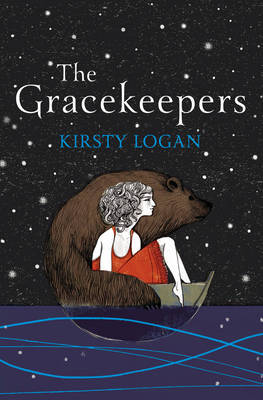 The Gracekeepers by Kirsty Logan: This inventive debut novel imagines a circus traveling through a flooded future world. Humanity is divided into two races, landlockers and damplings. Fear and prejudice distance these groups but the novel imagines them drawn together through a meeting between two young women, Callanish and North.

Foreword Reviews
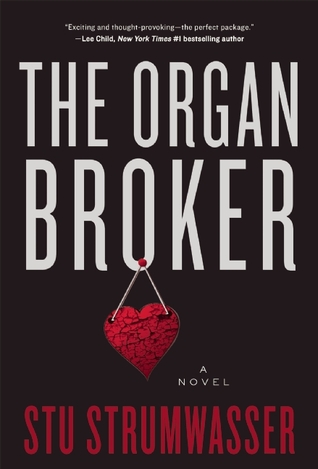 The Organ Broker by Stu Strumwasser: “There is no shortage of organs; there is only a shortage of organs in America.” The antihero of this debut novel finds organs on the international market and sells them for huge profits to Americans on transplant waiting lists. With snappy dialogue and a lovable hustler protagonist, it explores ethical ambiguities.
BookTrib
I chose my top four mother–daughter memoirs (by Alice Eve Cohen, Abigail Thomas, Alison Bechdel and Jeanette Winterson) for this Mother’s Day article.
I also post reviews of most of my casual reading on Goodreads.
Mademoiselle Chanel by C.W. Gortner: A writer of Tudor-era mysteries turns to more recent history with this novel about Coco Chanel. Detailing every business venture and love affair, he makes some parts a real chronological slog. I always associate Chanel with the 1950s–60s, so it was interesting to learn that she was born in the 1880s and experienced both world wars.
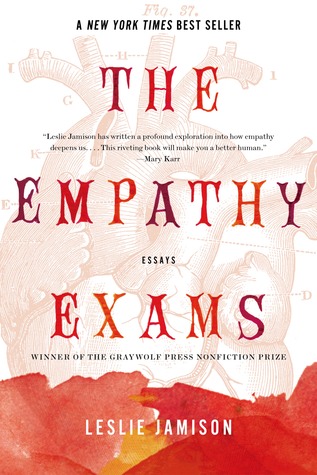 The Empathy Exams by Leslie Jamison: I liked the medical-related pieces – attending a Morgellons disease conference, working as a medical actor – but not the Latin American travel essays or the character studies. The overarching theme of empathy was not as strong as I thought it would be; really, the book is more about how experiences mark the body.
The Real Thing: Lessons on Love and Life from a Wedding Reporter’s Notebook by Ellen McCarthy: McCarthy writes about weddings and relationships for The Washington Post. This is a collection of short pieces about modern dating, breakups, wedding ceremonies, marriage, and making love last. The style is breezy and humorous, largely anecdote- and interview-based, with some heartfelt moments. If you’re a wedding junkie you’ll definitely enjoy it, but I didn’t think it broke new ground.

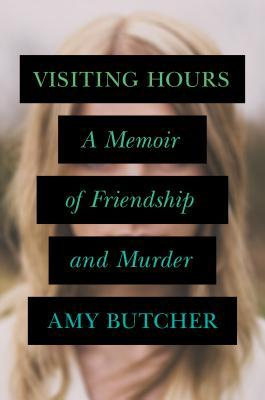 Visiting Hours: A Memoir of Friendship and Murder by Amy E. Butcher: The facts are simple: one night towards the end of their senior year at Gettysburg College, Kevin Schaeffer walked Butcher home from a drunken outing, then stabbed his ex-girlfriend to death. This book has elements of a true crime narrative, detailing the crime and speculating on possible causes for Kevin’s psychotic episode, but it’s more about how the crime affected Butcher. This is a concise and gripping narrative reminiscent of Half a Life by Darin Strauss.
A Reunion of Ghosts by Judith Claire Mitchell: Vee, Lady and Delph are the fourth generation of Alters, a Jewish family cursed with a rash of suicides. Indeed, the majority of the novel is the middle-aged sisters’ collective suicide note, narrated in the first-person plural. They reach back into the past to give the stories of their ancestors, including great-grandparents Iris and Lenz Alter, the latter of whom had the ironic distinction of being the Jewish creator of Zyklon gas (based on a real figure).

Beloved Strangers: A Memoir by Maria Chaudhuri: Islam versus Christianity is a background note, but the major theme is East versus West – specifically, Chaudhuri’s native Bangladesh set against America, where she attended university and later lived and worked. Religion, sexuality, dreams and second chances at love are all facets of the author’s search for a sense of home and family in a life of shifting loyalties. (My full review will appear in the autumn 2015 issue of Wasafiri literary magazine.)
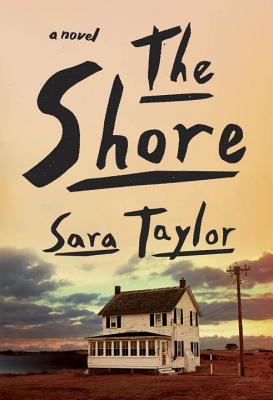 The Shore by Sara Taylor: Gritty and virtuosic, this novel-in-13-stories imagines 250 years of history on a set of islands off the coast of Virginia. As a Maryland native, I think of Chincoteague and Assateague as vacation destinations, but Taylor definitely focuses on their dark side here: industrial-scale chicken farms, unwanted pregnancies, domestic violence, bootleg liquor, gang rape, murders and meth labs.
Echoes of Heartsounds: A Memoir by Martha Weinman Lear: Longtime New York City journalist Lear’s first husband, a doctor named Hal, died after a series of heart attacks. Ironically, 30 years later she was admitted to the same hospital for a heart attack – an event that presents completely differently in women. As a sequel to her previous memoir, Heartsounds (1980), this explores life’s odd parallels and repetitions.
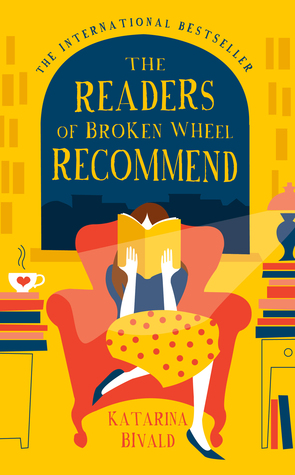 The Readers of Broken Wheel Recommend by Katarina Bivald: A Swedish tourist opens a bookstore in small-town Iowa. Given that she’d never visited the States at the time she wrote this novel (published in her native Sweden in 2013), Bivald has painted a remarkably accurate picture of a Midwestern town peopled with fundamentalists, gays, rednecks and a gun-toting diner owner. A cute read for book lovers, provided you can stomach a bit of chick lit / romance.
Life From Scratch: A Memoir of Food, Family, and Forgiveness by Sasha Martin: Martin writes well and I enjoyed this book overall, but at times you may become frustrated and ask “where’s the food?!” That’s because the makeup of this book is: Misery Memoir – 70% / Global Table Adventure blog – 30%. Martin had the idea to cook dishes from every country of the world. At the rate of one feast per weekend, the blog project took four years. She manages to give a fairly comprehensive overview of the cooking she did over that time.
Plumb Line by Steve Luttrell: Disappointingly average poems about nature and memory. The situations and sentiments are relatable but the language so plain that nothing sticks out.

The Sixth Extinction: An Unnatural History by Elizabeth Kolbert: The picture Kolbert paints of our environmental situation is depressing. I already knew the facts of climate change and animal extinction, but according to Kolbert the prognosis is even worse than I was aware. As a longtime New Yorker journalist, she writes at a good level for laymen: not talking down, nor assuming any specialist knowledge. Luckily, there are spots of humor to lighten the tone.
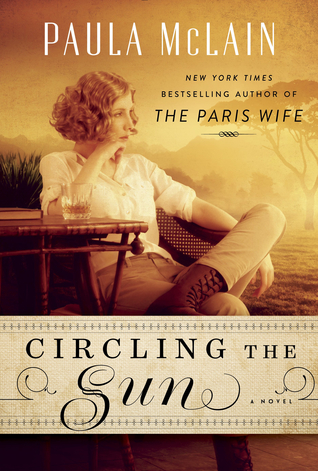 Circling the Sun by Paula McLain: This is just as good as The Paris Wife – if not better. I didn’t think I was very interested in aviatrix Beryl Markham, but McLain proved me wrong. The love triangle between her, Karen Blixen (Isak Dinesen) and Denys Finch Hatton forms the kernel of the book. McLain describes her African settings beautifully, and focuses as much on the small emotional moments that make a life as she does on the external thrills, though there are plenty of those.
The Size of Our Bed by Jacqueline Tchakalian: Well-structured and grouped into thematic sections, these poems are primarily about motherhood, the death of a much-loved husband from cancer, and adjusting to the reality of war. Alliteration and assonance stand in for traditional rhymes. Tchakalian is especially good with colors and flowers, which combine to create memorable metaphors. Releases September 15th.
 Bookish Beck = Rebecca Foster. American transplant to England. Freelance proofreader and book reviewer.
