Buddy Reads: Kilmeny of the Orchard by L.M. Montgomery & The Waterfall by Margaret Drabble
Buddy reading and other coordinated challenges are a good excuse to read the sort of books one doesn’t always get to, especially the more obscure classics. This was my third Lucy Maud Montgomery novel within a year and a bit, and my first contribution to Ali’s ongoing year with Margaret Drabble.
{SPOILERS IN BOTH OF THE FOLLOWING REVIEWS}
Kilmeny of the Orchard by L. M. Montgomery (1910)
I’ve participated in Canadian bloggers Naomi of Consumed by Ink and Sarah Emsley’s readalongs of three Montgomery works now. The previous two were Jane of Lantern Hill and The Story Girl. This sweet but rather outdated novella reminded me more of the latter (no surprise as it was published just a year before it) because of the overall sense of lightness and the male perspective, which isn’t what those familiar with the Anne and Emily books might expect from Montgomery.
 Eric Marshall travels to Prince Edward Island one May to be the temporary schoolmaster in Lindsay, filling in for an ill friend. At his graduation from Queenslea College, his cousin David Baker had teased him about his apparent disinterest in girls. He arrives on the island to an early summer idyll and soon wanders into an orchard where a beautiful young woman is playing a violin.
This is, of course, Kilmeny Gordon, her first name from a Scottish ballad by James Hogg, and it’s clear she will be the love interest. However, there are a couple of impediments to the romance. One is resistance from Kilmeny’s guardians, the strict aunt and uncle who have cared for her since her wronged mother’s death. But the greater obstacle is Kilmeny’s background – illegitimacy plus a disability that everyone bar Eric views as insuperable: she is mute (or, as the book has it, “dumb”). She hears and understands perfectly well, but communicates via writing on a slate.
There is interesting speculation as to whether her condition is psychological or magically inherited from her late mother, who had taken a vow of silence. Conveniently, cousin David is a doctor specializing in throat and voice problems, so assures Eric and the Gordons that nothing is physically preventing Kilmeny from speech. But she refuses to marry Eric until she can speak. The scene in which she fears for his life and calls out to save him is laughably contrived. The language around disability is outmoded. It’s also uncomfortable that the story’s villain, an adopted Gordon cousin, is characterized only by his Italian heritage.
Like The Story Girl, I found this fairly twee, with an unfortunate focus on beauty (“‘Kilmeny’s mouth is like a love-song made incarnate in sweet flesh,’ said Eric enthusiastically”), and marriage as the goal of life. But it was still a pleasant read, especially for the descriptions of a Canadian spring. (Downloaded from Project Gutenberg) #ReadingKilmeny
The Waterfall by Margaret Drabble (1969)
 This was Drabble’s fourth novel; I’ve read the previous three and preferred two of them to this (A Summer Bird-Cage is fab). The setup is similar to The Garrick Year, which I read last year for book club, in that the focus is on a young mother of two who embarks on an affair. When we meet Jane Gray she is awaiting the birth of her second child. Her husband, Malcolm, walked out a few weeks ago, but she has the midwife and her cousin Lucy to rely on. Lucy and her husband, James, trade off staying over with Jane as she recovers from childbirth. James is particularly solicitous and, one night, joins Jane in bed.
At this point there is a stark shift from third person to first person as Jane confesses that she’s been glossing over the complexities of the situation; sleeping with one’s cousin’s husband is never going to be without emotional fallout. “It won’t, of course, do: as an account, I mean, of what took place”; “Lies, lies, it’s all lies. A pack of lies.” The novel continues to alternate between first and third person as Jane gives us glimpses into her uneasy family-making. I found myself bored through much of it, only perking back up for the meta stuff and the one climactic event. In a way it’s a classic tale of free will versus fate, including the choice of how to frame what happens.
I am no longer capable of inaction – then I will invent a morality that condones me.
It wasn’t so, it wasn’t so. I am getting tired of all this Freudian family nexus, I want to get back to that schizoid third-person dialogue.
The narrative tale. The narrative explanation. That was it, or some of it. I loved James because he was what I had never had: because he drove too fast: because he belonged to my cousin: because he was kind to his own child
(What intriguing punctuation there!) The fast driving and obsession with cars is unsubtle foreshadowing: James nearly dies in a car accident on the way to the ferry to Norway. Jane and her children, Laurie and baby Bianca, are in the car but unhurt. This was the days when seatbelts weren’t required, apparently. “It would have been so much simpler if he had been dead: so natural a conclusion, so poetic in its justice.” The Garrick Year, too, has a near-tragedy involving a car. Like many an adultery story, both novels ask whether an affair changes everything, or nothing. Infidelity and the parenting of young children together don’t amount to the most scintillating material, but it is appealing to see Drabble experimenting with how to tell a story. See also Ali’s review. (Secondhand – Alnwick charity shopping)
The Story Girl by L. M. Montgomery (1911) #ReadingStoryGirl
Six months after the Jane of Lantern Hill readalong, Canadian bloggers Naomi (Consumed by Ink) and Sarah Emsley have chosen an earlier work by Lucy Maud Montgomery, The Story Girl, and its sequel The Golden Road, for November buddy reading.
The book opens one May as brothers Felix and Beverley King are sent from Toronto to Prince Edward Island to stay with an aunt and uncle while their father is away on business. Beverley tells us about their thrilling six months of running half-wild with their cousins Cecily, Dan, Felicity, and Sara Stanley – better known by her nickname of the Story Girl, also to differentiate her from another Sara – and the hired boy, Peter. This line gives a sense of the group’s dynamic: “Felicity to look at—the Story Girl to tell us tales of wonder—Cecily to admire us—Dan and Peter to play with—what more could reasonable fellows want?”
Felicity is pretty and domestically inclined; Sara knows it would be better to be useful like Felicity, but all she has is her storytelling ability. Some are fantasy (“The Wedding Veil of the Proud Princess”); some are local tales that have passed into folk memory (“How Betty Sherman Won a Husband”). Beverley is in raptures over the Story Girl’s orations: “if voices had colour, hers would have been like a rainbow. It made words live. … we had listened entranced. I have written down the bare words of the story, as she told it; but I can never reproduce the charm and colour and spirit she infused into it. It lived for us.”

The cousins’ adventures are gently amusing and quite tame. They all write down their dreams in notebooks. Peter debates which church denomination to join and the boys engage in a sermon competition. Pat the cat has to be rescued from bewitching, and receives a dose of medicine in lard he licks off his paws and fur. The Story Girl makes a pudding with sawdust instead of cornmeal (reminding me of Anne Shirley and the dead mouse in the plum pudding). Life consistently teaches lessons in humility, as when they are all duped by Billy Robinson and his magic seeds, which he says will change whatever each one most resents – straight hair, plumpness, height; and there is a false alarm about the end of the world.
I found the novel fairly twee and realized at a certain point that I was skimming over more than I was reading. As was my complaint about Jane of Lantern Hill, there is a predictable near-death illness towards the end. The descriptions of Felicity and the Story Girl are purple (“when the Story Girl wreathed her nut-brown tresses with crimson leaves it seemed, as Peter said, that they grow on her—as if the gold and flame of her spirit had broken out in a coronal”); I had to remind myself that this reflects on Beverley more so than on Montgomery. From Naomi’s review of The Golden Road, I think that would be more to my taste because it has a clear plot rather than just stringing together pleasant but mostly forgettable anecdotes.
Still, it’s been fun to discover some of L. M. Montgomery’s lesser-known work, and there are sweet words about cats and the seasons:
“I am very good friends with all cats. They are so sleek and comfortable and dignified. And it is so easy to make them happy.”
“The beauty of winter is that it makes you appreciate spring.”
This effectively captures the long, magical summer days of childhood. I thought about when I was a kid and loved trips up to my mother’s hometown in upstate New York, where her brothers still lived. I was in awe of the Judd cousins’ big house, acres of lawn and untold luxuries such as Nintendo and a swimming pool. I guess I was as star-struck as Beverley. (University library) 
Jane of Lantern Hill by L.M. Montgomery (1937) #ReadingLanternHill
I’m grateful to Canadian bloggers Naomi (Consumed by Ink) and Sarah for hosting the readalong: It’s been a pure pleasure to discover this lesser-known work by Lucy Maud Montgomery.
{SOME SPOILERS IN THE FOLLOWING}
Like Anne of Green Gables, this is a cosy novel about finding a home and a family. Fairytale-like in its ultimate optimism, it nevertheless does not avoid negative feelings. It also seemed to me ahead of its time in how it depicts parental separation.
Jane Victoria Stuart lives with her beautiful, flibbertigibbet mother and strict grandmother in a “shabby genteel” mansion on the ironically named Gay Street in Toronto. Grandmother calls her Victoria and makes her read the Bible to the family every night, a ritual Jane hates. Jane is an indifferent student, though she loves writing, and her best friend is Jody, an orphan who is in service next door. Her mother is a socialite breezing out each evening, but she doesn’t seem jolly despite all the parties. Jane has always assumed her father is dead, so it is a shock when a girl at school shares the rumour that her father is alive and living on Prince Edward Island. Apparently, divorce was difficult in Canada at that time and would have required a trip to the USA, so for nearly a decade the couple have been estranged.
It’s not just Jane who feels imprisoned on Gay Street: her mother and Jody are both suffering in their own ways, and long to live unencumbered by others’ strictures. For Jane, freedom comes when her father requests custody of her for the summer. Grandmother is of a mind to ignore the summons, but the wider family advise her to heed it. Initially apprehensive, Jane falls in love with PEI and feels like she’s known her father, a jocular writer, all the time. They’re both romantics and go hunting for a house that will feel like theirs right away. Lantern Hill fits the bill, and Jane delights in playing the housekeeper and teaching herself to cook and garden. Returning to Toronto in the autumn is a wrench, but she knows she’ll be back every summer. It’s an idyll precisely because it’s only part time; it’s a retreat.
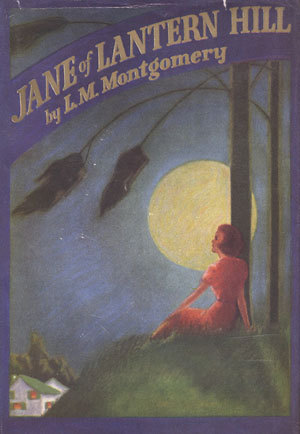
Jane is an appealing heroine with her can-do attitude. Her everyday adventures are sweet – sheltering in a barn when the car breaks down, getting a reward and her photo in the paper for containing an escaped circus lion – but I was less enamoured with the depiction of the quirky locals. The names alone point to country bumpkin stereotypes: Shingle Snowbeam, Ding-dong, the Jimmy Johns. I did love Little Aunt Em, however, with her “I smack my lips over life” outlook. Meddlesome Aunt Irene could have been less one-dimensional; Jody’s adoption by the Titus sisters is contrived (and closest in plot to Anne); and Jane’s late illness felt unnecessary. While frequent ellipses threatened to drive me mad, Montgomery has sprightly turns of phrase: “A dog of her acquaintance stopped to speak to her, but Jane ignored him.”
Could this have been one of the earliest stories of a child who shuttles back and forth between separated or divorced parents? I wondered if it was considered edgy subject matter for Montgomery. There is, however, an indulging of the stereotypical broken-home-child fantasy of the parents still being in love and reuniting. If this is a fairytale setup, Grandmother is the evil ogre who keeps the princess(es) locked up in a gloomy castle until the noble prince’s rescue. I’m sure both Toronto and PEI are lovely in their own way – alas, I’ve never been to Canada – and by the end Montgomery offers Jane a bright future in both.
Small qualms aside, I loved reading Jane of Lantern Hill and would recommend it to anyone who enjoyed the Anne books. It’s full of the magic of childhood. What struck me most, and will stick with me, is the exploration of how the feeling of being at home (not just having a house to live in) is essential to happiness. (University library) 
#ReadingLanternHill
Buy Jane of Lantern Hill from Bookshop.org [affiliate link]
Marilla of Green Gables by Sarah McCoy
There’s no doubt about it: fans of Lucy Maud Montgomery’s Anne series will throng to read Sarah McCoy’s prequel. McCoy was inspired by the brief moment in Anne of Green Gables when Marilla tells Anne that John Blythe used to be her beau. Just like Anne, she wanted to know the story behind that offhand remark.
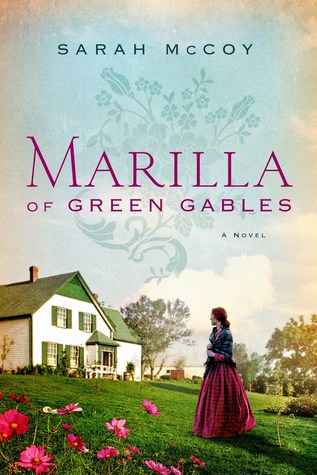 So although Marilla of Green Gables begins in 1876 with a short prologue in which Matthew and Marilla decide to ‘get a boy’ to help around the place, most of it is set in 1837–8, with Marilla taking a break from her schooling to assist her parents, Hugh and Clara (it’s no coincidence that these are the names of L.M. Montgomery’s parents), in the months before her new sibling is to arrive. Brother Matthew is 21 and testing out adulthood, but Marilla is just 13 and impressionable. John Blythe offers to bring her the school readings she’s missed out on, and later invites her to the Avonlea May Picnic. It’s clear she’s smitten.
Aunt Izzy, a dressmaker from St. Catharines, arrives in time to cheer her twin sister through the impending birth and ends up being Marilla’s new role model. She’s fanciful, exuberant and spontaneous and believes “A young girl needs as much time to dream as possible,” surely making her a deliberate precursor of Anne Shirley. Indeed, much of the fun of reading this book is in spotting the seeds of the Anne books: Clara and Izzy making their famous redcurrant wine and laughing about the time Clara lost a thumbnail in the mix; meeting Rachel White (Lynde) at a sewing circle; a visit to the orphanage in Hopetown; raspberry cordial at a picnic; the Ladies’ Aid Society; and looking to a mistake-free tomorrow.
Before long, though, personal and political upheaval take their toll at Green Gables and drive a wedge between Marilla and John. I found Part Two significantly less engaging, what with all the talk of Reformers versus Loyalists (though I did enjoy glimpses of escaped slaves’ experiences in Canada). I tend not to read anything approaching a romance novel, so I groaned to find that there’s not one but two Mr. Darcy-esque wet-shirt scenes featuring John.
This is not meant to be a substitute for reading Montgomery’s own work; if anything it’s prompted me to reread the original series as soon as I can. While I wouldn’t call Marilla a must-read for fans, then, if you enjoy women’s historical fiction set in the nineteenth century, you may want to pick up this companion volume anyway.
My rating: 
Marilla of Green Gables was published by William Morrow on October 23rd. My thanks to publicist Beth Parker for the proof copy for review. Sarah McCoy is the author of four previous works of fiction, including The Mapmaker’s Children and The Baker’s Daughter.
 Bookish Beck = Rebecca Foster. American transplant to England. Freelance proofreader and book reviewer.
 Bookish Beck