20 Books of Summer, 9: Search by Michelle Huneven (2022)
Now this is what I want from my summer reading: pure pleasure; lit fic full of gossip and good food; the kind of novel I was always relieved to pick up and spend time with, usually as a reward for having gotten through my daily allotment in paid-review books and some more challenging reads. The Kirkus review was appealing enough to land this a place on my Most Anticipated list last year, but the only way to get hold of a copy was to spend my Bookshop.org voucher from my sister and have her bring it over in her suitcase in December.
The setup to Search might seem niche to many: a Southern California Unitarian church undergoes a months-long process to replace its retiring senior minister via a nationwide application process. But in fact it will resonate with, and elicit chuckles from, anyone who’s had even the most fleeting brush with bureaucracy – whether serving on a committee, conducting interviews, or trying to get a unanimous decision out of three or more people – and the framing story makes it warm and engrossing.
Dana Potowski is a middle-aged restaurant critic who has just released a successful cookbook based on what she grows on her smallholding. When she’s invited to be part of an eight-member task force looking for the right next minister for Arroyo Unitarian Universalist Community Church –
a “little chugger” of a church in a small unincorporated suburb of LA … three acres of raffish gardens, an ugly sanctuary, a deliquescing Italianate mansion, a jewel-box chapel used mostly for yoga classes
– she reluctantly agrees but soon wonders whether this could be interesting fodder for a second memoir (with identifying details changed, to be sure). You’ll quickly forget about the layers of fictionalization and become immersed in the interactions between the search committee members, who are of different genders, races and generations. They range from stalwart members, including a former church president and Dana the one-time seminarian, to a Filipino American recent Evangelical defector with a husband and young children.

Like the ministerial candidates, they’re all gloriously individual. You realize, however, that most of them have agendas and preconceived ideas. The church as a whole agreed that it wanted a gifted preacher and skilled site manager, but there’s also a collective sense that it’s time for a demographic change. A woman of colour is therefore a priority after decades of white male control, but a facilitator warns: “If you’re too focused on a specific category, you could overlook the best hire for your needs. Our goal is to get beyond thinking in categories to see the whole person.” Still, fault lines develop, with the younger contingent on the panel pushing for a thirtysomething candidate and the others giving more weight to experience.
Huneven develops all of her characters through the dialogue and repartee at the search committee’s meetings, which always take place over snacks, if not full meals with cocktails. Dana is not the only gifted home cook among the bunch (a section at the end gives recipes for some of the star dishes, like “Belinda’s Preserved Lemon Chicken,” “Dana’s Seafood Chowder,” and “Jennie’s Midmorning Glory Muffins”), and she also takes turns inviting her fellow committee members out on her restaurant assignments for the paper.
I was amazed by the formality and intensity of this decision-making process: a lengthy application packet, Skype interviews, watching/reading multiple sermons by the candidates, speaking to their references, and then an entire weekend of in-person activities with each of three top contenders. It’s clear that Huneven did a lot of research about how this works. The whole thing starts out casual and fun – Dana refers to the church and minister packets as “dating profiles” – but grows increasingly momentous. Completely different worship and leadership styles are at stake. People have their favourites, and with the future of a beloved institution at stake, compromise comes to feel more like a failure of integrity.
Keep in mind, of course, that we’re getting all of it from Dana’s perspective. She sets herself up as the objective recorder, but our admiration and distrust can only be guided by hers. And she’s a very likable narrator: intelligent and quick-witted, fond of gardening, passionate about food and spirituality, comfortable in her quiet life with her Jewish husband and her dog and donkeys. It’s possible not everyone will relate to her, or read meal plans and sermon transcripts as raptly, as I did. At the same time as I was totally absorbed in the narrative, I was also mentally transported to churches and pastors past, to petty dramas the ministers in my family have navigated, to the one Unitarian service I attended in Santa Fe in the summer of 2005… For me, this had it all. Both light and consequential; nostalgic and resolute about the future; frustrated with yet tender towards humanity. Delicious! I’ll seek out more by Huneven.
(New purchase with birthday money) 
Love, Etc. – Some Thematic Reading for Valentine’s Day
Even though we aren’t big on Valentine’s Day (we went out to a “Flavours of Africa” supper club last weekend and are calling it our celebration meal), for the past three years I’ve ended up doing themed posts featuring books that have “Love” or a similar word in the title or that consider romantic or familial love in some way. (Here are my 2017, 2018 and 2019 posts.) These seven selections, all of them fiction, sometimes end up being more bittersweet or ironic than straightforwardly romantic, but see what catches your eye anyway.
Shotgun Lovesongs by Nickolas Butler (2014)
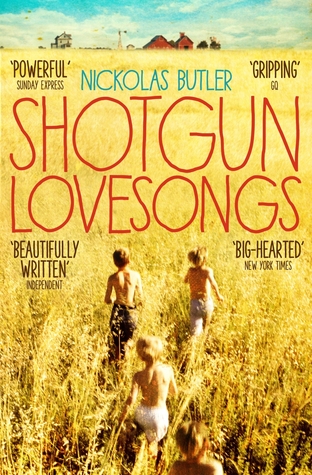 Four childhood friends from Little Wing, Wisconsin; four weddings (no funeral – though there are a couple of close calls along the way). Which bonds will last, and which will be strained to the breaking point? Henry is the family man, a dairy farmer who married his college sweetheart, Beth. Lee* is a musician, the closest thing to a rock star Little Wing will ever produce. He became famous for Shotgun Lovesongs, a bestselling album he recorded by himself in a refurbished chicken coop for $600, and now lives in New York City and hobnobs with celebrities. Kip gave up being a Chicago commodities trader to return to Little Wing and spruce up the old mill into an events venue. Ronny lived for alcohol and rodeos until a drunken accident ended his career and damaged his brain.
The friends have their fair share of petty quarrels and everyday crises, but the big one hits when one guy confesses to another that he’s in love with his wife. Male friendship still feels like a rarer subject for fiction, but you don’t have to fear any macho stylings here. The narration rotates between the four men, but Beth also has a couple of sections, including the longest one in the book. This is full of nostalgia and small-town (especially winter) atmosphere, but also brimming with the sort of emotion that gets a knot started in the top of your throat. All the characters are wondering whether they’ve made the right decisions. There are a lot of bittersweet moments, but also some comic ones. The entire pickled egg sequence, for instance, is a riot even as it skirts the edge of tragedy. 
*Apparently based on Bon Iver (Justin Vernon), whose first album was a similarly low-budget phenomenon recorded in Wisconsin. I’d never heard any Bon Iver before and expected something like the more lo-fi guy-with-guitar tracks on the Garden State soundtrack. My husband has a copy of the band’s 2011 self-titled album, so I listened to that and found that it has a very different sound: expansive, trance-like, lots of horns and strings. (But NB, the final track is called “Beth/Rest.”) For something more akin to what Lee might play, try this video.
Mr Loverman by Bernardine Evaristo (2013)
 Barry came to London from Antigua and has been married for 50 years to Carmel, the mother of his two adult daughters. For years Carmel has been fed up with his drinking and gallivanting, assuming he has lots of women on the side. Little does she know that Barry’s best friend, Morris, has also been his lover for 60 years. Morris divorced his own wife long ago, and he’s keen for Barry to leave Carmel and set up home with him, maybe even get a civil partnership. When Carmel goes back to Antigua for her father’s funeral, it’s Barry’s last chance to live it up as a bachelor and pluck up his courage to tell his wife the truth.
Barry’s voice is a delight: a funny mixture of patois and formality; slang and Shakespeare quotes. Cleverly, Evaristo avoids turning Carmel into a mute victim by giving her occasional chapters of her own (“Song of…” versus Barry’s “The Art of…” chapters), written in the second person and in the hybrid poetry style readers of Girl, Woman, Other will recognize. From these sections we learn that Carmel has her own secrets and an equal determination to live a more authentic life. Although it’s sad that these two characters have spent so long deceiving each other and themselves, this is an essentially comic novel that pokes fun at traditional mores and includes several glittering portraits. 
Mariette in Ecstasy by Ron Hansen (1991)
 Set in an upstate New York convent mostly in 1906–7, this is a story of religious fervor, doubt and jealousy. Mariette Baptiste is a 17-year-old postulant; her (literal) sister, 20 years older, is the prioress here. Mariette is given to mystical swoons and, just after the Christmas mass, also develops the stigmata. Her fellow nuns are divided: some think Mariette is a saint who is bringing honor to their organization; others believe she has fabricated her calling and is vain enough to have inflicted the stigmata on herself. A priest and a doctor both examine her, but ultimately it’s for the sisters to decide whether they are housing a miracle or a fraud.
The short sections are headed by the names of feasts or saints’ days, and often open with choppy descriptive phrases that didn’t strike me as quite right for the time period (versus Hansen has also written a Western, in which such language would seem appropriate). Although the novella is slow to take off – the stigmata don’t arrive until after the halfway point – it’s a compelling study of the psychology of a religious body, including fragments from others’ testimonies for or against Mariette. I could imagine it working well as a play. 
Bizarre Romance by Audrey Niffenegger and Eddie Campbell (2018)
 Most of these pieces originated as text-only stories by Niffenegger and were later adapted into comics by Campbell. By the time they got married, they had been collaborating long-distance for a while. Some of the stories incorporate fairies, monsters, ghosts and other worlds. A young woman on her way to a holiday party travels via a mirror to another land where she is queen; a hapless bar fly trades one fairy mistress for another; Arthur Conan Doyle’s father sketches fairies in an asylum; a middle-aged woman on a cruise decides to donate her remaining years to her aged father.
My favorite of the fantastical ones was “Jakob Wywialowski and the Angels,” a story of a man dealing with an angel infestation in the attic; it first appeared as a holiday story on the Amazon homepage in 2003 and is the oldest piece here, with the newest dating from 2015. I also liked “Thursdays, Six to Eight p.m.,” in which a man goes to great lengths to assure two hours of completely uninterrupted reading per week. Strangely, my two favorite pieces were the nonfiction ones: “Digging up the Cat,” about burying her frozen pet with its deceased sibling; and “The Church of the Funnies,” a secular sermon about her history with Catholicism and art that Niffenegger delivered at Manchester Cathedral as part of the 2014 Manchester Literary Festival. 
The Nine-Chambered Heart by Janice Pariat (2017)
 I find second-person narration intriguing, and I like the idea of various people’s memories of a character being combined to create a composite portrait (previous books that do this that I have enjoyed are The Life and Death of Sophie Stark and Kitchens of the Great Midwest). The protagonist here, never named, is a young Indian writer who travels widely, everywhere from the Himalayas to Tuscany. She also studies and then works in London, where she meets and marries a fellow foreigner. We get the sense that she is restless, eager for adventure and novelty: “You seem to be a woman to whom something is always about to happen.”
An issue with the book is that most of the nine viewpoints belong to her lovers, which would account for the title but makes their sections seem repetitive. By contrast, I most enjoyed the first chapter, by her art teacher, because it gives us the earliest account of her (at age 12) and so contributes to a more rounded picture of her as opposed to just the impulsive, flirtatious twentysomething hooking up on holidays and at a writers’ residency. I also wish Pariat had further explored the main character’s relationship with her parents. Still, I found this thoroughly absorbing and read it in a few days, steaming through over 100 pages on one.
Kinds of Love by May Sarton (1970)
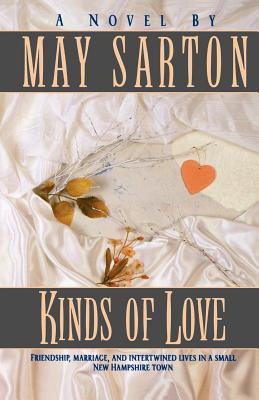 Christina and Cornelius Chapman have been “summer people,” visiting Willard, New Hampshire each summer for decades, but in the town’s bicentennial year they decide to commit to it full-time. They are seen as incomers by the tough mountain people, but Cornelius’s stroke and their adjustments to his disability and older age have given them the resilience to make it through a hard winter. Sarton lovingly builds up pictures of the townsfolk: Ellen Comstock, Christina’s gruff friend; Nick, Ellen’s mentally troubled son, who’s committed to protecting the local flora and fauna; Jane Tuttle, an ancient botanist; and so on. Willard is clearly a version of Sarton’s beloved Nelson, NH. She’s exploring love for the land as well as love between romantic partners and within families.
It’s a meandering novel pleasant for its atmosphere and its working out of philosophies of life through conversation and rumination, but Part Three, “A Stranger Comes to Willard,” feels like a misstep. A college dropout turns up at Ellen’s door after his car turns over in a blizzard. Before he’s drafted into the Vietnam War, he has time to fall in love with Christina’s 15-year-old granddaughter, Cathy. There may only be a few years between the teens, but this still didn’t sit well with me.
I liked how each third-person omniscient chapter ends with a passage from Christina’s journal, making things personal and echoing the sort of self-reflective writing for which Sarton became most famous. The book could have been closer to 300 pages instead of over 460, though.
The Dearly Beloved by Cara Wall (2019)
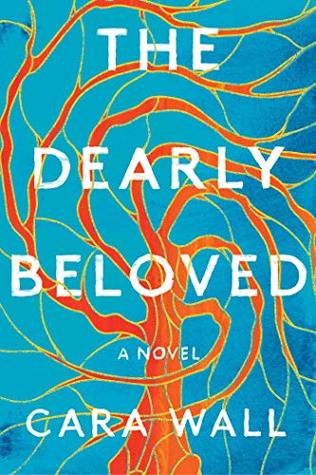 An elegant debut novel about two couples thrown together in 1960s New York City when the men are hired as co-pastors of a floundering Presbyterian church. Nearly the first half is devoted to the four main characters’ backstories and how each couple met. It’s a slow, subtle, quiet story (so much so that I only read the first half and skimmed the second), and I kept getting Charles and James, and Lily and Nan confused.
So here’s the shorthand: Charles is the son of an atheist Harvard professor and plans to study history until a lecture gets him thinking seriously about faith. Lily has closed herself off to life since she lost her parents in a car accident; though she eventually accedes to Charles’s romantic advances, she warns him she won’t bend where it comes to religion. James grew up in a poor Chicago household with an alcoholic father, while Nan is a Southern preacher’s daughter who goes up to Illinois to study music at Wheaton.
James doesn’t have a calling per se, but is passionate about social justice. As co-pastor, his focus will be on outreach and community service, while Charles’s will be on traditional teaching and ministry duties. Nan is desperate for a baby but keeps having miscarriages; Lily has twins, one of whom is autistic (early days for that diagnosis; doctors thought the baby should be institutionalized). Although Lily remains prickly, Nan and James’s friendship is a lifeline for them. The “dearly beloved” term thus applies outside of marriage as well, encompassing all the ties that sustain us – in the last line, Lily thinks, “these friends would forever be her stitches, her scaffold, her ballast, her home.”
 Bookish Beck = Rebecca Foster. American transplant to England. Freelance proofreader and book reviewer.
 Bookish Beck