Book Serendipity, April to May 2024
I call it “Book Serendipity” when two or more books that I read at the same time or in quick succession have something in common – the more bizarre, the better. Of course, the truer term would be synchronicity, but the branding has stuck. In Liz Jensen’s Your Wild and Precious Life, she mentions that Carl Jung coined the term “synchronicity” for what he described as “a meaningful coincidence of two or more events where something other than the probability of chance is involved.” I like thinking that it’s not just a matter of luck.
This is a regular feature of mine every couple of months. I would normally have waited until the end of June, but I had way too many coincidences stored up! Because I usually have 20–30 books on the go at once, I suppose I’m more prone to finding them. People frequently ask how I remember all of these incidents. The answer is: I jot them down on scraps of paper or input them immediately into a file on my PC desktop; otherwise, they would flit away.
The following are in roughly chronological order.
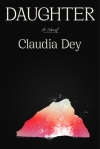
- Reading two King Lear updates at the same time: Private Rites by Julia Armfield and Daughter by Claudia Dey. The former has been specifically marketed as a “lesbian Lear,” but I had no idea that the latter also features two sisters plus a younger half-sister and their interactions with a larger-than-life father.

- Eating beans straight out of the tin in The Waterfall by Margaret Drabble and Of Mice and Men by John Steinbeck.
- Dead mice in Of Mice and Men by John Steinbeck and Stone Yard Devotional by Charlotte Wood.

-

- Screenshot
- Cloth holding the jaw of a corpse closed in one story from Barcelona by Mary Costello and A Woman’s Story by Annie Ernaux.
- Others see a character’s wife as a whore but the husband is oblivious in The Shipping News by E. Annie Proulx and Of Mice and Men by John Steinbeck.
 Setting up a game of solitaire in The Snow Hare by Paula Lichtarowicz and Of Mice and Men by John Steinbeck.
- Main character called Mona in Daughter by Claudia Dey and Mona of the Manor by Armistead Maupin.
- Being surprised at an older man still having his natural hair colour in one story of Barcelona by Mary Costello (where he’s aged 76) and Life in the Balance by Jim Down (where it’s Alan Bennett, at 84!).
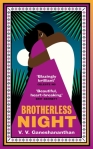
- A character named Anjali in Brotherless Night by V.V. Ganeshananthan and Moral Injuries by Christie Watson.

- A character named Cherry in Daughter by Claudia Dey and one story of This Is Why We Can’t Have Nice Things by Naomi Wood.
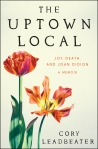
- My second memoir in two months in which a twentysomething son dies suddenly of a presumed heart problem: Fi by Alexandra Fuller, followed by Your Wild and Precious Life by Liz Jensen. (And a third in which his young friend died in the same way: The Uptown Local by Cory Leadbeater.) Also, Fuller and Jensen both see signs of their sons’ continued presence in bird sightings.
- Scratches on the inside of a coffin as proof of being buried alive in one story of Barcelona by Mary Costello and Life in the Balance by Jim Down.


- Surprise that one didn’t know the exact moment that a loved one died in one story of Barcelona by Mary Costello and Your Wild and Precious Life by Liz Jensen.
- Discussion of the meaning of brain stem death and a mention of meningococcal sepsis in Life in the Balance by Jim Down and Moral Injuries by Christie Watson.
- A scene set in a Denny’s diner in The Whole Staggering Mystery by Sylvia Brownrigg and After Dark by Haruki Murakami.


- A description of halal butchery in Barcelona by Mary Costello and Between Two Moons by Aisha Abdel Gawad.
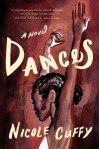
- A mention of ballet choreographer George Balanchine in Dances by Nicole Cuffy and The Uptown Local by Cory Leadbeater.
- A woman has an affair with a female postal worker in Mona of the Manor by Armistead Maupin and The Shipping News by Annie Proulx, both of which I DNFed.
- A character named Magdalena in Cloistered by Catherine Coldstream and The Snow Hare by Paula Lichtarowicz. The latter goes by Lena, which is also the name of the main character in Jungle House by Julianne Pachico. And there’s a character named Lina in Between Two Moons by Aisha Abdel Gawad.


- Being presented with powdered milk in Cloistered by Catherine Coldstream and Whale Fall by Elizabeth O’Connor.
- First I read a novel about a convent plagued by mice (Stone Yard Devotional by Charlotte Wood). Then I read a memoir about a convent plagued by feral cats (Cloistered by Catherine Coldstream).
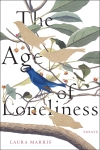
- Buffalo, New York as a setting in Consent by Jill Ciment and The Age of Loneliness by Laura Marris. It’s also mentioned in Enter Ghost by Isabella Hammad.


- Watching pigeons on one’s balcony in Keep by Jenny Haysom, Your Wild and Precious Life by Liz Jensen, and The Uptown Local by Cory Leadbeater.
 The family’s pet chicken is cooked for dinner in Coleman Hill by Kim Coleman Foote and The Snow Hare by Paula Lichtarowicz.
- The mother is named Gloria in Consent by Jill Ciment and Cold Spring Harbor by Richard Yates (and The War for Gloria by Atticus Lish, a DNF).
- A character named Anton in The Snow Hare by Paula Lichtarowicz and Jungle House by Julianne Pachico.
- A cat named Dog in The Door-to-Door Bookstore by Carsten Henn and a dog named Tiger in Jungle House by Julianne Pachico.
- Two nature books that feature wild cold-water swimming (though don’t they all these days?!): In All Weathers by Matt Gaw and Your Wild and Precious Life by Liz Jensen.

- Two nature books that mention W.H. Hudson: In All Weathers by Matt Gaw and North with the Spring by Edwin Way Teale.
 A large anonymous donation to a church in Slammerkin by Emma Donoghue and Excellent Women by Barbara Pym (£10–11, which was much more in the 18th century of the former than in the 1950s of the latter).
- A mention of Poughkeepsie, New York in Birdeye by Judith Heneghan and Woman of Interest by Tracy O’Neill.
- A 1950s scene of perusing a lipstick display in Recipe for a Perfect Wife by Karma Brown and Excellent Women by Barbara Pym.
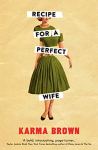

- A woman with a broken leg worries about how her garden will fare in Recipe for a Perfect Wife by Karma Brown and Remarkably Bright Creatures by Shelby Van Pelt.
- The same silent film image of a spaceship entering the moon’s eye (from Georges Méliès’s A Trip to the Moon) appears in Knife by Salman Rushdie and The Invention of Hugo Cabret by Brian Selznick. (I think this is the uncanniest coincidence of all this time!)

- A cleric who wears a biretta in Excellent Women by Barbara Pym and Daughters of the House by Michèle Roberts.
- A Black single mother who believes in the power of crystals in Company by Shannon Sanders and Another Word for Love by Carvell Wallace.


- An older woman really doesn’t want to leave her home but is moving into a retirement facility in Keep by Jenny Haysom and Remarkably Bright Creatures by Shelby Van Pelt. (There’s also a young woman who refuses to leave her house in Recipe for a Perfect Wife by Karma Brown.)
 A man throws his tie over his shoulder before eating in Recipe for a Perfect Wife by Karma Brown and Keep by Jenny Haysom.
- A mother writing a bad check becomes an important plot point in Remarkably Bright Creatures by Shelby Van Pelt and Another Word for Love by Carvell Wallace.
 A scene of self-induced abortion in Recipe for a Perfect Wife by Karma Brown and Sleeping with Cats by Marge Piercy.
- The Yiddish word feh (an expression of disappointment) appears in Feh by Shalom Auslander (no surprise there!) but also in A Reason to See You Again by Jami Attenberg, both of which are pre-release books I am reading for Shelf Awareness reviews.

What’s the weirdest reading coincidence you’ve had lately?
Book Serendipity, March to April 2024
I call it “Book Serendipity” when two or more books that I read at the same time or in quick succession have something in common – the more bizarre, the better. This is a regular feature of mine every couple of months. Because I usually have 20–30 books on the go at once, I suppose I’m more prone to such incidents. The following are in roughly chronological order.
- I encountered quotes from “The Second Coming” by W.B. Yeats on the same day in Immanuel by Matthew McNaught and Waiting for the Monsoon by Rod Nordland. A week or so later, I found another allusion to it – a “rough _________ slouching toward ________” – in Mothership by Greg Wrenn.
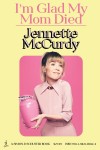
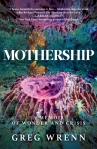
- Reading my second memoir this year in which the author’s mother bathed them until they were age 17 (in other words, way past when it ceased to be appropriate): I’m Glad My Mom Died by Jennette McCurdy was followed by Mothership by Greg Wrenn.
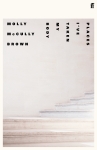
- Quoting a poem with the word “riven” in it (by Christian Wiman) in Places I’ve Taken My Body by Molly McCully Brown and (by a character in the novel) in Bright and Tender Dark by Joanna Pearson. The word “riven” (which is really not a very common one, is it?) also showed up in Sleepless by Annabel Abbs. And then “riving” in one of the poems in The Intimacy of Spoons by Jim Minick.
- East Timor as a destination in Waiting for the Monsoon by Rod Nordland and Mothership by Greg Wrenn.
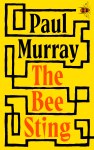
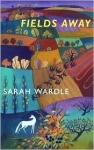
- Quoting John Donne in Places I’ve Taken My Body by Molly McCully Brown and The Bee Sting by Paul Murray (to which a Donne line is the epigraph); mimicking Donne in one poem of Fields Away by Sarah Wardle.
- “Who do you think you are?” as a question an abusive adult asks of a child in The Beggar Maid (aka Who Do You Think You Are?) by Alice Munro and Mothership by Greg Wrenn.
- Sylvia Plath is mentioned in Sleepless by Annabel Abbs and The Bee Sting by Paul Murray … and Katherine Mansfield in Sleepless by Annabel Abbs and The Beggar Maid by Alice Munro.
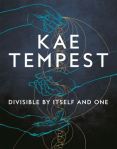
- Mosquitoes are mentioned in a poem in Rapture’s Road by Seán Hewitt and Divisible by Itself and One by Kae Tempest.

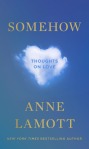
- Reading two memoirs that quote a Rumi poem (and that released on 9 April and that I reviewed for Shelf Awareness): Fi: A Memoir of My Son by Alexandra Fuller and Somehow: Thoughts on Love by Anne Lamott. (Rumi was also quoted as an epigraph in Viv Fogel’s poetry collection Imperfect Beginnings.)
- Bereavement memoirs that seek significance in eagle sightings (i.e. as visitations from the dead): Sleepless by Annabel Abbs and Fi: A Memoir of My Son by Alexandra Fuller.
- Snyder’s pretzels as a snack in Somehow: Thoughts on Love by Anne Lamott and Come and Get It by Kiley Reid.

- Reading two C-PTSD memoirs at the same time: A Flat Place by Noreen Masud and Mothership by Greg Wrenn.
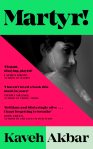 Information about coral reefs dying in Martyr! by Kaveh Akbar and Mothership by Greg Wrenn.
- The gay slang term “twink” appears in The Bee Sting by Paul Murray and Mothership by Greg Wrenn.
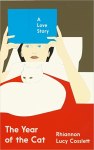
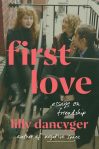
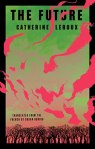
- Assisting a mother who reads tarot cards in Intervals by Marianne Brooker and The Year of the Cat by Rhiannon Lucy Cosslett. (Tarot is also read in First Love by Lilly Dancyger and The Future by Catherine Leroux.)

- An Asian American character who plays poker in a graphic novel: Advocate by Eddie Ahn and Lunar New Year Love Story by Gene Luen Yang.
- Vivian Gornick’s Fierce Attachments, which I was also reading at the time, is mentioned in Intervals by Marianne Brooker.
 An Uncle Frank in an Irish novel with no speech marks: Trespasses by Louise Kennedy and The Bee Sting by Paul Murray.
- Martin Luther King’s “I Have a Dream” speech is quoted in Some Kids I Taught & What They Taught Me by Kate Clanchy and How to Raise a Viking by Helen Russell.
- Using quarters for laundry in Come and Get It by Kiley Reid and one story from Dressing Up for the Carnival by Carol Shields.

- A scene of someone watching from a lawn chair as someone else splits wood in Martyr! by Kaveh Akbar and Becoming Little Shell by Chris La Tray.
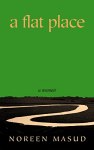 Quotes from cultural theorist Sara Ahmed in Intervals by Marianne Brooker and A Flat Place by Noreen Masud.
- I read about windows being blocked up because of high taxes on the same evening in Trespasses by Louise Kennedy and one story from Dressing Up for the Carnival by Carol Shields.
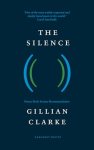
- I saw Quink ink mentioned in The Silence by Gillian Clarke and Trespasses by Louise Kennedy on the same evening.
- The song “It’s a Long Way to Tipperary” is mentioned in You’re on Your Own, Snoopy by Charles M. Schulz and Welcome to Glorious Tuga by Francesca Segal.
- A pet magpie in George by Frieda Hughes and A Council of Dolls by Mona Susan Power.

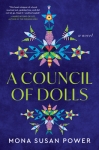
- A character tests to see what will happen (will God strike them down?) when they mess with the Host (by stealing the ciborium or dropping a wafer on the floor, respectively) in A Council of Dolls by Mona Susan Power and one story from Dressing Up for the Carnival by Carol Shields.
- Marrying the ‘wrong’ brother in The Bee Sting by Paul Murray and A Council of Dolls by Mona Susan Power.
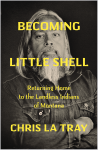 Indigenous author, Native versus Catholic religion, and descriptions of abuse and cultural suppression at residential schools in Becoming Little Shell by Chris La Tray and A Council of Dolls by Mona Susan Power.
- Teen girls obsessed with ‘sad girl’ poetry, especially by Sylvia Plath, in First Love by Lilly Dancyger and The Bee Sting by Paul Murray.
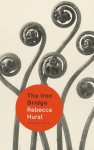
- “Hyacinth” is a poem in Solutions for the Problem of Bodies in Space by Catherine Barnett, and “Hyacinth Girl” a story in Cocktail by Lisa Alward. (Hyacinths are also mentioned in a poem in The Iron Bridge by Rebecca Hurst.)


- A character named Sissy in A Council of Dolls by Mona Susan Power and Stone Yard Devotional by Charlotte Wood.
- Harming amphibians, whether deliberately or accidentally, in a story in Barcelona by Mary Costello, a poem in Baby Schema by Isabel Galleymore, and Mothership by Greg Wrenn.
- A significant character called Paul in Dances by Nicole Cuffy, Daughter by Claudia Dey (those two were both longlisted for the Carol Shields Prize), and Moral Injuries by Christie Watson.
- Out of Africa (the film and then the book), which I was looking through for the #1937Club, is mentioned in The Whole Staggering Mystery by Sylvia Brownrigg – her writer grandfather lived in Nairobi’s “Happy Valley” in the 1930s.
- Reading two novels at the same time in which a teen girl’s plans to study medicine are derailed by war: Brotherless Night by V.V. Ganeshananthan and The Snow Hare by Paula Lichtarowicz.
What’s the weirdest reading coincidence you’ve had lately?
 Bookish Beck = Rebecca Foster. American transplant to England. Freelance proofreader and book reviewer.
 Bookish Beck