R.I.P. Reads, Part I: Bender, Harkness, Hurley
I’ve been reading twisted fairy tales, a novel about witches and vampires with historical and contemporary timelines, and a subtle work of Gothic horror set on a remote stretch of the English coast.
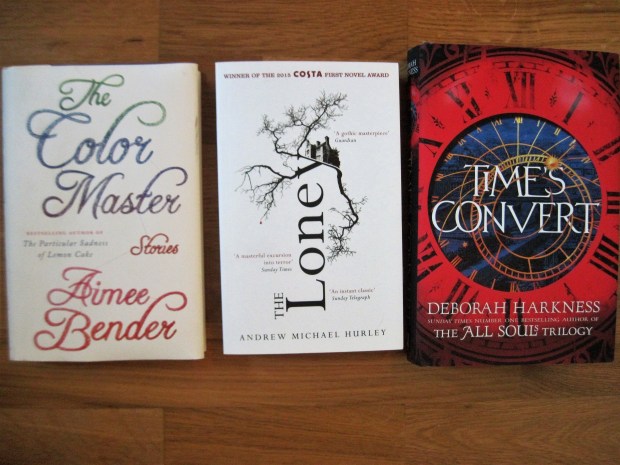
The Color Master by Aimee Bender (2013)
Aimee Bender is best known for The Particular Sadness of Lemon Cake. This is the second collection of her stories that I’ve read. Most have a touch of the bizarre to them – a tiny tweak to normal life – but some are set in completely alternate worlds. One character experiences extreme face blindness; another deludes himself that he was a famously vicious Nazi during the Second World War. Seamstresses take on odd tasks like repairing endangered animals or, in the title story, creating a dress that resembles the moon and embodies female anger. In “Appleless,” vigilantes punish a girl who won’t eat apples, while “The Devourings” is a dark riff on Shrek in which a woman comes to terms with her ogre husband’s innate violence.
 A few favorites were “A State of Variance,” in which a character can’t seem to avoid perfect facial symmetry no matter how he tries to mar his natural beauty, “The Doctor and the Rabbi,” a philosophical conversation between an ill rabbi and her atheist-leaning parishioner, and “The Red Ribbon” (which draws on the same source material as Carmen Maria Machado’s “The Husband Stitch”), about a bored housewife who starts acting out sexual fantasies to try to save her marriage.
Bender deploys a good mixture of voices and protagonists, though at least four of the 15 stories felt unnecessary to me. Her approach is similar to Kelly Link’s and Karen Russell’s, but I’ve failed to get on with their surreal stories before – Bender’s writing is that bit more accessible. I’d recommend her to fans of stories by Amy Bloom and Sarah Hall.
My rating: 
Time’s Convert by Deborah Harkness (2018)
This is a companion volume to Harkness’s All Souls Trilogy, which is like the thinking gal’s Twilight, as written by a historian of science. I read the first book, A Discovery of Witches, in 2011 and surprised myself by completely loving the story of the witch Diana Bishop, who researches alchemy at the Bodleian Library and falls hard for a centuries-old vampire, Matthew de Clermont. Although Time’s Convert is likely intended to stand alone, I felt it could do with a dramatis personae at the start as I’d forgotten who many of the minor characters were.
 Diana and Matthew are still major characters, though not at the heart of the book. One strand has Diana and her family staying in the French countryside. She and Matthew now have toddler twins, Philip and Becca, who are just starting to show magical powers: Philip summons a griffon named Apollo as his familiar. Another is set in Paris, where Phoebe Taylor is willingly being transformed into a vampire so she can marry Matthew’s son, Marcus. A final strand recreates Marcus’s experiences during the American and French Revolutions and onward: he was born in Massachusetts in 1757 and was a surgeon during the Revolutionary War before he met Matthew and received the offer of immortality.
I almost always feel that sequels fail to live up to the original. Time’s Convert is most like Shadow of Night, the second book of the series and my least favorite because it spends so much time in 1590s England. Here the three different story lines split my focus and I resented being taken away from Diana’s first-person narration, which is much more engaging than the third-person material. I would only recommend this volume to diehard fans of the series.
My rating: 
With thanks to Headline for the free copy for review.
Note: A television adaptation of A Discovery of Witches recently aired on Sky One in the UK and is coming to North America in January.
The Loney by Andrew Michael Hurley (2014)
 The Loney is not a monster, as I suppose I expected, but a place: an isolated coastline in the northwest of England that the narrator and his family visited on pilgrimage with their Roman Catholic congregation every Easter in the 1970s. The narrator, only identified by the nickname Tonto, explores their strange rental house – full of taxidermied animals and hidden rooms, it also has a rifle under the floorboards – and goes to the beach with his mute brother Andrew (“Hanny”). Mummer and Farther hold out hope that their son Hanny will be healed on a visit to the local shrine, and Mummer especially is frustrated that Father Bernard isn’t as strict and devout as their previous priest, Father Wilfred, who died under a cloud of suspicion not long before this trip.
Last year at around this time I read Hurley’s follow-up, Devil’s Day, which has a similarly bleak and eerie atmosphere. Both look at rural superstitions as experienced by outsiders. The Loney was more profound for me, though, in how it subverts religious rituals and posits a subtle evil influence without ever disappearing down doctrinal rabbitholes. It asks how far people will go to get what they want, what meaning there is to human life if there is no supernatural being looking out for us, and – through a framing story set 30 or more years later – how guilt and memory persist. I especially loved the Tenebrae service in a gloomy church featuring Bosch-like horrors in its artwork. This reminded me of a less abstract After Me Comes the Flood and a more contemporary The Short Day Dying; I highly recommend it.
Favorite lines:
“The Church of the Sacred Heart was an ancient place – dark and squat and glistening amphibiously in the rain.”
“The wind continued to rise and fall. Whining and shrilling. It was as insistent as the priest, louder sometimes, preaching an older sermon, about the sand and the sea.”
My rating: 
Have you been reading anything fantastical or spooky this October?
Five Perfect Winter Reads
When possible I enjoy reading with the seasons. As the holidays approached last year I picked out a pile of wintry reads that would see me through the dark, cold days of January. I’ve had a chance to read five of them so far, and give review extracts below. I may report back later on in the winter about a few books I plan to read with “snow” in the title.

In the Grip of Winter by Colin Dann
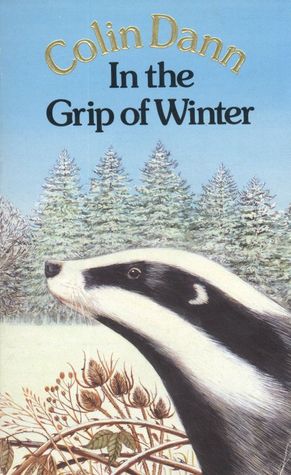 In this second book of the Farthing Wood series, the animals endure a harsh winter in their new home, the White Deer Park. When Badger falls down a slope and injures his leg, he’s nursed back to health at the Warden’s cottage, where Ginger Cat tempts him to join in a life of comfort and plenty. Meanwhile, Fox, Tawny Owl and the others are near starvation, and resort to leaving the park and stealing food from farms and rubbish bins. They have to band together and use their cunning to survive. This was a sweet book that reminded me of my childhood love of anthropomorphized animal stories (like Watership Down and the Redwall series). I doubt I’ll read another from the series, but this was a quaint read for the season.
My husband received this book for free from his school for some reason. Even early on his tastes turned towards wildlife. [One annoyance: the author always referred to Badger’s “set” instead of his “sett”; although it appears this may actually be a permissible variant, it wasn’t cool with me!]


Favorite wintry passage:
“‘Every winter is hard for some,’ Badger answered. ‘The weakest among us always suffer the most. The small creatures: the mice, the shrews, the voles and, particularly, the small birds – every winter takes its toll [on] them. But yes – I sense that this winter will be one to reckon with. There’s something in that wind…’”
My rating:
This Cold Heaven: Seven Seasons in Greenland by Gretel Ehrlich
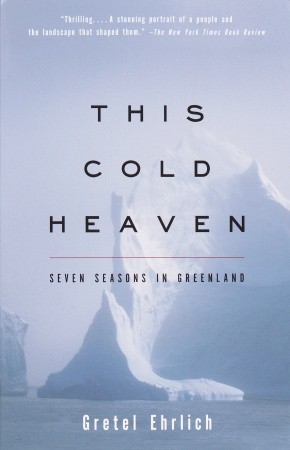 Once a year or so I encounter a book that’s so flawlessly written you could pick out just about any sentence and marvel at its construction. That’s certainly the case here. I never want to go to Greenland; English winters are quite dark and cold enough for me, and I don’t know if I could stomach seal meat at all, let alone for most meals and often raw. But that’s okay: I don’t need to book a flight to Qaanaaq, because through reading this I’ve already been in Greenland in every season, and I thoroughly enjoyed my armchair trek. Impressively, Ehrlich is always describing the same sorts of scenery, and yet every time finds a fresh way to write about ice and sun glare and frigid temperatures. I’ll be looking into her other books for sure.
Favorite wintry passage:
“The ice cap itself was a siren singing me back to Greenland, its walls of blue sapphire and sheer immensity always beguiling. Part jewel, part eye, part lighthouse, part recumbent monolith, the ice is a bright spot on the upper tier of the globe where the world’s purse strings have been pulled tight, nudging the tops of three continents together. Summers, it burns in the sun, and in the dark it hoards moonlight.”
My rating:
Further reading on Greenland: A Wilder Time: Notes from a Geologist at the Edge of the Greenland Ice by William E. Glassley (see my Foreword review) and The Prophets of Eternal Fjord by Kim Leine, an epic novel about an unconventional priest, set in late-eighteenth-century Denmark and Greenland (see my Nudge review). Also Sinéad Morrissey’s multi-part poem “Whitelessness.” You can read the first stanza of it here.
The Short Day Dying by Peter Hobbs
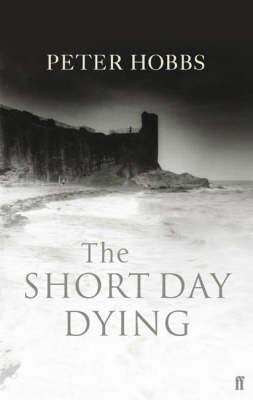 This short novel from 2005 deserves to be better known. It reminded me of Days Without End and On the Black Hill, but most of all of Francis Kilvert’s diary, perhaps as voiced by a rustic from Poldark. We journey through 1870 with Charles Wenmoth, a twenty-seven-year-old blacksmith’s apprentice and Methodist lay preacher in Cornwall mining country. Very little happens; the focus is on atmosphere and voice. The major struggle is with his melancholy spirit, which causes him to doubt his salvation. As winter circles round, the days grow shorter just as he senses life growing shorter. The short chapters are like undated diary entries (apparently based on the author’s great-great-grandfather’s); the sentences are almost completely unpunctuated, which at first had me twitching for my pencil to add commas to the run-on sentences, but eventually I gave myself over to the flow.
Favorite wintry passage:
“It is a shame we cannot stay children for ever and remain blind to the slow death of the land. How different it will all be in a few months the bare trees revealed as dark gnarled bodies. Something inside them though lives through the yearly famine and they always find new colour. I trust it is the same for us all.”
My rating:
Winter by Karl Ove Knausgaard
 This is my favorite of the three Knausgaard books I’ve read so far, and miles better than his Autumn. These short essays successfully evoke the sensations of winter and the conflicting emotions elicited by family life and childhood memories. The series is, loosely speaking, a set of instruction manuals for his unborn daughter, who is born a month premature in the course of this volume. So in the first book he starts with the basics of bodily existence – orifices, bodily fluids and clothing – and now he’s moving on to slightly more advanced but still everyday things she’ll encounter, like coins, stuffed animals, a messy house, toothbrushes, and the moon. I’ll see out this series, and see afterwards if I have the nerve to return to My Struggle.
Favorite wintry passage:
“winter not only muffles some sounds and intensifies others, it also has sounds that are entirely its own, unique to the season, and some of them are among the most beautiful of all. The low boom of ice-covered waters as they freeze, for instance, which can be heard on perfectly clear days or nights when the cold deepens, and which has something menacing or mighty about it, since it isn’t connected to an visible movement”
My rating:
Available Light by Marge Piercy
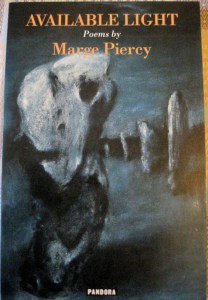 Many poetry volumes get a middling rating from me because some of the poems are memorable but others do nothing for me. This is on the longer side for a collection at 120+ pages, but only a handful of its poems fell flat. The subjects are diverse: travels in Europe (my cover depicts the Avebury stone circle in the gloom), menstruation, identifying as a Jew as well as a feminist, scattering her father’s ashes, the stresses of daily life, and being in love. The title poem, which appears first, has a slightly melancholy tone with its focus on the short days of winter, but the poet defiantly asserts meaning despite the mood: “Even the dead of winter: it seethes with more / than I can ever live to name and speak.” Piercy was a great discovery, and I’ll be trying lots more of her books from various genres.
Favorite wintry passage:
(from “Available light”)
In winter the light is red and short.
The sun hangs its wizened rosehip in the oaks.
By midafternoon night is folding in.
The ground is locked against us like a door.
Yet faces shine so the eyes stretch for them
and tracks in the snow are etched, calligraphy
My rating:
(And one book that didn’t quite work for me; I ended up abandoning it at 14%.
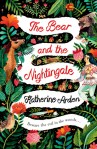 The Bear and the Nightingale by Katherine Arden: Some striking turns of phrase, an enchanting wintry atmosphere … but a little Disney-fied for me. I got this free for Kindle so may come back to it at some point.
Favorite wintry passage:
“The years slipped by like leaves. …The clouds lay like wet wool above the trees.”)
Have you read any wintry books this year?
Starting the Year as I Mean to Go On?
The houseguests have gone home, the Christmas tree is coming down tomorrow, and it’s darned cold. I’m feeling stuck in a rut in my career, the blog, and so many other areas of life. It’s hard not to think of 2017 as a huge stretch of emptiness with very few bright spots. All I want to do is sit around in my new fuzzy bathrobe and read under the cat. Luckily, I’ve had some great books to accompany me through the Christmas period and have finished five so far this year.
I thought I’d continue the habit of writing two-sentence reviews (or maybe no more than three), except when I’m writing proper full-length reviews on assignment or for blog tours or other websites. Granted, they’re usually long and multi-part sentences, and this isn’t actually a time-saving trick – as Blaise Pascal once said, “I’m sorry I wrote you such a long letter; I didn’t have time to write a short one” – but it feels like good discipline.
So here’s some mini-reviews of what I’ve been reading in late December and early January:
The Dark Flood Rises, Margaret Drabble
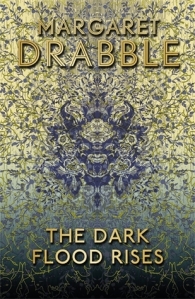 The “dark flood” is D.H. Lawrence’s metaphor for death, and here it corresponds to busy seventy-something Fran’s obsession with last words, obituaries and the search for the good death as many of her friends and acquaintances succumb – but also to literal flooding in the west of England and (dubious, this) to mass immigration of Asians and Africans into Europe. This is my favorite of the five Drabble books that I’ve read – it’s closest in style and tone to her sister A.S. Byatt as well as to Tessa Hadley, and the themes of old age and life’s randomness are strong – even though there seem to be too many characters and the Canary Islands subplot mostly feels like an unnecessary distraction. (Public library)
Hogfather, Terry Pratchett
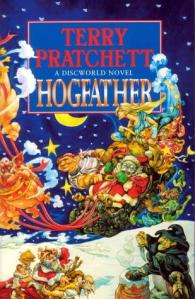 In Discworld belief causes imagined beings to exist, so when a devious plot to control children’s minds results in a dearth of belief in the Hogfather, the Fat Man temporarily disappears and Death has to fill in for him on this Hogswatch night. I laughed aloud a few times while reading this clever Christmas parody, but I had a bit of trouble following the plot and grasping who all the characters were given that this was my first Discworld book; in general I’d say that Pratchett is another example of British humor that I don’t entirely appreciate (along with Monty Python and Douglas Adams) – he’s my husband’s favorite, but I doubt I’ll try another of his books. (Own copy)
Love of Country: A Hebridean Journey, Madeleine Bunting
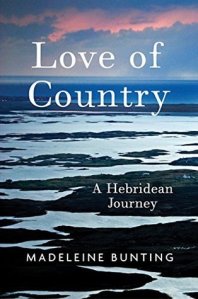 In a reprise of childhood holidays that inevitably headed northwest, Bunting takes a series of journeys around the Hebrides and weaves together her contemporary travels with the religion, folklore and history of this Scottish island chain, an often sad litany of the Gaels’ poverty and displacement that culminated with the brutal Clearances. Rather than giving an exhaustive survey, she chooses seven islands to focus on and tells stories of unexpected connections – Orwell’s stay on Jura, Lord Leverhulme’s (he of Port Sunlight and Unilever) purchase of Lewis, and Bonnie Prince Charlie’s landing on Eriskay – as she asks how geography influences history and what it truly means to belong to a place. (Public library)
Cobwebs and Cream Teas: A Year in the Life of a National Trust House, Mary Mackie
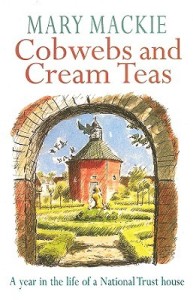 Mackie’s husband was Houseman and then Administrator at Felbrigg Hall in Norfolk in the 1980s – live-in roles that demanded a wide range of skills and much more commitment than the usual 9 to 5 (when he borrowed a pedometer he learned that he walked 15 miles in the average day, without leaving the house!). Her memoir of their first year at Felbrigg proceeds chronologically, from the intense cleaning and renovations of the winter closed season through to the following Christmas’ festivities, and takes in along the way plenty of mishaps and visitor oddities. It will delight anyone who’d like a behind-the-scenes look at the life of a historic home. (Own copy)
The Bridge Ladies: A Memoir, Betsy Lerner
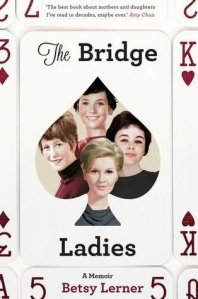 When life unexpectedly took the middle-aged Lerner back to her hometown of New Haven, Connecticut, she spent several years sitting in on her mother’s weekly bridge games to learn more about these five Jewish octogenarians who have been friends for 50 years and despite their old-fashioned reserve have seen each other through the loss of careers, health, husbands and children. Although Lerner also took bridge lessons herself, this is less about the game and more about her ever-testy relationship with her mother (starting with her rebellious teenage years), the ageing process, and the ways that women of different generations relate to their family and friends. It wouldn’t be exaggerating to say that every mother and daughter should read this; I plan to shove it in my mother’s and sister’s hands the next time I’m in the States. (Own copy)
Waiting on the Word, Malcolm Guite
 Guite chooses well-known poems (by Christina Rossetti, John Donne, Alfred Lord Tennyson, Samuel Taylor Coleridge et al.) as well as more obscure contemporary ones as daily devotional reading between the start of Advent and Epiphany; I especially liked his sonnet sequence in response to the seven “O Antiphons.” His commentary is learned and insightful, and even if at times I thought he goes into too much in-depth analysis rather than letting the poems speak for themselves, this remains a very good companion to the Christmas season for any poetry lover. (E-book from NetGalley)
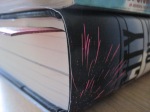 I started too many books over Christmas and have sort of put six of them on hold – including Titus Groan, which I’m thinking of quitting (it takes over 50 pages for one servant to tell another that the master has had a son?!), and City on Fire, which is wonderful but dispiritingly long: even after two good sessions with it in the days after Christmas, I’ve barely made a dent.
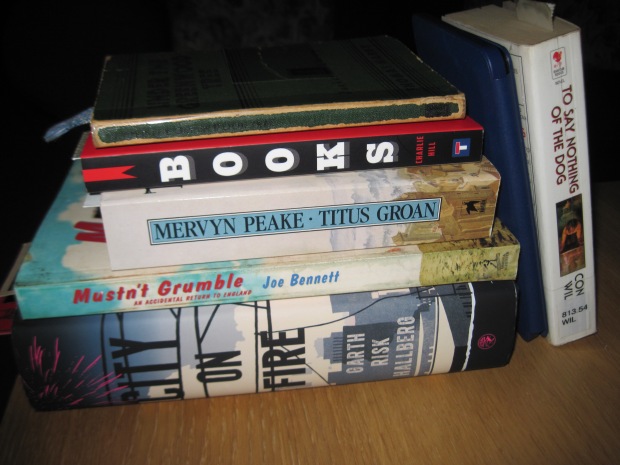
Stack on left = on hold (the book on top is Under the Greenwood Tree); standing up at right = books I’m actually reading.
However, the three books that I am actively reading I’m loving: To Say Nothing of the Dog by Connie Willis is an uproarious blend of time travel science fiction and Victorian pastiche (university library), Pachinko by Min Jin Lee is a compulsive historical saga set in Korea (ARC from NetGalley), and the memoir Birds Art Life by Kyo Maclear has been compared to H Is for Hawk in the way she turns to birdwatching to deal with depression (e-book from Edelweiss). I also will be unlikely to resist my e-galley of the latest Anne Lamott book, Hallelujah Anyway (forthcoming in April, ARC from Edelweiss), for much longer.



Meanwhile, in post-holiday charity shopping I scored six books for £1.90: one’s been tucked away as a present for later in the year; the Ozeki I’ve already read, but it’s a favorite so I’m glad to own it; and the rest are new to me. I look forward to trying Han Kang; Anne Tyler is a reliable choice for a cozy read; and the Hobbs sounds like a wonderful Victorian-set novel.
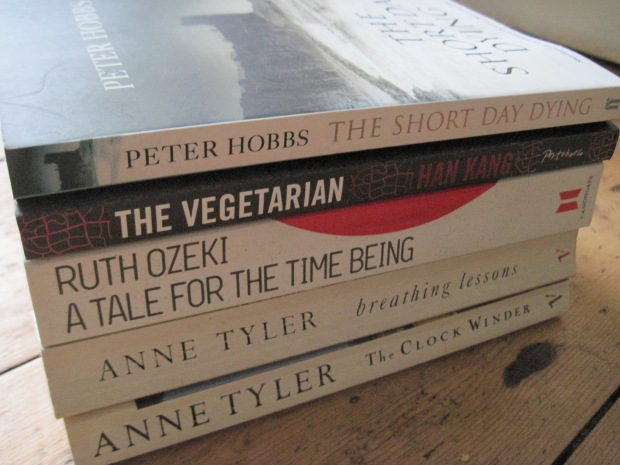
All in all, I seem to be starting my year in books as I mean to go on: reading a ton; making sure I review most or all of the books, even if I write just a few sentences; maintaining a balance between my own books, library books, and recent or advance NetGalley/Edelweiss reads; and failing to restrain myself from buying more.
Now if I could just work on my general attitude…
 Bookish Beck = Rebecca Foster. American transplant to England. Freelance proofreader and book reviewer.
 Bookish Beck