Hard Pushed: A Midwife’s Story by Leah Hazard
“For fans of Adam Kay’s This Is Going to Hurt and Christie Watson’s The Language of Kindness,” the blurb on my press release for Leah Hazard’s memoir opens. The publisher’s comparisons couldn’t be more perfect: Hard Pushed has the gynecological detail and edgy sense of humor of Kay’s book (“Another night, another vagina” is its first line, and the author has been known to introduce herself with “Midwife Hazard, at your cervix!”), and matches Watson’s with its empathetic picture of patients’ plights and medical professionals’ burnout.
Hazard alternates between anonymized case studies of patients she has treated and general thoughts on her chosen career (e.g. “Notes on Triage” and “Notes on Being from Somewhere Else”). Although all of the patients in her book are fictional composites, their circumstances are rendered so vividly that you quickly forget these particular characters never existed. Visceral details of sights, smells and feelings put you right there in the delivery room with Eleanor, one-half of a lesbian couple welcoming a child thanks to the now-everyday wonder of IVF; Hawa, a Somali woman whose pregnancy is complicated by the genital mutilation she underwent as a child; and Pei Hsuan, a Chinese teenager who was trafficked into sex work in Britain.
Sometimes we don’t learn the endings to these stories. Will 15-year-old Crystal have a healthy baby after she starts leaking fluid at 23 weeks? What will happen next for Pei Hsuan after her case is passed on to refugee services? Hazard deliberately leaves things uncertain to reflect the partial knowledge a hospital midwife often has of her patients: they’re taken off to surgery or discharged, and when they eventually come back to deliver someone else may be on duty. All she can do is to help each woman the best she can in the moment.
 A number of these cases allow the author to comment on the range of modern opinions about pregnancy and childrearing, including some controversies. A pushy new grandmother tries to pressure her daughter into breastfeeding; a woman struggles with her mental health while on maternity leave; a rape victim is too far along to have a termination. At the other end of the spectrum, we meet a hippie couple in a birthing pool who prefer to speak of “surges” rather than contractions. Hazard rightly contends that it’s not her place to cast judgment on any of her patients’ decisions; her job is simply to deal with the situation at hand.
I especially liked reading about the habits that keep the author going through long overnight shifts, such as breaking the time up into 15-minute increments, each with its own assigned task. The excerpts from her official notes – in italics and full of shorthand and jargon – are a neat window into the science and reality of a midwife’s work, with a glossary at the end of the book ensuring that nothing is too technical for laypeople.
Hazard, an American, lives in Scotland and has a Glaswegian husband and two daughters. Her experience of being an NHS midwife has not always been ideal; there were even moments when she was ready to quit. Like Kay and Watson, she has found that the medical field can be unforgiving what with low pay, little recognition and hardly any time to wolf down your dinner during a break, let alone reflect on the life-and-death situations you’ve been a part of. Yet its rewards outweigh the downsides.
Hard Pushed has none of the sentimentality of Call the Midwife – a relief since I’m not one to gush over babies. Still, it’s a heartfelt read as well as a vivid and pacey one, and it’s alternately funny and sobering. If you like books that follow doctors and nurses down hospital hallways, you’ll love it. This was one of my most anticipated books of the first half of the year, and it lived up to my expectations. It’s also one of my top contenders for the 2020 Wellcome Book Prize so far.
A few favorite passages:
“So many things in midwifery are ‘wee’ [in Scotland, at least!] – a wee cut, a wee tear, a wee bleed, the latter used to describe anything from a trickle to a torrent. Euphemisms are one of our many small mercies: we learn early on to downplay and dissemble. The brutality of birth is often self-evident; there is little need to elaborate.”
“Whenever I dress a wound in this way, I remember that this is an act of loving validation; every wound tells a story, and every dressing is an acknowledgement of that story – the midwife’s way of saying, I hear you, and I believe you.”
“midwives do so much more than catch babies. We devise and implement plans of care; we connect, console, empathise and cheerlead; we prescribe; we do minor surgery. … We may never have met you until the day we ride into battle for you and your baby; … you may not even recognise the cavalry that’s been at your back until the drapes are down and the blood has dried beneath your feet.”
My rating: 
Hard Pushed was published in the UK on May 2nd (just a few days before International Midwives’ Day) by Hutchinson. My thanks to the publisher for the free proof copy for review.
Margaret Atwood Reading Month: Surfacing and The Edible Woman
For the Margaret Atwood Reading Month hosted by Marcie and Naomi, I read her first two novels – though I didn’t realize they were so at the time, and read them in reverse order. These were my 18th and 19th Atwood books overall, and my 11th and 12th of her novels. It was particularly interesting to see the germ of her frequent themes in these early works.
Surfacing (1972)
(At 186 pages, this just about fit into Novellas for November too!) A young Canadian woman has returned to her French-speaking hometown, ostensibly to search for her missing father but really to search for herself. She’s an illustrator at work on a collection of Quebec folk tales, and in her past are a husband and child that she left behind. With her at her father’s lakeside cabin are her boyfriend Joe, whom she’s not sure she loves, and their friends David and Anna, a married couple whose dynamic is rather disturbing – David is always making demeaning sexualized jokes about Anna, who is afraid for him to see her without makeup on.
 This is a drifting, dreamy sort of book whose gorgeous nature writing (“Above the trees streaky mackerel clouds are spreading in over the sky, paint on a wet page; no wind at lake level, soft feel of the air before rain”) inures you to various threats. You’re never sure just how serious they’ll turn out to be. Will the men’s attitude to women spill over into outright assault? Will there be some big blowup with the resented Americans who are monopolizing the lake? (“We used to think they were harmless and funny and inept and faintly lovable, like President Eisenhower.”)
Meanwhile, the question of her father’s whereabouts becomes less and less important as the book goes on. The narrator seems to have closed herself off to emotion, but all that’s repressed returns dramatically in the final 20 pages (“From any rational point of view I am absurd; but there are no longer any rational points of view.”).
I suspect there may be a fair bit I missed; the book would probably benefit from future re-readings and even some exploration of secondary sources to think about all that’s going on. It’s maybe not as accessible and plot-heavy as much of Atwood’s later work, but I found it to be an intriguing and rewarding read, and it still feels timely more than four decades later. 
The Edible Woman (1969)
Marian McAlpin works for Seymour Surveys, administering questionnaires about rice pudding and a new brand of beer. She shares an apartment with Ainsley, who tests electric toothbrushes, in the home of a harridan of a landlady who monitors their every move. Marian is happy enough with her boyfriend Peter and gradually drifts into an engagement – but she can’t stop thinking about Duncan, an apathetic graduate student whom she met during her survey rounds and ran into again at the laundromat. Duncan represents a sort of strings-free relationship that contrasts with the traditional marriage she’d have with Peter. Her challenge is to overcome the inertia of convention and decide what she really wants from her life.
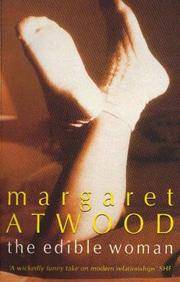 Part Two’s shift from first person to third person is a signal that Marian is dissociating from her situation. She recoils from food and pregnancy – two facts of bodily life that the book’s characters embrace greedily or turn from in horror. Gradually Marian eliminates more and more foods from her diet, starting with meat. And while Ainsley concocts a devious plan to get pregnant by Marian’s friend Len, Marian keeps in mind the cautionary tale of her college friend Clara, whose three monstrous children are always peeing on people or going off to poop in corners. Marian perceives Clara as having given up her mind in favor of her womb.
It’s unclear whether we’re meant to see Marian’s experience as a temporary eating disorder or a physical manifestation of endangered femininity. Now that veganism is mainstream, it sounds dated to hear her lamenting, “I’m turning into a vegetarian, one of those cranks; I’ll have to start eating lunch at Health Bars.” In any case, you can spot themes that will recur in Atwood’s later work, like the threat of the male gaze (Surfacing), the perception of the female body (Lady Oracle), manipulation of pregnancy (The Handmaid’s Tale) and so on. I can’t say I particularly enjoyed this novel, but I liked the food metaphors and laughed at the over-the-top language about babies. 
Have you read any of Margaret Atwood’s books recently?
Incidents of Book Serendipity
Since May I’ve been posting my occasional reading coincidences on Twitter and/or Instagram. This is when two or more books that I’m reading at the same time or in quick succession have something pretty bizarre in common. Because I have so many books on the go at once – usually between 10 and 20 – I guess I’m more prone to such serendipitous incidents. What’s the weirdest one you’ve had lately? (The following are in rough chronological order.)
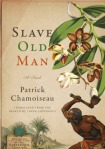
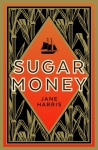
- Two historical novels set (partially) among the slaves of Martinique and featuring snippets of Creole (Patrick Chamoiseau’s Slave Old Man and Jane Harris’s Sugar Money)
- A book about epilepsy and a conductor’s memoir, followed by a novel with a conductor character and another who has seizures (Suzanne O’Sullivan’s Brainstorm and Lev Parikian’s Why Do Birds Suddenly Disappear? to Caoilinn Hughes’s Orchid & the Wasp)
- Two characters mistake pregnancy for cholera (in Alexandra Fuller’s Leaving Before the Rains Come and W. Somerset Maugham’s The Painted Veil)
 Two characters are reading Ursula K. Le Guin’s The Left Hand of Darkness (in Lily Brooks-Dalton’s Good Morning, Midnight and Julie Buntin’s Marlena) … I’ve since tried again with Le Guin’s book myself, but it’s so dry I can only bear to skim it.
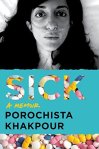
- Two memoirs by Iranian-American novelists with mental health and drug use issues (Porochista Khakpour’s Sick and Afarin Majidi’s Writing and Madness in a Time of Terror)

- References to the blasé response to Martin Luther King’s assassination in North Carolina (in Paulette Bates Alden’s Crossing the Moon and David Sedaris’s Calypso)
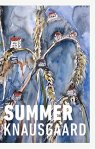
- The Police lyrics (in Less by Andrew Sean Greer and Summer by Karl Ove Knausgaard [a whole essay called “Sting”])

- Salmon croquettes mentioned in Less by Andrew Sean Greer and An American Marriage by Tayari Jones
 I’m reading Beryl Markham’s West with the Night … and then Glynnis MacNicol picks that very book up to read on a plane in No One Tells You This
- Starting two books with the word “Ladder” in the title, one right after the other: Ladders to Heaven by Mike Shanahan and Ladder of Years by Anne Tyler (followed just a couple of weeks later by A Ladder to the Sky by John Boyne!)


 Two books set in Dunedin, New Zealand, one right after the other – I planned it that way, BUT both have a character called Myrtle (To the Is-Land by Janet Frame and Dunedin by Shena Mackay). Then I encountered Harold Gillies, the father of plastic surgery, in Jim McCaul’s Face to Face, and guess what? He was from Dunedin!
- Then I was skimming Louisa Young’s You Left Early and she mentioned that her grandmother was a sculptor who worked with Gillies on prostheses, which was the inspiration for her WWI novel, My Dear I Wanted to Tell You.
- Two novels featuring drug addicts (Pretend I’m Dead by Jen Beagin and Bad News by Edward St. Aubyn)
- The same Wallace Stevens lines that appear as an epigraph to Barbara Kingsolver’s Unsheltered are mentioned in Elaine Pagels’s Why Religion? – “After the final no there comes a yes / And on that yes the future world depends.”

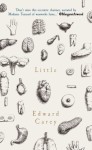 “Twinkle, Twinkle, Little Star” is mentioned in Little by Edward Carey and Marilla of Green Gables by Sarah McCoy
- Reading Nine Pints, Rose George’s book about blood, at the same time as Deborah Harkness’s Time’s Convert, which is partially about vampires; in this it takes 90 days for a human to become fully vampirized – the same time it takes to be cured of an addiction according to the memoir Ninety Days by Bill Clegg.
Wellcome Book Prize Shortlist: Stay with Me by Ayobami Adebayo
“Women manufacture children and if you can’t you are just a man. Nobody should call you a woman.”
On balance, I’m glad that the Wellcome Book Prize shortlist reading forced me to go back and give Stay with Me another try. Last year I read the first 15% of this debut novel for a potential BookBrowse review but got bored with the voice and the story, rather unfairly dismissing it as a rip-off of Chimamanda Ngozi Adichie. I also doubted that the health theme was strong enough for it to make the Wellcome shortlist, but that’s because I hadn’t read far enough to realize just how many medical conditions come up for consideration: it’s not just infertility, but also false pregnancy, cot death (or SIDS), sickle cell disease, and impotence.
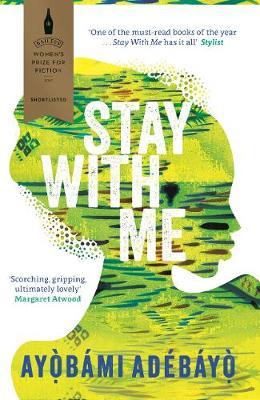 This time around I found Yejide a more sympathetic character. The words that open this review are cruel ones spoken by her mother-in-law. Her desperation to become and stay a mother drives her to extreme measures that also give a window onto indigenous religion in Nigeria: ‘breastfeeding’ a goat on the Mountain of Jaw-Dropping Miracles, and allowing an act of ritual scarification to prevent the return of an abiku, or spirit child (I’ve heard that one narrates Ben Okri’s Booker Prize-winning 1991 novel, The Famished Road).
Polygamy is another Nigerian custom addressed in the novel. Yejide’s husband, Akinyele Ajayi, allows himself to be talked into taking another wife, Funmilayo, when Yejide hasn’t produced a child after four years. There’s irony in the fact that polygyny is considered a valid route to pregnancy while polyandry is not, and traditional versus Western values are contrasted in the different generations’ reactions to polygamy: does it equate to adultery?
There are some welcome flashes of humor in the novel, such as when Yejide deliberately serves a soup made with three-day-old beans and Funmi gets explosive diarrhea. I also enjoyed the ladies’ gossip at Yejide’s hair salon. However, the story line tends towards the soap operatic, and well before halfway it starts to feel like just one thing after another: A lot happens, but to no apparent purpose. I was unconvinced by the choices the author made in terms of narration (split between Yejide and Akin, both in first person but with some second person address to each other) and structure (divided between 2008 and the main action starting in the 1980s). We see certain scenes from both spouses’ perspective, but that doubling doesn’t add anything to the overall picture. The writing is by turns maudlin (“each minute pregnant with hope, each second tremulous with tragedy”) and uncolloquial (“afraid that my touch might … careen him into the unknown”).
Things that at first seemed insignificant to me – the 1993 election results, what happens to Funmi, the one major scene set in 2008 – do eventually take on more meaning, and there is a nice twist partway through as well as a lovely surprise at the end. I did feel the ache of the title phrase as it applies to this couple’s children and marriage, so threatened by “all the mess of love and life that only shows up as you go along.” It all makes for truly effortless reading that I gobbled up in chunks of 50 or 100 pages – which indicates authorial skill, of course – yet this seems to me a novel more interesting for the issues it addresses than for its story and writing.
My rating:
See also:
My gut feeling: I would be very surprised if a novel won two years in a row. While the medical situations examined here are fairly wrenching, Stay with Me isn’t strong enough to win. Its appearance on the shortlist (for the Women’s Prize, too) is honor enough, I think.
Shortlist strategy:
- I’m one-third through The Vaccine Race by Meredith Wadman but have started skimming because it’s dense and not quite as laymen-friendly as The Immortal Life of Henrietta Lacks and The Emperor of All Maladies, the two books its subject matter is most reminiscent of for me.
- On Friday I started To Be a Machine by Mark O’Connell, which I’m also one-third through and have taken away on our mini-holiday. This is the shortlisted book whose topic appealed to me the least, so I’m pleasantly surprised to be enjoying it so much. It helps that O’Connell comes at the science as an outsider – he’s a freelance writer with a literature background, and he’s interested in the deeper philosophical questions that transhumanism raises.
- I’m awaiting a review copy of Mayhem by Sigrid Rausing, which I’ll be featuring as part of the official Wellcome Book Prize shortlist blog tour.
Blog Tour Review: Little Fires Everywhere by Celeste Ng
I’m delighted to be helping to close out the UK blog tour for Little Fires Everywhere. Celeste Ng has set an intriguing precedent with her first two novels, 2014’s Everything I Never Told You and this new book, the UK release of which was brought forward by two months after its blockbuster success in the USA. The former opens “Lydia is dead. But they don’t know this yet.” The latter starts “Everyone in Shaker Heights was talking about it that summer: how Isabelle, the last of the Richardson children, had finally gone around the bend and burned the house down.” From the first lines of each novel, then, we know the basics of what happens: Ng doesn’t write mysteries in the generic sense. She doesn’t want us puzzling over whodunit; instead, we need to ask why, examining motivations and the context of family secrets.
 Little Fires Everywhere opens in the summer of 1997 in the seemingly idyllic planned community of Shaker Heights, Ohio: “in their beautiful, perfectly ordered city, […] everyone got along and everyone followed the rules and everything had to be beautiful and perfect on the outside, no matter what mess lay within.” That strict atmosphere will take some getting used to for single mother Mia Warren, a bohemian artist who has just moved into town with her fifteen-year-old daughter, Pearl. They’ve been nomads for Pearl’s whole life, but Mia promises that they’ll settle down in Shaker Heights for a while.
Mia and Pearl rent a duplex owned by Elena Richardson, a third-generation Shaker resident, local reporter and do-gooder, and mother of four stair-step teens. Pearl is fascinated by the Richardson kids, quickly developing an admiration of confident Lexie, a crush on handsome Trip, and a jokey friendship with Moody. Izzy, the youngest, is a wild card, but in her turn becomes enraptured with Mia and offers to be her photography assistant. Mia can’t make a living just from her art, so takes the occasional shift in a Chinese restaurant and also starts cleaning the Richardsons’ palatial home in exchange for the monthly rent.
The novel’s central conflict involves a thorny custody case: Mia’s colleague at the restaurant, Bebe Chow, was in desperate straits and abandoned her infant daughter, May Ling, at a fire station in the dead of winter. The baby was placed with the Richardsons’ dear friends and neighbors, the McCulloughs, who yearn for a child and have suffered multiple miscarriages. Now Bebe has gotten her life together and wants her daughter back. Who wouldn’t want a child to grow up in the comfort of Shaker Heights? But who would take a child away from its mother and ethnic identity? The whole community takes sides, and the ideological division is particularly clear between Mia and Mrs. Richardson (as she’s generally known here).
For all that Shaker Heights claims to be colorblind, race and class issues have been hiding under the surface and quickly come to the forefront. Mrs. Richardson’s journalistic snooping and Mia’s warm words – she seems to have a real knack for seeing into people’s hearts – are the two driving forces behind the plot, as various characters decide to take matters into their own hands and make their own vision of right and wrong a reality. Fire is a potent, recurring symbol of passion and protest: “Did you have to burn down the old to make way for the new?” Whether they follow the rules or rebel, every character in this novel is well-rounded and believable: Ng presents no clear villains and no easy answers.

The U.S. cover
There are perhaps a few too many coincidences, and a few metaphors I didn’t love, but I was impressed at how multi-layered this story is; it’s not the simple ethical fable it might at first appear. There are so many different shards in its mosaic of motherhood: infertility, adoption, surrogacy, pregnancy, abortion; estrangement, irritation, longing, pride. “It came, over and over, down to this: What made someone a mother? Was it biology alone, or was it love?” Ng asks. I also loved the late-1990s setting. It’s a time period you don’t often encounter in contemporary fiction, and Ng brings to life the ambiance of my high school years in a way I found convincing: the Clinton controversy, Titanic, the radio hits playing at parties, and so on.
Each and every character earns our sympathy here – a real triumph of characterization, housed in a tightly plotted and beautifully written novel you’ll race through. This may particularly appeal to readers of Curtis Sittenfeld, Pamela Erens and Lauren Groff, but I’d recommend it to any literary fiction reader. One of the best novels of the year.
My rating:
Little Fires Everywhere was published by Little, Brown UK on November 9th. My thanks to Grace Vincent for the review copy.
 Bookish Beck = Rebecca Foster. American transplant to England. Freelance proofreader and book reviewer.
 Bookish Beck