Astraea by Kate Kruimink (Weatherglass Novella Prize) #NovNov24
Astraea by Kate Kruimink is one of two winners* of the inaugural Weatherglass Novella Prize, as chosen by Ali Smith. Back in September, I was introduced to it through Weatherglass Books’ “The Future of the Novella” event in London (my write-up is here).
Taking place within about a day and a half on a 19th-century convict ship bound for Australia, it is the intense story of a group of women and children chafing against the constraints men have set for them. The protagonist is just 15 years old and postpartum. Within a hostile environment, the women have created an almost cosy community based on sisterhood. They look out for each other; an old midwife can still bestow her skills.
The ship was their shelter, the small chalice carrying them through that which was inhospitable to human life. But there was no shelter for her there, she thought. There was only a series of confines between which she might move but never escape.
The ship’s doctor and chaplain distrust what they call the “conspiracy of women” and are embarrassed by the bodily reality of one going into labour, another tending to an ill baby, and a third haemorrhaging. They have no doubt they know what is best for their charges yet can barely be bothered to learn their names.

Indeed, naming is key here. The main character is effectively erased from the historical record when a clerk incorrectly documents her as Maryanne Maginn. Maryanne’s only “maybe-friend,” red-haired Sarah, has the surname Ward. “Astraea” is the name not just of the ship they travel on but also of a star goddess and a new baby onboard.
The drama in this novella arises from the women’s attempts to assert their autonomy. Female rage and rebellion meet with punishment, including a memorable scene of solitary confinement. A carpenter then constructs a “nice little locking box that will hold you when you sin, until you’re sorry for it and your souls are much recovered,” as he tells the women. They are all convicts, and now their discipline will become a matter of religious theatrics.
Given the limitations of setting and time and the preponderance of dialogue, I could imagine this making a powerful play. The novella length is as useful a framework as the ship itself. Kruimink doesn’t waste time on backstory; what matters is not what these women have done to end up here, but how their treatment is an affront to their essential dignity. Even in such a low page count, though, there are intriguing traces of the past and future, as well as a fleeting hint of homoeroticism. I would recommend this to readers of The Mercies by Kiran Millwood Hargrave, Devotion by Hannah Kent and Women Talking by Miriam Toews. And if you get a hankering to follow up on the story, you can: this functions as a prequel to Kruimink’s first novel, A Treacherous Country. (See also Cathy’s review.)
[115 pages]
With thanks to Weatherglass Books for the free copy for review.
*The other winner, Aerth by Deborah Tomkins, a novella-in-flash set on alternative earths, will be published in January. I hope to have a proof copy in hand before the end of the month to review for this challenge plus SciFi Month.

Marilla of Green Gables by Sarah McCoy
There’s no doubt about it: fans of Lucy Maud Montgomery’s Anne series will throng to read Sarah McCoy’s prequel. McCoy was inspired by the brief moment in Anne of Green Gables when Marilla tells Anne that John Blythe used to be her beau. Just like Anne, she wanted to know the story behind that offhand remark.
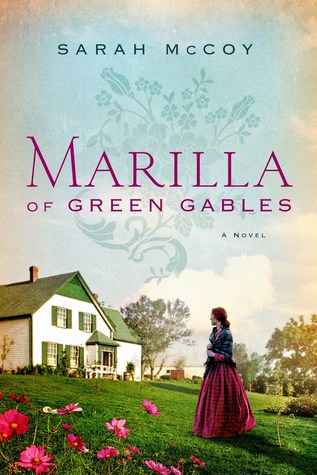 So although Marilla of Green Gables begins in 1876 with a short prologue in which Matthew and Marilla decide to ‘get a boy’ to help around the place, most of it is set in 1837–8, with Marilla taking a break from her schooling to assist her parents, Hugh and Clara (it’s no coincidence that these are the names of L.M. Montgomery’s parents), in the months before her new sibling is to arrive. Brother Matthew is 21 and testing out adulthood, but Marilla is just 13 and impressionable. John Blythe offers to bring her the school readings she’s missed out on, and later invites her to the Avonlea May Picnic. It’s clear she’s smitten.
Aunt Izzy, a dressmaker from St. Catharines, arrives in time to cheer her twin sister through the impending birth and ends up being Marilla’s new role model. She’s fanciful, exuberant and spontaneous and believes “A young girl needs as much time to dream as possible,” surely making her a deliberate precursor of Anne Shirley. Indeed, much of the fun of reading this book is in spotting the seeds of the Anne books: Clara and Izzy making their famous redcurrant wine and laughing about the time Clara lost a thumbnail in the mix; meeting Rachel White (Lynde) at a sewing circle; a visit to the orphanage in Hopetown; raspberry cordial at a picnic; the Ladies’ Aid Society; and looking to a mistake-free tomorrow.
Before long, though, personal and political upheaval take their toll at Green Gables and drive a wedge between Marilla and John. I found Part Two significantly less engaging, what with all the talk of Reformers versus Loyalists (though I did enjoy glimpses of escaped slaves’ experiences in Canada). I tend not to read anything approaching a romance novel, so I groaned to find that there’s not one but two Mr. Darcy-esque wet-shirt scenes featuring John.
This is not meant to be a substitute for reading Montgomery’s own work; if anything it’s prompted me to reread the original series as soon as I can. While I wouldn’t call Marilla a must-read for fans, then, if you enjoy women’s historical fiction set in the nineteenth century, you may want to pick up this companion volume anyway.
My rating: 
Marilla of Green Gables was published by William Morrow on October 23rd. My thanks to publicist Beth Parker for the proof copy for review. Sarah McCoy is the author of four previous works of fiction, including The Mapmaker’s Children and The Baker’s Daughter.
 Bookish Beck = Rebecca Foster. American transplant to England. Freelance proofreader and book reviewer.
 Bookish Beck