Carol Shields Prize Reads: Pale Shadows & All Fours
Later this evening, the Carol Shields Prize will be announced at a ceremony in Chicago. I’ve managed to read two more books from the shortlist: a sweet, delicate story about the women who guarded Emily Dickinson’s poems until their posthumous publication; and a sui generis work of autofiction that has become so much a part of popular culture that it hardly needs an introduction. Different as they are, they have themes of women’s achievements, creativity and desire in common – and so I would be happy to see either as the winner (more so than Liars, the other one I’ve read, even though that addresses similar issues). Both: 
Pale Shadows by Dominique Fortier (2022; 2024)
[Translated from French by Rhonda Mullins]
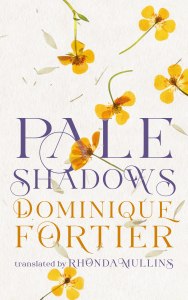 This is technically a sequel to Paper Houses, which is about Emily Dickinson, but I had no trouble reading this before its predecessor. In an Author’s Note at the end, Fortier explains how, during the first Covid summer, she was stalled on multiple fiction projects and realized that all she wanted was to return to Amherst, Massachusetts – even though her subject was now dead. The poet’s presence and language haunt the novel as the characters (which include the author) wrestle over her words. The central quartet comprises Lavinia, Emily’s sister; Susan, their brother Austin’s wife; Mabel, Austin’s mistress; and Millicent, Mabel’s young daughter. Mabel is to assist with editing the higgledy-piggledy folder of handwritten poems into a volume fit for publication. Thomas Higginson’s clear aim is to tame the poetry through standardized punctuation, assigned titles, and thematic groupings. But the women are determined to let Emily’s unruly genius shine through.
The short novel rotates through perspectives as the four collide and retreat. Susan and Millicent connect over books. Mabel considers this project her own chance at immortality. At age 54, Lavinia discovers that she’s no longer content with baking pies and embarks on a surprising love affair. And Millicent perceives and channels Emily’s ghost. The writing is gorgeous, full of snow metaphors and the sorts of images that turn up in Dickinson’s poetry. It’s a lovely tribute that mingles past and present in a subtle meditation on love and legacy.
Some favourite lines:
“Emily never writes about any one thing or from any one place; she writes from alongside love, from behind death, from inside the bird.”
“Maybe this is how you live a hundred lives without shattering everything; maybe it is by living in a hundred different texts. One life per poem.”
“What Mabel senses and Higginson still refuses to see is that Emily only ever wrote half a poem; the other half belongs to the reader, it is the voice that rises up in each person as a response. And it takes these two voices, the living and the dead, to make the poem whole.”
With thanks to The Carol Shields Prize Foundation for the free e-copy for review.
All Fours by Miranda July (2024)
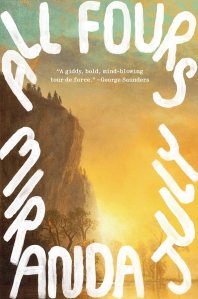 Miranda July’s The First Bad Man is one of the first books I ever reviewed on this blog back in 2015, after an unsolicited review copy came my way. It was so bizarre that I didn’t plan to ever read anything else by her, but I was drawn in by the hype machine and started this on my Kindle in September, later switching to a library copy when I got stuck at 65%. The narrator sets off on a road trip from Los Angeles to New York to prove to her husband, Harris, that she’s a Driver, not a Parker. But after 20 minutes she pulls off the highway and ends up at a roadside motel. She blows $20,000 on having her motel room decorated in the utmost luxury and falls for Davey, a younger man who works for a local car rental chain – and happens to be married to the decorator. In his free time, he’s a break dancer, so the narrator decides to choreograph a stunning dance to prove her love and capture his attention.
I got bogged down in the ridiculous details of the first two-thirds, as well as in the kinky stuff that goes on (with Davey, because neither of them is willing to technically cheat on a spouse; then with the women partners the narrator has after she and Harris decide on an open marriage). However, all throughout I had been highlighting profound lines; the novel is full to bursting with them (“maybe the road split between: a life spent longing vs. a life that was continually surprising”). I started to appreciate the story more when I thought of it as archetypal processing of women’s life experiences, including birth trauma, motherhood and perimenopause, and as an allegory for attaining an openness of outlook. What looks like an ending (of career, marriage, sexuality, etc.) doesn’t have to be.
Whereas July’s debut felt quirky for the sake of it, showing off with its deadpan raunchiness, I feel that here she is utterly in earnest. And, weird as the book may be, it works. It’s struck a chord with legions, especially middle-aged women. I remember seeing a Guardian headline about women who ditched their lives after reading All Fours. I don’t think I’ll follow suit, but I will recommend you read it and rethink what you want from life. It’s also on this year’s Women’s Prize shortlist. I suspect it’s too divisive to win either, but it certainly would be an edgy choice. (NetGalley/Public library)
(My full thoughts on both longlists are here.) The other two books on the Carol Shields Prize shortlist are River East, River West by Aube Rey Lescure and Code Noir by Canisia Lubrin, about which I know very little. In its first two years, the Prize was awarded to women of South Asian extraction. Somehow, I can’t see the jury choosing one of three white women when it could be a Black woman (Lubrin) instead. However, Liars and All Fours feel particularly zeitgeist-y. I would be disappointed if the former won because of its bitter tone, though Manguso is an undeniable talent. Pale Shadows? Pure literary loveliness, if evanescent. But honouring a translation would make a statement, too. I’ll find out in the morning!
10th Blogging Anniversary! & Thoughts on the Women’s Prize and Carol Shields Prize Longlists
I can hardly believe I’ve been blogging for a decade. It seems like no time ago that I started this site on a whim early in my freelance career, soon after my main online publication folded and my brother-in-law died. This is now my 1,486th blog post (so close to that 1,500 milestone!), which means I average 12 posts a month. Between reviews, challenges, memes, book lists, and prize reactions, I maintain a very active blog. I’ve long since stopped caring about numbers of views and likes; I’ll never be a top influencer but I offer quality, thoughtful content for those who are similarly serious about books. The blog has also become a place where I can write about personal things in response to losses and other life changes.

I’m pleased that my blog anniversary happens to coincide with International Women’s Day, around when the Women’s Prize and Carol Shields Prize longlists are announced. I don’t plan to shadow either prize in a concerted way, partly because I’m too busy with reading debut novels in my role as a McKitterick Prize judge, but there are some books that appeal.
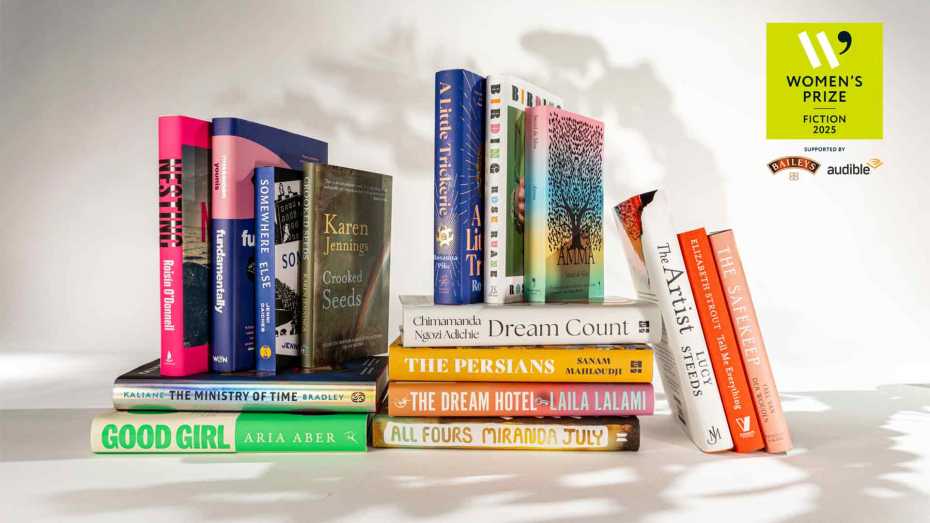
Women’s Prize Longlist
Read
- The Ministry of Time by Kaliane Bradley

- Tell Me Everything by Elizabeth Strout

- The Safekeep by Yael van der Wouden

Reading
 Dream Count by Chimamanda Ngozi Adichie
- All Fours by Miranda July
Already Wanted to Read
- Birding by Rose Ruane – For the cover if nothing else (it made my Cover Love post last year)
- The Artist by Lucy Steeds – Susan of A life in books rates it highly: see her review.
Unsure
- A Little Trickerie by Rosanna Pike – The premise is reasonably appealing (an orphan who pretends to be an angel) but I am very much not keen on medieval settings. I’ll wait and see if it’s shortlisted.
Decided Against
- Crooked Seeds by Karen Jennings – I read the Booker-longlisted An Island and it was fine but I don’t need to try anything else by her.
- Nesting by Roisín O’Donnell – 400 pages on an Irish domestic violence situation sounds like A Lot. Reviews have been very favourable, saying it’s as pacey as a thriller. Again, I’ll wait to see if it’s shortlisted.
Not Interested (for now)
- Good Girl by Aria Aber
- Somewhere Else by Jenni Daiches
- Amma by Saraid de Silva (but well done to Weatherglass Books!)
- The Dream Hotel by Laila Lalami
- The Persians by Sanam Mahloudji
- Fundamentally by Nussaibah Younis
The blurbs for these don’t attract me, but I’d be willing to change my mind if I see an enthusiastic review or two.
[Shortlist: 2 April; winner: 12 June]
Stab-in-the-dark shortlist predictions: Good Girl, Dream Count, The Dream Hotel, Nesting, The Artist, Tell Me Everything
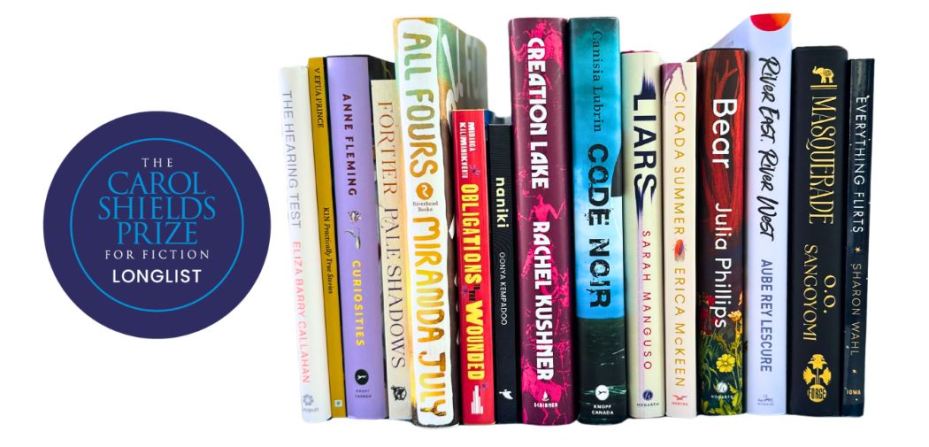
Carol Shields Prize Longlist
Read
- Liars by Sarah Manguso
DNF
- Cicada Summer by Erica McKeen – I read the first 15% last summer. In 2020, Husha has recently lost her mother and is locked down with her grandfather at his Ontario lake house. I recall that the prose was vague and somewhat obnoxiously poetic.
Reading
- All Fours by Miranda July – The only overlap with the WP. I don’t think that, as happened last year, the repeated title will be the winner. It’s too offbeat and divisive.
Want to Read
- The Hearing Test by Eliza Barry Callahan – Novella-length autofiction about adapting to disability.
- Curiosities by Anne Fleming – A historian becomes obsessed with the story told by five 17th-century manuscripts. Sounds like a queer Possession with a dash of North Woods.
- Pale Shadows by Dominique Fortier, translated by Rhonda Mullins – A Québécois author takes on the legacy of Emily Dickinson via the three women who first brought her poetry into print.
- Obligations to the Wounded by Mubanga Kalimamukwento – Linked short stories about Zambians and Zambian émigrés.
Unsure
- Bear by Julia Phillips – After reading Bear by Marian Engel, I don’t think I need any more bear legend-inspired romances in my life. (I already discounted Eowyn Ivey’s latest.)
- Kin: Practically True Stories by V Efua Prince – I’ve had good luck with other books from Wayne State University Press’ Made in Michigan series but can’t quite work out what this would be like.
- Everything Flirts: Philosophical Romances by Sharon Wahl – Could be intriguing; could be pretentious. At least it’s only novella length. All I can do is try an excerpt.
Not Interested (for now)
- Naniki by Oonya Kempadoo – Someone on Goodreads described this as being like spoken word at a sci-fi convention.
- Creation Lake by Rachel Kushner – I wasn’t keen when it was shortlisted for the Booker, and I haven’t changed my mind.
- River East, River West by Aube Rey Lescure – Ditto but from last year’s WP list.
- Code Noir by Canisia Lubrin – Normally I like linked short stories but a 400+ page count and the heavy subject matter of slavery regulations sound overwhelming.
- Masquerade by O.O. Sangoyomi – I struggle with fantasy at the best of times.
[Shortlist: 3 April; winner: 1 May]
Last year Laura T. and I covered most of the longlist between us and really enjoyed the project. (Marcie of Buried in Print also reviewed a lot of the longlist later in the year.) This year we’ll reassess at the shortlist stage and maybe request a few review copies from the publicist. See Laura’s prize longlist reactions here.
Stab-in-the-dark shortlist predictions: Curiosities, Obligations to the Wounded, Creation Lake, Code Noir, Masquerade
What have you read, or might you read, from these longlists?
 Bookish Beck = Rebecca Foster. American transplant to England. Freelance proofreader and book reviewer.
 Bookish Beck