Book Serendipity, Mid-April to Mid-June
I call it “Book Serendipity” when two or more books that I read at the same time or in quick succession have something in common – the more bizarre, the better. This is a regular feature of mine every couple of months. Because I usually have 20–30 books on the go at once, I suppose I’m more prone to such incidents. People frequently ask how I remember all of these coincidences. The answer is: I jot them down on scraps of paper or input them immediately into a file on my PC desktop; otherwise, they would flit away!
The following are in roughly chronological order.
- Raising a wild animal but (mostly) calling it by its species rather than by a pet name (so “Pigeon” and “the leveret/hare”) in We Should All Be Birds by Brian Buckbee and Raising Hare by Chloe Dalton.
- Eating hash cookies in New York City in Women by Chloe Caldwell and How to Be Somebody Else by Miranda Pountney.
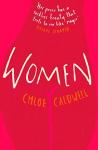
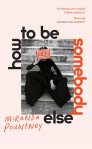
- A woman worries she’s left underclothes strewn about a room she’s about to show someone in one story of Single, Carefree, Mellow by Katherine Heiny and Days of Light by Megan Hunter.
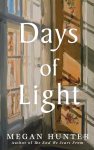 The dialogue is italicized in Women by Chloe Caldwell and Days of Light by Megan Hunter.
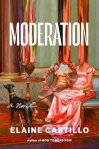
- The ‘you know it when you see it’ definition (originally for pornography) is cited in Moderation by Elaine Castillo and Bookish by Lucy Mangan.
- Women (including the protagonist) weightlifting in a gym in Moderation by Elaine Castillo and All Fours by Miranda July.
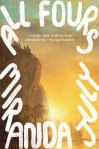
- Miranda July, whose All Fours I was also reading at the time, was mentioned in Chinese Parents Don’t Say I Love You by Candice Chung.
- A sibling story and a mystical light: late last year into early 2025 I read The Snow Queen by Michael Cunningham, and then I recognized this type of moment in Days of Light by Megan Hunter.
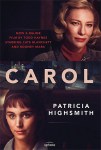
- A lesbian couple with a furniture store in Carol [The Price of Salt] by Patricia Highsmith and one story of Are You Happy? by Lori Ostlund.

- Not being able to see the stars in Las Vegas because of light pollution was mentioned in The Wild Dark by Craig Childs, then in Moderation by Elaine Castillo.
- A gynaecology appointment scene in All Fours by Miranda July and How to Be Somebody Else by Miranda Pountney.
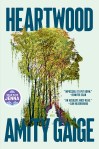
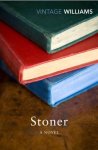
- An awkwardly tall woman in Heartwood by Amity Gaige, How to Be Somebody Else by Miranda Pountney, and Stoner by John Williams.
- The 9/11 memorial lights’ disastrous effect on birds is mentioned in The Wild Dark by Craig Childs and How to Be Somebody Else by Miranda Pountney.
- A car accident precipitated by an encounter with wildlife is key to the denouement in the novellas Women by Chloe Caldwell and Wild Boar by Hannah Lutz.
- The plot is set in motion by the death of an older brother by drowning, and pork chops are served to an unexpected dinner guest, in Bug Hollow by Michelle Huneven and Days of Light by Megan Hunter, both of which I was reading for Shelf Awareness review.
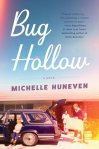
- Kids running around basically feral in a 1970s summer, and driving a box of human ashes around in Case Histories by Kate Atkinson and Bug Hollow by Michelle Huneven.
- A character becomes a nun in Case Histories by Kate Atkinson and Days of Light by Megan Hunter.
- Wrens nesting just outside one’s front door in Lifelines by Julian Hoffman and Little Mercy by Robin Walter.

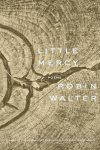
- ‘The female Woody Allen’ is the name given to a character in Women by Chloe Caldwell and then a description (in a blurb) of French author Nolwenn Le Blevennec.
- A children’s birthday party scene in Single, Carefree, Mellow by Katherine Heiny and Friends and Lovers by Nolwenn Le Blevennec. A children’s party is also mentioned in Case Histories by Kate Atkinson and A Family Matter by Claire Lynch.
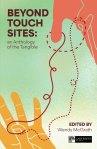
- A man who changes his child’s nappies, unlike his father – evidence of different notions of masculinity in different generations, in Case Histories by Kate Atkinson, What My Father and I Don’t Talk About, edited by Michele Filgate, and one piece in Beyond Touch Sites, edited by Wendy McGrath.
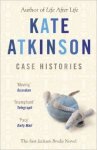
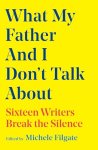
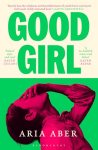
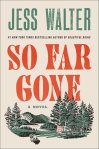
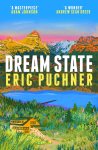
- What’s in a name? Repeated names I came across included Pansy (Case Histories by Kate Atkinson and Days of Light by Megan Hunter), Olivia (Case Histories by Kate Atkinson and A Family Matter by Claire Lynch), Jackson (Case Histories by Kate Atkinson and So Far Gone by Jess Walter), and Elias (Good Girl by Aria Aber and Dream State by Eric Puchner).
- The old wives’ tale that you should run in zigzags to avoid an alligator appeared in Alligator Tears by Edgar Gomez and then in The Girls Who Grow Big by Leila Mottley, both initially set in Florida.
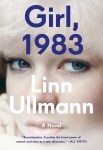
- A teenage girl is groped in a nightclub in Good Girl by Aria Aber and Girl, 1983 by Linn Ullmann.
- Discussion of the extinction of human and animal cultures and languages in both Nature’s Genius by David Farrier and Lifelines by Julian Hoffman, two May 2025 releases I was reading at the same time.
- In Body: My Life in Parts by Nina B. Lichtenstein, she mentions Linn Ullmann – who lived on her street in Oslo and went to the same school (not favourably – the latter ‘stole’ her best friend!); at the same time, I was reading Linn Ullmann’s Girl, 1983! And then, in both books, the narrator recalls getting a severe sunburn.
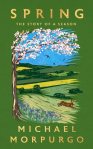 On the same day, I read about otter sightings in Lifelines by Julian Hoffman and Spring by Michael Morpurgo. The next day, I read about nesting swallows in both books.
- The Salish people (Indigenous to North America) are mentioned in Lifelines by Julian Hoffman, Dream State by Eric Puchner (where Salish, the town in Montana, is also a setting), and So Far Gone by Jess Walter.
- Driving into a compound of extremists, and then the car being driven away by someone who’s not the owner, in Dream State by Eric Puchner and So Far Gone by Jess Walter.
- A woman worries about her (neurodivergent) husband saying weird things at a party in The Honesty Box by Lucy Brazier and Normally Weird and Weirdly Normal by Robin Ince.
- Shooting raccoons in Ginseng Roots by Craig Thompson and So Far Gone by Jess Walter. (Raccoons also feature in Dream State by Eric Puchner.)
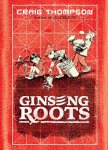
- A graphic novelist has Hollywood types adding (or at least threatening to add) wholly unsuitable supernatural elements to their plots in Spent by Alison Bechdel and Ginseng Roots by Craig Thompson.
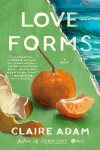
- A novel in which a character named Dawn has to give up her daughter in the early 1980s, one right after the other: A Family Matter by Claire Lynch, followed by Love Forms by Claire Adam.
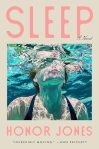
- A girl barricades her bedroom door for fear of her older brother in Love Forms by Claire Adam and Sleep by Honor Jones.
- A scene of an only child learning that her mother had a hysterectomy and so couldn’t have any more children in Dream Count by Chimamanda Ngozi Adichie and Other People’s Mothers by Julie Marie Wade.
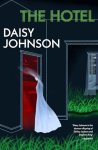
- An African hotel cleaner features in Dream Count by Chimamanda Ngozi Adichie and The Hotel by Daisy Johnson.

- Annie Dillard’s essay “Living Like Weasels” is mentioned in Nature’s Genius by David Farrier and The Dry Season by Melissa Febos.
- A woman assembles an inventory of her former lovers in Dream Count by Chimamanda Ngozi Adichie and The Dry Season by Melissa Febos.
What’s the weirdest reading coincidence you’ve had lately?
Poetry Month Reviews & Interview: Amy Gerstler, Richard Scott, Etc.
April is National Poetry Month in the USA, and I was delighted to have several of my reviews plus an interview featured in a special poetry issue of Shelf Awareness on Friday. I’ve also recently read Richard Scott’s second collection.
Wrong Winds by Ahmad Almallah
Palestinian poet Ahmad Almallah’s razor-sharp third collection bears witness to the devastation of Gaza.
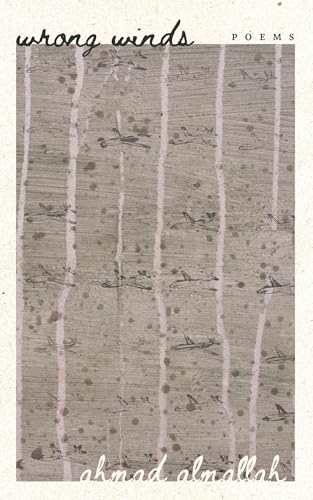 Through allusions, Almallah participates in an ancient lineage of poets, opening the collection with an homage to Al-Shanfarā and ending with “A Lament” for Zbigniew Herbert. Federico García Lorca is also a major influence. Occasional snippets of Arabic, French, and German, and accounts of travels in Berlin and Granada, reveal a cosmopolitan background. The speaker in “Loose Strings” considers exile, engaged in the potentially futile search for a homeland that is being destroyed: “What does it mean to be a poet, another ‘Homer’/ going home? Trying to find one?”
Tonally, anger and grief alternate, while alliteration and slant rhymes (sweat/sweet) create entrancing rhythms. In “Before Gaza, a Fall” and “My Tongue Is Tied Up Today,” staccato phrasing and spaced-out stanzas leave room for the unspeakable. The pièce de résistance is “A Holy Land, Wasted” (co-written with Huda Fakhreddine), which situates T.S. Eliot’s existential ruin in Palestine. Almallah contrasts Gaza then and now via childhood memories and adult experiences at checkpoints. His pastiche of “The Waste Land” starts off funny (“April is not that bad actually”) but quickly darkens, scorning those who turn away from tragedy: “It’s not good/ for your nerves to watch/ all that news, the sights/ of dead children.” The wordplay dazzles again here: “to motes the world crumbles, shattered/ like these useless mots.”
For Almallah, who now lives in Philadelphia, Gaza is elusive, enduringly potent—and mourned. Sometimes earnest, sometimes jaded, Wrong Winds is a remarkable memorial. 
Is This My Final Form? by Amy Gerstler
 Amy Gerstler’s exceptional book of poetry leaps from surrealism to elegy as it ponders life’s unpredictability.
The language of transformation is integrated throughout. Aging and the seasons are examples of everyday changes. “As Winter Sets In” delivers “every day/ a new face you can’t renounce or forsake.” “When I was a bird,” with its interspecies metamorphoses, introduces a more fantastical concept: “I once observed a scurry of squirrels,/ concealed in a hollow tree, wearing seventeenth/ century clothes. Alas, no one believes me.” Elsewhere, speakers fall in love with the bride of Frankenstein or turn to dinosaur urine for a wellness regimen.
The collection contains five thematic slices. Part I spotlights women behaving badly (such as “Marigold,” about a wild friend; and “Mae West Sonnet,” in an hourglass shape); Part II focuses on music and sound. The third section veers from the inherited grief of “Schmaltz Alert” to the miniplay “Siren Island,” a tragicomic Shakespearean pastiche. Part IV spins elegies for lives and works cut short. The final subset includes a tongue-in-cheek account of pandemic lockdown activities (“The Cure”) and wry advice for coping (“Wound Care Instructions”).
Monologues and sonnets recur—the title’s “form” refers to poetic structures as much as to personal identity. Alliteration plus internal and end rhymes create satisfying resonance. In the closing poem, “Night Herons,” nature puts life into perspective: “the whir of wings/ real or imagined/ blurs trivial things.”
This delightfully odd collection amazes with its range of voices and techniques.
I also had the chance to interview Amy Gerstler, whose work was new to me. (I’ll certainly be reading more!) We chatted about animals, poetic forms and tone, Covid, the Los Angeles fires, and women behaving ‘badly’. 
Little Mercy by Robin Walter
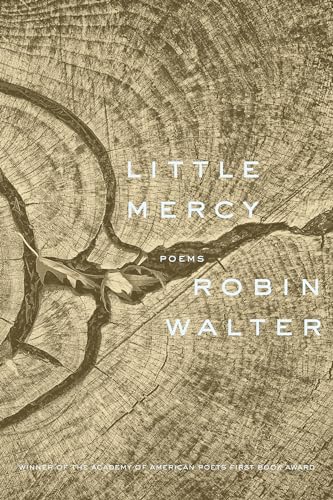 In Robin Walter’s refined debut collection, nature and language are saving graces.
Many of Walter’s poems are as economical as haiku. “Lilies” entrances with its brief lines, alliteration, and sibilance: “Come/ dark, white/ petals// pull/close// —small fists// of night—.” A poem’s title often leads directly into the text: “Here” continues “the body, yes,/ sometimes// a river—little/ mercy.” Vocabulary and imagery reverberate, as the blessings of morning sunshine and a snow-covered meadow salve an unquiet soul (“how often, really, I want/ to end my life”).
Frequent dashes suggest affinity with Emily Dickinson, whose trademark themes of loss, nature, and loneliness are ubiquitous here, too. Vistas of the American West are a backdrop for pronghorn antelope, timothy grass, and especially the wrens nesting in Walter’s porch. Animals are also seen in peril sometimes: the family dog her father kicked in anger or a roadkilled fox she encounters. Despite the occasional fragility of the natural world, the speaker is “held by” it and granted “kinship” with its creatures. (How appropriate, she writes, that her mother named her for a bird.)
The collection skillfully illustrates how language arises from nature (“while picking raspberries/ yesterday I wanted to hold in my head// the delicious names of the things I saw/ so as to fold them into a poem later”—a lovely internal rhyme) and becomes a memorial: “Here, on earth,/ we honor our dead// by holding their names/ gentle in our hollow mouths—.”
This poised, place-saturated collection illuminates life’s little mercies. 
The three reviews above are posted with permission from Shelf Awareness.
That Broke into Shining Crystals by Richard Scott
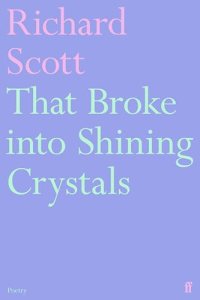 I’ve never forgotten how powerful it was to hear Richard Scott read aloud from his forthcoming collection, Soho, at the Faber Spring Party in February 2018. Back then I called his work “amazingly intimate,” and that is true of this second collection as well.
It also mirrors his debut in that the book is in several discrete sections – like movements of a musical composition – and there are extended allusions to particular poets (there, Paul Verlaine and Walt Whitman; here, Andrew Marvell and Arthur Rimbaud). But there is one overall theme, and it’s a tough one: Scott’s boyhood grooming and molestation by a male adult, and how the trauma continues to affect him.
Part I contains 21 “Still Life” poems based on particular paintings, mostly by Dutch or French artists (see the Notes at the end for details). I preferred to read the poems blind so that I didn’t have the visual inspiration in my head. The imagery is startlingly erotic: the collection opens with “Like a foreskin being pulled back, the damask / reveals – pelvic bowl of pink-fringed shadow” (“Still Life with Rose”) and “Still Life with Bananas” starts “curved like dicks they sit – cosy in wicker – an orgy / of total yellowness – all plenty and arching – beyond / erect – a basketful of morning sex and sugar and sunlight”.
“O I should have been the / snail,” the poet laments; “Living phallus that can hide when threatened. But / I’m the oyster. … Cold jelly mess of a / boy shucked wide open.” The still life format allows him to freeze himself at particular moments of abuse or personal growth; “still” can refer to his passivity then as well as to his ongoing struggle with PTSD.
Part II, “Coy,” is what Scott calls a found poem or “vocabularyclept,” rearranging the words from Marvell’s 1681 “To His Coy Mistress” into 21 stanzas. The constraint means the phrases are not always grammatical, and the section as a whole is quite repetitive.
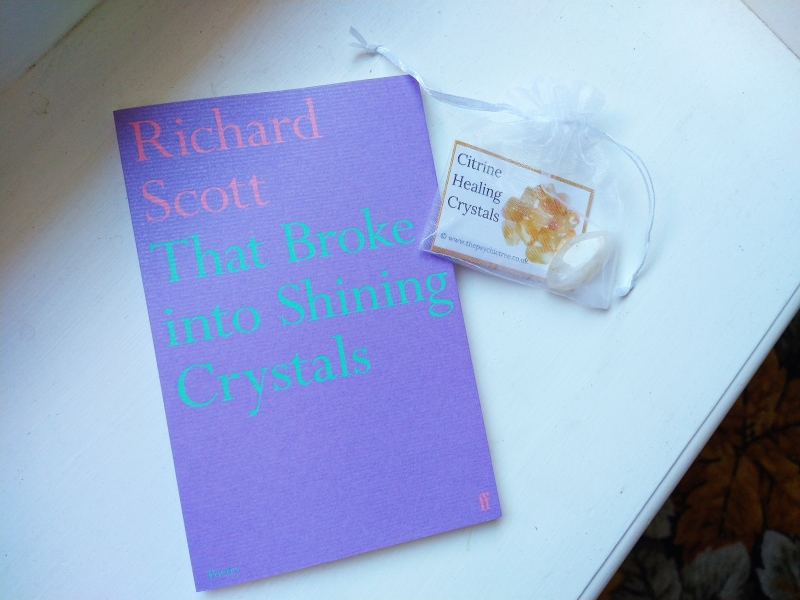
The title of the book (and of its final section) comes from Rimbaud and, according to the Notes, the 22 poems “all speak back to Arthur Rimbaud’s Illuminations but through the prism of various crystals and semi-precious stones – and their geological and healing properties.” My lack of familiarity with Rimbaud and his circle made me wonder if I was missing something, yet I thrilled to how visual the poems in this section were.
As with the Still Lifes, there’s an elevated vocabulary, forming a rich panoply of plants, creatures, stones, and colours. Alliteration features prominently throughout, as in “Citrine”: “O citrine – patron saint of the molested, sunny eliminator – crown us with your polychromatic glittering and awe-flecks. Offer abundance to those of us quarried. A boy is igneous.”
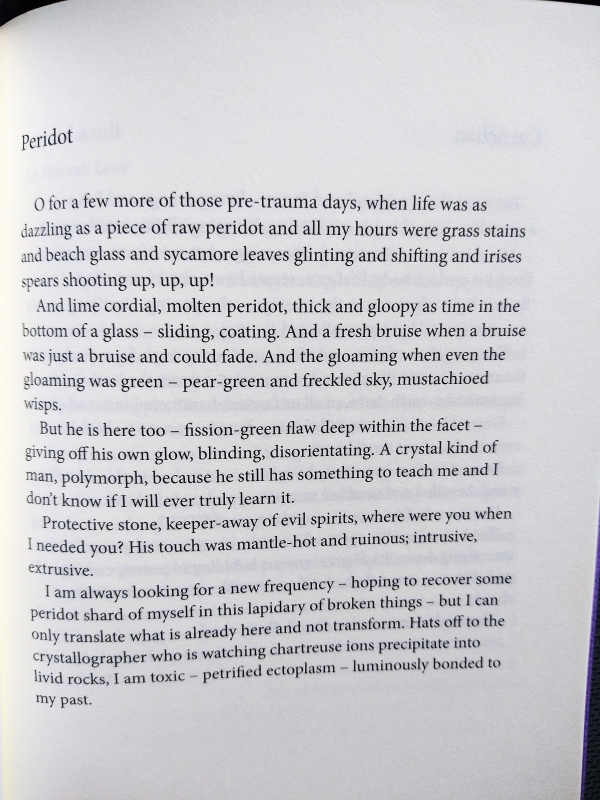
I’ve photographed “Peridot” (which was my mother’s birthstone) as an example of the before-and-after setup, the gorgeous language including alliteration, the rhetorical questioning, and the longing for lost innocence.
It was surprising to me that Scott refers to molestation and trauma so often by name, rather than being more elliptical – as poetry would allow. Though I admire this collection, my warmth towards it ebbed and flowed: I loved the first section; felt alienated by the second; and then found the third rather too much of a good thing. Perhaps encountering Part I or III as a chapbook would have been more effective. As it is, I didn’t feel the sections fully meshed, and the theme loses energy the more obsessively it’s repeated. Nonetheless, I’d recommend it to readers of Mark Doty, Andrew McMillan and Brandon Taylor.
Published today. With thanks to Faber for the free copy for review. An abridged version of this review first appeared in my Instagram post of 11 April.
Read any good poetry recently?
 Bookish Beck = Rebecca Foster. American transplant to England. Freelance proofreader and book reviewer.
 Bookish Beck