Booker Prize Longlist Reads (Switzy, The End of Everything) & Shortlist Predictions
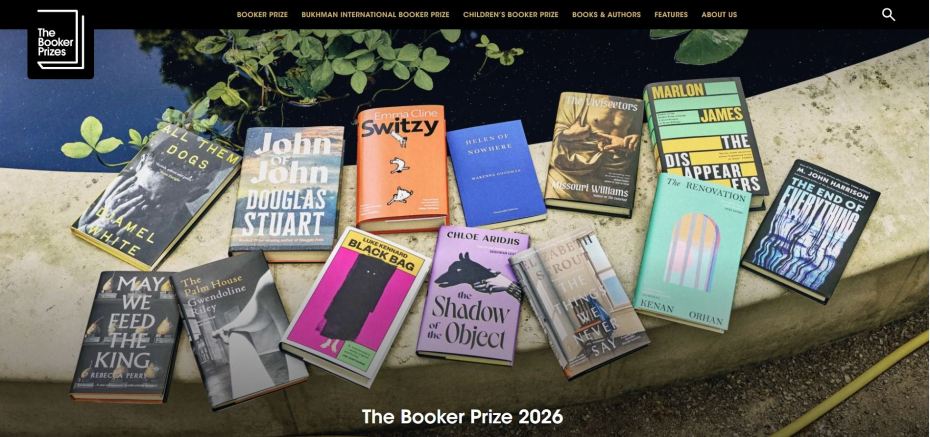
In an hour or so, the Booker Prize shortlist will be announced. I’ve now read four of the longlisted novels; I’m still awaiting a library hold of May We Feed the King by Rebecca Perry, which is the only other I’m particularly keen to read. This is the first time in four years that I’ve made much of an effort to read from the longlist, i.e., besides what I happen to have already read. I think this year’s judging panel may have something to do with it: I have read (almost) everything by Raymond Antrobus and Patricia Lockwood, and I admire Mary Beard even if I don’t know her work so well.
This pair contains unavoidably bleak stuff – dementia and preparing for an assisted death at Dignitas; weird goings-on in postapocalyptic London and Kent – but with some glints of humour. I could see the first being shortlisted but not the second.
Switzy by Emma Cline
Like many, I read Cline’s debut, The Girls, but lost track of her career afterwards. I was taken aback at the subject matter of her fourth book, which sounded like fodder for a different author – an older male. I also worried that her portrait of a privileged businessman trying to make meagre amends for the wrongs from his past would be too similar to George Saunders’s subpar Vigil. But in the end she won me over with her close-third-person portrait of the last few days of an Everyman defying the inexorable course of dementia.
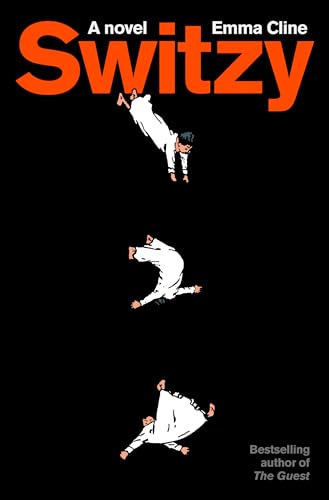 David Hastings, 70, is en route to Zurich, headed to the never-named Dignitas. He’s on a private plane borrowed from a longtime associate, and has with him a personal assistant, Cody. Their first stop is London so he can see his daughter, Rebecca, and his musical prodigy grandson, Rainer, and say a sort of goodbye – although his relatives have no idea it’s the last time they’ll see him. He has one more stop to make, just over the Swiss border, to see Tom, a boarding school chum who endured hazing that David didn’t intervene to stop. Beyond the guilt, we sense that he longs to see Tom because he has always been half in love with him – a recurring homoerotic impulse never consummated. (An interesting parallel is that Rebecca is having clandestine meet-ups with a female friend. Is same-sex attraction inherited?)
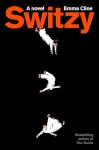
Depicting the mental turmoil of a character sinking into dementia is not that ground-breaking; I’ve read a number of novels that do so with aplomb (Still Alice, Elizabeth Is Missing, Turn of Mind, The Night Guest, The Swimmers). However, Cline convincingly traces David’s bewilderment at everyday traveller experiences of hotels, restaurants and taxis. It’s no mawkish tour through disability; instead, his outsider’s view skewers the ridiculousness of modern life. I was most impressed by the way David’s internal monologue skirts lost language and gets stuck on arbitrary phrases: sayings, song lyrics, liturgy. “The quick brown fox jumps over the lazy dog”; “The hills are alive…”; “Now and at the hour of our death…”; his ex-wife’s exhortation to their little girl to “brush away the sugar bugs”; and the story of Little Nemo in Slumberland (which lends the anomalous cover image).
“Unflinching” is a reviewing cliché, but this is what people have in mind when they say it. Cline follows David right up to his last moment, taking us into the room at the clinic with him. There’s nothing special, or even very likable, about this man, but as we follow along on his final physical experiences we get a sense of the weight of any life – which can still have value even if there are no longer any words for what’s happening. I found this much more affecting than I expected to, reaching the final pages with tear-soaked cheeks. (Read via NetGalley) 
Also recently reviewed by Cathy and Susan.
I’ve read and thought a lot about the topic of assisted dying, including with In Love by Amy Bloom, Intervals by Marianne Brooker, That One Patient by Ellen de Visser, The Inevitable by Katie Engelhart, and One Last Thing by Wendy Mitchell. Switzy would make a particularly good fictional counterpart to the Bloom, for those who wish to read further.
A bonus review:
A Better Death: The case for assisted dying by Jonathan Romain
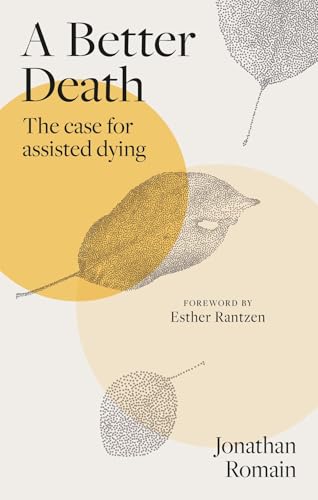 Romain is a rabbi and former chair of Dignity in Dying. In this short work, he gives a valuable history of relevant legislation in the UK and internationally, and a rundown (with rebuttals) of potential ethical objections to assisted dying. The party line of the major religions is to uphold the sanctity of life and thus oppose assisted suicide, but there are notable exceptions. Romain mentions a former archbishop of Canterbury who attends my church. George Carey changed his mind after the high-profile case of Tony Nicklinson, who was paralysed after a stroke and lost his appeal over the right to die. Pious supporters of the Campaign for Dignity in Dying emphasise the duty to be merciful to the suffering. Romain puts it this way: “From a religious perspective[,] it makes much more sense to say that we honour God most by healing someone when we can, comforting them when we cannot do so and helping them let go of life gently when desired.” Most medical bodies, too, have now reversed their official positions, with the majority voting to remain neutral on the matter. Romain characterises the campaign as a sign of humanitarian progress – like universal suffrage or the abolition of slavery – that future generations will look back on as overdue. He hopes that charismatic campaigners will arise from among the dying and their relatives. (The foreword is by TV presenter Esther Rantzen, who appealed after being diagnosed with terminal lung cancer. Just days ago, she announced she’s too fragile to travel to Dignitas.)
For me, this book offered little new because I was familiar with arguments around the issue, pro and con. However, it would be a good primer for those coming to such questions for the first time. What I did find helpful was a discussion of rituals we might develop to accompany an assisted death – a new sort of funeral that may one day be routine. Music, readings, a toast; a candle snuffed out or lit at the moment of death, and so on. Imagine a whole new category of human rite, one that should no longer be clouded in secrecy or available only to the wealthy. Alas, the latest version of the Terminally Ill Adults (End of Life) Bill was voted down by the House of Commons on 11 September, but no doubt it will be back in a new form soon. 
With thanks to Reaktion Books for the free copy for review.
The End of Everything by M. John Harrison
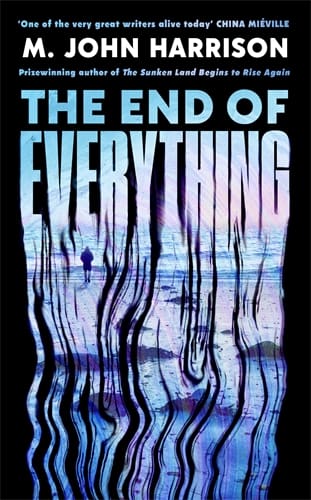 I was willing to give this a try for several reasons: it was readily available from my library (someone donated it), Harrison is lauded yet I’ve never approached his large back catalogue, and it’s novella length. Alas, those were insufficient to overcome my antipathy for vague dystopian scenarios in which characters’ actions have no clear motivations. Years post-crisis and -invasion, some people are still trying to flee Britain, but most seem content muddling along. “What were the iGhetti and where had they come from?” That’s a good question, and one to which we never get a straightforward answer, but the main hint is that they are jelly-like and arrived from elsewhere. Phillip Tennent engages in mudlarking – except some of the artefacts he discovers are amorphously humanoid and evolve human traits.
Initially it seems as if Phillip is the protagonist, but his 70-year-old painter aunt, Marnie, has more enduring importance. When she’s hounded out of her falling-down home, she shelters in an abandoned art gallery. She’s a surprising and almost admirable broad, handy with a weapon whenever she senses her way of life being threatened. There are some darkly comic outrageous happenings, and gruesome set pieces that blur the line between living and dead, human and non-. I had to wonder if there is also a Brexit allegory, given Marnie’s signs reading “HOW CAN YOU MISPLACE A CONTINENT?” Harrison’s prose is smooth and the pages turn quickly, but when I look back at the gnomic dictums I marked out, they don’t seem to mean anything:
Are we watching a film the universe is showing itself?
The world’s over. But that doesn’t matter. Because another one will be along soon enough.
Rather, significance is located in the expressions of uncertainty:
the apocalypse seemed to withhold itself, quickly becoming just another historical continuity.
There was a vigorous ambiguity to everything.
Believe all you like that at some level unavailable to you an organising principle exists. You will never have any evidence of that.
I suspect Harrison’s aim was to show how one can get used to anything, even random violence and purposeless wandering. But this watery postapocalyptic meander sheds no real light on the past, present, or future, and feels as if it should have been published more like a decade ago (at the time of The Wall by John Lanchester et al.). A couple of great scenes, such as children playing with fallen ash as if it were snow, aren’t enough to take the bitter edge off even such a short novel. I’m not tempted to try more by Harrison. (Public library) 
Also recently reviewed by Annabel.
Longlisted novels that I’d already read:
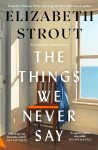 The Things We Never Say by Elizabeth Strout: Artie Dam is a likeable Everyman with the same sorts of secrets and struggles we all have. Sometimes he thinks his marriage is going well and he’s touching his high school history students’ lives; other times he feels fatalistic about his relationships and the US’s trajectory. Along with Lucy by the Sea, this is the most engaged Strout has been with the present day, and the most specific she’s gotten about political outrages. I liked how the flash-forwards prove Artie right in his predictions (occasionally based on premonitory dreams) or confirm what he couldn’t have known about the difference he made for two particular students. In his small way, Artie is a new Stoner.
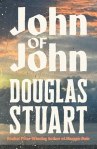 John of John by Douglas Stuart: One of my books of the year for sure. (I reviewed it for Shelf Awareness.) Stuart’s superb third novel is set on the Isle of Harris in the 1990s. Cal seeks to reconcile his sexuality and artistic goals with his family’s expectations and his devout upbringing. An absorbing, deliciously melodramatic story is built around the contrast between modernity and the old ways. The characters’ power plays and acts of desperation are heartrending, but mischief and love of colour and crafts lend lightness. Stuart’s every observation is profound; the simplest phrase is memorable for its beauty.
Here’s my thinking about the shortlist:
Lockwood may be to thank/blame for the weirder and more niche selections (i.e. previously unknown young Americans’ second books), whereas the judges are likely to come to a consensus on more straightforward, reader-friendly material. I imagine we’ll see a shortlist dominated by women and repeat nominees.
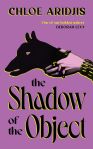
The Shadow of the Object by Chloe Aridjis – Especially with Antrobus and critic Rebecca Liu on the panel, we can expect at least two non-Anglo authors to make it through. Djamel White’s subject matter sounds neither appealing nor fresh. [Kenan Orhan is apparently Turkish American, though he looks white.] Though I’m personally not eager to read Aridjis again (after a DNF of Sea Monsters), I’m taking a gamble on this one being the second.
Switzy by Emma Cline – Edgy and powerful enough to deserve a place.
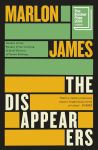
The Disappearers by Marlon James – A previous winner and a writer’s writer, though I’ve never particularly gotten on with his work.
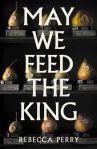
May We Feed the King by Rebecca Perry – I’ve heard almost exclusively good things.
The Things We Never Say by Elizabeth Strout – She’s getting to be a Booker bridesmaid and has been nominated for poorer books, so I hope she’ll get another shot.
John of John by Douglas Stuart – How could you not?! I’ll throw a tantrum if it doesn’t make it through.
But, of course, the judges could surprise me with a wildcard such as Black Bag by Luke Kennard; Gwendoline Riley is inexplicably popular with judging panels, too.
What have you read from the longlist? Which book(s) do you most want to read, or see on the shortlist?
My Year in Short Stories (#ShortStorySeptember)
The Short Story September link-up is open (see my pinned post). At the start of the month, I’m inviting you to tell about the short stories you’ve already read this year, especially any that you’ve particularly enjoyed.

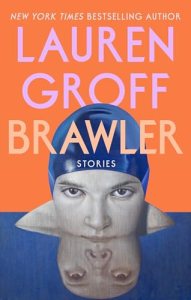
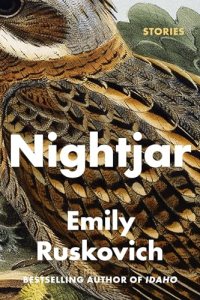
I don’t consider myself a great short story reader, so I was surprised to look back and find that I’ve already read 17 collections this year. I include in that four books that I consider to be linked short story collections, even though they were all published as novels rather than stories. (I’m sure Susan is right when she theorizes that this is about marketing – what’s expected to sell.) The best have been Brawler by Lauren Groff and Nightjar by Emily Ruskovich, which are actually quite similar.
Some other favourites were:
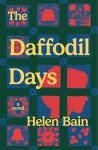 The Daffodil Days by Helen Bain: A slantwise biographical portrait of Sylvia Plath through her interactions in the last years of her life. The 16 chapters adopt the points-of-view of various secondary characters (e.g., Plath’s housekeeper, riding teacher, and brother), but the kernel of each is an encounter with Plath that illuminates her personality and state of mind. (Reviewed for Shelf Awareness)
Strange Weather in Tokyo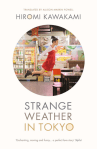 by Hiromi Kawakami: Tsukiko is a lonely barfly in her late thirties when she bumps into a secondary school teacher again. She calls him “Sensei,” and they start meeting up for low-key adventures. Kawakami infuses the book with attention to the seasons’ changes and everyday sensual pleasures like food. A lovely, subtle romance.
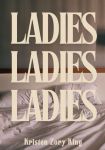 Ladies, Ladies, Ladies by Kristen Zory King: A “chapbook” containing 18 flash stories. It’s remarkable how much is packed into a few pages: a voice, a character, a setting and situation, an incident, a salient backstory, and some kind of epiphany or resolution. Fifteen of the pieces focus on one named character. Each story is distinctive, with no words wasted.
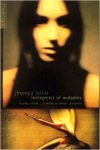 Interpreter of Maladies by Jhumpa Lahiri: Lahiri won the Pulitzer for this debut. Her characters tend to be Indian or Bengali immigrants in New England. Relationship studies trade off with accounts of encounters with strangers across generations and/or cultures. Often, food is a reminder of home. An overall theme is denying or affirming common humanity.
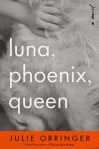 Luna, Phoenix, Queen by Julie Orringer: In Orringer’s wonderful third novel, the secrets between two literature professors and the adoption of a remarkable dog fuel an absorbing story of love, memory, and connection beyond words. Chapters take on different characters’ perspectives. (Review forthcoming for Shelf Awareness)
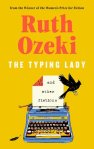 The Typing Lady and Other Fictions by Ruth Ozeki: Ozeki is up to her usual auto/metafiction tricks here, blurring the lines between fact and fiction, life and death. Themes include memory, creativity, language, ageing and cross-generation connections. The stories are playful without being twee, and represent a real return to form.
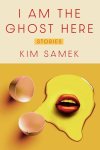 I Am the Ghost Here by Kim Samek: The television producer’s inventive debut recalls Ed Park and George Saunders with its focus on the mixed blessing of technology. Her speculative short stories’ protagonists deal with grief or new motherhood, often while also struggling with their health. Samek sets up unusual situations with knock-out first lines. (Reviewed for BookBrowse)
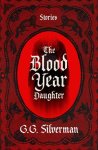 The Blood Year Daughter by G.G. Silverman: A remarkable collection that mixes feminist horror and twisted fairy tales into potent concoctions. Women’s bodies are imperiled by sadistic men and acts of self-sacrifice. Blood is a symbol of desire or power. Motherhood and sisterhood are vital bonds. Among bleak storylines come flashes of morbid humor. (Reviewed for Foreword Reviews)
All by women!
And the rest:
- Love Invents Us by Amy Bloom
- Baby in a Box by Sarah Braunstein (Reviewed for BookBrowse)
- A Calendar of Love and Other Stories by George Mackay Brown
- Museum Visits by Éric Chevillard
- Lesser Known Monsters of the 21st Century by Kim Fu
- It Will Come Back to You: Collected Stories by Sigrid Nunez
- The Book of Mating by Laksmi Pamuntjak [trans. from Indonesian by Annie Tucker] (Review forthcoming for Foreword Reviews)
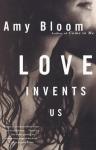
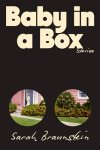
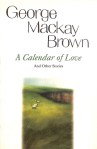
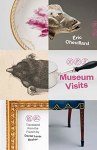
(All but two by women!)
What are some of your recent favorite experiences with short fiction?
June Releases by Fiona Mozley, Heather Sellers & Myfanwy Tristram
This month I have a fiction–poetry–nonfiction trio covers fake memories, Florida’s beauty and weirdness, and the past 50 years of protests in the UK. I also excerpt my reviews of five June releases I read in advance for Shelf Awareness, including one that’s in the running for my Book of the Year.
Awake Awake by Fiona Mozley
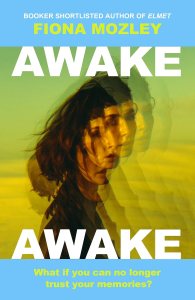 When writer Mary Mooney dives into her memories during appointments with her therapist, Sita, most of what comes up is the everyday stuff of her childhood in York: mild shenanigans with her younger brother, Jos; her friends Amelia and Eve plus Eric, a newcomer from New York City; and their wider circle. Early on, though, she warns readers that she’s untrustworthy. “In recent years, I have had difficulties with my memory,” she confesses. “It was not a sickness of forgetting. I did not have too few memories, but too many,” some of which couldn’t possibly be real – the best example being her conviction that her grandfather assassinated Hitler. She also tells Sita of a hotel fire and her rudeness to a couple of right-wing writers and journalists – things one does in dreams but not generally in real life.
The focus is on Mary and her peers’ formative teen years around the start of the Iraq War. In the final chapter, she offers a where-are-they-now for her closest friends. “Most of this is a verifiable journey through a life I really lived,” she notes, but “from hereon the fabrications begin.” This should have been an exciting revisiting of recent history in the company of an unreliable narrator, but everything about the novel is so dull that it was impossible to stay interested. It feels like pedestrian autofiction (insomuch as Mozley is from York and came of age in the same period as Mary, who is nominated for a major award for her first novel) drawing on a Blair-years upbringing. Mozley’s Elmet, which was shortlisted for the Booker Prize and the Sunday Times Young Writer of the Year Award, is one of my favourite debut novels of the last decade, so it’s a real shame that her subsequent work hasn’t lived up to that potential. Hot Stew (2021) was a DNF for me, a caricature-heavy London state-of-the-nation novel, and Awake Awake reads like a half-baked debut, not a world-class novelist’s third. Unless I hear rave reviews about a return to form in future, that’s it for me with Mozley.
With thanks to John Murray Publishers for the free copy for review.
Women in Tampa Talking about Alligators by Heather Sellers
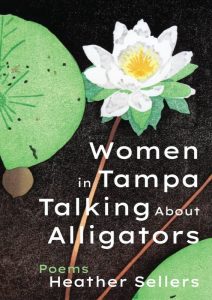 With such a title, how could you not want to read it?! In her fifth poetry collection, Sellers, a Florida native, recounts conversations with her neighbours, backyard sightings, and boat trips through swamp country. An appreciation of beauty rubs shoulders with awareness that it is threatened by climate breakdown and the state’s existential identity crisis. She describes Florida as “the thumbs-down thumb”; it “hangs on, for now, bobbing, / as she lowers into the dull warm blue sea.” Lovely poems about birds spin delightfully unexpected imagery: “watching the great white egret / stiletto across the jasmine fence, / black patent legs shining”. But they also contain barbs about the polluting influence of modern life (spot the alliteration and internal and slant rhymes):
Someone’s silvery phone gleaming underwater.
A fleet of rays flew between our little boats, skin kites on roller skates.
We discovered the things slung around the channel marker
was not a bird, just a plastic sack: the common, grey Florida Wal-Mart bag.
Cormorants dove into the chests of mangrove.
High above, paragraphs of frigates cursive-d land, land, land.
As winter and summer swap, the advantages and downsides of living in an identikit suburb mostly inhabited by retirees from elsewhere become clear. Nature is red in tooth and claw even in her garden, where crows prey on baby mockingbirds. Alligators are everywhere, and when “removed” for being a “nuisance” – in other words, interfering with human activity – their end reveals our inhumane priorities. “No? Seriously? They are euthanized? Euthanized for what, for living?” This is a terrific free verse collection at the intersection of the edenic and the diminished everyday. I would definitely read more by Sellers.
Published by Lynx House Press. With thanks to publicist Jeffrey Yamaguchi for the free e-copy for review.
Noisy Valley: The Art of Protest by Myfanwy Tristram
This is not a comprehensive history of protest but a snapshot of it over the past half-century or so, focussing on the Rhondda Valley in South Wales (not far from Cardiff), where a surprising number originated. The frame story is an exhibit of Tristram’s protest drawings at the Workers Gallery in Ynyshir, where she meets those featured. Each story is then expounded in turn, based on interviews with someone who led the protest or participated in it. We learn of miners’ strikes, a protest against a hospital closure, outrage over toxic runoff from a landfill, and a campaign to save Northern Meadows. One impetus was the worrying trend in the UK (and elsewhere) of governments cracking down on peaceful protests with overly harsh punishments.
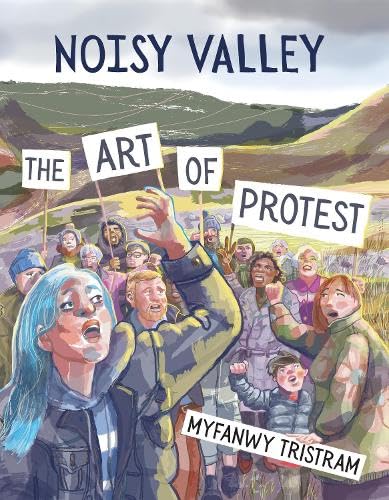
I was surprised to find that two of the chapters had local relevance for me: the Greenham Common women’s peace camp and the Aldermaston marches (part of the Campaign for Nuclear Disarmament). I was additionally taken aback to spot Martyn Joseph, a Welsh singer-songwriter we’re familiar with from Greenbelt Festival, turning up to sing a new bespoke version of “This Land Is Your Land” for a protest. I’m not fond of the talking heads approach to graphic nonfiction (also seen in Sexuality: A Graphic Guide and Trans History) or of the particular style here – monochrome in the main text with a few full-colour pages plus in the asides on the history of protest and changing regulations. I preferred the spreads focusing on landscapes. However, this is a worthwhile project and I particularly appreciated the below quote, which captures my feeling about the environmental marches I’ve been on in London.
You might find this a bit weird, but I never really thought that protest ever achieves its purpose. We still have nuclear weapons, you know. But it is worthwhile. My feeling is that protest is wonderful because it brings people together as a social group. The meeting of hearts and minds. I would argue that’s very positive.
~David Hurn, Aldermaston photographer
With thanks to SelfMadeHero for the free copy for review.
Reviewed for Shelf Awareness:
The Daffodil Days by Helen Bain: A remarkable debut novel about the last years of Sylvia Plath’s life. I’ve already discussed it here.
 Catching Sight: How a Guide Dog Helped Me See Myself by Deni Elliott with Graham Buck: Elliott was diagnosed as legally blind as an adult, though she’d always had limited vision. She explores her relationships with five very different dogs and introduces the process of training guide dogs in this heartwarming story of human–animal connection and resilience.
 Instructions for the End of the World: Homilies of Comfort and Resistance by Maggie Helwig: Helwig is the rector of inner-city Toronto’s St. Stephen-in-the-Fields. Her stirring sermons espouse a practical, progressive theology and affirm the power of solidarity and the commitment to social justice in turbulent times (including the pandemic years).
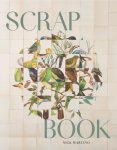 Scrap Book by Nick Martino: Martino’s formally inventive debut poetry collection draws on his mother’s journals and 1980s Polaroids to capture a Midwestern family dynamic overshadowed by divorce and his father’s incarceration.
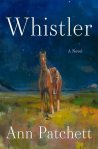 Whistler by Ann Patchett: Patchett is a master on the subject of family dysfunction, and her tenth novel, a stepdaughter–stepfather love story, is as wise as ever on secrets, traumatic memories, and storytelling. This is one of my top three books of 2026 so far, along with Brawler and John of John.
Which of these June releases have you read, or will you seek out now? What am I missing out on?
May Releases by Siri Hustvedt, Will Maclean & More
This month’s overarching theme is creepy and/or haunted houses! My main reviews are of a collage-style bereavement memoir and a slice of English horror. I also excerpt my reviews of four more May releases read in advance for Shelf Awareness, including one that’s in the running for my Book of the Year.
Ghost Stories by Siri Hustvedt
Paul Auster died of non-small cell lung cancer on April 30, 2024. His widow, Siri Hustvedt, wears his old clothes and still occasionally smells his cigar smoke in their Brooklyn home. “I’m living in a haunted house,” she writes, one “inhabited by a ghost Paul and I made together, a ‘we’ that doesn’t exist anymore.” This isn’t a straightforward bereavement memoir recounting the relationship followed by the loved one’s decline and death. Instead, it moves back and forth between past and present and incorporates various documents. There are glimpses of her state of mind as she keeps up with routines to get through the days but still experiences life as unreal and outside of time.
One section reprints 12 e-mail updates she sent to friends and family during Paul’s illness. She weaves through fragments of his shocking family history (familiar from The Invention of Solitude), certain events that have been memorialized in his books (such as the car accident he wrote about in Winter Journal), and brief tales of his work and its reception. There’s also Paul’s incomplete series of letters to his newborn grandson, Miles, in which he tells the boy the stories he thinks he should know about his ancestors. A notable one was about 9/11, which happened to be the day their daughter Sophie started at a new high school; she passed under the World Trade Center on the subway half an hour before the first attack.
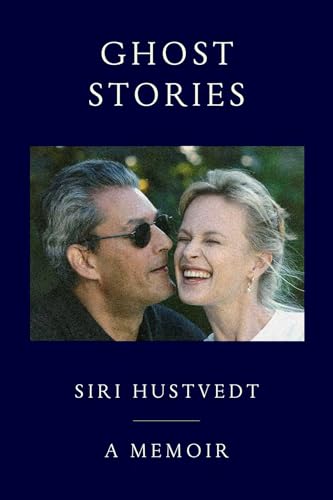 For those of us who have read both Auster and Hustvedt, it’s particularly interesting to read about how their work intersects. “We both liked the idea of our fictional worlds kissing, as it were,” she notes. She describes their connection as “intellectual-erotic” and predicts that, given another 100 years together, they would have merged into one person. Their influence on each other’s work was mutual, she insists, rather than one-sided from Paul to her as misogynistic detractors have assumed. She’s always been more the intellectual anyway, with a literature PhD and amateur interests in neurology and philosophy; and he ‘borrowed’ her character Iris Vegan (from The Blindfold) for one of his later novels, Leviathan.
The book grows increasingly political towards its close. Paul didn’t live to see “45” re-elected as 47. Hustvedt decries the rise of anti-intellectualism and, at Paul’s memorial service nearly 10 months after his death, quoted her father’s prescient words: “when fascism comes to America, they’ll call it Americanism.” It doesn’t seem like alarmism to ask what the current regime in the US and elsewhere portends for writers committed to humanism, nuance, and more or less overt voicing of outrage (as in one of Paul’s late books, a short text accompanying his son-in-law’s photographic series on gun violence in America).
This whetted my appetite to read more by Auster and fulfils her stated goal “to bring something of the man back on the page.” I can thoroughly recommend it to fans of either or both authors, as well as those interested in grief stories and the current literary scene. (Read via Edelweiss)
Solace House by Will Maclean
I hadn’t heard of Maclean’s first novel, The Apparition Phase, which was on the McKitterick Prize shortlist (before my involvement with the Prize), but I was drawn to the descriptions of his second. The cover puff from Nicholas Binge – “The Secret History meets The Haunting of Hill House” – can’t be topped, and the promotional materials’ references to Piranesi and Possession are equally accurate. In the summer of 1993, Alex Lane is 19, broke and wondering what to do with himself. He seems to be the only student left at The Ridge. Except for that pale young man he’s seen screaming at a window opposite his room…
The Student Welfare Office offers him a job on a team clearing out two Victorian properties the university has acquired or is hoping to acquire. One is Marshlands, a former mental hospital, while Solace House was the private residence of the Flaynes, the last of whom recently died at age 101. Alex finds “a lifeboat of easy camaraderie” with his seven co-workers: Clive, a loud, confident stoner; Malcolm, who’s beautiful and gay; Helen, who’s super-religious; Ruth, a Goth; Leo, a mystical researcher; Adam, a weird (traumatized rich kid; and Ella, who’s clever and alluring. But none of them is prepared for what they find at Solace House. Edwin Flayne was a hoarder and the rooms are so full that they can’t move. One is completely covered in mirrors; another has creepy effigies around a table; the hall is plastered with strange paintings; and a series of ledgers with the ravings of a madman. Alex and Ella save from the burn pile one that contains an epic poem of utopian visions and musings on the disappearance of Flayne’s mother.
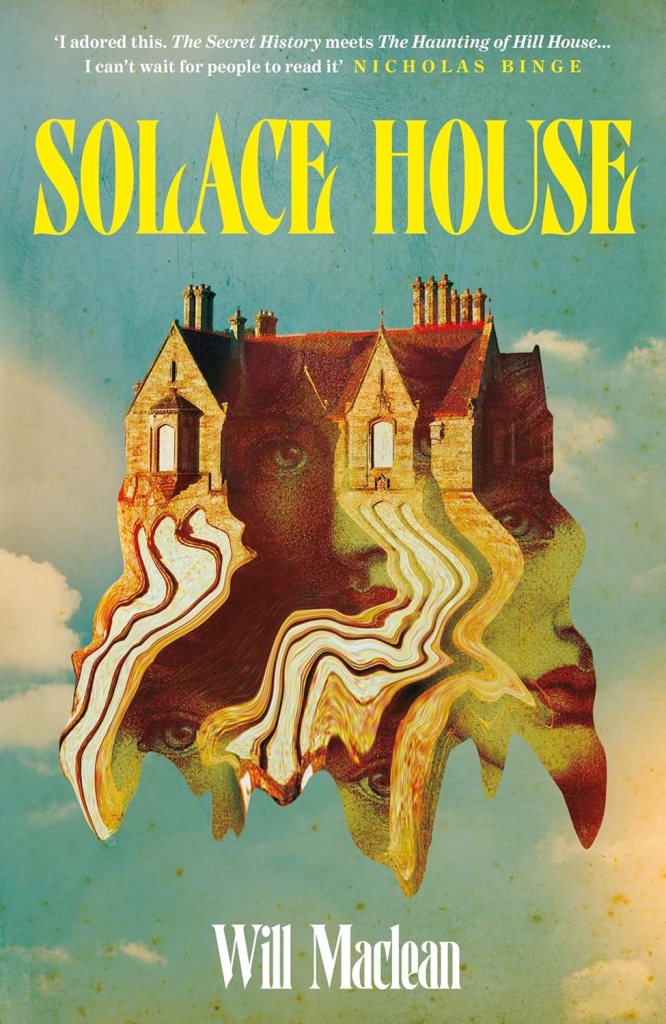
Flayne’s interest in the esoteric is only matched by Leo’s; add on some magic mushrooms and it’s a heady combination of the surreal as the team explores a cave on the property that the Flaynes considered a Thin Place. While high, Leo issues what seems to be a prophecy of the order in which they’ll all die. All along, we’re kept wondering how Alex’s parents both died on “The Last Day” at the hands of “The Annihilator.” He regurgitates fictional orphan plots to try to get Ella off his case, but she (and we) know he’s holding something back.
Although I wearied of the pastiche poetry that heads each chapter and at some point stopped reading it, it does have ultimate significance. (And bully to Maclean for adding “all written by me, rather than AI, before anyone asks” to his Acknowledgements.) Midway through, I was thinking to myself this should have been in the third person to legitimize the horror, as it can otherwise shade into silliness. Part IV jumps ahead in time and subverts what’s gone before, making Alex question not just the last four years of his life but the entire course of it. And now I knew why it had to be in the first person, so reliant is it on individual experience. Time, identity and memory all come into question.
At first I was disappointed, thinking that with this section Maclean had undermined the eerie power of what went before, but there’s another switchback still to come. The book is a little overlong at just under 500 pages, and sags a bit in the final 100, but it kept surprising me and it comes to a satisfying conclusion. I also got the sense of an author having fun with the 1990s nostalgia and student behaviour. I would certainly seek out his debut.
With thanks to Atlantic Books for the free copy for review.
Reviewed for Shelf Awareness:
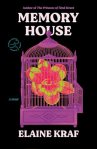 Memory House by Elaine Kraf: In this posthumous fifth novel, a novelist enters a commune for failed artists. Magic realism and metafiction coalesce in another of this unsung genius’ typically weird explorations of memory, creativity, and sexuality. It all appears to add up to a metaphorical journey, with a symbolic death and rebirth for those re-entering Society.
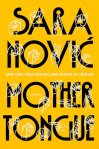 Mother Tongue by Sara Nović: Nović’s fourth book is a defiant memoir of parenthood achieved in spite of the troubled histories of deaf education, religious indoctrination, and international adoption. This is a fierce defense of deafness as a culture rather than a disability to be eradicated, and a beautiful exploration of the legacies of language and love.
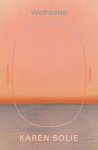 Wellwater by Karen Solie: The Canadian poet Karen Solie’s intricate sixth collection (which won the T. S. Eliot Prize), gilds the natural and human worlds with religious imagery and an environmentalist conscience. The work toggles between the material and the abstract; quotidian experiences fuel meditations on concepts such as intuition, kindness, and fate.
John of John by Douglas Stuart: In Douglas Stuart’s superb third novel set on the Isle of Harris (Outer Hebrides), a young man seeks to reconcile his sexuality and artistic goals with his family’s expectations and devout upbringing. Intriguing in its particularities but timeless in wisdom, it offers hope that relinquishing shame creates freedom to be true to oneself. (I also got to interview Douglas Stuart! This is one of my top three books of 2026 so far, along with Brawler and Whistler – forthcoming in June.)
Eleventh Blog Anniversary (& International Women’s Day)
Bookish Beck launched 11 years ago today. I find that hard to believe as I still feel like a newbie in the blogging world compared to veterans like Annabel, Kim, Laura, Liz and Simon; imposter syndrome (Imposter Foster!) strikes again. And yet I can’t really remember what it was like before I had a blog, nor can I imagine life without one.

Pratyya Ghosh, CC BY-SA 4.0 <https://creativecommons.org/licenses/by-sa/4.0>, via Wikimedia Commons
This is my 1594th post, which means I’m maintaining an average of 2.8 posts per week. I feel like I’m posting less often these days, with most of my reviews clumping around the end of a month as I scramble to report back on library reads and finish everything I’ve started towards particular challenges.
It’s also International Women’s Day, a coincidence I would have been unaware of when I started the blog. The Women’s Prize longlist is always announced at around this time of year, with the Carol Shields Prize longlist to follow on Tuesday. I’ve read three of the Women’s Prize nominees (Castillo, Hutchinson and King) and skimmed another (Choi). I’m currently reading Wendy Erskine’s The Benefactors, which is also just right for Reading Ireland Month.
To mark the day, I’ll reproduce my review of one of the best books I’ve read by a woman recently. It’s one of my early favourites for the year.
Brawler by Lauren Groff
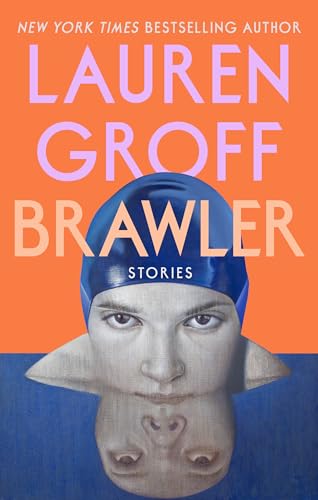 The nine short stories in Lauren Groff’s exceptional eighth book profile women in states of desperation and probe legacies of loss and violence.
Most of the stories employ third-person narration and originally appeared in the New Yorker. Often, inherited trauma binds mothers and daughters. The title character is high school swimmer Sara, who shoplifts and fights in frustration at her mother’s incurable illness. In “Under the Wave,” set after a natural disaster, a woman adopts an orphan as a replacement for her dead child—despite their racial differences. The title of “The Wind” symbolizes women’s fear and rage after an attempted escape from an abusive patriarch. Accidental harm and imagery of the Madonna and Child link the three mother–daughter pairs in “Annunciation.”
Themes of midlife reinvention and latent queerness (cf. Matrix) recur. Bisexuality is a secret between a dying woman and her friend in “Birdie.” In “Between the Shadow and the Soul,” a woman finds new hobbies following early retirement. Although she flirts with her female gardening teacher, she realizes her desire is not to leave her husband but to “brush up against the dazzling future again.”
“Such Small Islands” is a startling Jamesian fable; “To Sunland” a 1950s Southern gothic black comedy that would do Flannery O’Connor proud; and the masterful “What’s the Time, Mr. Wolf?” a suspenseful, novella-length examination of privilege and obsession.
The prose is stellar and the endings breathtaking. Groff is a first-rate novelist, but her short stories are truly peerless.
(Reposted with permission from Shelf Awareness.)
Thanks to all who support my blog by reading and commenting. You’re stars!
Book Serendipity, January to February
I call it “Book Serendipity” when two or more books that I read at the same time or in quick succession have something in common – the more bizarre, the better. This is a regular feature of mine every couple of months. Because I usually have 20–30 books on the go at once, I suppose I’m more prone to such incidents. People frequently ask how I remember all of these coincidences. The answer is: I jot them down on scraps of paper or input them immediately into a file on my PC desktop; otherwise, they would flit away! Feel free to join in with your own.
The following are in roughly chronological order.
- An old woman with purple feet (due to illness or injury) in one story of Brawler by Lauren Groff and John of John by Douglas Stuart.

- Someone is pushed backward and dies of the head injury in Zofia Nowak’s Book of Superior Detecting by Piotr Cieplak and one story of Brawler by Lauren Groff.
- The Hindenburg disaster is mentioned in A Long Game by Elizabeth McCracken and Evensong by Stewart O’Nan.
- Reluctance to cut into a corpse during medical school and the dictum ‘see one, do one, teach one’ in the graphic novel See One, Do One, Teach One: The Art of Becoming a Doctor by Grace Farris and Separate by C. Boyhan Irvine.
 A remote Scottish island setting and a harsh father in Muckle Flugga by Michael Pedersen [Shetland] and John of John by Douglas Stuart [Harris]. (And another Scottish island setting in A Calendar of Love by George Mackay Brown [Orkney].)
- A mention of genuine Harris tweed in Alone in the Classroom by Elizabeth Hay and John of John by Douglas Stuart.
- The Katharine Hepburn film The Philadelphia Story is mentioned in The Girls’ Guide to Hunting and Fishing by Melissa Bank and Woman House by Lauren W. Westerfield.
- A mention of Icelandic poppies in Nighthawks by Lisa Martin and Boundless by Kathleen Winter.
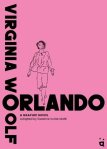
- Vita Sackville-West is mentioned in the Orlando graphic novel adaptation by Susanne Kuhlendahl and Boundless by Kathleen Winter.
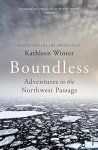
- Fear of bear attacks in Black Bear by Trina Moyles and Boundless by Kathleen Winter. Bears also feature in A Rough Guide to the Heart by Pam Houston and No Paradise with Wolves by Katie Stacey. [Looking through children’s picture books at the library the other week, I was struck by how many have bears in the title. Dozens!]
- I was reading books called Memory House (by Elaine Kraf) and Woman House (by Lauren W. Westerfield) at the same time, both of them pre-release books for Shelf Awareness reviews.
- An adolescent girl is completely ignorant of the facts of menstruation in I Who Have Never Known Men by Jacqueline Harpman and Carrie by Stephen King.
- Camembert is eaten in The Honesty Box by Lucy Brazier and Ordinary Saints by Niamh Ni Mhaoileoin.
- A herbal tonic is sought to induce a miscarriage in The Girls Who Grew Big by Leila Mottley and Bog Queen by Anna North.

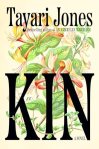
- Vicks VapoRub is mentioned in Love Invents Us by Amy Bloom, Kin by Tayari Jones, and Dirt Rich by Graeme Richardson.
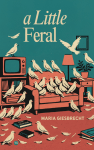
- An adolescent girl only admits to her distant mother that she’s gotten her first period because she needs help dealing with a stain (on her bedding / school uniform) in Love Invents Us by Amy Bloom, An Experiment in Love by Hilary Mantel, and Ordinary Saints by Niamh Ni Mhaoileoin. (I had to laugh at the mother asking the narrator of the Mantel: “Have you got jam on your underskirt?”) Basically, first periods occurred a lot in this set! They are also mentioned in A Little Feral by Maria Giesbrecht and one story of The Blood Year Daughter by G.G. Silverman. [I also had three abortion scenes in this cycle, but I think it would constitute spoilers to say which novels they appeared in.)
- A casual job cleaning pub/bar toilets in Kin by Tayari Jones and John of John by Douglas Stuart.
- Kansas City is a location mentioned in Strangers by Belle Burden, Mrs. Bridge by Evan S. Connell, and Dreams in Which I’m Almost Human by Hannah Soyer. (Not actually sure if that refers to Kansas or Missouri in two of them.)
- The notion of “flirting with God” is mentioned in Love Invents Us by Amy Bloom and A Little Feral by Maria Giesbrecht.
- A signature New Orleans cocktail, the Sazerac (a variation on the whisky old-fashioned containing absinthe), appears in Kin by Tayari Jones and Let the Bad Times Roll by Alice Slater.
- An older person’s smell brings back childhood memories in Love Invents Us by Amy Bloom and Whistler by Ann Patchett.
- The fact that complaining of chest pain will get you seen right away in an emergency room is mentioned in Love Invents Us by Amy Bloom and The Girls Who Grew Big by Leila Mottley.
- Thickly buttered toast is a favoured snack in The Honesty Box by Lucy Brazier and An Experiment in Love by Hilary Mantel.
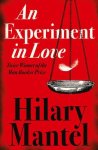 A scene of trying on fur coats in Love Invents Us by Amy Bloom and An Experiment in Love by Hilary Mantel.
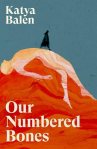
- Lime and soda is drunk in Our Numbered Bones by Katya Balen, Kin by Tayari Jones, and Whistler by Ann Patchett.
- A husband 17 years older than his wife in Kin by Tayari Jones and Whistler by Ann Patchett.
- The protagonist seems to hold a special attraction for old men in Love Invents Us by Amy Bloom and Whistler by Ann Patchett.
- A tattoo of a pottery shard (her ex-husband’s) in Strangers by Belle Burden and one of an arrowhead (her own) in Dreams in Which I’m Almost Human by Hannah Soyer.
- A relationship with an older editor at a publishing house: The Girls’ Guide to Hunting and Fishing by Melissa Bank (romantic) and Whistler by Ann Patchett (stepfather–stepdaughter).
- Repeated vomiting and a fever of 103–104°F leads to a diagnosis of appendicitis in My Grandmothers and I by Diana Holman-Hunt and Whistler by Ann Patchett.
 Multiple pet pugs in Strangers by Belle Burden and My Grandmothers and I by Diana Holman-Hunt.
- Palm crosses are mentioned in My Grandmothers and I by Diana Holman-Hunt and Kin by Tayari Jones.
- A Miss Jemison in Kin by Tayari Jones and a Miss Jamieson in Elizabeth and Ruth by Livi Michael.
- Pasley as a surname in Elizabeth and Ruth by Livi Michael and a place name (Pasley Bay) in Boundless by Kathleen Winter.
- A remark on a character’s unwashed hair in My Grandmothers and I by Diana Holman-Hunt and Let the Bad Times Roll by Alice Slater.
- A mention of a monkey’s paw in Museum Visits by Éric Chevillard and Let the Bad Times Roll by Alice Slater.

- A character gets 26 (22) stitches in her face (head) after a car accident, a young person who’s vehemently anti-smoking, and a mention of being dusted orange from eating Cheetos, in Whistler by Ann Patchett and Let the Bad Times Roll by Alice Slater.
- Pre-eclampsia occurs in Strangers by Belle Burden and The Girls Who Grew Big by Leila Mottley.
- There’s a chapter on searching for corncrakes on the Isle of Coll (the Inner Hebrides of Scotland) in The Edge of Silence by Neil Ansell, which I read last year; this year I reread the essay on the same topic in Findings by Kathleen Jamie.
- Worry over women with long hair being accidentally scalped – if a horse steps on her ponytail in Mare by Emily Haworth-Booth; if trapped in a London Underground escalator in Leaving Home by Mark Haddon.
 A pet ferret in My Grandmothers and I by Diana Holman-Hunt and Shooting Up by Jonathan Tepper.
- A dodgy doctor who molests a young female patient in Leaving Home by Mark Haddon and Elizabeth and Ruth by Livi Michael.
- A high school girl’s inappropriate relationship with her English teacher is the basis for Love Invents Us by Amy Bloom, and then Half His Age by Jennette McCurdy, which I started soon after.

- College roommates who become same-sex lovers, one of whom goes on to have a heterosexual marriage, in Kin by Tayari Jones and Whistler by Ann Patchett.
- A mention of Sephora (the cosmetics shop) in Half His Age by Jennette McCurdy and Whistler by Ann Patchett.
- A discussion of the Greek mythology character Leda in Mrs. Bridge by Evan S. Connell and Whistler by Ann Patchett (where it’s also a character name).
- A workaholic husband who rarely sees his children and leaves their care to his wife in Strangers by Belle Burden and Mrs. Bridge by Evan S. Connell.
- An apparently wealthy man who yet steals food in Strangers by Belle Burden and Let the Bad Times Roll by Alice Slater.
- Characters named Lulubelle in Mrs. Bridge by Evan S. Connell and Lulabelle in Kin by Tayari Jones.
- Characters named Ruth in Mrs. Bridge by Evan S. Connell, Kin by Tayari Jones, and Elizabeth and Ruth by Livi Michael.
 A mention of Mary McLeod Bethune in Negroland by Margo Jefferson and Kin by Tayari Jones.
- Doing laundry at a whorehouse in Kin by Tayari Jones and Elizabeth and Ruth by Livi Michael.
- A male character nicknamed Doll in John of John by Douglas Stuart and then Elizabeth and Ruth by Livi Michael.
- A mention of tuberculosis of the stomach in Findings by Kathleen Jamie and Shooting Up by Jonathan Tepper. I was also reading a whole book on tuberculosis, Everything Is Tuberculosis by John Green, at the same time.
- Mention of Doberman dogs in Mrs. Bridge by Evan S. Connell and one story of The Blood Year Daughter by G.G. Silverman.
- Extreme fear of flying in Leaving Home by Mark Haddon and Whistler by Ann Patchett.
What’s the weirdest reading coincidence you’ve had lately?
#NovNov25 Final Statistics & Some 2026 Novellas to Look Out For (Chapman, Fennelly, Gremaud, Miles, Netherclift & Saunders)
Novellas in November 2025 was a roaring success: In total, we had 50 bloggers contributing 216 posts covering at least 207 books! The buddy read(s) had 14 participants. If you want to take a look back at the link parties, they’re all here. It was our best year yet – thank you.
*For those who are curious, our most reviewed book was The Wax Child by Olga Ravn (4 reviews), followed by The Most by Jessica Anthony (3). Authors covered three times: Franz Kafka and Christian Kracht. Authors with work(s) reviewed twice: Margaret Atwood, Nora Ephron, Hermann Hesse, Claire Keegan, Irmgard Keun, Thomas Mann, Patrick Modiano, Edna O’Brien, Clare O’Dea, Max Porter, Brigitte Reimann, Ivana Sajko, Georges Simenon, Colm Tóibín and Stefan Zweig.*

I read and reviewed 21 novellas in November. I happen to have already read six with 2026 release dates, some of them within November and others a bit earlier for paid reviews. I’ll give a quick preview of each so you’ll know which ones you want to look out for.
The Pass by Katriona Chapman
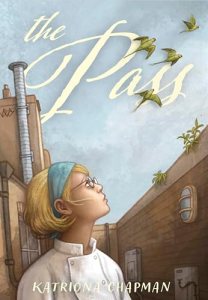 Claudia Grace is a rising star in the London restaurant world: in her early thirties, she’s head chef at Alley. But she and her small team, including sous chef Lisa, her best friend from culinary school; and Ben, the innovative Black bartender, face challenges. Lisa has a young son and disabled husband, while Ben is torn between his love of gardening and his commitment to Alley. Claudia is more stressed than ever as she prepares for a competition. All three struggle with their parents’ expectations. A financial crisis comes out of nowhere, but the greater threat is related to motivation. I was drawn to this graphic novel for the restaurant setting, but it’s more about families and romantic relationships than food. Several characters look too alike or much younger or older than they’re supposed to, while there’s a sudden ending that suggests a sequel might follow. (Fantagraphics, Jan. 20) [184 pages] (Read via Edelweiss)
The Irish Goodbye: Micro-Memoirs by Beth Ann Fennelly
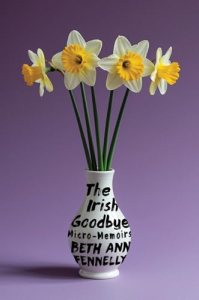 I’ve also read Fennelly’s previous collection of miniature autobiographical essays, Heating & Cooling. She takes the same approach as in flash fiction: some of these 45 pieces are as short as one sentence, remarking on life’s irony, poignancy or brevity. Again and again she loops back to her sister’s untimely death (the title reference: “without farewells, you slipped out the back door of the party of your life”); other major topics are her mother’s worsening dementia, her happy marriage, her continuing 28-year-old friendships with her college roommates, the pandemic, and her ageing body. Every so often, Fennelly experiments with third- or second-person narration, as when she recalls making a perfect gin and tonic for Tim O’Brien. One of the most in-depth pieces revisits a lonely stint teaching in Czechoslovakia in the early 1990s. Returning to the town recently, she is astounded that so many recognize her and that a time she experienced as bleak is the stuff of others’ fond memories. I also loved the long piece that closes the collection, “Dear Viewer of My Naked Body,” about being one of the 12 people in Oxford, Mississippi to pose nude for a painter in oils. Brilliant last phrase: “Enjoy the bunions.” (W.W. Norton & Company, Feb. 24) [144 pages] (Read via Edelweiss)
Generator by Rinny Gremaud (2023; 2026)
[Trans. from French by Holly James]
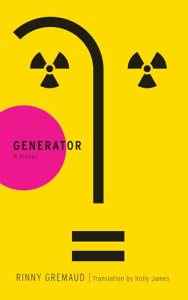 “I was born in 1977 at a nuclear power plant in the south of South Korea,” the unnamed narrator opens. She and her mother then moved to Switzerland with her stepfather. In 2017, news of Korea’s plans to decommission the Kori 1 reactor prompts her to trace her birth father, who was a Welsh engineer on the project. As a way of “walking my hypotheses,” she travels to Wales, Taiwan (where he had a wife and family), Korea, and Michigan, his last known abode. In parallel, she researches the history of nuclear power. By riffing on the possible definitions of generation, this lyrical autofiction comments on creation and legacy. Full Foreword review forthcoming. (Schaffner Press, Jan. 7) [197 pages] (PDF review copy)
Eradication: A Fable by Jonathan Miles
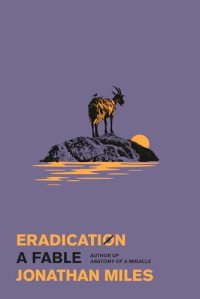 This taut, powerful fable pits an Everyman against seemingly insurmountable environmental and personal problems. Who wouldn’t take a job that involves “saving the world”? Adi, the antihero of Jonathan Miles’s fourth novel, is drawn to the listing not just for the noble mission but also for the chance at five weeks alone on a Pacific island. Santa Flora once teemed with endemic birds and reptiles, but many species have gone extinct because of the ballooning population of goats. He’s never fired a gun, but the mysterious “foundation” was so desperate it hired him anyway. It’s a taut parable reminiscent of T.C. Boyle’s When the Killing’s Done. My full Shelf Awareness review is here. (riverrun, 5 Feb. / Doubleday, Feb. 10) [176 pages] (Read via Edelweiss)
Vessel: The shape of absent bodies by Dani Netherclift
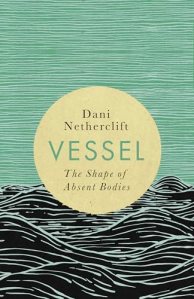 One scorching afternoon in 1993, the author’s father and brother drowned while swimming in an irrigation channel near their Australia home. A joint closed-casket funeral took place six days later. Eighteen at the time, Netherclift witnessed her relatives’ disappearance but didn’t see their bodies. Must one see the corpse to have closure? she wonders. “The presence of absence” is an overarching paradox. There are lacunae everywhere: in her police statement from the fateful day; in her journal and letters from that summer. The contradictions and ironies of the situation defy resolution. Full Foreword review forthcoming. (Assembly Press, Jan. 13) [184 pages] (PDF review copy)
Vigil by George Saunders
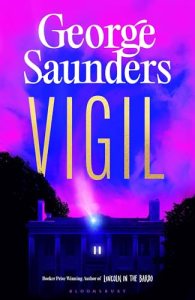 Impossible not to set this against the exceptional Lincoln in the Bardo, focused as both are on the threshold between life and death. Unfortunately, the comparison is not favourable to Vigil. A host of the restive dead visit the dying to offer comfort at the end. Jill Blaine’s life was cut short when she was murdered by a car bomb in a case of mistaken identity. Her latest “charge” is K.J. Boone, a Texas oil tycoon who not only contributed directly to climate breakdown but also deliberately spread anti-environmentalist propaganda through speeches and a documentary. As he lies dying of cancer in his mansion, he’s visited by, among others, the spirits of the repentant Frenchman who invented the engine and an Indian man whose family perished in a natural disaster. I expected a Christmas Carol-type reckoning with climate past and future; in resisting such a formula, Saunders avoids moralizing – oblivion comes for the just and the unjust. However, he instead subjects readers to a slog of repetitive, half-baked comedic monologues. I remain unsure what he hoped to achieve with the combination of an irredeemable character and an inexorable situation. All this does is reinforce randomness and hopelessness, whereas the few other Saunders works I’ve read have at least reassured with the sparkle of human ingenuity. YMMV. (Bloomsbury / Random House, 27 Jan.) [192 pages] (Read via NetGalley)
Novellas New to My TBR in #NovNov25
Somehow the rest of November flew away and all my best-laid plans for reviewing my preposterous stack of novellas fell by the wayside. As usual, I enthusiastically started a dozen when I should have just focused on three or four; it is ever thus. We spent the weekend visiting friends and it was also C’s birthday yesterday, so there wasn’t much time for reading. However, I managed to finish another five novellas by the 30th to review later in the week.
I will keep the link-up open through Saturday the 6th for belated reviews and catch-up posts and on Sunday the 7th I will post final statistics for the year’s challenge.
Here are the novellas I’ve added to my TBR this month:
 Before the Leaves Fall by Clare O’Dea, reviewed by both Cathy and Susan – Set in Switzerland, it has an assisted dying theme, which always attracts me. It’s also published by the indie Fairlight Books.
This one is nonfiction:
 Middlemarch and the Imperfect Life by Pamela Erens (from the Bookmarked series), spotted by chance on Liz’s wish list. I do love a memoir that responds to another work of literature.
And these two are 2026 releases that are on my radar as review books…
 Who Killed Bambi? by Monika Fagerholm (for Foreword Reviews) is about the aftermath of a teen gang rape in Helsinki.
 Men I Hate: A Memoir in Essays by Lynette D’Amico (for Shelf Awareness) is a response to her spouse transitioning.
Whew, four isn’t so overwhelming!
Wreck by Catherine Newman (and a Cocktail Recipe) for Thanksgiving
Happy Thanksgiving to all who celebrate! Though it’s just an ordinary Thursday here in the UK, I always strive to mark the occasion. Today, it’ll just be with a slice of pumpkin pie. But I’ve also been lucky this year to be invited to two Thanksgiving feasts, the first (vegetarian) last Saturday with a few North American neighbours from my book club and the next one (vegan) coming up tomorrow with university friends, one of whom is half-American. Meal #1 was splendid and kept us fed with leftovers for four days afterwards (I’m sure the second will be equally delicious and bounteous). We contributed mini squashes stuffed with leek and cauliflower macaroni and cheese, mashed potatoes and onion gravy, a pumpkin pie, and nibbles and cocktails. I adapted this pumpkin pie martini for J (too acrid and too sweet for me) but the rest of us had a signature cocktail I invented. Recipe below.


Friendsgiving Berry Cobbler
(Serves 1; or multiply by the number needed!)
50 mL Bombay Bramble gin
20 mL fresh lemon juice
20 mL homemade simple syrup
5 mL Grand Marnier
5 mL cranberry sauce or lingonberry jam
Mix all ingredients with ice in a cocktail shaker, shake well, and strain through a fine sieve to serve. Garnish with fresh cranberries, frozen blackberries and a twist of orange peel. Top up with ginger ale to taste.
Last month I reviewed Wreck by Catherine Newman for Shelf Awareness. It was one of my Most Anticipated books of the second half of the year and has a sequence set on Thanksgiving, which is reason enough to reprint it here.
 In Catherine Newman’s third novel, Wreck, a winsome sequel set two years on from Sandwich, a family encounters medical uncertainties and ethical quandaries.
Rocky is a fiftysomething food writer and mother of two young adults. After Rocky’s mother’s death, her 92-year-old father moved into the in-law apartment. Rocky and Nick’s son, Jamie, now works as a junior analyst for a New York City consulting firm. The engaging plot turns on two upsetting incidents. “In one single day, in two different directions, my life swerves from its path,” Rocky divulges. First, she notices a mysterious skin rash, which, along with abnormal blood work results, eventually points to an autoimmune liver condition [primary sclerosing cholangitis]; second, news comes that Miles Zapf, one of Jamie’s high school classmates, died in a collision between his car and a train. Was it suicide or an accident? A moral complication arises: Jamie’s firm advised the railroad company.
As one New England fall unfurls, leading to an emotionally climactic Thanksgiving Day, Rocky airs her fears over her prognosis, her father’s infirmity, and her children’s future. Empathy is a two-edged sword—she can’t stop imagining what Miles Zapf’s mother is going through. Newman (We All Want Impossible Things) writes autofiction that’s full of quirky one-liners and particularly resonates with anyone facing mental health and midlife challenges. There’s family drama aplenty, but also the everyday coziness of family rituals, especially those involving food. This warm hug of a novel ponders how to respond graciously when life gets messy and answers aren’t clear-cut.
(Reprinted with permission from Shelf Awareness.)
In short, it’s enjoyable and effortlessly readable, but Rocky is A Bit Much, and after you’ve read Sandwich this is really just more of the same.
Plus, more Thanksgiving reading ideas in this post I wrote way back in 2015.
#WITMonth, Part I: Susanna Bissoli, Jente Posthuma and More
I’m starting off my Women in Translation month coverage with two short novels: one Italian and one Dutch; both about women navigating loss, family relationships, physical or mental illness, and the desire to be a writer.
Struck by Susanna Bissoli (2024; 2025)
[Translated from Italian by Georgia Wall]
Vera has been diagnosed a second time with breast cancer – the same disease that felled her mother a decade ago. “I’m fed up with feeling like a problem to be taken care of,” she thinks. Even as her treatment continues, she determines to find routes to a bigger life not defined by her illness. Writing is the solution. When she moves in with her grouchy octogenarian father, Zeno Benin, she discovers he’s secretly written a novel, A Lucky Man. The almost entirely unpunctuated document is handwritten across 51 notebooks Vera undertakes to type up and edit alongside her father as his health declines.
At the same time, she becomes possessed by the legend of local living ‘saint’ Annamaria Bigani, who has been visited multiple times by the Virgin Mary and learned her date of death. Wondering if there is a story here that she needs to tell, Vera interviews Bigani, then escapes to Greece for time and creative space. “Do they save us, stories? Or is it our job to save them? I believe writing that story, day in and day out for years, saved my father’s life. But I’m sorry, I don’t have time to save his story: I need to write my own. The saint, or so I thought.” In the end, we learn, Struck – the very novel we are reading – is Vera’s book.

The title comes from a scientific study conducted on people struck by lightning at a country festival in France. How did they survive, and what were the lasting effects? The same questions apply to Vera, who avoids talking about her cancer but whose relationship with her sister Nora is still affected by choices made while their mother was alive. There are many delightful small conversations and incidents here, often involving Vera’s niece Alice. Vera’s relationship with Franco, a doctor who works with asylum seekers, is a steady part of the background. A translator’s afterword helped me understand the thought that went into how to reproduce Vera and others’ use of dialect (La Bassa Veronese vs. standard Italian) through English vernacular – so Vera and her sister say “Mam” and her father uses colourful idioms.
Though I know nothing of Bissoli’s biography, this second novel has the feeling of autofiction. Despite its wrenching themes of illness and the inevitability of death, it’s a lighthearted family story with free-flowing prose that I can enthusiastically recommend to readers of Elizabeth Berg and Catherine Newman.
This was my introduction to new (est. 2023) independent publisher Linden Editions, which primarily publishes literature in translation. I have two more of their books underway for another WIT Month post later this month. And a nice connection is that I corresponded with translator Georgia Wall when she was the publishing manager for The Emma Press.
With thanks to Linden Editions for the free copy for review.
People with No Charisma by Jente Posthuma (2016; 2025)
[Translated from Dutch by Sarah Timmer Harvey]
 Dutch writer Jente Posthuma’s quirky, bittersweet first novel traces the ripples that grief and mental ill health send through a young woman’s life. The narrator’s mother was an aspiring actress; her father runs a mental hospital. A dozen episodic short chapters present snapshots from a neurotic existence as she grows from a child to a thirtysomething starting a family of her own. Some highlights include her moving to Paris to write a novel, and her father – a terrible driver – taking her on a road trip through France. Despite the deadpan humor, there’s heartfelt emotion here and the prose and incidents are idiosyncratic. (Full review forthcoming for Shelf Awareness)
& Reviewed for Foreword Reviews a couple of years ago:
What I Don’t Want to Talk About by Jente Posthuma (2020; 2023)
[Translated from Dutch by Sarah Timmer Harvey]
 A young woman bereft after her twin brother’s suicide searches for the seeds of his mental illness. The past resurges, alternating with the present in the book’s few-page vignettes. Their father leaving when they were 11 was a significant early trauma. Her brother came out at 16, but she’d intuited his sexuality when they were eight. With no speech marks, conversations blend into cogitation and memories here. A wry tone tempers the bleakness. (Shortlisted for the European Union Prize for Literature and the International Booker Prize.)
Both featured an unnamed narrator and a similar sense of humor. I concluded that Posthuma excels at exploring family dynamics and the aftermath of bereavement.
I got caught out when I reviewed The Appointment, too: Volckmer doesn’t technically count towards this challenge because she writes in English (and lives in London), but as she’s German, I’m adding in a teaser of my review as a bonus. Oddly, this novella did first appear in another language, French, in 2024, under the title Wonderf*ck. [The full title below was given to the UK edition.]
Calls May Be Recorded [for Training and Monitoring Purposes] by Katharina Volckmer (2025)
 Volckmer’s outrageous, uproarious second novel features a sex-obsessed call center employee who negotiates body and mommy issues alongside customer complaints. “Thank you for waiting. My name is Jimmie. How can I help you today?” each call opens. The overweight, homosexual former actor still lives with his mother. His customers’ situations are bizarre and his replies wildly inappropriate; it’s only a matter of time until he faces disciplinary action. As in her debut, Volckmer fearlessly probes the psychological origins of gender dysphoria and sexual behavior. Think of it as an X-rated version of The Office. (Full review forthcoming for Shelf Awareness)
 Bookish Beck = Rebecca Foster. American transplant to England. Freelance proofreader and book reviewer.
