Book Serendipity, March to April 2024
I call it “Book Serendipity” when two or more books that I read at the same time or in quick succession have something in common – the more bizarre, the better. This is a regular feature of mine every couple of months. Because I usually have 20–30 books on the go at once, I suppose I’m more prone to such incidents. The following are in roughly chronological order.
- I encountered quotes from “The Second Coming” by W.B. Yeats on the same day in Immanuel by Matthew McNaught and Waiting for the Monsoon by Rod Nordland. A week or so later, I found another allusion to it – a “rough _________ slouching toward ________” – in Mothership by Greg Wrenn.
- Reading my second memoir this year in which the author’s mother bathed them until they were age 17 (in other words, way past when it ceased to be appropriate): I’m Glad My Mom Died by Jennette McCurdy was followed by Mothership by Greg Wrenn.
- Quoting a poem with the word “riven” in it (by Christian Wiman) in Places I’ve Taken My Body by Molly McCully Brown and (by a character in the novel) in Bright and Tender Dark by Joanna Pearson. The word “riven” (which is really not a very common one, is it?) also showed up in Sleepless by Annabel Abbs. And then “riving” in one of the poems in The Intimacy of Spoons by Jim Minick.
- East Timor as a destination in Waiting for the Monsoon by Rod Nordland and Mothership by Greg Wrenn.
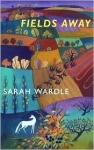
- Quoting John Donne in Places I’ve Taken My Body by Molly McCully Brown and The Bee Sting by Paul Murray (to which a Donne line is the epigraph); mimicking Donne in one poem of Fields Away by Sarah Wardle.
- “Who do you think you are?” as a question an abusive adult asks of a child in The Beggar Maid (aka Who Do You Think You Are?) by Alice Munro and Mothership by Greg Wrenn.
- Sylvia Plath is mentioned in Sleepless by Annabel Abbs and The Bee Sting by Paul Murray … and Katherine Mansfield in Sleepless by Annabel Abbs and The Beggar Maid by Alice Munro.
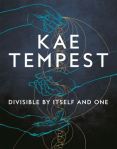
- Mosquitoes are mentioned in a poem in Rapture’s Road by Seán Hewitt and Divisible by Itself and One by Kae Tempest.

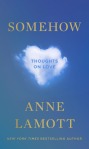
- Reading two memoirs that quote a Rumi poem (and that released on 9 April and that I reviewed for Shelf Awareness): Fi: A Memoir of My Son by Alexandra Fuller and Somehow: Thoughts on Love by Anne Lamott. (Rumi was also quoted as an epigraph in Viv Fogel’s poetry collection Imperfect Beginnings.)
- Bereavement memoirs that seek significance in eagle sightings (i.e. as visitations from the dead): Sleepless by Annabel Abbs and Fi: A Memoir of My Son by Alexandra Fuller.
- Snyder’s pretzels as a snack in Somehow: Thoughts on Love by Anne Lamott and Come and Get It by Kiley Reid.

- Reading two C-PTSD memoirs at the same time: A Flat Place by Noreen Masud and Mothership by Greg Wrenn.
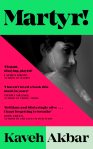 Information about coral reefs dying in Martyr! by Kaveh Akbar and Mothership by Greg Wrenn.
- The gay slang term “twink” appears in The Bee Sting by Paul Murray and Mothership by Greg Wrenn.
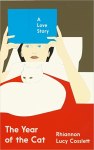
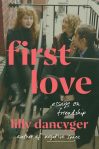
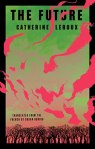
- Assisting a mother who reads tarot cards in Intervals by Marianne Brooker and The Year of the Cat by Rhiannon Lucy Cosslett. (Tarot is also read in First Love by Lilly Dancyger and The Future by Catherine Leroux.)

- An Asian American character who plays poker in a graphic novel: Advocate by Eddie Ahn and Lunar New Year Love Story by Gene Luen Yang.
- Vivian Gornick’s Fierce Attachments, which I was also reading at the time, is mentioned in Intervals by Marianne Brooker.
 An Uncle Frank in an Irish novel with no speech marks: Trespasses by Louise Kennedy and The Bee Sting by Paul Murray.
- Martin Luther King’s “I Have a Dream” speech is quoted in Some Kids I Taught & What They Taught Me by Kate Clanchy and How to Raise a Viking by Helen Russell.
- Using quarters for laundry in Come and Get It by Kiley Reid and one story from Dressing Up for the Carnival by Carol Shields.

- A scene of someone watching from a lawn chair as someone else splits wood in Martyr! by Kaveh Akbar and Becoming Little Shell by Chris La Tray.
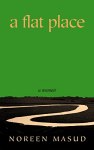 Quotes from cultural theorist Sara Ahmed in Intervals by Marianne Brooker and A Flat Place by Noreen Masud.
- I read about windows being blocked up because of high taxes on the same evening in Trespasses by Louise Kennedy and one story from Dressing Up for the Carnival by Carol Shields.
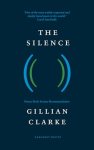
- I saw Quink ink mentioned in The Silence by Gillian Clarke and Trespasses by Louise Kennedy on the same evening.
- The song “It’s a Long Way to Tipperary” is mentioned in You’re on Your Own, Snoopy by Charles M. Schulz and Welcome to Glorious Tuga by Francesca Segal.
- A pet magpie in George by Frieda Hughes and A Council of Dolls by Mona Susan Power.

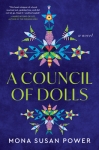
- A character tests to see what will happen (will God strike them down?) when they mess with the Host (by stealing the ciborium or dropping a wafer on the floor, respectively) in A Council of Dolls by Mona Susan Power and one story from Dressing Up for the Carnival by Carol Shields.
- Marrying the ‘wrong’ brother in The Bee Sting by Paul Murray and A Council of Dolls by Mona Susan Power.
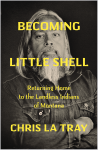 Indigenous author, Native versus Catholic religion, and descriptions of abuse and cultural suppression at residential schools in Becoming Little Shell by Chris La Tray and A Council of Dolls by Mona Susan Power.
- Teen girls obsessed with ‘sad girl’ poetry, especially by Sylvia Plath, in First Love by Lilly Dancyger and The Bee Sting by Paul Murray.
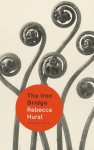
- “Hyacinth” is a poem in Solutions for the Problem of Bodies in Space by Catherine Barnett, and “Hyacinth Girl” a story in Cocktail by Lisa Alward. (Hyacinths are also mentioned in a poem in The Iron Bridge by Rebecca Hurst.)


- A character named Sissy in A Council of Dolls by Mona Susan Power and Stone Yard Devotional by Charlotte Wood.
- Harming amphibians, whether deliberately or accidentally, in a story in Barcelona by Mary Costello, a poem in Baby Schema by Isabel Galleymore, and Mothership by Greg Wrenn.
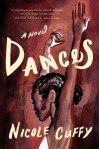
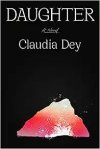
- A significant character called Paul in Dances by Nicole Cuffy, Daughter by Claudia Dey (those two were both longlisted for the Carol Shields Prize), and Moral Injuries by Christie Watson.

- Out of Africa (the film and then the book), which I was looking through for the #1937Club, is mentioned in The Whole Staggering Mystery by Sylvia Brownrigg – her writer grandfather lived in Nairobi’s “Happy Valley” in the 1930s.
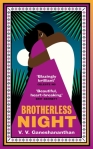
- Reading two novels at the same time in which a teen girl’s plans to study medicine are derailed by war: Brotherless Night by V.V. Ganeshananthan and The Snow Hare by Paula Lichtarowicz.

What’s the weirdest reading coincidence you’ve had lately?
National Poetry Day: William Sieghart’s The Poetry Pharmacy
Today is National Poetry Day in the UK, and there could be no better primer for reluctant poetry readers than William Sieghart’s The Poetry Pharmacy. Consider it the verse equivalent of Berthoud and Elderkin’s The Novel Cure: an accessible and inspirational guide that suggests the right piece at the right time to help heal a particular emotional condition.
Sieghart, a former chairman of the Arts Council Lottery Panel, founded the Forward Prizes for Poetry in 1992 and National Poetry Day itself in 1994. He’s active in supporting public libraries and charities, but he’s also dedicated to giving personal poetry prescriptions, and has taken his Poetry Pharmacy idea to literary festivals, newspapers and radio programs.
Under five broad headings, this short book covers everything from Anxiety and Convalescence to Heartbreak and Regret. I most appreciated the discussion of slightly more existential states, such as Feelings of Unreality, for which Sieghart prescribes a passage from John Burnside’s “Of Gravity and Light,” about the grounding Buddhist monks find in menial tasks. Pay attention to life’s everyday duties, the poem teaches, and higher insights will come.

I also particularly enjoyed Julia Darling’s “Chemotherapy”—
I never thought that life could get this small,
that I would care so much about a cup,
the taste of tea, the texture of a shawl,
and whether or not I should get up.
and “Although the wind” by Izumi Shikibu:
Although the wind
blows terribly here,
the moonlight also leaks
between the roof planks
of this ruined house.
Sieghart has chosen a great variety of poems in terms of time period and register. Rumi and Hafez share space with Wendy Cope and Maya Angelou. Of the 56 poems, I’d estimate that at least three-quarters are from the twentieth century or later. At times the selections are fairly obvious or clichéd (especially “Do Not Stand at My Grave and Weep” for Bereavement), and the choice of short poems or excerpts seems to pander to short attention spans. So populist is the approach that Sieghart warns Keats is the hardest of all. I also thought there should have been a strict one poem per poet rule; several get two or even three entries.
If put in the right hands, though, this book will be an ideal introduction to the breadth of poetry out there. It would be a perfect Christmas present for the person in your life who always says they wish they could appreciate poetry but just don’t know where to start or how to understand it. Readers of a certain age may get the most out of the book, as a frequently recurring message is that it’s never too late to change one’s life and grow in positive ways.
“What people need more than comfort is to be given a different perspective on their inner turmoil. They need to reframe their narrative in a way that leaves room for happiness and gratitude,” Sieghart writes. Poetry is a perfect way to look slantwise at truth (to paraphrase Emily Dickinson) and change your perceptions about life. If you’re new to poetry, pick this up at once; if you’re an old hand, maybe buy it for someone else and have a quick glance through to discover a new poet or two.
My rating:
My thanks to Particular Books for the free copy for review.
Do you turn to poetry when you’re struggling with life? Does it help?
Related reading:
Books I’ve read and enjoyed:
- The Hatred of Poetry by Ben Lerner
- 52 Ways of Looking at a Poem by Ruth Padel
- The Poem and the Journey and 60 Poems to Read Along the Way by Ruth Padel
Currently reading: Why Poetry by Matthew Zapruder
On the TBR:
- Poetry Will Save Your Life: A Memoir by Jill Bialosky
- How to Read a Poem by Molly Peacock
 Bookish Beck = Rebecca Foster. American transplant to England. Freelance proofreader and book reviewer.
 Bookish Beck