Love Your Library, July 2024
Thanks so much to Eleanor, Laura and Marcie for posting about their recent library reads! It’s been a light library reading month for me, but I’m awaiting many holds of recent releases, including a coincidental gardening-themed trio that I fancy reviewing together if the timing works out.
Marcie also gifted me a New York Times article so that I could go through their list of the 100 Best Books of the 21st Century so far and see how many I have read. The answer is 53 (+ 6 DNFs), with another 23 on my TBR. I pulled some awardees off my shelves and might try reading them later this year (below right) – let me know if you’d like to buddy read any of them with me. I was pleased to see that the article first encouraged readers to reserve books from their local library before giving links to places where they can be bought.


It was fun to find libraries mentioned in a couple of library books I’ve been reading recently:
- Thanked in the Acknowledgements to Soldier Sailor by Claire Kilroy: “The librarians of Howth and Baldoyle who are part of the village that raises the child”.
- From Late Light by Michael Malay:
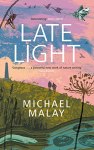 [When I was] a boy in Australia, my mother often took me to a library near our house, a small concrete building that stood across the road from a chicken shop and a video rental store. … the front door was slightly warped, making it difficult to pull open, while the carpet had been worn bare by years of footfall – and yet, to my fourteen- or fifteen-year-old self, it was a kind of palace. I would go there once or twice a week, roam the shelves on my own, gather all the books that appealed to me, and then take home as many titles as our library account would allow. I don’t think the books I chose were ever to my mother’s taste – at that time, I was obsessed with comics and fantasy novels – but she encouraged my enthusiasm anyway. … looking back now, I see that these books did other things for me – that they fed my curiosity, made time move in different ways, and opened up portals to other worlds. In all those years, I can’t remember my mother ever encouraging me to read more ‘serious’ or ‘literary’ books, and I continue to love her for that.
I’ve seen this Peanuts comic before and I love it. Isn’t library borrowing a brilliant concept?! All the more astounding when you step back to think about it anew. This was shared on Facebook by the library in the village where we go to church. Threatened with closure, it went independent. It has a building on peppercorn rent from the council and is run by volunteers. I don’t borrow books there because I can rarely visit during their limited opening hours (and I have plenty of other library books on my plate), but I do try to get to their book sales at least once or twice a year – particularly useful for stocking up on 3/£1 books for the book swapping game I run at our book club holiday social each year.

Tomorrow at 2 p.m. (if you’re in the UK, that is), the Booker Prize longlist will be announced. No doubt I’ll be baffled at all the books I’ve never heard of, or read. It happens every year. Perhaps I’ll be tempted enough by two or three nominees to place library holds on them right away.
My library use over the last month:
READ
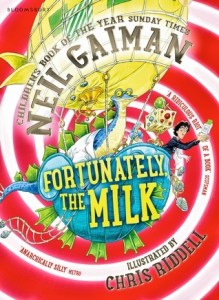
- Fortunately, The Milk… by Neil Gaiman

 SKIMMED
- Rites of Passage: Death and Mourning in Victorian Britain by Judith Flanders
CURRENTLY READING
 The Cove: A Cornish Haunting by Beth Lynch (I enjoyed her previous memoir)
- Groundbreakers: The Return of Britain’s Wild Boar by Chantal Lyons (Wainwright Prize longlist)
- Late Light: Finding Home in the West Country by Michael Malay (Wainwright Prize longlist)
- The Song of the Whole Wide World: On Motherhood, Grief, and Poetry by Tamarin Norwood (resuming this after it went out to fulfil an interlibrary loan)
CURRENTLY READING-ish (more accurately, set aside temporarily)
- Death Valley by Melissa Broder
- The Tale of Despereaux by Kate DiCamillo
- King: A Life by Jonathan Eig
- Mother’s Boy by Patrick Gale
- Learning to Think: A Memoir about Faith, Demons, and the Courage to Ask Questions by Tracy King
- Unearthing: A Story of Tangled Love and Family Secrets by Kyo Maclear
- Late Light: Finding Home in the West Country by Michael Malay
- Mrs Gulliver by Valerie Martin
- After Dark by Haruki Murakami
- Excellent Women by Barbara Pym
- Stowaway: The Disreputable Exploits of the Rat by Joe Shute
- Mrs Hemingway by Naomi Wood
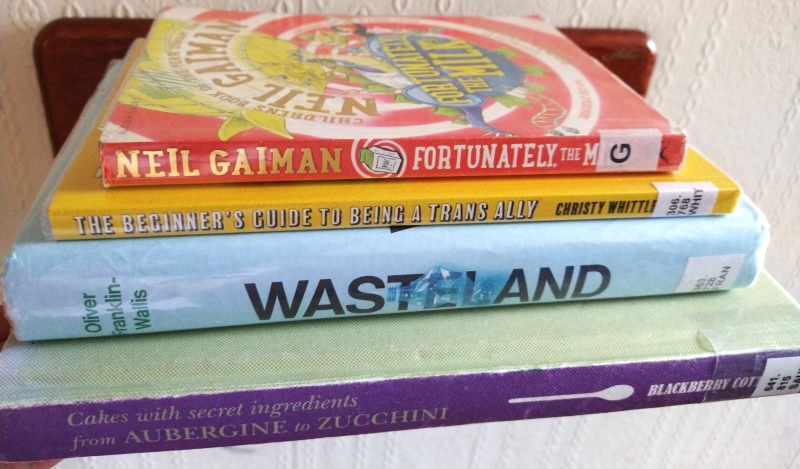
CHECKED OUT, TO BE READ
- Wasteland: The Dirty Truth about What We Throw Away, Where It Goes, and Why It Matters by Oliver Franklin-Wallis
IN THE RESERVATION QUEUE
- Private Rites by Julia Armfield (I read 43% on Kindle and stalled so I’ll try again in print)
- One Garden against the World: In Search of Hope in a Changing Climate by Kate Bradbury
- The Painter’s Daughters by Emily Howes
- The Garden against Time: In Search of a Common Paradise by Olivia Laing
- The Accidental Garden: The Plot Thickens by Richard Mabey
- The Burial Plot by Elizabeth Macneal
- This Is My Sea by Miriam Mulcahy
- The Echoes by Evie Wyld
ON HOLD, TO BE PICKED UP
- Parade by Rachel Cusk
- Nature’s Ghosts: A History – and Future – of the Natural World by Sophie Yeo
RETURNED UNREAD
- Hungry Ghosts by Kevin Jared Hosein – A glance at the first few pages was enough to put me off.
What have you been reading or reviewing from the library recently?

This meme runs every month, on the final Monday. Share a link to your own post in the comments. Feel free to use the above image. The hashtag is #LoveYourLibrary.
20 Books of Summer 2023 Plan
It’s my sixth year participating in Cathy’s 20 Books of Summer challenge, which starts today and runs through the 1st of September. In previous years I’ve chosen a theme.
2018: Books by women
2019: Fauna
2020: Food
2021: Colours
2022: Flora
Only in 2018, I think, was I strict enough with myself to only read books that I own, but every year that’s been my main goal: to clear things from the print TBR.
So, that means: no library books, no review copies bar the long-neglected backlog or the set-aside ones, and Kindle books only if I purchased them. Though I won’t be prescriptive about it, I’d like to prioritize hardbacks, recent acquisitions or longtime shelf-sitters, and books by women.
I thought about having no theme, or multiple mini ones, this year. However, I’ve amassed so many foodie reads that I could easily fill my 20 just with that topic (fiction and nonfiction pictured below, with some supplementary summery reads at left), so I’ll see how I go.


Below is my set-aside and review backlog area, which takes up much of the top two shelves. The bottom shelf is books I’m keen to reread. I could easily select some of my 20 from here.

I hoped to get ahead by reading one or two relevant books on the plane back from America, where I’ve been for the last 10 days for my sister’s nursing school graduation and some sadmin for my mom. Did I manage it? After I get over the jet lag, I’ll report back with my first read or two.
Are you joining in the summer reading challenge? What’s the first book on the docket?
Checking Up on My 2023 Reading Goals
In January I set some specific reading goals to help me prioritize books from my own shelves. It’s time to assess my progress in the first quarter.
- Catch up on review copies, e.g., by coinciding with the paperback release dates. I’ve managed to review 9 so far, which works out to three per month. Four or more a month (so, at least weekly) would be preferable.
- Authors I own 2+ unread works by – I must read at least one book by each this year. I have crossed 3 off the list thus far: Amy Bloom, Helen Dunmore and Howard Norman. However, I have also started books by Peter Ackroyd, T.C. Boyle, Brian McLaren, Wendy Perriam and Edwin Way Teale. Considering there are 70 authors on my list, though, I need to pick up the pace. I do have plans to read quite a number in connection with future challenges, but this is a project that is probably going to extend into 2024. I will have to be strict with myself and not acquire more books by these authors in the meantime!
- I will participate in at least one reading challenge per month. Success! Nordic FINDS, Reading Indies and Reading Ireland Month down, and 1940 Club coming up soon.
- Reintroduce one set-aside book to my reading pile each week. I’ve reduced this (part physical and part digital) pile by 6 so far, so I’m only at half my quota. Sigh. Once I set a book aside it seems to be the kiss of death. Only some new deadline or thematic inclusion gets me picking these back up.
- ‘Overhauls’ of earlier book hauls to ensure no more than 3 unread remaining from any one haul. We’ve booked a last-minute overnight in Bridport later this month, so I looked up what I bought on our trip there in 2019. I promptly picked up the two unread books (by Lightman and Orwell) for before we go and/or while there. To tie in with the Dorset locale, I’ll also bring along The Chosen by Elizabeth Lowry, a novel about Thomas Hardy and his first wife. It comes out in paperback this month, so it counts toward the review catch-up, and is also on this year’s Walter Scott Prize for Historical Fiction shortlist.
- At least one “just because” book per fortnight. This means anything from my own shelves that isn’t a review copy. I’m smashing this goal with a whole 15 read so far! That’s more than one per week, a good rate to try to keep up.
- (A goal I added in later.) One reread per fortnight. I’m doing surprisingly well, mostly because everything we choose for book club this year seems to be a reread, but with 4 thus far I’m averaging monthly instead. Still, not a bad effort considering I hardly ever reread.
- Request fewer 2023 review books from publishers. I sent out a big batch of requests recently, but almost all have gone ignored (the story of my year), which is probably for the best. My latest coup was securing review copies of Claire Fuller and Curtis Sittenfeld’s new novels – but each did require 3+ request e-mails!
How are you doing on your (formal/informal, explicit/tacit) 2023 reading goals?
Tricking Myself into Reading My Own Books
I suspect many of us have this bibliophile problem: we get tremendously excited about a particular book and just have to have it, whether as a proof from the publisher, pre-ordering it new, or (for an older book) snapping it up secondhand the minute we hear about it. Then months or even years pass and we realize that the novel or memoir we were once so desperate to read has simply joined the ranks of hundreds of other half-forgotten books we still plan to get to on that legendary ‘one day’ but always pass by in favour of newer acquisitions.
I’ve long strived to read more backlist books from my own collection, as well as to catch up on the dozens of books I’ve been foolish enough to pause partway through and group together on two “set-aside” shelves in the lounge. (Many of these I obtained as review copies from publishers, so I do feel a sense of obligation to write at least a mini review for each.) As Marcie (Buried in Print) noted in her recent reading goals post, vague intentions go by the wayside, so it’s time to get specific about how to incorporate these into my reading stacks.


- For my review backlog of 2022 releases, I get a second chance. I’ve noted the paperback release dates for around 20 books and will aim to have catch-up review posts (here or for Shiny New Books) ready for that date, or at least within that month. Having a deadline to work towards is essential for a last-minute worker like me.
- There are some authors I own 3 or more unread works by. Usually this means I enjoyed a book of theirs so much I went on a secondhand binge … then got distracted and didn’t explore their back catalogue as I meant to. Via Margaret, I just found out about What Cathy Read Next’s Backlist Burrow challenge, where she’s picked six authors who piqued her interest and two books by each to read this year. I’m unlikely to manage two each, but I fancy doing this adjacent/modified challenge: where I own 2 or more unread books by an author, I must read at least 1 this year. I have these authors to choose from, but also others in my sights, e.g. Sarah Hall, whose Haweswater I’ll take on holiday to the Lake District in July.
- Challenges like that one are the best way to get me rifling through my own shelves. I started a few low-key, long-term projects of my own back in 2020 (Journey through the Day and 4 in a Row) and am still ostensibly working on them, as well as on thematic pairs and trios (my Three on a Theme series) as they arise, along with regular tie-ins to seasons, holidays, etc. Hosted challenges are somehow better, though, perhaps due to the built-in companionship and accountability. Nordic FINDS this month, Reading Indies in February, Reading Ireland in March, the 1940 Club in April, and so on. Because they’re so useful for getting me reading from my shelves, I will participate in at least 1 reading challenge per month.
- How to tackle the dreaded set-aside shelves? One book at a time. So, in addition to the ones I’ll review to coincide with the paperback release, I’ll also reintroduce 1 set-aside book to my reading pile each week.
- How to ensure that book hauls from shopping excursions and gift-receiving occasions don’t get neglected? By undertaking regular “overhauls” such as this and this, and checking there are no more than 3 unread books remaining from any 1 haul. If there are, start reading the stragglers right away. This will be particularly important because it looks like this year I might complete the triple crown of UK book towns, with trips planned to Wigtown in June and the Sedbergh area in July/August and Hay-on-Wye a perpetual temptation.
- How to make time for all those lovely random books (such as this stack) that I keep meaning to read but somehow never do? I’m going to allow myself to start at least 1 “just because” book per fortnight.
- Connected to all of these will be requesting fewer 2023 review books from publishers. Almost all my recent requests have gone completely ignored, in fact, which is probably for the best. Unless I’m reviewing something for pay, I’ll just plan to read it from the library or, if I can’t find it that way, will add it to my wish list in advance of my birthday and Christmas.


How do you trick yourself into reading your own books?
December Reading Plans
November is always a busy blogging month what with co-hosting Novellas in November and making small contributions to several other challenges: Nonfiction November, German Literature Month, and Margaret Atwood Reading Month.
In the final month of the year, my ambitions are always split:
I want to get to as many 2022 releases as possible … but I also want to dip a toe into the 2023 offerings.
I need to work on my review copy backlog … but I also want to relax and read some cosy wintry or holiday-themed stuff.
I want to get to the library books I’ve had out for ages … but I also want to spend some time reading from my shelves.
And that’s not even to mention my second year of McKitterick Prize judging (my manuscript longlist is due at the end of January).
My set-aside shelves (yes, literal shelves plural) are beyond ridiculous, and I have another partial shelf of review books not yet started. I do feel bad that I’ve accepted so many 2022 books for review and not read them, let alone reviewed them. But books are patient, and I’m going to cut myself some slack given that my year has contained two of the most stressful events possible (buying and moving into a house, and the death of a close family member).
I’m not even going to show you my preposterous backlog, because my WordPress media library is at capacity. “Looks like you have used 3.0 GB of your 3.0 GB upload limit (99%).” I’ll have to work on deleting lots of old images later on this month so that I can post photos of my best-of stacks towards the end of the year.
 So, for December I’ll work a bit on all of the above. My one final challenge to self is “Diverse December” – not official since 2020, when Naomi Frisby spearheaded it, but worth doing anyway. This is the second year that I’ve specifically monitored my reading of BIPOC authors. Last year, I managed 18.5%. I have no idea where I stand now, but would like to see a higher total.
 I’ll start with a December review book, A Down Home Meal for These Difficult Times by Meron Hadero, and see how I go from there. I was a lucky recipient of a proof copy of The Late Americans by Brandon Taylor, one of my new favourite authors; it doesn’t come out until May 23 in the USA and June 22 in the UK, but I will also see if I can read it early. Another potential 2023 release I have by a BIPOC author is Camp Zero by Michelle Min Sterling, a debut dystopian novel about climate refugees, which arrived unsolicited last month.
Among the other tempting options on my dedicated BIPOC-author shelf:
Leave the World Behind by Rumaan Alam
Black Buck by Mateo Askaripour
Fruit of the Drunken Tree by Ingrid Rojas Contreras
The Inheritance of Loss by Kiran Desai
Diamond Hill by Kit Fan
A Fine Balance by Rohinton Mistry
Still Born by Guadalupe Nettel
The Last of Her Kind by Sigrid Nunez
Names of the Women by Jeet Thayil
What are your year-end bookish plans? Happy December reading!
Six Degrees of Separation: From The End of the Affair to Nutshell
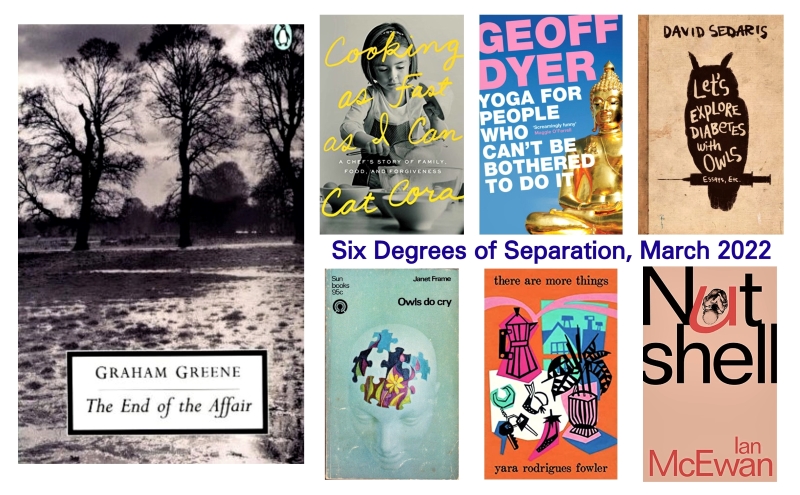
 This month we begin with The End of the Affair by Graham Greene, a perfect excuse for me to review a novel I finished more than a year ago. This was only my second novel from Greene, after The Quiet American many a year ago. It’s subtle: low on action and majoring on recollection and regret. Mostly what we get are the bitter memories of Maurice Bendrix, a writer who had an affair with his clueless friend Henry’s wife Sarah during the last days of the Second World War. After she broke up with him, he remained obsessed with her and hired Parkis, a lower-class private detective, to figure out why. To his surprise, Sarah’s diaries revealed, not that she’d taken up with another man, but that she’d found religion. Maurice finds himself in the odd position of being jealous of … God? (More thoughts here.)
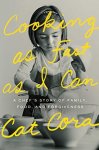 #1 I asked myself if I’d ever read another book where someone was jealous of a concept rather than a fellow human being, and finally came up with one. I enjoyed Cooking as Fast as I Can by Cat Cora even though I wasn’t aware of this Food Network celebrity and restaurateur. Her memoir focuses on her Mississippi upbringing in a half-Greek adoptive family and the challenges of being gay in the South. Separate obsessions plagued her marriage; I remember at one point she gave her wife an ultimatum: it’s either me or the hot yoga.
 #2 Yoga for People Who Can’t Be Bothered to Do It by Geoff Dyer is one of my favourite-ever book titles. The title is his proposed idea for a self-help book, but … wait for the punchline … he couldn’t be bothered to write it. It’s a book of disparate travel essays, with him as the bumbling antihero, sluggish and stoned. This wasn’t one of his better books, but his descriptions and one-liners are always amusing (my review).
 #3 Another book with a fantastic title that has nothing to do with the contents: Let’s Explore Diabetes with Owls by David Sedaris. Again, not my favourite of his essay collections (try Me Talk Pretty One Day or When You Are Engulfed in Flames instead), but he’s reliable for laughs.
 #4 No more about owls than the previous one; Owls Do Cry by Janet Frame is an autobiographical novel that tells the same story as her An Angel at My Table trilogy (but less compellingly): a hardscrabble upbringing in New Zealand and mental illness that led to incarceration in psychiatric hospitals. The title phrase is from Ariel’s song in The Tempest, which the Withers siblings learn at school. I’ve been ‘reading’ this for nearly a year and a half; really, it’s mostly been on the set-aside shelf for that time.
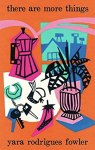 #5 Another title drawn from Shakespeare: there are more things by Yara Rodrigues Fowler is one of my Most Anticipated Books of 2022. It’s about a female friendship that links Brazil and London. I’m holding out hope for a review copy.
 #6 Fowler’s title comes from Hamlet, which provides the plot for Ian McEwan’s Nutshell, one of his strongest novels of recent years. Within a few pages, I was captivated and utterly convinced by the voice of this contemporary, in utero Hamlet. Not even born and already a snob with an advanced vocabulary and a taste for fine wine, this foetus is a delight to spend time with. His captive state pairs perfectly with Hamlet’s existential despair, but also makes him (and us as readers) part of the conspiracy: even as he wants justice for his father, he has to hope his mother and uncle will get away with their crime; his future depends on it.
Where will your chain take you? Join us for #6Degrees of Separation! (Hosted on the first Saturday of each month by Kate W. of Books Are My Favourite and Best.)
Have you read any of my selections? Tempted by any you didn’t know before?
March Reading Plans
It’s beginning to look a lot like spring, with daffodils a-blooming, so I have amassed a set of appropriate reads and aim to report on them in two installments between April and May. I was already partway through Davidson’s novel, I’m getting stuck into the Fitzgerald and Knausgaard, and I hope to start the Woolf soon. I also have a review copy of Ghosts of Spring by Luis Carrasco.

Much as I tried with #FinishItFebruary, I still have some set-aside titles I couldn’t get through before the end of last month. It’s a good thing that (as I’ll never forget Damian Barr commenting) books are patient. I’ll reintroduce these to my stacks in the weeks to come, but NO MORE BOOKS can join them. I’m going to be strict with myself: keep going with a book or DNF it; no more limbo.
One of my informal goals for the rest of the year is to have a buddy read on the go with my husband at all times. I’d noticed that I happened to have duplicate copies of a couple of books, and then started to look out for extra copies at the free mall bookshop and Little Free Library in 2019–21, so I’ve ended up with 11 books in total: three nature classics, four travel books, three novels to reread, and one to read for the first time. Nature/travel is where our taste most often overlaps, but John Irving is our mutual favourite author and English Passengers is a novel we both loved. We’ll work out a schedule for 1–2 per month. He reads faster than I do (but has much less time to read overall), so we’ll agree on a time frame and chat either as we go or when we’ve both finished a book. Let me know if you fancy joining in with any of these.

Of course, it’s also Reading Ireland Month, hosted by Cathy of 746 Books, and I’ve earmarked these fiction options for the next few weeks. So far I’ve started Maggie O’Farrell’s debut novel. Plus I just got Wendy Erskine’s story collection Dance Move out from the library, and I have Colm Tóibín’s forthcoming poetry collection on my e-reader.

I’m currently reading A Portrait of the Artist as a Young Girl, a collection of autobiographical essays by Irish women writers that originated on the radio. I also got a jump-start in late February by reading these two short books by writers from Ireland:
Wild Child: A Journey through Nature by Dara McAnulty; illus. Barry Falls (2021)
 I’d expected this to be just a picture book. Instead, it’s a guided tour through four landscapes – the garden, the woods, the uplands, and a river – and it combines Robert Macfarlane-esque poetry (the rhyming and alliteration are reminiscent of The Lost Words books) with facts and crafts/activities. It starts small, with the birds a child in the UK might be able to see out their window, and then ventures further afield. There is a teaching focus, with information on species’ classification, life cycles and migrations. I also learned to recognize hazel catkins and flowers, and then identified them on our walk later the same day! But the main aim, I think, is simply to encourage wonder and inspire children to get outside and explore the nature around them. I liked the illustrations, but wish the birds hadn’t been given slightly googly eyes. (Public library)
To Star the Dark by Doireann Ní Ghríofa (2021)
 Like many, I discovered Ní Ghríofa through A Ghost in the Throat, a genre-bending work of feminist autofiction. I treated myself to a copy of this, her sixth poetry collection, as part of a Waterstones haul with my Christmas book token. One poem actually mentions Eibhlín Dubh, subject of A Ghost in the Throat, and the work as a whole has some of the same attributes, blending biographical portraits and historical reflection with autobiographical material.
“Two Daydreams” connects a teenager in a history exam with the generations leading back to the Famine. “An Experiment to Engineer an Inheritance of Fear” wonders if there is an inherited Irish trauma: “Give her terror in a meadow. / Bind her fear to a black potato. … / When exposed to the ancestral scent, great-grandchildren will show signs of distress.” A newborn’s stay in the NICU occasions “Seven Postcards from a Hospital” (originally addressed to Sara Baume, Ní Ghríofa reveals in the Notes). Marine biologist Maude Delap is the subject of one multi-part poem.
Sensual imagery abounds, and there are several incantatory spells, including the spring one below. My favourite poem was “Craquelure,” likening cracks in a fellow bus passenger’s phone screen to the weathering old paintings develop. (New purchase)
Thoughts on Literary Prizes, Sequels, and Finishing Books
I feel like my blogging is all over the place so far this month, but I’ll get back on track in the next couple of weeks with a few thematic roundups. Today, some disparate thoughts.
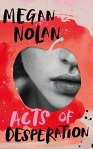 Literary prize season will soon be in full swing, and can be overwhelming. I’m currently reading Megan Nolan’s Acts of Desperation, doing double duty from the Dylan Thomas Prize longlist and the Sunday Times Young Writer of the Year Award shortlist, and enjoying it more than expected given the inevitable Sally Rooney comparisons and messed-up young female tropes. However, I abandoned Here Comes the Miracle (from the latter) after 46 pages because it was just as When God Was a Rabbit as I feared.
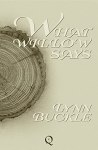 Today the second Barbellion Prize winner was announced: Lynn Buckle for What Willow Says, her lyrical novella about communication between a terminally ill woman, her deaf granddaughter, and the natural world. My choice from the shortlist would have been Josie George’s A Still Life, but I can see how the judges might have felt, in an early year when precedents are still being set, that it was important to recognize fiction as being just as valid a way of writing about disability and chronic illness.
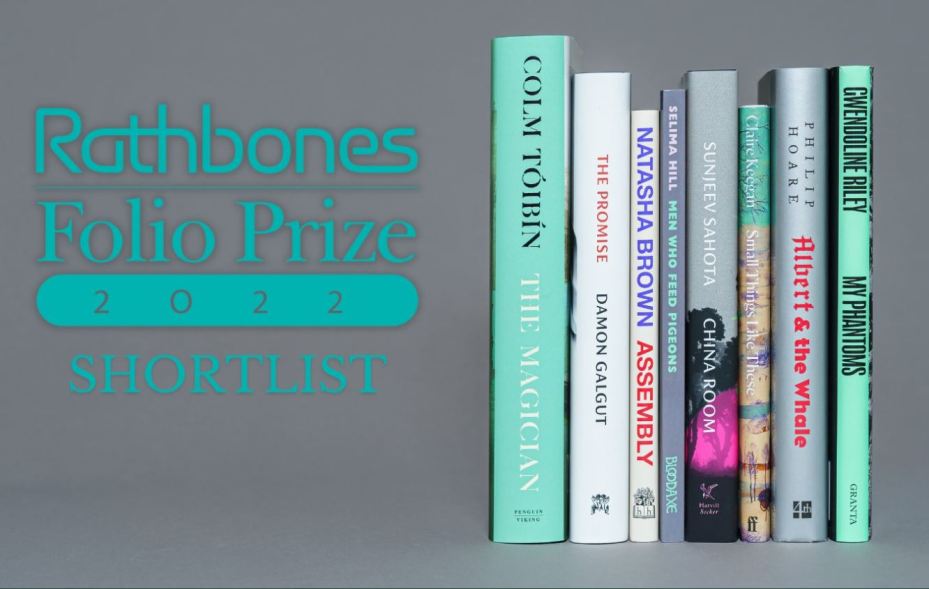
Earlier in the week, the Rathbones Folio Prize shortlist was announced. Everyone remarked on the attractive mint green colour scheme! I found myself slightly disappointed; the Prize is usually more various since it includes nonfiction and poetry as well as fiction. Only one nonfiction title here: Philip Hoare going on (again) about whales. I’ve read another of poet Selima Hill’s collections so would gladly read this, too. I’ve already read the Brown and Keegan novellas and Sahota’s novel; I DNFed the Riley. Galgut has already won the Booker Prize. I’m awaiting a library hold of The Magician but I rather doubt my staying power with a 500-page biographical novel. My vote would, overwhelmingly, be for China Room.
I’m more tempted by the Fiction with a Sense of Place shortlist, announced as part of the Edward Stanford Travel Writing Awards early this month. What an intriguing and non-obvious set of nominees! Elena Knows was on the Barbellion longlist and the Greengrass and Shafak novels were previously shortlisted for the Costa Prize. I plan to try the Heller again this summer.

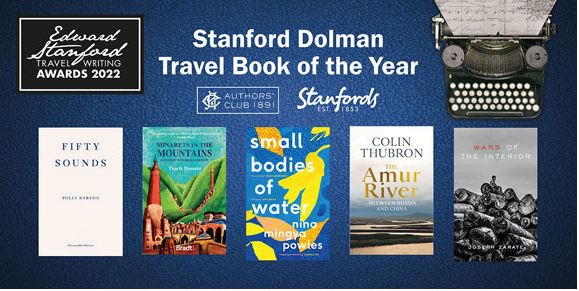
I’m also delighted to see that Small Bodies of Water by Nina Mingya Powles is shortlisted for the Stanford Dolman Travel Book of the Year Award.
I’ve been pondering my predictions and wishes (entirely separate things) for the Women’s Prize longlist and will post them early next month; for now, check out Laura’s.
I believe books should be self-contained and I struggle to engage with ANY series. Unpopular opinion alert: sequels are almost always indulgent and/or money-grubbing on the part of the author. Here are four high-profile literary fiction sequels I plan on skipping this year (in all the cases, I just didn’t like the original enough to continue the story):
- Either/Or by Elif Batuman – The Idiot was bizarre, deadpan and slightly entertaining, but I have no need to spend any more time with Selin.)
 The Candy House by Jennifer Egan – A Visit from the Goon Squad didn’t stand up to a reread.
- Less Is Lost by Andrew Sean Greer – Less, only mildly funny, was hugely overrated by critics.
- Tracy Flick Can’t Win by Tom Perrotta – I read, and saw the Reese Witherspoon-starring movie version of, Election ages ago; this is the one I’d be most likely to change my mind about, if I read good reviews.
I learned via a friend’s Instagram post that there is such a thing as #FinishItFebruary and felt seen. My goal had been to clear my set-aside shelf by the end of January; of course that didn’t happen, but I have been making some progress, reducing it from about 40 to more like 25. I try to reintroduce a part-finished book into my stack every few days. Sometimes it ‘takes’ and I finish it shortly; other times it languishes again, just in a different location. I’ll see how many more I can get to before the end of February.
A reminder of that set-aside shelf, as of early January.
Following any literary prize races this year?
Do you also avoid sequels, and leave books part-read?
Some 2022 Reading Goals
First of all, I need to give some proper attention to the books on my set-aside shelf (nearly 40 of them), preferably clearing this in January – while also catching up on review copies from last year and continuing with the January releases.
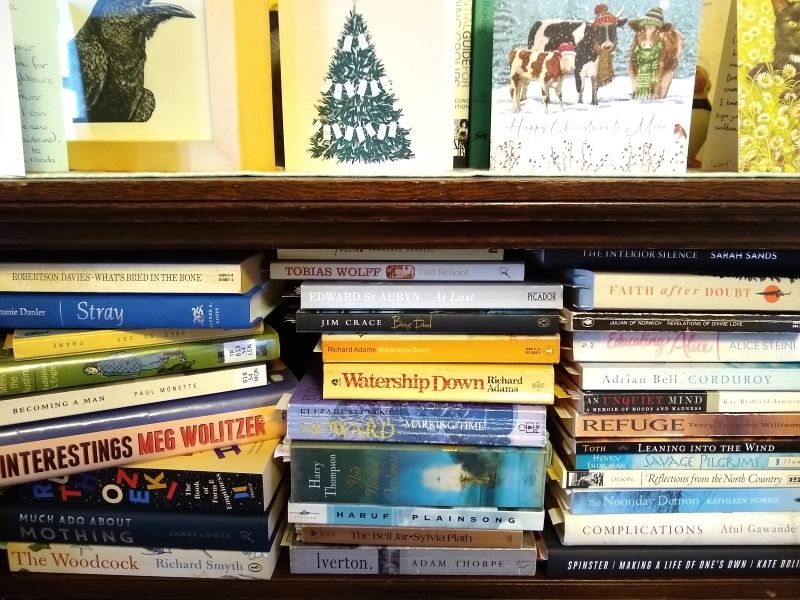
Thereafter, I’d like to concentrate on backlist books for the year. This may seem ironic given that I review new ones on the blog and for various other outlets, and that I’m going to be featuring my 20 most anticipated titles of 2022 in a post tomorrow, but I have a few reasons for wanting to focus on older material.
One is that backlist reading consistently produces new favourites. Another is that every time I shelve in the library’s back room rolling stacks, I see novels that I’ve always meant to read, or that look fantastic, and think, “I really should borrow more from in here” … then forget all about them and place holds on (sometimes disappointing) new books instead.
A final reason is that, as I pack up my library in preparation for moving and get a good look at the ~500 unread books all over again, I hope and expect that I will be inspired to read them – and also to revisit some long-neglected favourites. (Of course, I may also cull some before the move, which would be fine.) The plan is to eventually replace our fleet of white Billy bookcases with built-in shelving either side of the decorative fireplaces in a few rooms of the new house.


As always, I’d like to get to more classics, doorstoppers and literature in translation (I own hardly any translated titles, so most of this will have to be from the library). I’ll participate in all the usual annual blogger challenges plus any new ones I can fit in, including Annabel’s #NordicFINDS – I’m currently reading Sophie’s World by Jostein Gaarder to review later this month.
I’m sure to follow a similar set of literary prizes as last year, including the Young Writer of the Year Award, the Barbellion Prize, the Rathbones Folio Prize, the Wainwright Prize, and (to a lesser extent) the Dylan Thomas Prize, the Women’s Prize and the Booker Prize. And, of course, I’ll be carefully monitoring the later stages of the McKitterick Prize judging after sending off my own longlist for the unpublished manuscripts. These prize lists plus various review copies will ensure I have a regular influx of recent releases to counterbalance the backlist reads.
Brand new or backlist for you in 2022?
October Reading Plans and Books to Catch Up On
My plans for this month’s reading include:
Autumn-appropriate titles & R.I.P. selections, pictured below.


 October releases, including some poetry and the debut memoir by local nature writer Nicola Chester – some of us are going on a book club field trip to see her speak about it in Hungerford on Saturday.
A review book backlog dating back to July. Something like 18 books, I think? A number of them also fall into the set-aside category, below.
An alarming number of doorstoppers:
- Damnation Spring by Ash Davidson (a buddy read underway with Marcie of Buried in Print; technically it’s 442 pages, but the print is so danged small that I’m calling it a doorstopper even though my usual minimum is 500 pages)
- The Book of Form and Emptiness by Ruth Ozeki (in progress for blog review)
- Great Circle by Maggie Shipstead (a library hold on its way to me to try again now that it’s on the Booker Prize shortlist)
- The Lincoln Highway by Amor Towles (in progress for BookBrowse review)
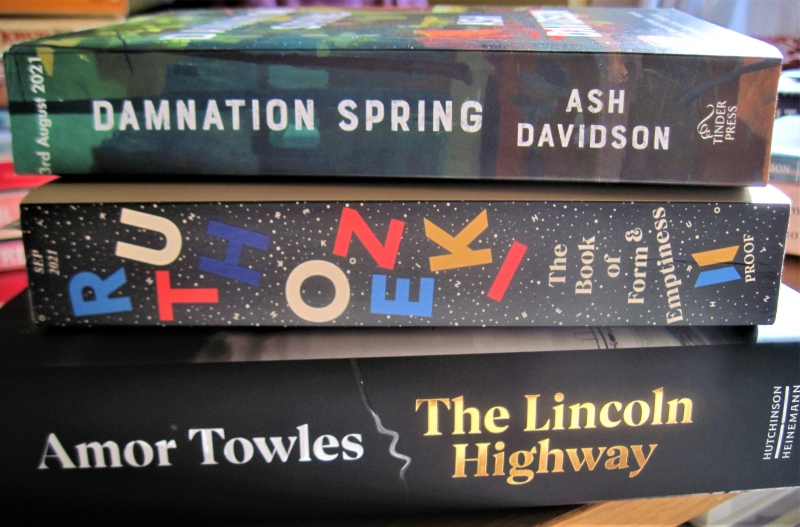
Also, I’m aware that we’re now into the last quarter of the year, and my “set aside temporarily” shelf – which is the literal top shelf of my dining room bookcase, as well as a virtual Goodreads shelf – is groaning with books that I started earlier in the year (or, in some cases, even late last year) and for whatever reason haven’t finished yet.

Setting books aside is a dangerous habit of mine, because new arrivals, such as from the library or from publishers, and more timely-seeming books always edge them out. The only way I have a hope of finishing these before the end of the year is to a) include them in challenges wherever possible (so a few long-languishing books have gone up to join my novella stacks in advance of November) and b) reintroduce a certain number to my current stacks at regular intervals. With just 13 weeks or so remaining, two per week seems like the necessary rate.
Do you have realistic reading goals for the final quarter of the year? (Or no goals at all?)
 Bookish Beck = Rebecca Foster. American transplant to England. Freelance proofreader and book reviewer.
 Bookish Beck