Young Writer of the Year Award Ceremony
Yesterday evening all of us on the Sunday Times / Peters Fraser + Dunlop Young Writer of the Year Award shadow panel met up again for the official prize-giving ceremony at the London Library.
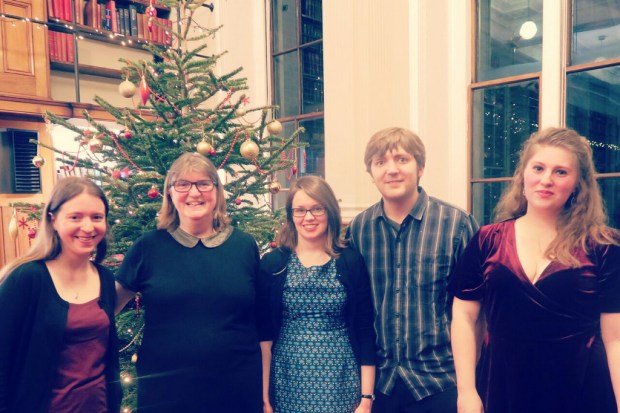
My train arrived late and then I got lost, twice (I don’t own a smartphone and hadn’t brought a map – foolish!), so I walked through the door just moments before the prize announcement, but as that was the most important part of the event it didn’t matter in the end. If you haven’t already heard, the prize went to Sally Rooney for Conversations with Friends. She’s the first Irish winner and the joint youngest along with Zadie Smith.

This did not really come as a surprise to the shadow panel, even though we unanimously chose Julianne Pachico’s The Lucky Ones as our winner.
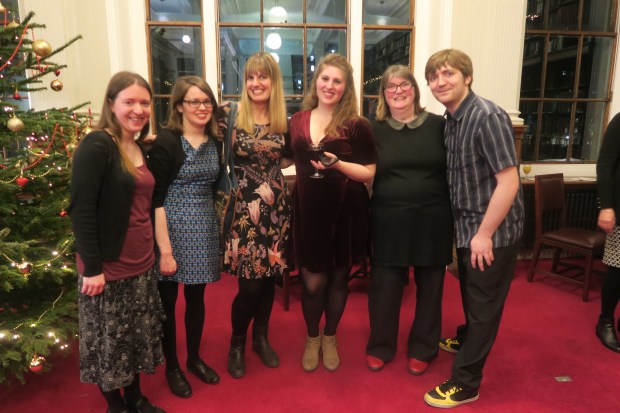
Julianne Pachico is third from left.
Three of us had chosen Rooney’s novel as our runner-up, and when I saw it appear in the Times’ Books of the Year feature, I thought to myself that this was probably a clue. In the official press release, judge and Sunday Times literary editor Andrew Holgate writes, “for line by line quality, emotional complexity, sly sophistication and sheer brio and enjoyment, Sally Rooney’s Conversations with Friends really stood out.”


Judge Elif Shafak states, “I salute Rooney’s intelligent prose, lucid style, and fierce intensity.” Judge Lucy Hughes-Hallett says, “This book stood out for its glittering intelligence, its formal elegance and its capacity to grip the reader. At first reading I was looking forward to bus journeys so that I could read some more. Second time round I was still delighted by the sophistication of its erotic quadrille.”


Being a part of the shadow panel was a wonderful experience and one of the highlights of my literary year.
Sunday Times Young Writer of the Year Award: Shadow Panel Winner & Giveaway
After a month of reading, reviewing, thinking and discussing, our shadow panel has come to a unanimous decision. Our winner is Julianne Pachico for The Lucky Ones. (My full review is here.)

We were all blown away by this linked short story collection set largely in Colombia. The way the whole book fits together, with story building on story, is so sophisticated, and at the sentence level the writing is nigh on flawless. Here’s a glimpse of what the rest of the shadow panel had to say, with links to their full reviews:
“However you style it, this collection is stunningly good and marks the debut of a young author to watch.” (Annabel)
“Pachico’s writing exhibits a surreal power and I’m looking forward to reading what she writes next.” (Clare)
“Pachico’s writing is stunning, and just the way she strings sentences together was a joy to behold.” (Dane)
“Throughout the collection, the sense of something being off-kilter competes with an evocation of place and atmosphere so strong that the book practically creates its own weather.” (Eleanor)

Clare, Eleanor, Rebecca, Annabel and Dane. Photo by Maddy Pickard.
In the run-up to the official awards ceremony on December 7th, we are giving our blog readers a chance to be one of five overall winners, each of whom can choose which one of the shortlisted books they’d like to have sent to them. (The other options are Outlandish Knight by Minoo Dinshaw, The End of the Day by Claire North, Conversations with Friends by Sally Rooney, and The Lauras by Sara Taylor.)
*Note: Unfortunately, this giveaway is limited to entries from the UK and Ireland. All entries must be received by the end of December 6th.*
Click on the Rafflecopter link below to get to the entry screen:
a Rafflecopter giveaway
https://widget-prime.rafflecopter.com/launch.js
Final Young Writer of the Year Award Shortlist Reviews
A quick roundup in advance of our shadow panel decision meeting on Friday. I struggled with these two books for different reasons. A 640-page biography of a figure I’d never heard of was always going to be a hard ask; and science fiction is not one of my go-to genres. But I’ll try my best to do them justice with these short reviews.
Outlandish Knight: The Byzantine Life of Steven Runciman
By Minoo Dinshaw
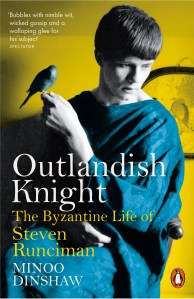
Historian Steven Runciman’s life spanned most of the twentieth century: 1903 to 2000. Though born in Northumberland, he considered himself Scottish and was for a time the Laird of Eigg, an island his father, Walter, purchased in 1925. This biography often reads like a who’s-who of the upper classes. Walter led the Board of Education in Prime Minister Asquith’s cabinet, and young Steven was school chums with the PM’s son, Anthony “Puffin” Asquith. At Eton Eric Blair (aka George Orwell) was his closest pal; at Cambridge he was photographed by Cecil Beaton – as in that splendid cover image. His brother married novelist Rosamond Lehmann. He was friends with E.F. Benson, Edith Wharton and the Queen Mother. A young Patrick Leigh Fermor wandered into Bulgaria while Runciman was there for the 1934 International Byzantine Congress, and Fermor and Freya Stark turn up frequently thereafter. Our hero also spent time in China, Japan, Greece, Turkey, Egypt and Borneo. My favorite odd interlude in this wide-ranging, adventurous life was a time in Hollywood advising George Cukor on Empress Theodora (to be played by Ava Gardner).
 Dinshaw draws a fine distinction between his subject’s professional and private selves. When talking about the published historian and thinker, he uses “Runciman”; when talking about the closeted homosexual and his relationships with family and friends, it’s “Steven”. This confused me to start with, but quickly became second nature. Occasionally these public and private personas are contrasted directly: “Runciman was a great romantic historian; but in his personal affairs Steven had come to be more admiring of that epithet ‘realistic’ than of any height of romance.” Indeed, Steven once confessed he had never been in love. At the shortlist event on Saturday, Dinshaw summed him up as “an old-fashioned, courtly queer.”
Dinshaw doesn’t shy away from his subject’s less flattering traits like vanity, envy and mischievousness. He also gives a good sense of Runciman’s writing style for those readers who may never read his history books – such as a three-volume history of the Crusades and a work on Sicilian prehistory – for themselves:
Runciman does owe some of his lucid style and sardonic humour to Gibbon.
The opening of Romanus established the practice of resonantly gnomic first lines in Runciman’s work: clear in style, epic in resonance, cynical in import and without immediate application to the particulars of the subject.
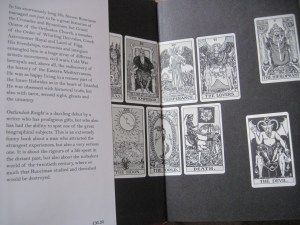 Chapter titles are mainly taken from relevant tarot cards (for instance, Chapter 22, “The Hanged Man,” primarily concerns Steven’s homosexuality), which also feature on the book’s endpapers. The text is also partitioned by two sets of glossy black-and-white photographs. The book’s scope and the years of research that went into it cannot fail to impress. I never warmed to Steven as much as I wanted to, but that is likely due to a lack of engagement: regrettably, I had to skim much of the book to make the deadline. However, I will not be at all surprised if the official judges choose to honor this imposing work of scholarship.
Other shadow panel reviews of Outlandish Knight:
Annabel’s at Annabookbel
The End of the Day
By Claire North
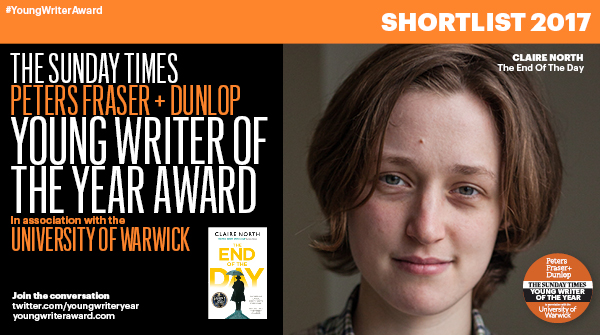
Charlie is the Harbinger of Death, a role that involves a lot of free travel and some sticky situations. But really, it’s a job like any other:
When he got the job, the first thing he did was phone his mum, who was very proud. It wasn’t what she’d ever imagined him doing, of course, not really, but it came with a pension and a good starting salary, and if it made him happy…
The second thing he did was try and find his Unique Taxpayer Reference, as without it the office in Milton Keynes said they couldn’t register him for PAYE at the appropriate tax level.
After all, they say there are only two things you can’t avoid: death and taxes.
Charlie is Death’s John the Baptist, if you will: “I’m the one who’s sent before. … My presence is not the end. Sometimes I am sent as a courtesy, sometimes as warning. I never know which.” His destinations include Peru, Greenland, Syria, Nigeria and Mexico. In between these visitations – during which he talks to the person in question and gives them something meaningful, like tea or a figurine of a deity – Charlie strives to lead a normal life back in Dulwich with Emmi, whom he met via Internet dating.
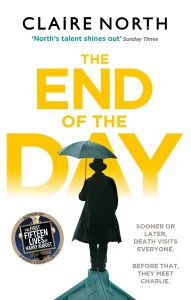 I loved the premise of the novel, and its witty writing should appeal to Terry Pratchett and Nicola Barker fans. The more fantastical elements are generally brought back to earth by unremitting bureaucracy – I especially enjoyed a scene in which Charlie is questioned by U.S. Border officials. But the book’s structure and style got in the way for me. It is episodic and told via super-short chapters (110 of them). It skips around in a distracting manner, never landing on one scene or subplot for very long. Ellipses, partial repeated lines, and snippets of other voices all contribute to it feeling scattered and aimless. North’s The First Fifteen Lives of Harry August is terrific, but her latest didn’t live up to my expectations. Hopefully this is just a one-off; I’m willing to try more from North in the future.
Other shadow panel reviews of The End of the Day:
Annabel’s at Annabookbel
Clare’s at A Little Blog of Books
Dane’s at Social Book Shelves
Eleanor’s at Elle Thinks
Young Writer of the Year Award: Shortlist Readings Event
On Saturday I attended an exclusive bloggers’ event at the Groucho Club in London with four of the authors shortlisted for the Sunday Times / Peters Fraser + Dunlop Young Writer of the Year Award (Sally Rooney was unable to make it from Dublin). Also in attendance were fellow shadow panelists Annabel and Clare and some other notable names from the UK blogging community, including Eric Karl Anderson and Naomi Frisby. It was lovely to meet them, and Annabel, for the first time, and to have time to chat with the shortlisted authors.

That’s me with Clare and Annabel. Thanks to Eric Karl Anderson for taking the photo.
The event was chaired by Robert Collins, a former deputy literary editor of the Sunday Times now with Intelligence Squared. Each author gave a short reading from their book and answered questions from the chair and the audience. In every case, what I heard helped me appreciate the work and the author more. All four writers were so funny and warm, and seemed equally humbled and delighted to be in the running for this award.
Minoo Dinshaw reminded me of an Oxford don twice his age. (Indeed, his father is an Oxford don, and his mother is Scottish writer Candia McWilliam, so he has a proud literary pedigree.) He first became aware of Steven Runciman as a child when he and his mother spotted the wizened old man in a hotel lobby in Edinburgh, where they had traveled for the book festival. He then read Runciman’s Crusades books at school, and when in 2011 he met Runciman’s niece and she asked him to write the biography, he said he couldn’t think of anything else he wanted to do. (And still can’t.) Reading from his Kindle as “I didn’t want to break my wrist” (!), he chose a late passage featuring Steven in his nineties. Dinshaw said that while writing about Runciman he felt by turns flirted with and accused. Living in his subject’s house, working in his library, even sleeping in his bed (just the once), he felt he “had a very strange ghost in my life.” Dinshaw said the project captured his attention because he’s romantic and competitive, but that he’d like to try writing fiction in the future.
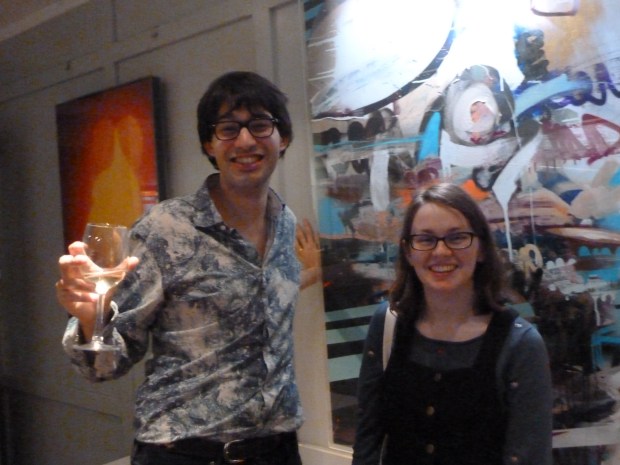
Clare with Minoo Dinshaw. Photo by Annabel Gaskell.
Julianne Pachico read a party scene from “The Tourists,” as it’s approaching the festive season. I was intrigued to learn that the interlinking structure of her book only emerged late on in the editing process; she’d originally meant to write a post-apocalyptic novel set all in one house, but found that setting too limiting. “I sort of work it out as I go along,” she said. So is it short stories or a novel? She’s sick of this question! Really she just wanted to write the kind of book she likes to read, citing Jennifer Egan’s A Visit from the Goon Squad and David Mitchell’s Ghostwritten as examples. Asked about her mentors, Pachico cited her mother, who told her “you’ll never be lonely, you’ll never be bored” as long as you read; and her first tutor, Andrew Cowan, who told her no one out there was writing anything like her story “Junkie Rabbit” – just the affirmation she needed. With all that’s happened in 2017, Pachico said she plans to turn to writing as a way “to outcreate the abyss” (a phrase from her twin sister, who’s also a writer). Pachico also teaches creative writing at Sheffield Hallam.

Julianne Pachico signing my book. Photo by Annabel Gaskell.
(As Sally Rooney was not in attendance, Collins read on her behalf a passage about Frances and Bobbi’s early friendship at school.)
 Claire North, aka “Cat” (real name: Catherine Webb; her fantasy and science fiction books are under various names) was in a way the odd one out at this event. Collins opened by saying that this award is all about getting in on the ground level with these writers, several of whom are debut authors. But North is a teen phenom who published her first book at age 14 and is set to release #20 next year. All along her parents called her a freak and demanded that she get her GCSEs and go to uni because writing “isn’t a proper job” (“but we’re very proud of you!” they’d usually append). She’s experienced the full gamut of responses over the years: some swore she wouldn’t have anything to say until age 40; others sighed that once she turned 18 she could no longer be marketed as “young.” She read the perfect passage from The End of the Day: a frantic, bravura account of the riders of the apocalypse together on a plane. She loves that science fiction “makes the extraordinary domestic” and playing with death appealed to her “flippant nature.” Charlie is, she thinks, the kindest character she’s ever written.
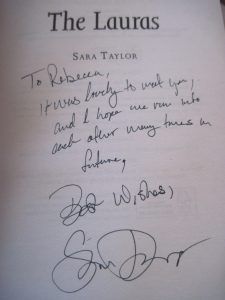 Sara Taylor read from one of Ma’s earliest stories about how her parents met. She wrote The Lauras while she was supposed to be completing her PhD thesis on censorship in American literature. At the time she was coming to terms with the fact that she was going to be staying in the UK, as well as remembering family road trips and aspects of her relationship with her mother that she wishes were otherwise. Her agent wasn’t comfortable with the focus on an “agender” character, but Taylor held firm. She’s used to ignoring the advice her (older, male) professors and advisors tend to give her. Instead, she gets tips from her ten-years-younger sister back in the States, who knows exactly how to “fix” her work. Taylor feels the USA is 5–10 years behind the UK on gender issues, and revealed that The Lauras is a response to the novel Love Child (1971) by Maureen Duffy. She has recently finished her third novel and hopes to get back into teaching since writing non-stop for nine months makes her “go a little funny.”
This was such a special event. There were no more than 20 people in the room, and at the end I got a chance to speak to each of the authors as they signed my books. I normally get shy in such situations, but everyone was completely approachable. (Sara Taylor and I confirmed that we were indeed on the same study abroad program to England, a few years apart, so spent some time reminiscing about Reading and our formerly women-only colleges. Her mother went to Hood College, my alma mater – thus the brief mention of it in The Lauras.)


Important upcoming dates:
- November 24th: shadow panel meeting in London
- November 27th: deadline for shadow panel winner decision
- November 29th: shadow panel winner announced on STPFD website
- December 3rd: shadow panel winner announced in Sunday Times
- December 7th: prize-giving ceremony at the London Library
I’ll be aiming to post my last couple of reviews on Wednesday.
The Lucky Ones by Julianne Pachico
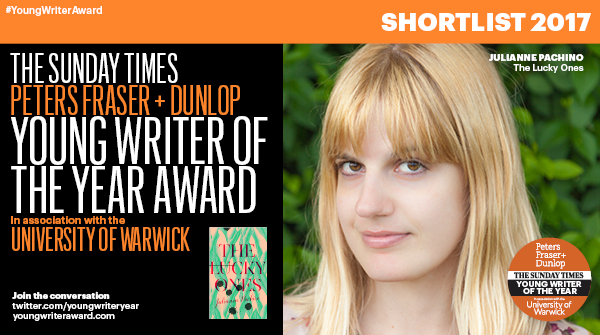 Sunday Times Young Writer of the Year Award shortlist review #3
If you’ve been following the shadow panel’s progress on Twitter, you’ll know that we’re all extremely impressed with this one. Marketed as a novel in America but as a short story collection here in the UK, The Lucky Ones is really somewhere in between: it’s a linked story collection in which the 11 chapters could stand alone but are so much richer together. Each generally adds a layer of meaning to the others by filling in the background or following a certain character a decade or more into the future. The book keeps creeping backward and leaping forward to show how terror endured in one’s past never really goes away.
The title certainly seems ironic, as many of the schoolmates, teachers and hangers-on who people these Colombia-set stories face imprisonment, torture or disappearance. The story titles, too, seem innocuous, even sweet. But the first story, “Lucky,” sets the precedent for things turning very dark very fast. Stephanie Lansky’s family leaves for a weekend party at the Montoyas’ country house, but teenage Stephanie stays home, planning to smoke in secret and meet up with a friend at the mall. Scary snatches of radio dialogue about Communist rebels and bombs contrast with her escapist re-reading of Arthurian romances, but the threat becomes real when a man comes to the door to get her. With the maid missing and her parents not answering their phones, she’s effectively a hostage in her own home. The open-ended conclusion is masterly; its “could be,” “maybe” and “It’s still possible” phrases leave the reader to wonder whether Stephanie will be one of the lucky ones or not.
The stories range from 1993 to 2013, and over those two decades we zoom in and out to visit some of Stephanie’s classmates and teachers. For instance, in “Lemon Pie,” my favorite individual story, her teacher, Mr. B., is now a prisoner in a jungle camp and nourishes what little sanity he has left by teaching his old Hamlet lesson plans to groups of leaves and sticks. In the next story, “M + M,” we meet another of Mr. B.’s pupils, a scholarship student who fell out spectacularly with a friend over their differing class status. Ten years later, he’s a guerrilla commander so harsh that he orders deserters executed by their friends.
 Seven of the stories are in the third person, but others add in some interesting variety: in “Siberian Tiger Park,” the third graders of Stephanie’s class form a first-person plural voice as they set their vivid imaginations loose on the playground and turn against their former ringleader, and “The Bird Thing,” a slice of horror in which a maid’s traumatic memories feed a monster, is told in the second person. And then there’s “Junkie Rabbit,” a first-person story set among a coca-consuming colony of pet rabbits gone feral. It’s Watership Down on speed. Indeed, drug use and wildness are recurring tropes, and there’s a hallucinatory quality to these stories – somewhere between languid and frantic – that suits the subject matter.
Before starting this I knew nothing about the relatively recent conflict in Colombia. It’s estimated that there were 60,000 forced disappearances on top of the documented carnage. We meet one character who has his hand chopped off for “publishing the wrong kind of articles,” but the country’s atrocities usually show up in asides, woven in so subtly and elegantly that they’re among the most arresting passages in the book:
On Saturdays … you got to run to the riverside, slide down the bank, and go swimming or throw stones or try to catch tiny silver fish with your bare hands, then feed them leftovers from lunch. Except when the bodies were floating in the water. Rumor was that men always floated face up, women face down. Sometimes there were vultures sitting on them and sometimes not. But if there were bodies, you would just go to the little stream instead and that was better. There the fish would eat rice straight from your hand, grains floating through the water like confetti thrown at a wedding.
Almost every story has at least one paragraph that striking. I thought two stories added less than the others and might have been cut to get the page count down closer to 200, but for the originality of the setup and the sheer excellence of the writing this book can’t be topped.
More shadow panel reviews of The Lucky Ones:
Annabel’s at Annabookbel
Clare’s at A Little Blog of Books
Dane’s at Social Book Shelves
Eleanor’s at Elle Thinks
Talking ’bout My Generation? Conversations with Friends by Sally Rooney
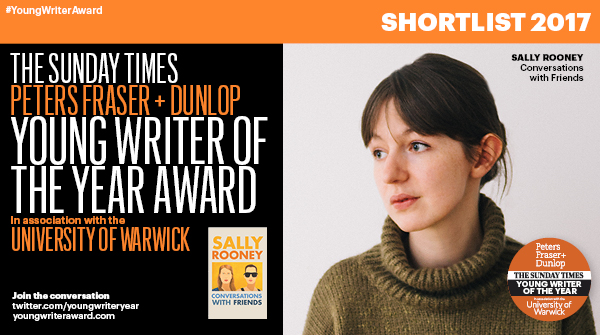 Sunday Times Young Writer of the Year Award shortlist review #2
The first thing to note about a novel with “Conversations” in the title is that there are no quotation marks denoting speech. In a book so saturated with in-person chats, telephone calls, texts, e-mails and instant messages, the lack of speech marks reflects the swirl of voices in twenty-one-year-old Frances’ head; thought and dialogue run together. This is a work in which communication is a constant struggle but words have lasting significance.
 It’s the summer between years at uni in Dublin, and Frances is interning at a literary agency and collaborating with her best friend (and ex-girlfriend) Bobbi on spoken word poetry events. She’s the ideas person, and Bobbi brings her words to life. At an open mic night they meet Melissa, an essayist and photographer in her mid-thirties who wants to profile the girls. She invites them back for a drink and Frances, who is from a slightly rough background – divorced parents and an alcoholic father who can’t be relied on to send her allowance – is dazzled by the apparent wealth of Melissa and her handsome actor husband, Nick. Bobbi develops a crush on Melissa, and before too long Frances falls for Nick. The stage is set for some serious amorous complications over the next six months or so.
Young woman and older, married man: it may seem like a cliché, but Sally Rooney is doing a lot more here than just showing us an affair. For one thing, this is a coming of age in the truest sense: Frances, forced into independence for the first time, is figuring out who she is as she goes along and in the meantime has to play roles and position herself in relation to other people:
At any time I felt I could do or say anything at all, and only afterwards think: oh, so that’s the kind of person I am.
I couldn’t think of anything witty to say and it was hard to arrange my face in a way that would convey my sense of humour. I think I laughed and nodded a lot.
What will be her rock in the uncertainty? She can’t count on her parents; she alienates Bobbi as often as not; she reads the Gospels out of curiosity but finds no particular solace in religion. Her other challenge is coping with the chronic pain of a gynecological condition. More than anything else, this brings home to her the disappointing nature of real life:
I realised my life would be full of mundane physical suffering, and that there was nothing special about it. Suffering wouldn’t make me special, and pretending not to suffer wouldn’t make me special. Talking about it, or even writing about it, would not transform the suffering into something useful. Nothing would.
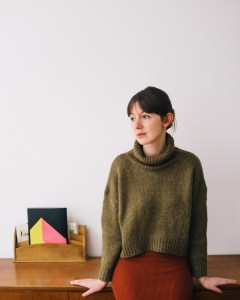 Rooney writes in a sort of style-less style that slips right down. There’s a flatness to Frances’ demeanor: she’s always described as “cold” and has trouble expressing her emotions. I recognized the introvert’s risk of coming across as aloof. Before I started this I worried that I’d fail to connect to a novel about experiences so different from mine. I was quite the strait-laced teen and married at 23, so I wasn’t sure I’d be able to relate to Frances and Bobbi’s ‘wildness’. But this is much more about universals than it is about particulars: realizing that you’re stuck with yourself, exploring your sexuality and discovering that sex is its own kind of conversation, and deciding whether ‘niceness’ is really the same as morality.
With its prominent dialogue and discrete scenes, I saw the book functioning like a minimalist play, and I could also imagine it working as an on-location television miniseries. In some ways the dynamic between Frances and Bobbi mirrors that between the main characters in Paulina and Fran by Rachel B. Glaser, Friendship by Emily Gould, and The Animators by Kayla Rae Whitaker, so if you enjoyed any of those I highly recommend this, too. Rooney really captures the angst of youth:
You’re twenty-one, said Melissa. You should be disastrously unhappy.
I’m working on it, I said.
This is a book I was surprised to love, but love it I did. Rooney is a tremendous talent whose career we’ll have the privilege to watch unfolding. I’ve told the shadow panel that if we decide our focus is on the “Young” in Young Writer, there’s no doubt that this nails the zeitgeist and should win.
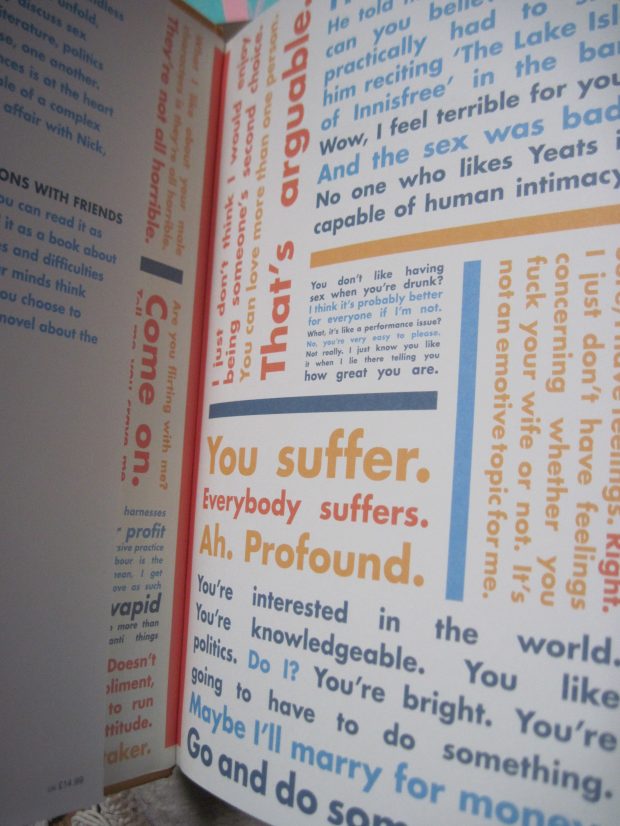
The conversations even spill out onto the endpapers.
Reviews of Conversations with Friends:
From the shadow panel:
Annabel’s at Annabookbel
Clare’s at A Little Blog of Books
Dane’s at Social Book Shelves
Eleanor’s at Elle Thinks
Others:
On the Road with Ma: The Lauras by Sara Taylor
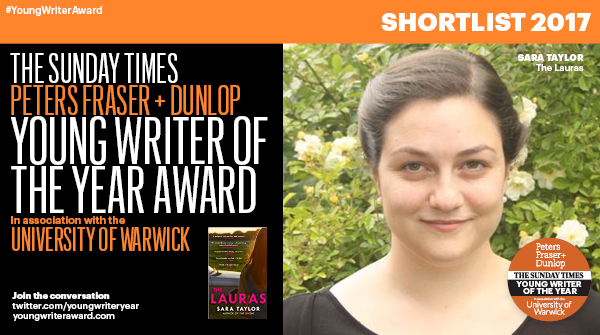
Sunday Times Young Writer of the Year Award shortlist review #1
Sara Taylor’s debut, The Shore, was a gritty and virtuosic novel-in-13-stories that imagined 250 years of history on a set of islands off the coast of Virginia. It was one of my favorite books of 2015, and earned Taylor a spot on that year’s Sunday Times Young Writer of the Year Award shortlist as well as the Baileys Prize longlist. Her second book is a whole different kettle of fish: a fairly straightforward record of an extended North American road trip that 13-year-old Alex took with his/her mother 30 years ago.
Alex and Ma have run off from their home in Virginia and left Alex’s father behind. They travel, seemingly at random, all over – North Carolina, Michigan, Mississippi, Nevada, California – stopping for weeks at a time for Ma to earn enough to move on again. On the way they visit various sites from Ma’s past, mostly foster homes where she lived as a runaway teen and made fleeting connections with friends and lovers. Her five best friends were all apparently named Laura. Sometimes it seems Ma is after revenge; other times she’s making amends for mistakes from her past or attending to unfinished business. One thing gradually becomes clear: this is no arbitrary journey but a quest with a destination. It even has a Harold Fry element, though Taylor avoids Rachel Joyce’s schmaltz.
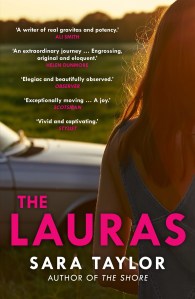 The Lauras is more complex than your average coming-of-age tale, largely because of Alex’s deliberate androgyny: a whole novel passes without us figuring out whether the narrator is male or female. “I suppose I was forgettable, came across still as whichever gender a person expected to see … being either and neither and both at once fit me more closely than the other options on offer,” Alex writes. But this chosen indeterminateness is not without consequences: there are a couple of disturbing scenes of bullying and sexual assault.
I enjoyed the mother-and-teen banter and the depiction of characters who are restless and rootless, driven on by traumatic memories as much as by uncertainty about the future. However, I had a few problems with the book. A road trip is generally a fun fictional setup, but here it tends towards the episodic and the repetitive. Moreover, Ma’s past is generally conveyed by secondhand stories rendered in Alex’s voice, which subordinates Ma’s perspective to her child’s and relies on somewhat dull reportage. Also, the metaphorical language and level of psychological understanding seem too advanced for a young teen, which only emphasizes the disjunction between the events being recounted (perhaps from the 1990s?) and the supposed present day three decades later. Those niggles explain why I abandoned this book a third of the way through on my first attempt in December 2016, and why, for me at least, it overall pales in comparison with the originality of The Shore.

I prefer this cover image.
Bearing in mind that I might be meeting these authors at the shortlist event or prize-giving ceremony, I’m not going to rate the five ST Young Writer books. (It wouldn’t take much sleuthing to find my Goodreads ratings, but never mind.) I’m still a huge fan of Sara Taylor’s work and look forward to her next book; were this to be the consensus of the rest of the shadow panel I would happily recognize it, but it’s unlikely to be one of my top two.
Other reviews of The Lauras:
Postscript: Taylor and I have a few neat connections: she graduated from Randolph College (formerly Randolph-Macon Women’s College), whose study abroad program in Reading, England brought me over here for the first time, and when not working on her PhD at UEA lives with her husband in Reading. Plus a tiny mention from The Lauras made me cheer: Ma went to Hood College, my alma mater!
Young Writer of the Year Award shortlist
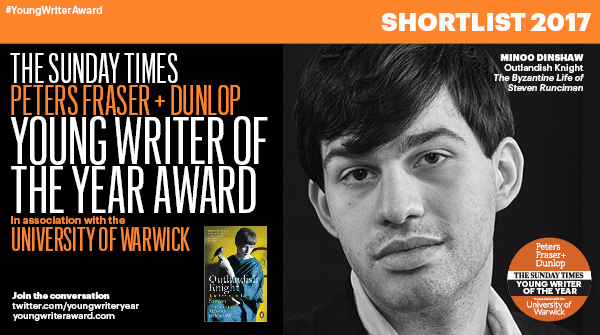
Now that the shortlist has been announced in the Sunday Times, I can also share it here:
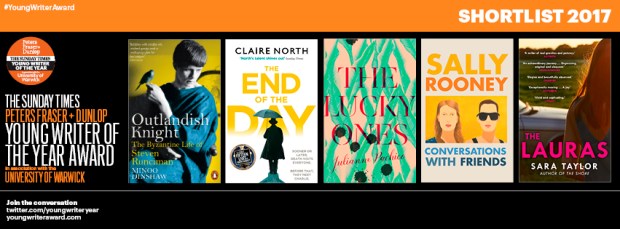
For the first time ever, the judges have chosen five titles, having apparently found it just too difficult to decide on four!
- Outlandish Knight: The Byzantine Life of Steven Runciman, Minoo Dinshaw (biography)
- The End of the Day, Claire North (science fiction novel)
- The Lucky Ones, Julianne Pachico (linked short stories)
- Conversations with Friends, Sally Rooney (contemporary novel)
- The Lauras, Sara Taylor (contemporary novel)
My initial thoughts: I only predicted Sally Rooney, and am surprised not to see Fiona Mozley here. My only other disappointment is that no poetry has been recognized this year.
There is great variety on this list, ranging as it does from sci fi lite to biography/history. I have only read part of one of the books: an unsuccessful attempt with The Lauras last December, though I am more than happy to try again because I loved The Shore so much. I am now halfway through.
I enjoyed the one book I read by Claire North very much (The First Fifteen Lives of Harry August) so look forward to trying another, and I have heard a lot about the Sally Rooney book and read various reviews (it seems to be a polarizing read, though).
I think we are all feeling a bit daunted by the 640-page biography about a historian I had never heard of. However, I have been getting more into biographies so will be interested to see how the author shapes this life story. I am a few chapters in so far, but have a feeling I will be reading it right up until our decision meeting.
I will be posting 1+ shortlist review per week in November, starting with The Lauras.
Sunday Times Young Writer of the Year Award shadow panel
I’m delighted to announce that I’ve been invited to be on the official shadow panel for the Sunday Times / Peters Fraser + Dunlop Young Writer of the Year Award, in association with The University of Warwick (to give it its full and proper title). Here’s a bit of background on the prize, from its website:
The prize “is awarded annually to the best work of published or self-published fiction, non-fiction or poetry by a British or Irish author aged between 18 and 35, and has gained attention and acclaim across the publishing industry and press. £5,000 is given to the overall winner and £500 to each of the three runners-up.
“Since it began in 1991, the award has had a striking impact, boasting a stellar list of alumni that have gone on to become leading lights of contemporary literature. The 2016 Award was presented to Max Porter for his extraordinary debut, Grief Is the Thing with Feathers. Following a five-year break, the prestigious award returned with a bang in 2015, awarding debut poet Sarah Howe the top prize for her phenomenal first collection, Loop of Jade.”
Past winners include Ross Raisin, Adam Foulds, Naomi Alderman, Robert Macfarlane, William Fiennes, Zadie Smith, Sarah Waters, Francis Spufford, Simon Armitage and Helen Simpson.
This year’s official judging panel is made up of Andrew Holgate, literary editor of the Sunday Times, and writers Lucy Hughes-Hallett and Elif Shafak.

I’m joined on the shadow panel by four other book bloggers, several of whom you will recognize as long-time friends of this blog:
- Dane Cobain (SocialBookshelves)
- Eleanor Franzen (Elle Thinks)
- Annabel Gaskell (Annabookbel)
- Clare Rowland (A Little Blog of Books)
Here are some key upcoming dates:
- Sunday October 29th: shortlist announced in Sunday Times
- November 18th: book bloggers event with readings from the shortlisted authors (Groucho Club, London)
- November 27th: deadline for shadow panel winner decision
- November 29th: shadow panel winner announced on STPFD website
- December 3rd: shadow panel winner announced in Sunday Times
- December 7th: prize-giving ceremony and winner announcement (London Library)
I’m so looking forward to getting stuck into the shortlisted books and discussing them! I’ll be posting a review of each one in November.
Wellcome Book Prize Shadow Panel Decision
It’s been a whirlwind five weeks as we on the shadow panel have made our way through the six books shortlisted for the Wellcome Book Prize 2017. The list is strong and varied: an account of the AIDS crisis, a posthumous memoir by a neurosurgeon, a thorough history of genetics, an introduction to the microbial world, and novels about a donor heart and an ordinary family’s encounter with unexpected illness. All have been well worth engaging with, but when it came to decision time we had a pretty clear winner: When Breath Becomes Air by Paul Kalanithi. (With Sarah Moss’s The Tidal Zone a fairly close second.)


“I realized that the questions intersecting life, death, and meaning, questions that all people face at some point, usually arise in a medical context.” ~Paul Kalanithi
I first read this book a year and a half ago; when I picked it back up on Friday, I thought I’d give it just a quick skim to remind myself why I loved it. Before I knew it I’d read 50 pages, and I finished it last night in the car on the way back from a family party, clutching my dinky phone as a flashlight, awash in tears once again. (To put this in perspective: I almost never reread books. My last rereading was of several Dickens novels for my master’s in 2005–6.)
What struck me most on my second reading is how Kalanithi, even in his brief life, saw both sides of the medical experience (as the U.K. book cover portrays so well). He was the harried neurosurgery resident making life and death decisions and marveling at the workings of the brain; in a trice he was the patient with terminal lung cancer wondering how to make the most of his remaining time with his family.

Yet in both roles his question was always “What makes human life meaningful?” – a quest that kept him shuttling between science, literature and religion. In eloquent prose and with frequent scriptural allusions, this short, technically unfinished book narrates Kalanithi’s past (his growing-up years and medical training), present (undergoing cancer treatment but ultimately facing death) and future (the legacy he leaves behind, including his daughter).
Looking back once again at the guidelines for the Wellcome Book Prize (“At some point, medicine touches all our lives. Books that find stories in those brushes with medicine are ones that add new meaning to what it means to be human”), When Breath Becomes Air stands out as a perfect exemplar. In her blog review, Ruby writes, “This book looks death right in the eye and doesn’t seek to rationalise it, explain it, avoid it. It deals with it head on.” In his Nudge review Paul calls the book “equally heart breaking and full of love … a painfully honest account of a short, but intense life.”
My thanks, once again, to the other members of the shadow panel: Paul Cheney, GrrlScientist, Ruby Jhita and Amy Pirt.
Tomorrow evening the winner of the Wellcome Book Prize 2017 will be announced at an awards ceremony at the Wellcome Collection in London. As thanks for my participation in the blog tour, I’ve been invited to attend. Small talk and networking are very much outside of my comfort zone, but I couldn’t pass up this opportunity and hope to at the very least meet one or two fellow bloggers. I’ll post very quickly when I get home from the ceremony tomorrow night to announce the winner, and promise a longer write-up of the event sometime on Tuesday.
 Bookish Beck = Rebecca Foster. American transplant to England. Freelance proofreader and book reviewer.
 Bookish Beck