The Essex Serpent by Sarah Perry
This exquisite work of historical fiction explores the gaps – narrower than one might think – between science and superstition and between friendship and romantic love. The Essex Serpent was a real-life legend from the latter half of the seventeenth century, but Perry’s second novel has fear of the sea creature re-infecting Aldwinter, her invented Essex village, in the 1890s. Mysterious deaths and disappearances are automatically attributed to the Serpent who dwells in the depths of the Blackwater. This atmosphere of paranoia triggers some schoolgirls to erupt in frenzied delusions as in The Crucible. It is unclear whether the Church should tolerate a source of mystery or dismiss it all as nonsense – after all, there’s a winged serpent carved onto one of the pews at the parish church.
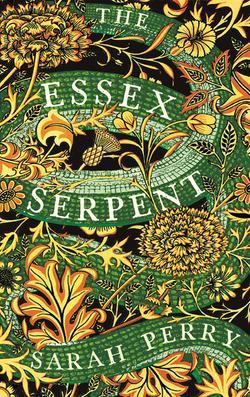 In a domestic counterpart to all these supernatural goings-on, we gain entry into two middle-class households. Cora Seaborne’s abusive husband, Michael, has recently died of throat cancer, leaving her to raise their odd (autistic, I wondered?) eleven-year-old son Francis on her own. She has an amateur interest in fossils to rival Mary Anning’s, so when she hears of a cache near Colchester she leaves London for Essex, bringing along Frankie and her companion, Martha. Mutual friends put her in touch with Will Ransome, the vicar of Aldwinter, sure that he and his family – consumptive wife Stella and children Joanna, James and John – will be able to show her around the coast.
Despite an inauspicious first meeting, which sees Cora and Will, still unknown to each other, hauling a drowning sheep out of a lake, theirs soon becomes a close, easy friendship. Cora feels she can speak her mind about the faith she lost and the new marvels she finds in nature:
I had faith, the sort I think you might be born with, but I’ve seen what it does and I traded it in. It’s a sort of blindness, or a choice to be mad – to turn your back on everything new and wonderful – not to see that there’s no fewer miracles in the microscope than in the gospels!
She holds her own in cerebral debates with Will as he deplores his parishioners’ fantasies about the Serpent. Is there really such a big difference between his faith – “all strangeness and mystery – all blood, and brimstone,” Cora teases – and the Serpent legend? In seeming contradiction to his career path, Will is more suspicious than many of the other characters of things he doesn’t understand and can’t explain away, like hypnosis and a Fata Morgana.
The novel’s nuanced treatment of faith and doubt is enhanced by references to Victorian science, including fossil hunting and early medical procedures. Dr. Luke Garrett, Michael’s surgeon, is one of Cora’s best friends back in London; she calls him “The Imp.” In one of the most striking passages of the entire book, he performs rudimentary heart surgery on the young victim of a stab wound. Perry fills in the novel’s background with a plethora of apt Victorian themes, including housing reform and London crime. For a book of 440 pages, it has a large cast and a fairly epic scope. Although there are places where subplots and minor characters might have been expanded upon, Perry wisely refrains from stuffing the novel with evidence of her research. Indeed, it’s a restrained book overall, yet breaks out into effusiveness in just the right places, as in Stella’s mystical adoration of the color blue.
Descriptive passages and the letters passing between the characters give a clear sense of the months passing, yet there is also something timelessly English about the narrative – Dickensian in places (Our Mutual Friend) and Hardyesque in others (Far from the Madding Crowd). I especially loved this picture of the June countryside:
Essex has her bride’s gown on: there’s cow parsley frothing by the road and daisies on the common, and the hawthorn’s dressed in white; wheat and barley fatten in the fields, and bindweed decks the hedges.
Cross this cozy pastoral vision with the Gothic nature of the Serpent craze and you get quite a unique atmosphere. The vague, unexplained sense of menace didn’t work for me at all in Perry’s previous novel, After Me Comes the Flood, but here it’s just right.
It was no doubt true in the late Victorian period that “men and women can’t be friends because the sex part always gets in the way” (as famously declared in When Harry Met Sally). No one is sure what to make of a sexually available, self-assured female like Cora. The different kinds of Greek love, from philia to eros, keep shading into each other here. Like the water that forms the book’s metaphorical substrate, the relationships ebb and flow. Yet there’s no denigrating any connection as just friendship; in fact, friendship is enough to rescue one character from suicide. Like Hanya Yanagihara’s A Little Life, the novel asks whether love is ever enough to save us – and gives a considerably more optimistic answer.

My proof copy didn’t have quite such a gorgeous cover but did come intriguingly wrapped in snakeskin ribbon…
The fact that I have an MA in Victorian literature means I’m drawn to Victorian-set novels but also highly critical about their authenticity. While reading this, though, I thoroughly believed that I was in 1890. Moreover, Perry adroitly illuminates the situation of the independent “New Woman” and the quandary of science versus religion (which were the joint subjects of my dissertation: women’s faith and doubt narratives in Victorian fiction).
I’m delighted, especially having seen Perry speak at Bloxham Festival in February (see my write-up for more on her background and the inspirations behind this novel), to have liked The Essex Serpent three times as much as her debut. It has an elegant, evocative writing style reminiscent of A.S. Byatt and Penelope Fitzgerald. Something holds me back from the full 5 stars – too diffuse? Too much staying on the surface of things? Not quite intimate enough, especially about Cora’s inner life? – but I still declare myself mightily impressed. The Essex Serpent counts as one of my favorite novels of 2016 so far. You can see why Serpent’s Tail (how perfect is her publisher’s name?!) rushed this one into publication a few weeks early. Expect to see it on the Booker Prize shortlist and any other award list you care to mention.
With thanks to Anna-Marie Fitzgerald at Serpent’s Tail for the free review copy.
My rating: 
My Favorite Nonfiction Reads of 2015
Without further ado, I present to you my 15 favorite non-fiction books read in 2015. I’m a memoir junkie so many of these fit under that broad heading, but I’ve dipped into other areas too. I give two favorites for each category, then count down my top 7 memoirs read this year.
Note: Only four of these were actually published in 2015; for the rest I’ve given the publication year. Many of them I’ve already previewed through the year, so – like I did yesterday for fiction – I’m limiting myself to two sentences per title: the first is a potted summary; the second tells you why you should read this book. (Links given to full reviews.)
Foodie Lit
 A Homemade Life: Stories and Recipes from My Kitchen Table by Molly Wizenberg (2009): Wizenberg reflects on the death of her father Burg from cancer, time spent living in Paris, building a new life in Seattle, starting her food blog, and meeting her husband through it. Each brief autobiographical essay is perfectly formed and followed by a relevant recipe, capturing precisely how food is tied up with memories.
 Comfort Me with Apples: More Adventures at the Table by Ruth Reichl (2001): Reichl traces the rise of American foodie culture in the 1970s–80s (Alice Waters and Wolfgang Puck) through her time as a food critic for the Los Angeles Times, also weaving in personal history – from a Berkeley co-op with her first husband to a home in the California hills with her second after affairs and a sticky divorce. Throughout she describes meals in mouth-watering detail, like this Thai dish: “The hot-pink soup was dotted with lacy green leaves of cilantro, like little bursts of breeze behind the heat. … I took another spoonful of soup and tasted citrus, as if lemons had once gone gliding through and left their ghosts behind.”
Nature Books
 Meadowland: The Private Life of an English Field by John Lewis-Stempel (2014): Lewis-Stempel is a proper third-generation Herefordshire farmer, but also a naturalist with a poet’s eye. Magical moments and lovely prose, as in “The dew, trapped in the webs of countless money spiders, has skeined the entire field in tiny silken pocket squares, gnomes’ handkerchiefs dropped in the sward.”
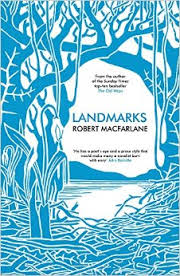 Landmarks by Robert Macfarlane: This new classic of nature writing zeroes in on the language we use to talk about our environment, both individual words – which Macfarlane celebrates in nine mini-glossaries alternating with the prose chapters – and the narratives we build around places, via discussions of the work of nature writers he admires. Whether poetic (“heavengravel,” Gerard Manley Hopkins’s term for hailstones), local and folksy (“wonty-tump,” a Herefordshire word for a molehill), or onomatopoeic (on Exmoor, “zwer” is the sound of partridges taking off), his vocabulary words are a treasure trove.
Theology Books
 Amazing Grace: A Vocabulary of Faith by Kathleen Norris (1998): In few-page essays, Norris gives theological words and phrases a rich, jargon-free backstory through anecdote, scripture and lived philosophy. This makes the shortlist of books I would hand to skeptics to show them there might be something to this Christianity nonsense after all.
 My Bright Abyss: Meditation of a Modern Believer by Christian Wiman (2013): Seven years into a cancer journey, Wiman, a poet, gives an intimate picture of faith and doubt as he has lived with them in the shadow of death. Nearly every page has a passage that cuts right to the quick of what it means to be human and in interaction with other people and the divine.
General Nonfiction
 Penelope Fitzgerald: A Life by Hermione Lee (2013): Although Penelope Fitzgerald always guarded literary ambitions, she was not able to pursue her writing wholeheartedly until she had reared three children and nursed her hapless husband through his last illness. This is a thorough and sympathetic appreciation of an underrated author, and another marvellously detailed biography from Lee.
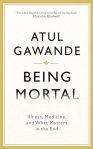 Being Mortal: Medicine and What Matters in the End by Atul Gawande (2014): A surgeon’s essential guide to decision-making about end-of-life care, but also a more philosophical treatment of the question of what makes life worth living: When should we extend life, and when should we concentrate more on the quality of our remaining days than their quantity? The title condition applies to all, so this is a book everyone should read.
Memoirs
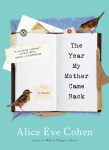 The Year My Mother Came Back by Alice Eve Cohen: Wry and heartfelt, this is a wonderful memoir about motherhood in all its variations and complexities; the magic realism (Cohen’s dead mother keeps showing up) is an added delight. I recommend this no matter what sort of relationship, past or present, you have with your mother, especially if you’re also a fan of Anne Lamott and Abigail Thomas.
- The Art of Memoir
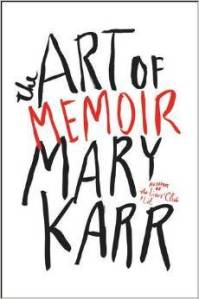 by Mary Karr: There is a wealth of practical advice here, on topics such as choosing the right carnal details (not sexual – or not only sexual – but physicality generally), correcting facts and misconceptions, figuring out a structure, and settling on your voice. Karr has been teaching (and writing) memoirs at Syracuse University for years now, so she’s thought deeply about what makes them work, and sets her theories out clearly for readers at any level of familiarity.
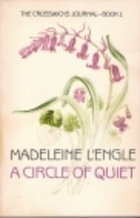 A Circle of Quiet by Madeleine L’Engle (1971): In this account of a summer spent at her family’s Connecticut farmhouse, L’Engle muses on theology, purpose, children’s education, the writing life, the difference between creating stories for children and adults, neighbors and fitting into a community, and much besides. If, like me, you only knew L’Engle through her Wrinkle in Time children’s series, this journal should come as a revelation.
-
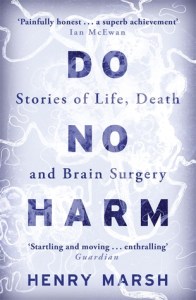 Do No Harm: Stories of Life, Death and Brain Surgery by Henry Marsh (2014): “Terrible job, neurosurgery. Don’t do it.” – luckily for us, Henry Marsh reports back from the frontlines of brain surgery so we don’t have to. In my favorite passages, Marsh reflects on the mind-blowing fact that the few pounds of tissue stored in our heads could be the site of our consciousness, our creativity, our personhood – everything we traditionally count as the soul.
 I Hate to Leave This Beautiful Place by Howard Norman (2013): Norman has quickly become one of my favorite writers. You wouldn’t think these disparate autobiographical essays would fit together as a whole, given that they range in subject from Inuit folktales and birdwatching to a murder–suicide committed in Norman’s Washington, D.C. home and a girlfriend’s death in a plane crash, but somehow they do; after all, “A whole world of impudent detours, unbridled perplexities, degrading sorrow, and exacting joys can befall a person in a single season, not to mention a lifetime.”
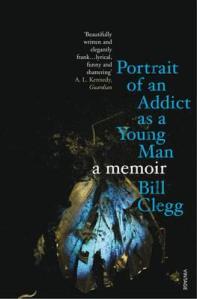 Portrait of an Addict as a Young Man by Bill Clegg (2010): Through this book I followed literary agent Bill Clegg on dozens of taxi rides between generic hotel rooms and bar toilets and New York City offices and apartments; together we smoked innumerable crack pipes and guzzled dozens of bottles of vodka while letting partners and family members down and spiraling further down into paranoia and squalor. He achieves a perfect balance between his feelings at the time – being out of control and utterly enslaved to his next hit – and the hindsight that allows him to see what a pathetic figure he was becoming.
And my overall favorite nonfiction book of the year:
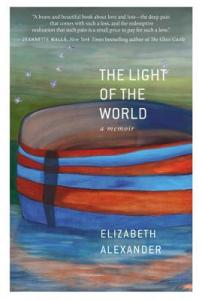 1. The Light of the World by Elizabeth Alexander: In short vignettes, beginning afresh with every chapter, Alexander conjures up the life she lived with – and after the sudden death of – her husband Ficre Ghebreyesus, an Eritrean chef and painter. This book is the most wonderful love letter you could imagine, and no less beautiful for its bittersweet nature.
What were some of your best nonfiction reads of the year?
 Bookish Beck = Rebecca Foster. American transplant to England. Freelance proofreader and book reviewer.
 Bookish Beck