Love Your Library: February 2026
Thanks, as always, to Eleanor and Skai for posting about their recent library borrowing/reading!
All of the books that I asked to be added to stock seemed to arrive at once. By the time I picked them up, four already had at least one further reservation on them, which was pleasing as it shows it these weren’t selfish requests; the books are of interest to others, too. Although a 2026 goal of mine was to read more from my own shelves, I’m having to balance that with big stacks of library books – which I’m glad I didn’t have to buy. A few will count towards #ReadIndies if I manage to finish them before the end of the month.
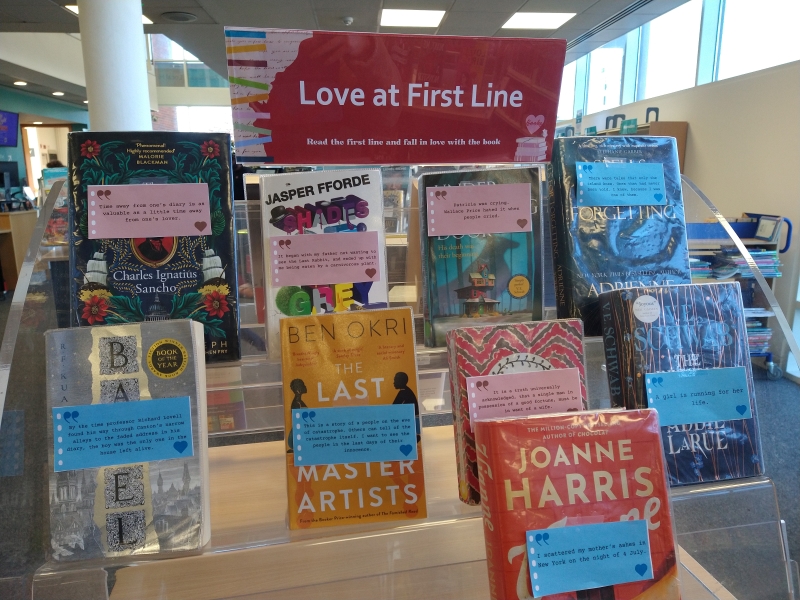
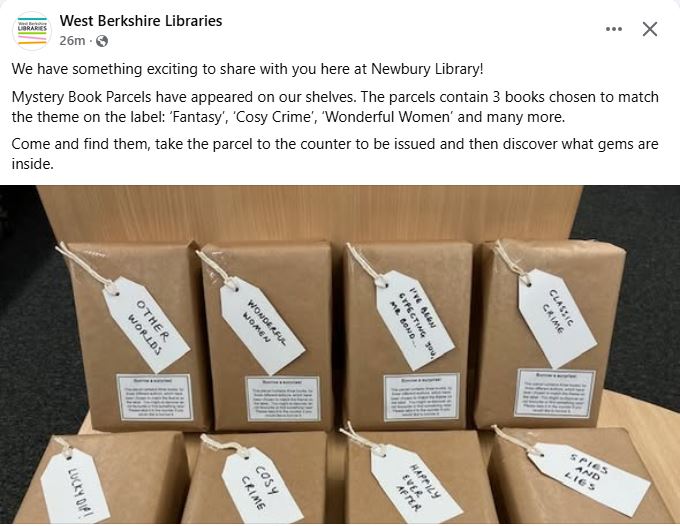
I mentioned last month that loans are down in my library system. I’ve noticed a couple of new initiatives that must be intended to boost borrowing: a “Love at First Line” Valentine’s Day display, and ‘blind date with a book’-style bundles distributed around the shelves.
One unfortunate necessity to keep stock turning over is weeding. I recently noticed that a couple of books I’d long meant to read were culled from the collection before I was able to borrow them: A Widow’s Story by Joyce Carol Oates and The Cold Millions by Jess Walter.
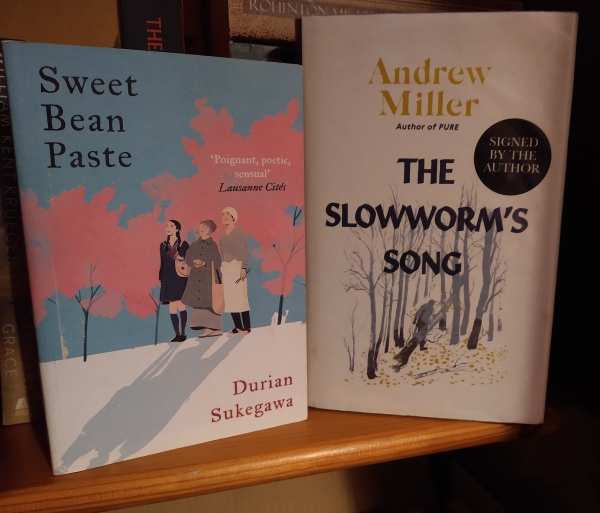
The majority of the library’s withdrawn books are sold. The latest book sale started mid-month and I was among the first through the door on that Saturday morning to have a rummage. I came away with one mostly pristine paperback (probably a rejected donation) and a signed ex-library hardback of an Andrew Miller novel for a grand total of 80 pence.
I’ve had to do some weeding myself recently, of the theology library I run at my church. We’re pushing 500 items, and given the limited space on the shelves in the lobby, I often find I’m having to wedge books in or lay them across the top. I’ve culled 24 items over the years: duplicates, books in poor condition, and a couple I labelled as irrelevant (a Barbara Pym novel set among clergy types and a book of Coronavirus prayers I’ll keep for posterity).
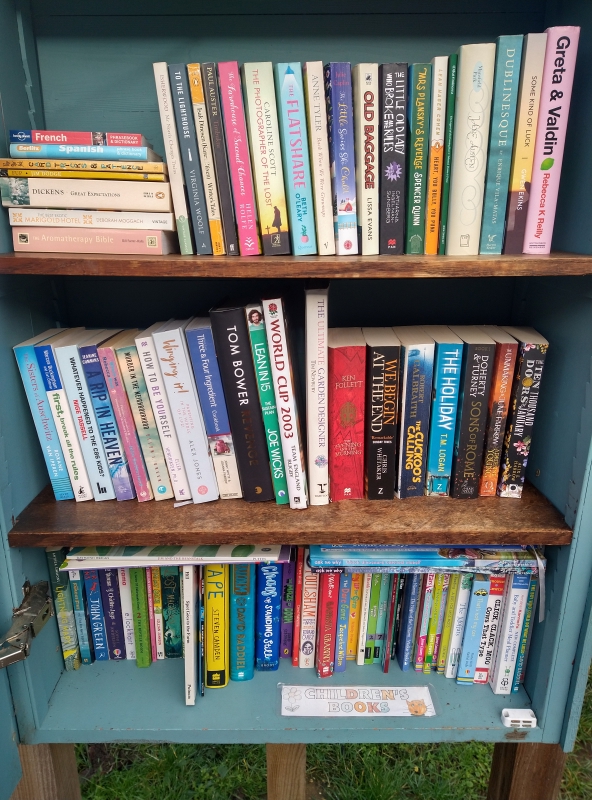
I do much more frequent culling at the neighbourhood Little Free Library I curate. Turnover is low in the winter (and I put fewer books in there than usual anyway, to try to cut down on condensation), so the same stuff often hangs around for many weeks. I immediately remove anything tatty or with a spine so faded the title is unreadable, and I try to keep only one book per author (series are frequent donations but take up too much space and don’t shift). Every so often I do a complete changeover of the stock and take the rejects to a charity warehouse or have them picked up for charity – the same strategy as with the withdrawn theology books.
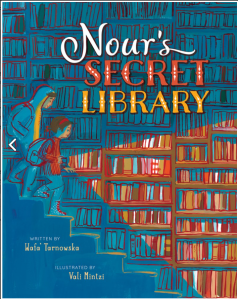
Appropriately, I found this next one among the Little Free Library donations: a sweet picture book based on the true story of how the young people of Daraya amassed a 15,000-volume basement library of rescued books during the first four years of the Syrian civil war. The author grew up during the Lebanese civil war and the illustrator in communist Romania, so they, too, know how books can give comfort and courage during the hardest times. “Their secret library had become a safe port in a sea of war. The hope it brought carried them from the darkness of destruction into a bright new dawn.” Lovely.
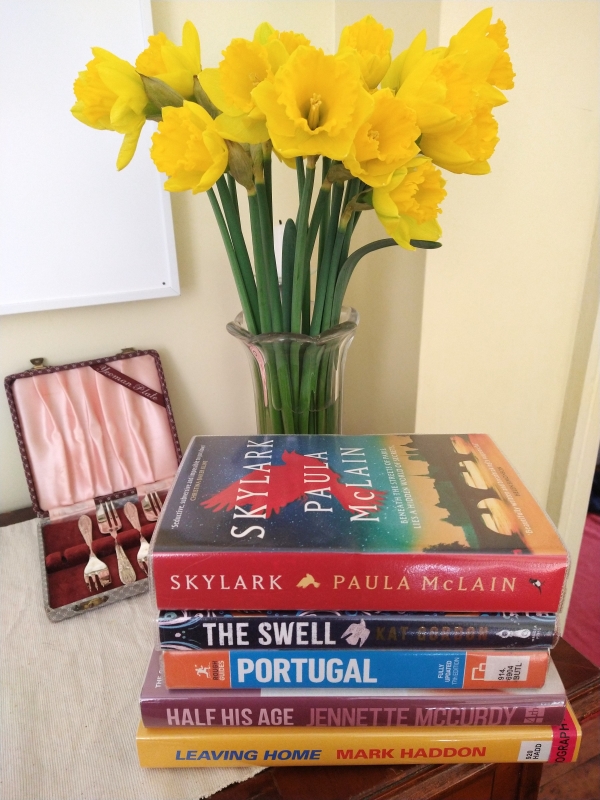
You’ll see from the Rough Guide and phrase book that we’re pondering a trip to Portugal in April. It’s feeling last minute now; we hope to book our travel and accommodation soon.
My library use over the last month:
READ
- Eva Trout by Elizabeth Bowen

- The Honesty Box by Lucy Brazier

- Badger Books by Paddy Donnelly

- Mildred the Gallery Cat by Jono Ganz
- Everything Is Tuberculosis by John Green
- Green by Louise Greig

- I Who Have Never Known Men by Jacqueline Harpman
- Footpath Flowers by JonArno Lawson
- An Experiment in Love by Hilary Mantel
- The Girls Who Grew Big by Leila Mottley
- Bog Queen by Anna North
- Winter Trees by Sylvia Plath
- Let the Bad Times Roll by Alice Slater
- Ultra-Processed People by Chris van Tulleken
- Alexander and the Terrible, Horrible, No Good, Very Bad Day by Judith Viorst
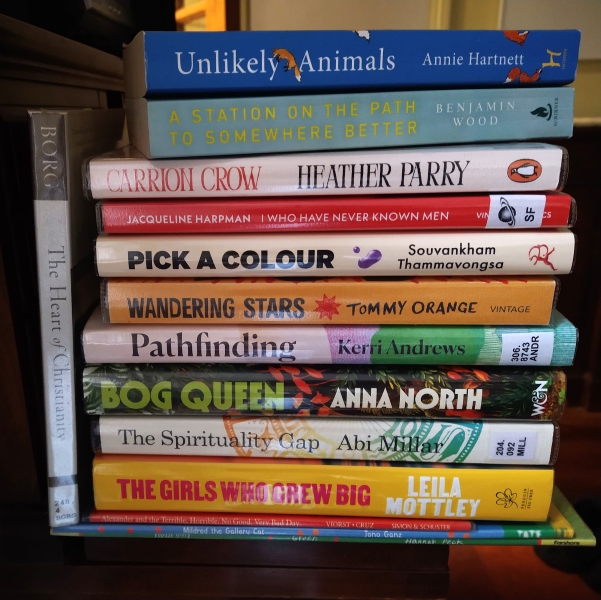
With a cheeky Oxfam book haul (Hartnett and Wood) on the top.
CURRENTLY READING
- The Parallel Path: Love, Grit and Walking the North by Jenn Ashworth
- The Heart of Christianity by Marcus Borg (a reread)
- Strangers: The Story of a Marriage by Belle Burden
- Leaving Home: A Memoir in Full Colour by Mark Haddon
- Carrie by Stephen King
- Of Thorn & Briar: A Year with the West Country Hedgelayer by Paul Lamb
- Half His Age by Jennette McCurdy
- The Spirituality Gap by Abi Millar
- People Like Us by Jason Mott
- Pick a Colour by Souvankham Thammavongsa
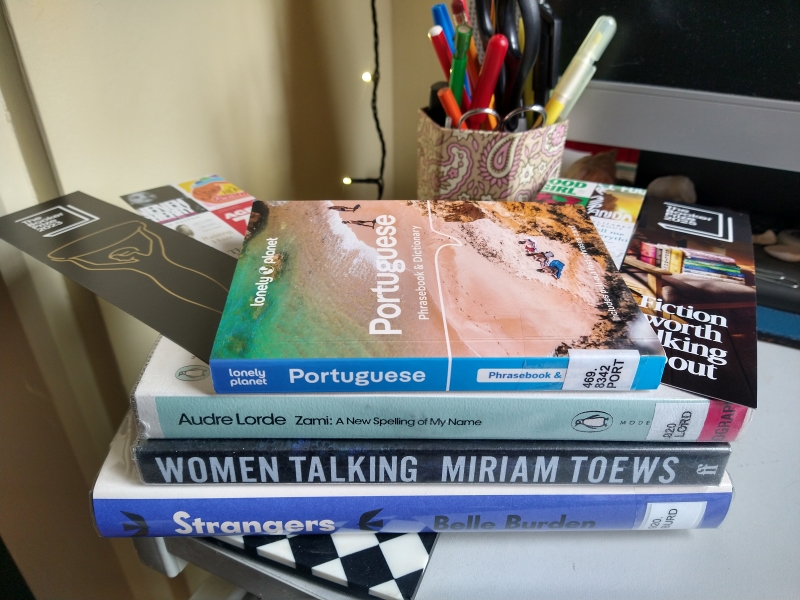
CHECKED OUT, TO BE READ
- Eva Luna by Isabel Allende (for April book club)
- Pathfinding: On Walking, Motherhood and Freedom by Kerri Andrews
- Like Mother by Jenny Diski
- Bog Child by Siobhan Dodd
- The Swell by Kat Gordon
- Skylark by Paula McLain
- Wandering Stars by Tommy Orange
- Carrion Crow by Heather Parry
- The Original by Nell Stevens
- Women Talking by Miriam Toews
- The First Day of Spring by Nancy Tucker
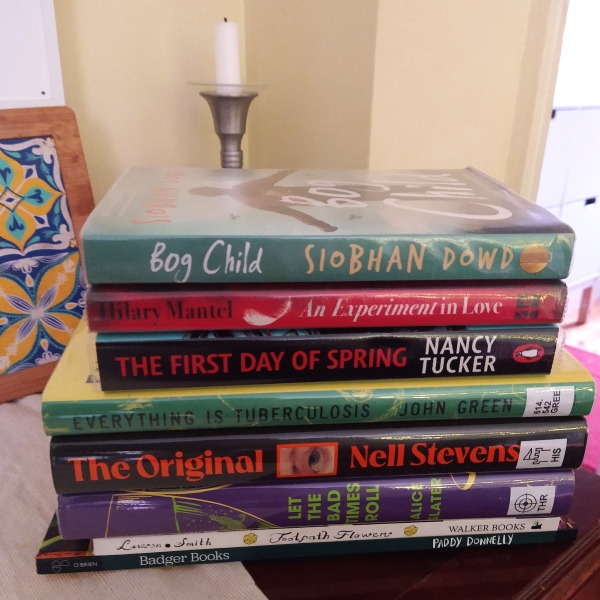
ON HOLD, TO BE COLLECTED
- The Brain at Rest: Why Doing Nothing Can Change Your Life by Joseph Jebelli
- Seven by Joanna Kavenna
- Our Better Natures by Sophie Ward
IN THE RESERVATION QUEUE
- A Beautiful Loan by Mary Costello
- The Correspondent by Virginia Evans
- Honour & Other People’s Children by Helen Garner
- Almost Life by Kiran Millwood Hargrave
- Frostlines: An Epic Exploration of the Transforming Arctic by Neil Shea
- First Class Murder by Robin Stevens
RETURNED UNFINISHED
- Redwall by Brian Jacques – I read 60 pages before this was requested off me, and I decided it was probably for the best to leave this series to my childhood.
- A Long Game: How to Write Fiction by Elizabeth McCracken – I was about halfway through when this was requested off me, but I have it from Edelweiss so can finish it on my Kindle.
RETURNED UNREAD
- Zami by Audre Lorde – I have it on my Kindle so will return this for another member of my book club (the women’s classics subgroup) to borrow as our May read.
What have you been reading or reviewing from the library recently?

Share a link to your own post in the comments. Feel free to use the above image. The hashtag is #LoveYourLibrary.
11 Days, 11 Books: 2023’s Reading So Far
I realized that, as in 2020, I happen to have finished 11 books so far this year (including a Patrick Gale again). Some of the below I’ll be reviewing in full for other themes or challenges coming up, and others have paid reviews pending that I can’t share yet, but I’ve written a little bit about each of the others. Here’s how my reading year has started off…


A children’s book
 Leila and the Blue Fox by Kiran Millwood Hargrave – Similar in strategy to Hargrave’s previous book (also illustrated by her husband Tom de Freston), Julia and the Shark, one of my favourite reads of last year – both focus on the adventures of a girl who has trouble relating to her mother, a scientific researcher obsessed with a particular species. Leila, a Syrian refugee, lives with family in London and is visiting her mother in the far north of Norway. She joins her in tracking an Arctic fox on an epic journey, and helps the expedition out with social media. Migration for survival is the obvious link. There’s a lovely teal and black colour scheme, but I found this unsubtle. It crams too much together that doesn’t fit.
Celebrity autobiographies
A genre that pretty much never makes it onto my stacks, but I read these two despite knowing little to nothing about the authors; instead, I was drawn in by their particular stories.
 A Heart that Works by Rob Delaney – Delaney is an American actor who was living in London for TV filming in 2016 when his third son, baby Henry, was diagnosed with a brain tumour. He died before the age of three. The details of disabling illness and brutal treatment could not be other than wrenching, but the tone is a delicate balance between humour, rage, and tenderness. The tribute to his son may be short in terms of number of words, yet includes so much emotional range and a lot of before and after to create a vivid picture of the wider family. People who have never picked up a bereavement memoir will warm to this one.
 Born a Crime: Stories from a South African Childhood by Trevor Noah – Again, I was not familiar with the author’s work in TV/comedy, but had heard good things so gave this a try. It reminded me of Barack Obama’s Dreams from My Father what with the African connection, the absent father, the close relationship with his mother, and the reflections on race and politics. I especially loved his stories of being dragged to church multiple times every Sunday. He writes a lot about her tough love, and the difficulty of leaving hood life behind once you’ve been sucked into it. The final chapter is exceptional. Noah does a fine job of creating scenes and dialogue; I’d happily read another book of his.
Novels
 Bournville by Jonathan Coe – Coe does a good line in witty state-of-the-nation novels. Patriotism versus xenophobia is the overarching dichotomy in this one, as captured through a family’s response to seven key events from English history over the last 75+ years, several of them connected with the royals. Mary Lamb, the matriarch, is an Everywoman whose happy life still harboured unfulfilled longings. Coe mixes things up by including monologues, diary entries, and so on. In some sections he cuts between the main action and a transcript of a speech, TV commentary, or set of regulations. Covid informs his prologue and the highly autobiographical final chapter, and it’s clear he’s furious with the government’s handling.
 Our Missing Hearts by Celeste Ng – Disappointing compared to her two previous novels. I’d read too much about the premise while writing a synopsis for Bookmarks magazine, so there were no surprises remaining. The political commentary, though necessary, is fairly obvious. The structure, which recounts some events first from Bird’s perspective and then from his mother Margaret Miu’s, makes parts of the second half feel redundant. Still, impossible not to find the plight of children separated from their parents heart-rending, or to disagree with the importance of drawing attention to race-based violence. It’s also appealing to think about the power of individual stories and how literature and libraries might be part of an underground protest movement.
And a memoir in miniature
 Heating & Cooling: 52 Micro-Memoirs by Beth Ann Fennelly – I love memoirs-in-essays. Fennelly goes for the same minimalist approach as Abigail Thomas’s Safekeeping. Pieces range from one line to six pages and mostly pull out moments of note from the everyday of marriage, motherhood and house maintenance. I tended to get more out of the ones where she reinhabits earlier life, like “Goner” (growing up in the Catholic church); “Nine Months in Madison” (poetry fellowship in Wisconsin, running around the lake where Otis Redding died in a plane crash); and “Emulsionar,” (age 23 and in Barcelona: sexy encounter, immediately followed by scary scene). Two about grief, anticipatory for her mother (“I’ll be alone, curator of the archives”) and realized for her sister (“She threaded her arms into the sleeves of grief” – you can tell Fennelly started off as a poet), hit me hardest. Sassy and poignant.
The best so far? Probably Born a Crime, followed by Bournville.
Any of these you have read or would read?
The 2021 Dylan Thomas Prize Shortlist
The Swansea University International Dylan Thomas Prize recognizes the best published work in the English language written by an author aged 39 or under. All literary genres are eligible, so the longlist contained poetry collections as well as novels and short stories. Remaining on the shortlist are these six books (five novels and one short story collection; four of the works are debuts):
- Alligator and Other Stories by Dima Alzayat – Stories of the Syrian American experience.
- Kingdomtide by Rye Curtis – A novel about an elderly plane crash victim and the alcoholic park ranger who tries to find her. (See Annabel’s review.)
- The Death of Vivek Oji by Akwaeke Emezi – A coming-of-age story set in Nigeria.
- Pew by Catherine Lacey – A mysterious fable about a stranger showing up in a Southern town in the week before an annual ritual.
- Luster by Raven Leilani – A young Black woman and would-be painter negotiates a confusing romantic landscape and looks for meaning beyond dead-end jobs.
- My Dark Vanessa by Kate Elizabeth Russell – A nuanced look at the #MeToo phenomenon through the prism of one young woman’s relationship with her teacher.
It’s an American-dominated set this year, but, refreshingly, five of the six nominees are women or non-binary. I happen to have already read the last three of the novels on the list. I’m most keen to try Alligator and Other Stories and Kingdomtide and hope to still have a chance to read them. No review copies reached me in time, so today I’m giving an overview of the list.
This is never an easy prize to predict, but if I had to choose between the few that I’ve read, I would want Kate Elizabeth Russell to win for My Dark Vanessa.

(The remaining information in this post comes from the official Midas PR press release.)
The shortlist “was selected by a judging panel chaired by award-winning writer, publisher and co-director of the Jaipur Literature Festival Namita Gokhale, alongside founder and director of the Bradford Literature Festival Syima Aslam, poet Stephen Sexton, writer Joshua Ferris, and novelist and academic Francesca Rhydderch.
“This year’s winner will be revealed at a virtual ceremony on 13 May, the eve of International Dylan Thomas Day.”
Namita Gokhale, Chair of Judges, says: “We are thrilled to present this year’s extraordinary shortlist – it is truly a world-class writing showcase of the highest order from six exceptional young writers. I want to press each and every one of these bold, inventive and distinctive books into the hands of readers, and celebrate how they challenge preconceptions, ask new questions about how we define identity and our relationships, and how we live together in this world. Congratulations to these tremendously talented writers – they are master storytellers in every sense of the word.”
Francesca Rhydderch on Alligator and Other Stories by Dima Alzayat: “Dima Alzayat’s visceral, innovative Alligator & Other Stories marks the arrival of a major new talent. While the range of styles and stories is impressively broad, there is a unity of voice and tone here which must have been so very difficult to achieve, and a clear sense that all these disparate elements are part of an overriding, powerful examination of identity.”
Joshua Ferris on Kingdomtide by Rye Curtis: “Kingdomtide is a propulsively readable and frequently very funny book about the resources, personal and natural, necessary to survive a patently absurd world. The winning voice of Texas-native Cloris Waldrip artfully takes us through her eighty-eight-day ordeal in the wilds of Montana as the inimitable drunk and park ranger Debra Lewis searches for her. This fine novel combines the perfect modern yarn with something transcendent, lyrical and wise.”
Namita Gokhale on The Death of Vivek Oji by Akwaeke Emezi: “The Death of Vivek Oji by Akwaeke Emezi is a powerful novel that carries the authenticity of cultural and emotional context. The story unfolds brilliantly, with the prescient foreboding about Vivek Oji’s death already announced in the brief line that constitutes the opening chapter. Yet the suspense is paced and carefully maintained until the truth is finally communicated in the final chapter. A triumph of narrative craft.”


Francesca Rhydderch on Pew by Catherine Lacey: “In this brilliant novel Catherine Lacey shows herself to be completely unafraid as a writer, willing to tackle the uglier aspects of a fictional small town in America, where a stranger’s refusal to speak breeds paranoia and unease. Beautifully written, sharply observed, and sophisticated in its simplicity, Pew is a book I’m already thinking of as a modern classic.”
Syima Aslam on Luster by Raven Leilani: “Sharp and incisive, Luster speaks a fearless truth that takes no hostages. Leilani is unflinchingly observant about the realities of being a young, black woman in America today and revelatory when it comes to exploring unconventional family life and 21st-century adultery, in this darkly comic and strangely touching debut.”
Stephen Sexton on My Dark Vanessa by Kate Elizabeth Russell: “My Dark Vanessa is an articulate, uncompromising and compelling novel about abuse, its long trail of damage and its devastating iterations. In Vanessa, Russell introduces us to a character of immense complexity, whose rejection of victimhood—in favour of something more like love—is tragic and unforgettable. Timely, harrowing, of supreme emotional intelligence, My Dark Vanessa is the story of one girl; of many girls, and of the darknesses of Western literature.”
Three Hours by Rosamund Lupton (Blog Tour Review)
It can’t happen here. Or can it? That’s a question Rosamund Lupton asks with her novel about a siege at a progressive school in rural England. When out in public with my copy of the book, I was asked a few times what I was reading. I would explain that it was about a school shooting in Somerset, and the reply was always “In the UK?!” Guns are difficult to come by in this country thanks to firearms legislation that was passed following a couple of high-profile massacres in the 1980s and 90s. So, to an extent, you’ll have to suspend your disbelief about the perpetrators getting access to automatic weapons and bombs. And you should, because the story that unfolds is suspenseful and timely.
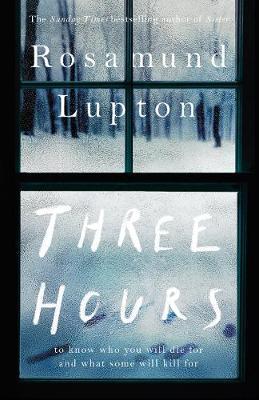 Cliff Heights School is in the midst of a surprise November blizzard. It’s also under attack. At 9:16 the headmaster, Matthew Marr, is shot twice. Students bundle him into the library, barricade the doors and tend to his head and foot injuries as best they can. He recognized the shooter, but the damage to his brain means he’s incapable of telling anyone who it was.
At 8:15 Rafi Bukhari, a Syrian refugee pupil, had seen an IED explode on the school grounds and alerted Marr, who promptly evacuated the junior school. But the institution is based across several buildings, with some students in the theatre for a dress rehearsal, more in the pottery hut for art class – and now a few trapped in the library.
Lupton toggles between these different locations, focusing on a handful of staff and students and the relationships between them. Hannah, who’s doing her best to help Mr. Marr, is Rafi’s girlfriend. Rafi is concerned for his little brother, Basi, who’s still traumatized after their escape from Syria. Mr. Marr sponsored the boys’ move to England. Could it be that anti-Muslim sentiment has made the Bukhari boys – and thus the school they attend – a target?
We also spend time behind the scenes with police investigators as they pursue leads and worried parents as they await news of their children. I found the book most gripping when the situation was still a complete unknown; as the options narrow down and it becomes clear who’s responsible, things feel a bit more predictable. However, there are still unexpected turns to come.
A few elements that stood out for me were the use of technology (FaceTime, WhatsApp and drones weren’t available at the time of Columbine), the Syrian boys’ history, and the student production of Macbeth, whose violence ironically comments on the school’s crisis. While not my usual fare, I found this well worth reading and will look into Lupton’s back catalogue, too.
Readalikes: Bloomland by John Englehardt and A Mother’s Reckoning by Sue Klebold
My rating: 
Three Hours will be published by Penguin Viking on the 9th. My thanks to the publisher for the free copy for review.
My pal Annabel has also reviewed the book today.
 Bookish Beck = Rebecca Foster. American transplant to England. Freelance proofreader and book reviewer.
 Bookish Beck