As a God Might Be by Neil Griffiths
[Note: A shortened, edited version of this review appeared in the June 15th, 2018 issue of the Church Times.]
Proctor McCullough isn’t a churchgoer. He’s not even particularly religious. Yet somehow he senses that God is calling him to build a chapel, with a little house beside it, on a cliff in the southwest of England. It’s a source of bewilderment for his partner, Holly, and their London friends. Is Mac mentally ill, or having a particularly acute midlife crisis? He’s handed off from a minister to a therapist to a neurologist, but no one knows what to make of him. This forty-four-year-old father of two, an otherwise entirely rational-seeming advisor to the government on disaster situations, won’t be deterred from his mission.
It’s important to get a sense of the way this character speaks:
I want a structure that will move people to contemplate something other than all the obvious stuff … to be confronted with a sense of something and only be able to define it as Other.
God is the transcendent Other for whom creation, what we know as life, is a gratuitous act of love, a dispossession of a portion of His infinite creativity given over to our thriving. It is a gift from His infinite excess. That we can know Him at all is because of the possibility of this excess within us, which we experience as love, art, great feats of the mind. Our bounty is Him.
Down at the project site, Mac acquires four young workers/disciples: Rebecca, Nathaniel, Terry and Rich. Rebecca is a sarcastic, voluptuous teenager who will be off to Cambridge in a few months. She perhaps represents vanity, temptation and judgment, while the other three are more difficult to slot into symbolic roles. Terry is a dreadlocked lager lout who takes care of a mother with early dementia; contrary to appearances, he’s also a thinker, and takes to carrying around a Bible along with a collection of other theological works. Nat and Rich are more sketch-like figures, just ciphers really, which became problematic for me later on.
 With Mac we shuttle between the building site and his home in London for weeks at a time. The idea of incorporating Pascal’s mystical hexagon into the church design captivates him, and the costs – initially set at £100,000 – balloon. Meanwhile, his relationship with Holly is strained almost to the breaking point as they each turn to alternative confidants, and there’s a renegotiation process as they decide whether their actions have torn them apart for good.
Like Sarah Moss, Neil Griffiths realistically blends serious concepts with everyday domestic tasks: sure, there may be a God-ordained chapel to build, but Mac also has to do the shopping and get his six-year-old twins fed and in bed at a decent hour. If Mac is meant to be a Messiah figure here, he’s a deeply flawed one; he can even be insufferable, especially when delivering his monologues on religion. If you’re like me, you’ll occasionally get incensed with him – particularly when, at the midpoint, he concocts a Clintonian justification for his behavior.
All the same, the themes and central characters were strong enough to keep me powering through this 600-page novel of ideas. Mac’s violent encounters with God and with the nature of evil are compelling, and although some of the events of the last third push the boundaries of credibility, it’s worth sticking with it to see where Griffiths takes the plot. There’s no getting past the fact that this is a dense theological treatise, but overlaid on it is a very human story of incidental families and how love sustains us through the unbearable.
If I had to point to the novel’s forebears, I’d mention Hamlet, A.S. Byatt’s The Virgin in the Garden, Michael Arditti’s Easter, and even Ayn Rand’s The Fountainhead. If you’ve read any Dostoevsky (I haven’t, yet) or Iris Murdoch, you’ll likely spot philosophical echoes. The title itself is from Wallace Stevens. It’s all unabashedly highbrow, and a greater than average familiarity with the Christian tradition is probably key. For the wary, I’d suggest not trying too hard to read metaphorical significance into character names or chapter and section titles – I’m sure those meanings are in there, but better to let the story carry you along rather than waste time trying to work it all out.
While reading this novel I was bitterly regretting the demise of Third Way magazine; it would have been a perfect place for me to engage with Griffiths’ envelope-pushing theology. I was also wishing I was still involved with Greenbelt Festival’s literature programming, as this would make a perfect Big Read. (Though however would we get people to read 600 pages?! In my experience of book clubs, it’s hard enough to get them to read 200.)
I’m grateful to Dodo Ink (“an independent UK publisher publishing daring and difficult fiction”) for stepping into the breach and taking a chance on a book that will divide Christians and the nonreligious alike, and to publicist Nicci Praça for the surprise copy that turned up on my doorstep. This turned out to be just my sort of book: big and brazen, a deep well of thought that will only give up its deeper meanings upon discussion and repeat readings.
My rating:
As a God Might Be was published in the UK by Dodo Ink on October 26th. This is Neil Griffiths’ third novel, after Betrayal in Naples (2004) and Saving Caravaggio (2006). He says that this most recent book took him seven years to write.
Three Theology Books for Easter
If you’ve been celebrating Passover or gearing up for Easter this past week, you might be interested in picking up one of these three recent (or forthcoming) theology titles I’ve encountered. (See also the more extensive Easter reading list I compiled two years ago.)
Misfit Faith: Confessions of a Drunk Ex-Pastor, Jason J. Stellman
 Stellman is a former pastor who runs a podcast called “Drunk Ex-Pastors” with his best friend and agnostic cohost, Christian Kingery. His book suffers a bit, I think, from an unclear aim: it started off as an apologia for his conversion to Catholicism after an unchurched upbringing and fervently Evangelical teen years. What it turned into is more of a theological ramble about how to see God and the world anew. For instance, God is Father, but also flesh, so we don’t need to condemn the secular: “embracing a Christianity that reflects the Incarnation by validating the physical world rather than vilifying it.”
With (dated, geeky) pop culture references, Stellman encourages a rejection of xenophobia and an embrace of narrative and ritual, which Roman Catholicism perhaps makes more space for than your average Protestant tradition. The last few lines of the book are a wonderful plea for openness, hearkening back to the very definition of ‘catholic’ – broad and inclusive:
Is misfit faith about love or suffering? Feasting or fasting? Divinity or humanity? Heaven or earth? The answer is yes, to all of it. And yeah, I want it all: the now and the later, the spirit and the flesh, the head, the heart, and the stations of the cross. I would rather embrace way too much than way too little, because something tells me that as wide as I can open my arms and heart, God’s are always open wider.
I’d recommend this to readers of David Dark and Rob Bell.
My rating: 
I received this e-book from Blogging for Books (via Edelweiss) for this review.
What Is the Bible? How an Ancient Library of Poems, Letters, and Stories Can Transform the Way You Think and Feel about Everything, Rob Bell
 Speaking of Rob Bell…this is one of his stronger books. Not as fresh and vibrant as Velvet Elvis, but it will have a big impact on teens and twentysomethings starting to question the narrow interpretations of the Bible they’ve grown up with in conservative churches. Bell stresses the importance of reading the Bible literately rather than literally: always looking deeper than surface facts to see what’s really going on here; striving to understand the background of Jewish practice and Roman occupation at the time of Jesus.
Bell emphasizes that the Bible is a disparate set of books written by fallible people who were defined by their own historical context, yet if you ask why they wrote down these stories of their interactions with the divine in this way – why they mattered to them then – you might get a glimpse of why they might still matter to us now. The “haphazard humanity” of the Bible, then is for him stronger evidence of its reliability than some rigid perfection would be.
He chooses a number of the more unusual incidents in the Bible to illuminate with a closer reading, such as Jesus writing in the dust, Ehud assassinating tubby King Eglon, and the Book of Revelation. Part 4 is usefully structured around FAQs (e.g. “So how would you define the word of God? The creative action of God speaking in and through the world, bringing new creation and new life into being”). This is like listening to a really good sermon series. (Releases May 16th.)
My rating: 
My Jewish Year: 18 Holidays, One Wondering Jew, Abigail Pogrebin
 One thing Bell stresses is that Jesus was Jewish, so you can’t understand the stories about him apart from their Jewish context. This bighearted, open-minded book strikes me as a perfect model for how any person of faith should engage with their tradition: not just offering lip service and grudgingly showing up to a few services a year, but knowing what you believe and practice, and why.
Like many an American Jew, Pogrebin marked a limited set of holidays: Hanukkah, the Passover seder, Rosh Hashanah, Yom Kippur, and Shabbat. She circumcised her son, and hosted bar/bat mitzvahs for him and her daughter. Yet she had a nagging feeling that she had never genuinely locked into her own religion, and longed to go beyond the beginner stage.
So from September 2014 to September 2015, she celebrated all the holidays in the Jewish calendar, seeking to move beyond clichés and simplistic interpretations; interviewing rabbis and scholars of every stripe and reading Torah commentaries to discover meanings she’d missed before. Yom Kippur isn’t just a day of atonement; it’s for pondering the fact of your own death, taking stock of your life and asking what must change. Hanukkah, uncomfortably, is not just about persecution but about Jew-on-Jew violence.
There are opposite strands running through the Jewish ritual year: gratitude for survival (Purim) versus sorrow at tragedies (Holocaust Remembrance Day); feasting versus fasting. I was consistently impressed by how Pogrebin draws thematic connections and locates the resonance of religious ritual in her daily life.
Favorite lines:
“[I]t’s a quintessential Jewish act: seeking, grappling. If you’re reaching, it’s because you believe there’s something to grab hold of.”
“I’m beginning to think that Judaism is obsessed with brevity and instability. But rather than finding the message depressing, it’s clarifying.”
“Judaism is always asking us to apply epic stories to everyday decisions.”
“Judaism reminds us not to run from transitions, but to consecrate them.”
My rating: 
Books that (Should Have) Literally Changed My Life
(Following on from my posts Landmark Books from My Early Life and Landmark Books in My Life, Part II.)
Every once in a while you’ll hear someone claim that a certain book will change your life. I think of a scene in Garden State, still one of my favorite movies of all time, where Natalie Portman’s character tells Zach Braff’s character “this song will change your life” and puts The Shins’ “New Slang” on his headphones. (Ok, it’s a good song, but not that great.)
Are there any books that have literally changed my life? I can think of a handful that have been extremely influential on my worldview and, in a couple of cases, also changed my behavior. As it happens, they’re all nonfiction.
Religion
 After I got back to the States from my year abroad, I spent a few years doing some intensive reading about progressive Christianity (it was sometimes also called the emergent church) and other religions, trying to decide if it was worth sticking with the faith I’d grown up in. Although I still haven’t definitively answered this for myself, and have drifted in and out of lots of churches over the last 12 years, two authors were key to me never ditching Christianity entirely: Brian McLaren and Marcus Borg.
 McLaren founded the church we attend whenever we’re back in Maryland and is the author of over a dozen theology titles, including the New Kind of Christian trilogy of allegorical novels. For me his best book is A New Kind of Christianity, which pulls together all his recurrent themes. Borg, who died in 2015, wrote several books that made a big impression on me, but none more so than The Heart of Christianity, which is the best single book I’ve found about what Christianity can and should be, going back to Jesus’ way of peace and social justice and siphoning off the unhelpful doctrines that have accumulated over the centuries.
 Any number of other Christian books and authors have been helpful to me over the years (Secrets in the Dark by Frederick Buechner, How (Not) to Speak of God by Peter Rollins, Falling Upward by Richard Rohr, An Altar in the World by Barbara Brown Taylor, Without Buddha I Could Not be a Christian by Paul Knitter, Unapologetic by Francis Spufford, and various by Kathleen Norris, Rowan Williams, Richard Holloway and Anne Lamott), reassuring me that it’s not all hellfire/pie in the sky mumbo-jumbo for anti-gay Republicans, but Borg and McLaren were there at the start of my journey.
Sexuality
 Reading is my primary means of examining society as well as my own life, so it’s no wonder that I have turned to books to learn from some gender pioneers. Hanne Blank’s accessible social history Straight (2012) is particularly valuable for its revelation of the surprisingly short history of heterosexuality as a concept – the term has only existed since the 1860s. But the book that most helped me adjust my definitions of gender and broaden my tolerance was Conundrum by Jan Morris (1974).
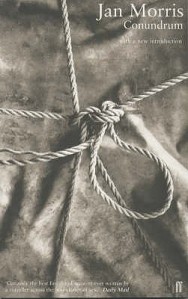 James Morris, born in 1926, was a successful reporter, travel writer, husband and father. Yet all along he knew he was meant to be female; it was something he had sensed for the first time as a young child sitting under the family piano: “I was three or perhaps four years old when I realized that I had been born into the wrong body, and should really be a girl … the conviction was unfaltering from the start.” In 1954 he began taking hormones to start his transition to womanhood, completed by a sex reassignment surgery in Morocco in 1972. This exceptional memoir of sex change evokes the swirl of determination and doubt, as well as the almost magical process of metamorphosing from one thing to another. Morris has been instrumental in helping me see sexuality as a continuum rather than a fixed entity.
Food
Apart from Michael Pollan, can you guess who’s had the greatest influence on my eating habits? You might be surprised to learn it’s American novelist Jonathan Safran Foer. In 2009 he published a provocative book called Eating Animals. I’m still surprised by how powerful and challenging I found it, considering that I knew pretty much what to expect: anti-meat rhetoric from a trendy vegetarian, with plenty of arresting statistics and horrifying behind-the-scenes accounts of factory farming and slaughter. But I set aside my jaded approach to potential propaganda and let it all saturate me, and it was devastating.
 The fact that I still haven’t completely given up meat is proof of how difficult it is to change, even once you’ve been convicted. We’ve gone from eating meat occasionally to almost never, and then mostly when we’re guests at other people’s houses. But if I really reminded myself to think about where my food was coming from, I’m sure we’d be even more hardline. Foer didn’t answer all my questions – what about offal and wild game, and why not go all the way to veganism? – but I appreciated that he never characterizes the decision to be vegetarian as an easy one. He recognizes the ways food is bound up with cultural traditions and family memories, but still thinks being true to one’s principles outweighs all. (He’s brave enough to suggest to middle America that it’s time to consider a turkey-free Thanksgiving!)
Daily Life
 There’s nothing more routine than brushing your teeth, and I never thought I would learn a new way to do it at age 32! But that’s just what Ignore Your Teeth and They’ll Go Away by Sheldon Dov Sydney gave me. He advises these steps: (1) brushing with a dry brush to remove bits of food and plaque, (2) flossing, and (3) brushing with toothpaste as a polish and to freshen breath. It takes a little bit longer than your usual quick brush and thus I can’t often be bothered to do it, but it does always leave my mouth feeling super-clean.
 I frequently succumb to negative self-talk, thinking “I can’t cope” or “There’s no way I could…” Feel the Fear and Do It Anyway by Susan Jeffers helped me see that I need to be more positive in my thought life. Originally published in 1987, the self-help classic says that at the base of every fear is a belief that “I can’t handle it.” Our fears are either of things that can happen to us (aging and natural disasters) or actions we might take (going back to school or changing jobs). You can choose to hold fear with either pain (leading to paralysis) or power (leading to action). This is still a struggle for me, but whenever I start to think “I can’t” I try to replace it with Jeffers’ mantra, “Whatever it is, I’ll handle it.”
Can you think of any books that have literally changed your life?
Practical Theology: Something More by John Pritchard
This is only the second theology book I’ve reviewed here, after Joan Chittister’s Between the Dark and the Daylight in May 2015. I requested John Pritchard’s Something More from SPCK after reading a leaflet about it at Bloxham Festival, thinking it sounded like a relevant, non-preachy approach to the spiritual side of life. And that is indeed what I found. It’s a book stuffed full of relatable themes under one overarching topic: the moments that cause us to question whether there is more to life than what we see and do in the everyday.
 Each chapter has many of the familiar elements of a short sermon: opening prompts, personal or borrowed anecdotes, exposition of a theme, quotations from the Bible and other writers or poets, and life application questions. At times I felt Pritchard was too reliant on quotes from other authors, meaning I didn’t get a particular sense of his own style. However, like an Anglican sermon, each chapter is something you can work through in 10 or 15 minutes – understandable, solidly put together, and with plenty of take-home messages.
Some examples of the chapter-by-chapter themes are suffering, social justice, the arts, and the search for stillness and wonder. There are a few slightly overlapping pieces that might have been combined, but that would have altered the digestible format. A recurring image is of the church building as a tranquil place of holiness and power – no matter if you view it religiously or not. Whether Pritchard is discussing pain or poetry, his tactic is always to expose hints of the supernatural. “To describe the Bruch violin concerto as the product of horse hair scraping over catgut doesn’t feel adequate. There’s more to be said,” he writes.
That word “more” is the book’s clarion call, encouraging readers to look deeper into every situation for sparks of light that point to God. SPCK is a venerable Christian publishing company and Pritchard is a retired Bishop of Oxford, so it’s clear where the book is coming from. Its assumptions may not reflect your own, as Pritchard is well aware. He remembers being in a hospital in London and telling his nurse about the book he was planning. “The entire Christian world-view is probably a foreign country to my nurse,” he realized, which encouraged him to avoid religious jargon and keep it simple and applicable here.
I think everyone can relate to the circumstances Pritchard sets out at the beginning of the book: “Life is OK in an OK kind of way but it fails the test of ecstasy or lament. It rolls on in a safe, middling register, but it feels as if there should be more. … In the meantime we get on with secondary things, with our habits of low hope.” If you dare to think there must be more to life than going to work and paying the bills and want to explore what might be out there, I’d recommend picking this up alongside books by some of the other terrific writers Pritchard quotes, such as Brian McLaren, Marcus Borg, and Barbara Brown Taylor.
With thanks to Sarah Head at SPCK for sending a free copy for review.
My rating: 
Book Spine Poetry
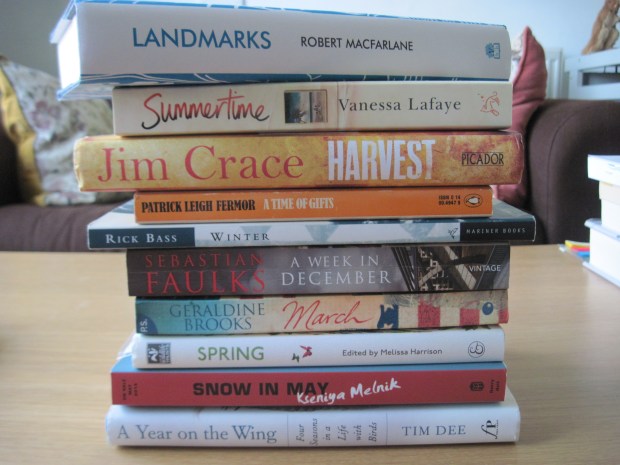
April is National Poetry Month, so I thought I’d try my hand at some book spine poetry. Thanks to Naomi at Consumed by Ink and Cathy at 746 Books for the fun idea! I have taken the liberty of adding punctuation between some lines, but the book titles themselves appear exactly as on the spines. This has been a fun project to do a bit at a time over the last couple of weeks – it’s always a nice break from my editing and more analytical writing.
Peruse your own shelves or the local library’s and have a go. It’s an easy way to get creative!
The years go by so fast…
Landmarks
Summertime
Harvest
A time of gifts
Winter
A week in December
March
Spring
Snow in May
A year on the wing
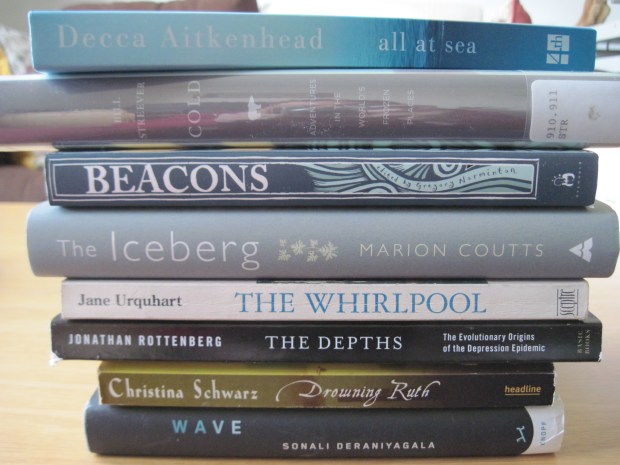
A morbid little number, with a riff on Stevie Smith:
All at sea
Cold beacons:
The iceberg,
The whirlpool,
The depths.
Drowning Ruth,
Wave.
Memento mori:
In fond remembrance of me
How to read a graveyard:
A tour of bones,
Mostly harmless.
Last night on earth?
Nothing to be frightened of.

Thanks to my husband, we have a ton of bird-themed books. The concluding line from Emily Dickinson makes this one a bit of a cheat.
Adventures among birds
To see every bird on earth:
The secret lives of puffins,
Last of the curlews,
The life of the skies.
Rare encounters with ordinary birds:
Songbird journeys,
An eye on the sparrow,
The goldfinch.
Falcon fever:
The armchair birder
Feeding the eagles,
Chasing the wild goose.
Hope is the thing with feathers.

An attempt to lay the groundwork for some progressive theology:
How (not) to speak of God
Jesus among other gods:
Atonement?
Blessed assurance?
Everything is illuminated?
The nice and the good
Crossing to safety?
A new kind of Christianity
The story we find ourselves in.
An unquiet mind
Until I find you.
Love wins;
No man is an island;
We make the road by walking.

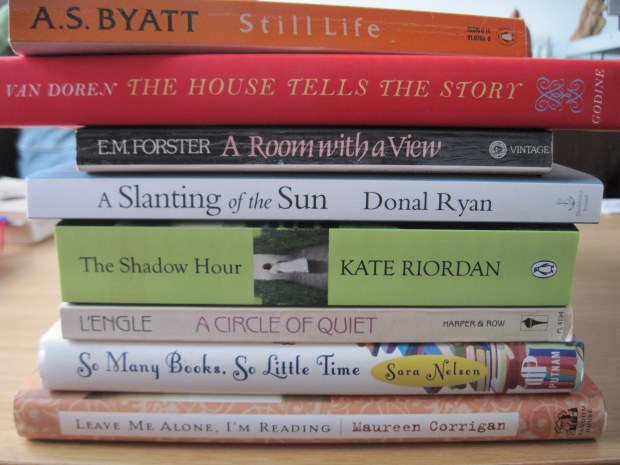
This one’s my favorite – a tribute to my peaceful days spent working from home.
Still life
The house tells the story:
A room with a view
A slanting of the sun
The shadow hour
A circle of quiet.
So many books, so little time;
Leave me alone, I’m reading.
My Favorite Nonfiction Reads of 2015
Without further ado, I present to you my 15 favorite non-fiction books read in 2015. I’m a memoir junkie so many of these fit under that broad heading, but I’ve dipped into other areas too. I give two favorites for each category, then count down my top 7 memoirs read this year.
Note: Only four of these were actually published in 2015; for the rest I’ve given the publication year. Many of them I’ve already previewed through the year, so – like I did yesterday for fiction – I’m limiting myself to two sentences per title: the first is a potted summary; the second tells you why you should read this book. (Links given to full reviews.)
Foodie Lit
 A Homemade Life: Stories and Recipes from My Kitchen Table by Molly Wizenberg (2009): Wizenberg reflects on the death of her father Burg from cancer, time spent living in Paris, building a new life in Seattle, starting her food blog, and meeting her husband through it. Each brief autobiographical essay is perfectly formed and followed by a relevant recipe, capturing precisely how food is tied up with memories.
 Comfort Me with Apples: More Adventures at the Table by Ruth Reichl (2001): Reichl traces the rise of American foodie culture in the 1970s–80s (Alice Waters and Wolfgang Puck) through her time as a food critic for the Los Angeles Times, also weaving in personal history – from a Berkeley co-op with her first husband to a home in the California hills with her second after affairs and a sticky divorce. Throughout she describes meals in mouth-watering detail, like this Thai dish: “The hot-pink soup was dotted with lacy green leaves of cilantro, like little bursts of breeze behind the heat. … I took another spoonful of soup and tasted citrus, as if lemons had once gone gliding through and left their ghosts behind.”
Nature Books
 Meadowland: The Private Life of an English Field by John Lewis-Stempel (2014): Lewis-Stempel is a proper third-generation Herefordshire farmer, but also a naturalist with a poet’s eye. Magical moments and lovely prose, as in “The dew, trapped in the webs of countless money spiders, has skeined the entire field in tiny silken pocket squares, gnomes’ handkerchiefs dropped in the sward.”
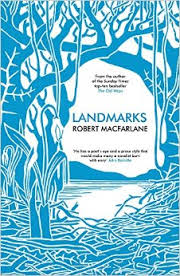 Landmarks by Robert Macfarlane: This new classic of nature writing zeroes in on the language we use to talk about our environment, both individual words – which Macfarlane celebrates in nine mini-glossaries alternating with the prose chapters – and the narratives we build around places, via discussions of the work of nature writers he admires. Whether poetic (“heavengravel,” Gerard Manley Hopkins’s term for hailstones), local and folksy (“wonty-tump,” a Herefordshire word for a molehill), or onomatopoeic (on Exmoor, “zwer” is the sound of partridges taking off), his vocabulary words are a treasure trove.
Theology Books
 Amazing Grace: A Vocabulary of Faith by Kathleen Norris (1998): In few-page essays, Norris gives theological words and phrases a rich, jargon-free backstory through anecdote, scripture and lived philosophy. This makes the shortlist of books I would hand to skeptics to show them there might be something to this Christianity nonsense after all.
 My Bright Abyss: Meditation of a Modern Believer by Christian Wiman (2013): Seven years into a cancer journey, Wiman, a poet, gives an intimate picture of faith and doubt as he has lived with them in the shadow of death. Nearly every page has a passage that cuts right to the quick of what it means to be human and in interaction with other people and the divine.
General Nonfiction
 Penelope Fitzgerald: A Life by Hermione Lee (2013): Although Penelope Fitzgerald always guarded literary ambitions, she was not able to pursue her writing wholeheartedly until she had reared three children and nursed her hapless husband through his last illness. This is a thorough and sympathetic appreciation of an underrated author, and another marvellously detailed biography from Lee.
 Being Mortal: Medicine and What Matters in the End by Atul Gawande (2014): A surgeon’s essential guide to decision-making about end-of-life care, but also a more philosophical treatment of the question of what makes life worth living: When should we extend life, and when should we concentrate more on the quality of our remaining days than their quantity? The title condition applies to all, so this is a book everyone should read.
Memoirs
 The Year My Mother Came Back by Alice Eve Cohen: Wry and heartfelt, this is a wonderful memoir about motherhood in all its variations and complexities; the magic realism (Cohen’s dead mother keeps showing up) is an added delight. I recommend this no matter what sort of relationship, past or present, you have with your mother, especially if you’re also a fan of Anne Lamott and Abigail Thomas.
- The Art of Memoir
 by Mary Karr: There is a wealth of practical advice here, on topics such as choosing the right carnal details (not sexual – or not only sexual – but physicality generally), correcting facts and misconceptions, figuring out a structure, and settling on your voice. Karr has been teaching (and writing) memoirs at Syracuse University for years now, so she’s thought deeply about what makes them work, and sets her theories out clearly for readers at any level of familiarity.
 A Circle of Quiet by Madeleine L’Engle (1971): In this account of a summer spent at her family’s Connecticut farmhouse, L’Engle muses on theology, purpose, children’s education, the writing life, the difference between creating stories for children and adults, neighbors and fitting into a community, and much besides. If, like me, you only knew L’Engle through her Wrinkle in Time children’s series, this journal should come as a revelation.
-
 Do No Harm: Stories of Life, Death and Brain Surgery by Henry Marsh (2014): “Terrible job, neurosurgery. Don’t do it.” – luckily for us, Henry Marsh reports back from the frontlines of brain surgery so we don’t have to. In my favorite passages, Marsh reflects on the mind-blowing fact that the few pounds of tissue stored in our heads could be the site of our consciousness, our creativity, our personhood – everything we traditionally count as the soul.
 I Hate to Leave This Beautiful Place by Howard Norman (2013): Norman has quickly become one of my favorite writers. You wouldn’t think these disparate autobiographical essays would fit together as a whole, given that they range in subject from Inuit folktales and birdwatching to a murder–suicide committed in Norman’s Washington, D.C. home and a girlfriend’s death in a plane crash, but somehow they do; after all, “A whole world of impudent detours, unbridled perplexities, degrading sorrow, and exacting joys can befall a person in a single season, not to mention a lifetime.”
 Portrait of an Addict as a Young Man by Bill Clegg (2010): Through this book I followed literary agent Bill Clegg on dozens of taxi rides between generic hotel rooms and bar toilets and New York City offices and apartments; together we smoked innumerable crack pipes and guzzled dozens of bottles of vodka while letting partners and family members down and spiraling further down into paranoia and squalor. He achieves a perfect balance between his feelings at the time – being out of control and utterly enslaved to his next hit – and the hindsight that allows him to see what a pathetic figure he was becoming.
And my overall favorite nonfiction book of the year:
 1. The Light of the World by Elizabeth Alexander: In short vignettes, beginning afresh with every chapter, Alexander conjures up the life she lived with – and after the sudden death of – her husband Ficre Ghebreyesus, an Eritrean chef and painter. This book is the most wonderful love letter you could imagine, and no less beautiful for its bittersweet nature.
What were some of your best nonfiction reads of the year?
Reviews Roundup, November–December
One of my goals with this blog is to have one convenient place where I can gather together all my writing that has appeared in disparate online locations. To that end, once a month I provide links to all book reviews I’ve published elsewhere, with a rating (below each description) and a taster so you can decide whether to read more. A few exceptions: I won’t point out my Kirkus Indie, BlueInk or Publishers Weekly reviews since I don’t get a byline.
The Bookbag
 In Search of Mary: The Mother of All Journeys by Bee Rowlatt: A BBC journalist and mother of four sets out, baby in tow, to trace the steps of Mary Wollstonecraft in Norway and France. A follow-up trip to California is a little off-topic, but allows Rowlatt to survey the development of feminism over the last few centuries. This isn’t as successful a bibliomemoir as many I’ve read in recent years, such as Rebecca Mead’s My Life in Middlemarch or Samantha Ellis’s How to Be a Heroine, but for readers interested in engaging in the ongoing debate about how women can balance work life with motherhood, and especially for any women who have attempted traveling with children, it’s a fun, sassy travelogue.

Foreword Reviews
 Italy Invades: How Italians Conquered the World by Christopher Kelly and Stuart Laycock: Proceeding alphabetically from Afghanistan to Zimbabwe, the authors give a comprehensive picture of Italians’ global reach through one- to five-page snapshots. There are many familiar names here, such as Caesar, Garibaldi and Marco Polo. Along with exploration, some major reasons for historical crossover were trade, war, colonialism and immigration. At times it feels as if the authors are grasping at straws; better to skip one-paragraph write-ups altogether and focus instead on the countries that have extensive links with Italy. Nonetheless, this is a lively, conversational book full of surprising facts.

Why You Won’t Go to Hell by Benjamin Vande Weerdhof Andrews: In a well-structured argument, Andrews prizes empirical thinking, rejects the supernatural, and affirms the possibility of godless morality. His central thesis is that religion doesn’t evolve to keep pace with society and so holds humanity back. The book’s tone is too often defensive, often in response to included website comments, and there are some failures of accuracy and fairness. Ultimately, though, this could be an inspirational book for atheists or believers, prompting both groups to question their assumptions and be willing to say “I don’t know.” Readers of Sam Harris and Christopher Hitchens will be particularly drawn to the book, but others should take a chance on it too.

 Cultured Food for Health by Donna Schwenk: When Schwenk started eating cultured foods in 2002, she had diabetes, high blood pressure, and a premature newborn. Keen to see if good bacteria could help with her medical problems, she started introducing the “healing powerhouse” of kefir (a fermented milk product resembling thin yogurt), kombucha (bubbly tea), and cultured vegetables into her diet, and soon reaped the rewards. About a quarter of the book is background information about probiotic foods. Bullet-pointed lists of health benefits, along with an alphabetical inventory of the diseases that cultured foods can treat, should prove helpful. The rest of the book is devoted to recipes, most vegetarian.
Three Simple Questions: Being in the World, But Not of It by Charlie Horton: Horton, trained as a social worker, was diagnosed with cerebellar degeneration in 1988. It has gradually affected his speech and movement. Despite having lived with disability for nearly three decades, he declares, “the world I live in is rich, and my spirit is young.” Here he documents how he deals with depression and physical limitations through guided meditations that bring him closer to God. Although he comes from a Christian perspective, he writes about spirituality in such inclusive terms that his work should speak to people of any faith.
Middle Passage: The Artistic Life of Lawrence Baker by Louis B. Burroughs, Jr.: This ghostwritten autobiography of an African-American artist is not only an evocative, eventful life story that moves from the Jim Crow South to the North, but also a forceful artist’s manifesto. Burroughs writes in Baker’s voice, a decision that works surprisingly well. The title is a powerful reference to the slave trade. Indeed, Burroughs consciously crafts Baker’s autobiography as an “up from slavery” narrative reminiscent of Richard Wright and Maya Angelou – with ‘slavery’ in this case being poverty and racism.
Nudge
 40 Sonnets by Don Patterson: All but one of the poems in this new book have the sonnet’s traditional 14 lines; “The Version” is a short prose story about writing an untranslatable poem. However, even in the more conventional verses, there is a wide variety of both subject matter and rhyme scheme. Topics range from love and death to a phishing phone call and a footpath blocked off by Dundee City Council. A few favorites were “A Powercut,” set in a stuck elevator; “Seven Questions about the Journey,” an eerie call-and-response; and “Mercies,” a sweet elegy to an old dog put to sleep. There weren’t quite enough stand-outs here for my liking, but I appreciated the book as a showcase for just how divergent in form sonnets can be.
 Without You There Is No Us by Suki Kim: This is a quietly gripping book even though not much of moment happens over Kim’s five months teaching young men at a missionary-run college in Pyongyang. She was in a unique position in that students saw her as ethnically one of their own but she brought an outsider’s perspective to bear on what she observed. Just before she flew back to the States in 2011, Kim Jong-Il died, an event she uses as a framing device. It could have represented a turning point for the country, but instead history has repeated itself with Kim Jong-un. Kim thus ends on a note of frustration: she wants better for these young men she became so fond of. A rare glimpse into a country that carefully safeguards its secrets and masks its truth.
 Alive, Alive Oh!: And Other Things that Matter by Diana Athill: Diana Athill turns 98 on December 21st. Apart from “Dead Right,” however, this collection is not primarily concerned with imminent death. Instead Athill is still grateful to be alive: marveling at a lifetime of good luck and health and taking joy in gardening, clothing, books, memories and friendships. Six of the 10 essays originally appeared elsewhere. The collection highlight is the title piece, about a miscarriage she suffered in her forties. Another stand-out is “The Decision,” about moving into a retirement home in her nineties. This doesn’t live up to her best memoirs, but is an essential read for a devoted fan, and a consolation given she will likely not publish anything else (though you never know). [For first-time Athill readers, I’d recommend starting with Somewhere Towards the End, followed by Stet, about her work as a literary editor.]
I also post reviews of most of my casual reading and skimming on Goodreads:
The Weightless World by Anthony Trevelyan: This debut novel blends postcolonial bureaucracy with steampunk zaniness. The setup is familiar enough: businessmen head overseas to take financial advantage of a former colony, puzzle over unfamiliar customs, and by the end are chastened but gain a clearer sense of values. Narrator Steven Strauss is the personal assistant to Raymond Ess, an entrepreneur with a history of mental illness. Their aviation company has gone bust; Strauss is to accompany Ess to India and keep him occupied by looking for an anti-gravity machine. Not anchored by either current events or convincing fantasy, the plot suffers in comparison to works by Geoff Dyer or Nick Harkaway. Despite entirely serviceable writing and a gravity-defying theme, it never really takes off.

 My Confection: Odyssey of a Sugar Addict by Lisa Kotin: 1978. Twenty-one-year-old mime goes to macrobiotic rehab to recover from sugar addiction. Fails. Shows signs of being a sex addict as well. Pared down to headlines, that’s how this fairly rambling memoir about Kotin’s relationships with food, family, lovers, and career opens. I kept waiting for a turn, some moment of revelation, when Kotin’s binge eating would be solved. Still, her recreation of her obsessive younger self can be pretty funny and charming, and her family sounds a bit like the Sedaris clan. I found this a bit dated, but others may find the time period and Jewish family background more evocative.
 Good on Paper by Rachel Cantor: I’m going to chalk this one up to blurb inflation. The writing is lively and the plot well crafted, with quirky postmodern touches, but the novel as a whole did not live up to my absurdly high expectations: it’s really nothing like A.S. Byatt’s Possession. It’s 1999 and Shira Greene is a failed translator from the Italian, now working as a temp in New York City and raising her daughter Andi with the help of her gay, Pakistani co-parent, Ahmad. One day she gets a call from Romei, a Nobel Prize-winning Italian poet who wants her to translate his new work, a version of Dante’s Vita Nuova that focuses on his relationship with his ill wife – and eventually starts to comment on Shira’s own life in surprising ways.
Water Sessions by James Lasdun: Wonderful poems from a severely underrated writer. The British Lasdun has relocated to small-town upstate New York, where he’s learned the spiritual worth of manual labor. There are such interesting rhyme schemes and half-rhymes throughout. One of the most striking poems, “Thing One and Thing Two,” compares human and animal sexuality in a rather disturbing way. The title sequence is a dialogue between a patient and a therapist, discussing what went wrong in a relationship and how arguments are never ‘about’ the thing that started it.
 The Secret Chord by Geraldine Brooks: A retelling of the life of King David from the perspective of the prophet Nathan. The naming takes some getting used to, but the stories – from gory massacres to moments of triumph – are recognizable from the Old Testament. What makes Brooks’s take unique is the different points of view it shows and the ways it subtly introduces doubt about David’s carefully cultivated image. It’s sensual historical fiction, full of rich descriptive language. Strangely unmemorable for me, perhaps because the storyline is just too familiar. Brooks doesn’t offer a radical reinterpretation but sows small seeds of doubt about the hero we think we know. (Full review in Jan/Feb 2016 issue of Third Way magazine.)
 When I Die: Lessons from the Death Zone by Philip Gould: Gould may be familiar to British readers as a key strategist of the New Labour movement and one of Tony Blair’s advisors. In 2008 he was diagnosed with esophageal cancer and chose to pay for private treatment at New York’s Sloan-Kettering hospital instead of going for a radical operation through the NHS – a fateful decision. Gould’s own account is fairly short, about 140 pages, but it’s supplemented by short reminiscences from his wife and two daughters. Daughter Georgia’s, especially, is a very good blow-by-blow of his final week. All royalties from the book went to the National Oesophago-Gastric Cancer Fund.
 Twain’s End by Lynn Cullen: “Twain’s End” was a possible name for the Clemens house in Connecticut, but it’s also a tip of the hat to Howards End and an indication of the main character’s impending death. In January 1909, when the novel opens, Samuel Clemens, 74, is busy dictating his autobiography and waiting for Halley’s Comet, the heavenly body that accompanied his birth, to see him back out. His secretary, Isabel Lyon, is 45 and it’s no secret that the two of them are involved. I love how the novel shifts between the perspectives of several strong female characters yet still gives a distinct portrait of Clemens/Twain. Interestingly, I found that it helped to have visited the Twain house in Connecticut – I could truly picture all the scenes, especially those set in the billiard room and conservatory.
 Meadowland: The Private Life of an English Field by John Lewis-Stempel: Lewis-Stempel is a proper, third-generation Herefordshire farmer, but also a naturalist with a poet’s eye. His day job might involve shooting rabbits, cutting hay and delivering lambs, but he still finds the time to notice and appreciate wildlife. He knows his field’s flowers, insects and birds as well as he knows his cows; he gets quiet and close enough to the ground to watch a shrew devouring beetles. June and July are the stand-out chapters, with some truly magical moments. When his mower breaks on a stone, he has to cut the hay by hand, returning him to a centuries-gone model of hard labor. All delivered in the loveliest prose.

Did You Ever Have a Family by Bill Clegg: A strong debut novel about personal and community responses to tragedy. Clegg’s multivocal approach works quite well, though there are perhaps a few too many voices diluting the mixture. I like how the revelations of what really happened that night before the wedding to cause the fatal house fire come gradually, making you constantly rethink who was responsible and what it all means. The small-town Connecticut setting is a good one, but I’d question the decision to set so much of the book in Washington, where the bereaved June drives on a whim. For a tragic story, it’s admirably lacking in melodrama.
 A Homemade Life: Stories and Recipes from My Kitchen Table by Molly Wizenberg: Foodoir extraordinaire! I liked this even better than Delancey, which is a terrific book about opening a pizza restaurant in Seattle with her husband. Here we get the prequel: the death of her father Burg from cancer, time spent living in Paris, building a new life in Seattle, starting her now-famous food blog (Orangette), and meeting her husband Brandon through it. Each brief autobiographical essay is perfectly formed and followed by a relevant recipe, capturing precisely how food is tied up with her memories. Wizenberg’s very fond of salad, but also of cake, and every recipe is full-on in terms of flavors and ingredients.
Ellen Foster by Kaye Gibbons: This was a random library book sale purchase, chosen almost entirely for the title. I set aside my usual dislike of child narrators and found an enjoyable voice-driven novella about a feisty ten-year-old who loses both her parents (good riddance to her father, at least) and finds her own unconventional family after cycling through the homes of some truly horrid relatives. Just as an example, her maternal grandmother sends her out to work picking cotton. The book is set in the South, presumably in the 1970s or 80s, so it’s alarming to see how strong racial prejudice still was.
 The Ecco Book of Christmas Stories, edited by Alberto Manguel: I read this over several years, a handful each holiday season. There are some very unusual choices, including some that really have hardly anything to do with Christmas (e.g. one by Bessie Head). Still, it’s a nice book to have to hand, even if just to skip through. Manguel strikes a good balance between well-known short story writers, authors you might never think to associate with Christmas, and fairly obscure works in translation. Four favorites: “A Christmas Memory,” Truman Capote (overall favorite); “Christmas Is a Sad Season for the Poor,” John Cheever; “The Zoo at Christmas,” Jane Gardam; and “O’Brien’s First Christmas,” Jeanette Winterson.
Between the Dark and the Daylight, Joan Chittister
 Joan Chittister is a Benedictine nun and author of over 50 books of theology. Somehow I had never heard of her before I requested this title from Blogging for Books. Between the Dark and the Daylight, which came out in February, strikes me as a work of practical spirituality with a self-help bent. It’s not very religion-specific; in fact, Jesus is only mentioned four times, and the word “Christian” appears just once.
Based on the title, I was expecting something like Barbara Brown Taylor’s Learning to Walk in the Dark, which is more about metaphors of darkness and how times of doubt and suffering may actually be helpful for people of faith. Although there is likely some overlap between the two, Chittister’s subtitle – Embracing the Contradictions of Life – gives a better idea of what her book is about. Her focus on oxymorons and pairs of opposites spurs readers to re-evaluate and redefine experiences that are always envisioned as negative: frustration, confusion, loss, solitude, and doubt (in this last she reminds me of Peter Rollins).
“To the average person whose life is exemplary most of all for its ordinariness—to people like you and me, for instance—it is what goes on inside of us that matters for the healthy life and real spirituality. … Whatever it is that we harbor in the soul throughout the nights of our lives is what we will live out during the hours of the day.”
Chittister takes emotions seriously, but at the same time she gently nudges us to look below the surface and ask what’s really going on within.
In Chapter 2, “The Delusion of Frustration,” for example, she insists that “Frustration is a cover-up for something we have yet to face in ourselves. … It’s what we use to explain the sour or pouty or demanding or manipulative attitudes we have developed. It is the right we assert to be less than we are capable of being.”
Rather than seeing uncertainty as negative, we should consider it as fostering “the spirit of invention and possibility”: “Life is about participating in the fine art of finding ourselves—our talents, our confidence, our sense of self, our purpose in life.”
Rather than letting failure drive us into despair, we must “pursue the possible in the imperfect,” for “hope lies in taking what we have … and using every heartbeat within us to turn it into something worthwhile.” As Churchill once said, “Success is bounding from failure to failure with no loss of enthusiasm.”
“The Creativity of Confusion” and “The Liberation in Loss” are two more stand-out chapters, with too many quotable lines to mention here.
This book has been quite inspirational for me. It’s refreshing to see that Chittister doesn’t advocate mute resignation to what life/God/Fate has in store for us; “it is as much our responsibility to shape life as it is for life to shape us.” I especially appreciated her advice to “Plant yourself where you know you can bloom.”
If I were being critical, I might say that her prose is a little repetitive and too reliant on quotes and anecdotes from external sources. She is certainly more focused on ideas than on writing style. This is a common complaint I have about theology books: if academic, they’re inaccessible; if popular, they’re averagely written.
Nevertheless, I think Chittister’s work will be revelatory for a lot of people. And you don’t have to be a Catholic, or even a Christian, to find wisdom here. (My NetGalley request to read the book was initially declined because I’m not a Catholic blogger, a curious instance of narrow, discriminatory thinking.) Anyone who wants to pursue a life of joy and purpose – who dares to believe that life could be more than a cycle of frustration and hopelessness – will want to give this a read.
My rating: 
Recommended Easter Reading
Unlike Christmas, Easter is a holiday that might not lend itself so easily to reading lists. December is the perfect time to be reading cozy books with wintry scenes of snow and hearth, or old-time favorites like Charles Dickens. Christmas-themed books and short stories are a whole industry, it seems. Lent and Advent both prize special foods, traditions and symbols, but beyond devotional reading there doesn’t seem to be an Easter book scene. Nonetheless, I have a handful of books I’d like to recommend for the run-up to Easter, whether for this year or the future.
 Easter, Michael Arditti
I hadn’t heard of Michael Arditti until I reviewed his novel The Breath of Night – a taut, Heart of Darkness-inspired thriller about a young man searching for a missing priest in the Philippines – for Third Way magazine in late 2013. He deserves to be better known. Easter (2000), his third novel, earned him comparisons to Iris Murdoch and Barbara Pym. His nuanced picture of modern Christianity, especially the Anglican Church, is spot-on.
I’ve just finished Part One, which traces the week between Palm Sunday and Easter Sunday in a fictional London parish, St Mary-in-the-Vale, Hampstead. Structured around the services of Holy Week and punctuated with bits of liturgy, the novel moves between the close third-person perspectives of various clergy and parishioners. Huxley Grieve, the vicar, is – rather inconveniently – experiencing serious doubts in this week of all weeks. And this at a time when the new Bishop of London, Ted Bishop (“Bishop by name, bishop by calling,” he quips), has announced his mission to root out the poison of liberalism from the Church.
So far I’m reminded of a cross between Susan Howatch and David Lodge (especially in How Far Can You Go?), with a dash of the BBC comedy Rev thrown in. Reverend Grieve’s sermons may be achingly earnest, but the novel is also very funny indeed. Here’s a passage, almost like a set of stage directions, from the Palm Sunday service: “The procession moves up the nave. The Curate leads the donkey around the church. It takes fright at the cloud of incense and defecates by the font.”
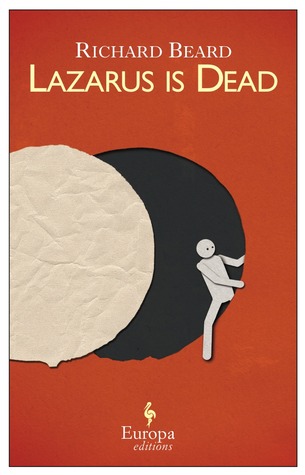 Lazarus Is Dead, Richard Beard
In this peculiar novel-cum-biography, Beard attempts to piece together everything that has ever been said, written and thought about the biblical character of Lazarus. The best sections have Beard ferreting out the many diseases from which Lazarus may have been suffering, and imagining what his stench – both in life and in death – must have been like. (“He stinketh,” as the Book of John pithily puts it.)
Alongside these reasonable conjectures is a strange, invented backstory for Jesus and Lazarus: when they were children Jesus failed to save Lazarus’ younger brother from drowning and Lazarus has borne a lifelong grudge. A Roman official is able to temporarily convince Lazarus that he needs to take up the mantle of the Messiah because he came back to life: he has the miracle to prove the position, whether he wants it or not. The end of the novel follows the strand of the Passion Week, though in a disconnected and halfhearted fashion.
Beard’s interest is not that of a religious devotee or a scriptural scholar, but of a skeptical postmodern reader. Lazarus is a vehicle for questions of textual accuracy, imagination, and the creation of a narrative of life and death. His unprecedented second life must make him irresistible to experimental novelists. Beard’s follow-up novel, Acts of the Assassins, is also Bible-themed; it’s a thriller that imagines the Roman Empire still in charge today.
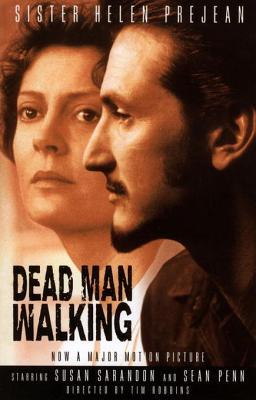 Dead Man Walking, Sister Helen Prejean
No matter your current thoughts on the death penalty, you owe it to yourself to read this book with an open mind. I read it in the run-up to Easter 2007, and would recommend it as perfect reading for the season. As I truly engaged with themes of guilt and retribution, I felt the reality of death row was brought home to me for the first time. Many of the men Prejean deals with in this book we would tend to dismiss as monsters, yet Jesus is the God who comes for the lost and the discounted, the God who faces execution himself.
The film version, which conflates some of the characters and events of the book, is equally affecting. I saw it first, but it does not ruin the reading experience in any way.
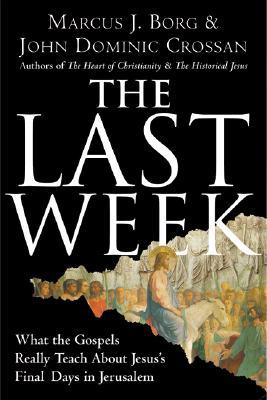 The Last Week: What the Gospels Really Teach about Jesus’s Final Days in Jerusalem, Marcus J. Borg and John Dominic Crossan
Marcus Borg, who just died on January 21st, has been one of the most important theologians in my continuing journey with Christianity. His Reading the Bible Again for the First Time and The Heart of Christianity are essential reading for anyone who’s about to give up on the faith. In this day-by-day account, mostly referencing the Gospel of Mark, Borg and Crossan convey all that is known about the historical Jesus’ last week and death. They collaborated on a second book, The First Christmas, which does the same for Jesus’ birth.
And now for two more unusual, secular selections…
 Bellman & Black, Diane Setterfield
Call me morbid, but I love English graveyards. My most enduring Easter memory is of dawn services at the country church in my husband’s hometown. In the weak half-light, with churchyard rooks croaking a near-deafening chorus, the overwhelming sense was of rampant wildness. The congregation huddled around a bonfire while a black-cloaked vicar intoned the story of scripture, from creation to the coming of Christ, as loudly as possible over the rooks – trying to win mastery over the night, and score a point for civilization in the meantime.
This anecdote goes some way toward explaining why I rather enjoyed Bellman and Black – but why many others won’t. Setterfield’s second novel is a peculiar beast, a bit like a classic suspense story but also an English country fable. Protagonist William Bellman is part Job and part Faustus. At age ten, he makes a catapult that kills a rook. Thereafter, his life is plagued by death, despite his successful career as an entrepreneur at a cloth mill. Can he make a deal with the Devil – or, rather, the sinister Mr. Black – that will stop the cycle of deaths?
Bellman’s daughter Dora is a wonderful character, and because I love birds anyway and have strong, visceral memories involving rooks in particular, I enjoyed Setterfield’s symbolic use of them. However, many will be bored to tears by details of cloth-making and dyeing in early nineteenth-century England. Setterfield evokes her time period cannily, but in such a painstaking manner that the setting does not feel entirely natural. Here’s hoping for a return to form with Setterfield’s third novel.
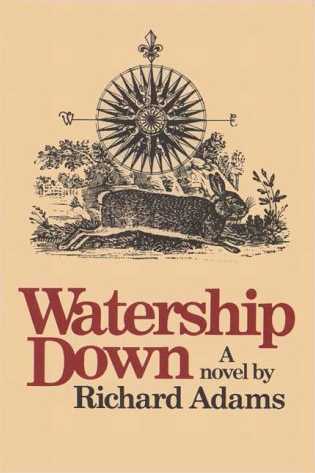 Watership Down, Richard Adams
This was the first book I ever borrowed from the Adult Fiction section of the public library, when I was eight years old. It quickly became a favorite, and though I didn’t reread it over and over like I did the Chronicles of Narnia, it still has a strong place in my childhood memories. Why have I chosen it for this list? Well, it’s about rabbits: a warren comes under threat from English countryside development and human interference.
I loved a little story Rachel Joyce inserts in her novel The Love Song of Miss Queenie Hennessy. Taking over from another nun, a young, air-headed nurse at Queenie’s hospice resumes reading Watership Down to a patient. At the end the patient cries, “Oh, it’s so sad, those poor rabbits” and the nurse replies, “What rabbits?” (You’d think the cover might have given it away!) It’s a good laugh, but also reflects how carefully Adams characterizes – one might say anthropomorphizes – each rabbit; you might forget they’re actually animals.
Do you have any favorite books to read or reread at particular holidays?
Happy spring reading!
 Bookish Beck = Rebecca Foster. American transplant to England. Freelance proofreader and book reviewer.
 Bookish Beck