October Books: Ballard, Czarnecki, Moss, Oliver, Ostriker, Steed & More
Apparently October is THE biggest month of the year for new releases. A sterling set came my way this year, including two beautiful novella-length memoirs, a luxuriantly illustrated work dedicated to an everyday bird species, two very different but equally elegant poetry collections, and a book of offbeat comics. Time and concentration only allow for a paragraph or so on each, but I hope that gives a flavour of the contents and will pique interest in the ones that suit you best. Plus I excerpt and link to my BookBrowse review of a poignant story of sisters and mental illness, and my Shelf Awareness review of a fantastic graphic novel adaptation.
Bound: A Memoir of Making and Remaking by Maddie Ballard
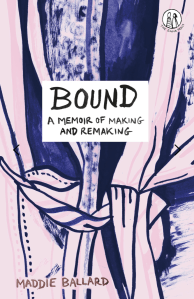 This collection of micro-essays considers sewing and much more. Each piece is headed by a pattern name and list of materials that Ballard made into an article of clothing for herself or for someone else. Among the minutiae of the craft, she slips in so many threads: about her mixed Chinese heritage and her relationship with her grandmother, about the environmental and financial benefits of making one’s own clothing, and especially about the upheaval of her twenties: the pandemic, a break-up, leaving a job to go back to school, finding roommates. I can barely mend a sock and I’m clueless when it comes to fashion, yet I can appreciate how sewing blends comfort and creativity. Ballard presents it as a meditative act of self-care:
I lower the needle and the world recedes. The process of sewing a garment – printing the pattern, tracing and cutting, sewing the first and the second and the fiftieth seam – is a lesson in taking your time.
Like gardening, sewing is an investment in the future – in what sort of person your future self will be, and how she will feel about her body, and what she will want to wear.
Similar to two other very short works of nonfiction I’ve read from The Emma Press, How Kyoto Breaks Your Heart by Florentyna Leow and Tiny Moons by Nina Mingya Powles (Ballard, too, is from New Zealand), this is a graceful, enriching book about a young woman making her way in the world and figuring out what is essential to her sense of home and identity. I commend it whether or not you have any particular interest in handicraft.
With thanks to The Emma Press for the free copy for review.
Encounters with Inscriptions: A Memoir Exploring Books Gifted by Parents by Kristin Czarnecki
When Kristin Czarnecki got in touch to offer a copy of her bibliomemoir about revisiting the books her late parents gifted her, I was instantly intrigued but couldn’t have known in advance how perfect it would be for me. Niche it might seem, but it combines several of my reading interests: bereavement, books about books, relationships with parents (especially a mother) and literary travels.
 The book starts, aptly, with childhood. A volume of Shel Silverstein poetry and A Child’s Christmas in Wales serve as perfect vehicles for the memories of how her parents passed on their love of literature and created family holiday rituals. Thereafter, the chapters are not strictly chronological but thematic. A work of women’s history opens up her mother’s involvement in the feminist movement; reading a Thomas Merton book reveals why his thinking was so important to her Catholic father. The interplay of literary criticism, cultural commentary and personal significance is especially effective in pieces on Alice Munro and Flannery O’Connor. A Virginia Woolf biography points to Czarnecki’s academic specialism and a cookbook to how food embodies memories.
It seems fitting to be reviewing this on the second anniversary of my mother’s death. The afterword, which follows on from the philosophical encouragement of a chapter on the Rubaiyat of Omar Khayyam, exhorts readers to cherish loved ones while we can – and be grateful for the tokens they leave behind. I had told Kristin about books my parents inscribed to me, as well as the journals I inherited from my mother. But I didn’t know there would be other specific connections between us, too, such as being childfree and hopeless in the kitchen. (Also, I have family in South Bend, Indiana, where she’s from, and our mothers were born in the first week of August.) All that to say, I felt that I found a kindred spirit in this lovely book, which is one of the nicest things that happens through reading.
With thanks to the author for the advanced e-copy for review.
The Starling: A Biography by Stephen Moss
 Moss has written a whole series of accessible bird species monographs suitable for nature buffs; this is the sixth. (I’ve not read the others, just Moss’s Wild Hares and Hummingbirds and Skylarks with Rosie, but we do have a copy of The Robin on the shelf that I’ve earmarked for Christmas.) The choice of the term ‘biography’ indicates the meeting of a comprehensive aim and intimate detail. The book conveys much anatomical and historical information about the starling’s relatives, habits, and worldwide spread, yet is only 187 pages – and plenty of those feature relevant paintings and photographs, too. It’s well known that starlings were introduced to Anglophone countries as part of misguided “acclimatisation” projects that we would now dub cultural imperialism. In the USA and elsewhere, the bird is still considered common. But with the industrialisation of agriculture, starlings are actually having less breeding success and thus are in decline.
Overall, the style of the book is dry and slightly workmanlike. However, when he’s recounting murmurations he’s seen in Somerset or read about, Moss’s enthusiasm lifts it into something special. Autumn dusk is a great time to start watching out for starling gatherings. I love observing and listening to the starlings just in the treetops and aerials of my neighbourhood, but we do also have a small local murmuration that I try to catch at least a few times in the season. Here’s how he describes their magic: “At a time when, both as a society and as individuals, we are less and less in touch with the natural world, attending this fleeting but memorable event is a way we can reconnect, regain our primal sense of wonder – and still be home in time for tea.”
With thanks to Square Peg, an imprint of Vintage (Penguin Random House) for the free copy for review.
The Alcestis Machine by Carolyn Oliver
 Carolyn is a blogger friend whose first collection, Inside the Storm I Want to Touch the Tremble, was on my Best Books of 2022 list. Her second is again characterized by precise vocabulary and crystalline imagery, often related to etymology, book history, or pigments (“You and I are marginalia shadowed / by a careless hand, we are gall-soaked vellum / invisible appetites consume.”). Astronomy and technology are a counterpoint, juxtaposing the ancient and the cutting-edge. I loved the language of sea creatures in “Strange Attractor” and the oblique approach to the passage of time (“Three popes ago, you and I”). The repeated three-word opening “In another life” gives a sense of many worlds, e.g., “In another life I’m a florist sometimes accused of inappropriate gravity.” Prose poems relay childhood memories. Love poems are tantalizing and utterly original: “If I promise not to describe the moon, will you / come with me a ways further into the night? / We’ll wash the forest floor / of ash and find a fairy ring / half-eaten, muted crescent bereft of power.” And alliteration never fails to win me over: “Tonight, snow tumbles over sophomores and starlings” and “the pillars in the water make a pillory not a pier”. Some of the collection remained cryptic for me; there was a bit less that grabbed me emotionally. But it’s still stirring work. And how flabbergasted was I to spot my name in the Acknowledgments? (Read via Edelweiss)
The Holy & Broken Bliss: Poems in Plague Time by Alicia Ostriker
“The words of an old woman shuffling the cards of her own decline the decline
of her husband the decline of her nation her plague-smitten world”
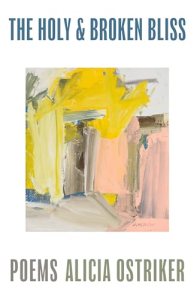 Out of pandemic isolation come new rituals: watching days and seasons pass, fighting for her own health but mostly her husband’s, and lamenting public displays of hate. Lines feel stark with honesty; some poems are just haiku length. Elsewhere, repetition and alliteration create a wistful tone. Jewish scripture and mysticism are the source of much of the language and outlook. Music and nature, too, promise the transcendent. Simple and remarkable. Here’s a stanza about late autumn:
It is almost winter and still
as I walk to the clinic the gingkos
sing their seraphic air
as if there is no tomorrow
With thanks to Alice James Books for the advanced e-copy for review.
Forces of Nature by Edward Steed
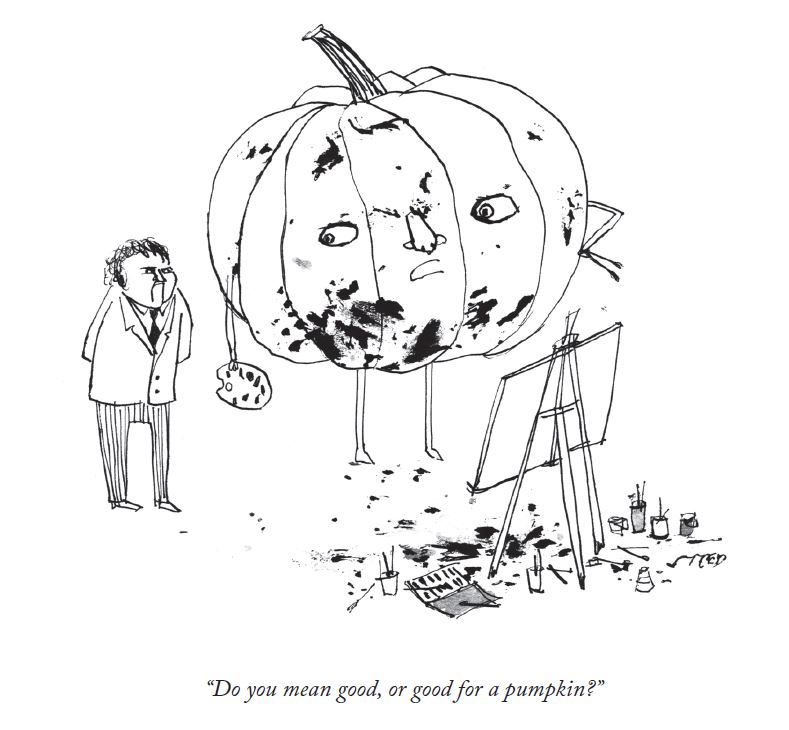
 Steed is a longtime New Yorker cartoonist who produces single panels. This means there is no story progression (as in a graphic novel), just what you see on one page. Some of the comics are wordless; many scenes are visual gags which, to be entirely honest, I didn’t always grasp. Steed’s recurring characters are unhappy couples, exiles on desert islands, and dumb cops or criminals. His style is deliberately simplistic: the people not much more advanced than stick figures and the animals especially sketchy. There are multiple attempted prison breaks and satirical depictions of God and the Garden of Eden. Many of the setups are contrived, and the tone can be absurd or prickly, even shading into gruesome. These comics weren’t altogether my cup of tea, though I did get a laugh out of a few of them (a seasonal example is below). Endorsed if you fancy a cross between Edward Gorey and The Book of Bunny Suicides.
With thanks to Drawn & Quarterly for the e-copy for review.
Reviewed for BookBrowse:
 Shred Sisters by Betsy Lerner – “No one will love you more or hurt you more than a sister” is a wry aphorism that appears late in Lerner’s debut novel. Over the course of two decades, there is much heartache for the Shred family, but also moments of joy. Ultimately, a sisterly bond endures despite secrets, betrayals, and intermittent estrangement. Through her psychologically astute portrait of Olivia (“Ollie”) and Amy Shred, Lerner captures the lasting effects that mental illness can have on not just an individual, but an entire family.
Reviewed for Shelf Awareness:
 The Worst Journey in the World, Volume 1: Making Our Easting Down: The Graphic Novel by Sarah Airriess – The thrilling opening to a cinematically vivid adaptation of Apsley Cherry-Garrard’s 1922 memoir. He was an assistant zoologist on Robert Falcon Scott’s 1910-13 Terra Nova expedition to the South Pole. Even before the ship entered the pack ice, the journey was perilous. The book resembles a full-color storyboard for a Disney-style maritime adventure film. There is jolly camaraderie as the men sing sea shanties to boost morale. The second volume can’t arrive soon enough.
Six Degrees of Separation: From Our Wives Under the Sea to Groundskeeping
 This month we began with Our Wives Under the Sea by Julia Armfield, one of my favourite novels of the year so far. It fuses horror-tinged magic realism with an emotionally resonant story of disconnection and grief. My review is here. I met the lovely Julia Armfield at the 2019 Sunday Times Young Writer of the Year Award ceremony at the London Library. (See also Kate’s opening post.)

 #1 This morning I was reading in Slime, Susanne Wedlich’s wide-ranging popular science book about primordial slime and mucus and biofilms and everything in between, about the peculiar creatures that thrive in the high-pressure deep sea level known as the hadal zone – which is of great significance in Armfield’s book. One of these is the hadal snailfish.
 #2 I wish I could remember how I first heard about The Sound of a Wild Snail Eating by Elisabeth Tova Bailey (2010). Possibly the Bas Bleu catalogue? In any case, it was one of the books I requested on interlibrary loan during one of our stays with my parents in Maryland. Bailey, bedbound by chronic illness, saw in the snail that lived on her bedside table a microcosm of nature and animal behaviour. It’s a peaceful book about changing one’s pace and expectations, and thereby appreciating life.
 #3 The book is still much admired in nature writing circles. In fact, it was mentioned by Anita Roy, one of the panellists at last year’s New Networks for Nature conference – except she couldn’t remember the author’s name so asked the audience if anyone knew. Yours truly called it out (twice, so I could be heard over my face mask). Anyway, Josie George is in a similar position to Bailey and A Still Life records how she has cultivated close observation skills of the nature around her. I believe she was even inspired to keep a snail at one point.
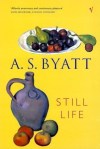 #4 Still Life is one of my favourite A.S. Byatt novels (this is not the first time I’ve used one of her novels that happens to have the same title as another book as a link in my chain; see also September 2020’s). Back in 2010, Erica Wagner, then literary editor of The Times and one of my idols (she’s American), happened to mention in her column the manner of death of a character in Still Life. Except she had it wrong. I e-mailed to say so, and got referred to in a follow-up column soon thereafter as a “perceptive reader” (i.e., know-it-all) who spotted the error; she used it as an opportunity to reflect on the tricksy nature of memory.
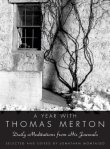 #5 When I wrote to Wagner, I remarked that the real means of death was similar to Thomas Merton’s, which is why it was fresh in mind though I hadn’t read the Byatt in years. (It would be ripe for rereading, in fact.) No spoilers here, so only look into Merton’s death if you’re morbidly curious and don’t mind having a novel’s ending ruined. I’ve not read an entire book by Merton yet, but have encountered his wisdom piecemeal via lots of references made by other authors and the daily excerpts in the one-year devotional book A Year with Thomas Merton, which I must have worked my way through in 2009.
 #6 Merton was a Trappist monk based in Kentucky. In the process of introducing his girlfriend, Alma, a Bosnian American who grew up in northern Virginia, to the state where she’s come to live, Owen, the protagonist of Lee Cole’s debut novel, Groundskeeping, takes her to see Merton’s grave at the Abbey of Our Lady of Gethsemani, near Bardstown, Kentucky. Literary grave hunting is one of my niche hobbies, and Groundskeeping, like Our Wives Under the Sea, is one of my top novels of 2022 so far.
So, I’ve gone from one reading year highlight to another, via two instances of me being a book nerd. Deep sea creatures, slime and snails, accidental deaths, and literary grave spotting: it’s been an odd chain! That’s just what I happened to come up with this morning, right after I wrote my review of Groundskeeping for BookBrowse; I’d started a chain yesterday afternoon and came up with something completely different before getting stuck on link #4. It goes to show you how arbitrary and off-the-cuff this meme can be, though I know others pick a strategy and stick with it, or first choose the books and then shoehorn them in.
Where will your chain take you? Join us for #6Degrees of Separation! (Hosted on the first Saturday of each month by Kate W. of Books Are My Favourite and Best.) Next month’s starting point is True History of the Kelly Gang by Peter Carey. I can’t remember if I still have a copy – pretty much all of my books are now packed in advance of our mid-May move – but if I find it, I should be sure to actually read it!
Have you read any of my selections? Tempted by any you didn’t know before?
A Retrospective of 2018’s Events, Reading Projects and Themes
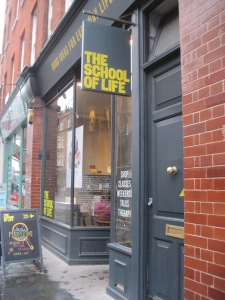 In January I had the tremendous opportunity to have a free personalized bibliotherapy appointment with Ella Berthoud at the School of Life in London. I’ve since read three of her prescriptions plus parts of a few others, but I still have several more awaiting me in the early days of 2019, and will plan to report back at some point on what I got out of all of them.
In March to April I ran a Wellcome Book Prize shadow panel for the second time. This year it was much more successful; I plan to do it again next year, too. (I actually proffered myself as an official judge for next year’s prize and got a very kind but entirely noncommittal e-mail back from the chairwoman, which I will have to take as victory enough.)
 Early April saw us visiting Wigtown, Scotland’s book town, for the first time. It was a terrific trip, but thus far I have not been all that successful at reading the 13 books that I bought! (Just two and a quarter so far.)
I reviewed three novels for Liz Dexter’s Iris Murdoch Readalong project: A Severed Head in March, The Italian Girl in June, and The Nice and the Good in September. In February I’ll pop back in with one more paperback that I own, The Sacred and Profane Love Machine. November was Margaret Atwood Reading Month, hosted by Marcie of Buried in Print and Naomi of Consumed by Ink, and provided me with a good excuse to read her first two novels.
 I did some “buddy reads” for the first time: Andrea Levy’s Small Island with Canadian blogger friends, including Marcie and Naomi; and West With the Night with Laila of Big Reading Life and Late Nights on Air with Naomi as well as Penny of Literary Hoarders during 20 Books of Summer, which I took part in for the first time. In May my mother and I read W. Somerset Maugham’s The Painted Veil and shared reading notes via e-mail. (A planned buddy read of The Left Hand of Darkness with Annabel and Laura was, alas, a fail.)
Besides the official Wellcome Book Prize blog tour in April, I participated in another 11 blog tours, averaging out at one a month. I’m going to scale back on these next year because I have too often found, after I accepted, that the book was a dud and I had to just run an extract because I could see I wasn’t going to get through it and write a review.
I joined my neighborhood book club in September and have attended every month since then. Our first four selections were Ladder of Years by Anne Tyler, The Gracekeepers by Kirsty Logan, Noonday by Pat Barker, and Number 11 by Jonathan Coe. I’d already read the Logan and Coe years ago and didn’t fancy rereading them, so wasn’t able to participate as much in those months, but was still glad to go along for the socializing. My husband even read the Coe and came to December’s meeting (was it just for the mince pies and mulled wine?!). We’ve set our first four reads for 2019 – the three below, in order from left to right, plus Ernest Hemingway’s The Garden of Eden, which I’ll borrow from the university library.

 In October I won tickets to see a production of Angela Carter’s Wise Children at the Old Vic in London. Just a few weeks later I won tickets to see Barbara Kingsolver in conversation about Unsheltered at the Southbank Centre. I don’t often make it into London, so it was a treat to have bookish reasons to go and blogging friends to meet up with (Clare of A Little Blog of Books joined me for both, and Laura T. was also at the Kingsolver event).
November was mostly devoted to novellas, for the third year in a row. Although I didn’t officially participate in Nonfiction November, I still enjoyed coming up with some fiction/nonfiction pairings and an “expert’s” list of women’s religious memoirs.
My husband wrote pretty much his entire PhD thesis this year and on Friday the 14th had his graduation ceremony. I was the moral support / proofreader / preparer of simple meals during the months when he was in the throes of writing up, so I will consider myself as sharing in the accomplishment. Congratulations, Dr. Foster!
This month and into January I’ll be reading the last few nominees for the National Book Critics Circle’s John Leonard Prize.

When the list of finalists was released, I was relieved to see I’d already read four out of seven (and three of those were ones I’d nominated); the other three – the Adjei-Brenyah and Brinkley stories and There There – were books I was keen to read but hadn’t managed to get hold of. About 80 of us NBCC members are reading the shortlist and voting for the best first book of the year by January 8th. Plus I’m technically up for an NBCC prize myself, in that I nominated myself (that’s how it works) for the 2018 Nona Balakian Citation for Excellence in Reviewing and sent in an application with five of my best reviews from the year.
The Ones that Got Away
 Two posts I planned but never got around to putting together would have commemorated the 50th anniversary of Thomas Merton’s death (I own several of his books but am most interested in reading The Seven-Storey Mountain, which celebrated its 70th birthday in October) and the 40th anniversary of the publication of The Snow Leopard by the late Peter Matthiessen. Perhaps I’ll try these authors for the first time next year instead.
Final Book Serendipity Incidents
In the second half of the year I started keeping track of all my weird reading coincidences, posting about them on Twitter or Instagram before collecting them into a blog post a couple months ago. Here are a few that popped up since then or recalled earlier reads from the year:
- Two protagonists named Willa: Anne Tyler’s Clock Dance and Barbara Kingsolver’s Unsheltered
- Two novels featuring bog people: Anne Youngson’s Meet Me at the Museum and Sarah Moss’s Ghost Wall
- Two dogs named Flash: Ben Crane’s Blood Ties and Andrew Marshall’s The Power of Dog
- Multiple sclerosis is an element in Christian Donlan’s The Unmapped Mind: A Memoir of Neurology, Incurable Disease and Learning How to Live, Jennifer Richardson’s Americashire and Michelle Obama’s Becoming (her father had it)
- The ideas of Freud are mentioned in a 1910s setting in Nancy Horan’s Loving Frank, Annabel Abbs’s Frieda and Daniel Mason’s The Winter Soldier
- Mermaids (or ‘mermaids’) and/or mermen appear in Imogen Hermes Gowar’s The Mermaid and Mrs Hancock, Melissa Broder’s The Pisces, Daniel Mason’s The Winter Soldier, and a series of poems in Miriam Darlington’s Windfall
- Bohemian writer dies young of tuberculosis (or similar) in novels about their wives: Annabel Abbs’s Frieda (D.H. Lawrence) and Nancy Horan’s Under the Wide and Starry Sky (Robert Louis Stevenson)
- Two books that mention the Indonesian practice of keeping dead relatives as mummies and bringing them out on occasion for ritual celebrations: From Here to Eternity by Caitlin Doughty and The Hot Young Widows Club by Nora McInerny
- Two books that include a trip to Lourdes for healing: Heal Me by Julia Buckley and Constellations by Sinéad Gleeson
- Two books that mention the irony of some of the most well-loved modern Christmas songs being written by Jews: In Mid-Air by Adam Gopnik and Christmas Days by Jeanette Winterson
Surprise Themes from My Year’s Reading
A few of these make sense – cults fit with my interest in narratives of religious experience, and it doesn’t take a psychologist to see that my relationship with my father has been an ongoing issue in recent years (I wonder how the numbers would compare for books about mothers?) – but most are completely random.
I decided a theme had to show up at least three times to make the list. Some topics I enjoyed so much I’ll keep reading about them next year. Within a category the books are in rough chronological order of my reading, and I include skims, DNFs and books in progress.
 Fathers (absent/difficult) + fatherhood in general: Educated by Tara Westover, And When Did You Last See Your Father? by Blake Morrison, The Italian Teacher by Tom Rachman, In the Days of Rain by Rebecca Stott, Implosion by Elizabeth W. Garber, Little Women by Louisa May Alcott & March by Geraldine Brooks, The Unmapped Mind by Christian Donlan, Never Mind and Bad News by Edward St. Aubyn, The Reading Promise by Alice Ozma, How to Build a Boat by Jonathan Gornall, Lake Success by Gary Shteyngart, Normal People by Sally Rooney, Rosie by Rose Tremain, My Father and Myself by J.R. Ackerley, Everything Under by Daisy Johnson, Ghost Wall by Sarah Moss, Surfacing by Margaret Atwood, Heart Berries by Terese Marie Mailhot, Blood Ties by Ben Crane, To Throw Away Unopened by Viv Albertine, Small Fry by Lisa Brennan-Jobs
Addiction: The Leavers by Lisa Ko, Mayhem by Sigrid Rausing, The Only Story by Julian Barnes, The Small Door of Your Death by Sheryl St. Germain, Writing and Madness in a Time of Terror by Afarin Majidi, Marlena by Julie Buntin, Ninety Days by Bill Clegg, Bad News by Edward St. Aubyn, Pretend I’m Dead by Jen Beagin, Heart Berries by Terese Marie Mailhot
 Greenland: A Wilder Time by William E. Glassley, This Cold Heaven by Gretel Ehrlich, Miss Smilla’s Feeling for Snow by Peter Høeg, On Balance by Sinéad Morrissey (the poem “Whitelessness”), Cold Earth by Sarah Moss, Crimson by Niviaq Korneliussen, The Library of Ice by Nancy Campbell
Cults: Educated by Tara Westover, Harmony by Carolyn Parkhurst, In the Days of Rain by Rebecca Stott, The Incendiaries by R.O. Kwon, A River Could Be a Tree by Angela Himsel
Trees: Ladders to Heaven by Mike Shanahan, The Overstory by Richard Powers, The Man Who Planted Trees by Jean Giono, The Wood and The Secret Life of the Oak by John Lewis-Stempel
 Flying: Skybound by Rebecca Loncraine, West With the Night by Beryl Markham, Going Solo by Roald Dahl, Skyfaring by Mark Vanhoenacker
The Anglo experience in Africa: Free Woman: Life, Love and Doris Lessing by Lara Feigel, Leaving Before the Rains Come by Alexandra Fuller, West With the Night by Beryl Markham, Going Solo by Roald Dahl
Korean-American women: The Incendiaries by R.O. Kwon, If You Leave Me by Crystal Hana Kim, All You Can Ever Know by Nicole Chung, Famous Adopted People by Alice Stephens, Digging to America by Anne Tyler
 New Zealand: The Garden Party and Other Stories by Katherine Mansfield, To the Is-Land by Janet Frame, Dunedin by Shena Mackay
Life in the White House: Living History by Hillary Rodham Clinton, All the Presidents’ Pastries by Roland Mesnier, Becoming by Michelle Obama
Lighthouses: Stargazing: Memoirs of a Young Lighthouse Keeper by Peter Hill, The Bird Artist by Howard Norman, Under the Wide and Starry Sky by Nancy Horan (about Robert Louis Stevenson, whose family built lighthouses)

More lighthouse books ready for next year.
Butterflies: Four Wings and a Prayer by Sue Halpern, Magdalena Mountain by Robert Michael Pyle, Mama Amazonica by Pascale Petit

More butterfly books ready for next year.
 Bookish Beck = Rebecca Foster. American transplant to England. Freelance proofreader and book reviewer.
 Bookish Beck