I call it “Book Serendipity” when two or more books that I read at the same time or in quick succession have something in common – the more bizarre, the better. This is a regular feature of mine every couple of months. Because I usually have 20–30 books on the go at once, I suppose I’m more prone to such incidents. People frequently ask how I remember all of these coincidences. The answer is: I jot them down on scraps of paper or input them immediately into a file on my PC desktop; otherwise, they would flit away!
The following are in roughly chronological order.
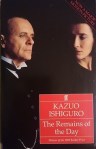
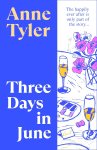
- The protagonist isn’t aware that they’re crying until someone tells them / they look in a mirror in The Remains of the Day by Kazuo Ishiguro and Three Days in June by Anne Tyler.
- A residential complex with primal scream therapy in Confessions by Catherine Airey and The Möbius Book by Catherine Lacey.
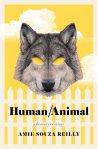
- Memories of wiping down groceries during the early days of the pandemic in The End Is the Beginning by Jill Bialosky and Human/Animal by Amie Souza Reilly.
- A few weeks before I read Maurice and Maralyn by Sophie Elmhirst, I’d finished reading the author’s husband’s debut novel (Going Home by Tom Lamont); I had no idea of the connection between them until I got to her Acknowledgements.
- A mention of the same emergency money passing between friends in Alligator Tears by Edgar Gomez ($20) and The Möbius Book by Catherine Lacey ($100).
- Autobiographical discussions of religiosity and anorexia in The Möbius Book by Catherine Lacey and Godstruck by Kelsey Osgood.
- The theme of the dark night sky in The Wild Dark by Craig Childs, followed almost immediately by Night Magic by Leigh Ann Henion.
- Last year I learned about Marina Abramović’s performance art where she and her ex trekked to China’s Great Wall from different directions, met in the middle, and continued walking away to dramatize their breakup in The Ritual Effect by Michael Norton. Recently I saw it mentioned again in The Möbius Book by Catherine Lacey. Abramović’s work is also mentioned in Human/Animal by Amie Souza Reilly and is the basis for the opening track on Anne-Marie Sanderson’s album Old Light, “Amethyst Shoes.”
- The idea of running towards danger appears in Alex Marzano-Lesnevich’s essay in Edge of the World, a queer travel anthology edited by Alden Jones; and the bibliography of The Möbius Book by Catherine Lacey.
- I then read another Alex Marzano-Lesnevich essay in quick succession (both were excellent, by the way) in What My Father and I Don’t Talk About, edited by Michele Filgate.
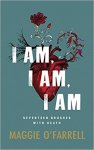
- A scene in which a woman goes to a police station and her concerns are dismissed because she has no evidence and the man/men’s behaviour isn’t ‘bad enough’ in I Am, I Am, I Am by Maggie O’Farrell and Human/Animal by Amie Souza Reilly.
- Too many details as the sign of a lie in Dream Count by Chimamanda Ngozi Adichie and Three Days in June by Anne Tyler.
- Scenes of throwing all of a spouse’s belongings out on the yard/street in Old Soul by Susan Barker, How to Survive Your Mother by Jonathan Maitland, and Human/Animal by Amie Souza Reilly.
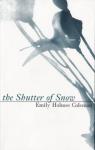
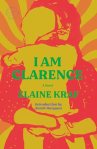
- Reading two lost American classics about motherhood and time spent in a mental institution at the same time: The Shutter of Snow by Emily Holmes Coleman and I Am Clarence by Elaine Kraf.
- Disorientation underwater: a literal experience in I Am, I Am, I Am by Maggie O’Farrell, then used as a metaphor for what it was like to be stuck in a blizzard on Annapurna in 2014 in The Secret Life of Snow by Giles Whittell.
- A teenager who has a job cleaning hotels in Old Soul by Susan Barker and I Am, I Am, I Am by Maggie O’Farrell. (In Stir-Fry by Emma Donoghue, Maria is also a teenaged cleaner, but of office buildings.)
- A vacuum cleaner bag splits in Stir-Fry by Emma Donoghue and one story of Are You Happy? by Lori Ostlund – in the latter it’s deliberate, searching for evidence of the character’s late son after cleaning his room.

- An ailing tree or trees that have to be cut down in one story of The Accidentals by Guadalupe Nettel and The Lost Trees of Willow Avenue by Mike Tidwell.
- Buchenwald was mentioned in one poem each in A God at the Door by Tishani Doshi and The Ghost Orchid by Michael Longley.
- A reference to Robin Wall Kimmerer’s Braiding Sweetgrass in To Have or to Hold by Sophie Pavelle and Human/Animal by Amie Souza Reilly.

- A mentally unwell woman deliberately burns her hands in I Am Clarence by Elaine Kraf and Every Day Is Mother’s Day by Hilary Mantel.
- A mention of the pollution caused by gas stoves in We Do Not Part by Han Kang and The Lost Trees of Willow Avenue by Mike Tidwell.
- An art installation involving part-buried trees was mentioned in Immemorial by Lauren Markham and then I encountered a similar project a few months later in We Do Not Part by Han Kang. Burying trees as a method of carbon storage is then discussed in The Lost Trees of Willow Avenue by Mike Tidwell.

- Imagining the lives of the people living in an apartment you didn’t end up renting in Scaffolding by Lauren Elkin and one story of The Accidentals by Guadalupe Nettel.
- The Anthropocene is mentioned in Scaffolding by Lauren Elkin and The Alternatives by Caoilinn Hughes.
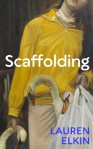
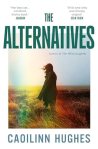
- I was reading three debut novels from the McKitterick Prize longlist at the same time, all of them with very similar page counts of 383, 387, and 389 (i.e., too long!).
- Being appalled at an institutionalized mother’s appearance in The End Is the Beginning by Jill Bialosky and Every Day Is Mother’s Day by Hilary Mantel.
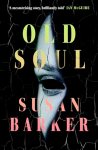 A remote artist’s studio and severed fingers in Old Soul by Susan Barker and We Do Not Part by Han Kang.
- A lesbian couple in New Mexico, the experience of being watched through a window, and the mention of a caftan/kaftan, in Old Soul by Susan Barker and one story of Are You Happy? by Lori Ostlund.
- Refusal to go to a hospital despite being in critical condition in I Am, I Am, I Am by Maggie O’Farrell and one story of Are You Happy? by Lori Ostlund.
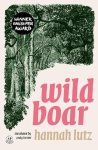
- It’s not a niche stylistic decision anymore; I was reading four novels with no speech marks at the same time: Old Soul by Susan Barker, Scaffolding by Lauren Elkin, The Alternatives by Caoilinn Hughes, and We Do Not Part by Han Kang. [And then, a bit later, three more: Wild Boar by Hannah Lutz, Mouthing by Orla Mackey, and How to Be Somebody Else by Miranda Pountney.]
 A lesbian couple is alarmed by the one partner’s family keeping guns in Spent by Alison Bechdel and one story of Are You Happy? by Lori Ostlund.
- Responding to the 2021 murder of eight Asian spa workers in Atlanta in Foreign Fruit by Katie Goh and Find Me as the Creature I Am by Emily Jungmin Yoon.
- Disposing of a late father’s soiled mattress in Mouthing by Orla Mackey and one story of Are You Happy? by Lori Ostlund.
 New York City tourist slogans in Apple of My Eye by Helene Hanff and How to Be Somebody Else by Miranda Pountney.
- A Jewish care home for the elderly in The End Is the Beginning by Jill Bialosky and Joanna Rakoff’s essay in What My Father and I Don’t Talk About (ed. Michele Filgate).
- A woman has no memory between leaving a bar and first hooking up with the man she’s having an affair with in If You Love It, Let It Kill You by Hannah Pittard and How to Be Somebody Else by Miranda Pountney.
 A stalker-ish writing student who submits an essay to his professor that seems inappropriately personal about her in one story of Are You Happy? by Lori Ostlund and If You Love It, Let It Kill You by Hannah Pittard.
- A pygmy goat as a pet (and a one-syllable, five-letter S title!) in Spent by Alison Bechdel and Sleep by Honor Jones.
- A Brooklyn setting and thirtysomething female protagonist in Sleep by Honor Jones, So Happy for You by Celia Laskey, and How to Be Somebody Else by Miranda Pountney.
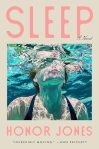
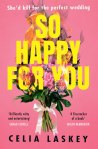
- A mention of the American Girl historical dolls franchise in Sleep by Honor Jones and If You Love It, Let It Kill You by Hannah Pittard, both of which I’m reviewing early for Shelf Awareness.
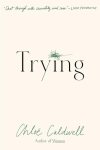 A writing professor knows she’s a hypocrite for telling her students what (not) to do and then (not) doing it herself in Trying by Chloé Caldwell and If You Love It, Let It Kill You by Hannah Pittard. These two books also involve a partner named B (or Bruce), metafiction, porch drinks with parents, and the observation that a random statement sounds like a book title.
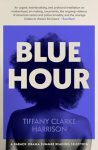
- The protagonist’s therapist asks her to find more precise words for her feelings in Blue Hour by Tiffany Clarke Harrison and So Happy for You by Celia Laskey.
- The protagonist “talks” with a dying dog or cat in The Möbius Book by Catherine Lacey and If You Love It, Let It Kill You by Hannah Pittard.
 Shalimar perfume is mentioned in Scaffolding by Lauren Elkin and Chopping Onions on My Heart by Samantha Ellis.
- The Rapunzel fairytale is a point of reference in In the Evening, We’ll Dance by Anne-Marie Erickson and Secret Agent Man by Margot Singer, both of which I was reading early for Foreword Reviews.
What’s the weirdest reading coincidence you’ve had lately?
 Bookish Beck = Rebecca Foster. American transplant to England. Freelance proofreader and book reviewer.
 Bookish Beck
Gosh, lately I feel like I’m reading a short book if it’s less than 380 pages long.
LikeLiked by 1 person
Give me a novella any day 😉
LikeLiked by 1 person
I really did myself in by stacking my A Century of Books books by number of pages, so that at the end, I was only reading long ones. I just looked at my stats for this year, and 42% of the books I have read so far are 300-499 pages and 11% are even longer! Yikes! However, my percentages for all-time reading are worse!
LikeLike
I think the one about Dream Count and Three Days in June might have gotten cut off or something during the editing/posting process? These are all brilliant—so many this time around! (No-quotation-mark speech is definitely normalised in fiction now, to the point where I was reading a book in which speech is *italicised* and it felt… jarring and obvious, somehow.)
LikeLiked by 1 person
Thanks for the heads-up! I’ve added it back above. (It should read “Too many details as the sign of a lie”.)
I know some readers still avoid no-speech-marks as much as possible, which these days would be limiting! I come across italicizing, or offsetting with en dashes (Tessa Hadley) sometimes.
LikeLike
Yes, what struck me was how normalised no-speech-marks has become! So much so that italics (which even 10 years ago might have seemed cutting-edge) actually felt annoyingly clunky, and I wished the author had just gone with no-speech-marks instead as that would have felt *easier* to read. Weird, eh?
LikeLiked by 1 person
No sooner had you commented then I started two novels with italicized speech: Women by Chloe Caldwell and Days of Light by Megan Hunter. You’re right: it feels affected and odd. I wish they’d not designated it in any way!
LikeLike
I think Abramović inspires Baader-Meinhof Syndrome wherever she goes – I transcribed an interview with her once and then she kept popping up all over the place (not just in whatever she was doing that the interview was about)! You’ve reminded me I want to get and read Edge of the World, thank you. I’ve had mention of the Asian spa workers’ murders in a couple of books recently, now you come to mention it – other books to yours, too – Daisy J Hung’s I am Not a Tourist and I can’t remember the other one! As usual, (apart from that one), I’ve been mentioning them as I go along and linking to your latest post, so will now save this one to link to.
LikeLiked by 1 person
Ha, she is one of those people who’s always being referenced, along with, for me, Hannah Arendt and Louise Bourgeois (neither of whom I know much about otherwise).
Edge of the World is brilliant; you’ll love it.
Oh cool! I have I Am Not a Tourist out from the library but haven’t gotten to it yet. If you’d like my proof of Foreign Fruit I’m happy to send it to you at some point (I also have some vintage pony books by the likes of Christine Pullein-Thompson that I rescued from the Little Free Library!).
LikeLike
These are always fascinating! Wiping down the shopping though, let’s hope we never have to go back to that!!
LikeLiked by 1 person
Can you believe some of the things that were normalized during that time?! I’ve spoken with my book club about it at various points and we think people would never submit to restrictions again (even as minor as masking) if another pandemic hit.
LikeLiked by 1 person
I don’t think people would again either.
LikeLike
I always forget to write mine down!!! Some of these are brilliantly specific. I especially enjoyed ‘A residential complex with primal scream therapy’ and ‘A lesbian couple is alarmed by the one partner’s family keeping guns’.
LikeLiked by 1 person
I know! You couldn’t make it up!
LikeLiked by 1 person
Woah – so many connections! I read Braiding Sweetgrass last year and loved it. I also enjoyed The Remains of the Day as well. 🙂
LikeLiked by 1 person
Two amazing books!
LikeLiked by 1 person
wow, you really have amazing ones! I started jotting mine down, but have only a couple so far, so not enough for a post yet!
LikeLiked by 1 person
My son and I were talking about the beginning of the pandemic last week and he said he didn’t remember the wiping down of the groceries part. He said he thinks he blocked some stuff out! He was 8 going on 9, so I can see that.
LikeLiked by 1 person
It’s so interesting to think how children and teenagers will remember that time, and how history will characterize it.
LikeLiked by 1 person
I always love these! I can’t think of a reading coincidence of late, but I can think of a too-long book. I’m listening to Hilary Mantel’s A Place of Greater Safety about the French Revolution–cast off audiobook I got for free from the library. (I should say, half listening, at this point.) It is all of 29 cds!!!
LikeLiked by 1 person
Someone recommended that for our book club and I thought, Fat chance! People struggle enough to finish the 300-page selections in time.
LikeLiked by 1 person
I like the sounds of the apartment renters. And I enjoy it when short pieces by writers in one anthology suddenly “pop up” in other anthologies (or in a mag online). That’s really cool about reading the writer’s partner’s work without realising until you read the acknowledgements. How easily you might not have known at all! (I’m one of those who always reads the end bits.)
Here are my mine: 1. D.H. Lawrence as a reference in both a poetry/photo book by Zwicky and Moody which I wrote about in my Bookbag post AND in Ann Bridge’s novel Illyrian Spring. 2. While re/reading Mark Twain’s Tom Sawyer and Huck Finn, two characters in a short story by Jamaica Kinkaid go to the Mark Twain museum. 3. Another of her stories begins with a scene from Charles Kingsley’s The Water Babies AND it appears in Silvia Moreno-Garcia’s Daughter of Doctor Moreau. 4. A family prepares to take a vacation with all the related excitement and irritation in a short story by Susan Taylor and in R.C. Sherriff’s A Fortnight in September (reprt Persephone). 5. New Year’s Day celebrations in both Ernest Buckler’s The Mountain and the Valley (my 1952 read) and in Kev Lambert’s Les sentiers de neige (which takes place from mid-December to early January, a perfect winter read). Phew, I didn’t realise I’d noted so many. Next time maybe I should include them in a post.
LikeLiked by 1 person
Awesome! Well done for keeping track of those. Did you keep them in your notebook?
LikeLike
Finally, eh? lol I used to jot them on envelopes and the like, whatever was at hand, then lose them, so I started jotting them at the bottom of the calendar day in the 10:00 and 10:30 slots where I never have an “event” LOL (but that’s also why I couldn’t easily count).
LikeLiked by 1 person
[…] a really rather peculiar Bookish Beck Serendipity moment, there was a random mention of the artist Hilma af Klint, who I’d never heard of before I […]
LikeLike
[…] had a little Bookish Beck Seredipity Moment in this one, as it was the second book in quick succession (after “Marsha“) to mention […]
LikeLike
[…] had a Bookish Beck Seredipity Moment in this one – it was the second book I read in a row to feature little Greek phrases of […]
LikeLike
[…] also caused one of Rebecca’s moments of book serendipity: I was reading Dervla McTiernan’s The Good Turn at the same time, which also features a man […]
LikeLike