Book Serendipity, August to September
From Jennifer Croft’s superb Notes on Postcards (forthcoming in November):
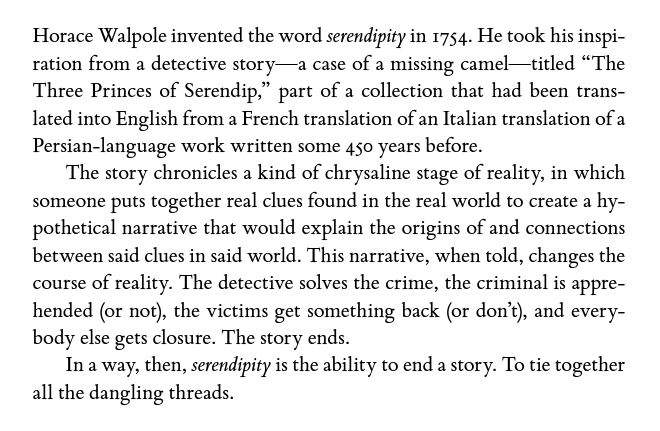
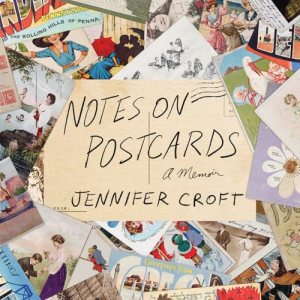
I’d heard that story of Horace Walpole and the etymology of “serendipity” before. Tying together dangling threads is a good description of what I try to do with these posts, which arise from my reading.
I call it “Book Serendipity” when two or more books that I have read at the same time or in quick succession have something in common – the more bizarre, the better. This is a regular feature of mine every couple of months. Because I usually have 20–30 books on the go at once, I suppose I’m more prone to such incidents. People frequently ask how I remember all of these coincidences. The answer is: I jot them down on scraps of paper or input them immediately into a file on my PC desktop; otherwise, they would flit away!
 The more accurate keyword would probably be “synchronicity,” which according to Carl Jung, who “believed in a universe of mysterious connections,” is “a meaningful coincidence in which an internal mental state somehow attracts a real-world parallel” (quotes from The Spirituality Gap by Ali Millar). An intriguing idea, that: somehow, by thinking about these ideas or details, I might be … luring repeat incidents to me?!
The following are in roughly chronological order.
What’s in a name?
- Girlfriends named Maddie (in Year of the Drought by Roland Buti) and Mattie (Tom’s in Pardon Our French by Alex Durand and Tom Carles); plus a granddaughter (in The Typing Lady and Other Fictions by Ruth Ozeki) and niece (in The Land and Its People by David Sedaris) named Maddy.
- A character named Hattie in Leaving the Yellow House by Saul Bellow and The Correspondent by Virginia Evans.
- A character named India in Leaving the Yellow House by Saul Bellow and Family Family by Laurie Frankel (our second The Marriage Plot/Literary Wives club read this year in which the protagonist was named India, after Mrs. Bridge by Evan S. Connell).
 A daughter named Rebecca in Switzy by Emma Cline and Family Family by Laurie Frankel (where she’s known as Bex); and sisters named Rebecca (known as Becks) in one story of The Rental Heart and Other Fairytales by Kirsty Logan and The Long Road to Holy Island by Austin Suggs. Those are both nicknames I’ve had, by the way. The one nickname I detest is Becky.
- A mother named Monica in The Summerhouse Trilogy by Alice Thomas Ellis and Apt Pupil by Stephen King.
- A Hilda in The Given World by Melissa Harrison and one story of Self-Help by Lorrie Moore.
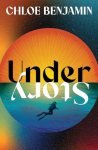
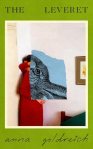
- A Clare in Under Story by Chloe Benjamin, The Leveret by Anna Goldreich and The Given World by Melissa Harrison.
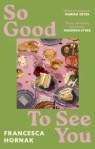
- A Sergio in Old Romantics by Maggie Armstrong and a Serge in So Good to See You by Francesca Hornak.
- A son named Silas in Under Story by Chloe Benjamin and So Good to See You by Francesca Hornak.
- Compensation for run-over chickens in Year of the Drought by Roland Buti and Don’t Let’s Go to the Dogs Tonight by Alexandra Fuller.
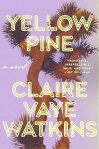
- “Enough is enough” is a slogan in The Land and Its People by David Sedaris (where it’s also an essay title) and Yellow Pine by Claire Vaye Watkins.
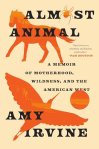
 Telluride, Colorado features as a setting in Almost Animal by Amy Irvine and in one essay of The Land and Its People by David Sedaris.
- A trip from Paris to see Chartres Cathedral in The Magician by W. Somerset Maugham and Shadow of a Man by May Sarton.
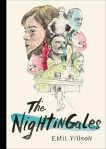
- Fleeting references to the Donner Party in Yellow Pine by Claire Vaye Watkins and The Nightingales by Emil Wilson.
- An essay about an Icelandic sheep ram, and the idea that one should ride geldings because they’re calmer and more reliable than mares, in Animals Taught Me Everything by Pam Houston and The Land and Its People by David Sedaris.
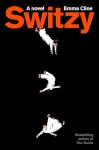
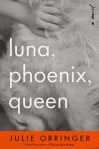
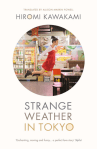
- The protagonist’s work performance declining due to dementia, and a tweed jacket, in Switzy by Emma Cline and Luna, Phoenix, Queen by Julie Orringer. (There’s also a tweed jacket mentioned in Strange Weather in Tokyo by Hiromi Kawakami.)
- German artist Käthe Kollwitz is mentioned in Seed Corn Must Not Be Ground (the title is from one of her works) by Pat Browne and The Book of Mating by Laksmi Pamuntjak.
- Child brides and incestuous rape are mentioned/feature in Almost Animal by Amy Irvine and The Book of Mating by Laksmi Pamuntjak, both of which I was reading early for Foreword Reviews.
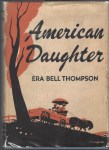
- The keeping of goats in Almost Animal by Amy Irvine and American Daughter by Era Bell Thompson, both of which I was reading early for Foreword Reviews.
- In August I unwittingly started rereading two books that I’d first read in April 2013 (is 13+ years the ideal interval?!): I Feel Bad about My Neck by Nora Ephron and Flush by Virginia Woolf.
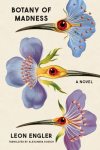
- Men by the name of Christmas: the narrator’s parents wanted to name him Noel (but the German state didn’t allow it?!) in Botany of Madness by Leon Engler; and a main character is named Joe Christmas in Light in August by William Faulkner.
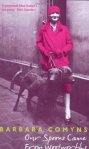
- To the narrator’s question of whether something awful has happened / they’ve done something wrong, a reply of “it very likely had but she hadn’t heard about it yet” in Our Spoons Came from Woolworths by Barbara Comyns and “Most likely. You know that better than I do” in Botany of Madness by Leon Engler.
- The idea that human–animal communication/connection is deeper than that between humans because it is beyond language plays a major role in three books I read around the same time: Animals Taught Me Everything by Pam Houston, Mitz by Sigrid Nunez, and Luna, Phoenix, Queen by Julie Orringer. (The Houston and Orringer both publish on 13 October and I was reviewing them early for Shelf Awareness.)
- The fact that children of alcoholics feel they have to make everything perfect to avoid conflict appears in Botany of Madness by Leon Engler and Animals Taught Me Everything by Pam Houston.
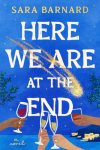 I encountered lines from the song “Closing Time” by Semisonic in Here We Are at the End by Sara Barnard (a specific reference to the pop song accompanied “Every new beginning comes from some other beginning’s end” – which I was amused to learn is actually a quote from Seneca!) and Family Family by Laurie Frankel (“You don’t have to go home. But you can’t stay here.” – not attributed, but I can’t but think she had the song in mind.)
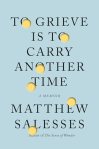
- The stereotype of overachieving Asian Americans is mentioned or discussed in Family Family by Laurie Frankel, Miracle Creek by Angie Kim, and To Grieve Is to Carry Another Time by Matthew Salesses. There are Korean Americans in all three, and Korean children adopted into a white family in the Frankel and Salesses.
- A young woman is aghast at her mother getting rid of loved pet(s) in Nightjar by Emily Ruskovich and The Nightingales by Emil Wilson (both titled after birds!)
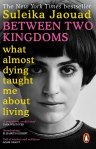
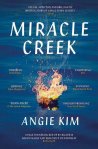
- A mention of the practice of buying single cigarettes from a city corner shop for 50 cents in Between Two Kingdoms by Suleika Jaouad and Miracle Creek by Angie Kim.
- Saving turtles from the road in Yellow Pine by Claire Vaye Watkins and then a mention of someone else doing so in To Grieve Is to Carry Another Time by Matthew Salesses.
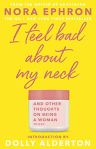 The lines “Leave as soon as you think to yourself, ‘This is a great party. I’m having a wonderful time’” from Nora Ephron’s I Feel Bad About My Neck are echoed in Emma Cline’s Switzy.
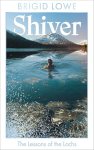
- A holy well is mentioned in The Given World by Melissa Harrison and Shiver by Brigid Lowe.
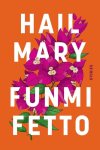
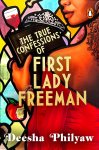
- A sexy pastor’s wife features in one story of Hail Mary by Funmi Fetto and The True Confessions of First Lady Freeman by Deesha Philyaw.
- A flawed pearl is mentioned in Apt Pupil by Stephen King and A Desert between Two Seas by A. Muia.
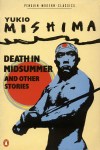
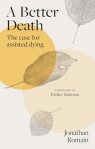
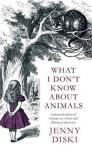
- A mention of hara-kiri (literal) in Death in Midsummer by Yukio Mishima and A Better Death by Jonathan Romain; and as a metaphor in What I Don’t Know about Animals by Jenny Diski.
- Camel cigarettes appear in Miracle Creek by Angie Kim and Apt Pupil by Stephen King.
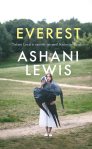
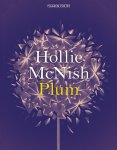
- A woman remembers being nicknamed an “ice queen” in one story of Everest by Ashani Lewis and Plum by Hollie McNish.
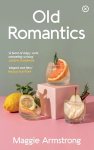
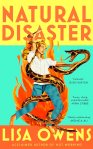
- A woman has to have a bowel movement in the labour ward in Old Romantics by Maggie Armstrong and Natural Disaster by Lisa Owens.
- The challenge of being a mother in the film industry is discussed in Family Family by Laurie Frankel and So Good to See You by Francesca Hornak.
 A three-year-old gets their own cereal breakfast in Old Romantics by Maggie Armstrong and So Good to See You by Francesca Hornak.
- A woman feels guilty of neglect due to her eight-year-old son’s death in a lake in Under Story by Cloe Benjamin and The Correspondent by Virginia Evans.
- A viral scandal where photographs/video footage are misconstrued to make a woman look bad in Hum by Helen Phillips and The True Confessions of First Lady Freeman by Deesha Philyaw.
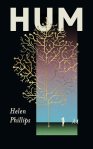
- A misunderstanding causes a mother to be investigated for child neglect in one story of Old Romantics by Maggie Armstrong and Hum by Helen Phillips.
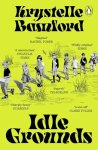 Shirley Temples (the non-alcoholic cocktail) are mentioned in Idle Grounds by Krystelle Bamford and The True Confessions of First Lady Freeman by Deesha Philyaw.
- A woman impulsively takes a dishwashing job in Under Story by Cloe Benjamin and Exit Party by Emily St. John Mandel.

- A scene of putting out sandbags in Rattlebone by Maxine Clair and The Long Road to Holy Island by Austin Suggs.
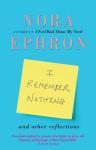 An unwanted mince pie in Idle Grounds by Krystelle Bamford and I Remember Nothing by Nora Ephron.
- A child in hospital with acute appendicitis in one story of Don’t Go to Sleep in the Dark by Celia Fremlin and Natural Disaster by Lisa Owens (and with suspected appendicitis in Shiver by Brigid Lowe).
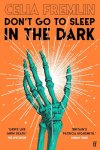
- The Tennyson poem “The Charge of the Light Brigade” is mentioned in Idle Grounds by Krystelle Bamford and Peck & Peck by Bonnie Garmus.
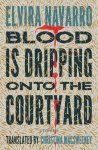
- Having to get off an elevator at the previous floor because it doesn’t go up to the destination in Exit Party by Emily St. John Mandel and Blood Is Dripping onto the Courtyard by Elvira Navarro.
- Realizing one’s bed is unmade in one story of Everest by Ashani Lewis and A Very British Midlife Crisis by Rob Temple.
- Confusion over the name of a possibly abused dog (with special powers!) adopted from a shelter in Peck & Peck by Bonnie Garmus and Luna, Phoenix, Queen by Julie Orringer.
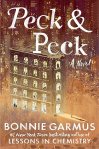
- I encountered the phrase “She’s not worth it” in both Peck & Peck by Bonnie Garmus and The True Confessions of First Lady Freeman by Deesha Philyaw within 10 minutes!
 Someone being pulled back into the womb in Under Story by Chloe Benjamin and Nightmares and Daydreams: A.C. 2020 by Mirko Ilić.
- An apple orchard as a setting in Under Story by Chloe Benjamin and one story of Apple and Palm by Patricia Henley.

- “Little Nemo in Slumberland” as an image and metaphor in Switzy by Emma Cline and Nightmares and Daydreams: A.C. 2020 by Mirko Ilić.
- A lost twin sibling – lost at birth in Peck & Peck by Bonnie Garmus and H Is for Hawk by Helen Macdonald; lost later on in one story of The Rental Heart and Other Fairytales by Kirsty Logan.


- A portal to another timeline, and characters who are doubles of each other, in Under Story by Chloe Benjamin and Exit Party by Emily St. John Mandel.
- A lesbian couple moves to a new house and the one woman feels isolated and sad because she’s recently had a miscarriage in the debut novels The New People by Andrea Uptmor (reviewed for BookBrowse) and then The Leveret by Anna Goldreich.

- Nagging a woman to use lotion on her hands as they’re the first place to show signs of ageing in Hum by Helen Phillips and one story of Moderate to Poor, Occasionally Good by Eley Williams.
A couple of visual ones:
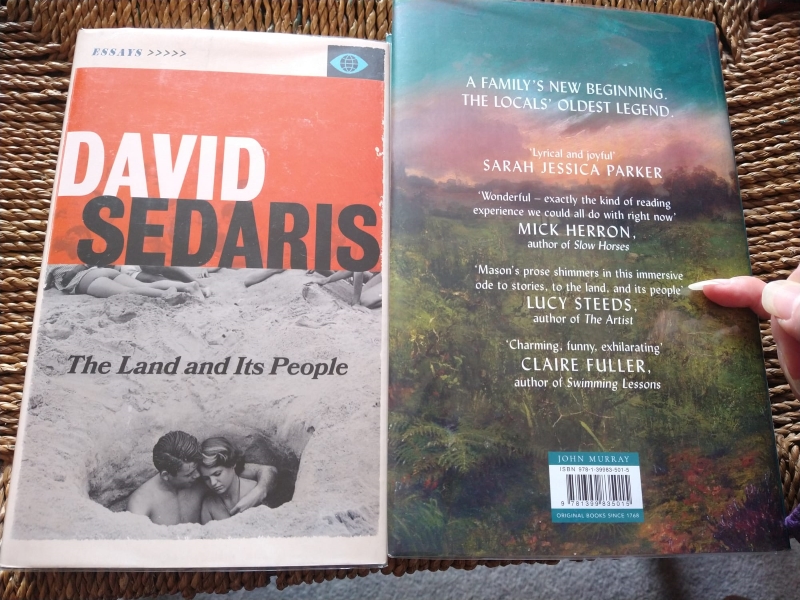
- I was reading The Land and Its People by David Sedaris at the same time as Country People by Daniel Mason, one of whose blurbs happens to borrow Sedaris’s title phrase.
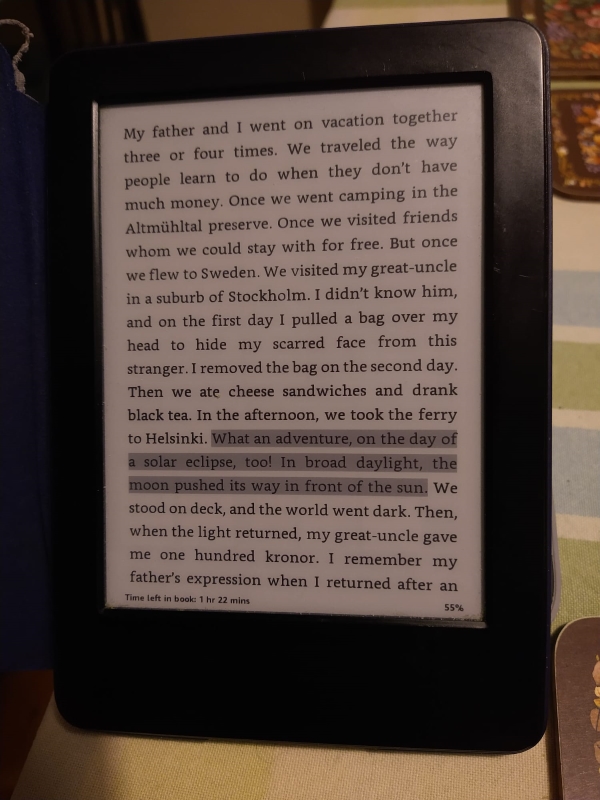
- I was reading Botany of Madness by Leon Engler and encountered this passage on the day of the solar eclipse in Europe (12 August):
What’s the weirdest reading coincidence you’ve had lately?
20 Books of Summer, 4–7: Fadiman; Kingsolver & O’Farrell Rereads; Sullivan
I finished several of these a while ago now, but it’s been a struggle to summon up the motivation to write about them, especially during the heat wave we’re currently experiencing in the southern half of England. You’ve heard a lot from me recently as I’ve been catching up on reviews, so I’ll try to keep these responses to one (long) paragraph each.
Frog and Other Essays by Anne Fadiman (2026)
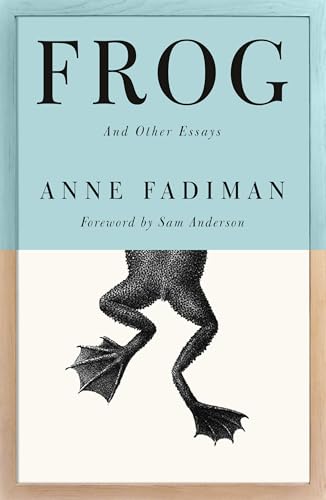 This was one of my Most Anticipated titles of the year because I’ve loved Fadiman’s nonfiction, especially the bookish Ex Libris, which I’ve read twice. Her essays are warm and fluent, braiding memoir and observation in a natural way and drawing readers in whether they share her particular preoccupations or not. “Frog” is about her guilt for not being more attentive to her children’s surprisingly long-lived pet frog, Bunky; “South Polar Times” recounts her obsession with polar exploration and what she discovered in the archives of the magazine Shackleton produced in the 1910s. At the centre of the book is a triptych on modern technology (“My Old Printer”) and language use, especially as she’s experienced it as a Yale professor trying to adjust to pandemic-era teaching (“Screen Share”) and expanded gender possibilities (“All My Pronouns,” which is mostly about getting used to “they” as a singular pronoun for nonbinary individuals). What a relief that advancing age and pedantry didn’t see her joining the anti-woke camp. The final essay, “Yes to Everything,” was – I think – the afterword to her late student Marina Keegan’s The Opposite of Loneliness (2014). For me the highlight was “The Oakling and the Oak,” about Samuel Taylor Coleridge’s disappointing son (“A penumbra of impossible expectation began to settle around Hartley’s head”). There’s a tantalizing parallel here with her own sense of needing to live up to her literary father, Clifton Fadiman, that I wish she’d explored further. So: good stuff here, but only seven essays, all of which were originally published elsewhere. It feels like scraping the barrel. And why the laudatory foreword by someone I’ve never heard of (Sam Anderson)? I ordered this while in the States to get to a free-shipping limit and I’m glad I got the chance to read it, but it’s not a must. Do seek out “Frog” and “Oak,” though. (New purchase – Target.com)
Prodigal Summer by Barbara Kingsolver (2000)
In all her life Lusa had never seen such an oversexed, muggy summer. Just breathing was a torrid proposition.
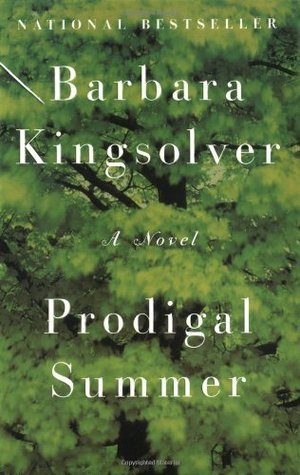 Although I remembered this as being in Kingsolver’s top tier of novels, I recalled no details beyond a female ranger who lives in the woods, has an affair with a hunter, and studies coyotes (actually, I thought it was wolves – I was conflating Deanna’s surname, Wolfe, and Sarah Hall’s The Wolf Border, which has a similar setup). I’d forgotten that there are two other strands: Lusa, a Polish-Palestinian entomologist widowed young, inherits her husband’s family farm and tries to make a go of goat breeding despite others’ disapproval; and Garnett, a pious old man trying to resurrect the American chestnut after it was wiped out by blight, has an ongoing low-key feud with his organic orchard-keeping neighbour, Nannie. These threads rotate under the headings “Predators,” “Moth Love,” and “Old Chestnuts.” There are pleasing connections between the main characters, who are also thematically linked by ideological disagreements and the possibility of new life and romance when age or circumstances seemed to disqualify them. Kingsolver writes brilliantly about science, and although she gets a little preachy through Nannie, in a way that presages Unsheltered (“It’s glory, to be part of a bigger something. The glory of an evolving world”), her environmentalist messages are always right on. It’s depressing to note that, more than a quarter-century later, the issues she raises related to food production and pesticide use are worse rather than better. Like Margaret Atwood, she’s a literary prophet of our time. I’m nearly halfway through her upcoming novel, Partita, for a Shelf Awareness review and its protagonist, Livia, seems to be in the lineage of Deanna – an Appalachian girl who tries to exceed her origins. This was a big ol’ satisfying summer read. Whyever didn’t Kingsolver win the Women’s Prize for this one? (Little Free Library)
My original rating: 
My rating now: 
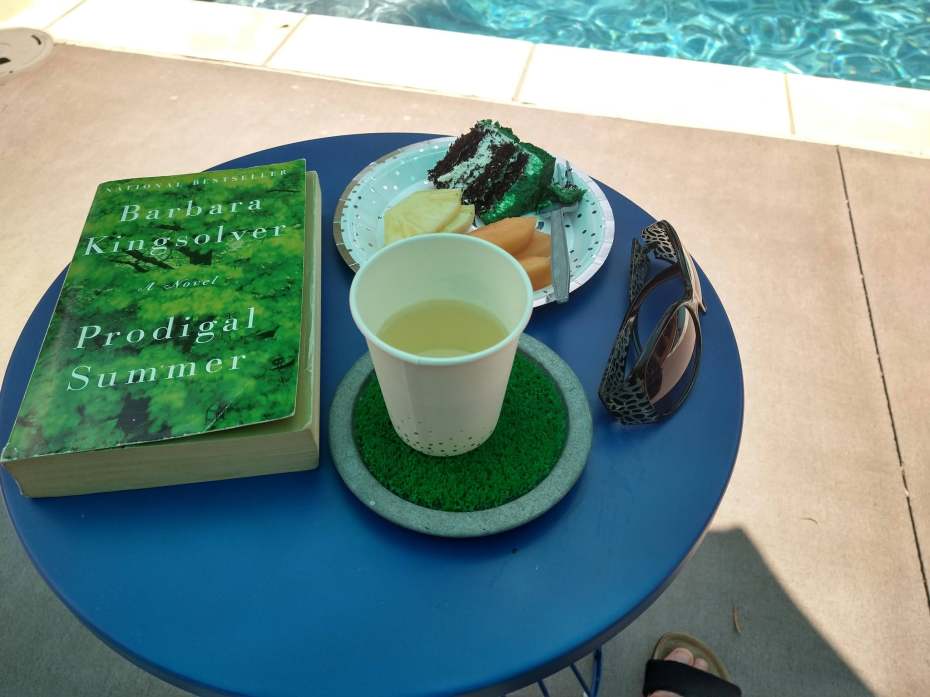
Poolside reading at my nephew’s graduation party.
The Vanishing Act of Esme Lennox by Maggie O’Farrell (2006)
Nothing is our own. We begin in the world as anagrams of our antecedents.
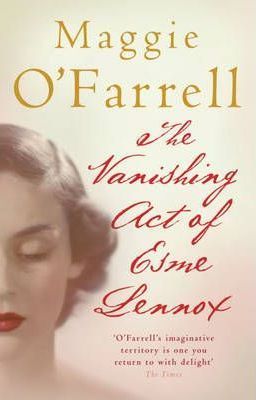 Another reread. I remembered the mental hospital element but think I may have otherwise had this confused with Sebastian Barry’s The Secret Scripture, which also features historical family secrets and a great big twist. This was our book club selection for June, and although I missed the meeting (which was also our summer social) while I was back visiting my family, I wanted to catch up by reading it again – especially after it earned a perfect score from the rest of the group! In the novel’s present day, vintage clothing store owner Iris is having an affair with a married man and learns that she has a ‘mad’ great-aunt who will soon be her responsibility when the hospital Esme has called home for 60 years closes. Why did Iris’s grandmother, Kitty, hide that she had a sister? With Kitty on a dementia ward, she can’t ask outright. Instead, narration alternates between the sisters’ growing-up years in India and Edinburgh – where flighty, rebellious Esme caught boys’ eyes while obedient Kitty didn’t – and Iris and Esme embarking on a tentative relationship. The use of the present tense for both, as well as the fragments of memory we gradually work out are Kitty’s, create a continuous narrative so gripping that I could easily have consumed it in one sitting had I not had other commitments. Grief, parenting, male privilege, family legacies, and a freedom of spirit that might today be branded neurodivergence are strong elements. It’s appalling how women have been punished for breaking the rules, but the other ensuing betrayals are just as shocking. This must have one of THE best surprise endings out there. I can’t believe I’d forgotten the details. After a couple of lacklustre early novels, O’Farrell’s career truly took off with this one. Now to reread her other gems. (Borrowed from a book club friend)
My original rating:
My rating now: 
Commencement by J. Courtney Sullivan (2009)
Smith had left its mark on her, so that the place would always feel like home
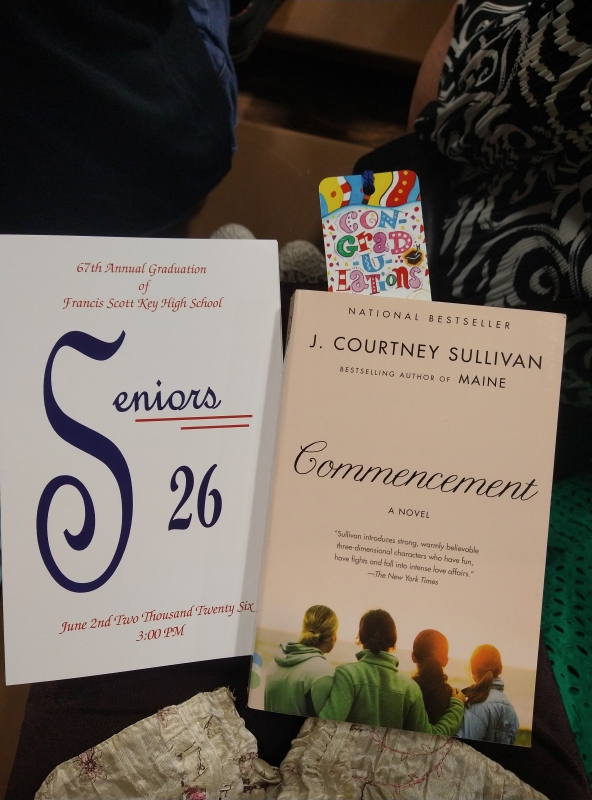
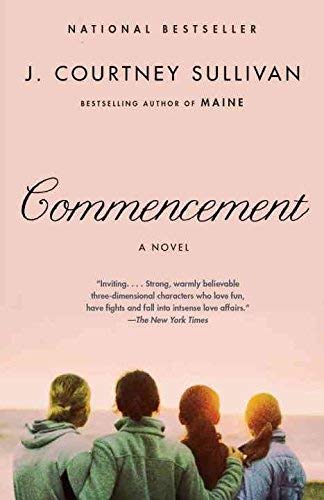 I’ve had a mixed experience with Sullivan’s novels, but this debut was a delight. Let’s start with the clever title: An American graduation ceremony is called “commencement,” so it marks both an ending and a beginning. For four friends who meet at Smith College, a women-only institution, in the late 1990s, their student experiences have effects that carry on into their ‘real’ lives afterwards. We watch how their relationships with each other, and with family members and partners, shift over the course of nearly a decade. Sally arrives on campus bereft from the death of her mother, but she doesn’t let her sadness corrode her ambition or her kind heart. Bree is engaged to a man when she comes up from Savannah but leaves in a committed relationship with a woman. April was raised by a single mother and has always been a strident feminist, but graduates with plans to go to extremes in drawing attention to the plight of sex workers. The framing story of the friends gathering for Sally’s wedding introduces us first to Celia, who is in some sense still living the student life in the small New York City apartment she brings one-night stands back to after drunken evenings. The wedding ends up in a huge fight between the four, and as the years pass they split off into pairs and trios of loyalty before a crisis brings them back together. It’s a little far-fetched how this all plays out, but I was invested enough in all four characters that I was happy to go along with it. Sullivan went to Smith (I also attended what was a women’s college at the time, Hood), so you have to wonder if anything was autobiographical for her. She weaves in various women’s issues, such as sexual assault and decisions about career and motherhood. I applaud Sullivan for mentioning support for trans men on campus, though her discussion does seem of its time and today I think the debate would be more around allowing trans women to attend. I chose this to read because my recent USA trip was for my nephew’s high school graduation. It’s perfect for Curtis Sittenfeld fans. (Secondhand purchase – 2nd & Charles)
Book Serendipity, Mid-February to Mid-April
I call it “Book Serendipity” when two or more books that I read at the same time or in quick succession have something in common – the more bizarre, the better. This is a regular feature of mine every couple of months. Because I usually have 20–30 books on the go at once, I suppose I’m more prone to such incidents. People frequently ask how I remember all of these coincidences. The answer is: I jot them down on scraps of paper or input them immediately into a file on my PC desktop; otherwise, they would flit away!
The following are in roughly chronological order.
- The protagonist isn’t aware that they’re crying until someone tells them / they look in a mirror in The Remains of the Day by Kazuo Ishiguro and Three Days in June by Anne Tyler.
- A residential complex with primal scream therapy in Confessions by Catherine Airey and The Möbius Book by Catherine Lacey.
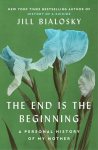
- Memories of wiping down groceries during the early days of the pandemic in The End Is the Beginning by Jill Bialosky and Human/Animal by Amie Souza Reilly.
- A few weeks before I read Maurice and Maralyn by Sophie Elmhirst, I’d finished reading the author’s husband’s debut novel (Going Home by Tom Lamont); I had no idea of the connection between them until I got to her Acknowledgements.
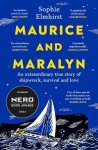
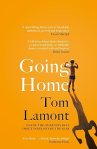
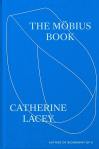
- A mention of the same emergency money passing between friends in Alligator Tears by Edgar Gomez ($20) and The Möbius Book by Catherine Lacey ($100).
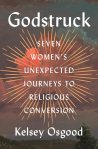
- Autobiographical discussions of religiosity and anorexia in The Möbius Book by Catherine Lacey and Godstruck by Kelsey Osgood.
- The theme of the dark night sky in The Wild Dark by Craig Childs, followed almost immediately by Night Magic by Leigh Ann Henion.
- Last year I learned about Marina Abramović’s performance art where she and her ex trekked to China’s Great Wall from different directions, met in the middle, and continued walking away to dramatize their breakup in The Ritual Effect by Michael Norton. Recently I saw it mentioned again in The Möbius Book by Catherine Lacey. Abramović’s work is also mentioned in Human/Animal by Amie Souza Reilly and is the basis for the opening track on Anne-Marie Sanderson’s album Old Light, “Amethyst Shoes.”
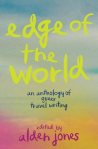
- The idea of running towards danger appears in Alex Marzano-Lesnevich’s essay in Edge of the World, a queer travel anthology edited by Alden Jones; and the bibliography of The Möbius Book by Catherine Lacey.
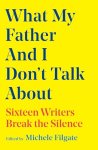
- I then read another Alex Marzano-Lesnevich essay in quick succession (both were excellent, by the way) in What My Father and I Don’t Talk About, edited by Michele Filgate.
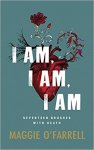
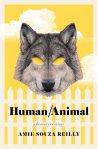
- A scene in which a woman goes to a police station and her concerns are dismissed because she has no evidence and the man/men’s behaviour isn’t ‘bad enough’ in I Am, I Am, I Am by Maggie O’Farrell and Human/Animal by Amie Souza Reilly.
- Too many details as the sign of a lie in Dream Count by Chimamanda Ngozi Adichie and Three Days in June by Anne Tyler.
- Scenes of throwing all of a spouse’s belongings out on the yard/street in Old Soul by Susan Barker, How to Survive Your Mother by Jonathan Maitland, and Human/Animal by Amie Souza Reilly.
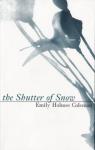
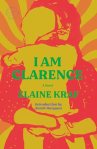
- Reading two lost American classics about motherhood and time spent in a mental institution at the same time: The Shutter of Snow by Emily Holmes Coleman and I Am Clarence by Elaine Kraf.
- Disorientation underwater: a literal experience in I Am, I Am, I Am by Maggie O’Farrell, then used as a metaphor for what it was like to be stuck in a blizzard on Annapurna in 2014 in The Secret Life of Snow by Giles Whittell.
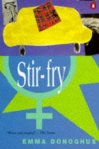
- A teenager who has a job cleaning hotels in Old Soul by Susan Barker and I Am, I Am, I Am by Maggie O’Farrell. (In Stir-Fry by Emma Donoghue, Maria is also a teenaged cleaner, but of office buildings.)
- A vacuum cleaner bag splits in Stir-Fry by Emma Donoghue and one story of Are You Happy? by Lori Ostlund – in the latter it’s deliberate, searching for evidence of the character’s late son after cleaning his room.

- An ailing tree or trees that have to be cut down in one story of The Accidentals by Guadalupe Nettel and The Lost Trees of Willow Avenue by Mike Tidwell.
- Buchenwald was mentioned in one poem each in A God at the Door by Tishani Doshi and The Ghost Orchid by Michael Longley.
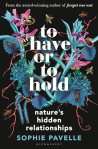
- A reference to Robin Wall Kimmerer’s Braiding Sweetgrass in To Have or to Hold by Sophie Pavelle and Human/Animal by Amie Souza Reilly.

- A mentally unwell woman deliberately burns her hands in I Am Clarence by Elaine Kraf and Every Day Is Mother’s Day by Hilary Mantel.
- A mention of the pollution caused by gas stoves in We Do Not Part by Han Kang and The Lost Trees of Willow Avenue by Mike Tidwell.
- An art installation involving part-buried trees was mentioned in Immemorial by Lauren Markham and then I encountered a similar project a few months later in We Do Not Part by Han Kang. Burying trees as a method of carbon storage is then discussed in The Lost Trees of Willow Avenue by Mike Tidwell.

- Imagining the lives of the people living in an apartment you didn’t end up renting in Scaffolding by Lauren Elkin and one story of The Accidentals by Guadalupe Nettel.
- The Anthropocene is mentioned in Scaffolding by Lauren Elkin and The Alternatives by Caoilinn Hughes.
- I was reading three debut novels from the McKitterick Prize longlist at the same time, all of them with very similar page counts of 383, 387, and 389 (i.e., too long!).
- Being appalled at an institutionalized mother’s appearance in The End Is the Beginning by Jill Bialosky and Every Day Is Mother’s Day by Hilary Mantel.
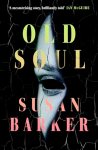 A remote artist’s studio and severed fingers in Old Soul by Susan Barker and We Do Not Part by Han Kang.
- A lesbian couple in New Mexico, the experience of being watched through a window, and the mention of a caftan/kaftan, in Old Soul by Susan Barker and one story of Are You Happy? by Lori Ostlund.
- Refusal to go to a hospital despite being in critical condition in I Am, I Am, I Am by Maggie O’Farrell and one story of Are You Happy? by Lori Ostlund.
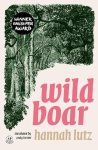
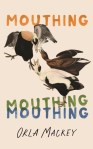
- It’s not a niche stylistic decision anymore; I was reading four novels with no speech marks at the same time: Old Soul by Susan Barker, Scaffolding by Lauren Elkin, The Alternatives by Caoilinn Hughes, and We Do Not Part by Han Kang. [And then, a bit later, three more: Wild Boar by Hannah Lutz, Mouthing by Orla Mackey, and How to Be Somebody Else by Miranda Pountney.]
 A lesbian couple is alarmed by the one partner’s family keeping guns in Spent by Alison Bechdel and one story of Are You Happy? by Lori Ostlund.
- Responding to the 2021 murder of eight Asian spa workers in Atlanta in Foreign Fruit by Katie Goh and Find Me as the Creature I Am by Emily Jungmin Yoon.
- Disposing of a late father’s soiled mattress in Mouthing by Orla Mackey and one story of Are You Happy? by Lori Ostlund.
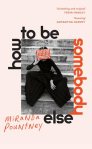 New York City tourist slogans in Apple of My Eye by Helene Hanff and How to Be Somebody Else by Miranda Pountney.
- A Jewish care home for the elderly in The End Is the Beginning by Jill Bialosky and Joanna Rakoff’s essay in What My Father and I Don’t Talk About (ed. Michele Filgate).
- A woman has no memory between leaving a bar and first hooking up with the man she’s having an affair with in If You Love It, Let It Kill You by Hannah Pittard and How to Be Somebody Else by Miranda Pountney.
 A stalker-ish writing student who submits an essay to his professor that seems inappropriately personal about her in one story of Are You Happy? by Lori Ostlund and If You Love It, Let It Kill You by Hannah Pittard.
- A pygmy goat as a pet (and a one-syllable, five-letter S title!) in Spent by Alison Bechdel and Sleep by Honor Jones.
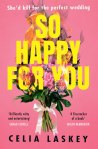
- A Brooklyn setting and thirtysomething female protagonist in Sleep by Honor Jones, So Happy for You by Celia Laskey, and How to Be Somebody Else by Miranda Pountney.
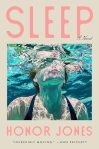
- A mention of the American Girl historical dolls franchise in Sleep by Honor Jones and If You Love It, Let It Kill You by Hannah Pittard, both of which I’m reviewing early for Shelf Awareness.
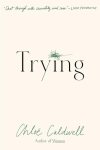 A writing professor knows she’s a hypocrite for telling her students what (not) to do and then (not) doing it herself in Trying by Chloé Caldwell and If You Love It, Let It Kill You by Hannah Pittard. These two books also involve a partner named B (or Bruce), metafiction, porch drinks with parents, and the observation that a random statement sounds like a book title.
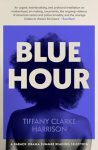
- The protagonist’s therapist asks her to find more precise words for her feelings in Blue Hour by Tiffany Clarke Harrison and So Happy for You by Celia Laskey.
- The protagonist “talks” with a dying dog or cat in The Möbius Book by Catherine Lacey and If You Love It, Let It Kill You by Hannah Pittard.
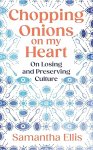 Shalimar perfume is mentioned in Scaffolding by Lauren Elkin and Chopping Onions on My Heart by Samantha Ellis.
- The Rapunzel fairytale is a point of reference in In the Evening, We’ll Dance by Anne-Marie Erickson and Secret Agent Man by Margot Singer, both of which I was reading early for Foreword Reviews.
What’s the weirdest reading coincidence you’ve had lately?
 Bookish Beck = Rebecca Foster. American transplant to England. Freelance proofreader and book reviewer.
