As well as Reading Ireland Month, it’s Reading Wales Month, hosted by Karen of BookerTalk and Kath of Nut Press. I read three relevant books by women – my ideal trio of a novel, a poetry collection and a memoir – and also experienced some additional poetry via a special church service.
Fountainville by Tishani Doshi (2013)
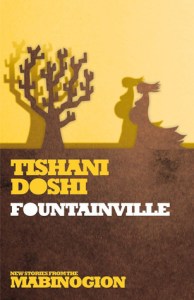 This is part of a Seren series retelling the medieval Welsh legends in the Mabinogion. Doshi has Welsh and Indian parentage; here she blends her knowledge of both countries and their stories. Luna, the narrator, works as an assistant to Begum, the Lady of the Fountain. Begum and her husband Kedar, a gangster, operate a shady surrogacy clinic. Then Owain Knight comes to town and makes Luna a proposition and things get complicated. Though this is novella length, it took me ages to slog through it. My lack of familiarity with the source text felt like a problem – I’d rather it had been summarized in a foreword rather than an afterword – and Doshi’s narrative is insipid despite the soap opera-ready content; I saw none of the spark and originality I’ve found in her excellent poetry. On this evidence I’m unlikely to pick up any more of her fiction. In any case, it was appropriate that I bought an ex-Swansea Libraries copy from Richard Booth’s Bookshop in Hay-on-Wye. (Secondhand purchase)
First Rain in Paradise by Gwyneth Lewis (2025)
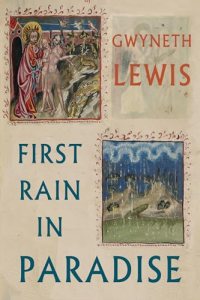 I’ve read a couple of Lewis’s poetry collections before (e.g. Parables and Faxes), as well as her memoir of depression and her travel book about sailing with her husband. She was Wales’s first poet laureate in 2005–6 and this is her sixth collection in English. The first section about her childhood with an emotionally abusive mother envisions her mother as a spider. The rest of the book traces the effects of that early trauma into chronic illness and mental health struggles. There is a sense of lost time. “Late Blackberries” opens “Where was I during the glut? I missed / the first sweetness, alluring and glossy // black as a dormouse’s eye, when pickings / were easy. A decade lost being ill tastes // bitter.” The imagery is drawn from physics, the countryside, medieval religious art, and the discovery of mummies. The two most quintessentially Welsh poems are “Red Waistcoat,” about coming across a dead ewe in a field, and “Under,” commemorating a fatal 2011 mining accident. Forasmuch as the book’s themes seemed perfectly assembled to appeal to me, I never felt they’d been brought to life in the language. (Secondhand purchase – Exeter charity shop)
A Writer’s House in Wales by Jan Morris (2002)
“My house is so absolutely of its setting, is rooted so profoundly not just in the soil, but in the very idea of Wales, that anywhere else it would lose all charisma.”
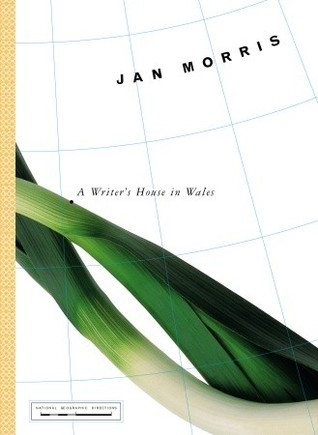 Although Jan Morris was famous for travelling the world and writing all about it, she equally loved being able to retreat to Trefan Morys, “for me … a summation, a metaphor, a paradigm, a microcosm, an examplar, a multum in parvo, a demonstration, a solidification, an essence, a regular epitome of all that I love about my country.” That excerpt from the first paragraph is a typical example of her effusive overwriting. This short book was clearly written for people (Americans) who know nothing about Wales, not even where on earth it is. I love her cosy evocation of her home – actually the renovated 18th-century stable block of the former family home, ample for her and Elizabeth in their dotage – and its bookshelves and animal life, whether domestic (Ibsen the Norwegian forest cat) or wild (bats in the attic!).
However, this was a reread and I found it indulgent as well as quaint this time around. It reminded me most of her diaries (the first volume was In My Mind’s Eye) and would be ideal for reading in tandem with those. Morris writes, “I am emotionally in thrall to Welshness.” I couldn’t help but think of biographer Sara Wheeler’s words about Morris’s contradictions: “she was a famous chronicler of the British Empire (some say an apologist for it) and a card-carrying Welsh nationalist. She was singular and contrary”. Wheeler slept in this house, in Morris’s bed, after her death while working through the papers.
I’ve always meant to source more from this National Geographic Directions series of brief travel books in which authors celebrate a beloved place. The only other I’ve read is Land’s End, Michael Cunningham’s book on Provincetown. (Free from The Book Thing of Baltimore)
For Advent last year and Lent this year, my church put on special evening compline services that combine liturgy and folk-inspired music my husband helped with. Earlier this month we had an extraordinary R.S. Thomas-themed service with some poems read aloud from the pulpit and others set to avant-garde music (a theremin was ruled out, but a harmonium, melodeon and glockenspiel featured, as well as a mandolin, banjo, toy piano and electric guitar). I was mostly unfamiliar with Thomas, who was a priest as well as a poet, and was gobsmacked by the commingling of scientific and theological vocabulary and the tolerance of doubt. Here are some extracts.
It is this great absence
that is like a presence,
that compels me to address it without hope
of a reply.
You speak
all languages and none,
answering our most complex
prayers with the simplicity
of a flower, confronting
us, when we would domesticate you
to our uses, with the rioting
viruses under our lens.
You have made God small,
setting him astride
a pipette
And all this in a carefully assembled pamphlet that I’ve kept as a souvenir.
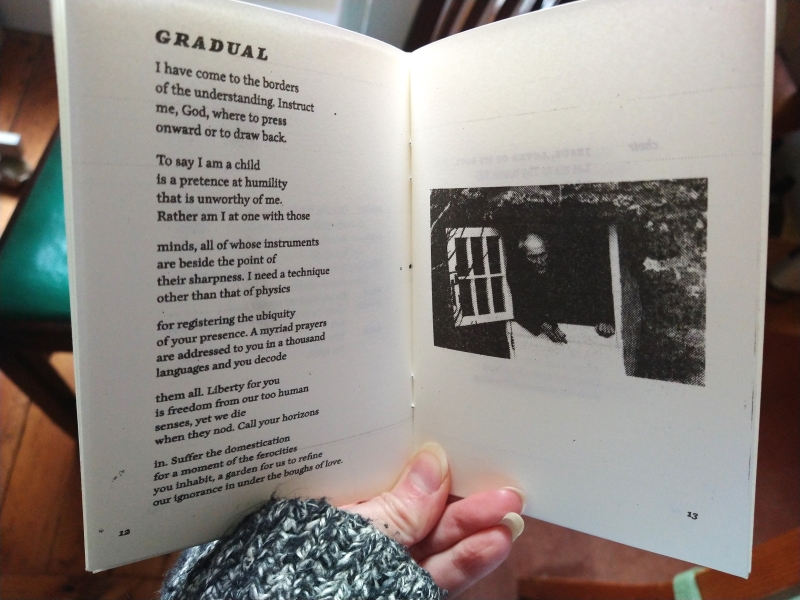
I might not have chosen the best books this year, but I’m still feeling well disposed towards the Welsh. A nice link is that Thomas lived just a few miles from Morris. In her book she calls him “perhaps the greatest Welsh poet writing in English since George Herbert.” She describes him thus: “I last set eyes on R. S. Thomas standing all alone beside our coastal road gazing silently into an adjacent wood, as though communing with the crows and blackbirds in its branches … Whenever I recall him at the roadside that day, looking silently into the trees as though the answer to all things was to be found among them, the memory gives me a sense of calm and liberation, as Wales itself does”.
 Bookish Beck = Rebecca Foster. American transplant to England. Freelance proofreader and book reviewer.

Happy to hear that you haven’t been put off us! Thanks for taking part and you chose an interesting mix of reading, even if the outcome wasn’t as satisfactory as you were hoping for. I do like the sound of the R S Thomas event in your local church, though.
LikeLiked by 1 person
They all had the potential to be excellent … maybe I was in a funny mood. Thanks for your co-hosting and I’ll hope to participate again next year (I had lots of options I didn’t get time for).
LikeLiked by 1 person
No, sometimes they don’t hit. And I definitely have way more options than I managed to read and review, as well.
LikeLiked by 1 person
Some lovely reads, and the Thomas service sounds marvellous. I’m an atheist, yet I love his poetry. One a holiday in Wales one year we drove down the Llyn Peninsula just to get a glimpse of his house from the road…
LikeLiked by 1 person
I’d like to see more of Wales. Apart from one bus tour around the North, one holiday to Pembrokeshire, and a brief visit to Cardiff, I only really know Hay-on-Wye (which is only just over the border!).
LikeLiked by 1 person
North Wales is beautiful!
LikeLiked by 1 person
It’s hard to beat Pembrokeshire!
LikeLiked by 1 person
What a lovely thing for Morris to say about Thomas, I haven’t read either of them but A Writers House is now on my list!
LikeLiked by 1 person
Pleased to hear that! Morris has an enormous back catalogue and is essential if you’re at all into travel writing.
LikeLiked by 1 person
If anyone reading this likes #RSThomas then you might be interested in following this Bluesky account @RSThomaspoet.bsky.social, also facebook.com/groups/RSThomas/
– share his poems, quotes, events, info, Q+A, etc.
– and there’s a Society you can join… rsthomaspoetry.co.uk/rs-thomas-me-eldridge-society/
LikeLiked by 2 people
Thank you for reading and commenting! I’ve followed the Bluesky account.
LikeLike
I read A Writer’s House in Wales last year. Maybe I just wasn’t in the right frame of mind, but I’m sorry to say found it intensely irritating, and as you say, overwritten. It came across to me as smug and self-satisfied. I probably should re-read it, but I was so disappointed by it that I gave it to the Oxfam bookshop!My favourite book set in Wales is Nina Bawden’s Carrie’s War; it has particular resonance for me as my late mother was evacuated from Wales to a small Welsh village during the war. She often said it was one of the happiest times of her life. My husband and I visited the village when we were in Wales last year, and were able to show mother photos of it before she died. It has, of course, changed a great deal, but she still recognised some of the older buildings.
LikeLiked by 1 person
I see what you mean — it’s hard to write from a place of privilege and contentment without coming across as smug! I haven’t decided yet whether to keep this copy or send it off to the Little Free Library. I think I liked it so much at that time (probably back in 2006) because it was so different to her other books: a quick, fond slice of life rather than an in-depth travel report.
I’ll have to look out for the Bawden. It sounds lovely, and that’s so special that it had personal significance for your family.
LikeLike
I did of course mean that my mother was evacuated from London to Wales – sorry!
LikeLiked by 1 person
Shame about the Doshi as I love her poetry.
LikeLiked by 1 person
Her own fiction might be a different story; maybe the constraints of the legend update stifled her?
LikeLiked by 1 person
Sorry that the books didn’t work out for you. Fountainville sounded intriguing with its blend of Indian/Welsh lore – maybe the author assumed a level of knowledge in her audience that just didn’t exist.
What good luck though to have that event in the church
LikeLiked by 1 person
I imagine others could enjoy Fountainville more than I did. Were you familiar with that series of retellings?
LikeLike
A shame about the Doshi. I think I’ve read some others in that series – Owen Sheers’ White Ravens comes to mind.
LikeLiked by 1 person
I’d be willing to try another.
LikeLiked by 1 person
That Doshi volume is part of a set of retellings I marked TBR some years ago but, now that time has passed and shipping for books is so costly, I might not get to it (and I can hear you saying, no loss heheh). I know what you mean about Jan Morris’ books; at times I have loved them and other times felt wholly unmoved (and sometimes by the same volume). But, then, I think that could also be true of some of May Sarton’s diaries… maybe the very plain language isn’t always a good fit.
LikeLiked by 1 person
I can see why you’d be drawn to the Mabinogion series but, yes, I imagine the volumes are difficult to source.
My reactions to Morris have been all over the place; her novel may be one of the worst I’ve ever read!
LikeLike
[…] Fountainville by Tishani Doshi [resold] […]
LikeLike