Airmail: Books that Lasted All of 2015 #2
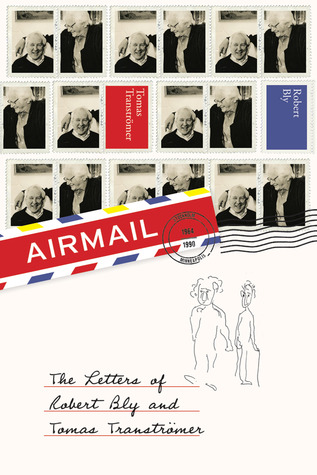 Airmail: The Letters of Robert Bly and Tomas Tranströmer was my first-ever Goodreads giveaway win. Way back in the summer of 2013, the good people of Graywolf Press spent a small fortune to send this tremendous book all the way from Minnesota to my tiny then-house on the outskirts of Reading, England. It took me an unconscionably long time first to pick it up, then to read it, and finally to review it. But here we are.
This is the first time I’d read a literary correspondence, and I absolutely loved it. I knew very little about either poet before picking this up, though I recognized Bly as the translator of the copy of Knut Hamsun’s Hunger I had read a few years back. The two first corresponded in 1964 when Tranströmer requested a copy of the poetry journal The Sixties from Bly’s small press. At this point Tranströmer was already an established poet in his native Sweden, but in decades to come Bly was responsible for making his reputation in English translation.
“Friendships have their rhythms and seasons, fat times and lean times,” editor Thomas R. Smith writes in his introduction. One of the pleasures of this book is watching a friendship develop, as salutations go from “Dear Mr. Tranströmer” and “Best wishes” to “Your friend” and “With deep fondness always.”
Their relationship was both professional and personal: they translated each other’s poems into their respective languages so discussed intricacies of meaning as well as publication details and reading tours, but they also visited each other and became ever deeper confidants through deaths in the family and Bly’s painful divorce. They also commiserate over the debacle of the Vietnam War (as a protestor Bly was once arrested alongside Dr. Spock and Allen Ginsberg) and the Nixon–Reagan affronts to liberalism.
These letters sparkle with humor, especially from Tranströmer, who paints a Micawber-ish picture of his impecunious family, initially supported through his day job as a psychologist at a boys’ prison. My impression of him was of an impish joker.
Our shortage of money is comical—toward the end of the month we go around and shake all our old clothes in the hope that a stray coin might fall out.
We drank some champagne, which makes you think very clearly—my head turned into an aquarium with goldfish who were mumbling sentences of Marcus Aurelius.
Bly’s a witty sort, too:
I’ll send you the most insulting review I’ve ever gotten—it’s wonderful, he objects to everything about me except the size of my shoes!
I carefully set aside these free days which are known as Introvert Days, and are to be spent in solitary anxious, obstinate, confused ectomorph brooding.
Forgive my new typewriter—its mother was frightened by a Latin manuscript, and it doesn’t believe in pauses…
You don’t have to have any interest in poetry to read this with enjoyment. In fact, I didn’t care for most of the poem extracts. In the 1960s and 70s, at least – the heyday for the letters – they both wrote free verse poems that alternate matter-of-fact observations with abstractions. Lacking in sound techniques, they struck me as flat and artless. They weren’t to my taste apart from this one stanza of Tranströmer’s that instantly jumped out to me:
Two truths approach each other. One comes from inside, the other from outside, and where they meet we have a chance to catch sight of ourselves. (from “Preludes”)
However, Bly, at least, became “positively form-mad” in his later years; “[I] now have to eat all my words praising free verse as the only food conceivable for true Christian folk,” he wrote in 1981. He even created his own form, the “ramage” of 85 syllables. Perhaps I’ll like their later work better – I’m game for trying a full collection from each of them.
For anyone interested in the nitty-gritty of translation, there are many fascinating passages here where the poets wrestle with vocabulary and nuances. “Poems are best when there are incredible mysteries in them,” Bly declares, and all the more difficult to retain that mystery as they passed back and forth between Swedish and English. “I think it was something unexplainable, something water-like or flowing in our approach to poetry that made our translations of each other full of feeling even with occasional mistakes,” Bly wrote to their Swedish editor.
These selected letters continue through 1990, when Tranströmer had a stroke and their correspondence inevitably declined. Tomas Tranströmer would go on to win the Nobel Prize in 2011 and died in March 2015. Robert Bly is still going at age 89 and has recently been the subject of a biopic. Stealing Sugar from the Castle, a volume of his new and selected poems, was published in 2013.
After this I’d be keen to try out more authors’ correspondence volumes. I love letters whether they appear in epistolary fiction or in nonfiction, and here they form a touching picture of a friendship that sustained their writers for decades. In 1978 Bly wrote: “Thank you for receiving my grief and my uncertainties and my shadowy complications without running out the door.” That’s the mark of a true friend.
With thanks to Graywolf Press for the free copy, won in a Goodreads giveaway.
My rating: 
Four Books that Lasted All of 2015: #1
With this four-part post (one per day for the rest of this week) I think I will finally have caught up on the 2015 reads I needed to review. These four books have daunted me for ages because I spent much of last year with them – one because I wrestled with it (vacillating between admiration and frustration), another because it was a daily bedside book, and the other two because they were long and rewarding yet tough to read more than a bit of at a time. Knowing full well that I won’t do any of them justice, I’ll offer a few thoughts.
Fourth of July Creek by Smith Henderson
“I go into homes all the time and I save children. It’s what I do for a living, you see? And I didn’t save my own daughter.”
 If I take nearly a year over a novel, stopping and starting, that’s usually a bad sign. But I forced myself to finish this one, just like I did with The Orphan-Master’s Son by Adam Johnson. In the end my feelings were roughly similar, too: I appreciated the skill behind Henderson’s writing but never fully warmed to it. This is the story of Pete Snow, a Montana social worker in the early 1980s. His cases are uniformly distressing, but the one that most captivates his attention is Benjamin Pearl, raised in the wilderness by his father Jeremiah, a fundamentalist anarchist who drills holes in coins to show his antipathy to the government.
Since his wife and their teenage daughter Rachel left for Texas, Pete has been adrift in a fog of alcohol and sex, driving obsessively between remote locations in an attempt to save his doomed clients and criminal brother. When Rachel runs away, though, life’s dangers come home to Pete for the first time: “He’d seen so much suffering, but he’d only ever suffered it secondarily. To have it fresh and his own. The scope of it. He’d had no idea. He’d known nothing.” His search for his daughter is what saved the book for me. However, what actually happens to Rachel I found melodramatic, and how it’s narrated – through a third-person rendering of an interview, rather than a you/I back-and-forth – seemed odd.
Indeed, there are unusual narration choices throughout, such as the occasional second-person phrase in reference to Pete. The prose style is by turns fragmentary (as the above lines attest) and expansive, as in this long, alliterative sentence:
Shattered chants and ceaseless invective morph into a nearly simian cacophony of hoots and throaty shrieks as a white cloud of gas composes and insinuates itself into the small crowd that yet churns forward from the rear and backward from the front as the agitators break into two scattering bodies, fanning and choking and wild-eyed, coursing up and down the road.
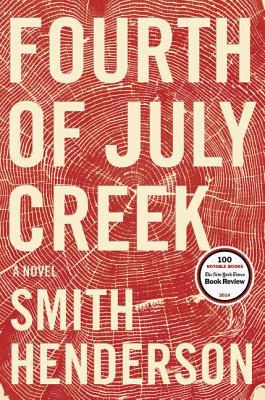
Once again I prefer the American cover. What’s up with that?
Ultimately I found this novel to be very hard work. The one scene I’ll remember most clearly is Pete and the Pearls stumbling on a pile of animals, from a raccoon right up to a black bear, that were all killed by a downed telephone wire. I’d recommend this if you’re a dedicated reader of dirty realism and you accept the violence and the detached writing style that genre tends to involve. If not, you should probably start somewhere else, like with Ron Rash or David Vann.
Ever since Sufjan Stevens’s Carrie and Lowell came out, I can’t help but hear his song “Fourth of July” in my head when I think about this book: “What did you learn from the Tillamook Burn and the Fourth of July? We’re all gonna die.” It’s that oppressive, depressing, even apocalyptic atmosphere I’ll return to when I think about this book. Fourth of July Creek – a real place in Montana – is nowhere I’ll want to revisit.
With thanks to Windmill Books for the free copy, won in a Goodreads giveaway.
My rating: 
The Novel Cure—Bibliotherapy in Action
A good book, read at the right moment, should leave you uplifted, inspired, energized and eager for more. With so many books to choose from, what’s the point of reading even one more that leaves you cold?
I’ve mentioned my interest in bibliotherapy before. Well, for anyone new to the concept or interested in finding out more, The Novel Cure by Ella Berthoud and Susan Elderkin, two of the bibliotherapists at London’s School of Life, is an accessible introduction. Subtitled “An A–Z of Literary Remedies,” this is a learned and at times tongue-in-cheek book of advice about what fiction to read if you’re suffering from any sort of malady – physical, psychological, or imagined.
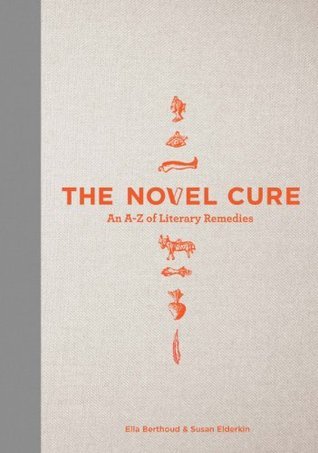 The alphabetical format and “see also” asides make it more like a cross-referenced encyclopedia than a book to read straight through, though I tried it both ways. Initially I flipped through at random, letting one entry take me to another related one and so on, but after a while I went back to the start and caught up on unread entries to finish within a year.
“It helps enormously at times of stress to read about other people who are going through similar things; watching how other people cope or fail to cope will make you feel less alone and give you strength,” the authors write to introduce the “cancer, caring for someone with” entry. I found this to be true when my sister lost her husband to cancer last year. She had never been a reader – apart from celebrity magazines – but in the past year she’s read nearly 90 books, many of them memoirs about illness and bereavement. Books are how I’ve always made sense of the world, so it’s been incredibly gratifying to see her turn to them as well. There are plenty of recommendations I’ll pass on to her from this book, especially “death of a loved one” (After You’d Gone by Maggie O’Farrell and Extremely Loud and Incredibly Close by Jonathan Safran Foer) and “widowed, being” (The Same Sea by Amos Oz and Major Pettigrew’s Last Stand by Helen Simonson).
You’ll be amazed at the range of conditions and circumstances for which the book offers prescriptions. Newly retired? “Bucolic and tranquil, The Enigma of Arrival [by V.S. Naipaul] will encourage you to take stock of your life and enjoy the unfolding of new possibilities.” Workaholic? “Immerse your desiccated soul in something very simple, very rustic, very small. We suggest [Thomas] Hardy’s gentlest, most innocent novel, Under the Greenwood Tree.” Two sections that felt particularly relevant to me as a vertically challenged freelancer were “short, being” and “tax return, fear of doing.” Meanwhile I’ll be pointing my husband to “baldness,” “flying, fear of,” “stress” and “tinnitus” (poor chap). But some of these entries surely resulted from the authors thinking “hey, here’s a great book we have to mention,” and then coming up with a category to fit it into, like “determinedly chasing after a woman even when she’s a nun” for In the Skin of a Lion by Michael Ondaatje.

I think I prefer this U.S. cover.
Indeed, there’s a certain levity to this book that I think some reviewers have missed. These aren’t all entirely serious suggestions, though they are all worthwhile books. I especially liked the sections where the authors incorporate pastiche of the book in question. A piece recommending Pamela by Samuel Richardson is in the form of an old-fashioned letter, for example, while “single, being” apes Bridget Jones’s diary entries. They even imitate certain authors’ prose style, as in “Who poses questions without question marks and observes the subtle changes in the light with exquisite brevity.” Answer: J.P. Donleavy, apparently.
The book is also a great source of top ten lists (I’m working through their novels for thirty-somethings) and advice for how to deal with reading crises (e.g. “busy to read, being too” and “giving up halfway through, tendency to”). My only criticism of the book – and this is one I level against many examples from the ‘books about books’ genre – is that there’s a fair bit of plot summary, sometimes so much so that it puts me off reading a book rather than whets my appetite for it.
It’s a bit belated (or early) for suggesting this as a Christmas gift for a book lover, but perhaps you can hand it over as a birthday gift or an anytime present – even to yourself. I got my copy on Amazon for £4, quite a bargain for a book I’ll be returning to again and again over the years.
My rating: 
Do you agree that novels have the power to cure, or at least help with, problems?
Library Checkout: January 2016
I’ve been back in the UK for a few weeks now and in my leisure reading have been trying to focus on the books I already own (especially giveaway books I feel obligated to review) plus a priority list of library reads.
(Thanks to Shannon at River City Reading for the great blog idea and template! Check out her blog for other link-ups.)
LIBRARY BOOKS READ
- Can’t We Talk about Something More Pleasant? by Roz Chast [one-week loan from University of Reading library; already returned]
- Glitter and Glue: A memoir by Kelly Corrigan
- How to Connect with Nature by Tristan Gooley [from the School of Life series]
- Reasons to Stay Alive by Matt Haig
- Swithering by Robin Robertson [poetry]
LIBRARY BOOKS CURRENTLY READING
- The Zookeeper’s Wife by Diane Ackerman
- Persepolis by Marjane Satrapi [graphic novel]
- Early Warning by Jane Smiley
CHECKED OUT, TO BE READ
- The Human Age: The World Shaped by Us by Diane Ackerman
- Walking Away by Simon Armitage
- History of a Suicide: My Sister’s Unfinished Life by Jill Bialosky
- Bibliotherapy with Bereaved Children by Eileen H. Jones [will probably only skim]
- Rising Ground: A Search for the Spirit of Place by Philip Marsden
- The Book of Aron by Jim Shepard
Plus, it’s time to redouble our efforts at planning a Europe trip for early summer:
- Travellers Sweden
- Lonely Planet guide to Germany
ON REQUEST
My Brilliant Friend, Elena Ferrante [I’m 8th in the queue, so I’ll be waiting a while!]
Have you been taking advantage of your local libraries? What were some of your best recent reads?
More Specific 2016 Goals
Following up on the handful of low-key resolutions I made at the start of the month, I can report that three of my volunteer reviewing positions plus a paid one all seem to have come to a natural end, so that frees me up a little more to seek out big-name opportunities and focus on reading more of the unread books in my own collection plus library copies of books by the authors I’m most keen to try.
Now that nearly one twelfth of this ‘new’ year has passed, I feel like it’s time to set some more specific goals for 2016.
Blogging
Be more strategic about which books I review in full on here. So far it’s just been a random smattering of books I requested online or through publishers. Overall, I don’t feel like I have a clear rationale for which books I feature here and which ones I just respond to via Goodreads. Perhaps I’ll focus on notable reading experiences I feel like drawing attention to (like The Goldfinch recently), or target some pre-release literary fiction to help create buzz.
Start writing more concise reviews. The task of writing just two sentences about my top books from 2015 got me thinking that sometimes less might be more. (See Shannon’s Twitter-length reviews!) Ironically, though, dumping a whole bunch of thoughts about a book can feel easier and less time-consuming than crafting one tight paragraph. As Blaise Pascal said, “I have only made this letter longer because I have not had the time to make it shorter.”
Redesign this blog and get lots of advice from other book bloggers on how to develop it. It’s my one-year anniversary coming up in March and I want to think about what direction to take the site in. I feel like I need to find a niche rather than just post at random.
Update my social media profiles and pictures. In some cases I’m still using photos taken of me nearly three years ago. Not that I’ve changed too much in appearance since then, but I might as well stay current!
Leisure Reading
Make it through my backlog of giveaway books. In the photo below, the books on the left I won through Goodreads giveaways, and the pile on the right I won through various other giveaways, usually through Twitter or publisher newsletters.

Although there is no strict compulsion to review the books you win, it’s an informal obligation I’d like to honor. Before too many months go by, then, I’d like to read and review them all. That’ll help me meet the next goal…
Get down to 100 or fewer unread books in the flat by the end of the year. Although this seems like an achievable goal, it does mean getting through about 100 of the books we own, on top of any review books that come up throughout the year, not to mention my Kindle backlog from NetGalley and Edelweiss (so I am definitely NOT counting those in the 100!).
Weed our bookshelves. Alas, it’s looking like we’re going to be moving again in August, so before then it would be great if I could reduce our overflow areas so that everything can fit on our four matching bookcases with little or no double-stacking. I’ll start by picking out the books I’ve already read and don’t think I’ll read or refer to again. Which brings me to a related goal…
Start a Little Free Library or make another arrangement for giving away proof copies. Advanced copies technically should not be resold, so ones I don’t want to keep I tend to give away to friends and family or to a thrift store if they don’t too obviously look like proofs (i.e. they have a finished cover and don’t say “Proof copy” in enormous letters). I figure if a charity shop can get £1 for the copy, why not? It’s a perfectly good, readable book. However, I should really come up with a better solution. If not an LFL, then maybe I could arrange to keep a giveaway box outside a charity shop or at the train station wherever we next live.
Career
Take control of my e-mail inboxes. There are currently over 11,000 messages in my personal account and nearly 1,100 in my professional account. I attribute this partly to sentimentality and partly to fear of deleting something important I might need to reference later.
Find a way to incorporate exercise into my workday. I really, really need a treadmill desk. Or any piece of exercise equipment with a ledge that would hold a Kindle or laptop. That way I could continue reading and writing so that working out wouldn’t feel like lost time. Otherwise I am far too sedentary in my normal life.

Apropos of nothing, but always worth remembering.
What are some of your updated goals for 2016 – reading-related or otherwise?
Images of Women Reading
I was going back through the 2015 miniature calendar my in-laws gave me for Christmas last year, “The Reading Woman,” and thought to myself what a strange set of images it featured. Perhaps the manufacturers were scraping the bottom of the barrel, because I had not seen a single one of these paintings before, and some were downright hideous. Even some that were aesthetically pleasing were ideologically a little weird: the women tend to look either vapid or downright unpleasant. This got me thinking about how reading women have often been portrayed in the history of art.
Bored; so rich she doesn’t know what to do with herself but read? Reading seems to be but one small step away from pure idleness.
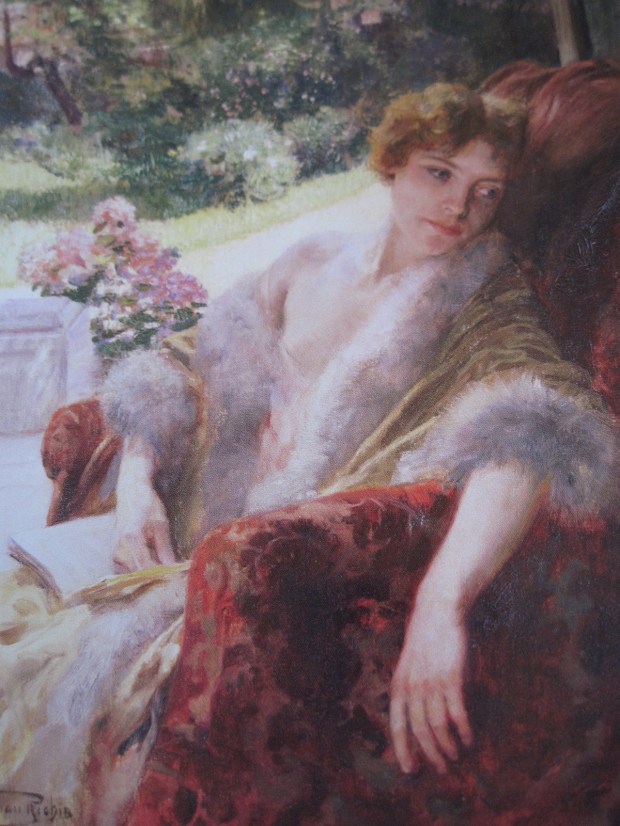
Portrait of a Woman in a Fur Wrap, Herman Richir (Belgian)
Ditto, except it’s a girl reading picture books. I don’t admire art this abstract.

Girl in Pink, c. 1906, Samuel John Peploe (Scottish)
These next two women could only be described as unfortunate-looking, if not masculine. Perhaps people worried that too much reading would rob women of their natural femininity?

Woman Reading, 1913, Rik Wouters (Belgian)
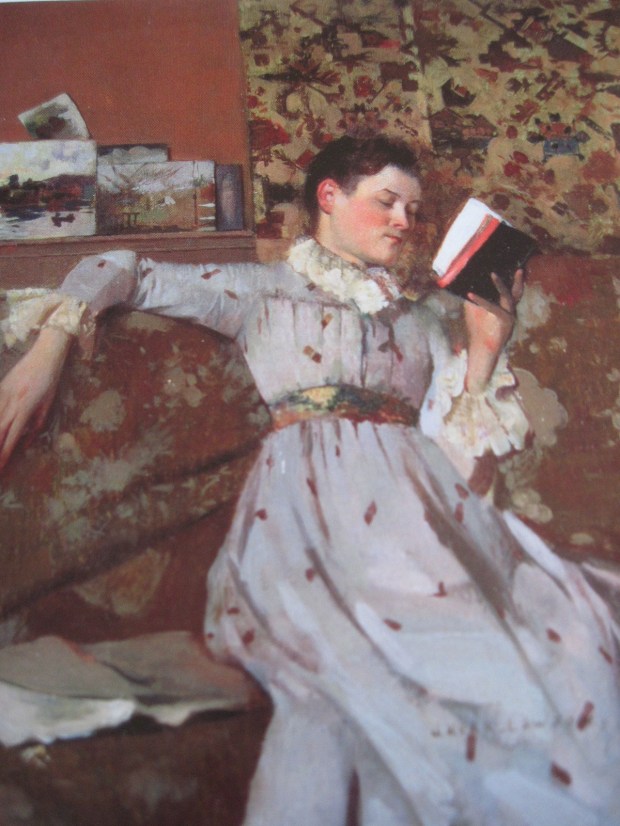
Caterina Reading a Book, c. 1888, James Kerr-Lawson (Scottish)
Here’s a sweet one. The subject seems pensive, even troubled. Is it by what she’s reading, or is the book her temporary solace from life? I love the colors and the faint echo of the Pre-Raphaelite style. Interesting also to see that it’s by a female painter – all these others have been male visions.
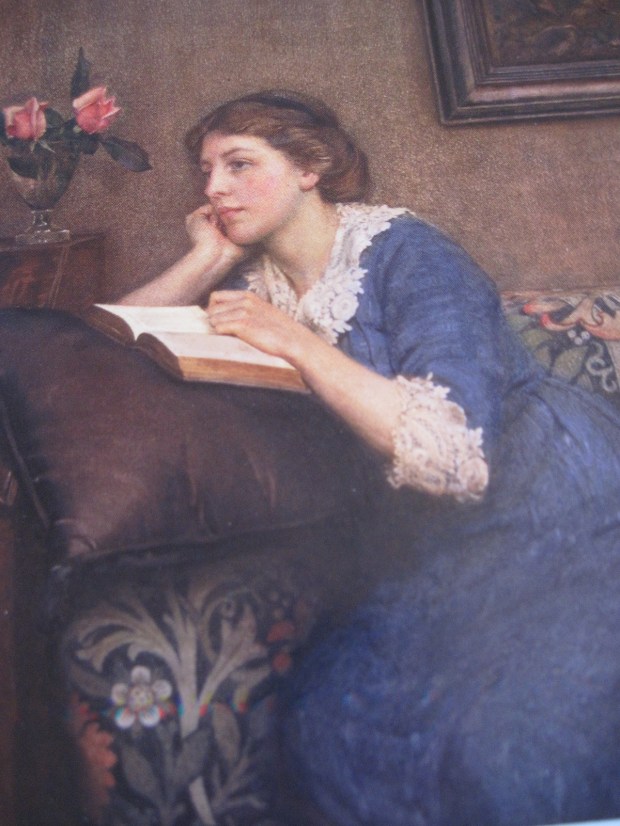
Portrait of Winifred Roberts, c. 1913, Eleanor Fortescue-Brickdale
Now this one I really love. The hues and textures in this Renoir-esque painting are soft and inviting, and the subject is looking straight at the painter with a confident, almost flirtatious air. She’s no stick-in-the-mud who’s picked up a book because she has nothing better to do. It’s no wonder this was chosen as the calendar’s cover image.
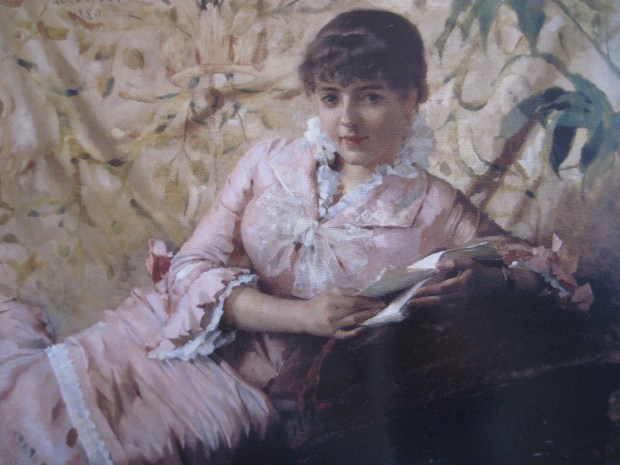
Parisienne Reading, 1880, Albert Gustaf Aristides Edelfelt (Finnish)
Beyond the calendar, a couple of reading women paintings I’ve always liked are by Sir John Lavery and Mary Cassatt. In the former I appreciate how the book cover matches the subject’s lips, and how she seems absorbed without being inaccessible.
![Miss Auras, c. 1900, Sir John Lavery [Public domain, via Wikimedia Commons]](https://commons.wikimedia.org/wiki/File:Lavery_Maiss_Auras.jpg)
Miss Auras, c. 1900, Sir John Lavery [Public domain, via Wikimedia Commons]
![Woman Reading in a Garden, 1880, Mary Cassatt [Public domain, via Wikimedia Commons]](https://commons.wikimedia.org/wiki/File:Mary_Cassatt_Woman_Reading_in_a_Garden.jpg)
Woman Reading in a Garden, 1880, Mary Cassatt [Public domain, via Wikimedia Commons]
Two of the most common images of women reading (you see these turning up as users’ avatars on Goodreads all the time) are by Jean-Honoré Fragonard and Gustav Adolph Hennig. I think they’re so popular because of the warm shades, the straightforward composition, and the subject’s apparent indifference to being watched. These are plucky heroines you feel you can relate to.
![A Young Girl Reading, c. 1770, Jean-Honoré Fragonard [Public domain, via Wikimedia Commons]](https://commons.wikimedia.org/wiki/File:Fragonard,_The_Reader.jpg)
A Young Girl Reading, c. 1770, Jean-Honoré Fragonard [Public domain, via Wikimedia Commons]
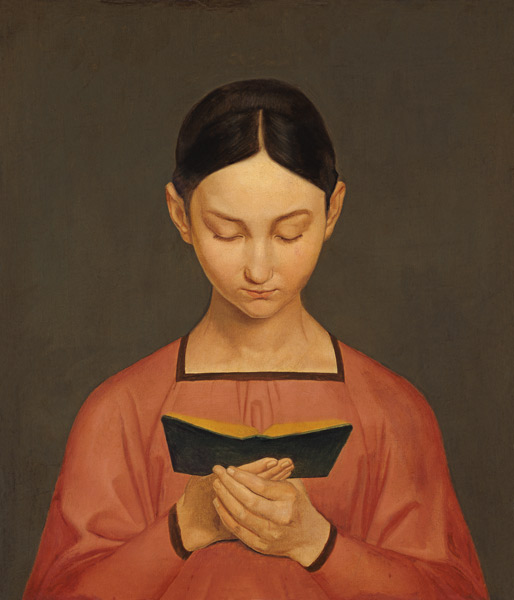
Lesendes Mädchen, 1828, Gustav Adolph Hennig
Do you have any favorite – or least favorite – paintings of women reading?
Reviews Roundup, December–January
It’s been a slow period for reviewing; I was mostly focusing on ongoing projects and year-end lists, and didn’t take the time to review a lot of the books I borrowed from libraries while in the States visiting family. Enjoy the respite! And I promise more productivity next month. There’s a rating (below each description) and a taster so you can decide whether to read more.
Fig Tree Books
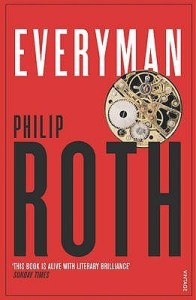 Everyman by Philip Roth: It has now been about three years since Philip Roth, then 79, famously announced his retirement from fiction writing. In a look back over Roth’s career—spanning half a century and 30 books—Everyman (2006) might fade into the background, especially given the book’s novella length. But to overlook it would be a mistake: This is a near-perfect fable about the life we build through decades of small choices and the death that is always lying in wait, whether we feel ready or not.
(Have a look around at the great work this publisher does in highlighting the American Jewish Experience; for instance, they released Safekeeping by Jessamyn Hope, which I loved this past summer.)
Foreword Reviews
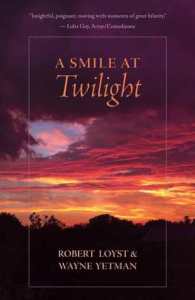 A Smile at Twilight by Robert Loyst and Wayne Yetman: Loyst gives a candid account of the joys and difficulties of helping to care for Poppy, an Alzheimer’s patient he met through a Toronto-based “Seniors Helping Seniors” organization. It’s an appealing “opposites attract”/“odd couple” scenario: Poppy was a perfectionist with a foul mouth and a withering glare of disapproval, while Loyst describes himself as “more of a take-it-as-it-comes type of guy.” Those who have family members or friends struggling with dementia will probably benefit most from the memoir, but readers of Still Alice might enjoy trying a real-life story.
I also post reviews of most of my casual reading and skimming on Goodreads.
My Name is Lucy Barton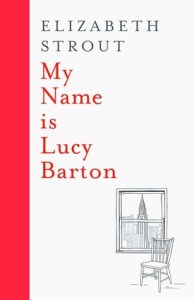 by Elizabeth Strout: Lucy Barton is in the hospital for nine weeks following an appendectomy. The novel zeroes in on the five days her mother comes to stay by her bedside, a pinnacle in their often difficult relationship. For a short book, this packs a lot in: an artist’s development, the course of a marriage, poverty and class distinctions. Lucy grew up in rural Illinois, where words like “cheap” and “trash” could easily have been applied to her family. I read this in one sitting on a plane ride and found it to be a powerful portrayal of the small connections that stand out in a life.
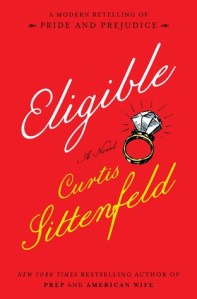 Eligible: A modern retelling of Pride and Prejudice by Curtis Sittenfeld: Pride and Prejudice transplanted to Cincinnati in 2013? That might sound like a stretch, but Sittenfeld pretty much pulls it off. The characters and underlying plot are virtually identical to the original, with just a few tweaks here and there. What Sittenfeld does update are the particular scenes and situations, as well as the cultural norms and sexual practices. My main problem is how slavishly Sittenfeld replicates Austen’s third-person voice and vocabulary. Sittenfeld is the queen of first-person female narration; this is the first time in my memory that she has attempted an omniscient voice. To me it felt like the book was crying out to be told from Lizzy’s perspective. Releases April 19th.
Bibliotherapy for the New Year
In January lots of us tend to think about self-improvement for the New Year. Books can help! I’m resurrecting a post I first wrote as part of a series for Bookkaholic in April 2013 in hopes that those new to the concept of bibliotherapy will find it interesting.
I happen to believe – and I’m not the only one, not by a long shot – that a relationship with books can increase wellbeing. The right book at the right time can be a powerful thing, not just amusing and teaching, but also reassuring and even healing. Indeed, an ancient Greek library at Thebes bore an inscription on the lintel naming it a “Healing-Place for the Soul.”
The term “bibliotherapy,” from the Greek biblion (books) + therapeia (healing), was coined in 1916 by Samuel McChord Crothers (1857-1927). Crothers, a Unitarian minister and essayist, introduced the word in an Atlantic Monthly piece called “A Literary Clinic.” The use of books as a therapeutic tool then came to the forefront in America during the two world wars, when librarians received training in how to suggest helpful books to veterans recuperating in military hospitals. Massachusetts General Hospital had founded one of the first patients’ libraries, in 1844, and many other state institutions – particularly mental hospitals – had followed suit by the time of the First World War. Belief in the healing powers of reading was becoming more widespread; whereas once it had been assumed that only religious texts could edify, now it was clear that there could be benefits to secular reading too.
Read this for what ails you
Clinical bibliotherapy is still a popular strategy, often used in combination with other medical approaches to treat mental illness. Especially in the UK, where bibliotherapy is offered through official National Health Service (NHS) channels, library and health services work together to give readers access to books that may aid the healing process. Over half of England’s public library systems offer bibliotherapy programs, with a total of around 80 schemes documented as of 2006. NHS doctors will often write patients a ‘prescription’ for a recommended book to borrow at a local library. These books will usually fall under the umbrella of “self-help,” with a medical or mental health leaning: guides to overcoming depression, building self-confidence, dealing with stress, and so on.
Books can serve as one component of cognitive behavioral therapy, which aims to modify behavior through the identification of irrational thoughts and emotions. Bibliotherapy has also been shown to be an effective method of helping children and teenagers cope with problems: everything from parents’ divorce to the difficulties of growing up and resisting peer pressure. Overall, bibliotherapy is an appealing strategy for medical professionals to use with patients because it is low-cost and low-risk but disproportionately effective.
In addition to clinical bibliotherapy, libraries also support what is known as “creative bibliotherapy” – mining fiction and poetry for their healing powers. Library pamphlets and displays advertise their bibliotherapy services under names such as “Read Yourself Well” or “Reading and You,” with eclectic, unpredictable lists of those novels and poems that have proved to be inspiring or consoling. With all of these initiatives, the message is clear: books have the power to change lives by reminding ordinary, fragile people that they are not alone in their struggles.
The School of Life
London’s School of Life, founded by Alain de Botton, offers classes, psychotherapy sessions, secular ‘sermons,’ and a library of recommended reading tackle subjects such as job satisfaction, creativity, parenting, ethics, finances, and facing death with dignity. In addition, the School offers bibliotherapy sessions (one-on-one, for adults or children, or, alternatively, for couples) that can take place in person or online. A prospective reader fills out a reading history questionnaire before meeting the bibliotherapist, and can expect to walk away from the session with one instant book prescription. A full prescription of another 5-10 books arrives within a few days.
In 2011 The Guardian sent six of its writers on School of Life bibliotherapy sessions; their consensus seemed to be that, although the sessions produced some intriguing book recommendations, at £80 (or $123) each they were an unnecessarily expensive way of deciding what to read next – especially compared to asking a friend or skimming newspapers’ reviews of new books. Nonetheless, it is good to see bibliotherapy being taken seriously in a modern, non-medical context.
A consoling canon
You don’t need a doctor’s or bibliotherapist’s prescription to convince you that reading makes you feel better. It cheers you up, makes you take yourself less seriously, and gives you a peaceful space for thought. Even if there is no prospect of changing your situation, getting lost in a book at least allows you to temporarily forget your woes. In Comfort Found in Good Old Books (1911), a touching work he began writing just 10 days after his son’s sudden death, George Hamlin Fitch declared “it has been my constant aim to preach the doctrine of the importance of cultivating the habit of reading good books, as the chief resource in time of trouble and sickness.”
Indeed, as Rick Gekoski noted last year in an article entitled “Some of my worst friends are books,” literary types have always turned to reading to help them through grief. He cites the examples of Joan Didion coming to grips with her husband’s death in The Year of Magical Thinking, or John Sutherland facing up to his alcoholism in The Boy Who Loved Books. Gekoski admits to being “struck and surprised, both envious and a little chagrined, by how literary their frame of reference is. In the midst of the crisis…a major reflex is to turn, for consolation and understanding, to favorite and esteemed authors.” Literary critic Harold Bloom confirms that books can provide comfort; in The Western Canon he especially recommends William Wordsworth, Walt Whitman, and Emily Dickinson as “great poets one can read when one is exhausted or even distraught, because in the best sense they console.”
Just as in a lifetime of reading you will develop your own set of personal classics, you are also likely to build up a canon of favorite books to consult in a crisis – books that you turn to again and again for hope, reassurance, or just some good laughs. For instance, in More Book Lust Nancy Pearl swears by Bill Bryson’s good-natured 1995 travel book about England, Notes from a Small Island: “This is the single best book I know of to give someone who is depressed, or in the hospital.” (With one caveat: beware, your hospitalized reader may well suffer a rupture or burst stitches from laughing.)
Just what you needed
There’s something magical about that serendipitous moment when a reader comes across just the right book at just the right time. Charlie D’Ambrosio confides that he approaches books with a quiet wish: “I hope in my secret heart someone, somewhere, mysteriously influenced and moved, has written exactly what I need” (his essay “Stray Influences” is collected in The Most Wonderful Books). Yet this is not the same as superstitiously expecting to open a book and find personalized advice. Believe it or not, this has been an accepted practice at various points in history. “Bibliomancy” means consulting a book at random to find prophetic help – usually the Bible, as in the case of St. Augustine and St. Francis of Assisi. St. Francis’s first biographer, Thomas of Celano, wrote that “he humbly prayed that he might be shown, at his first opening the book, what would be most fitting for him to do” (in his First Life of St Francis of Assisi).
Perhaps meeting the right book is less like a logical formula and more like falling in love. You can’t really explain how it happened, but there’s no denying that it’s a perfect match. Nick Hornby likens this affair of the mind to a dietary prescription – echoing that medical tone bibliotherapy can often have: “sometimes your mind knows what it needs, just as your body knows when it’s time for some iron, or some protein” (in More Baths, Less Talking).
Entirely by happenstance, a book that recently meant a lot to me is one of the six inaugural School of Life titles, How to Stay Sane by psychotherapist Philippa Perry. Clearly and practically written, with helpful advice on how to develop wellbeing through self-observation, healthy relationships, optimism, and exercise, Perry’s book turned out to offer just what I needed.
I’ve been busy visiting family in the States but I’ll be back soon with a review of The Novel Cure from School of Life bibliotherapists Ella Berthoud and Susan Elderkin.
2015 in review
The WordPress.com stats helper monkeys prepared a 2015 annual report for this blog.
Here’s an excerpt:
A New York City subway train holds 1,200 people. This blog was viewed about 4,000 times in 2015. If it were a NYC subway train, it would take about 3 trips to carry that many people.
A Few Simple New Year’s Resolutions
I’m not big on New Year’s resolutions – I prefer to set challenges and commitments at any time of year – but I have a few professional and reading-related goals that I will share here for the sake of accountability.
Career
- Target a few more big-name publications. My work will appear in the Pittsburgh Post-Gazette and the Los Angeles Review of Books in the early months of 2016 – that’s progress, but I’d like to work on getting some other noteworthy publications.
- Assess which freelance gigs are working for me and which ones are not worth it. Sometimes I look at the number of hours I put into a project compared to the ultimate payment amount and think I must be crazy to continue with it.
- Find ways of being paid into my British bank account rather than hoarding lots of dollars in an American bank account where they’re not doing me much good.
Leisure Reading
- Focus on reading more of the books I actually own. This means cutting down on NetGalley and Edelweiss requests and volunteer reviewing!
- Keep an ongoing priority list of books and authors I want to try, and make steady progress through it. On the list so far: Elena Ferrante, Matt Haig, Karl Ove Knausgaard, Wallace Stegner, Tim Winton, and Nell Zink.
What are some of your goals for 2016 – reading-related or otherwise?
 Bookish Beck = Rebecca Foster. American transplant to England. Freelance proofreader and book reviewer.
