The Best Fiction of 2016: My Top 15
You might be surprised to hear that I received ‘only’ eight books for Christmas. (And a very fetching owl bookmark.) Here they are:

As I did last year, I’ve come up with my top 15 fiction books of the year (the three translated works first appeared in English in 2016) and even attempted to rank them. Many of these books have already featured on the blog in some way over the course of the year. To keep it simple for myself as well as for all of you who are figuring out whether you’re interested in these books or not, I’m limiting myself to two sentences per title: the first is a potted summary; the second tells you why you should read it. I also link to any full reviews.
Without further ado, let the countdown begin!
 Your Heart Is a Muscle the Size of a Fist by Sunil Yapa: A hard-hitting novel with an unforgettably resonant title, this is set at the 1999 Seattle WTO protest: Yapa explores the motivations and backstories of activists, police officers, and delegates as the day deteriorates into violence. This fine debut is about cultivating the natural compassion in your heart even while under the threat of the fist.
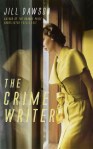 The Crime Writer by Jill Dawson: Beyond the barest biographical facts, Dawson has imagined the plot based on Patricia Highsmith’s own preoccupations: fear of a stalker, irksome poison-pen letters, imagining what it would be like to commit murder … and snails. You’re never quite sure as you’re reading what is actually happening in the world of the novel and what only occurs in Highsmith’s imagination, making this one of the most gripping, compulsive books I encountered this year.
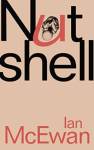 Nutshell by Ian McEwan: Within the first few pages, I was captivated and convinced by the voice of this contemporary, in utero Hamlet. His captive state pairs perfectly with Hamlet’s existential despair, but also makes him (and us as readers) part of the conspiracy: even as he wants justice for his father, he has to hope his mother and uncle will get away with their crime; his whole future depends on it.
 The Longest Night by Andria Williams: This absorbing work of historical fiction combines a remote setting, the threat of nuclear fallout, and a marriage strained to the breaking point in a convincing early 1960s atmosphere. A great debut and an author I’d like to hear more from.
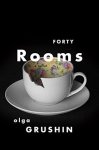 Forty Rooms by Olga Grushin: Each of us is said to occupy 40 rooms in our lives; this novel in 40 vignettes, one per room, tells the life story of a Russian immigrant to America who dreams of becoming a poet but ends up a suburban housewife and mother of six. I feel this book will resonate with women of every age, prompting them to question the path they’ve taken, the passions they’ve left unexplored, and whether it’s too late to change.
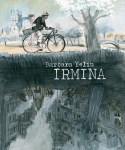 Irmina by Barbara Yelin: After her grandmother’s death Yelin, a Munich-based artist, found a box of diaries and letters that told the story of a budding love affair that was not to be and charted a young woman’s gradual capitulation to Nazi ideology. For the out-of-the-ordinary window onto Third Reich history and the excellent illustrations, I highly recommend this to graphic novel lovers and newbies alike.
 The Wonder by Emma Donoghue: In the 1850s a nurse investigates the case of an Irish girl surviving without food for months: miracle or hoax? Donoghue writes convincing and vivid historical fiction, peppering the text with small details about everything from literature to technology and setting up a particularly effective contrast between medicine and superstition.
 The Summer Guest by Alison Anderson: The kernel of the novel is a true story: for two summers in the late 1880s, Chekhov (known here as Anton Pavlovich) stayed at the Lintvaryovs’ guest house in Luka, Ukraine; one strand of the narration is a journal kept during those years by the family’s eldest daughter, who’s dying of a brain tumor. An elegantly plotted story about writing, translation, illness, and making the most of life.
 Quiet Flows the Una by Faruk Šehić: This autobiographical novel by a Bosnian poet and former soldier is full of poetic language and nature imagery. The lyrical writing about his beloved river provides a perfect counterpoint to the horror and absurdity of war.
 Three-Martini Lunch by Suzanne Rindell: Rindell brings the late 1950s, specifically the bustling, cutthroat New York City publishing world, to life through the connections between three young people who collide over a debated manuscript. It’s an expert evocation of Beat culture and post-war paranoia over communism and homosexuality.
 Golden Hill by Francis Spufford: The novel opens suddenly as twenty-four-year-old Richard Smith arrives from London with a promissory note for £1000; before he can finally get his money, he’ll fall in and out of love, fight a duel, and be arrested twice – all within the space of two months. Bawdy, witty, vivid historical fiction; simply brilliant.
 Why We Came to the City by Kristopher Jansma: Five university friends strive to make their lives count against the indifferent backdrop of recession-era New York City. You’ll see yourself in one or more of the characters, and the rest you’ll greet as if they were your own friends and makeshift family.
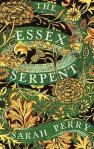 The Essex Serpent by Sarah Perry: The Essex Serpent was a real-life legend from the latter half of the seventeenth century, but Perry’s second novel has fear of the sea creature re-infecting Aldwinter, her invented Essex village, in the 1890s. This exquisite work of historical fiction explores the gaps – narrower than one might think – between science and superstition and between friendship and romantic love.
 The Tobacconist by Robert Seethaler: Seventeen-year-old Franz Huchel’s life changes for good when in 1937 his mother sends him away from his quiet lakeside village to work for her old friend Otto Trsnyek, a Vienna tobacconist. This novel is so many things: a coming-of-age story, a bittersweet romance, an out-of-the-ordinary World War II/Holocaust precursor, and a perennially relevant reminder of the importance of finding the inner courage to stand up to oppressive systems.
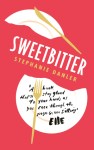 Sweetbitter by Stephanie Danler: The restaurant where twenty-two-year-old Tess works is a claustrophobic world unto itself, like a theatre set where the food is high art and the staff interactions are pure drama. Everything about this novel is utterly assured: the narration, the characterization, the prose style, the plot, the timing; it captures the intensity and idealism of youth yet injects a hint of nostalgia.
& A poetry selection:
 Still the Animals Enter by Jane Hilberry: A rich, strange, gently erotic collection featuring diverse styles and blurring the lines between child and adult, human and animal, life and death through the language of metamorphosis. The message is that we are part of a shared life beyond the individual family or even the human species; we are all connected.
What are the best novels you read this year? Any new favorite books or authors?
I’ll be back tomorrow with the best nonfiction books I read this year.
The 2017 Releases I’m Most Excited About
2017 hasn’t even begun and already I’m overwhelmed by the quantity and quality of new books to be released. This is by no means a full picture of what’s coming out next year; it’s only 30 titles that I happen to have heard about and/or know I want to seek out. The descriptions are taken from the publisher blurbs on Goodreads, NetGalley or Edelweiss. Some of these I already have access to in galley form; others I’ll be doing my darndest to get hold of! (Within categories, titles are in alphabetical order by author rather than by publication date.)
ASSIGNED
English Animals by Laura Kaye (for the blog tour) [Jan. 12, Little, Brown UK]: “When Mirka [from Slovakia] gets a job in a country house in rural England, she has no idea of the struggle she faces to make sense of a very English couple, and a way of life that is entirely alien to her.”
 Pachinko by Min Jin Lee (for BookBrowse) [Feb. 7, Grand Central]: “Pachinko follows one Korean family through the generations, beginning in [the] early 1900s. … [A] sweeping saga of an exceptional family in exile from its homeland and caught in the indifferent arc of history.”
No One Is Coming to Save Us by Stephanie Watts Powell (for the Pittsburgh Post-Gazette) [Apr. 4, Ecco]: “The Great Gatsby brilliantly recast in the contemporary South: a powerful first novel about an extended African-American family and their colliding visions of the American Dream.”
The Twelve Lives of Samuel Hawley by Hannah Tinti (for The Bookbag) [Mar. 28, Tinder Press]: “A father protects his daughter from the legacy of his past and the truth about her mother’s death in this thrilling new novel … Both a coming-of-age novel and a literary thriller, The Twelve Lives of Samuel Hawley explores what it means to be a hero, and the cost we pay to protect the people we love most.”
NOVELS (all by authors I’ve enjoyed in the past)
Greatest Hits by Laura Barnett [June 15, W&N]: “Cass Wheeler [is] a British singer-songwriter, hugely successful since the early 70s … Her task is to choose 16 songs from among the hundreds she has written … for a uniquely personal Greatest Hits record”
The Idiot by Elif Batuman [Mar. 14, Penguin]: “1995: Selin, the daughter of Turkish immigrants, arrives for her freshman year at Harvard. … With superlative emotional and intellectual sensitivity, mordant wit, and pitch-perfect style, Batuman dramatizes the uncertainty of life on the cusp of adulthood.”
The Hearts of Men by Nickolas Butler [Mar. 7, Ecco]: “Nelson, irrevocably scarred from the Vietnam War, becomes Scoutmaster of Camp Chippewa, while Jonathan marries, divorces, and turns his father’s business into a highly profitable company. … [A] sweeping, panoramic novel about the slippery definitions of good and evil, family and fidelity”
New Boy by Tracy Chevalier [May 16, Hogarth]: “The tragedy of Othello is transposed to a 1970s suburban Washington schoolyard, where kids fall in and out of love with each other before lunchtime, and practice a casual racism picked up from their parents and teachers.”
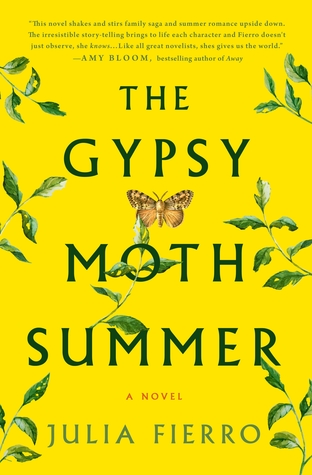 Gypsy Moth Summer by Julia Fierro [June 6, St. Martin’s]: “It is the summer of 1992 and a gypsy moth invasion blankets Avalon Island. … The Gypsy Moth Summer is about love, gaps in understanding, and the struggle to connect: within families; among friends; between neighbors and entire generations.” – Plus, get a load of that gorgeous cover!
Grief Cottage by Gail Godwin [June 6, Bloomsbury USA]: “Grief Cottage is the best sort of ghost story, but it is far more than that—an investigation of grief, remorse, and the memories that haunt us. The power and beauty of this artful novel wash over the reader like the waves on a South Carolina beach.”
The Evening Road by Laird Hunt [Feb. 7, Little, Brown & Co.]: “Reminiscent of the works of Louise Erdrich, Edward P. Jones and Marilynne Robinson, The Evening Road is the story of two remarkable women on the move through an America riven by fear and hatred, and eager to flee the secrets they have left behind.”
 The Awkward Age by Francesca Segal [May 4, Chatto & Windus]: “In a Victorian terraced house, in north-west London, two families have united in imperfect harmony. … This is a moving and powerful novel about the modern family: about starting over; about love, guilt, and generosity; about building something beautiful amid the mess and complexity of what came before.” – Sounds like Ann Patchett’s Commonwealth…
The Best of Adam Sharp by Graeme Simsion [Feb. 9, Penguin]: “The Best of Adam Sharp is about growing old and feeling young, about happy times and sad memories, about staying together and drifting apart, but most of all, it’s about how the music we make together creates the soundtrack that shapes our lives.” – Sounds a lot like the Barnett!
SHORT STORIES (also by authors I’ve enjoyed in the past)
The Dinner Party by Joshua Ferris: [May 2, Little, Brown & Co.]: “Full of the keenly observed, mordant wit that characterizes his beloved, award-winning novels, the stories in The Dinner Party are about people searching for answers in the aftermath of life’s emotional fissures”
Bad Dreams and Other Stories by Tessa Hadley [May 16, Harper]: “Hadley has proven herself to be the champion of revealing the hidden depths in the deceptively simple. In these short stories it’s the ordinary things that turn out to be most extraordinary: the history of a length of fabric or a forgotten jacket.”
NOVELS BY AUTHORS NEW TO ME
 A Separation by Katie Kitamura [Feb. 7, Riverhead Books]: “A mesmerizing, psychologically taut novel about a marriage’s end and the secrets we all carry.”
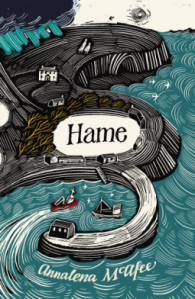
Hame by Annalena McAfee (Mrs. Ian McEwan) [Feb. 9, Harvill Secker]: “Mhairi McPhail dismantles her life in New York and moves with her 9-year-old daughter, Agnes, to the remote Scottish island of Fascaray. Mhairi has been commissioned to write a biography of the late Bard of Fascaray, Grigor McWatt, a cantankerous poet with an international reputation.”
NONFICTION: memoirs
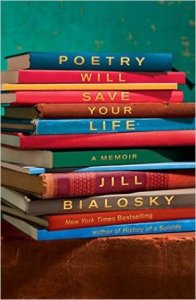 Poetry Can Save Your Life: A Memoir by Jill Bialosky [June 13, Atria]: “[A]n unconventional coming-of-age memoir organized around the 43 remarkable poems that gave her insight, courage, compassion, and a sense of connection at pivotal moments in her life.”
Between Them: Remembering My Parents by Richard Ford [May 2, Harper Collins]: “Ford brings his trademark candor, wit, and empathetic storytelling to the most intimate of landscapes: that of his love for two people who remain a mystery. Mining poignant details of his life in the American South during some iconic periods of the 20th century, Between Them illuminates the writer’s past as well as his beliefs on memory, relationships, and self-knowledge.”
The Mighty Franks: A Family Memoir by Michael Frank [May 16, Farrar, Straus and Giroux]: “A psychologically acute memoir about an unusual and eccentric Hollywood family.”
Sick: A Life of Lyme, Love, Illness, and Addiction by Porochista Khakpour [Aug. 8, Harper Perennial]: “In the tradition of Brain on Fire and The Empathy Exams, an honest, beautifully rendered memoir of chronic illness, misdiagnosis, addiction, and the myth of full recovery that details author Porochista Khakpour’s struggles with late-stage Lyme disease.”
A Stitch of Time: The Year a Brain Injury Changed My Language and Life by Lauren Marks [May 2, Simon & Schuster]: “Lauren Marks was twenty-seven, touring a show in Scotland with her friends, when an aneurysm ruptured in her brain and left her fighting for her life. … [A]n Oliver Sacks-like case study of a brain slowly piecing itself back together”
Homing Instincts: Early Motherhood on a Midwestern Farm by Sarah Menkedick [May 2, Pantheon]: “Fresh, intimate, and radiantly meditative, Homing Instincts is the story of one woman’s ‘coming of age’ as a first-time parent on her family’s rural Ohio farm.”
My Jewish Year: 18 Holidays, One Wondering Jew by Abigail Pogrebin [Mar. 14, Fig Tree Books]: “Although she grew up following some holiday rituals, Pogrebin realized how little she knew about their foundational purpose and contemporary relevance; she wanted to understand what had kept these holidays alive and vibrant, some for thousands of years. Her curiosity led her to embark on an entire year of intensive research, observation, and writing about the milestones on the religious calendar.”
 Theft by Finding: Diaries (1977–2002) by David Sedaris [May 30, Little, Brown & Co.]: “[F]or the first time in print: selections from the diaries that are the source of his remarkable autobiographical essays.”
How to Make a French Family: A Memoir of Love, Food, and Faux Pas by Samantha Vérant [Apr. 4, Sourcebooks]: “When Samantha is given a second chance at love at the age of forty, she moves to southwestern France, thinking she’s prepared for her new role in life as an instant American wife and stepmom. It turns out, though, that making a French family takes more than just good intentions and a quick lesson in croissant-baking.”
NONFICTION: poetry, biography, essays, travel
Eat This Poem: A Literary Feast of Recipes Inspired by Poetry by Nicole Gulotta [Mar. 21, Roost Books]: “The twenty-five inspiring poems in this book—from such poets as Marge Piercy, Louise Glück, Mark Strand, Mary Oliver, Billy Collins, Jane Hirshfield—are accompanied by seventy-five recipes that bring the richness of words to life in our kitchen, on our plate, and through our palate.”
Mozart’s Starling by Lyanda Lynn Haupt [May 16, Little, Brown & Co.]: “A charming story of Mozart and his pet starling, along with a natural history of the bird.”
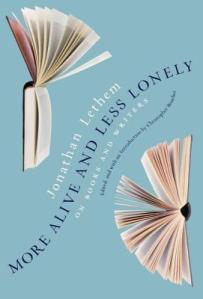 More Alive and Less Lonely: On Books and Writers by Jonathan Lethem [Mar. 14, Melville House]: “[C]ollects more than a decade of Lethem’s finest writing on writing, with new and previously unpublished material, including: impassioned appeals for forgotten writers and overlooked books, razor-sharp essays, and personal accounts of his most extraordinary literary encounters and discoveries.”
The Not-Quite States of America by Doug Mack [Feb. 14, W.W. Norton]: “American Samoa, Guam, Puerto Rico, the Northern Mariana Islands, and the U.S. Virgin Islands—and their 4 million people—are often forgotten, even by most Americans. … When Doug Mack realized just how little he knew about the territories, he set off on a globe-hopping quest covering more than 30,000 miles to see them all.”
What 2017 books are you most looking forward to?
Which of these interest you?
Books in Brief: Five I Loved Recently
Novels about Patricia Highsmith and a prison production of The Tempest; a true-life account of opening a secondhand bookstore; a faux memoir setting ancestors’ memories in the context of twentieth-century history; and an exposé of the happiness movement in America: these five very different books are all 4-star reads I can highly recommend.
The Crime Writer
By Jill Dawson
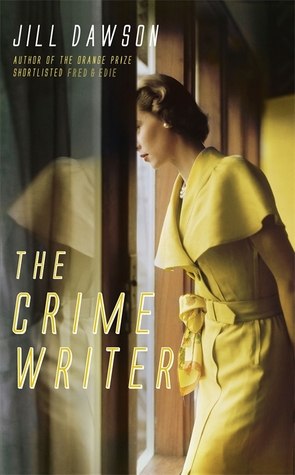 Patricia Highsmith hated the term “crime writer”; she preferred to speak of her work as “suspense novels,” animated by the threat of danger. Dawson’s terrific pastiche is set in the early 1960s, when the nomadic Highsmith was living in a remote cottage in Suffolk, England. Beyond the barest biographical facts, though, Dawson has imagined the plot based on Highsmith’s own preoccupations: fear of a stalker, irksome poison-pen letters, imagining what it would be like to commit murder … and snails. In a combination of third- and first-person narration, she shows “Pat” succumbing to alcoholism and paranoia as she carries on affairs with Sam, a married woman, and Ginny, a young journalist who’s obsessed with her. You’re never quite sure as you’re reading what is actually happening in the world of the novel and what only occurs in Highsmith’s imagination; I’m sure that’s deliberate. This counts as one of the most gripping, compulsive books I’ve encountered this year.
The Little Bookstore of Big Stone Gap
By Wendy Welch
 Everyone told Wendy Welch and her husband that they were crazy when they decided to open a used bookstore in a small Appalachian Coalfields town in the middle of a recession. They lived above the shop and initially stocked it with their own library plus books picked up cheap at yard sales – though Welch later learned to be much more choosy about what they added to their inventory and to tailor their selections to the tastes of country readers. Essentially, they were making it all up as they went along, but eight years later they’re still a community fixture in Big Stone Gap, Virginia. (I’d love to visit someday.) For the most part that’s because they branched out to fill other roles: hosting cultural events, murder mystery evenings, a writing group, a crafting circle, and regular Quaker meetings. I appreciated the details about the nitty-gritty of running a bookstore (like a chapter on pricing) more than the customer interactions. A warm and fuzzy book-lover’s delight.
Hag-Seed: The Tempest Retold
By Margaret Atwood
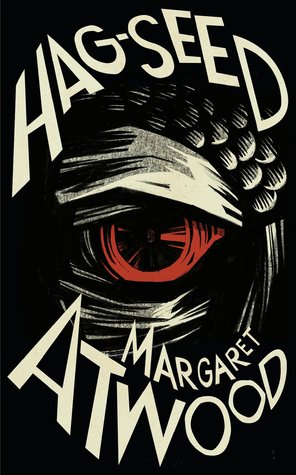 Margaret Atwood looks more like a good witch every year, and here she works her magic on The Tempest to produce the most satisfying volume of the Hogarth Shakespeare series yet. There’s a really clever play-within-the-play-within-the-play thing going on, and themes of imprisonment and performance resonate in multiple ways. It’s fun to see the disgraced Felix’s second act as a director of inmate plays at Fletcher Correctional – “I don’t care why you’re in here or what they say you’ve done: for this course the past is prologue.” Part V gets a little tedious/didactic as the cast hash out the characters’ afterlives, and at times (mainly the raps) you’re painfully aware that this is an old white lady trying to approximate how seasoned criminals might speak, but in general I thoroughly enjoyed this. Even though you see behind the scenes (e.g. my favorite chapter was about Felix wandering the streets of Toronto to buy props and costumes), you still get caught up in the magic. (See also Carolyn’s wonderful review at Rosemary and Reading Glasses.)
The Pursuit of Happiness: Why are we driving ourselves crazy and how can we stop?
By Ruth Whippman
 I call this niche genre anti-self-help. (Two other great examples are Smile or Die by Barbara Ehrenreich and Promise Land by Jessica Lamb-Shapiro.) Whippman has a particularly interesting perspective as a British Jew who moved to California for her husband’s work. With sharp humor and natural British cynicism, she investigates various manifestations of the American obsession with happiness, including the cult-like Landmark Forum, Zappos shoes HQ, Facebook’s encouragement of shallow social interaction, and the positive psychology movement. I especially liked her visit to Mormons in Salt Lake City (the nation’s happiest group, it seems, but also the most highly medicated against depression), but the funniest chapter is on happiness-focused parenting. The basic message is that the happiness movement went wrong by making it a matter of personal responsibility, of mental and spiritual triumph over circumstances. It gives no easy answers, but it’s a very enjoyable book.
Moonglow
By Michael Chabon
 Chabon’s seventh novel was inspired by his maternal grandfather’s deathbed confessions in 1989—or was it? A tongue-in-cheek author’s note refers to this as a “memoir,” and it’s narrated by “Mike Chabon,” but he and “Grandfather” (never named) are characters here in the same way that Jonathan Safran Foer and his ancestors are in Everything Is Illuminated. Space travel and explosives are Grandfather’s lifelong obsessions, but the chronology moves back and forth seemingly haphazardly, as if we are hearing this story exactly as it emerged. Chabon offers a rich meditation on how Jewishness and family secrets influence the creation of identity. With a seam of dark humor that brings to mind Jonas Jonasson’s The Hundred-Year-Old Man…, Moonglow inventively fuses family history and fiction but leaves cracks for happiness and meaning to shine through. (See my full review on the Pittsburgh Post-Gazette website.)
Have you read any of these? Which one takes your fancy?
Three Perfect November Reads
It occurred to me that I’ve read three novels with “November” in the title. They’re extremely different from each other: one’s a melancholy 1930s American classic; one’s a quirky Icelandic road trip; and the last is a darker entry in a beloved Scandinavian children’s series. All are interesting books, though, and worth reading if you’re in the right mood.
Now in November by Josephine Johnson
(Reviewed here in full back in May.)
 Missouri-born Johnson was just 24 years old when she published Now in November, which won the 1935 Pulitzer Prize. The novel is narrated by the middle Haldmarne daughter, Marget, looking back at a grueling decade on the family farm. The arrival of Grant Koven, a neighbor in his thirties hired to help with hard labor, seems like the only thing that might break the agricultural cycle of futile hope and disappointment. Marget quickly falls in love with him, but it takes her a while to realize that her two sisters are smitten too. They all keep hoping their fortunes will change, but as drought settles in, things only get worse. This is an atmospheric and strangely haunting novel. The plot is simple enough, but the writing elevates it into something special. The plaintive tone, folksy metaphors, and philosophical earnestness all kept me eagerly traveling along with Marget to see where the tragic story might lead.
Butterflies in November by Auður Ava Ólafsdóttir
 This is a whimsical, feminist road trip novel. The unnamed narrator is a translator based in Reykjavík. When her best friend slips on an icy sidewalk and breaks her arm, it falls to the narrator to care for the friend’s deaf-mute four-year-old son, Tumi. Leaving behind romantic troubles and boosted by not one but two lottery wins, she and the boy set off on a snowy voyage around Iceland’s Ring Road, with plenty of madcap adventures ahead. The plot is rather scattered and uneven, with uproarious mishaps followed by tedious passages. However, in this kooky fictional world where “nothing is as it should be any more,” where butterflies are still flying in November, the narrator’s tragicomic travels should still strike a chord. Recommended for fans of zany Scandinavian fiction such as The Hundred-Year-Old Man Who Climbed Out of the Window and Disappeared by Jonas Jonasson, or Doppler by Erlend Loe. (See my full review at For Books’ Sake.)
Moominvalley in November by Tove Jansson
 Jansson said that after the Second World War she was depressed and wanted to write about something naïve and innocent. She wrote the first book of the Moomins series in 1945, about a family of hippo-like white trolls. But the Moomins do not appear in this book at all. It is November, the days are closing in, and no one knows where they have gone and when they might come back. A series of visitors journey to Moominvalley and find the house empty, cold and strange; these interlopers try to make their own merriment with a picnic and a party, but it all falls flat. The book felt unique to me for its Scandinavian qualities: the strange sprite-like creatures, woodland settings and short winter days, and the slight air of depression. As with the best children’s fiction, there is much here to entertain adults. Perhaps the most fun aspect of the book is Jansson’s original black and white line drawings of her peculiarly loveable creations.
Favorite passage: “The quiet transition from autumn to winter is not a bad time at all. It’s a time for protecting and securing things and for making sure you’ve got in as many supplies as you can. It’s nice to gather together everything you possess as close to you as possible, to store up your warmth and your thoughts and burrow yourself into a deep hole inside, a core of safety where you can defend what is important and precious and your very own. Then the cold and the storms and the darkness can do their worst. They can grope their way up the walls looking for a way in, but they won’t find one, everything is shut, and you sit inside, laughing in your warmth and your solitude, for you have had foresight.”
[On my TBR: November Storm by Robert Oldshue, a recent short story collection.]
Have you read these or any other “November” books?
Books in Brief: Five I Loved Recently
Novels narrated by an octogenarian and an unborn child; memoirs about connection with nature and escaping an abusive relationship; and a strong poetry collection that includes some everyday epics: these five wildly different books are all 4-star reads I can highly recommend.
The Secret Diary of Hendrik Groen, 83¼ Years Old
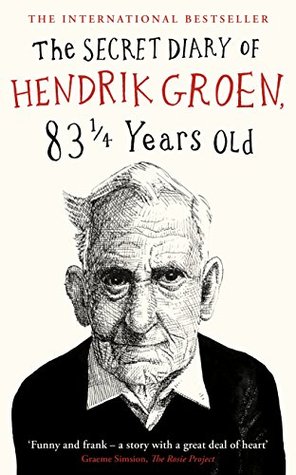 In this anonymous Dutch novel in diary form, Hendrik Groen provides a full reckoning of how 2013 went down in his Amsterdam old folks’ care home. He and five friends form the “Old But Not Dead” club and take turns planning exciting weekly outings. Much comic relief is provided by his incorrigibly tippling friend, Evert, and the arrival of Eefje makes late-life romance seem like a possibility for Hendrik. However, there’s no getting around physical decay: between them these friends suffer from incontinence, dementia, diabetic amputations and a stroke. By the time 2014 rolls around, their number will be reduced by one. Yet this is a tremendously witty and warm-hearted book, despite Hendrik’s sad family history. It’s definitely one for fans of A Man Called Ove – but I liked this more. A sequel from 85-year-old Hendrik came out this year in Dutch; I’ll be looking forward to the English translation.
The Moth Snowstorm: Nature and Joy
By Michael McCarthy
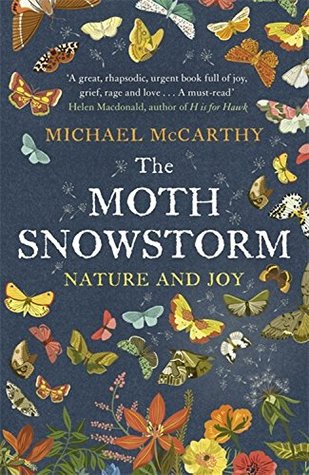 An environmental journalist for the UK’s Independent, McCarthy offers a personal view of how the erstwhile abundance of the natural world has experienced a dramatic thinning, even just in England in his lifetime. He gives both statistical and anecdotal evidence for that decline; as a case study he discusses the construction of a sea wall at Saemangeum in South Korea, responsible for decimating a precious estuary habitat for shorebirds. As if to balance his pessimism about the state of the world, McCarthy remembers singular natural encounters that filled him with joy and wonder – first discovering birdwatching as a lad near Liverpool, seeing a morpho butterfly in South America – but also annual displays that rekindle his love of life: the winter solstice, the arrival of cuckoos, and bluebells. This memoir is more sentimental than I expected from an English author, but I admire his passion and openness.
Nutshell
By Ian McEwan
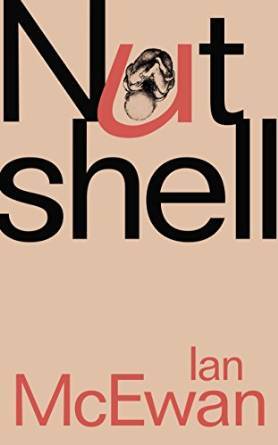 My seventh McEwan novel and one of his strongest. Within the first few pages, I was utterly captivated and convinced by the voice of this contemporary, in utero Hamlet. Provided you suspend disbelief a bit to accept he can see/hear/surmise everything that happens – the most tedious passages are those where McEwan tries to give more precise justification for his narrator’s observations – the plot really works. Not even born and already a snob with an advanced vocabulary and a taste for fine wine, this fetus is a delight to spend time with. His captive state pairs perfectly with Hamlet’s existential despair, but also makes him (and us as readers) part of the conspiracy: even as he wants justice for his father, he has to hope his mother and uncle will get away with their crime; his whole future depends on it.
Favorite line: “I have lungs but not air to shout a warning or weep with shame at my impotence.”
How Snow Falls
By Craig Raine
 One of the few best poetry collections I’ve read this year. It contains nary a dud and is a good one to sink your teeth into – it’s composed of just 20 poems, but several are in-depth epics drawn from everyday life and death. Two elegies, to a dead mother and a former lover, are particularly strong. I loved the mixture of clinical and whimsical vocabulary in “I Remember My Mother” as the poet charts the transformation from person to corpse. “Rashomon” is another stand-out, commissioned as an opera and inspired by the short story “In a Grove” by Ryūnosuke Akutagawa. In couplets with a flexible rhyme scheme, the poem alternates the perspectives of a bandit, a captive husband, his raped wife, and the woodcutter who becomes an unwilling observer. Alliteration is noteworthy throughout the collection, but here produces one of my favorite lines: “Sweet cedar chips were spurting in the gloom like sparks.”
Land of Enchantment
By Leigh Stein
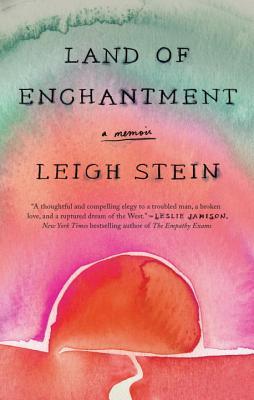 Stein tells of her abusive relationship with Jason, a reckless younger man with whom she moved to New Mexico. The memoir mostly toggles between their shaky attempt at a functional relationship in 2007 and learning about his death in a motorcycle accident in 2011. Even though they’d drifted apart, Jason’s memory still had power over her. Breaking free from him meant growing up at last and taking responsibility for her future. You might call this a feminist coming-of-age narrative, though that makes it sound more strident and formulaic than it actually is. I admired the skipping around in time, and especially a late chapter in the second person. I also enjoyed how New Mexico provides a metaphorical as well as a literal setting; Stein weaves in references to Georgia O’Keeffe’s art and letters to put into context her own search to become a self-sufficient artist.
Have you read any of these? Which one takes your fancy?
Six Books that Disappointed Me Recently
I had high hopes for all of these: long-awaited novels from Jonathan Safran Foer (10 years after his previous one), Maria Semple and Zadie Smith; a Project Gutenberg download from the reliably funny Jerome K. Jerome; a brand new psychological thriller from James Lasdun, whose memoir and poetry I’ve loved; and a horse racing epic that generated Great American Novel buzz. But they all failed to live up to expectations.
Here I Am
By Jonathan Safran Foer
 Is it a simple account of the implosion of two Washington, D.C. fortysomethings’ marriage? Or is it a sweeping epic of Judaism from the biblical patriarchs to imagined all-out Middle Eastern warfare? Can it succeed in being both? I didn’t really think so. The dialogue between this couple as they face the fallout is all too real and cuts to the quick. I enjoyed the preparations for Sam’s bar mitzvah and I could admire Julia’s clear-eyed capability and Sam, Max and Benjy’s almost alarming intelligence and heart at the same time as I wondered to what extent she was Foer’s ex-wife Nicole Krauss and they were the authors’ kids. But about halfway through I thought the book got away from Foer, requiring him to throw in a death, a natural disaster, and a conflict with global implications. This feels more like a novel by Philip Roth or Howard Jacobson, what with frequent masturbation and sex talk on the one hand and constant quarreling about what Jewishness means on the other. The central message about being present for others’ suffering, and your own, got a little lost under the flood of events.
My rating: 
Three Men on the Bummel
 By Jerome K. Jerome
Jerome’s digressive style can be amusing in small doses, but this book is almost nothing but asides. I did enjoy the parts that most closely resemble a travelogue of the cycle trip through Germany, but these are drowned under a bunch of irrelevant memories and anecdotes. I much preferred Diary of a Pilgrimage.
My rating: 
The Fall Guy
By James Lasdun
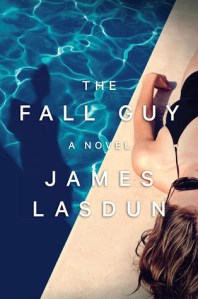 This is a capable psychological thriller about an out-of-work chef who becomes obsessed with the idea that his wealthy cousin’s alluring wife is cheating on him during a summer spent with them in their upstate New York bolthole. I liked hearing about Matthew’s cooking and Chloe’s photography, and it’s interesting how Lasdun draws in a bit about banking and the Occupy movement. However, the complicated Anglo-American family backstory between Matthew and Charlie feels belabored, and the fact that we only see things from Matthew’s perspective is limiting in a bad way. There’s a decent Hitchcock vibe in places, but overall this is somewhat lackluster.
My rating:
The Sport of Kings
By C.E. Morgan
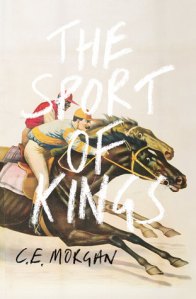 I found this Kentucky-based horse racing novel to be florid and overlong. The novel doesn’t achieve takeoff until Allmon comes on the scene at about page 180. Although there are good descriptions of horses, the main plot – training Hellsmouth to compete in the 2006 Derby – mostly passed me by. Meanwhile, the interpersonal relationships become surprisingly melodramatic, more fit for a late Victorian novel or maybe something by Faulkner. My favorite character was Maryleen, the no-nonsense black house servant. Henry himself, though, makes for pretty unpleasant company. Morgan delivers the occasional great one-liner (“Childhood is the country of question marks, and the streets are solid answers”), but her prose is on the whole incredibly overwritten. There’s a potent message in here somewhere about ambition, inheritance and race, but it’s buried under an overwhelming weight of words. (See my full Nudge review.)
My rating:
Today Will Be Different
By Maria Semple
 Bernadette fans, prepare for disappointment. There’s nothing that bad about the story of middle-aged animator Eleanor Flood, her hand-surgeon-to-the-stars husband Joe, and their precocious kid Timby, but nor is there anything very interesting about it. The novel is one of those rare ones that take place all in one day, a setup that enticed me, but all Eleanor manages to fit into her day – despite the title resolution – is an encounter with a pet poet who listens to her reciting memorized verse, another with a disgruntled former employee, some pondering of her husband’s strange behavior, and plenty of being downright mean to her son (as if his name wasn’t punishment enough). “In the past, I’d often been called crazy. But it was endearing-crazy, kooky-crazy, we’re-all-a-little-crazy-crazy,” Eleanor insists. I didn’t think so. I didn’t like being stuck in her head. In general, it seems like a bad sign if you’re eager to get away from a book’s narrator and her scatty behavior. Compared to Semple’s previous novel, it feels like quirkiness for quirkiness’ sake, with a sudden, contrived ending.
My rating:
Swing Time
By Zadie Smith
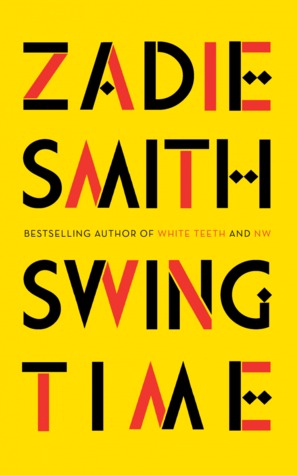 Smith’s fifth novel spans 25 years and journeys from London to New York City and West Africa in tracing the different paths two black girls’ lives take. The narrator (who is never named) and Tracey, both biracial, meet through dance lessons at age seven in 1982 and soon become inseparable. The way this relationship shifts over time is the most potent element of the novel, and will appeal to fans of Elena Ferrante. The narrator alternates chapters about her friendship with Tracey with chapters about her work for pop star Aimee in Africa. Unfortunately, the Africa material is not very convincing or lively and I was impatient for these sections to finish. The Aimee subplot and the way Tracey turns out struck me as equally clichéd. Despite the geographical and chronological sprawl, the claustrophobic narration makes this feel insular, defusing its potential messages about how race, money and class still define and divide us. A new Zadie Smith novel is an event; this one is still worth reading, but it definitely disappointed me in comparison to White Teeth and On Beauty. (Releases Nov. 15th.)
My rating: 
Have you read any of these? What did you think?
What’s the last book that really let you down?
Books in Brief: Five I Loved Recently
Here are mini-reviews of five books I loved recently: two I originally reviewed for other websites and three stellar library reads; three works of historical fiction and two nonfiction books.
Known and Strange Things: Essays
By Teju Cole
 This collects 55 short pieces under three headings: literature, visual arts, and travel. Alongside straightforward book reviews are essays in which Cole engages with his literary heroes. A 400-page book of disparate essays is a hard ask, and even photography aficionados may struggle through the long middle section. All the same, patience is rewarded by Part III, “Being There,” in which he deftly blends memoir and travelogue. Again and again he reflects on displacement and ambiguity. Born in Michigan but raised in Nigeria, Cole returned to the States for college. Though erudite and wide-ranging, these essays are not quite as successful as, say, Julian Barnes’s or Geoff Dyer’s in making any and every topic interesting to laymen. Still, Cole proves himself a modern Renaissance man, interweaving experience and opinion in rigorous yet conversational pieces that illuminate the arts. (See my full review on the Pittsburgh Post-Gazette website.)
Winter
By Christopher Nicholson
 A perfect novel about a few months of Thomas Hardy’s later life. On the surface it’s the story of a rather odd love triangle: the octogenarian Hardy was infatuated with Gertrude Bugler, a local Dorset actress who had agreed to play his Tess on the London stage; his neurotic second wife, Florence, got wind of his feelings and jealously decided to sabotage Gertie. Underneath, I found this to be a deeply moving book about fear – of death, but also of not having lived the way you wanted and meant to. The perspective moves between Florence and Gertie in the first person and an omniscient third-person narrator. Chapters 1, 6 and 8, in particular, are a pitch-perfect pastiche of Hardy’s style. A bleak country winter is the perfect setting for a story of personal decay and a marriage grown cold. This brought back vivid memories of my visit to Hardy’s house in 2004 and coincided with my own vision of who Hardy was.
The Complete Maus
By Art Spiegelman
 The only graphic novel to win the Pulitzer Prize, this brings the Holocaust home in a fresh way. Like Animal Farm, it uses the conceit of various animal associations: Jews are mice, Poles are pigs, Nazis are cats, and Americans are dogs. Spiegelman draws what, from a distance of decades, his father Vladek remembers about his almost unbelievable series of escapes, including time in Auschwitz. Spiegelman gives the book an extra dimension by including his 1970s/80s recording sessions with his father as a framing story for most chapters. The narration is thus in Vladek’s own broken English, and we see how exasperating Spiegelman finds him – for pinching pennies and being racist against blacks, for instance – even as he’s in awe of his story. You can see how this paved the way for comic artists like Roz Chast and Alison Bechdel. I recommend it to absolutely anyone, graphic novel fan or no.
Golden Hill
By Francis Spufford
 Bawdy, witty, vivid historical fiction; simply brilliant. You’ll never doubt for a second that you are in 1746 New York – an English colony with a heavy Dutch influence, and slavery still the standard. The novel opens suddenly as twenty-four-year-old Richard Smith arrives from London with a promissory note for £1000. He won’t explain how he came by the money or what he intends to do with it, but the order seems legitimate. This puts the merchant Mr. Lovell in rather a bind, because that kind of cash simply can’t be come by. Before he can finally get his money, Smith will fall in and out of love, fight a duel, and be arrested twice – all within the space of two months. In a book full of fantastic scenes, Smith and Septimus’ narrow escape via the rooftops on Pope Day stands out. The finest thing about the novel, though, is the authentic eighteenth-century diction. Spufford writes very good creative nonfiction, with five books to date, but with his debut novel he’s hit a home run.
Resolution
By A.N. Wilson
 From a prolific author of both fiction and nonfiction, a meticulously researched novel about George Forster, one of the naturalists on Captain Cook’s second voyage. Rather than giving a simple chronological account of the journey and its aftermath, Wilson employs a sophisticated structure that alternates vignettes from the voyage with scenes from about 10 years later, when George is unhappily married to Therese and struggling to find suitable work. This is the second novel I’ve read by Wilson, after The Potter’s Hand. I find his fiction to be thoroughly convincing as well as engaging. This reminded me most of Measuring the World by Daniel Kehlmann, another rip-roaring tale of exploration with prose emulating the more detached narrative style of the eighteenth century. Recommended to any readers of historical fiction and adventure stories. (See my full review at The Bookbag.)
Have you read any of these? Which one takes your fancy?
Landmark Books from My Early Life
I initially wanted to title this post “Books that Changed My Life,” but soon realized it would probably be more accurate to speak about them as the books that have shaped my life as a keen reader and meant the most to me as the years have passed.
In making this list I was inspired by a book I recently finished, Kate Gross’s memoir Late Fragments, which finishes with a bibliography of books that influenced her during different periods of her life. Gross, who died of colon cancer at age 36 in 2014, divides her reading life into five distinct, whimsically named eras: “With my back to the radiator” (childhood), “The grub years” (adolescence), “Emerging from the cocoon” (early adulthood), “The woman in the arena” (career life) and “End of life book club.”
I’ll do a follow-up post on the key books from my twenties next month, but for now I want to focus on the books that defined my growing-up and teen years.
What Bewick’s Birds was for Jane Eyre, my parents’ book on flower arranging was for me. I couldn’t tell you the title or author, but I think this green fabric covered tome with its glossy pages and lush full-color photographs was the origin of my love of books as physical objects. I must have spent hours paging through the illustrations and breathing in the new-book aroma. I’ve been a book sniffer ever since.
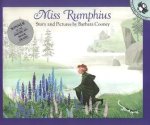 I can’t recall many of the individual picture books my mother read with me when I was little, but one that does stand out in my memory is Miss Rumphius by Barbara Cooney, about an eccentric woman who goes about planting lupines. Again, it’s a gorgeous book filled with flowers – you’d think I might have become a botanist!
 C.S. Lewis’s The Chronicles of Narnia were the first books I ever read by myself, starting at age five. It took me years to get to the allegory-heavy The Last Battle, but I read the other volumes over and over, even after the PBS television movies came out. The Silver Chair was always my favorite, but I’m sure I must have read the first three books 10 or 20 times each.
 Richard Adams’s Watership Down was the first book I ever borrowed from the adult section of the public library, at age nine. Crossing the big open lobby of the Silver Spring, Maryland library from the children’s room to the imposing stacks of Adult Fiction was like a rite of passage; when I emerged clutching the fat plastic-covered hardback I felt a little bit like a rebel but mostly just pretty darn proud of myself. I inhaled the several hundred pages of this bunny epic and for years afterwards considered it my favorite book.
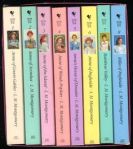 Nowadays I don’t like to commit to series, but as a kid I couldn’t get enough of them: after Narnia, I devoured the Babysitter’s Club and Saddle Club books, the Anastasia Krupnik books, and so on. Whenever I found an author I loved I dutifully read everything they’d written. The Anne of Green Gables series by L.M. Montgomery, in particular, accompanied me through my early teen years. I think I saw the CBC/PBS television miniseries starring Megan Follows first and read the books afterwards. Bereft once the eight-book cycle was over, I read the much darker Emily trilogy, but it just couldn’t live up to the Anne books.
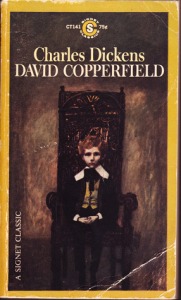 My first foray into the realm of heavy-duty classics was Charles Dickens’s David Copperfield at age 14. I bought a battered secondhand paperback from a library sale and was immediately entranced, from the first line onwards: “Whether I shall turn out to be the hero of my own life, or whether that station will be held by anybody else, these pages must show.” No doubt the idea of discovering my own potential heroism was what drew me in, but I loved everything about this novel: the rich panorama of nineteenth-century life, the vibrant secondary characters, the under-the-surface humor you had to work a little bit to understand, and the sweet second-chance romance. This was the start of my love affair with Victorian literature. I’ve read it three times since then. If ever asked for my favorite book, this is what I name.
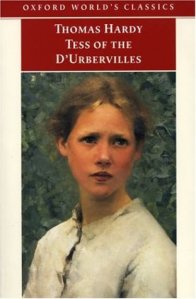 It wasn’t my first Hardy novel (that was Far from the Madding Crowd, another all-time favorite), but Tess of the D’Urbervilles is most memorable for the circumstances in which I read it. At age 19 I accompanied my sister, who’d won a singing contest on local radio, to the Season 2 finale of American Idol in Hollywood. If you were a loyal viewer, you might recall that this was the showdown between Ruben Studdard and Clay Aiken, on whom I had a hopeless crush – it later emerged that he’s gay. I read Tess on the flight to Los Angeles. Stranger pairings have been known, I’m sure, but I’ll never forget that disconnect between bleak England (where I hadn’t yet been at that point) and the sunny entertainment capital.
What are some of the books that meant the most to you in your early years?
Books in Brief: Five I Enjoyed Recently
Despite my largely successful resolution to focus on my own books for the summer, I’ve also gotten through plenty of e-books from NetGalley and Edelweiss, too. I just find it easier to fit time with the Kindle into my day, whether it’s 20 minutes over lunch (food-themed nonfiction works particularly well for such situations) or 30 minutes on the cross trainer. Here’s a sample of the e-books I’ve enjoyed this summer: four nonfiction and one fiction.
Pancakes in Paris: Living the American Dream in France
By Craig Carlson
 A good-natured memoir about the travails of opening the first American-style diner in Paris. Carlson charts his somewhat chaotic growing-up years in Connecticut, the college study abroad experience that kindled his love for France, his years trying to make it as a screenwriter and director in Hollywood, his long-held dream of opening Breakfast in America, and finding a French sweetheart of his own. Much of the book is devoted to a blow-by-blow of the bureaucratic nightmare of opening a restaurant, starting with getting investors on board and continuing through France’s ridiculously restrictive labor laws. (The impression I came away with was: France – great place to be an employee or rent property; terrible place to start a business.) Next time I’m in Paris, I will be looking to get myself a stack of his signature blueberry and white chocolate chip pancakes. Releases September 6th.
When in French: Love in a Second Language
By Lauren Collins
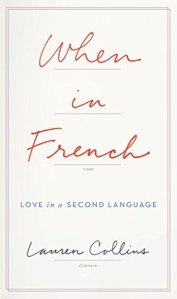 Collins, a journalist from North Carolina, married a Frenchman named Olivier she met while working in London. They then moved to Geneva, a mutually unfamiliar place but one where French reigned. For the first time, she was forced to learn a new language to survive. I love how she blends her own story with the philosophy, history and science behind language use. As she learned how to do things she never expected to have to in French – deal with her in-laws and give birth, for instance – she developed a new appreciation for the marvel that is bilingualism and pondered whether she was the same person in a different language. My favorite section recounts a holiday to Corsica that brought her family and Olivier’s into close quarters and cast her in the unforeseen role of translator. There’s a surprising amount of linguistic detail here, but Collins incorporates it well. Releases September 13th.
A Body, Undone: Living On After Great Pain
By Christina Crosby
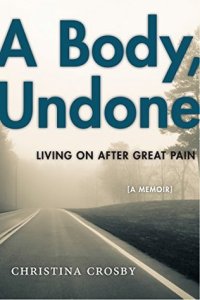 Crosby teaches English and gender studies at Wesleyan University. Her inclusion in this “Sexual Cultures” series has to do with her lesbian feminist ideology but also the new understanding of her body an accident forced upon her at age 50. While she was cycling, a stick stuck in her spokes and she fell over onto concrete, breaking vertebrae in her neck that damaged her spinal cord. In the midst of a full and physical life, she became a quadriplegic. The great irony was that in this she joined her brother Jeff, whose MS had long since reduced him to a wheelchair. Here, in a memoir written 11 years after the accident, she reflects on chronic pain and new limitations – even including bowel habits – with blunt honesty as well as literary allusions. Along the way she remembers physical pleasures now denied to her. Nonetheless, she never comes across as sorry for herself. I found this to be highly absorbing.
The Reader on the 6.27
By Jean-Paul Didierlaurent
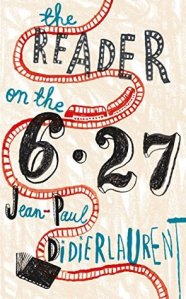 Guylain Vignolles works in a paper pulping plant. Rather than an enemy of books, however, he’s really a champion of the written word and its power to improve people’s lives. Every day when he descends into the belly of “The Thing” to clean it, he rescues the stray pages that escaped destruction and reads them aloud the following morning on his twenty-minute train commute, or to the residents of an old-folks home, no matter what their subject. He also helps his disabled former colleague Giuseppe stockpile all the books made from the recycled paper created on the fateful day the machine shredded his legs. There’s a charming Amélie vibe to this short novel, especially in the later chapters when Guylain sets off on a romantic quest to find the lavatory attendant whose wry diary he finds on a memory stick on the train. Most of the subplots could do with some expanding, but it’s a pleasant and super-quick read.
Stir: My Broken Brain and the Meals that Brought Me Home
By Jessica Fechtor
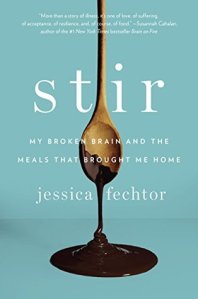 For me this is right up there with Molly Wizenberg and Ruth Reichl in how the author merges food writing with a frank recounting of personal experiences with crisis and heartache. At age 28 Fechtor, then a graduate student in history and Yiddish, collapsed on a treadmill with a brain bleed. Surgery to clip the aneurysm left her blind in one eye. During her long recovery process she started a food blog. At the end of each chapter she shares recipes that alternate between simple, favorite dishes and more involved ones. It’s that unpretentiousness that really endears her to me. She doesn’t think she was particularly brave in getting through an unwanted illness; nor does she think the perfect almond macaroon or cherry clafoutis is beyond anyone’s capability. Instead, she gives a glimpse into an ordinary life turned upside down and the foods that helped her regain a zest for life.
Have you read any of these? Which one takes your fancy?
Books in Brief: Five I Enjoyed Recently
Lab Girl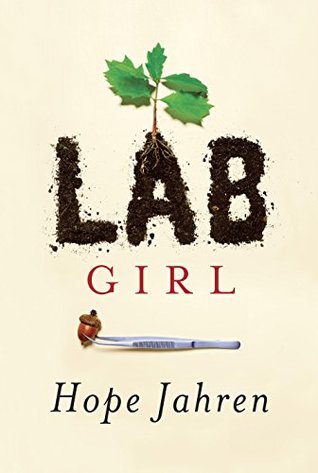
By Hope Jahren
This memoir puts so many things together that it shouldn’t work, yet somehow – delightfully – does. With witty anecdotes and recreated dialogue, Jahren tells about her Minnesota upbringing, crossing the country to take up geobiology/botany academic posts in Atlanta, Baltimore and Hawaii, her long-time platonic relationship with eccentric lab partner Bill, and zany road trips for conferences and field work. On the serious side, she writes about how bipolar disorder complicated work life, marriage and motherhood. Add to that the interspersed chapters illuminating aspects of plant biology and you get a truly varied and intricate narrative. What Jahren does best is simply convey what it is like to have true passion for your work, a rare thing. You don’t have to be a science type to enjoy this book. All that’s required is curiosity about how others live. Jahren might even inspire you to go plant a tree.
My rating: 
 It’s Okay to Laugh (Crying Is Cool, Too)
By Nora McInerny Purmort
Purmort was hit by a triple whammy of loss: within weeks of miscarrying her second child, both her father and her husband were dead of cancer. After a seizure revealed his brain tumor, she and Aaron got engaged on his hospital bed and went through fertility treatment to have their son. All in all they got three years together, after which the Minneapolis-based author founded what she calls the “Hot Widows Club.” She’s only about my age but, as she puts it, has “been through some shit.” The book is in the form of short essays, a lot like blog entries, that tread the fine line between heartbreak and humor. I might have preferred a bit more of a narrative; I wearied of open letters and lists. The book is best where she eases up on self-deprecating jokes and pop culture references and just tells her story, so much of which resonates with my sister’s experience. As soon as I finished the book, I ordered her a copy.
My rating: 
My Heart Can’t Even Believe It: A Story of Science, Love, and Down Syndrome
 By Amy Silverman
When her younger daughter Sophie was born with Down’s syndrome in 2003, Silverman had no idea what to expect. The long-time Arizona journalist put her investigative skills to work, finding out everything she could about the discovery of Down’s and the history of how patients have been treated down the decades. In addition, she delves into the foundation of the Special Olympics (which had a connection with the Kennedy family) and its alternatives, and – not being a “support group kinda girl,” the other sources of encouragement she finds, especially through fellow bloggers. A significant portion of the book is about finding the best schools for Sophie – information that may well be not just U.S.-specific but particular to Arizona, where charter schools are popular. Still, what comes through is Silverman’s fierce love for her daughter and her insistence that every person with Down’s is an individual.
My rating:
 How to Ruin Everything: Essays
By George Watsky
Watsky is a slam poet and rap/hip hop artist from San Francisco. These essays about his misadventures reminded me most of Lauren Weedman (Miss Fortune) and John Jeremiah Sullivan (Pulphead). My favorite pieces were “Tusk,” on smuggling a narwhal tusk from Canada to the States to be his roommate’s great-aunt June’s hundredth birthday present, and “The White Whale,” about his unreliable tour bus. Others see him moving from a crumbling Boston college house to the heart of Hollywood deadbeat territory, traveling through India, fishing in Alaska, trying to attract older women, and reflecting on a childhood love of baseball. In the other stand-out essay, a more serious one, he reveals his experience of epilepsy and weaves in the history of its diagnosis and treatment. Also remarkable was a mention of Pauly Shore, a personage I haven’t thought about in, oh, I don’t know, a decade?
My rating:
Only in Naples: Lessons in Food and Famiglia from My Italian Mother-in-Law
 By Katherine Wilson
This is just the kind of book I would want to write about my experience studying abroad in England and eventually settling here. Of course, Wilson had it harder: she had to conduct her romance with Salvatore Avallone, relate to her future in-laws, and start a career all in a different language. But there were consolation prizes, chief among them the food. A lot of the best anecdotes revolve around Italian cuisine, like Salva’s mother Raffaella sending food down to her daughter in the apartment below via the elevator, or his uncle catching octopi with his one arm. I loved the colorful Italian and Neapolitan dialect expressions Wilson dots around, and as a fellow expat it was interesting to see what her non-negotiable American imports are (we all have our own list, I’m sure): wall-to-wall carpeting, air conditioning, a garbage disposal, and peanut butter – I’m with her on that last one, anyway.
My rating:
(For each one, read my full Goodreads review by clicking on the title link.)
Have you read any of these? Which one takes your fancy?
Note: I’m traveling until the 24th so won’t be responding to comments right away, but will be sure to catch up soon after I’m back. I always welcome your thoughts!
 Bookish Beck = Rebecca Foster. American transplant to England. Freelance proofreader and book reviewer.
 Bookish Beck