Books in Brief: Five I Enjoyed Recently
Lab Girl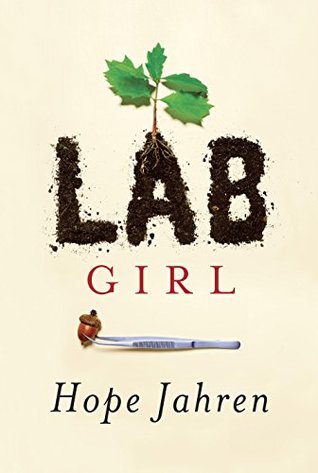
By Hope Jahren
This memoir puts so many things together that it shouldn’t work, yet somehow – delightfully – does. With witty anecdotes and recreated dialogue, Jahren tells about her Minnesota upbringing, crossing the country to take up geobiology/botany academic posts in Atlanta, Baltimore and Hawaii, her long-time platonic relationship with eccentric lab partner Bill, and zany road trips for conferences and field work. On the serious side, she writes about how bipolar disorder complicated work life, marriage and motherhood. Add to that the interspersed chapters illuminating aspects of plant biology and you get a truly varied and intricate narrative. What Jahren does best is simply convey what it is like to have true passion for your work, a rare thing. You don’t have to be a science type to enjoy this book. All that’s required is curiosity about how others live. Jahren might even inspire you to go plant a tree.
My rating: 
 It’s Okay to Laugh (Crying Is Cool, Too)
By Nora McInerny Purmort
Purmort was hit by a triple whammy of loss: within weeks of miscarrying her second child, both her father and her husband were dead of cancer. After a seizure revealed his brain tumor, she and Aaron got engaged on his hospital bed and went through fertility treatment to have their son. All in all they got three years together, after which the Minneapolis-based author founded what she calls the “Hot Widows Club.” She’s only about my age but, as she puts it, has “been through some shit.” The book is in the form of short essays, a lot like blog entries, that tread the fine line between heartbreak and humor. I might have preferred a bit more of a narrative; I wearied of open letters and lists. The book is best where she eases up on self-deprecating jokes and pop culture references and just tells her story, so much of which resonates with my sister’s experience. As soon as I finished the book, I ordered her a copy.
My rating: 
My Heart Can’t Even Believe It: A Story of Science, Love, and Down Syndrome
 By Amy Silverman
When her younger daughter Sophie was born with Down’s syndrome in 2003, Silverman had no idea what to expect. The long-time Arizona journalist put her investigative skills to work, finding out everything she could about the discovery of Down’s and the history of how patients have been treated down the decades. In addition, she delves into the foundation of the Special Olympics (which had a connection with the Kennedy family) and its alternatives, and – not being a “support group kinda girl,” the other sources of encouragement she finds, especially through fellow bloggers. A significant portion of the book is about finding the best schools for Sophie – information that may well be not just U.S.-specific but particular to Arizona, where charter schools are popular. Still, what comes through is Silverman’s fierce love for her daughter and her insistence that every person with Down’s is an individual.
My rating:
 How to Ruin Everything: Essays
By George Watsky
Watsky is a slam poet and rap/hip hop artist from San Francisco. These essays about his misadventures reminded me most of Lauren Weedman (Miss Fortune) and John Jeremiah Sullivan (Pulphead). My favorite pieces were “Tusk,” on smuggling a narwhal tusk from Canada to the States to be his roommate’s great-aunt June’s hundredth birthday present, and “The White Whale,” about his unreliable tour bus. Others see him moving from a crumbling Boston college house to the heart of Hollywood deadbeat territory, traveling through India, fishing in Alaska, trying to attract older women, and reflecting on a childhood love of baseball. In the other stand-out essay, a more serious one, he reveals his experience of epilepsy and weaves in the history of its diagnosis and treatment. Also remarkable was a mention of Pauly Shore, a personage I haven’t thought about in, oh, I don’t know, a decade?
My rating:
Only in Naples: Lessons in Food and Famiglia from My Italian Mother-in-Law
 By Katherine Wilson
This is just the kind of book I would want to write about my experience studying abroad in England and eventually settling here. Of course, Wilson had it harder: she had to conduct her romance with Salvatore Avallone, relate to her future in-laws, and start a career all in a different language. But there were consolation prizes, chief among them the food. A lot of the best anecdotes revolve around Italian cuisine, like Salva’s mother Raffaella sending food down to her daughter in the apartment below via the elevator, or his uncle catching octopi with his one arm. I loved the colorful Italian and Neapolitan dialect expressions Wilson dots around, and as a fellow expat it was interesting to see what her non-negotiable American imports are (we all have our own list, I’m sure): wall-to-wall carpeting, air conditioning, a garbage disposal, and peanut butter – I’m with her on that last one, anyway.
My rating:
(For each one, read my full Goodreads review by clicking on the title link.)
Have you read any of these? Which one takes your fancy?
Note: I’m traveling until the 24th so won’t be responding to comments right away, but will be sure to catch up soon after I’m back. I always welcome your thoughts!
 Bookish Beck = Rebecca Foster. American transplant to England. Freelance proofreader and book reviewer.
 Bookish Beck