Adventures in Rereading: A. S. Byatt and Abigail Thomas
At the end of last year, I picked out a whole shelf’s worth of books I’ve been meaning to reread. I know that others of you are devoted re-readers, returning to childhood favorites for comfort or poring over admired novels two or three times to figure out how they work. Alas, I’m usually resistant to rereading because I feel like it takes away time that I could be spending reading new or at least new-to-me books. Yet along with the nostalgia there is also a certain relief to returning to a favorite: here’s a book that is guaranteed not to disappoint.
So far this year I’ve finished two rereads, and I’m partway through a third. I’m not managing the one-every-other-week pace I would need to keep up to get through the whole shelf this year, but for me this is still good progress. I’ll report regularly on my experience of rereading.
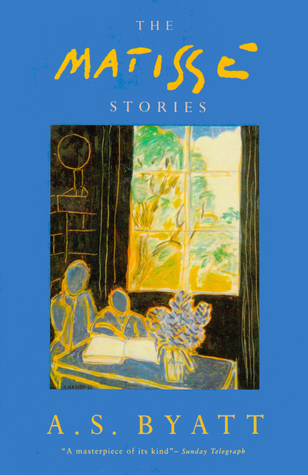
The Matisse Stories by A. S. Byatt (1993)
Byatt is my favorite author. My memory for individual short stories is pitiful, yet I have never forgotten the first of three stories in this volume, so I focus on it here with a close rereading. In “Medusa’s Ankles,” a middle-aged woman goes berserk in a hair salon but it all turns out fine. I remember imagining what that would be like: to let go, to behave badly with no thought for others’ opinions, to act purely on instinct – and for there to be no consequences.
I’d forgotten all the particulars of the event. Susannah, a linguist, is drawn to the salon by the Rosy Nude reproduction she sees through the window. She becomes a reluctant receptacle for her stylist Lucian’s stories, including tales of his wife’s fat ankles and his mistress’ greater appeal. He confides in her his plan to run away. “I don’t want to put the best years of my life into making suburban old dears presentable. I want something more.”
 Susannah holds in all her contempt for Lucian and his hip shop redesign until the day he fobs her off on another stylist – even though she’s said she needs an especially careful job this time because she is to appear on TV to accept the Translator’s Medal. When Deirdre is done, Susannah forgets about English politeness and says just what she thinks: “It’s horrible. I look like a middle-aged woman with a hair-do.” (Never mind that that’s exactly what she is.)
In a whirlwind of fury, she trashes the salon. Byatt describes the aftermath, indulging her trademark love of colors: “It was a strange empty battlefield, full of glittering fragments and sweet-smelling rivulets and puddles of venous-blue and fuchsia-red unguents, patches of crimson-streaked foam and odd intense spills of orange henna or cobalt and copper.”
You can just imagine the atmosphere in the salon: everyone exchanging horrified looks and cautiously approaching Susannah as if she’s a dangerous dog. Lucian steps in to reassure her: “We all feel like that, sometimes. Most of us don’t dare. … The insurance’ll pay. Don’t worry. … You’ve done me a good turn in a way.” Maybe he’ll go off with his girlfriend and start a new business, after all. Predictably, the man has made it all about him.
The ironic kicker to this perfect story about middle age and female rage comes after Susannah goes home to a husband we hadn’t heard about yet. “He saw her. (Usually he did not.) ‘You look different. You’ve had your hair done. I like it. You look lovely. It takes twenty years off you. You should have it done more often.’”
“Art Work” briefly, unnecessarily, uses a Matisse painting as a jumping-off point. A bourgeois couple, a painter and magazine design editor, hire Mrs. Brown, a black woman, to clean their house and are flabbergasted when she turns out to be an artist in her own right. “The Chinese Lobster,” the final story, is the only one explicitly about Matisse. An academic dean invites her colleague out to lunch at a Chinese restaurant to discuss a troubled student he’s supervising. This young woman has eating disorders and is doing a portfolio of artwork plus a dissertation on Matisse’s treatment of female bodies. Her work isn’t up to scratch, and now she’s accused her elderly supervisor of sexual harassment. The racial and sexual politics of these two stories don’t quite hold up, though both are well constructed.
I reread the book in one morning sitting last week.
My original rating (c. 2005): 
My rating now: 
A Three Dog Life by Abigail Thomas (2006)
In April 2000 Thomas’s husband Rich was hit by a car and incurred a traumatic brain injury when their dog Harry got off the leash and Rich ran out into the road near their New York City home to save him. It was a miracle that Rich lived, but his disability was severe enough that he had to be moved to an upstate nursing home. This is one of the first memoirs I ever remember reading, and it made a big impression. I don’t think I realized at the time that it was written in discrete essays, many of which were first published in magazines and anthologies. It represents an advance on the highly fragmentary nature of her first memoir, Safekeeping.
 Thomas maintains a delicate balance of emotions: between guilt every time she bids Rich goodbye in the nursing home and relief that she doesn’t have to care for him 24/7; between missing the life they had and loving the cozy one she’s built on her own with her three dogs. (The title is how Aborigines refer to the coldest nights.) As in One Hundred Names for Love and All Things Consoled, Rich’s aphasia produces moments of unexpectedly poetic insight.
Before rereading I remembered one phrase and one incident (though I’d thought the latter was from Safekeeping): doctors described Rich’s skull as “shattered like an eggshell,” and Thomas remembers a time she was driving and saw the car ahead hit a raccoon; she automatically swerved to avoid the animal, but saw in her rearview mirror that it was still alive and realized the compassionate thing would have been to run it over again. I’ve never forgotten these disturbing images.
Unassuming and heart on sleeve, Thomas wrote one of the most beautiful books out there about loss and memory. I’d recommend this to fans of Anne Lamott and readers of bereavement memoirs in general. This is what I wanted from the rereading experience: to find a book that was even better the second time around.
My original rating (c. 2006):
My rating now: 
Currently rereading: Flaubert’s Parrot by Julian Barnes
Considering rereading next: On Beauty by Zadie Smith
Done any rereading lately?
Doorstopper of the Month: A Reread of The Poisonwood Bible (1998)
“The fallen Congo came to haunt even our little family, we messengers of goodwill adrift on a sea of mistaken intentions.”
You may have gathered by now that I struggle with rereading. Often I find that on a second reading a book doesn’t live up to my memory of it – last year I reread just four books, and I rated each one a star lower than I had the first time. But that wasn’t the case with my September book club book, Barbara Kingsolver’s The Poisonwood Bible, which I’ve just flown through in 11 days. I first read it in the spring of 2002 or 2003, so maybe it’s that I’d allowed enough time to pass for it to be almost completely fresh – or that I was in a better frame of mind to appreciate its picture of harmful ideologies in a postcolonial setting. In any case, this time it struck me as a masterpiece, and has instantly leapt onto my favorites list.

Here’s what I’d remembered about The Poisonwood Bible after the passage of 16–17 years:
- It’s about a missionary family in Africa, and narrated by the daughters.
- One of the sisters marries an African.
- The line “Nathan was made frantic by sex” (except I had it fixed incorrectly in my mind; it’s actually “Nathan was made feverish by sex”).
Everything else I’d forgotten. Here’s what stood out on my second reading:
- Surely one of the best opening lines ever? (Though technically there’s a prologue that comes before it.) “We came from Bethlehem, Georgia, bearing Betty Crocker cake mixes into the jungle.”
- The book is actually narrated in turns by the wife and four daughters of Southern Baptist missionary Nathan Price, who arrives in the Congo with his family in 1959. These five voices are a triumph of first-person narration, so distinct and arising organically from the characters’ personalities and experiences. The mother, Orleanna, writes from the future in despondent isolation – a hint right from the beginning that this venture is not going to end well. Fifteen-year-old Rachel is a selfish, ditzy blonde who speaks in malapropisms and period slang and misses everything about American culture. Leah, one of the 13-year-olds, is whip-smart and earnest; she idolizes their father and echoes his religious language. Her twin, Adah, who was born with partial paralysis, rarely speaks but has an intricate inner life she expresses through palindromes, cynical poetry and plays on words. And Ruth May, just five years old, sees more than she understands and sets it all across plainly but wittily.
- Nathan’s arrogant response to the ‘native customs’ is excruciating. His first prayer, spoken to bless the meal the people of Kilanga give in welcome, quickly becomes a diatribe against nakedness, and he later rails against polygamy and witch doctors and tries to enforce child baptism. When he refuses to take their housekeeper Mama Tataba’s advice on planting, all of the seeds he brought from home wash away in the first rainstorm. On a second attempt he meekly makes the raised beds she recommended, and keeps away from the poisonwood that made him break out in a nasty rash. This garden he plants is a metaphor for control versus adaptation.
- Brother Fowles, Nathan’s predecessor at the mission, is proof that Christianity doesn’t have to be a haughty rampage. He respects Africans enough to have married one, and his religion is a playful, elastic one built around love and working alongside creation.
- The King James Bible (plus Apocrypha, for which Nathan harbors a strange fondness) provides much of the book’s language and imagery, as well as the section headings. Many of these references come to have (sometimes mocking) relevance. Kingsolver also makes reference to classics of Africa-set fiction, like Chinua Achebe’s Things Fall Apart and Joseph Conrad’s Heart of Darkness.
- Africa is a place of many threats – malaria and dysentery, snakes in the chicken house, swarms of ants that eat everything in their path, corruption, political coups and assassinations – not least the risk of inadvertently causing grave cultural offense.
- The backdrop of the Congo’s history, especially the declaration of independence in 1960 and the U.S.-led “replacement” (by assassination) of its first prime minister, Patrice Lumumba, with the dictator Mobutu, is thorough but subtle, such that minimal to no Googling is required to understand the context. (Only in one place, when Leah and Rachel are arguing as adults, does Kingsolver resort to lecturing on politics through dialogue, as she does so noticeably in Unsheltered.)
- Names are significant, as are their changes. With the end of colonialism Congo becomes Zaire and all its cities and landmarks are renamed, but the change seems purely symbolic. The characters take on different names in the course of the book, too, through nicknames, marriage or education. Many African words are so similar to each other that a minor mispronunciation by a Westerner changes the meaning entirely, making for jokes or irony. And the family’s surname is surely no coincidence: we are invited to question the price they have paid by coming to Africa.
- We follow the sisters decades into the future. “Africa has a thousand ways to get under your skin,” Leah writes; “we’ve all ended up giving up body and soul to Africa, one way or another.” Three of the four end up staying there permanently, but disperse into different destinies that seem to fit their characters. Even those Prices who return to the USA will never outrun the shadow the Congo has left on their lives.
 What an amazing novel about the ways that right and wrong, truth and pain get muddied together. Some characters are able to acknowledge their mistakes and move on, while others never can. As Adah concludes, “We are the balance of our damage and our transgressions.”
I worried it would be a challenge to reread this in time to hand it over for my husband to take on his week-long field course in Devon, but it turned out to be a cinch. That’s the mark of success of a doorstopper for me: it’s so engrossing you hardly notice how long the book is. I think this will make for our best book club discussion yet. I can already think of a few questions to ask – Is it fair that Nathan never gets to tell his side of the story? Which of the five voices is your favorite? Who changes and who stays the same over the course of the book? – and I’m sure I’ll find many more resources online since this was an Oprah’s Book Club pick too.
English singer-songwriter Anne-Marie Sanderson’s excellent Book Songs, Volume 1 EP includes the song “Poisonwood.” The excerpted lyrics are below, with direct quotes from the text in bold.

Our Father speaks for all of us
Our Father knows what’s best for us as well
He planted a garden where poisonwood grew
He cut down the orchids cos none of us knew
that the seeds that filled his pockets
would grow and grow without stopping
his beans, his Kentucky Wonders
played their part in tearing us asunder.
Our mother suffered through all of this
Our mother carried the guilt
Carry us, marry us, ferry us, bury us
Carry us, bury us with the poisonwood.
Page count: 615
My rating:
Re-Reading Modern Classics: Fiction Advocate’s “Afterwords” Series
I didn’t manage a traditional classic this month: I stalled on Cider with Rosie and gave up on Evelyn Waugh’s A Handful of Dust after just 16 pages. Instead, I’m highlighting three books from Fiction Advocate’s new series about re-reading modern classics, “…Afterwords.” Their tagline is “Essential Readings of the New Canon,” and the concept is to have “acclaimed writers investigate the contemporary classics.”
As Italo Calvino notes in his invaluable essay “Why Read the Classics?”, “The classics are those books about which you usually hear people saying: ‘I’m rereading…’, never ‘I’m reading…’.” Harold Bloom agrees in The Western Canon: “One ancient test for the canonical remains fiercely valid: unless it demands rereading, the work does not qualify.” But readers will also encounter books that strike such a chord with them that they become personal classics. Calvino exhorts readers that “during unenforced reading … you will come across the book which will become ‘your’ book…‘Your’ classic is a book to which you cannot remain indifferent, and which helps you define yourself in relation or even in opposition to it.”
For the Afterwords series, the three writers below have each chosen a modern classic that they can’t stop reading for all it has to say to their own situation and on humanity in general.
I Meant to Kill Ye: Cormac McCarthy’s Blood Meridian by Stephanie Reents (2018)
Blood Meridian must be one of the two or three bleakest books I’ve ever read. I was led to it by Bloom, who speaks about it as a, if not the, Great American Novel. It’s over 10 years since I’ve read it now, but I still remember some of the specific incidences of violence, like skewering babies and sodomizing corpses on a battlefield, as well as the overall feeling of nihilism: there’s no reason for the evil promulgated by characters like the Judge; it is simply a reality – perhaps the human condition.
 Reents, who teaches English at the College of the Holy Cross, returns to Blood Meridian, a novel she has re-read compulsively over the years, to ask why it continues to have such a hold over her. Its third-person perspective is so distant that we never understand characters’ motivations or glimpse their inner lives, she notes; everyone seems like a pawn in a fated course. She usually shies away from violence and long descriptive passages; she has an uneasy relationship with the West, having moved away from Idaho to live on the East coast. So why should this detached, brutal Western based on the Glanton Gang’s Mexico/Texas killing spree have so captivated her? “Often, we most admire the books that we could never produce, the writing styles or intellects so different from our own that we aren’t even tempted to try imitating them,” she offers as explanation. “It’s a pure kind of admiration, unsullied by envy.” (I feel that way about Faulkner and Steinbeck.)
As part of her quest, Reents recreated some of the Gang’s desert route and traveled to the Texas State University library near Austin to look at McCarthy’s early drafts, notes and correspondence. She was intrigued to learn that the Kid was a more conventional POV character to start with, and McCarthy initially included more foreshadowing. By cutting all of it, he made it so that the book’s extreme violence comes out of nowhere. Reents also explores the historical basis for the story via General Samuel Chamberlain’s dubious memoir. Pondering the volatility of the human heart as she drives along the Mexican border, she ends on the nicely timely note of a threatened Trump-built wall. I doubt I could stomach reading Blood Meridian again (though I’ve read another two McCarthy novels since), but I enjoyed revisiting it with Reents as she finds herself “re-bewildered by its beauty and horror.” 
A Little in Love with Everyone: Alison Bechdel’s Fun Home by Genevieve Hudson (2018)
Alison Bechdel is one of Hudson’s queer heroes (along with James Baldwin, Tracy Chapman, and seven others), portrayed opposite the first page of each chapter in black and white drawings by Pace Taylor – the sort of people who gave her the courage to accept her lesbian identity after a conventional Alabama upbringing.
 As portrayed in her landmark graphic memoir Fun Home, Bechdel was in college and finally coming to terms with her sexuality at the same time that she learned that her father was gay and her parents were about to divorce. Her father died in an accident just a few months later and, though he had many affairs, had never managed to live out his homosexuality openly. As Bechdel’s mother scoffed, “Your father tell the truth? Please!” By contrast, Hudson appreciates Bechdel so much because of her hard-won honesty: “In her work, Bechdel does the opposite of lying. She excavates the real. She dredges up the stuff of her life, embarrassing parts and all.”
Hudson looks at how people craft their own coming-out narratives, the importance of which cannot be overemphasized, in her experience. “Coming out was a tangible thing with tangible effects. For every friend who left my life, a new person arrived—usually someone with broader horizons, exciting stories, and a deviance that seemed sweet and sexy and sincere. After I came out, roaming the streets of Charleston in fat sunglasses and thin dresses, a group of beautiful lesbians appeared out of nowhere. … Everyone was a little in love with everyone.”
A Cool Customer: Joan Didion’s The Year of Magical Thinking by Jacob Bacharach (2018)
 I made the mistake of not taking any notes on, or even marking out any favorite passages in, this, so all I can tell you is that for me it was the most powerful of the three I’ve tried from the series. The author re-examines Didion’s work in the light of his own encounter with loss – his brother’s death from a drug overdose – and ponders why it has become such a watershed in bereavement literature. Didion really is the patron saint of grief thanks to her two memoirs, Magical Thinking and Blue Nights – after she was widowed she also lost her only daughter – even though she writes with a sort of intellectual detachment; you have to intuit the emotion between the lines. Bacharach smartly weaves his family story with a literate discussion of Didion’s narratives and cultural position to make a snappy and inviting book you could easily read in one sitting.
Indeed, all of the Afterwords books are 120–160-page, small-format paperbacks that would handily slip into a pocket or purse.
My thanks to the publisher for the free copies for review.
The other titles in the series are An Oasis of Horror in a Desert of Boredom by Jonathan Russell Clark (on 2666 by Roberto Bolaño), New Uses for Failure by Adam Colman (on 10:04 by Ben Lerner, and Bizarro Worlds by Stacie Williams (on The Fortress of Solitude by Jonathan Lethem).
Next month’s plan: The Leopard by Giuseppe di Lampedusa will be my classic to get me in the mood for traveling to Italy for the first week of July.
Some of My Recent and Upcoming Bylines
Next month marks five years that I’ve been a freelance reviewer, and I turn 35 later in the year. With these milestones in mind, I’ve been pushing myself a bit more to make contact with new publications and try to get my work out there more widely.
Most recently, I was pleased to have my first article in Literary Hub, an essay about rereading Little Women in its 150th anniversary year in conjunction with the new BBC/PBS miniseries production. (I shared this article intensively on social media, so do forgive me if you’ve already seen it somewhere else!) This is the first time, apart from here on the blog, that I’ve blended book commentary with personal material. I think it’s probably the best “exposure” I’ve had for my writing thus far: last time I looked, Literary Hub’s Facebook post about the article had gotten 123 likes and 33 shares, with 71 likes and 22 retweets on Twitter.
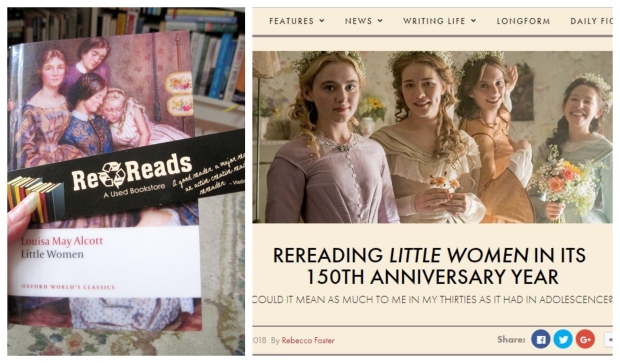
[Note: I now know that the spelling is Katharine Hepburn and have asked twice over e-mail for the editor to correct it, but it’s clearly very low on their list of priorities!]
I continue to review for the Pittsburgh Post-Gazette on a regular basis. My latest review was quite a negative one, alas, for Richard Flanagan’s First Person ( ). Upcoming: Slave Old Man by Patrick Chamoiseau (
 ) and A Weekend in New York by Benjamin Markovits.


I still contribute the occasional review to Shiny New Books. My latest two are of From Here to Eternity by Caitlin Doughty () and All the Beautiful Girls by Elizabeth J. Church ( ).
).


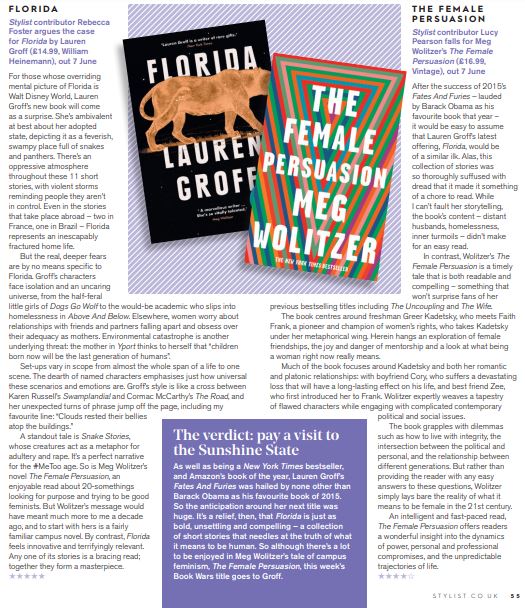
I reviewed Florida by Lauren Groff (), my fiction book of the year so far, for Stylist magazine. This is the fourth time I’ve volunteered for their “Book Wars” column, but the first time I’ve ‘won’ – I attribute it to the high class of book!
Bylines coming later in the summer:
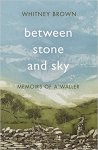
- A dual review of two nature-themed memoirs in the Times Literary Supplement (June 15th issue). This is my third piece for the TLS, but as it’s a longer one it feels a little more ‘real’.
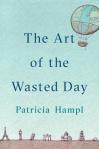
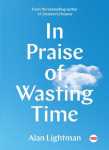
- An essay on two books about “wasting time” (including Alan Lightman’s) in the Los Angeles Review of Books (June 20th).
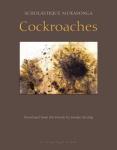
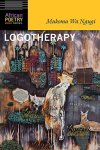
- A dual review of a memoir and a poetry volume by African writers in Wasafiri literary magazine (Issue 95).
Upcoming work, with no publication date yet:
- A dual review of two death-themed poetry collections for PN Review.


- Two book lists for OZY, one on the refugee crisis and another on compassion in medicine.
- A review essay on Gross Anatomy by Mara Altman for Glamour Online.
 Bookish Beck = Rebecca Foster. American transplant to England. Freelance proofreader and book reviewer.
 Bookish Beck