My Favorite Nonfiction Reads of 2015
Without further ado, I present to you my 15 favorite non-fiction books read in 2015. I’m a memoir junkie so many of these fit under that broad heading, but I’ve dipped into other areas too. I give two favorites for each category, then count down my top 7 memoirs read this year.
Note: Only four of these were actually published in 2015; for the rest I’ve given the publication year. Many of them I’ve already previewed through the year, so – like I did yesterday for fiction – I’m limiting myself to two sentences per title: the first is a potted summary; the second tells you why you should read this book. (Links given to full reviews.)
Foodie Lit
 A Homemade Life: Stories and Recipes from My Kitchen Table by Molly Wizenberg (2009): Wizenberg reflects on the death of her father Burg from cancer, time spent living in Paris, building a new life in Seattle, starting her food blog, and meeting her husband through it. Each brief autobiographical essay is perfectly formed and followed by a relevant recipe, capturing precisely how food is tied up with memories.
 Comfort Me with Apples: More Adventures at the Table by Ruth Reichl (2001): Reichl traces the rise of American foodie culture in the 1970s–80s (Alice Waters and Wolfgang Puck) through her time as a food critic for the Los Angeles Times, also weaving in personal history – from a Berkeley co-op with her first husband to a home in the California hills with her second after affairs and a sticky divorce. Throughout she describes meals in mouth-watering detail, like this Thai dish: “The hot-pink soup was dotted with lacy green leaves of cilantro, like little bursts of breeze behind the heat. … I took another spoonful of soup and tasted citrus, as if lemons had once gone gliding through and left their ghosts behind.”
Nature Books
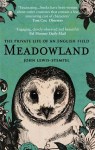 Meadowland: The Private Life of an English Field by John Lewis-Stempel (2014): Lewis-Stempel is a proper third-generation Herefordshire farmer, but also a naturalist with a poet’s eye. Magical moments and lovely prose, as in “The dew, trapped in the webs of countless money spiders, has skeined the entire field in tiny silken pocket squares, gnomes’ handkerchiefs dropped in the sward.”
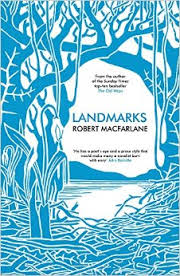 Landmarks by Robert Macfarlane: This new classic of nature writing zeroes in on the language we use to talk about our environment, both individual words – which Macfarlane celebrates in nine mini-glossaries alternating with the prose chapters – and the narratives we build around places, via discussions of the work of nature writers he admires. Whether poetic (“heavengravel,” Gerard Manley Hopkins’s term for hailstones), local and folksy (“wonty-tump,” a Herefordshire word for a molehill), or onomatopoeic (on Exmoor, “zwer” is the sound of partridges taking off), his vocabulary words are a treasure trove.
Theology Books
 Amazing Grace: A Vocabulary of Faith by Kathleen Norris (1998): In few-page essays, Norris gives theological words and phrases a rich, jargon-free backstory through anecdote, scripture and lived philosophy. This makes the shortlist of books I would hand to skeptics to show them there might be something to this Christianity nonsense after all.
 My Bright Abyss: Meditation of a Modern Believer by Christian Wiman (2013): Seven years into a cancer journey, Wiman, a poet, gives an intimate picture of faith and doubt as he has lived with them in the shadow of death. Nearly every page has a passage that cuts right to the quick of what it means to be human and in interaction with other people and the divine.
General Nonfiction
 Penelope Fitzgerald: A Life by Hermione Lee (2013): Although Penelope Fitzgerald always guarded literary ambitions, she was not able to pursue her writing wholeheartedly until she had reared three children and nursed her hapless husband through his last illness. This is a thorough and sympathetic appreciation of an underrated author, and another marvellously detailed biography from Lee.
 Being Mortal: Medicine and What Matters in the End by Atul Gawande (2014): A surgeon’s essential guide to decision-making about end-of-life care, but also a more philosophical treatment of the question of what makes life worth living: When should we extend life, and when should we concentrate more on the quality of our remaining days than their quantity? The title condition applies to all, so this is a book everyone should read.
Memoirs
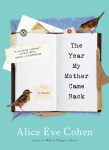 The Year My Mother Came Back by Alice Eve Cohen: Wry and heartfelt, this is a wonderful memoir about motherhood in all its variations and complexities; the magic realism (Cohen’s dead mother keeps showing up) is an added delight. I recommend this no matter what sort of relationship, past or present, you have with your mother, especially if you’re also a fan of Anne Lamott and Abigail Thomas.
- The Art of Memoir
 by Mary Karr: There is a wealth of practical advice here, on topics such as choosing the right carnal details (not sexual – or not only sexual – but physicality generally), correcting facts and misconceptions, figuring out a structure, and settling on your voice. Karr has been teaching (and writing) memoirs at Syracuse University for years now, so she’s thought deeply about what makes them work, and sets her theories out clearly for readers at any level of familiarity.
 A Circle of Quiet by Madeleine L’Engle (1971): In this account of a summer spent at her family’s Connecticut farmhouse, L’Engle muses on theology, purpose, children’s education, the writing life, the difference between creating stories for children and adults, neighbors and fitting into a community, and much besides. If, like me, you only knew L’Engle through her Wrinkle in Time children’s series, this journal should come as a revelation.
-
 Do No Harm: Stories of Life, Death and Brain Surgery by Henry Marsh (2014): “Terrible job, neurosurgery. Don’t do it.” – luckily for us, Henry Marsh reports back from the frontlines of brain surgery so we don’t have to. In my favorite passages, Marsh reflects on the mind-blowing fact that the few pounds of tissue stored in our heads could be the site of our consciousness, our creativity, our personhood – everything we traditionally count as the soul.
 I Hate to Leave This Beautiful Place by Howard Norman (2013): Norman has quickly become one of my favorite writers. You wouldn’t think these disparate autobiographical essays would fit together as a whole, given that they range in subject from Inuit folktales and birdwatching to a murder–suicide committed in Norman’s Washington, D.C. home and a girlfriend’s death in a plane crash, but somehow they do; after all, “A whole world of impudent detours, unbridled perplexities, degrading sorrow, and exacting joys can befall a person in a single season, not to mention a lifetime.”
 Portrait of an Addict as a Young Man by Bill Clegg (2010): Through this book I followed literary agent Bill Clegg on dozens of taxi rides between generic hotel rooms and bar toilets and New York City offices and apartments; together we smoked innumerable crack pipes and guzzled dozens of bottles of vodka while letting partners and family members down and spiraling further down into paranoia and squalor. He achieves a perfect balance between his feelings at the time – being out of control and utterly enslaved to his next hit – and the hindsight that allows him to see what a pathetic figure he was becoming.
And my overall favorite nonfiction book of the year:
 1. The Light of the World by Elizabeth Alexander: In short vignettes, beginning afresh with every chapter, Alexander conjures up the life she lived with – and after the sudden death of – her husband Ficre Ghebreyesus, an Eritrean chef and painter. This book is the most wonderful love letter you could imagine, and no less beautiful for its bittersweet nature.
What were some of your best nonfiction reads of the year?
Review: Seal Morning by Rowena Farre
Here’s an obscure nature classic for animal lovers who can’t get enough of Gerald Durrell and James Herriot. It was a bestseller and a critical success when first published in 1957, and the fact that it has been reprinted several times in the new millennium is testament to its enduring appeal. It’s the account of seven years Farre spent living in a primitive Scottish croft (no electricity or running water) with her Aunt Miriam, starting at age 10. Despite an abrupt beginning, a dearth of dialogue and slightly rushed storytelling, I found this very enjoyable.
 Like the young Durrell, Farre kept a menagerie of wild and half-domesticated animals, including Cuthbert and Sara the gray squirrels, Rodney the rat, Hansel and Gretel the otters, and – the star of this memoir – Lora, a common seal pup. Other pets came and went, like an ill-tempered roe deer fawn, a family of song thrushes, and a pair of fierce wild cat kittens. Early chapters about the struggle to keep all these ravenous creatures fed and wrangled are full of humorous mishaps, like Cuthbert falling down a chimney into the porridge.
Farre acquired Lora on a trip to Lewis. Like dogs, seal pups are very loyal and attached. Farre fed Lora a bottle on her lap and let her sleep at the foot of the bed. Lora was also strikingly intelligent: she recognized 35 words, collected the mail from the postman, unpacked groceries and had an aptitude for music, including playing the mouth organ and xylophone and ‘singing’ along to piano accompaniment. She and the otters, along with Ben the dog, loved to frolic in the water and slide down snowy hills in the winter.
Besides capturing animal antics, what Farre does best in this book is to evoke the extreme isolation of their living situation. Aunt Miriam had saved up £75 a year for them to live off, but also painted designs on wooden bowls for extra cash. The regular summer routine of storing up food was not about passing the time but survival. Near-catastrophes, like getting lost in a mountain mist or the goats raiding Lora’s food supply, showed how precarious life could be. There was little to do on winter days, and only five or six hours of daylight anyway;
“Another hour in the croft and I would have had a nervous breakdown,” said Aunt Miriam. Life up here got you like that sometimes.
Really there are very few adults these days who possess the mental and emotional self-sufficiency necessary for leading satisfactory existences in these remote parts.
A life with animals is bound to involve some sadness. One pet gets picked off by a peregrine; another is injured in a trap and has to be put down. Ben’s fate is particularly sad. Lora’s, by contrast, is just mysterious: after seven years at the croft, she simply disappeared. Farre never learned what became of her.
At age 17, Farre had to decide how to make her own way in life. She took solo camping trips to contemplate her future, doing some informal seal research on Shetland and Iceland. Especially after Aunt Miriam met a Canadian man on an extended trip to visit friends in Berkshire and got engaged, it was clear that their crofting life together was soon to end. Farre hints at what happened next for her: she would go on to travel with British gypsies and journey to the Himalayas, subjects for two further autobiographies. The book ends on a melancholy note as Farre returns to the croft five years later and finds it no better than a ruin.
Farre died relatively young, aged 57 in 1979. Alas, an afterword by Maurice Fleming introduces an element of doubt about the writer and the strict veracity of her memoir. For one thing, Rowena Farre wasn’t her real name. “Piecing Daphne Lois Macready’s life together is like laying out a jigsaw from which some bits are missing and others faded,” Fleming writes. We know she was born in India to an Army officer and the family moved around the Far East for a number of years. However, Farre does not account for her formal schooling, and no evidence of the croft has ever been found. In other words, we don’t know how much is true.
Does this matter? It doesn’t detract from my enjoyment of this lively animal-themed memoir (after all, Herriot also did plenty of fictionalizing), but it does make me wonder whether some of Lora’s feats might be made up. Are seals really as intelligent and personable as she makes them out to be? I was left feeling slightly uneasy, and wanting to do more research about both Farre and seals to figure out what’s what. Still, this is a wonderfully cozy read to pick up by a fire this autumn or winter.
With thanks to the publisher, Birlinn, for the free copy.
My rating: 
Review: Smoke Gets in Your Eyes, by Caitlin Doughty
 Caitlin Doughty, a funeral director in her early thirties, is on a mission. Her goal? Nothing less than completely changing how we think about death and the customs surrounding it. Her odyssey through the death industry began when she was 23 and started working at suburban San Francisco’s Westwind Crematorium. She had spent her first 18 years in Hawaii and saw her first dead body at age eight when she went to a Halloween costume contest at the mall and saw a little girl plummet 30 feet over a railing. In another century, she reflects, it would have been rare for a child to go that long before seeing a corpse; nineteenth-century tots might have experienced the death of multiple siblings, if not a parent.
“Today, not being forced to see corpses is a privilege of the developed world,” she writes. And if we do see a dead body, it will have been so prettified by mortuary workers that it might bear little resemblance to how the person looked in life. Here Doughty reveals all the tricks of the American trade – from embalming (a post-Civil War development) and heavy-duty makeup to gluing eyes closed and sewing mouths shut – that give the dead that peaceful, lifelike look we like to see at wakes. Compare our squeamishness with the openness of various Asian countries, where one might see dozens of corpses floating down the Ganges or Buddhist monks meditating on a decomposing corpse as a memento mori.
Doughty is in a somewhat awkward position: she is part of the very American death industry she is criticizing – those “professionals whose job was not ritual but obfuscation, hiding the truths of what bodies are and what bodies do.” Although she reveled in her work at the crematorium despite its occasional gruesomeness and seems to believe cremation is an efficient and responsible choice for body disposal, she also worries that it might be a further sign of people’s determination to keep bodies out of sight and out of mind. As anthropologist Geoffrey Gorer noted, “In many cases, it would appear, cremation is chosen because it is felt to get rid of the dead more completely and finally than does burial.”
Could cremation be noble instead? Doughty traces its origins to ancient Roman funeral pyres, as different as could be from the enclosed, clinical environment of a modern crematorium. Two factors led directly to cremation becoming increasingly accepted and popular after the 1960s. One was Jessica Mitford’s book The American Way of Death (1961), which mocked the same Los Angeles area cemetery Evelyn Waugh does in The Loved One, Forest Lawn. The other was Pope Paul VI overturning the Catholic Church’s ban on cremation in 1963. Doughty quotes George Bernard Shaw’s rapturous account of his mother’s cremation in 1913 as proof that it can be not only natural, but even aesthetically pleasing:
And behold! The feet burst miraculously into streaming ribbons of garnet colored lovely flame, smokeless and eager, like Pentecostal tongues, and as the whole coffin passed in it sprang into flame all over, and my mother became that beautiful fire.
It is rare, however – and, for the workers, nerve-racking – to have witnesses at a cremation. For the most part Westwind worked like a factory, cremating six bodies per weekday. Doughty experienced all sides of the work: collecting dead fetuses from hospitals for free cremation, shaving adult corpses before burning, enduring the stench of decomposing flesh, and taking delivery of a box of heads whose bodies were donated to science. She is largely unsentimental about it all; who is this fairytale witch who speaks of “tossing” babies into the oven and grinding their little bones?
“Handmaiden to the underworld,” she describes herself, and given her medieval history degree and Goth-lite looks, you can see that a certain macabre cast of mind is necessary for this line of work. She also has a good ear for arrestingly witty one-liners; my favorite was “As a general rule, if anyone ever asks you to put stockings on a ninety-year-old deceased Romanian woman with edema, your answer should be no.”
Still, Doughty recognizes the almost unbearable sadness of many of the cases the crematorium sees – the young man who traveled to California from Washington just to stand in the path of a train, the “floaters” found in the ocean, the elderly with oozing bed sores, and the homeless folk of Los Angeles who were cremated and dumped in a mass grave after they were used for embalming practice at her mortuary school. She even considered committing suicide herself on a lonely trip out to a redwood forest.
What has kept her going is the desire to combat misconceptions and superstitions about the dead. As she realized after a potentially serious car accident on the freeway, she has lost her own fear of death, and she wants to help others do the same. This will require getting people talking about death, something she is doing through her online community Order of the Good Death and her Ask a Mortician YouTube videos. She would also like to see people having involvement with dead bodies again, as they did in previous centuries, perhaps by washing their dead relatives or keeping them at home before the funeral rather than having them taken away. “It is never too early to start thinking about your own death and the deaths of those you love.” This is not morbid; it’s just planning ahead for an inevitable experience. “We can wander further into the death dystopia, denying that we will die and hiding dead bodies from our sight. Making that choice means we will continue to be terrified and ignorant of death, and the huge role it plays in how we live our lives.”
The sections of personal anecdote in this book are better than those based on anthropological research – which is not woven in entirely naturally. Ultimately, it’s a little unclear exactly how Doughty plans to change things. She speaks of designing her own welcoming crematorium, an open, airy space that doesn’t suggest a death factory. But it’s enough that she’s part of a movement in the right direction, and beneath her wry tone her passion is clear.
My rating: 
Further reading suggestions: For more on how people are revolutionizing how we think about death, I highly recommend Anne Karpf’s book for the School of Life, How to Age. Other death-themed reads I have particularly enjoyed are The Undertaking by Thomas Lynch, The Removers by Andrew Meredith, and A Tour of Bones by Denise Inge. Less effective as a memoir but still interesting for its view of the funeral home business is The Undertaker’s Daughter by Kate Mayfield.
Note: I was originally going to review this book for a British website, so I received a free copy of the UK edition from Canongate. Doughty inserts British statistics and information to increase the book’s relevance to a new audience. She also astutely notes that British funerals minimize interaction with a dead body, something I have certainly found true in the two cremations I have attended in England. The Irish are famous for their wakes, but the British do not have this custom. In fact, when we attended my brother-in-law’s viewing and funeral in America earlier this year, it was the first time my husband (aged 31) had seen a dead body. Although I can see Doughty’s point about a prettified corpse not being representative of what the dead ‘should’ look like, I must also say that the funeral home had done a fantastic job of making him look happy and at peace, like he was sleeping and having pleasant dreams. He certainly didn’t look like a man who had suffered the ravages of brain cancer for four years. The same was not true for my ninety-something grandmother, however, who was nearly unrecognizable.
Between the Dark and the Daylight, Joan Chittister
 Joan Chittister is a Benedictine nun and author of over 50 books of theology. Somehow I had never heard of her before I requested this title from Blogging for Books. Between the Dark and the Daylight, which came out in February, strikes me as a work of practical spirituality with a self-help bent. It’s not very religion-specific; in fact, Jesus is only mentioned four times, and the word “Christian” appears just once.
Based on the title, I was expecting something like Barbara Brown Taylor’s Learning to Walk in the Dark, which is more about metaphors of darkness and how times of doubt and suffering may actually be helpful for people of faith. Although there is likely some overlap between the two, Chittister’s subtitle – Embracing the Contradictions of Life – gives a better idea of what her book is about. Her focus on oxymorons and pairs of opposites spurs readers to re-evaluate and redefine experiences that are always envisioned as negative: frustration, confusion, loss, solitude, and doubt (in this last she reminds me of Peter Rollins).
“To the average person whose life is exemplary most of all for its ordinariness—to people like you and me, for instance—it is what goes on inside of us that matters for the healthy life and real spirituality. … Whatever it is that we harbor in the soul throughout the nights of our lives is what we will live out during the hours of the day.”
Chittister takes emotions seriously, but at the same time she gently nudges us to look below the surface and ask what’s really going on within.
In Chapter 2, “The Delusion of Frustration,” for example, she insists that “Frustration is a cover-up for something we have yet to face in ourselves. … It’s what we use to explain the sour or pouty or demanding or manipulative attitudes we have developed. It is the right we assert to be less than we are capable of being.”
Rather than seeing uncertainty as negative, we should consider it as fostering “the spirit of invention and possibility”: “Life is about participating in the fine art of finding ourselves—our talents, our confidence, our sense of self, our purpose in life.”
Rather than letting failure drive us into despair, we must “pursue the possible in the imperfect,” for “hope lies in taking what we have … and using every heartbeat within us to turn it into something worthwhile.” As Churchill once said, “Success is bounding from failure to failure with no loss of enthusiasm.”
“The Creativity of Confusion” and “The Liberation in Loss” are two more stand-out chapters, with too many quotable lines to mention here.
This book has been quite inspirational for me. It’s refreshing to see that Chittister doesn’t advocate mute resignation to what life/God/Fate has in store for us; “it is as much our responsibility to shape life as it is for life to shape us.” I especially appreciated her advice to “Plant yourself where you know you can bloom.”
If I were being critical, I might say that her prose is a little repetitive and too reliant on quotes and anecdotes from external sources. She is certainly more focused on ideas than on writing style. This is a common complaint I have about theology books: if academic, they’re inaccessible; if popular, they’re averagely written.
Nevertheless, I think Chittister’s work will be revelatory for a lot of people. And you don’t have to be a Catholic, or even a Christian, to find wisdom here. (My NetGalley request to read the book was initially declined because I’m not a Catholic blogger, a curious instance of narrow, discriminatory thinking.) Anyone who wants to pursue a life of joy and purpose – who dares to believe that life could be more than a cycle of frustration and hopelessness – will want to give this a read.
My rating: 
Review: The Birth of the Pill by Jonathan Eig
The development of the birth control pill: this seems like an odd topic for my first book review on the new blog, but I’ll go with it. I have a special love for nonfiction that incorporates many different genres: history, biography, popular science, sociology, and so on. (See my next-to-last paragraph for some other examples of books that do this well.)
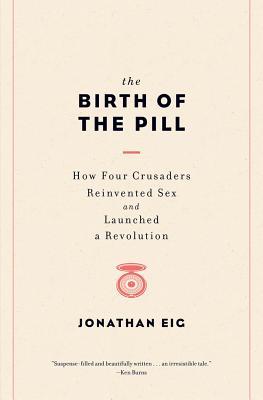 This is an epic adventure starring four unlikely heroes: two middle-aged doctors, Gregory Pincus, fired by Harvard, and John Rock, a Catholic; and two older ladies, Margaret Sanger, who left her first husband and family and grew increasingly addicted to alcohol and prescription pills, and Katharine McCormick, whose mentally ill husband died and left her with a huge fortune she dug into the birth control movement.

Dr. Gregory Pincus is on the left (date unknown). Copyright Mrs. F. Hammond.
From testing progesterone on rabbits to the desperate hunt for human test subjects in Puerto Rico and in a Massachusetts mental hospital, it is a tale full of surprises. When first presented to American doctors and the FDA, the contraceptive pill – then known as Enovid – was billed as an infertility drug: It regulated periods to make it more likely that women would then get pregnant after going off it. Pincus et al. conveniently failed to mention that it also prevented ovulation. I never would have expected a Trojan horse story.
Margaret Sanger was given a hero’s welcome on every trip to Japan, but she also had an unfortunate association with the eugenics movement – an inevitable offshoot of concerns about overpopulation? She once said that parents should have to apply for the right to have children just like immigrants have to apply for visas. The best random piece of trivia I came across here was that Prescott S. Bush, father of George and grandfather of Dubya, was the treasurer for Planned Parenthood’s first nationwide fundraising campaign in 1947. You can bet the Bush family has tried to cover that one up!

Margaret Sanger in 1922.
“Religion is a very poor scientist,” John Rock was known to say. The fight to have the Catholic Church change its position on birth control is an important background narrative in this book. The sexual revolution and the personal decision to contravene Catholic doctrine regarding contraception is also a major component of Quite a Good Time to Be Born, David Lodge’s recent memoir. It’s always fun when similar ideas come up in multiple books at the same time.
Jonathan Eig was previously known for his sports biographies, and there’s plenty of action and narrative here. Like the best science writers (Rebecca Skloot in The Immortal Life of Henrietta Lacks, David Quammen in Spillover, Atul Gawande in Being Mortal, or Siddhartha Mukherjee in The Emperor of All Maladies), he tells a story rich with three-dimensional characters.
We have a family legend about a Swiss ancestor who admitted herself to a mental asylum (then euphemistically called a sanatorium) in upstate New York in 1922 rather than have more children. She already had nine kids (one more died in infancy); she was tired and overworked. If this was what it took to keep her husband from making her pregnant again, so be it. She and thousands of housewives like her never could have guessed that one day (in 1960, to be precise) a simple pill could limit their family size. This is what this book is all about: the quest to give women control over their lives.
My rating:
 Bookish Beck = Rebecca Foster. American transplant to England. Freelance proofreader and book reviewer.
