Three on a Theme of Sylvia Plath (The Slicks by Maggie Nelson for #NonfictionNovember & #NovNov25; The Bell Jar and Ariel)
A review copy of Maggie Nelson’s brand-new biographical essay on Sylvia Plath (and Taylor Swift) was the excuse I needed to finally finish a long-neglected paperback of The Bell Jar and also get a taste of Plath’s poetry through the posthumous collection Ariel, which is celebrating its 60th anniversary. These are the sorts of works it’s hard to believe ever didn’t exist; they feel so fully formed and part of the zeitgeist. It also boggles the mind how much Plath accomplished before her death by suicide at age 30. What I previously knew of her life mostly came from hearsay and was reinforced by Euphoria by Elin Cullhed. For the mixture of nonfiction, fiction and poetry represented below, I’m counting this towards Nonfiction November’s Book Pairings week.
The Slicks: On Sylvia Plath and Taylor Swift by Maggie Nelson (2025)
 Can young women embrace fame amidst the other cultural expectations of them? Nelson attempts to answer this question by comparing two figures who turn(ed) life into art. The link between them was strengthened by Swift titling her 2024 album The Tortured Poets Department. “Plath … serves as a metonym – as does Swift – for a woman who makes art about a broken heart,” Nelson writes. “When women make the personal public, the charge of whorishness always lurks nearby.” What women are allowed to say and do has always, it seems, attracted public commentary, and “anyone who puts their work into the world, at any level, must learn to navigate between self-protectiveness and risk, becoming harder and staying soft.”
Nelson acknowledges a major tonal difference between Plath and Swift, however. Plath longed for fame but didn’t get the chance to enjoy it; she’s the patron saint of sad-girl poetry and makes frequent reference to death, whereas Swift spotlights joy and female empowerment. It’s a shame this was out of date before it went to print; my advanced copy, at least, isn’t able to comment on Swift’s engagement and the baby rumour mill sure to follow. It would be illuminating to have an afterword in which Nelson discusses the effect of spouses’ competing fame and speculates on how motherhood might change Swift’s art.
Full confession: I’ve only ever knowingly heard one Taylor Swift song, “Anti-Hero,” on the radio in the States. (My assessment was: wordy, angsty, reasonably catchy.) Undoubtedly, I would have gotten more out of this essay were I equally familiar with the two subjects. Nonetheless, it’s fluid and well argued, and I was engaged throughout. If you’re a Swiftie as well as a literary type, you need to read this.


[66 pages]
With thanks to Vintage (Penguin) for the advanced e-copy for review.
The Bell Jar by Sylvia Plath (1963)
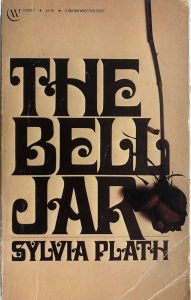 Given my love of mental hospital accounts and women’s autofiction, it’s a wonder I’d not read this before my forties. It was first published under the pseudonym “Victoria Lucas” because Plath thought it immature, “an autobiographical apprentice work which I had to write in order to free myself from the past.” Esther Greenwood is the stand-in for Plath: a talented college student who, after working in New York City during the remarkable summer of 1953, plunges into mental ill health. Chapter 13 is amazing and awful at the same time as Esther attempts suicide thrice in one day, toying with a silk bathrobe cord and ocean waves before taking 50 pills and walling herself into a corner of the cellar. She bounces between various institutional settings, undergoing electroshock therapy – the first time it’s horrible, but later, under a kind female doctor, it’s more like it’s ‘supposed’ to be: a calming reset.
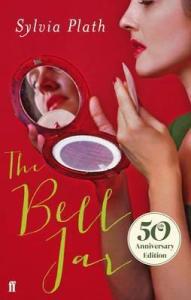 The 19-year-old is obsessed with the notion of purity. She has a couple of boyfriends but decides to look for someone else to take her virginity. Beforehand, the asylum doctor prescribes her a fitting for a diaphragm. A defiant claim to the right to contraception despite being unmarried is a way of resisting the bell jar – the rarefied prison – of motherhood. Still, Esther feels guilty about prioritizing her work over what seems like feminine duty: “Why was I so maternal and apart? Why couldn’t I dream of devoting myself to baby after fat puling baby? … I was my own woman.” Plath never reconciled parenthood with poetry. Whether that’s the fault of Ted Hughes, or the times they lived in, who can say. For her and for Esther, the hospital is a prison as well – but not so hermetic as the turmoil of her own mind. How ironic to read “I took a deep breath and listened to the old brag of my heart. I am, I am, I am” knowing that this was published just a few weeks before this literary genius ceased to be.
Apart from an unfortunate portrayal of a “negro” worker at the hospital, this was an enduringly relevant and absorbing read, a classic to sit alongside Emily Holmes Coleman’s The Shutter of Snow and Janet Frame’s Faces in the Water.
(Secondhand – it’s been in my collection so long I can’t remember where it’s from, but I’d guess a Bowie Library book sale or Wonder Book & Video / Public library – I was struggling with the small type so switched to a recent paperback and found it more readable)
Ariel by Sylvia Plath (1965)
Impossible not to read this looking for clues of her death to come:
Dying
Is an art, like everything else.
I do it exceptionally well.
(from “Lady Lazarus”)
Eternity bores me,
I never wanted it.
(from “Years”)
The woman is perfected.
Her dead
Body wears the smile of accomplishment
(from “Edge”)
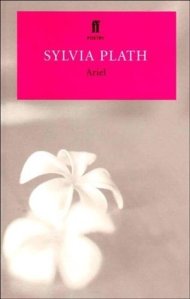 I feel incapable of saying anything fresh about this collection, which takes no prisoners. The images and vocabulary are razor-sharp. First and last lines or stanzas are particularly memorable. (“Morning Song” starts “Love set you going like a fat gold watch”; “Lady Lazarus” ends “Out of the ash / I rise with my red hair / And I eat men like air.”) Words and phrases repeat and gather power as they go. “The Applicant” mocks the obligations of a wife: “A living doll … / It can sew, it can cook. It can talk, talk, talk. … // … My boy, it’s your last resort. / Will you marry it, marry it, marry it.” I don’t know a lot about Plath’s family life, only that her father was a Polish immigrant and died after a long illness when she was eight, but there must have been some daddy issues there – after all, “Daddy” includes the barbs “Daddy, I have had to kill you” and “If I’ve killed one man, I’ve killed two— / The vampire who said he was you / And drank my blood for a year, / Seven years, if you want to know.” It ends, “Daddy, daddy, you bastard, I’m through.” Several later poems in a row, including “Stings,” incorporate bee-related imagery, and Plath’s father was an international bee expert. I can see myself reading this again and again in future, and finding her other collections, too – all but one of them posthumous. (Secondhand – RSPCA charity shop, Newbury)
#MARM2025 and #NovNov25: The Penelopiad by Margaret Atwood (2005)
It’s my eighth time participating in the annual Margaret Atwood Reading Month (#MARM) hosted by indomitable Canadian blogger Marcie of Buried in Print. In previous years, I’ve read Surfacing and The Edible Woman, The Robber Bride and Moral Disorder, Wilderness Tips, The Door, Bodily Harm and Stone Mattress, and Life Before Man and Interlunar; and reread The Blind Assassin. Novembers are my excuse to catch up on the soon-to-be-86-year-old’s extensive back catalogue. While awaiting a library hold of her memoir, Book of Lives, I’ve also been rereading the 1983 short story collection Bluebeard’s Egg.

Celebrating its 20th anniversary this year is The Penelopiad, Atwood’s contribution to Canongate’s The Myths series, from which I’ve also read the books by Karen Armstrong, A.S. Byatt, Ali Smith and Jeanette Winterson. I remember Armstrong’s basic point being that a myth is not a falsehood, as in common parlance, but a story that is always true even if not literally factual. Think of it as ‘these things happen’ rather than this happened. Greek mythology is every bit as brutal as the Hebrew Bible, and I find it instructive to interpret biblical stories the same way: Focus on timelessness and universality rather than on historicity.
I do the scheduling for my book club, so I cheekily set The Penelopiad as our November book so that it would count towards two blog challenges. Although it’s a feminist retelling of Homer’s The Odyssey, we concluded that it’s not essential to have prior knowledge of the Greek myths. Much of the narrative is from Penelope’s perspective, including from the afterlife. Cliché has it that she waited patiently for 20 years for her husband Odysseus to return from war, chastely warding off all her would-be suitors. But she admits to readers that both she and Odysseus are inveterate liars.
When Odysseus returned, he murdered the suitors and then Penelope’s maids – some of whom had consensual relations with the men; others of whom were raped. The focus is not on the slaughtered suitors, or on Odysseus’s triumphant return and revenge, but on the dozen maids – viz. the chapter title “Odysseus and Telemachus Snuff the Maids.” The murdered maids form a first-person plural voice (a literal Greek chorus) and speak in poetry and song, also commenting on their own plight through an anthropology lecture and a videotaped trial. They appeal to The Furies for posthumous justice, knowing they won’t get it from men (see the Virago anthology Furies). This sarcastic passage spotlights women’s suffering:
Never mind. Point being that you don’t have to get too worked up about us, dear educated minds. You don’t have to think of us as real girls, real flesh and blood, real pain, real injustice. That might be too upsetting. Just discard the sordid part. Consider us pure symbol. We’re no more real than money.
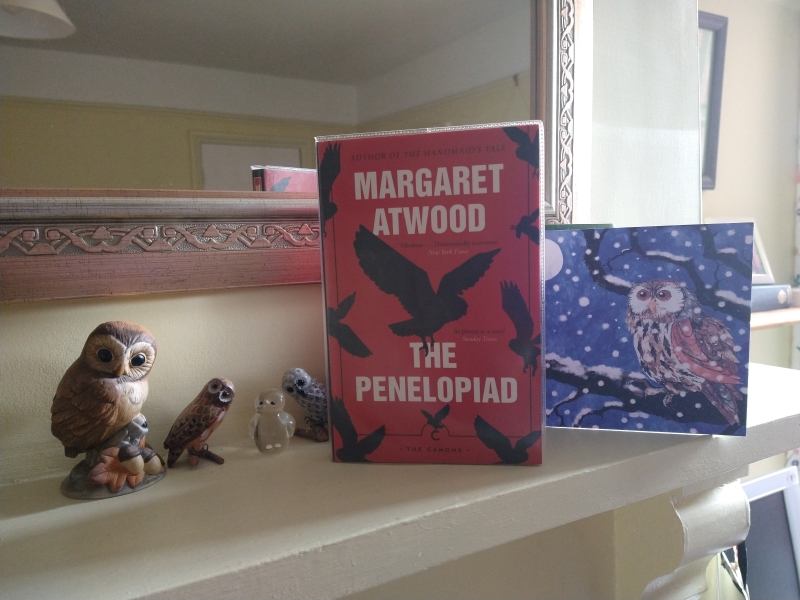
The cover of The Canons edition hints at the maids’ final transformation into legend.
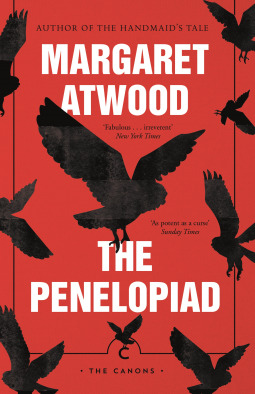 As well as The Odyssey, Atwood drew on external sources. She considers the theory that Penelope was the leader of a goddess cult. Women are certainly the most interesting characters here. Penelope’s jealousy of her cousin Helen (of Troy) and her rocky relationship with her teenage son Telemachus are additional threads. Eurycleia, Odysseus’s nurse, is a minor character, and there is mention of Penelope’s mother, a Naiad. Odysseus himself comes across not as the brave hero but as brash, selfish and somewhat absurd.
Like Atwood’s other work, then, The Penelopiad is subversive and playful. We wondered whether it set the trend for Greek myth retellings – given that those by Pat Barker, Natalie Haynes, Madeline Miller, Jennifer Saint and more emerged 5–15 years later. It wouldn’t be a surprise: she has always been wise and ahead of her time, a puckish prophetess. This fierce, funny novella isn’t among my favourites of the 30 Atwood titles I’ve now read, but it was an offbeat selection that made for a good book club discussion – and it wouldn’t be the worst introduction to her feminist viewpoint.
(Public library)
[198 pages]

Seascraper by Benjamin Wood (#NovNov25 Buddy Read)
Seascraper is set in what appears to be the early 1960s yet could easily be a century earlier because of the protagonist’s low-tech career. Thomas Flett lives with his mother in fictional Longferry in northwest England and carries on his grandfather’s tradition of fishing with a horse and cart. Each day he trawls the seabed for shrimp – sometimes twice a day when the tide allows – and sells his catch to local restaurants. At around 20 years old, Thomas still lives with his mother, who is disabled by obesity and chronic pain. He’s the sole breadwinner in the household and there’s an unusual dynamic between them in that his mother isn’t all that many years older, having fallen pregnant by a teacher while she was still in school.
Their life is just a mindless trudge of work with cosy patterns of behaviour in between … He wants to wake up every morning with a better purpose.
It’s a humdrum, hardscrabble existence, and Thomas longs for a bigger and more creative life, which he hopes he might achieve through his folk music hobby – or a chance encounter with an American filmmaker. Edgar Acheson is working on a big-screen adaptation of a novel; to save money, it will be filmed here in Merseyside rather than in coastal Maine where it’s set. One day he turns up at the house asking Thomas to be his guide to the sands. Thomas reluctantly agrees to take Edgar out one evening, even though it will mean missing out on an open mic night. They nearly get lost in the fog and the cart starts to sink into quicksand. What follows is mysterious, almost like a hallucination sequence. When Thomas makes it back home safely, he writes an autobiographical song, “Seascraper” (you can listen to a recording on Wood’s website).
After this one pivotal and surprising day, Thomas’s fortunes might just change. This atmospheric novella contrasts subsistence living with creative fulfillment. There is the bitterness of crushed dreams but also a glimmer of hope. Its The Old Man and the Sea-type setup emphasizes questions of solitude, obsession and masculinity. Thomas wishes he had a father in his life; Edgar, even in so short a time frame, acts as a sort of father figure for him. And Edgar is a father himself – he shows Thomas a photo of his daughter. We are invited to ponder what makes a good father and what the absence of one means at different stages in life. Mental and physical health are also crucial considerations for the characters.

That Wood packs all of this into a compact circadian narrative is impressive. My admiration never crossed into warmth, however. I’ve read four of Wood’s five novels and still love his debut, The Bellwether Revivals, most, followed by his second, The Ecliptic. I’ve also read The Young Accomplice, which I didn’t care for as much, so I’m only missing out on A Station on the Path to Somewhere Better now. Wood’s plot and character work is always at a high standard, but his books are so different from each other that I have no clear sense of him as a novelist. Still, I’m pleased that the Booker longlisting has introduced him to many new readers.
Also reviewed by:
Annabel (AnnaBookBel)
Anne (My Head Is Full of Books)
Brona (This Reading Life)
Cathy (746 Books)
Davida (The Chocolate Lady’s Book Review Blog)
Eric (Lonesome Reader)
Jane (Just Reading a Book)
Helen (She Reads Novels)
Kate (Books Are My Favourite and Best)
Kay (What? Me Read?)
Nancy (The Literate Quilter)
Rachel (Yarra Book Club)
Susan (A life in books)
Check out this written interview with Wood (and this video one with Eric of Lonesome Reader) as well as a Q&A on the Booker Prize website in which Wood talks about the unusual situation in which he wrote the book.
(Public library)
[163 pages]

All Souls’ Day Reading: Armitage, Campbell, Mah & Perry
Along with my Halloween-tide R.I.P. reading (here and here), I’ve been reading books about ancestors and the dead – appropriate for All Saints’ Day (yesterday) and All Souls’ Day (today). Both are in the Church calendar but less a part of popular culture.
My mind naturally turns toward the dead as October advances: on the 30th, it was three years since my mother’s death (plus the 25th marked a year since we started losing sweet Alfie). To allay dread at the impending anniversary, I booked myself a treat to look forward to that day. For some reason, Wantage Literary Festival included a Gin Tasting Extravaganza alongside its bookish events. I didn’t fancy any book talks but was keen to try 10 British Isles gins, 9 of which were new to me and 5 of which were ticks in my 101 Gins to Try before You Die book.


Beforehand, I did some secondhand book shopping. Regent is an excellent and enormous maze of a bookshop that I’d been to once before. It has an exhaustive selection and great prices (£2.50 paperbacks / £3–5 hardbacks) that haven’t changed in three years. I considered this return trip a chance for another birthday book haul and was delighted with my finds (the Gleeson was from a charity shop in the town).


My All Souls’ stack includes a poetry collection and three #NonfictionNovember reads.
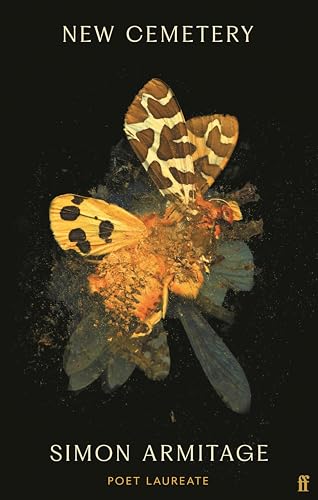
New Cemetery by Simon Armitage (2025)
Not far from the English Poet Laureate’s home in Huddersfield, some cow fields were recently converted into a municipal graveyard. I can’t do better than Armitage’s own description of the style in this collection: “short-lined tercets linked with/by intermittent rhymes and half-rhymes … like threading daisy chains.” Each one is titled in brackets after a species of moth, in a rather arbitrary way, as he acknowledges. The point was to – in a time of climate breakdown – include nature in the inevitable march of death and decay. I most liked the poems about the cemetery, whereas the majority of the book is about everyday moments from a writer’s life.
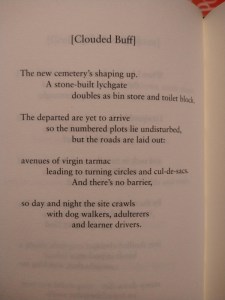
There are some amusing and poignant lines among the rest:
 I died and went
to Bristol Parkway
for my sins,
interchange
between soul and flesh
the whispered half-rhymes
of earth and death
on the spade’s tongue.
I also appreciated this haiku-like stanza: “Almond blossom / slash rotten confetti / clogging the church drains.” But there was little that struck me otherwise. I’ve tried to love Armitage’s poetry, but this third experience again leaves me unmoved. I’ve preferred his travel memoirs. Still, the book ends on the perfect note:
the dead are patiently
killing time
between visiting hours,
deaf, blind, mute
and numb,
unable to love
but capable still
of being loved.
(Public library)
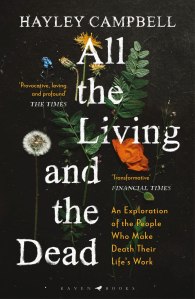 I’ve read the first two chapters of a long-neglected review copy of All the Living and the Dead by Hayley Campbell (2022), in which she shadows various individuals who work in the death industry, starting with a funeral director and the head of anatomy services for the Mayo Clinic in Minnesota. In Victorian times, corpses were stolen for medical students to practice on. These days, more people want to donate their bodies to science than can usually be accommodated. The Mayo Clinic receives upwards of 200 cadavers a year and these are the basis for many practical lessons as trainees prepare to perform surgery on the living. Campbell’s prose is journalistic, detailed and matter-of-fact, but I’m struggling with the very small type in my paperback. Upcoming chapters will consider a death mask sculptor, a trauma cleaner, a gravedigger, and more. If you’ve enjoyed Caitlin Doughty’s books, try this.
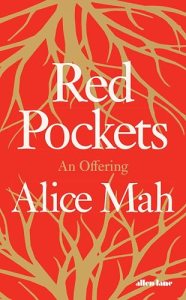 I’m halfway through Red Pockets: An Offering by Alice Mah (2025) from the library. I borrowed it because it was on the Wainwright Prize for Conservation Writing shortlist. During the Qingming Festival, the Chinese return to their hometowns to honour their ancestors. By sweeping their tombs and making offerings, they prevent the dead from coming back as hungry ghosts. When Mah, who grew up in Canada and now lives in Scotland, returns to South China with a cousin in 2017, she finds little trace of her ancestors but plenty of pollution and ecological degradation. Their grandfather wrote a memoir about his early life and immigration to Canada. In the present day, the cousins struggle to understand cultural norms such as gifting red envelopes of money to all locals. This is easy reading but slightly dull; it feels like Mah included every detail from her trips simply because she had the material, whereas memoirs need to be more selective. But I’m reminded of the works of Jessica J. Lee, which is no bad thing.
Death of an Ordinary Man by Sarah Perry (2025)
Perry recognises what a sacred privilege it was to witness her father-in-law’s death, which occurred just nine days after his diagnosis with oesophageal cancer. She concludes, like Simone de Beauvoir does of her mother in A Very Easy Death, that David’s end was as good as one might hope for. Viz., he was in his late seventies, remained at home, was looked after by his son and daughter-in-law, more or less maintained his mental capacity until the end, and showed minimal signs of pain or distress. Still, every death is fraught, to some degree, with bureaucracy, medical error and pangs of regret. There is a searing encounter here with an unfeeling GP; on the other hand, there is such kindness from nurses, relatives and a pastor.
The beauty of Perry’s memoir is its patient, clear-eyed unfolding of every stage of dying, a natural and inexorable process that in other centuries would have been familiar to anyone – having observed it with siblings, children, parents, neighbours, distant relatives and so on. She felt she was joining a specifically womanly lineage of ministering, a destiny so quotidian that she didn’t feel uncomfortable with any of the intimate care involved. I thought of my sister and her mother- and sister-in-law sitting vigil at my brother-in-law’s deathbed in 2015.
 Perry traces the physical changes in David as he moved with alarming alacrity from normal, if slowed, daily life to complete dependency to death’s door. At the same time, she is aware that this is only her own perspective on events, so she records her responses and emotional state and, to a lesser extent, her husband’s. Her quiver of allusions is perfectly chosen and she lands on just the right tone: direct but tender. Because of her and David’s shared upbringing, the points of reference are often religious, but not obtrusive. My only wish is to have gotten more of a sense of David alive. There’s a brief section on his life at the start, mirrored by a short “Afterlife” chapter at the end telling what succeeded his death. But the focus is very much on the short period of his illness and the days of his dying. During this time, he appears confused and powerless. He barely says anything beyond “I’m in a bit of a muddle,” to refer to anything from incontinence to an inability to eat. At first I thought this was infantilizing him. But I came to see it as a way of reflecting how death strips everything away.
As I read, I often had tears in my eyes, thinking of the deaths I have experienced at second hand and the many more that will come my way until my own. In this gift of a book, Perry captures the emotional poles of bearing witness, and the dignity and uniqueness of every life:
There was relief, and there was loss – it was the saddest thing we’d ever seen, and the best thing we had ever done – all these things existing together undiminished, and never cancelling each other out.
now I understand there are no ordinary lives – that every death is the end of a single event in time’s history: an event so improbable it represents a miracle, and irreplaceable in every particular.
(Public library) 
Death and grief are common topics in my stacks at all times of year. I see more books on dying and the dead in my immediate future, starting with two rereads for #NovNov – The Death of Ivan Ilych and Death in Venice, along with The Field by Robert Seethaler (narrated by the inhabitants of a cemetery), the latter two for #GermanLitMonth; and A Single Man by Christopher Isherwood.
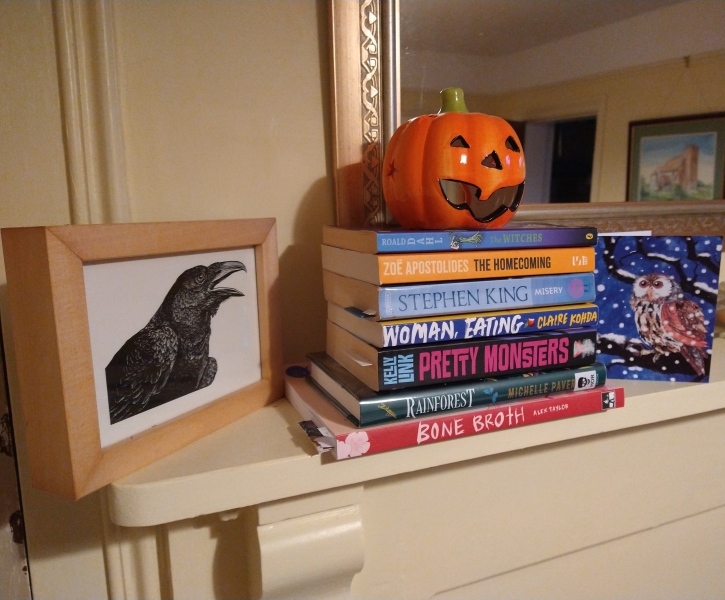
R.I.P. Reads, Part II: Feito, King, Link, Paver & Taylor
Soon it’ll be all novellas, all the time around here. But first I have a few more October reads to review.
A belated Happy Halloween! As a kid in the U.S. suburbs, I loved Halloween. It was such fun planning costumes – pumpkin, cowgirl and picnic table are a few memorable ones that I remember thanks to photographs – and my hoard of candy would last me for months. But these days, I tend to be pretty grumpy about the holiday. It never used to be a thing in the UK, but it has been creeping in year on year. I don’t mind a creatively carved jack o’ lantern, tasteful decoration or clever homemade costume. What does get my goat is plastic tat, gratuitous gore and the dozens of sodden sweets and wrappers littering the streets after last night’s rain and wind.
Anyway, we enjoyed the stormy evening because we spent it at friends’ having delicious autumnal lasagne and parkin, playing instruments and board games and eavesdropping on the trick-or-treaters. I had to laugh when J said “Take a couple” and one little girl replied, “That’s okay, I don’t really like sweeties.” These friends were keeping some ancient traditions alive: carving a turnip, wearing one’s clothes inside out and walking between two fires to ward off fairies. They also put potatoes in the treats bowl, which definitely confused the kids. (One did take a spud!)
I really leaned into the Readers Imbibing Peril reading this year. I had a somewhat lacklustre first batch, but these five were great!
Victorian Psycho by Virginia Feito (2025)
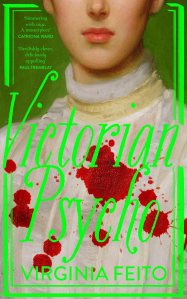 This was among my Most Anticipated titles of the year – for the bonkers blurb but also because of how much I’d enjoyed Feito’s debut, Mrs. March. Both novels go deep with mentally disturbed protagonists. The first channeled Patricia Highsmith with its stylish psychological suspense; here we have a full-on blend of slasher horror and sadistic humour, wrapped up in a Victorian pastiche. Winifred Notty (naughty girl indeed) is the new governess at Ensor House on the Yorkshire moors. She couldn’t care less about her charges, Andrew and Drusilla. No, she’s here to exact revenge on the master of the house, Mr. Pounds. But not before she’s dispatched many a random servant and baby. “Bodies pile up in the attic.” Her brutal fantasies are so realistic that at times it’s difficult to separate them from what she actually carries out. Miss Notty is also a highly sexual being whose fixations could certainly be interpreted in Freudian ways. Feito spins a traumatic backstory for her antiheroine but doesn’t make it any excuse for her gleeful reign of terror. It’s delicious fun, especially for a Victorianist, but don’t attempt if you’re squeamish. (Read via NetGalley)
Misery by Stephen King (1987)
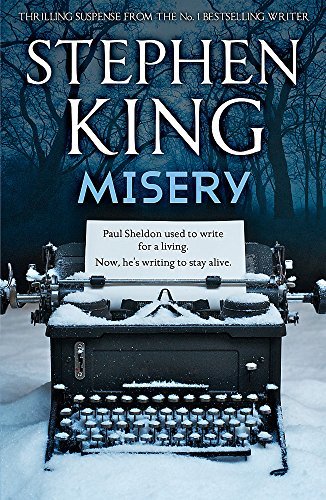 All these years I’d had two 1989–1990 films conflated: Misery and My Left Foot. I’ve not seen either but as an impressionable young’un I made a mental mash-up of the posters’ stills into a film featuring Daniel Day-Lewis as a paralyzed writer and Kathy Bates as a madwoman wielding an axe. (Turns out the left foot is relevant!)
Paul Sheldon wakes in a fog of pain, his legs shattered from a one-car accident on a snowy Colorado backroad. He’s famous for his historical potboilers about Misery Chastain but, like Arthur Conan Doyle with Sherlock Holmes, has killed off his most beloved character. Except now he’s in the home of Annie Wilkes, his rescuer and biggest fan, and she demands he resurrect Misery. Annie is a former nurse who left the profession after numerous suspicious deaths on her watch. She keeps Paul dependent on her – and on Novril, a fictional opiate. In a case of ‘Scheherazade complex’, he’ll be her prisoner until he’s completed a sequel that’s to her satisfaction. Compared to Pet Sematary, the only other King novel I’ve read, this was slow to draw me in because of the repetitive scenes in a claustrophobic setting, and I wearied of the excerpts from Paul’s manuscript. But eventually I was riveted, desperate to know how Paul was going to get out of this predicament and what the final showdown could be. Extremes of pain and obsession make this an intense study of the psychology of a wretched pair. (Public library)
Pretty Monsters by Kelly Link (2008)
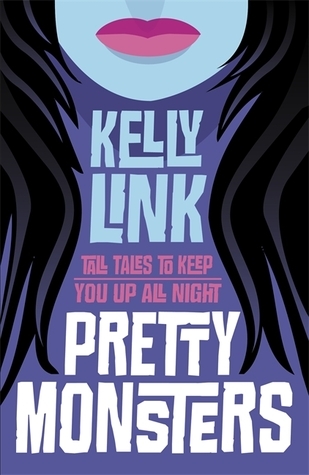 This is a reissue edition geared towards young adults. All but one of the 10 stories were originally published in literary magazines or anthologies. The stories are long, some approaching novella length, and took me quite a while to read. I got through the first three and will save the rest for next year. In “The Wrong Grave,” a teen decides to dig up his dead girlfriend’s casket to reclaim the poems he rashly buried with her last year – as did Dante Gabriel Rossetti, which Link makes a point of mentioning. A terrific blend of spookiness and comedy ensues.
“The Wizards of Perfil” and the title story are 50-some and 60-some pages, respectively, which allows a lot of space for intriguing weirdness and side plots. In the former, Onion’s cousin Halsa is purchased to be a servant to a wizard. The cousins both have the gift of foresight but can’t get the wizards to take them seriously when they beg that something to be done to prevent human disasters. It’s a brilliant allegory of the danger of waiting for an external force – God, the government, whatever – to solve everything versus getting on with it yourself. In the title story, a group of teens are obsessed with a mysterious Doctor Who-esque television show called The Library, which colours all their interactions. The main character Jeremy’s father is an eccentric sci-fi novelist named Gordon Strangle Mars who has written his son into his latest plot in a disturbing way. Jeremy recently inherited a gas station and phone box in Las Vegas and occasionally calls the phone box to air his grievances and solicit supernatural aid. My only other experience of Link was a standalone story I was once sent for review, “The Summer People,” which I didn’t get on with, so I was surprised to encounter such top-notch fantasy/horror tales. (Little Free Library)
Rainforest by Michelle Paver (2025)
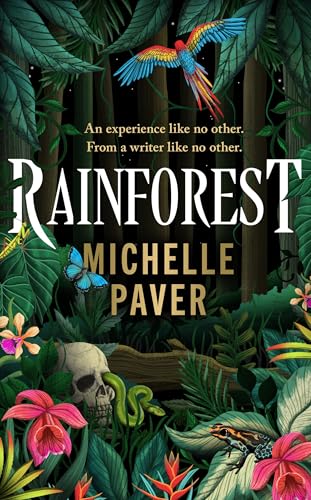 I’d read all three of Paver’s previous horror novels for adults (Thin Air, Dark Matter and Wakenhyrst) and found them easy, atmospheric reading but not nearly as scary as billed. This is her best yet. Set in 1973 on an expedition to Mexico, it has as its unreliable narrator Dr. Simon Corbett, an English entomologist. Adding to the findings of the archaeological dig he’s accompanying, he’ll be hunting for mantids (praying mantises, stick insects and the like) by fogging sacred trees with pesticides. He also experiments with taking a hallucinogenic plant extract used by the Indigenous shamans, hoping to be reunited with his lost love, Penelope.
We know that Corbett’s employment is tenuous and that he’s seeing a therapist. Paver authentically reproduces the casual racism and sexism of the time and seeds little hints that this protagonist may not be telling the whole truth about his relationship with Penelope. The long sequence where he’s lost in the jungle is fantastic. Corbett seems fated to repeat ancient masochistic rites, as if in penance for what he’s done wrong. My husband is an entomologist, so I was interested to read about period collecting practices. The novelty of the setting is a bonus to this high-quality psychological thriller and ghost story. (Public library)
Bone Broth by Alex Taylor (2025)
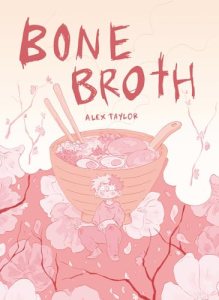 Ash is a trans man who starts working at a hole-in-the-wall ramen restaurant underneath a London railway arch. All he wants is to “pay for hormones, pay rent, [and] make enough to take a cutie on a date.” Bug’s Bones is run by an irascible elderly proprietor but staffed by a young multicultural bunch: Sock, Blue, Honey and Creamy. They quickly show Ash the ropes and within a month he’s turning out perfect bowls. He’s creeped out by the restaurant’s trademark bone broth, though, with its reminders of creatures turning into food. At the end of a drunken staff party, they find Bug lying dead and have to figure out what to do about it.
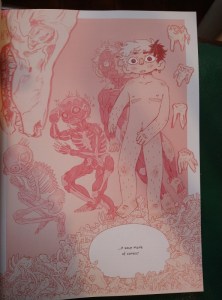 This storyline is in purple, whereas the alternating sequences of flashbacks are in a fleshy pinkish-red. As the two finally meet and meld, we see Ash trying to imitate the masculinity he sees on display while he waits for the surface to match what’s inside. I didn’t love the drawing style – though the full-page tableaux are a lot better than the high-school-sketchbook small panes – so that was an issue for me throughout, but this was an interesting, ghoulish take on the transmasc experience. Taylor won a First Graphic Novel Award.
With thanks to SelfMadeHero for the free copy for review.
And one DNF: Saltwash by Andrew Michael Hurley. (I was warned!) It had no menace or momentum at all…
Any stand-out creepy reading for you this year?
#NovNov25 Begins! & My Year in Novellas
Welcome to Novellas in November! The link-up is open (see my pinned post). At the start of the month, we’re inviting you to tell us about any novellas you’ve read since last November.

I have a designated shelf of short books that I keep adding to throughout the year. Whenever I’m at secondhand bookshops, charity shops, the Little Free Library, or the public library volunteering, I’m always eyeing up thin volumes and thinking about my piles for November.
But I read novellas other times of year, too. Forty-five of them between December 2024 and now, according to my Goodreads shelves (last year the figure was 44 and the year before it was 46, so that’s my natural average). I often choose to review books of novella length for BookBrowse, Foreword and Shelf Awareness, so that helps to account for the number. I’ve read a real mixture, but predominantly literature in translation and autobiographical works.
My four favourites are ones I’ve already covered on the blog (links to my reviews): The Most by Jessica Anthony, Pale Shadows by Dominique Fortier and Three Days in June by Anne Tyler; and, in nonfiction, Mornings without Mii by Mayumi Inaba. Two works of historical fiction, one contemporary story; and a memoir of life with a cat.


What are some of your recent favourite novellas?
R.I.P. Reads, Part I: Apostolides, Dahl, Harkness, Kingfisher & Kohda
Ghosts, witches, vampires, creepy underground things: It can only be Readers Imbibing Peril time of year! Here’s my first five reviews.
The Homecoming by Zoë Apostolides (2025)
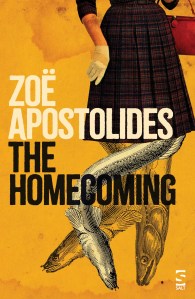 This debut novel dropped through my door as a total surprise: not only was it unsolicited, but I’d not heard about it. In this modern take on the traditional haunted house story, Ellen is a ghostwriter sent from London to Elver House, Northumberland, to work on the memoirs of its octogenarian owner, Catherine Carey. Ellen will stay in the remote manor house for a week and record 20 hours of audio interviews – enough to flesh out an autobiography. Miss Carey isn’t a forthcoming subject, but Ellen manages to learn that her father drowned in the nearby brook and that all Miss Carey did afterwards was meant to please her grieving mother and the strictures of the time. But as strange happenings in the house interfere with her task, Ellen begins to doubt she’ll come away with usable material. I was reminded of The Woman in Black, The Thirteenth Tale, and especially Wakenhyrst what with the local eel legends. The subplot about Ellen drifting apart from her best friend, a new mother, felt unnecessary, though I suppose was intended to bolster the main theme of women’s roles. There’s a twist that more seasoned readers of Gothic fiction and ghost stories might see coming. While I found this very readable and perfectly capably written, I didn’t get a sense of where the author hopes to fit in the literary market; she’s previously published a true crime narrative. Full disclosure: I once collaborated with Zoë on a Stylist assignment.
With thanks to Salt Publishing for the proof copy for review.
The Witches by Roald Dahl (1983)
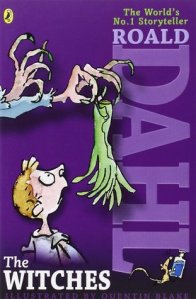 I’m sure I read all of Dahl’s major works when I was a child, though I had no specific memory of this one. After his parents’ death in a car accident, a boy lives in his family home in England with his Norwegian grandmother. She tells him stories from Norway and schools him in how to recognize and avoid witches. They wear wigs and special shoes to hide their baldness and square feet, and with their wide nostrils they sniff out children to turn them into hated creatures like slugs. When Grandmamma falls ill with pneumonia, she and the boy travel to a Bournemouth hotel for her recovery only to stumble upon a convention of witches under the guise of the Royal Society for the Prevention of Cruelty to Children. The Grand High Witch (Anjelica Huston, if you know the movie) has a new concoction that will transform children into mice at enough of a delay to occur the following morning at school. It’s up to the boy and his grandmother to save the day. I really enjoyed this caper, which I interpreted as being – like Tove Jansson’s The Summer Book – about imagination and making the most of one’s time with grandparents. But in the back of my mind was Jen Campbell’s objection to the stereotypical equating of disfigurement with villainy. The Grand High Witch also speaks with a heavy German accent. It would be understandable to dismiss this as dated and clichéd, but I still found it worthwhile. It also fit into my project to read books from my birth year. (Free from a neighbour)
The Black Bird Oracle by Deborah Harkness (2024)
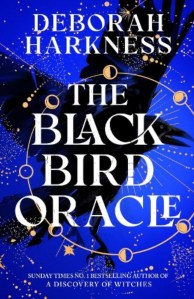 Somehow I’ve read this entire series even though none of the subsequent books lived up to A Discovery of Witches. What I loved about that first novel was how the author drew on her knowledge of the history of science to create a believable backdrop for a story of witches, vampires and other supernatural beings that took place largely in Oxford and its medieval libraries. Each sequel has elaborated further adventures for Diana Bishop, a witch; her vampire husband, Matthew de Clermont; and their family members and other hangers-on. Their twins, especially Becca, have inherited some of Diana’s power. I read the first half of this last year and finally skimmed to the end last week, so I haven’t retained much. Diana is summoned to the ancestral seat of the Bishops in Massachusetts and finds herself part of a community of gossipy, catty witches. (Dahl was right, they’re everywhere!) She has some fun, folksy interactions but things soon get more serious as she girds herself for a showdown with the darker implications of her gift. Overall, this didn’t add much to the ongoing narrative and the love scenes veered too close to romantasy for my liking. (Public library)
What Stalks the Deep by T. Kingfisher [Ursula Vernon] (2025)
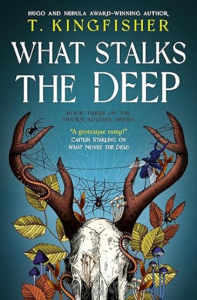 The third in the “Sworn Soldier” series, after What Moves the Dead and What Feasts at Night. Alex Easton is a witty, gender-nonconforming narrator, which is why I persist with these novellas even though I’m underwhelmed by the plots. Denton, the American doctor friend from the first book, begs Easton to come to West Virginia: his cousin Oscar has gone missing in a mine after sending a series of alarming letters about a red light he saw in the depths. Easton and their right-hand man, Angus, soon encounter claustrophobia-inducing cave systems, various kinds of bad air and siphonophore-like marine creatures that can assemble to imitate other beings. (Why aren’t these on the cover, huh?!) In other intriguing matters, Denton seems to have something going on with his friend John Ingold, an Indigenous scientist. Though, as Easton frequently reminds themself, that’s none of our business. There are some great set-pieces and funny, if anachronistic, asides (on learning how to flick a lighter just right: “I used to practice it for hours as a teenager, in hopes of impressing girls. Look, girls were more easily impressed in those days. Shut up.”) But my feeling with all three books is that they’re over before they’ve barely begun, and they never deliver the expected horror. Smart-ass, queer fantasy/horror: these will be some people’s perfect books, just not mine. If you’re intrigued, do at least try the first one, which riffs on Poe. (Read via Edelweiss)
Woman, Eating by Claire Kohda (2022)
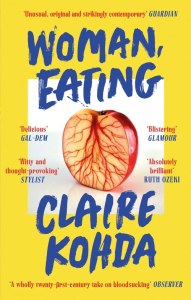 A very different sort of vampire novel. Twenty-three-year-old Lydia is half Japanese and half Malaysian; half human and half vampire. She’s trying to follow in her late father’s footsteps as an artist through an internship at a Battersea gallery, which comes with studio space where she’ll sleep to save money. But she can only drink blood like her mother, who turned her when she was a baby. Mostly she subsists on pig blood – which she can order dried if she can’t buy it fresh from a butcher – though, in one disturbing sequence, she brings home a duck carcass. When she falls for Ben, one of her studio-mates, she imagines what it would be like to be fully human: to make art together, to explore Asian cuisine, to bond over losing their mothers (his is dying of cancer; hers is in a care home with violence-tinged dementia). But Ben is already seeing someone, the internship is predictably dull, and a first attempt at consuming regular food goes badly wrong. There are a lot of promising threads in this debut. It’s fascinating how Lydia can intuit a creature’s whole life story by drinking their blood. She becomes obsessed with the Baba Yaga folk tale (and also mentions Malay vampire legends) and there’s a neat little bit of #MeToo revenge. But overall, it’s half-baked. Really, it’s just a disaster-woman book in disguise. The way Lydia’s identity determines her attitudes towards food and sex feels like a symbol of body dysmorphia. I’ll look out to see if Kohda does something more distinctive in future. (Secondhand – Awesomebooks.com)
More coming up on Halloween (thankfully, including books I liked better on average)!
Love Your Library, October 2025
Thanks, as always, to Eleanor and Skai for posting about their recent library reading!
Library borrowing is often the only thing that allows me to follow literary prizes. My library system always acquires at least the entire shortlist for most major UK prizes; sometimes the longlist as well. It would be fair to say that I’ve not engaged with what I’ve read from the Booker Prize shortlist this year. I half-heartedly skimmed two novels (Choi and Miller) and swiftly DNFed another (Markovits; see below). The Desai isn’t going to happen any time soon due to the length, and I haven’t enjoyed Kitamura enough in the past to try her again. David Szalay is my last great hope! I remember liking his All that Man Is, so when I pick up Flesh from the library tomorrow I’ll be hoping that it jumps out at me as a potential winner.
My library use over the last month:
(links are to books not already reviewed on the blog; some reviews are still to come)
READ
- New Cemetery by Simon Armitage
- The Penelopiad by Margaret Atwood
- Cathedral by Raymond Carver
- Dim Sum Palace by X. Fang
- The Black Bird Oracle by Deborah Harkness
- Endling by Maria Reva

- The Doctor Stories by William Carlos Williams
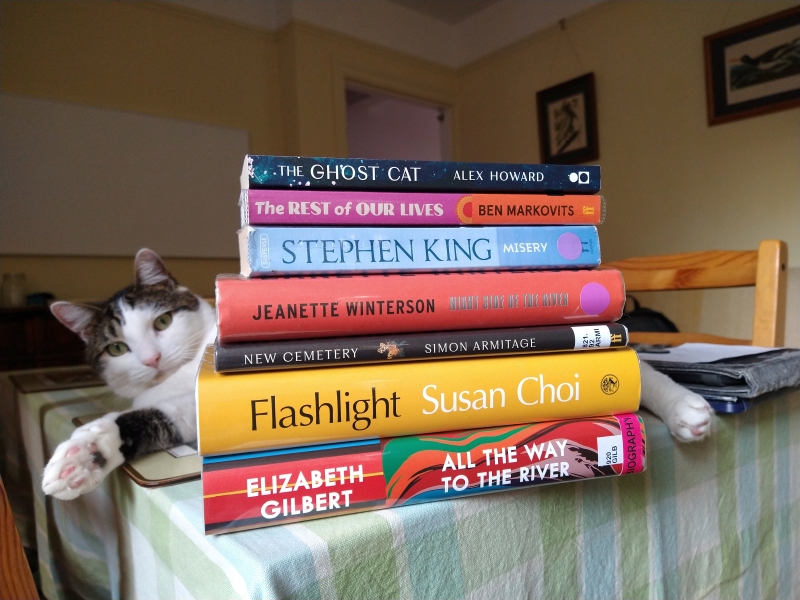
Naughty photo bomber on the dining table!
SKIMMED
- Flashlight by Susan Choi
- All the Way to the River by Elizabeth Gilbert
- The Haunted Wood: A History of Childhood Reading by Sam Leith
- Buckeye by Patrick Ryan
CURRENTLY READING
- The Honesty Box by Lucy Brazier
- Kairos by Jenny Erpenbeck
- Emil and the Detectives by Erich Kästner
- Misery by Stephen King
- Of Thorn & Briar: A Year with the West Country Hedgelayer by Paul Lamb
- Sister Outsider: Essays and Speeches by Audre Lorde
- Red Pockets: An Offering by Alice Mah
- Rainforest by Michelle Paver
- Death of an Ordinary Man by Sarah Perry
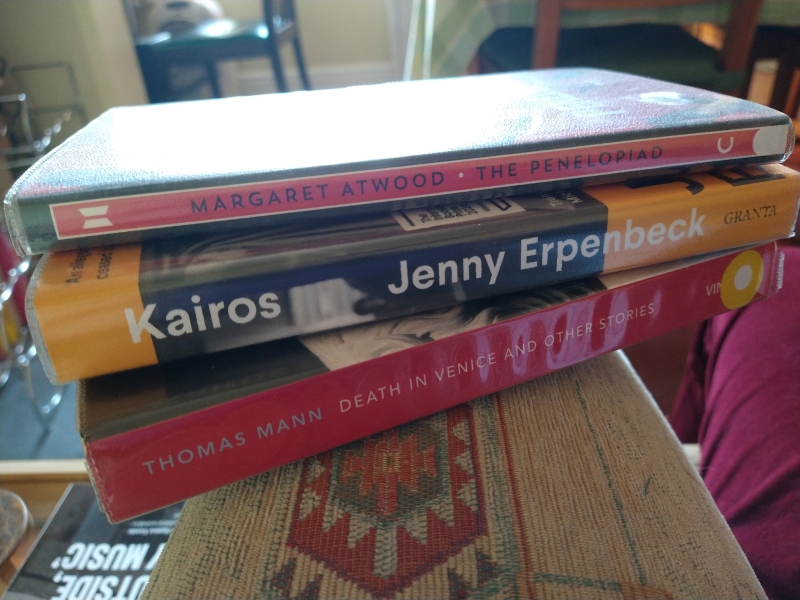
CHECKED OUT, TO BE READ
- A Single Man by Christopher Isherwood
- Death in Venice and Other Stories by Thomas Mann
- Super-Frog Saves Tokyo by Haruki Murakami
- The Death of Ivan Ilyich by Leo Tolstoy
ON HOLD, TO BE COLLECTED
- The Eights by Joanna Miller
- Flesh by David Szalay
- Notes on Infinity by Austin Taylor
- Lone Wolf: Walking the Faultlines of Europe by Adam Weymouth
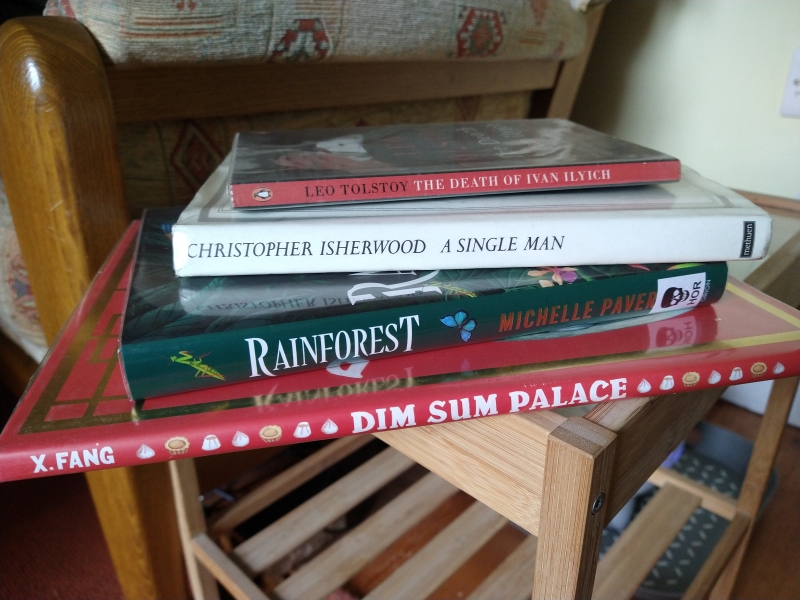
IN THE RESERVATION QUEUE
- Book of Lives: A Memoir of Sorts by Margaret Atwood
- It’s Not a Bloody Trend: Understanding Life as an ADHD Adult by Kat Brown
- Look Closer: How to Get More out of Reading by Robert Douglas-Fairhurst
- Honour & Other People’s Children by Helen Garner
- Snegurochka by Judith Heneghan
- The Perimenopause Survival Guide: A Feel-Like-Yourself-Again Roadmap for Every Woman over 35 by Heather Hirsch
- Queen Esther by John Irving
- The Matchbox Girl by Alice Jolly
- Heart the Lover by Lily King
- Night Life: Walking Britain’s Wild Landscapes after Dark by John Lewis-Stempel
- The Shapeshifter’s Daughter by Sally Magnusson
- Winter by Val McDermid
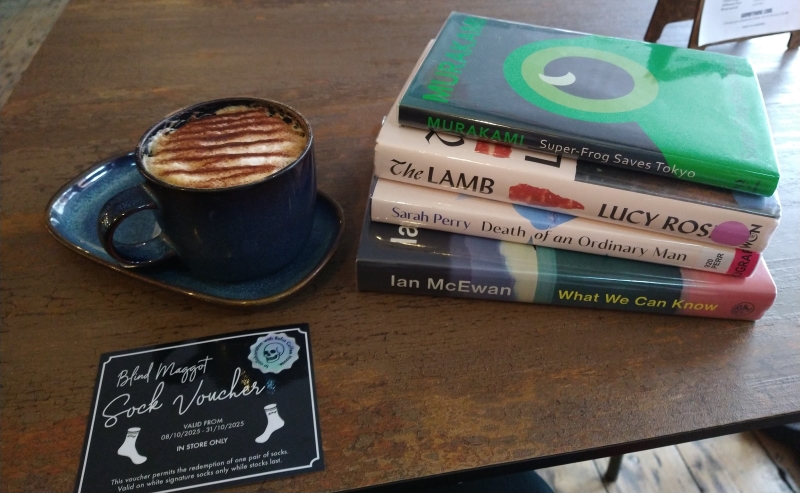
Library pick-ups on my birthday; I perused them over a cappuccino at my favourite local coffeehouse. Also got a voucher for a free pair of socks (which I gave to my husband).
RETURNED UNREAD
- The Two Roberts by Damian Barr – Lost immediate interest.
- Opt Out by Carolina Setterwall – Lost immediate interest.
- Slags by Emma Jane Unsworth – Keeps being requested off me.
- Night Side of the River by Jeanette Winterson – I was put off by the endless introduction about the history of ghost stories, and at a glance none of the stories themselves jumped out at me.
RETURNED UNFINISHED
- The Ghost Cat by Alex Howard – Great premise but iffy writing/editing, including lots of “reigns”-instead-of-reins nonsense. I read 40-some pages.
- The Rest of Our Lives by Benjamin Markovits – THIS is one of the six best books of the past year!? I thought I’d try Markovits again after the lacklustre A Weekend in New York but I barely made it past page 10. What a boring voice!
- What We Can Know by Ian McEwan – I was tickled that the protagonist shares my birthday, but not at all drawn in. I read 20-some pages.
- The Lamb by Lucy Rose – The vampire novel I have on the go is enough for me for R.I.P. without cannibalism added on. I glanced at the first few pages.
- A Long Winter by Colm Tóibín – Jumping on that Claire Keegan stand-alone-story bandwagon. Except this story of an alcoholic mother and soldier brother was deathly dull. I read 30-some pages (in a small hardback with some supplementary material this is stretched out to 130+).
What have you been reading or reviewing from the library recently?

Share a link to your own post in the comments. Feel free to use the above image. The hashtag is #LoveYourLibrary.
#1925Club: The Heart of a Dog by Mikhail Bulgakov
Simon and Kaggsy’s classics reading weeks always get me picking up older books. I found this unusual Russian novella on a giveaway pile a few years ago and it’s been on my #NovNov possibility shelf ever since, but now turned out to be the perfect time for it. This review also fits into the Hundred Years Hence challenge.

Sharik is an abused stray dog, living on scraps on the snowy streets of Moscow until Professor Philip Philipovich Preobrazhensky takes him in. The professor is a surgeon renowned for his rejuvenation procedures – implanting monkey ovaries into a middle-aged lady, for instance – and he has designs on the mutt. His new strategy is to take the pituitary gland and testicles of a just-deceased young man and transplant them into Sharik. The central chapter is composed of medical notes taken by Preobrazhensky’s assistant, Dr. Bormenthal. Gradually, a transformation is achieved: The dog’s bark becomes more of a human groan and his fur and tail fall off. Soon the new man is fully convincing: eating, dressing and conversing. Even in a matter-of-fact style, the doctor’s clinical observations are hilarious. “The dog[,] in the presence of Zina and myself, had called Prof. Preobrazhensky a ‘bloody bastard’. … Heard to ask for ‘another one, and make it a double.’” The scientists belatedly look into the history of the man whose glands they harvested and discover to their horror that he was an alcoholic petty thief who died in a bar fight. Sharikov follows suit as an inebriated boor who pesters women, wants to be known as Poligraph Poligraphovich – and still chases cats. Is it too late to reverse a Frankenstein-esque trial gone wrong?
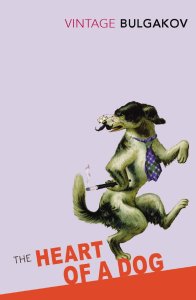 This was a fairly entertaining fable-like story, with whimsical fragments of narration from Sharik himself at the start and close. The blurb inside the jacket of my 1968 Harvill Press hardback suggests “The Heart of a Dog can be enjoyed solely as a comic story of splendid absurdity; it can also be read as a fierce parable about the Russian Revolution.” The allegorical meaning could easily have passed me by, being less overt than in Animal Farm. Reading a tiny bit of external information, I see that this has been interpreted as a satire on the nouveau riche during the Bolshevik era: Sharikov complains about how wealthy the professor is and proposes that he sacrifice some of his apartment-cum-office’s many rooms to others who have nowhere to live. But yes, I mostly stayed at the surface level and found an amusing mad-scientist cautionary tale. I’ll read more by Bulgakov – I’ve had a copy of The Master and Margarita for ages. Next year’s Reading the Meow week might be my excuse.
[Translated from Russian by Michael Glenny, 1968]
(Free from a neighbour, formerly part of Scarborough Public Library stock)
I also intended to read An American Tragedy by Theodore Dreiser from the university library, having a dim memory of a black-and-white film version starring Montgomery Clift (A Place in the Sun). But the catalogue’s promised 400-some pages was a lie; there are two volumes in one, totaling 840 pages. So that was a nonstarter.
But here are some other famous 1925 titles that I’ve read (I’m now at 7 out of the top 15 on the Goodreads list of the most popular books published in 1925):
The Great Gatsby by F. Scott Fitzgerald
The Trial by Franz Kafka
The Painted Veil by W. Somerset Maugham
Emily Climbs by L.M. Montgomery
Carry On, Jeeves by P.G. Wodehouse
Mrs. Dalloway by Virginia Woolf
I’ve previously participated in the 1920 Club, 1956 Club, 1936 Club, 1976 Club, 1954 Club, 1929 Club, 1940 Club, 1937 Club, 1970 Club, and 1952 Club.
#NovNov25 and Other November Reading Plans
Not much more than two weeks now before Novellas in November (#NovNov25) begins! Cathy and I are getting geared up and making plans for what we’re going to read. I have a handful of novellas out from the library, but mostly I gathered potential reads from my own shelves. I’m hoping to coincide with several of November’s other challenges, too.
Although we’re not using the below as themes this year, I’ve grouped my options into categories:
Short Classics (pre-1980)
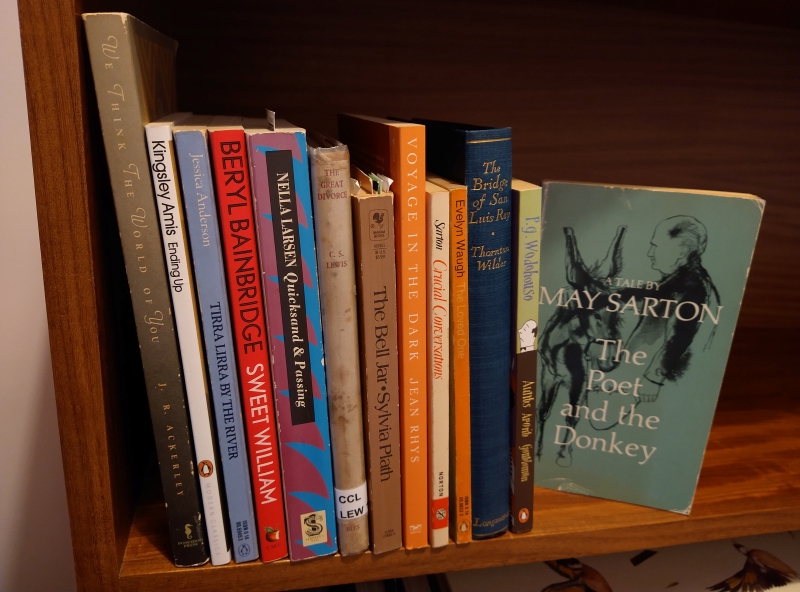
Just Quicksand to read from the Larsen volume; the Wilder would be a reread.
Contemporary Novellas
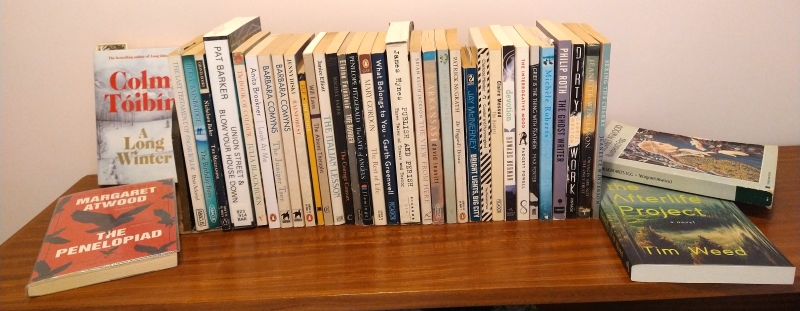
(Just Blow Your House Down; and the last two of the three novellas in the Hynes.)
Also, on my e-readers: Sea, Poison by Caren Beilin, Likeness by Samsun Knight, Eradication: A Fable by Jonathan Miles (a 2026 release, to review early for Shelf Awareness)
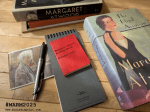 *Margaret Atwood Reading Month is hosted by Marcie of Buried in Print. I’ve just read The Penelopiad for book club, so I’ll start off with a review of that. I might also reread Bluebeard’s Egg, and I’ll be eagerly awaiting her memoir from the library.
[*Science Fiction Month: Beautyland by Marie-Helene Bertino, Archive of Unknown Universes by Ruben Reyes Jr., and The Afterlife Project (all catch-up review books) are options, plus I recently started reading The Martian by Andy Weir.]
Short Nonfiction
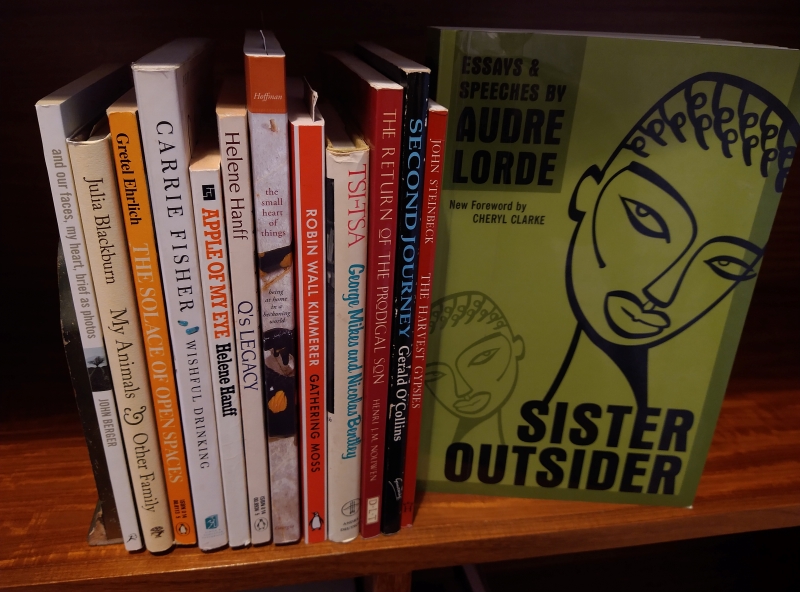
Including our buddy read, Sister Outsider by Audre Lorde. (A shame about that cover!)
Also, on my e-readers: The Serviceberry by Robin Wall Kimmerer, No Straight Road Takes You There by Rebecca Solnit, Because We Must by Tracy Youngblom. And, even though it doesn’t come out until February, I started reading The Irish Goodbye: Micro-Memoirs by Beth Ann Fennelly via Edelweiss.
For Nonfiction November, I also have plenty of longer nonfiction on the go, a mixture of review books to catch up on and books from the library:
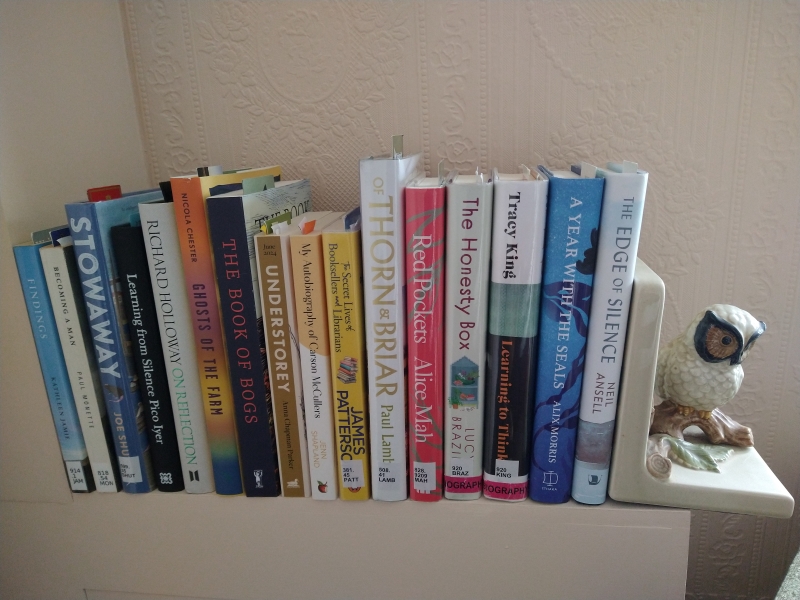
I also have one nonfiction November release, Joyride by Susan Orlean, to review.
Novellas in Translation
At left are all the novella-length options, with four German books on top.
The Chevillard and Modiano are review copies to catch up on.

Also on the stack, from the library: Super-Frog Saves Tokyo by Haruki Murakami
On my e-readers: The Old Fire by Elisa Shua Dusapin, The Old Man by the Sea by Domenico Starnone, Our Precious Wars by Perrine Tripier
 *German Literature Month: Our recent trip to Berlin and Lübeck whetted my appetite to read more German/German-language fiction. I’ll try to coincide with the Thomas Mann week as I was already planning to reread Death in Venice. I have some longer German books on the right-hand side as well. I started Kairos but found it hard going so might switch to audiobook. I also have Demian by Hermann Hesse on my Nook, downloaded from Project Gutenberg.
Spy any favourites or a particularly appealing title in my piles?
The link-up is now open for you to share your planning post!
Any novellas lined up to read next month?
 Bookish Beck = Rebecca Foster. American transplant to England. Freelance proofreader and book reviewer.
